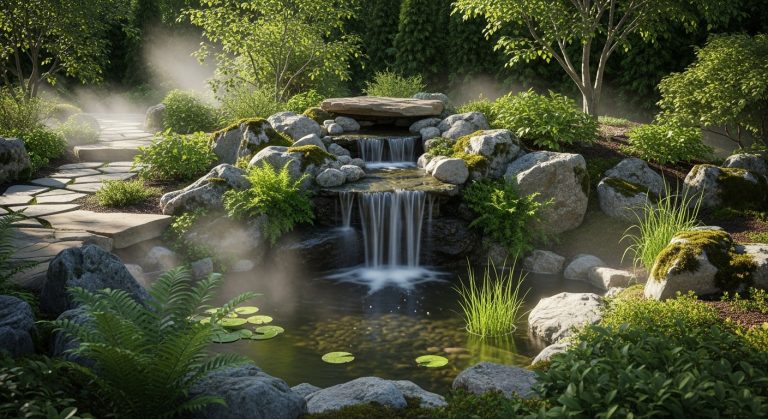
Buxus Garden Ideas: Transform Your Outdoor Space with Timeless Elegance
If you’ve ever wandered through a formal European garden, you’ve probably noticed the crisp, geometric lines of boxwood hedges. That’s Buxus, the plant that’s been shaping gardens for centuries. But here’s the thing — buxus isn’t just for classic, structured gardens. Its versatility makes it perfect for contemporary designs, cottagecore escapes, or even cozy city patios. Honestly, there’s something deeply satisfying about shaping a living hedge and watching your outdoor space transform over time.
What excites me most about buxus is its adaptability. You can trim it into neat cubes, spiral topiaries, soft flowing curves, or even use it as a backdrop for colorful seasonal flowers. Whether you’re a gardening newbie or a seasoned plant parent, these 15 buxus garden ideas will spark inspiration and help you create a lush, elegant, and low-maintenance garden that feels both alive and intentional.
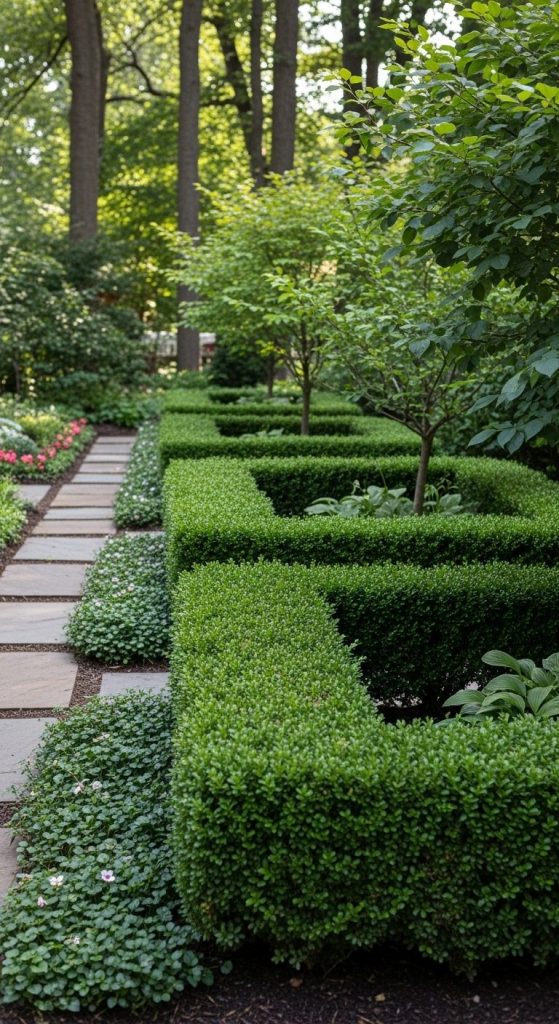
Boxwood hedges are the quintessential buxus look — clean lines, evergreen structure, and year-round elegance.
Pros:
- Formal beauty: Perfect for framing pathways or garden borders.
- Privacy: Tall hedges create natural privacy screens.
- Low maintenance: Slow-growing varieties reduce frequent pruning needs.
Cons:
- Labor-intensive initially: Shaping dense hedges can take effort.
- Pests: Boxwood leafminer or mites can occasionally damage leaves.
Mini takeaway: A classic hedge is timeless and instantly adds sophistication to your garden. Ever noticed how a straight hedge just makes everything feel polished? Exactly.
2. Curved Pathway Borders
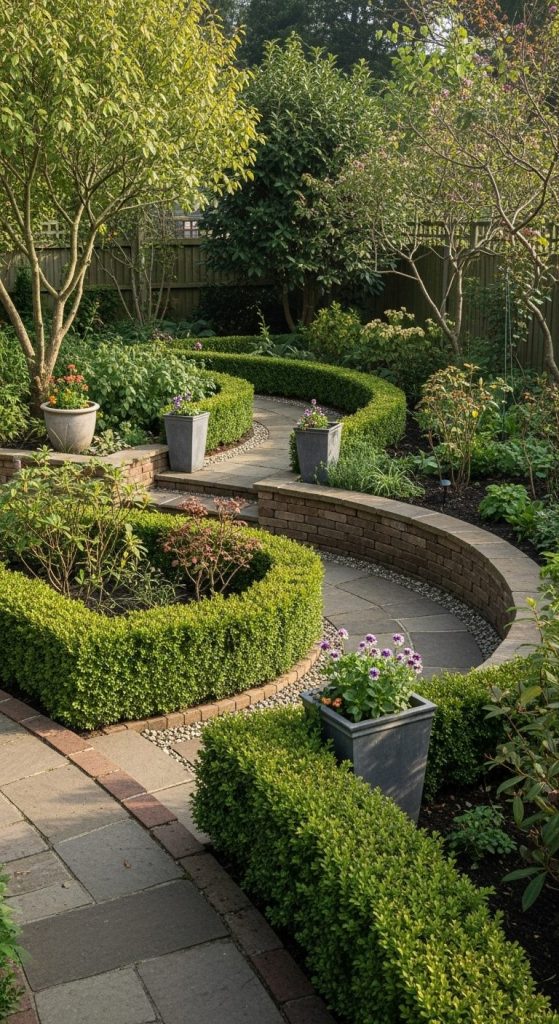
Swap straight lines for gentle curves. Buxus along winding paths softens geometry and adds whimsy.
Pros:
- Visual flow: Curves guide visitors through the garden naturally.
- Creative freedom: Mix with seasonal flowers for dynamic contrast.
Cons:
- Complex shaping: Curves require careful trimming.
Mini takeaway: Curved hedges add movement to your garden and invite exploration, making even small yards feel expansive.
3. Spiral Topiaries
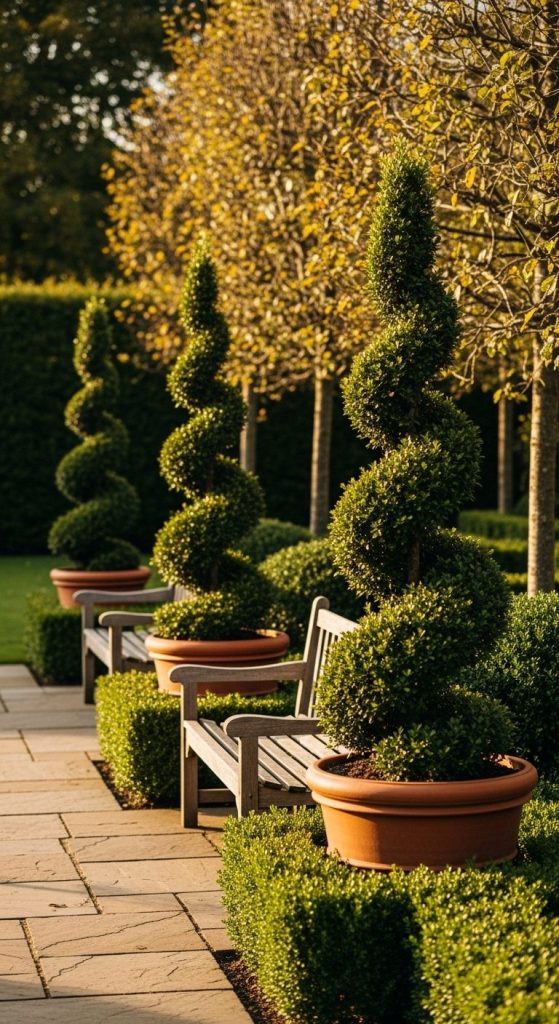
If you want a conversation starter, spiraled buxus topiaries are unbeatable.
Pros:
- Statement pieces: Eye-catching for entrances or patios.
- Evergreen beauty: Looks good year-round without seasonal changes.
Cons:
- Pruning skill required: Precision is key to keep the spiral clean.
- Time investment: Spirals grow slowly, patience needed.
Mini takeaway: A spiral topiary is like art you can touch — IMO, nothing elevates curb appeal quite like it.
4. Cube-Shaped Planters
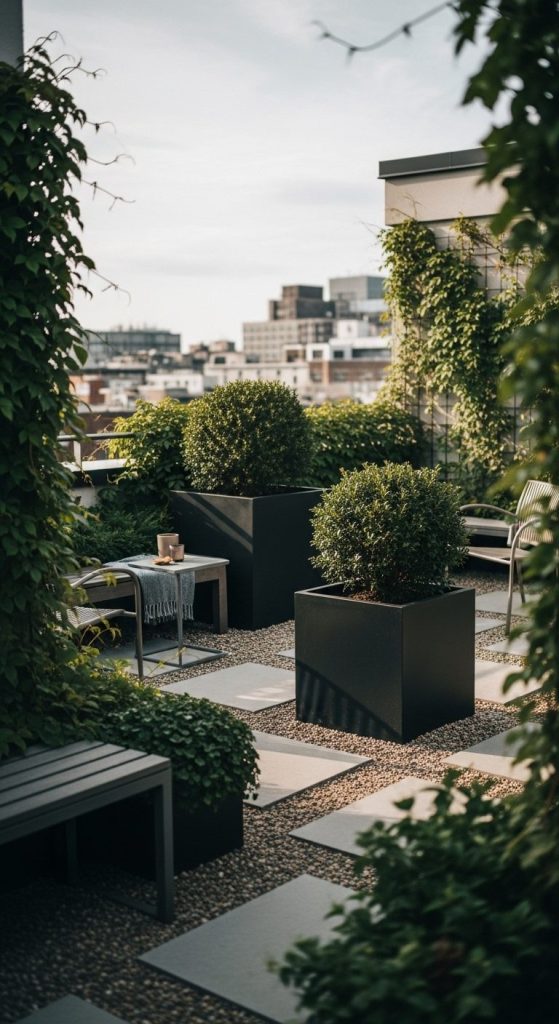
Think modern minimalism — small boxwood cubes in sleek containers.
Pros:
- Flexible placement: Perfect for patios, rooftops, or balconies.
- Low-maintenance geometry: Cubes hold their shape naturally with occasional trimming.
Cons:
- Pot restrictions: Root space limits long-term growth.
Mini takeaway: Cube-shaped buxus brings a modern, clean aesthetic and works beautifully in urban gardens.
5. Mixed Border Plantings
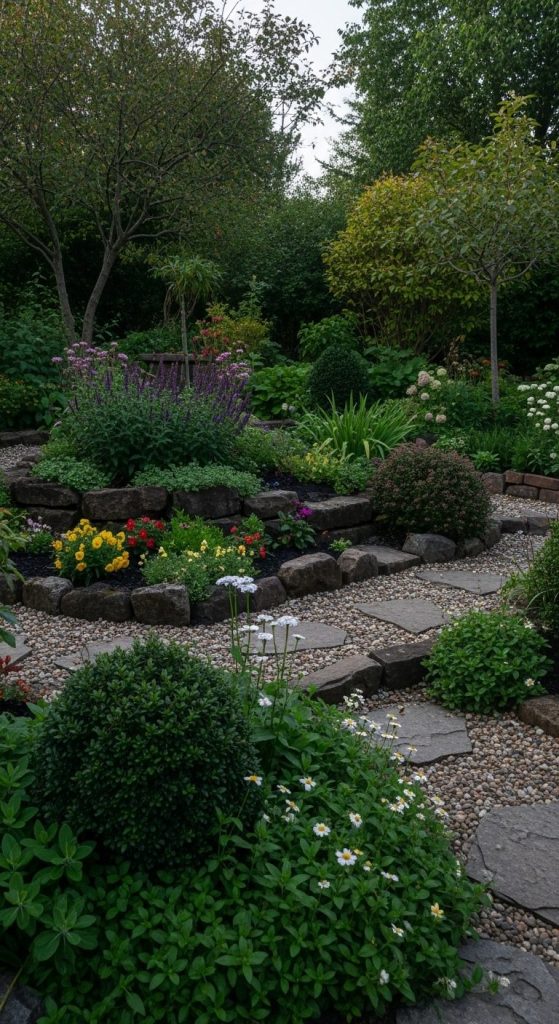
Combine boxwood with colorful perennials or seasonal flowers.
Pros:
- Color contrast: The deep green of buxus makes blooms pop.
- Ecological diversity: Supports pollinators and beneficial insects.
Cons:
- Maintenance juggling: Need to balance water and nutrients for multiple species.
Mini takeaway: Mixing textures and colors with buxus keeps your garden lively and layered without losing structure.
6. Buxus Maze
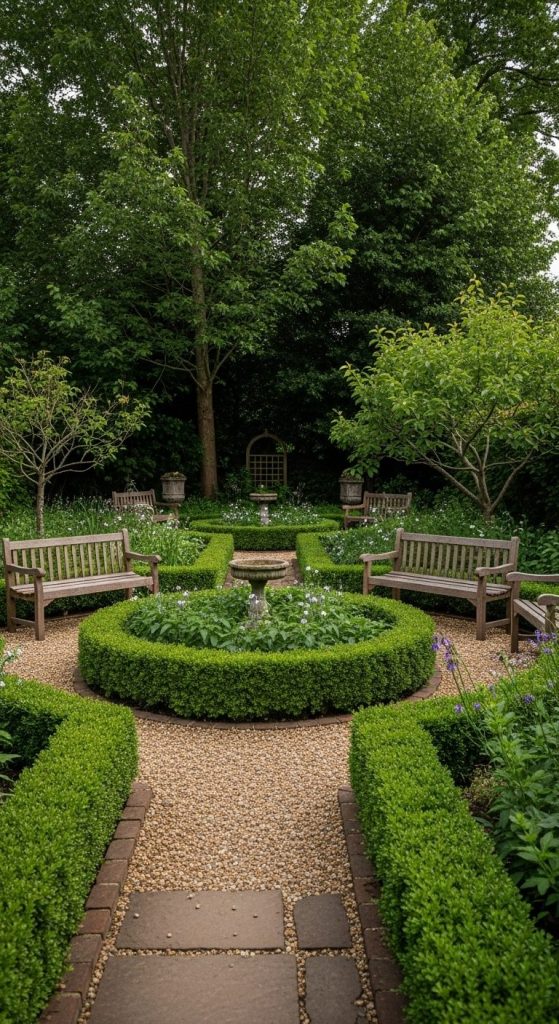
Why not make your garden playful? A small boxwood maze is charming for kids and adults alike.
Pros:
- Fun and interactive: Great for family gardens.
- Showcases skill: Demonstrates precise gardening techniques.
Cons:
- Space requirement: Needs enough room to weave pathways.
- High upkeep: Regular trimming is essential to maintain shape.
Mini takeaway: A maze is functional art — the perfect mix of whimsy and structure.
7. Topiary Animals
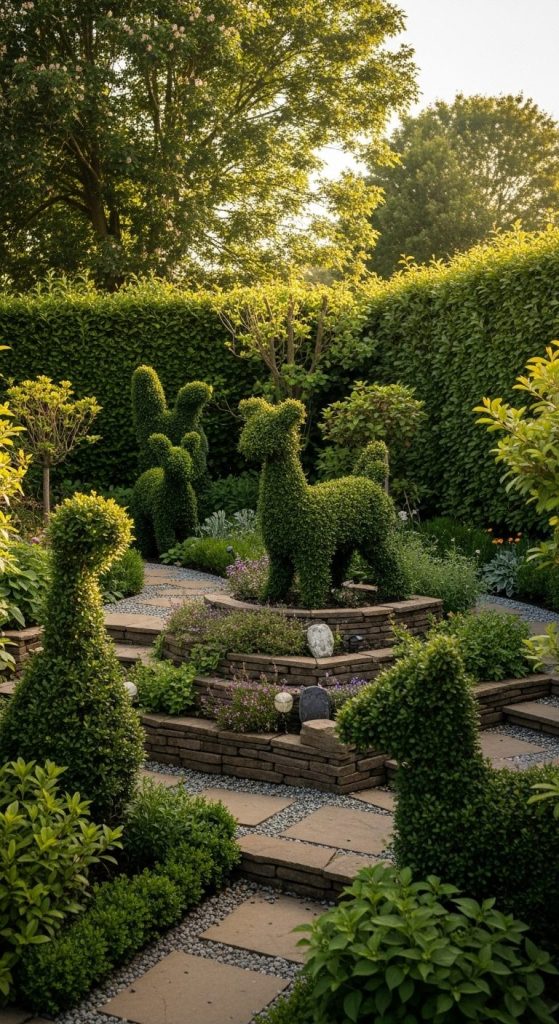
For a playful twist, sculpt buxus into animals or abstract shapes.
Pros:
- Whimsical focal points: Adds personality to gardens.
- Evergreen charm: Looks good all year round.
Cons:
- Advanced skill needed: Not beginner-friendly.
- Time-consuming: Takes years to perfect.
Mini takeaway: Topiary animals are garden storytelling — playful yet elegant.
8. Formal Garden Squares
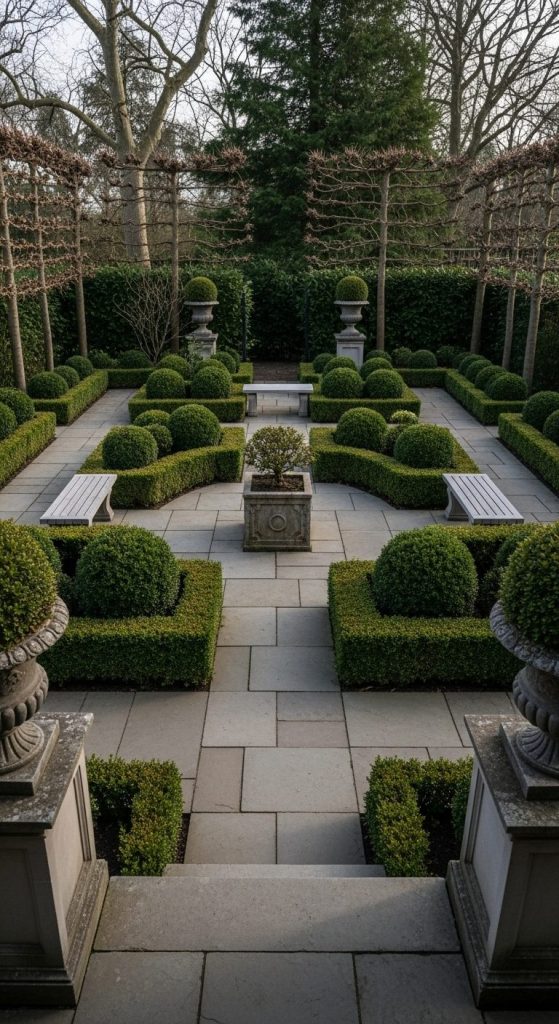
Grid-like layouts with buxus cubes create a refined, symmetrical look.
Pros:
- Classic elegance: Reminiscent of French or Italian Renaissance gardens.
- Ease of planning: Modular arrangement is easy to design.
Cons:
- Can feel rigid: Might look too formal in casual landscapes.
Mini takeaway: Formal squares exude timeless order — perfect if symmetry soothes your soul.
9. Low Groundcover Edges
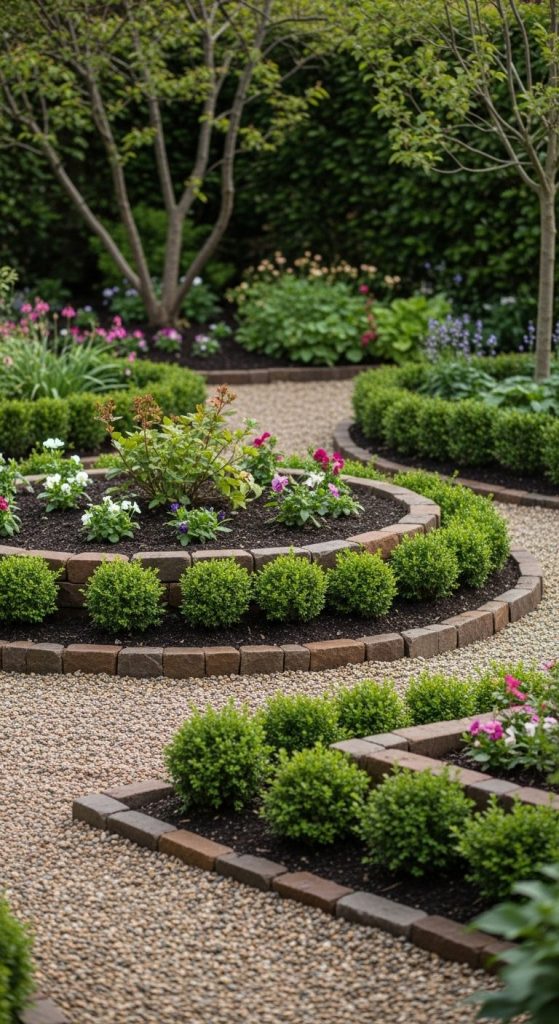
Use dwarf buxus varieties to edge flower beds or vegetable plots.
Pros:
- Defines spaces: Creates neat, clean borders.
- Low height: Doesn’t block views.
Cons:
- Limited impact: Smaller size may not make a bold statement.
Mini takeaway: Groundcover edges are subtle, practical, and keep gardens tidy effortlessly.
10. Vertical Buxus Walls
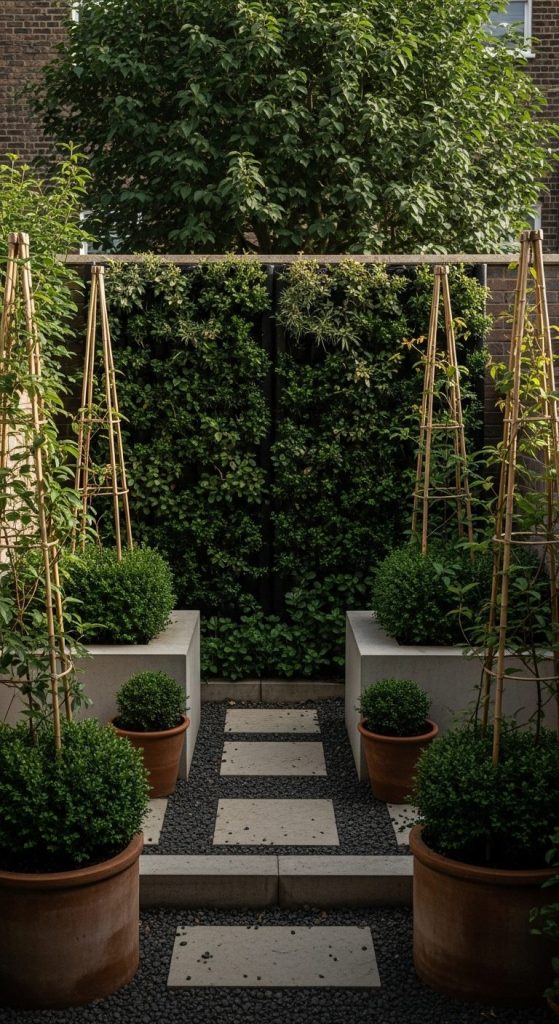
Create living walls or panels with tightly clipped buxus.
Pros:
- Space-saving: Ideal for small yards.
- Visual interest: Adds depth and structure.
Cons:
- Regular maintenance: Needs frequent trimming.
- Weight concerns: Large walls in containers require structural support.
Mini takeaway: Vertical buxus adds height and drama without taking up horizontal space — perfect for city gardens.
11. Buxus in Rock Gardens
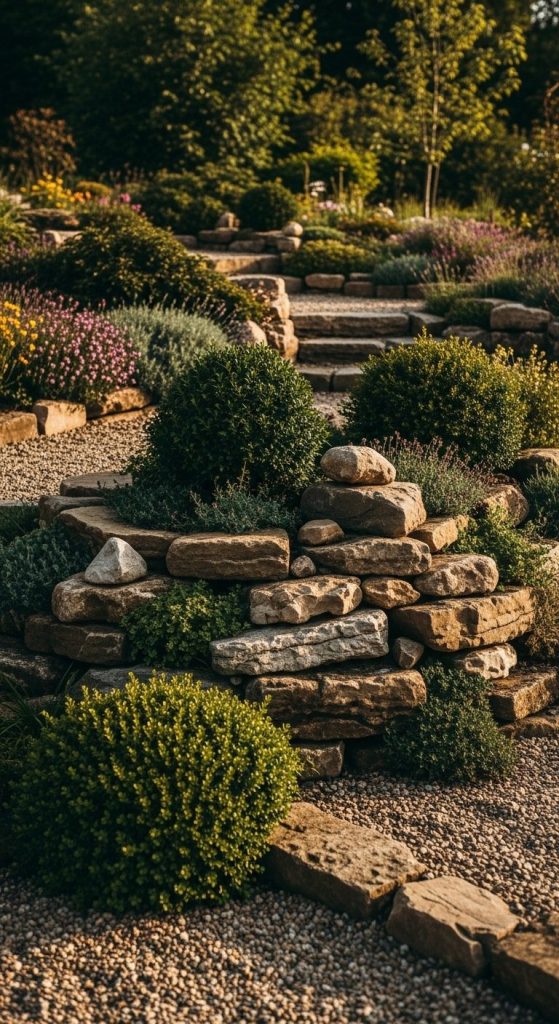
Combine boxwood with stone arrangements for a textured, natural feel.
Pros:
- Visual contrast: Green against stone is striking.
- Low-maintenance integration: Rocks reduce weeding and soil erosion.
Cons:
- Limited soil depth: May affect growth in very rocky areas.
Mini takeaway: Rocks and buxus together give a modern yet earthy vibe — IMO, it’s understated elegance at its best.
12. Seasonal Accent Planting
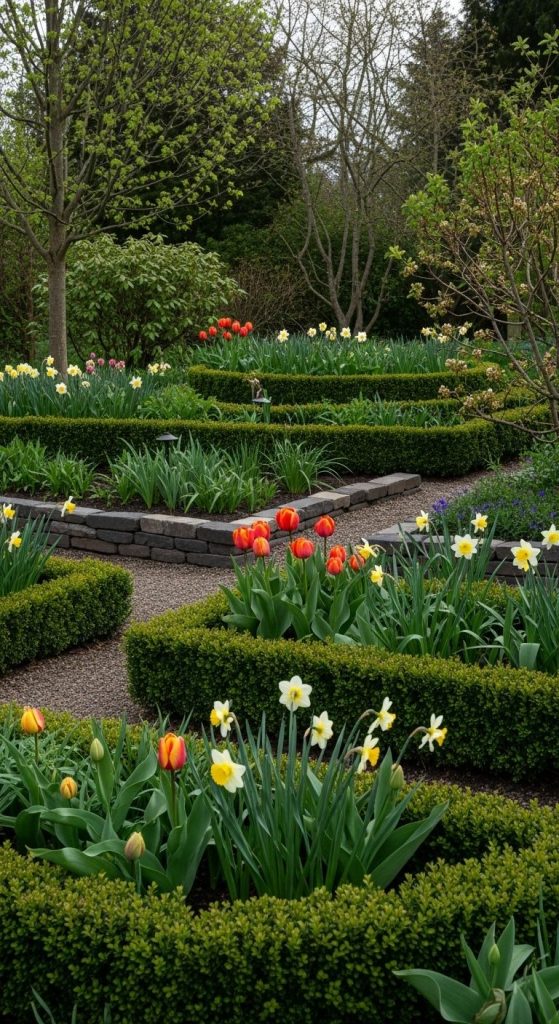
Pair buxus with seasonal bulbs like tulips or daffodils for dynamic color.
Pros:
- Year-round interest: Green structure combined with bursts of color.
- Pollinator-friendly: Supports bees and butterflies.
Cons:
- Replanting required: Bulbs need annual rotation.
Mini takeaway: Seasonal accents keep your garden fresh and ever-changing while maintaining a buxus backbone.
13. Framed Garden Entrances
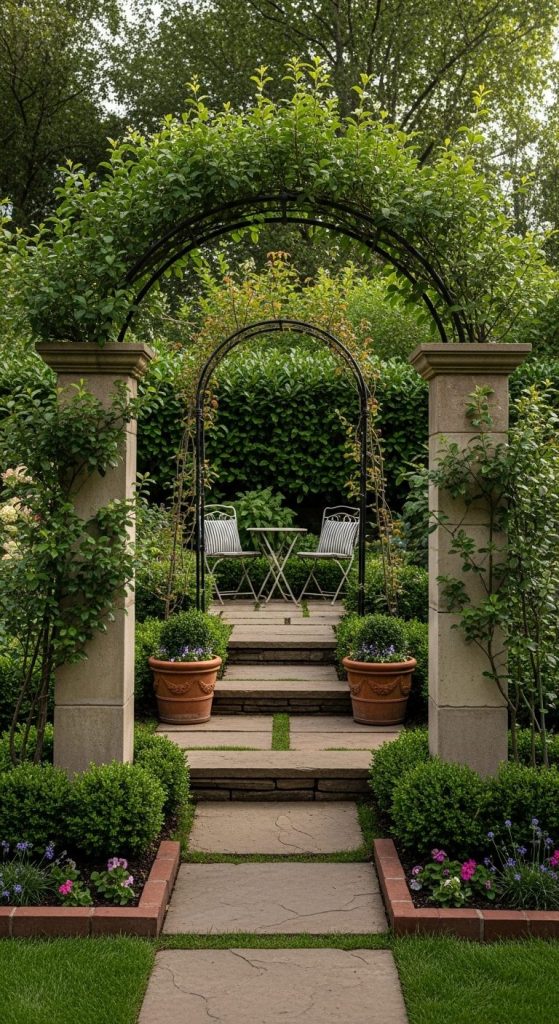
Use buxus to create archways, gate flanks, or entrance pillars.
Pros:
- Inviting focal point: Welcoming and elegant entrance.
- Structural versatility: Can be sculpted into various shapes.
Cons:
- Skill required: Shaping arches takes practice.
Mini takeaway: A framed entrance sets the tone for the entire garden — elegance starts at the gate.
14. Pair with Water Features
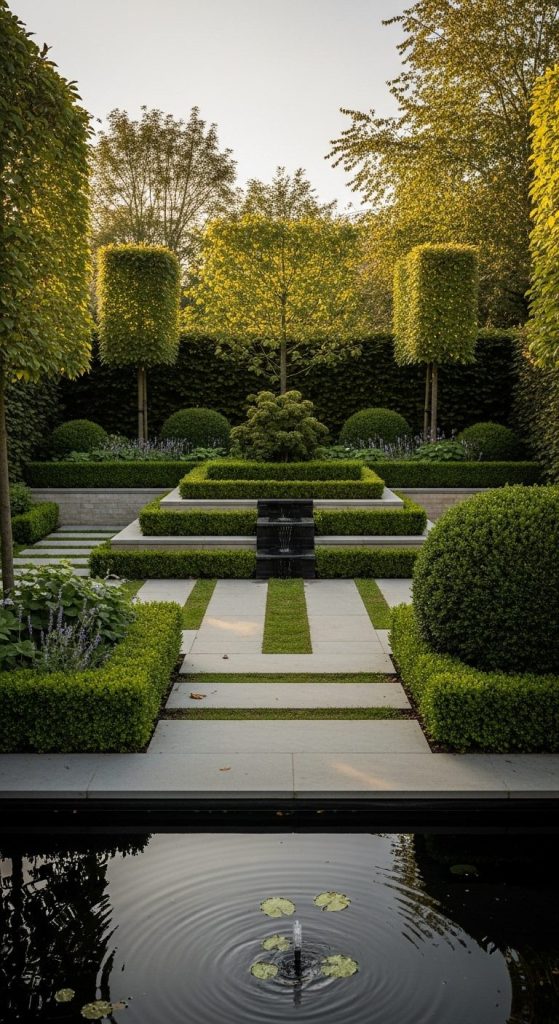
Boxwood works beautifully around fountains, ponds, or reflecting pools.
Pros:
- Complementary textures: Structured green against fluid water.
- Relaxing ambiance: Water adds sound and motion.
Cons:
- Moisture management: Soil must drain well to prevent root rot.
Mini takeaway: Water features paired with buxus create serene, balanced gardens — a visual and sensory win.
15. Indoor or Container Buxus
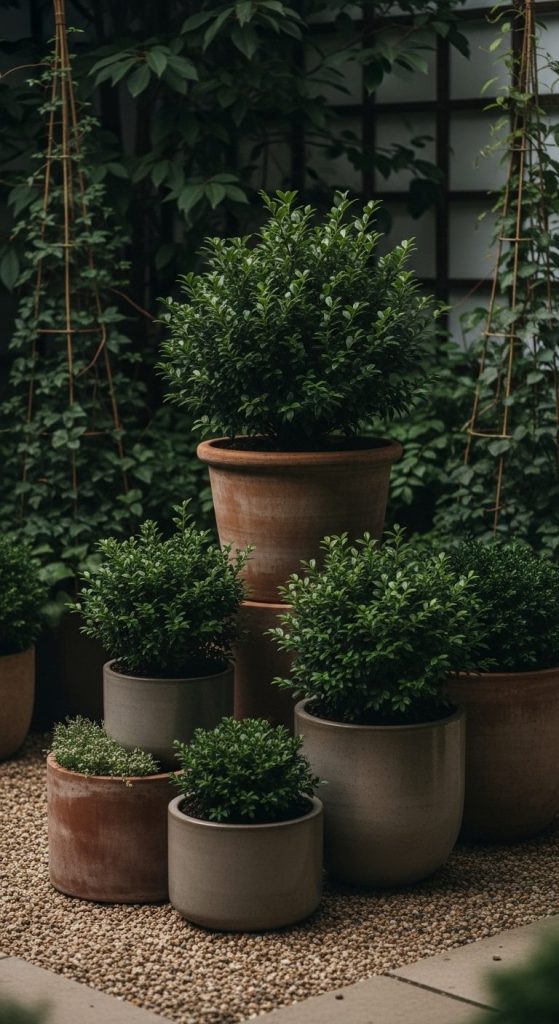
Don’t limit boxwood to outdoor spaces — use it in pots for patios or sunrooms.
Pros:
- Flexibility: Moveable, great for renters or seasonal decor.
- Control: Easier to manage pests, soil, and pruning.
Cons:
- Root space: Containers restrict long-term growth.
- Watering needs: Containers dry out faster than garden soil.
Mini takeaway: Container buxus brings greenery into patios and interiors, expanding your garden’s reach beyond the backyard.
Conclusion
Buxus isn’t just a hedge; it’s a canvas for creativity. From formal hedges and spiral topiaries to playful mazes and container displays, these ideas show that boxwood can adapt to nearly any garden style. It balances structure with softness, evergreen calm with seasonal vibrancy.
For me, the joy of working with buxus lies in its versatility — it lets you sculpt, frame, and decorate your outdoor spaces while maintaining a low-maintenance backbone. Whether you’re designing a French-style courtyard, a modern minimal patio, or a whimsical backyard retreat, buxus offers endless possibilities. IMO, a garden anchored by well-planned boxwood never goes out of style — it’s timeless, living art.
So grab your shears, plan your layout, and let your creativity grow — your buxus garden awaits!

William Martin is a passionate bowler who spends most of his weekends playing the sport. With years of intense experience under his belt, William decided to share his knowledge by creating BOWLING OCEAN. Join me on this journey to explore the world of bowling and discover the tips and tricks to becoming a pro.