DIY Garden Boxes: Your Ultimate Guide to Building Backyard Success
I have to tell you—I didn’t always think much about garden boxes. A few springs ago I got tired of bending over, battling clay soil, and mowing around patchy veggie plots. Then I built my first DIY garden box and bam—my tomatoes soared, weeds dropped, and I actually enjoyed weeding. If you’ve been eyeing raised beds or garden boxes, you’re in the right place. We’re going to cover 15 creative, practical ideas for DIY garden boxes—complete with pros, cons, and real talk about how they perform (yes, even the messy bits).
Before we dig in, let’s set the scene: by “garden boxes” I mean raised garden beds or boxed-structures that hold your soil above ground—wood, metal, repurposed containers, you name it. These do more than just look neat: they give you better control over soil, drainage, access, and layout. For instance, studies show raised-boxes warm faster in spring and drain better than in-ground beds.
Alright—grab your gloves and your sense of excitement. Let’s build—with ideas.
1. Classic Wood Frame Box
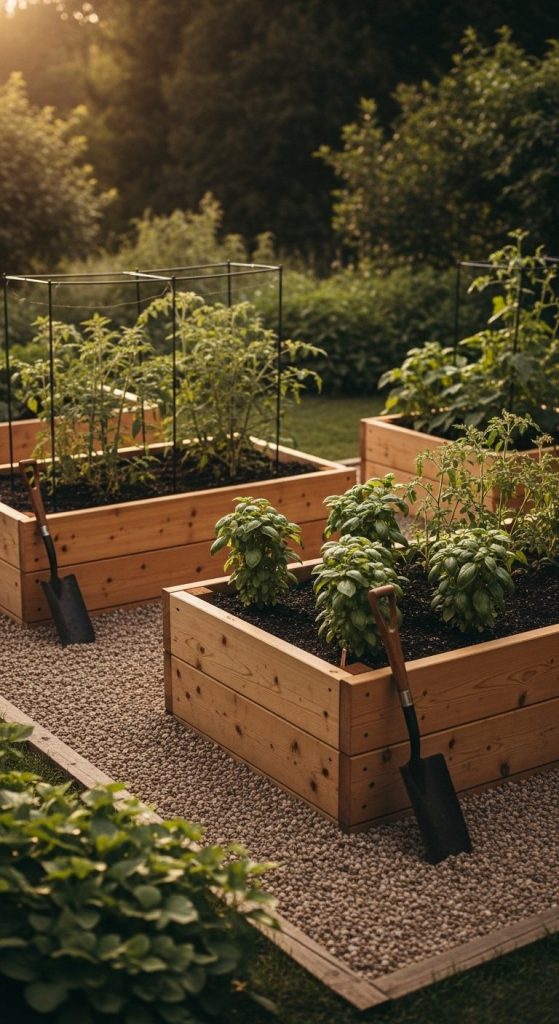
Imagine the comfortable, familiar look of cedar or pine planks forming a rectangular raised bed. You see it in backyard gardens, the kind that says “I mean business, but I also love nature.”
Pros:
- Warm, natural aesthetic that blends into landscapes and patios.
- Easy to build with common materials and straightforward tools.
- Great for soil control: you can fill the box with your ideal mix of soil and compost. (Raised boxes improve drainage and root development.)
Cons:
- Wood eventually rots or warps, especially untreated lumber—so it may need replacement or maintenance.
- Depending on height, you still may bend or kneel—not ideal if you have mobility issues.
Mini takeaway:
If you want a reliable, good-looking DIY garden box that gets the job done, a classic wood frame is hard to beat for versatility and budget.
2. Tall/Stand-Up Garden Box
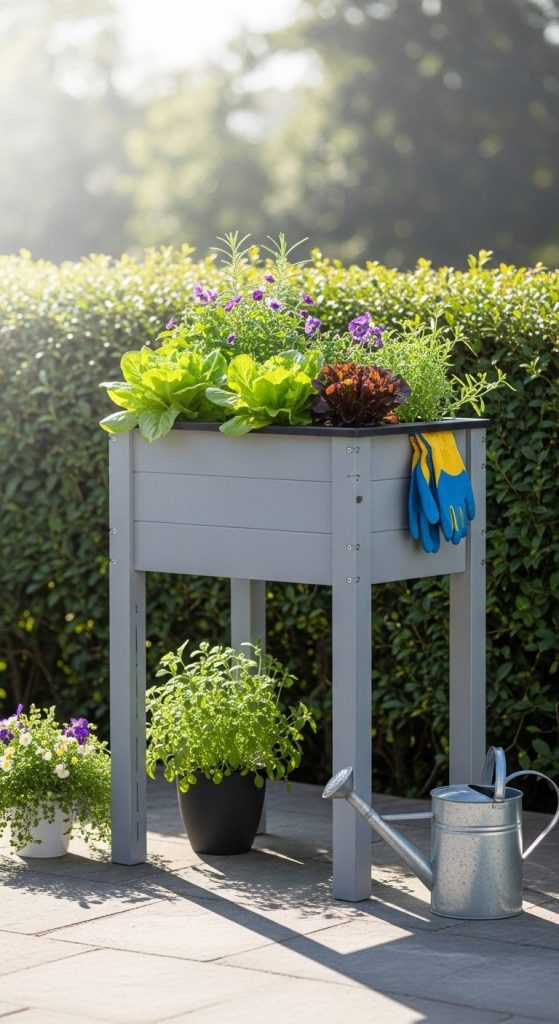
Think about a garden box elevated at hip height so you don’t have to bend down much. Perfect if you hate crouching or have back issues.
Pros:
- Ergonomic: You can plant, weed, harvest without serious bending. (Raised beds improve accessibility.)
- Better pest control: Elevation can deter pets or critters stepping in.
Cons:
- More materials and cost—legs or supports add complexity.
- Elevated soil can dry out faster, so you’ll likely need more frequent watering.
Mini takeaway:
If you’re thinking of long-term comfort (and maybe gardening for years), a tall garden box is a smart move.
3. Modular Stackable Boxes
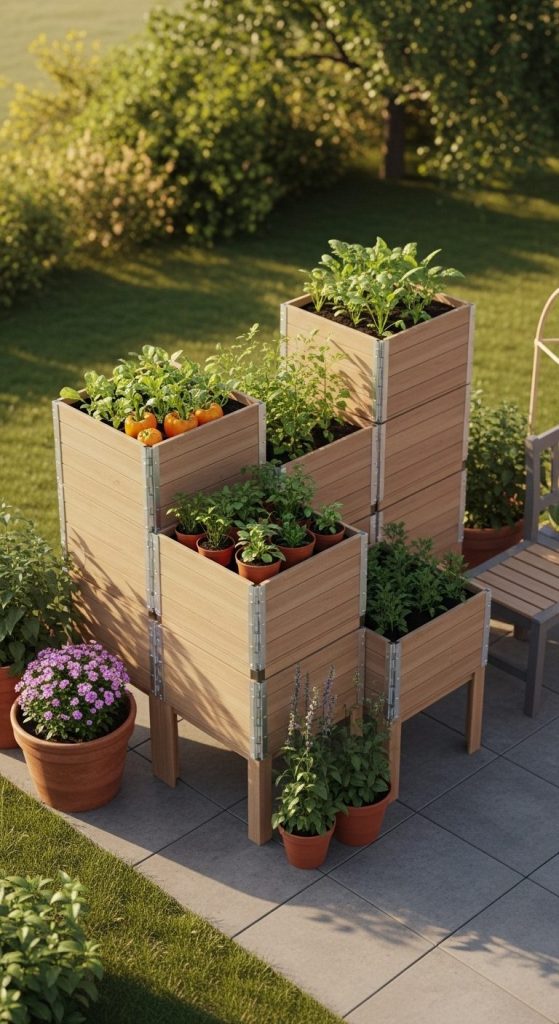
Imagine several boxes of the same size stacked or placed side by side, maybe with wheels or modular connectors so you can rearrange them. Flexibility is the name of the game.
Pros:
- Customizable layout: add more boxes as you go or relocate easily.
- Great for beginners or seasonal changes: you can experiment with one box and expand.
Cons:
- Without strong connections, the boxes may shift or settle unevenly over time.
- You may need more boxes to get the same planting area as one large bed—cost per square foot may rise.
Mini takeaway:
A modular setup is excellent if you like adaptability and want to try small then scale.
4. Corner or L-Shaped Garden Box
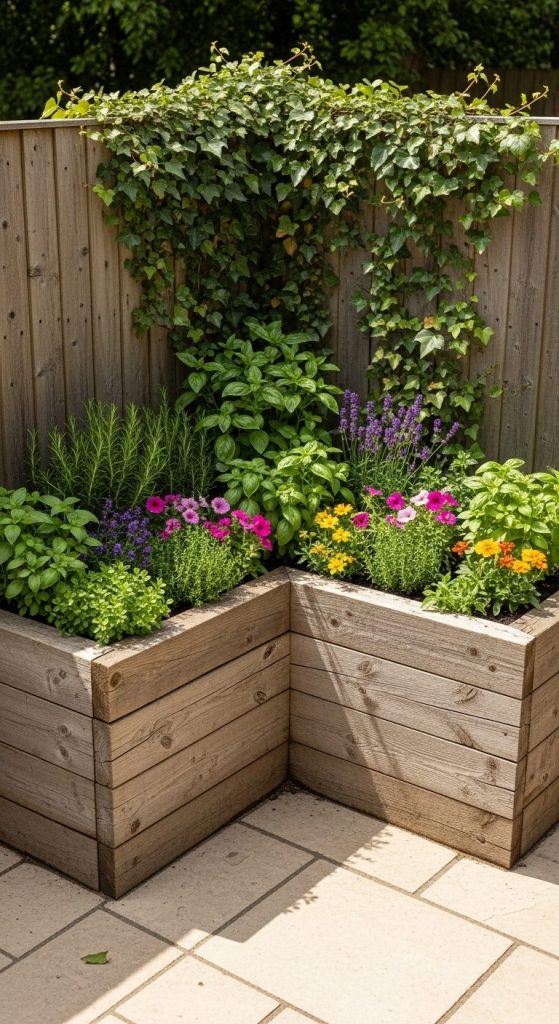
Let’s say your yard has that odd corner space that always felt awkward. Instead of resisting it, build an L-shaped garden box that makes use of that nook.
Pros:
- Efficient use of space: maximizes planting area in an unusual layout.
- Acts as a visual border or feature, framing a patio or walkway nicely.
Cons:
- Building the corner joint can be trickier than simple rectangles—more measurement and cutting.
- If the corner is too narrow or shaded, you might run into light or airflow limitations.
Mini takeaway:
For quirky yard shapes, an L-shaped DIY garden box turns “dead space” into productive green space.
5. Reclaimed or Upcycled Container Box
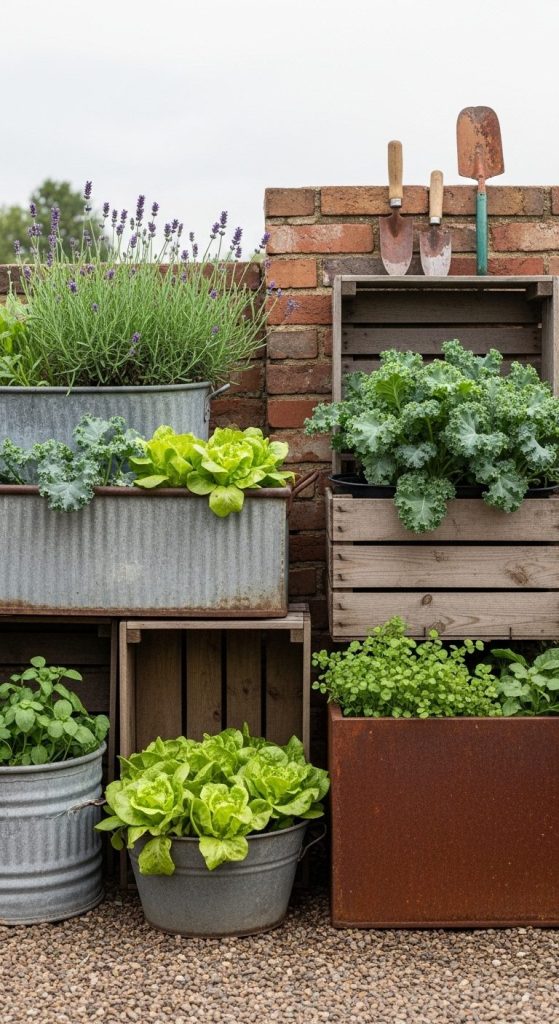
Got old pallets, wood crates, metal troughs, or even shipping containers repurposed as garden boxes? That’s the attitude. Use what you already have to build something beautiful and sustainable.
Pros:
- Cost-efficient: reusing materials saves money and reduces waste.
- Adds character and personality—you’ll likely have a unique structure.
Cons:
- You’ll need to check for safety: some reclaimed materials may have chemicals, paint, or wood preservatives you don’t want in your food.
- Because of odd shapes or aging, you may need extra reinforcement—this can cost time and effort.
Mini takeaway:
If your style is green in more ways than one (eco-friendly and creative), an upcycled garden box is exactly your vibe.
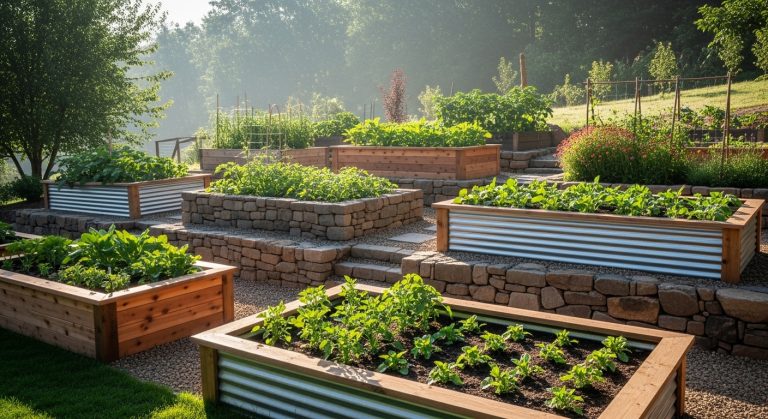
6. Tiered or Multi-Level Garden Boxes
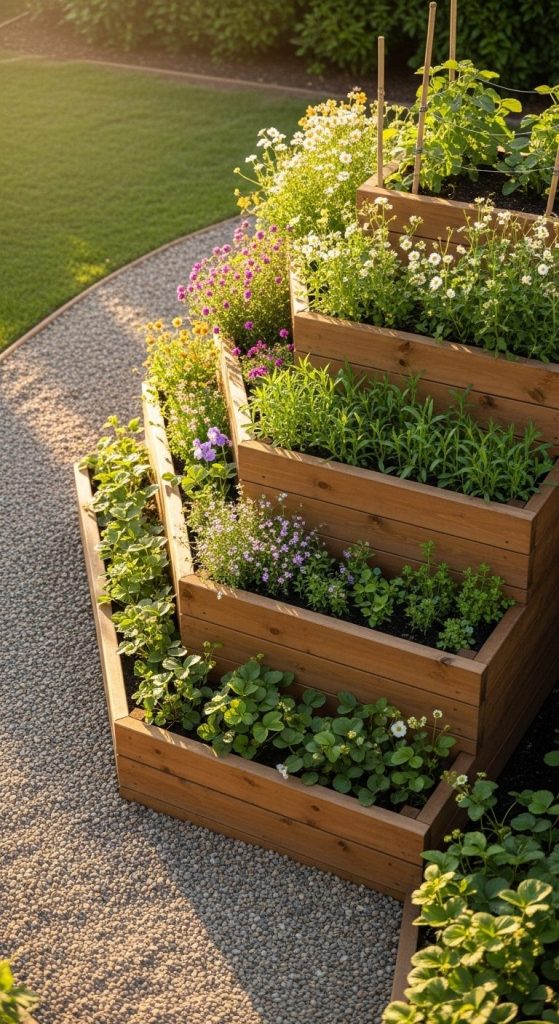
Visualize a set of boxes stacked like steps, or side by side at different heights—ideal for herb gardens, or when you want visual interest and variation.
Pros:
- Visual appeal: tiered boxes add dimension and height.
- Plant variety: you can put sun-lovers up high and shade plants lower.
Cons:
- More complex build—requires careful leveling and support so higher levels don’t crush lower ones.
- Access may be trickier across tiers—some heights might be harder to reach.
Mini takeaway:
When you want planting space and architectural flair, tiered boxes bring both form and function.
7. Mobility/Portable Garden Boxes
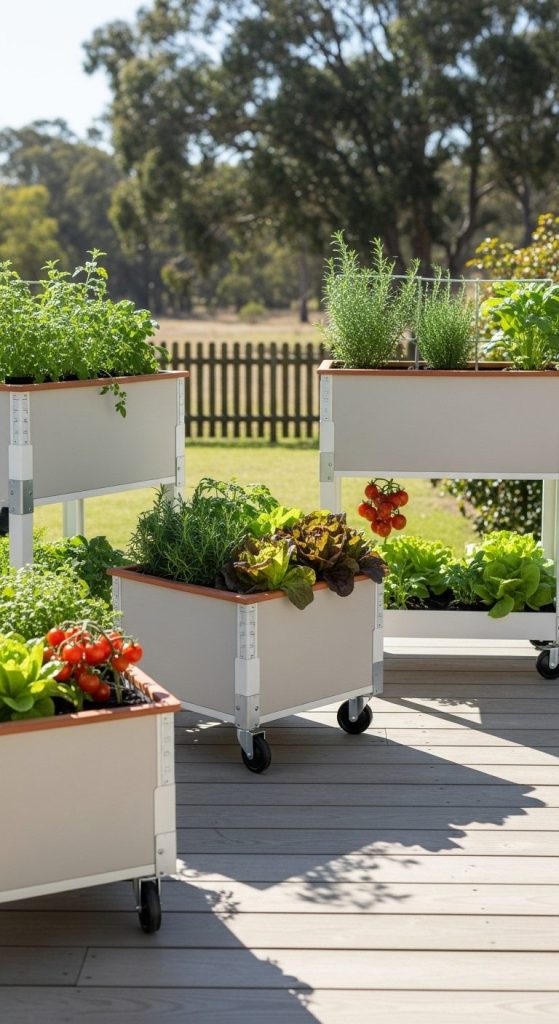
Maybe you rent, maybe you want to move around the season, maybe you visit your garden less often—portable garden boxes (with wheels or castors, or built to fit patio slabs) give flexibility.
Pros:
- Adaptable location: move to sunniest spot, bring closer to house, or shift under shade canopy.
- Perfect for renters or balconies: you’re not stuck with digging or permanent build.
Cons:
- Wheels or mobility features add cost and maintenance (locking wheels, sturdier frames).
- If too small or shallow (for portability’s sake) you might trade off soil depth and root space.
Mini takeaway:
If you anticipate moving or want to experiment, go for a mobile garden box that goes where you go.
8. Raised Garden Boxes with Trellis or Vertical Support
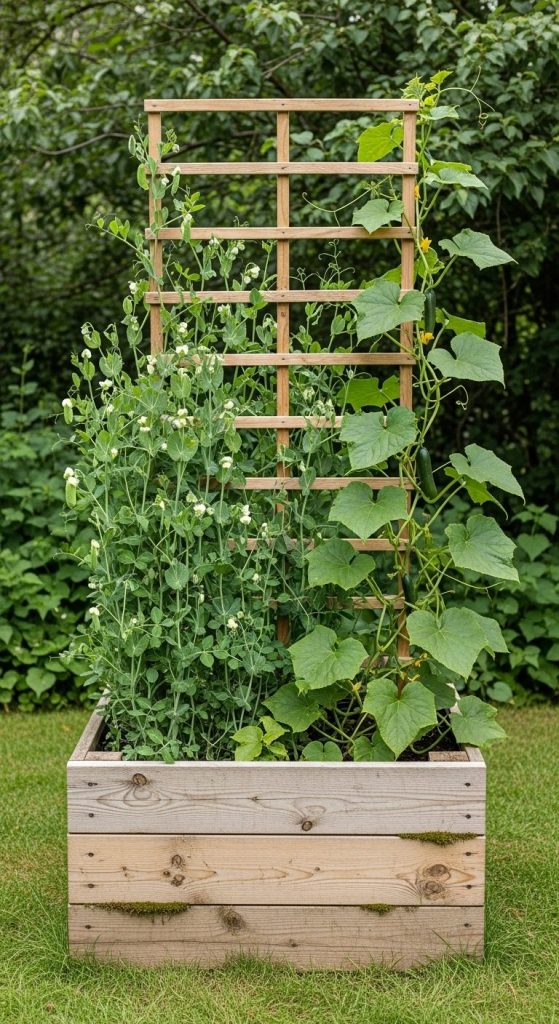
Want vining crops like cucumbers, tomatoes, peas or even climbing flowers? Build a garden box plus integrated vertical trellis, netting or arched frame.
Pros:
- Maximizes space: you’re growing upward not just outward.
- Great for vining and climbing plants—more yield in less ground area (raised boxes increase productivity per square foot).
Cons:
- Requires stronger build and anchoring—extra materials (trellis, supports, fasteners).
- Vines can cast shadows or block sunlight for other plants if poorly placed.
Mini takeaway:
If you’re serious about growing a lot in limited space, a raised box with vertical support is a high-return play.
9. Shade-Tolerant Garden Boxes
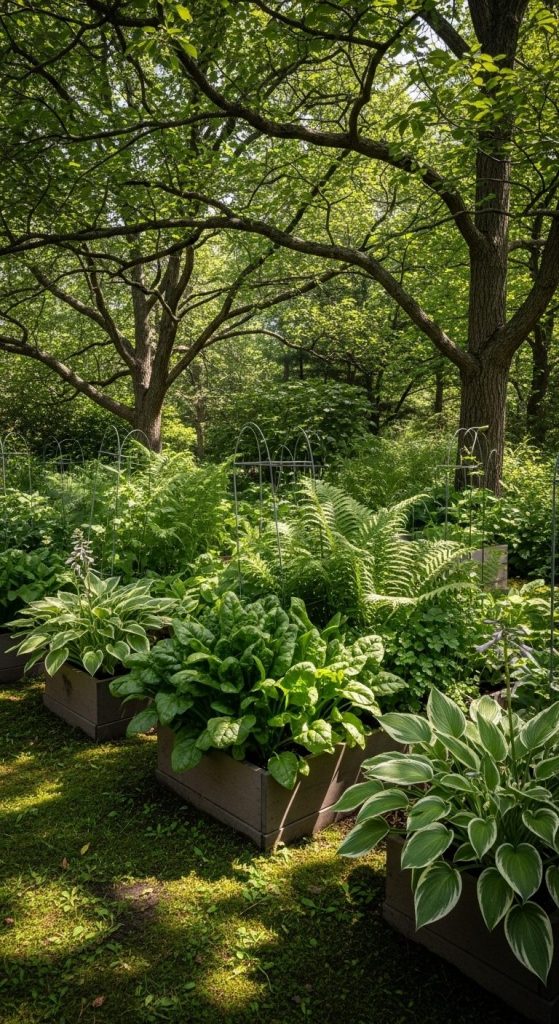
Not all yards give you full sun. If you’ve got partial shade or dappled light, you can build garden boxes optimized for shade plants—leaves, herbs, and woodland-type crops.
Pros:
- Uses areas others might discard (under trees, along north walls).
- Often lesser competition—shade-tolerant crops face fewer pests and extreme heat.
Cons:
- Your plant selection is more limited; you’ll avoid sun-loving veggies (tomatoes, peppers) in many cases.
- Soil may stay cooler and wetter longer—drainage matters.
Mini takeaway:
Don’t let the shade kill your garden dreams—build boxes that embrace it and grow with purpose.
10. Raised Garden Boxes for Children or Education
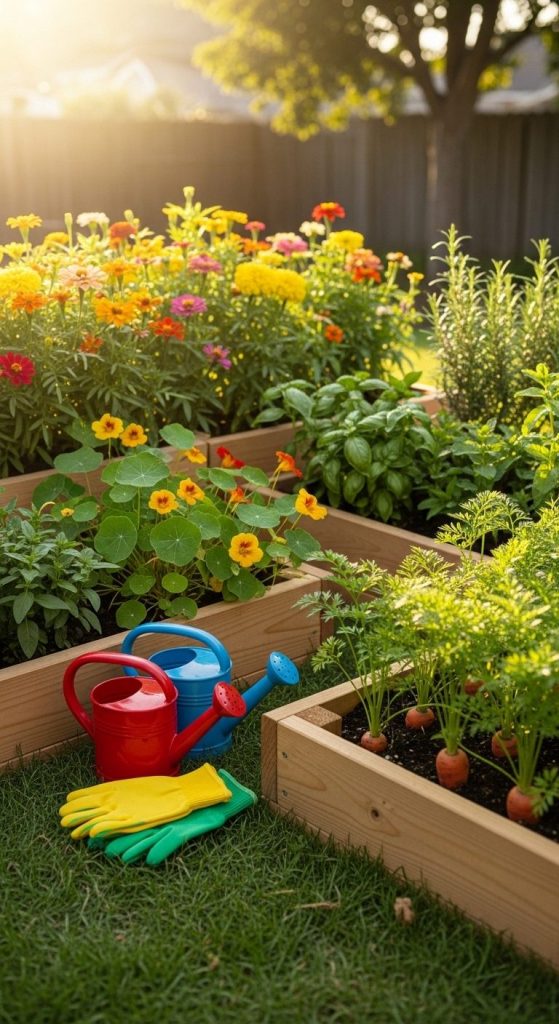
Build a lower-height box or a series of boxes sized for kids—so they can see, reach, and enjoy. Here the garden box becomes part of a learning, exploration, or family-time tool.
Pros:
- Educational: kids learn about growth, seasons, responsibility.
- Accessible: lower height means younger hands can participate.
Cons:
- Lower height may mean more bending for adults, or less space for deep-rooted plants.
- Kids’ enthusiasm can mean more mess, more experimentation—and sometimes disappointment if things don’t grow.
Mini takeaway:
If you have little helpers or just want to design with family in mind, children-friendly boxes are a joyful investment.
11. High-Drain or Slope Garden Boxes
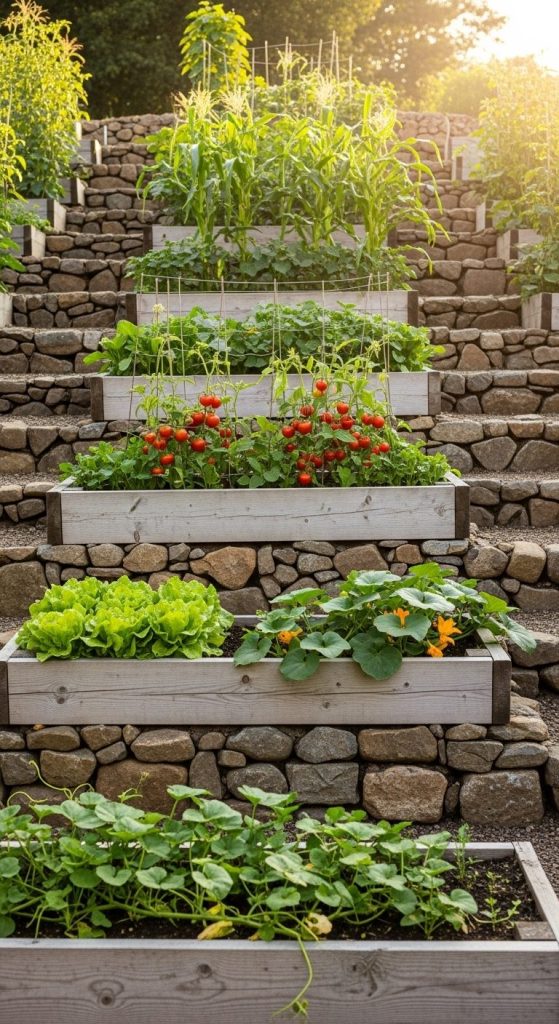
Have a sloped yard or drainage issues? Build garden boxes that level the planting area or raise above soggy ground. You’re essentially using the box to fix a problem zone.
Pros:
- Solves site issues: poor soil, slope, heavy clay—all manageable. Raised boxes enable planting in places you might have abandoned.
- Cleaner, neater look: reduces mess from muddy paths or eroded soil.
Cons:
- Requires careful build: leveling, ensuring structural integrity on slope, drainage planning.
- Might cost more (retaining walls, longer boards, extra fill soil).
Mini takeaway:
If your plot is less than ideal, DIY garden boxes offer a fix that looks good and works smart.
12. Urban / Balcony Garden Boxes
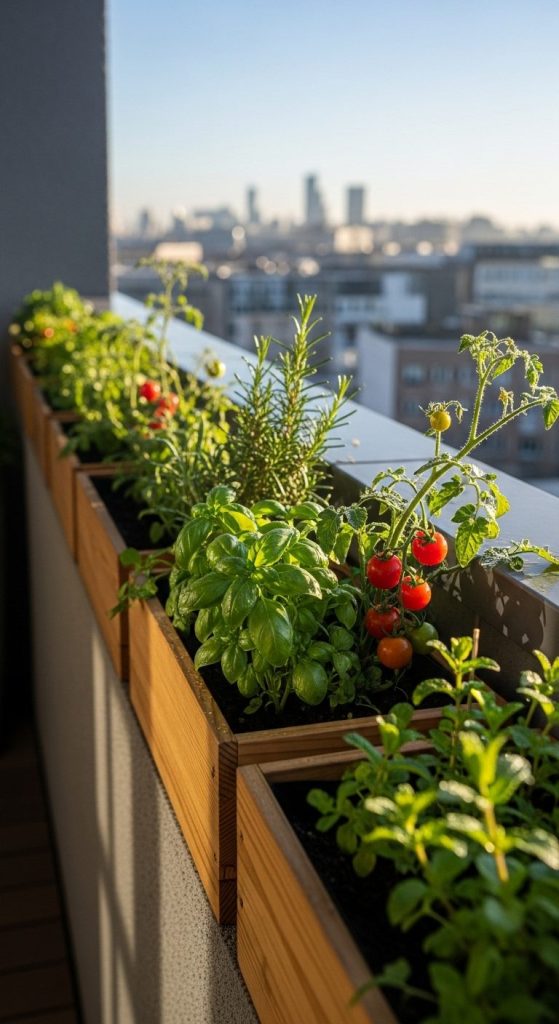
Limited space? City living? No yard? Build boxes designed for balconies, rooftops, small patios. Shallow yet wide, maybe built with lightweight materials, and positioned for sun plus easy watering.
Pros:
- Enables gardening even in compact spaces—bringing green to urban living.
- Often shallow means less soil to buy and lower cost.
Cons:
- Soil volume is smaller—so you’ll invest more in quality soil and watering is more frequent (soil dries faster).
- Weight matters: rooftop or balcony boxes must be lightweight or have drainage plan to not overload structure.
Mini takeaway:
No excuse for not gardening—even in a city flat. Build a mini garden box and watch things grow where you are.
13. Seasonal or Cold-Frame Garden Boxes
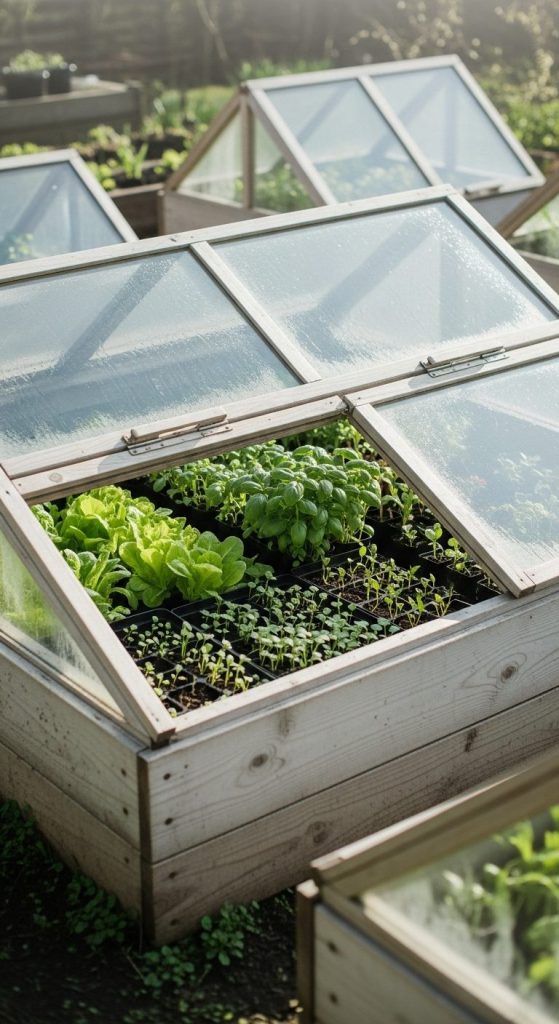
You can build garden boxes that incorporate cold frames, covers or glow-houses so you extend your growing season. Think early spring greens or fall harvests.
Pros:
- Extended season: Raised boxes warm up faster and are easier to cover.
- Adds versatility: you can use spring for veggies, summer for flowers, fall for root crops.
Cons:
- More materials: lids, hoops, covers, maybe insulation required.
- Maintenance increases: you’ll need to monitor ventilation, frost risk, watering under cover.
Mini takeaway:
If you love early seeds or late-season greens, design your boxes with the seasons in mind and get more out of your garden year-round.
14. Multi‐Crop / Companion Planting Garden Boxes
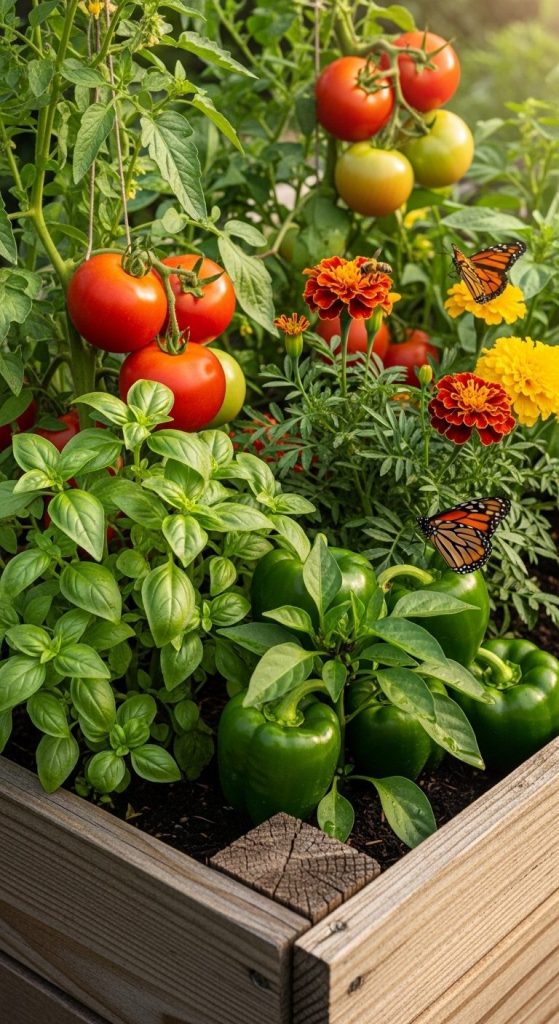
Design boxes with the intention of mixing vegetables, herbs, and flowers—companion planting inside your DIY garden box. It’s not just one crop; it’s a mini ecosystem.
Pros:
- Biodiversity: Flowers attract pollinators, herbs repel pests, veggies produce yield.
- Efficient use: One box can serve many functions: food, beauty, habitat.
Cons:
- Requires planning and knowledge: you’ll need to know which plants pair well and which don’t.
- Risk of overcrowding: if you put too many in one box you may reduce yield.
Mini takeaway:
If you’re into design and function, go multi-crop. It’s an advanced move but very rewarding.
15. Long-Term / Perennial Garden Boxes
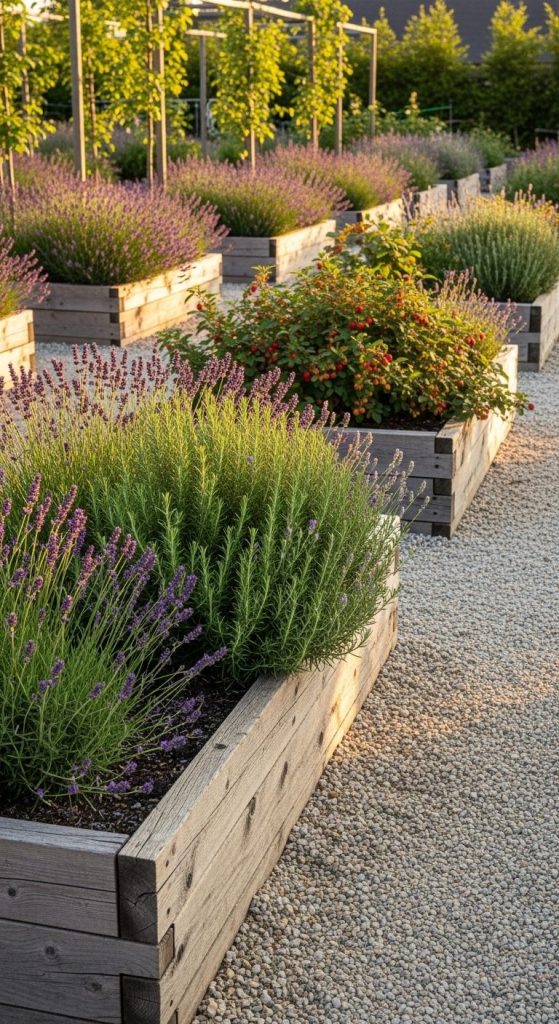
Instead of re-planting every spring only annuals, build garden boxes that accommodate perennial plants (herbs, berries, even fruits) so the structure becomes part of a multi-year plan.
Pros:
- Lower long-term maintenance: perennials come back, you invest once and benefit for years.
- Can become landscape feature not just seasonal.
Cons:
- Up-front design must allow space and root depth for perennials; mis-sizing means future disappointment.
- Some perennial beds may need winter protection, division, or be less productive for food each year (depending on climate).
Mini takeaway:
If you’re in this for the long haul and want garden boxes that mature with the landscape, build with perennials in mind.
Conclusion
Whew—I hope you’re feeling as excited as I do about these DIY garden box ideas. We covered everything from classic wood frames to urban balcony boxes, from children-friendly designs to multi-crop ecosystems. The beauty of garden boxes is that they give you control—over soil, layout, access, aesthetics—but they also bring you a little joy every time you dig, plant, harvest.
My personal favorite is probably the tiered box (Idea 6) because I love height variation and maximizing small spaces. But if it were me starting fresh again, I might pick the modular stackable (Idea 3) so I can grow gradually and reshape over time.
Here’s the truth: part of why garden boxes work so well is because they solve common problems: poor soil, drainage, awkward yard shapes, access issues. Research backs this up—raised boxes warm up earlier, drain better, lead to higher yields in tight spaces. So you’re not just building something pretty—you’re building smart.
Whatever style you decide on, keep it fun, keep it you, and don’t sweat perfection. A little wobble in the wood or slightly uneven soil edge only adds character. After all, gardens are living, evolving spaces—just like us 🙂
Happy building, happy planting—and here’s to ripe tomatoes, lush herbs, and garden boxes that make you grin every time you stroll past.

William Martin is a passionate bowler who spends most of his weekends playing the sport. With years of intense experience under his belt, William decided to share his knowledge by creating BOWLING OCEAN. Join me on this journey to explore the world of bowling and discover the tips and tricks to becoming a pro.