Paved Garden Ideas: 15 Creative, Achievable Designs
Have you ever walked into a garden and immediately noticed the way the paving just seemed to guide your steps effortlessly? That’s the subtle magic of a well-paved garden. Paving isn’t just about functionality; it shapes the mood, rhythm, and flow of the entire space. From quiet courtyard retreats to lively outdoor dining areas, a thoughtfully paved surface transforms ordinary gardens into inviting, practical, and visually striking outdoor spaces.
What’s fascinating is how small changes in materials, patterns, or layout can completely alter the experience. A well-laid stone path can make a tiny backyard feel expansive, while creative brickwork can give a cozy garden an artisanal charm. Paved gardens are especially appealing because they balance beauty and usability—they’re easy to maintain, ideal for all seasons, and perfect for high-traffic areas.
Below, you’ll find 15 practical, stylish paved garden ideas that are fully achievable. Each one is designed to be realistic for homeowners, landscapers, or community projects, while adding character, structure, and function to any outdoor space.
1. Herringbone Brick Patterns for Classic Charm
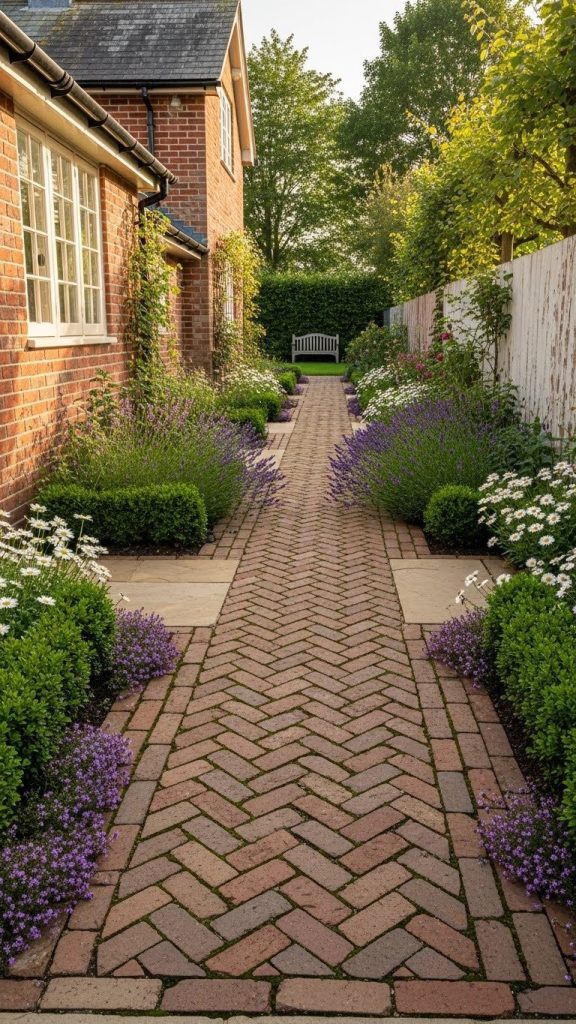
Walking on a herringbone brick path has an oddly satisfying rhythm. The pattern is timeless, offering visual texture while guiding the eye along the garden’s natural flow.
Using bricks in a herringbone layout works for both narrow walkways and large patios. The angled pattern provides extra stability underfoot, making it practical as well as stylish.
Pros
- Classic, elegant look that never goes out of style
- Durable and slip-resistant
- Easy to integrate with garden beds or flower borders
Cons
- Requires precise laying to maintain alignment
- Bricks may settle over time and need leveling
Mini Takeaway
Herringbone paving adds instant sophistication and structure, making it feel like the garden was professionally curated.
2. Stepping Stone Paths Through Grass
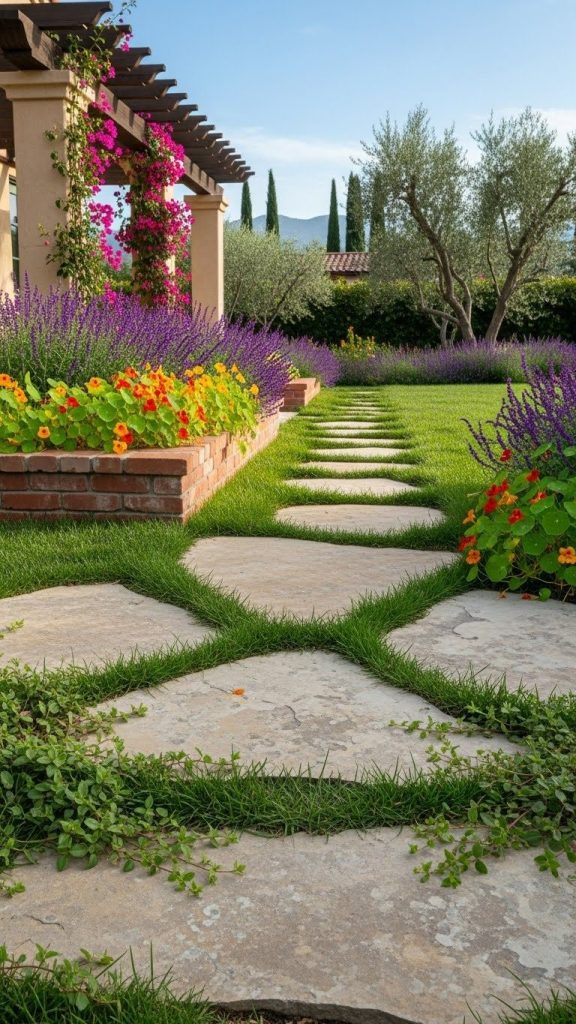
Sometimes less is more. Simple stepping stones allow greenery to peek between the stones, creating a casual, natural path.
Stepping stones are especially effective in informal gardens. They guide foot traffic without fully covering the soil, letting your lawn or groundcover breathe.
Pros
- Flexible design—stones can be moved or replaced easily
- Affordable option for DIY projects
- Encourages interaction with the garden rather than blocking it
Cons
- Stones can shift if not properly set
- Moss or weeds may grow between gaps, requiring maintenance
Mini Takeaway
Stepping stones create playful, light-footed movement that complements lush, natural planting.
3. Cobblestone Courtyards for European Vibes
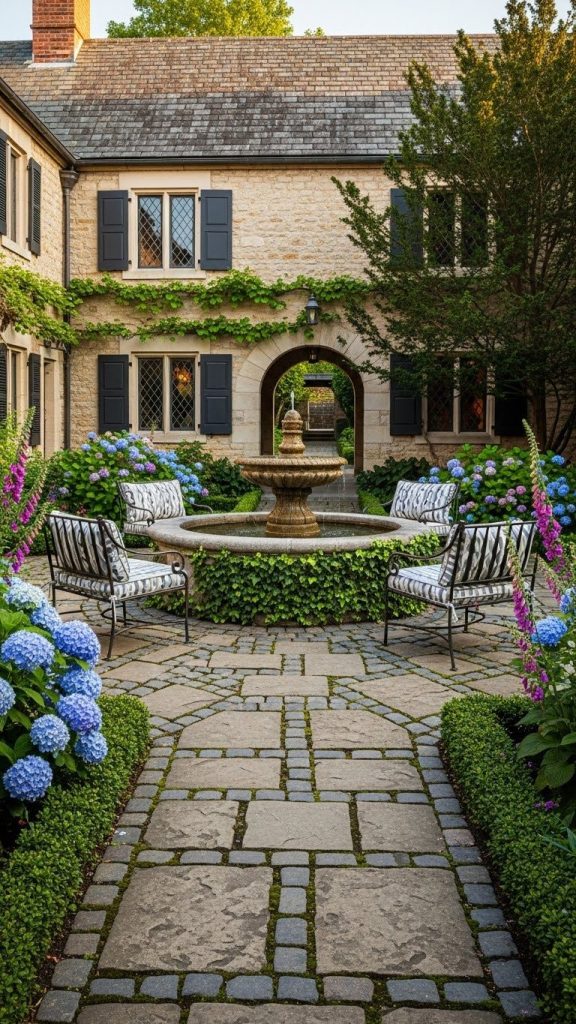
Cobblestones are perfect for creating a quaint, European-inspired courtyard. Their irregular shapes and textures give a garden personality and a touch of history.
This style works well in enclosed patios, around fountains, or near garden seating areas. It balances rustic charm with functional durability.
Pros
- Extremely durable and long-lasting
- Adds texture and character
- Great for focal areas like patios or entrances
Cons
- Cobblestones can be costly and labor-intensive to install
- Uneven surfaces may be tricky for heels or wheelchairs
Mini Takeaway
A cobblestone area makes any garden corner feel curated and inviting, ideal for conversation zones or focal patios.
4. Patterned Concrete Tiles for Modern Flair
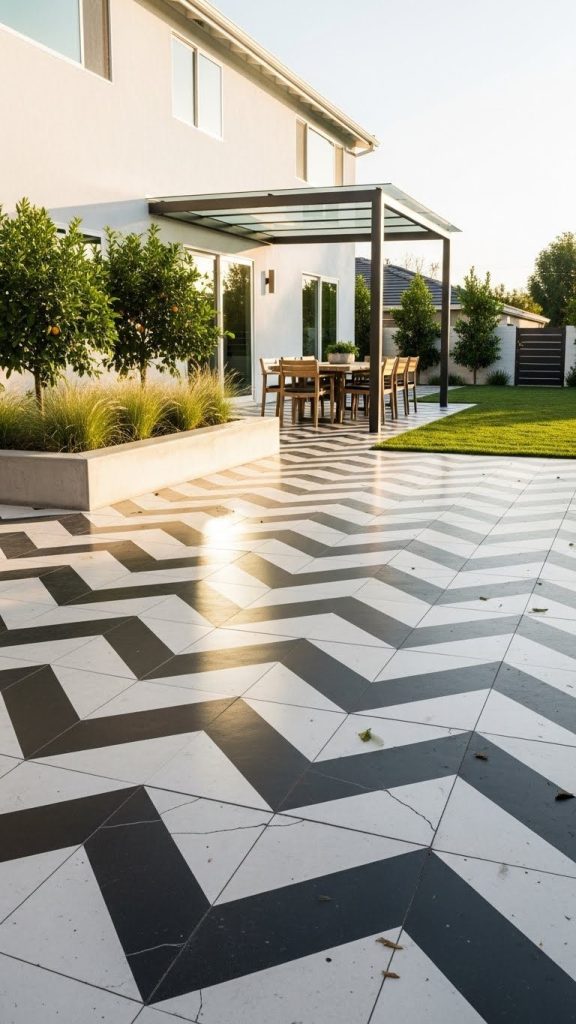
Modern gardens often benefit from clean lines. Patterned concrete tiles offer geometric or textured designs that add personality without clutter.
Tiles can be arranged in grids, diagonals, or checkerboard patterns, creating a striking visual impact while remaining easy to maintain.
Pros
- Sleek, contemporary look
- Durable and low-maintenance
- Versatile in shape, color, and pattern
Cons
- Can feel cold or sterile if overused
- Requires proper leveling for safety
Mini Takeaway
Patterned concrete is a practical, stylish option for modern patios or minimalist garden layouts.
5. Gravel Paving With Defined Edges
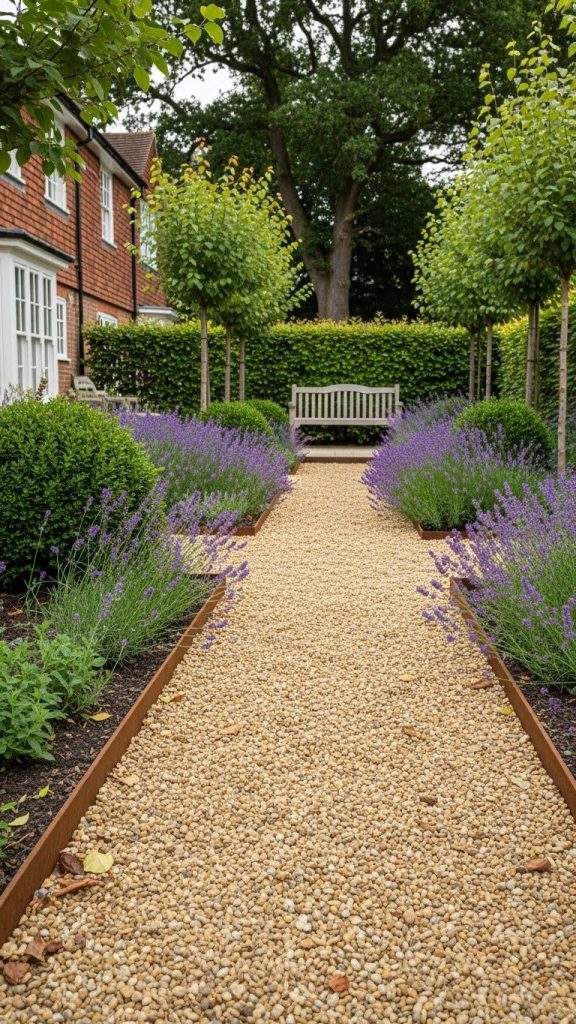
Gravel offers a soft, casual look and excellent drainage. With defined borders—such as metal, timber, or brick—the path feels tidy and intentional.
Gravel is lightweight, easy to install, and suitable for larger surfaces where paving might be expensive.
Pros
- Affordable and easy to lay
- Supports various garden styles
- Excellent for drainage and preventing puddles
Cons
- Needs occasional raking to maintain flat surface
- Can scatter beyond borders if heavily trafficked
Mini Takeaway
Gravel paths feel relaxed yet purposeful, providing a durable surface without rigid structure.
6. Mosaic Paving for Artistic Expression
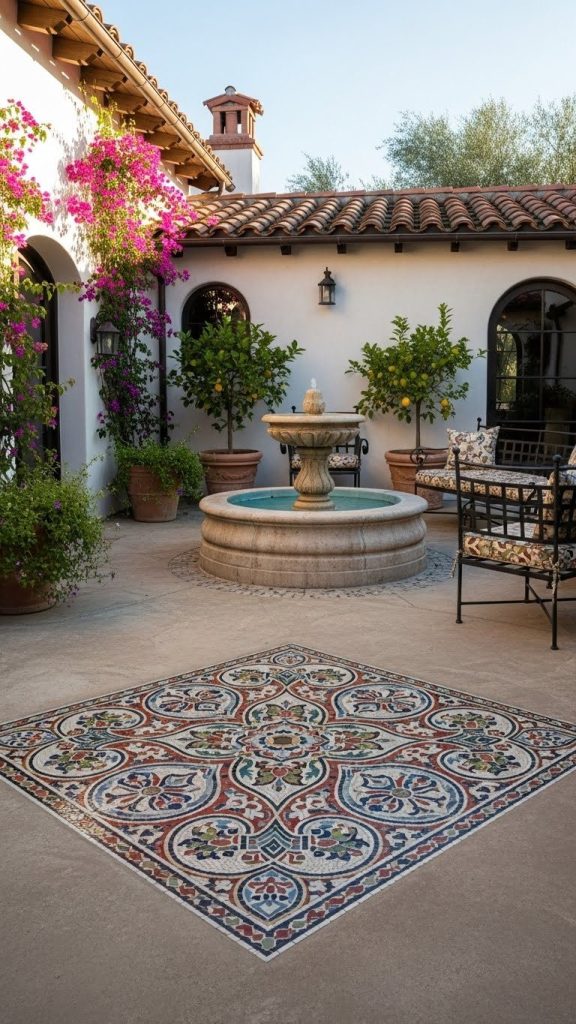
Adding mosaics to garden paving instantly elevates the space. Whether ceramic tiles, stones, or glass pieces, mosaics create focal points that draw the eye.
This works beautifully around seating areas, fountains, or entryways, blending art with function.
Pros
- Highly customizable and unique
- Serves as a striking conversation starter
- Durable when installed correctly
Cons
- Labor-intensive to create intricate patterns
- Can be slippery if smooth tiles are used
Mini Takeaway
Mosaics turn paving into a canvas, making the garden feel like a curated art space.
7. Reclaimed Wood Decking Paths
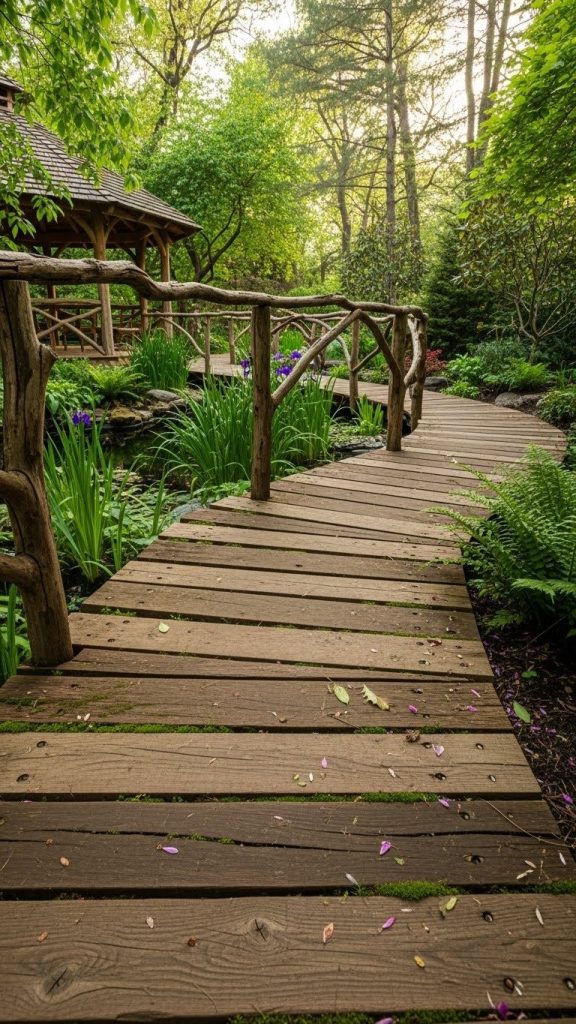
Paving doesn’t have to be stone. Reclaimed wood creates warm, sustainable pathways, especially when paired with lush planting.
Wooden paths work well in shady gardens, near ponds, or to bridge uneven terrain, creating a natural, inviting walkway.
Pros
- Eco-friendly and warm aesthetic
- Flexible for uneven terrain
- Integrates well with greenery
Cons
- Requires weatherproofing and occasional treatment
- Can be slippery when wet
Mini Takeaway
Reclaimed wood gives a rustic charm while staying practical for garden paths.
8. Circular Paving Designs Around Focal Points
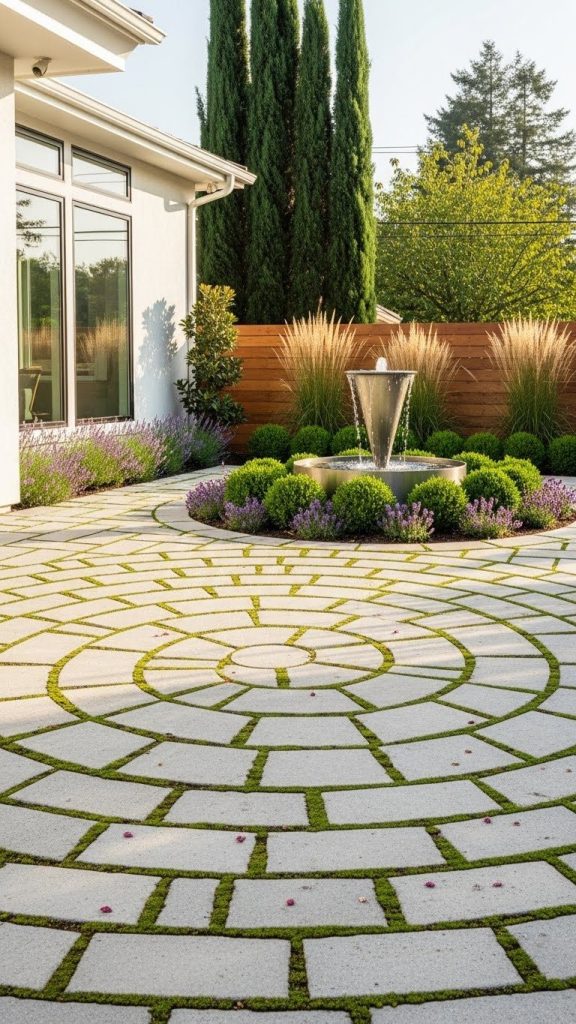
Designing paths and patios in circular patterns can make fountains, sculptures, or seating areas feel central and intentional.
Curved layouts are easier on the eyes than rigid grids, offering a sense of flow and softness in paved spaces.
Pros
- Creates a natural focal point
- Adds elegance and movement
- Works well in medium-sized gardens
Cons
- Installation is more complex than straight layouts
- Requires precise measuring for symmetry
Mini Takeaway
Circular paving emphasizes key features while adding visual interest and flow.
9. Patterned Brick Borders With Contrasting Infill
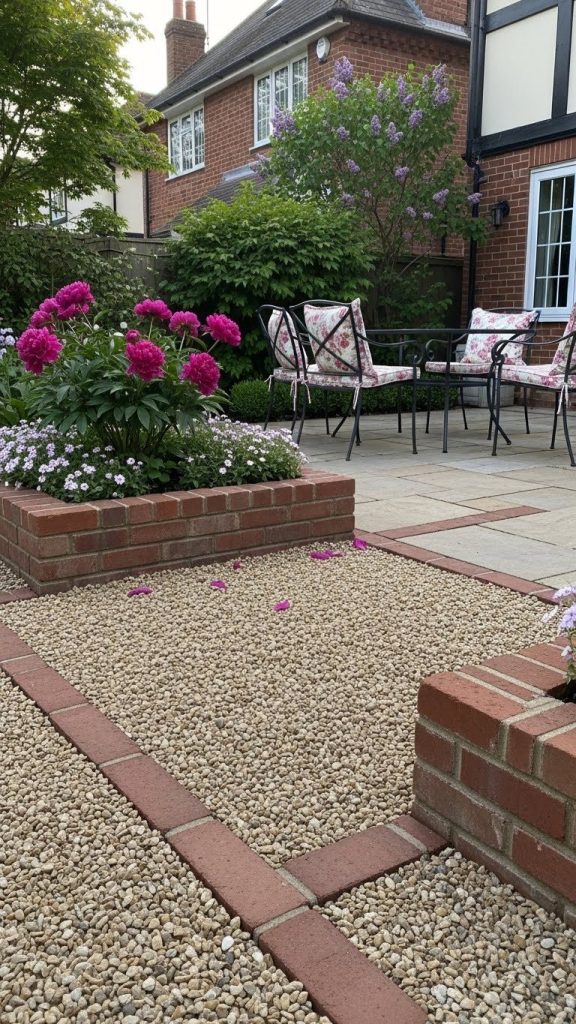
Combining two materials—like bricks with gravel or small stones—creates a stylish border and defines garden areas effectively.
This method works for patios, driveways, or walkways, adding depth without overcrowding the space.
Pros
- Offers versatile design options
- Affordable way to mimic high-end styles
- Durable with low maintenance
Cons
- May require professional installation for complex patterns
- Material mismatch can feel busy if overdone
Mini Takeaway
A simple border technique can make a plain paved area look sophisticated and intentional.
10. Slate Stepping Stones in Wildflower Gardens
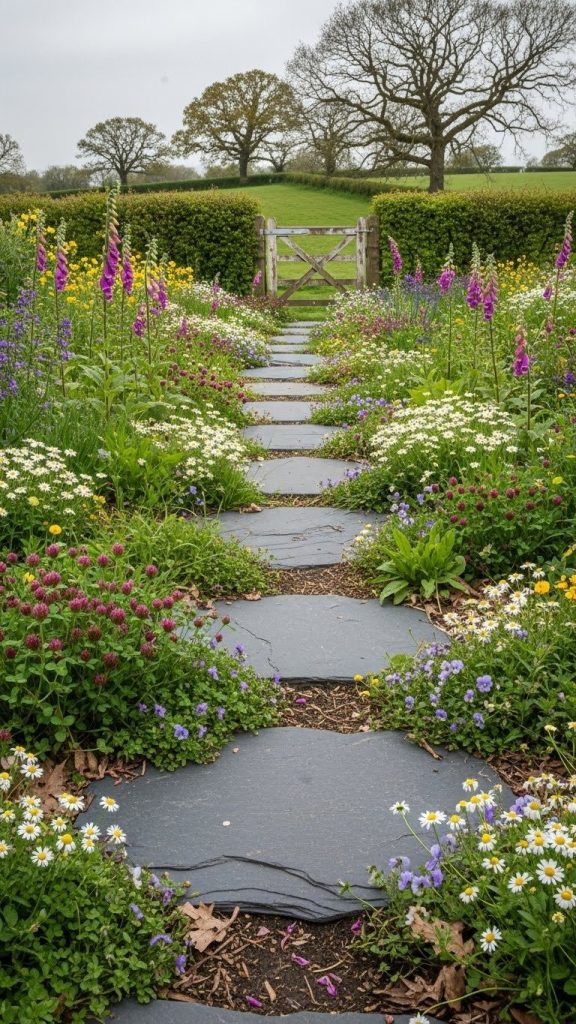
Slate slabs interspersed with low groundcovers or wildflowers create a natural, serene path. It’s an excellent choice for informal gardens.
The dark, flat stones contrast beautifully with bright blooms and grasses, creating a dynamic, tactile walkway.
Pros
- Elegant yet understated
- Low maintenance and durable
- Integrates seamlessly with greenery
Cons
- Stones can crack under heavy weight
- Limited flexibility once laid
Mini Takeaway
Slate stepping stones highlight the garden’s plant life while guiding visitors through the space.
11. Large Flagstone Patios for Relaxed Entertaining
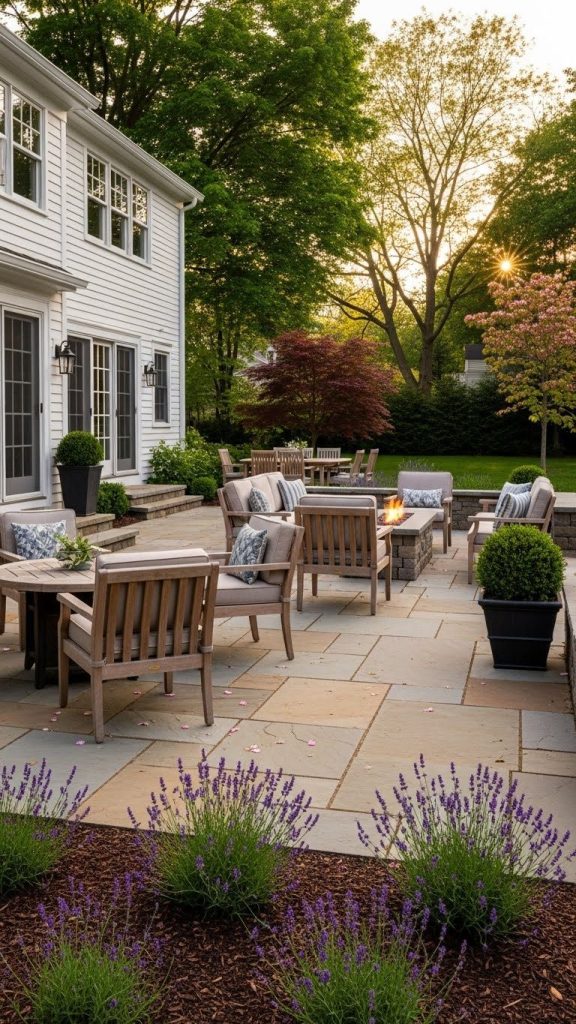
Flagstones are perfect for patio areas where comfort and aesthetics meet. Their irregular shapes and textures create a rustic, cozy environment.
Paired with outdoor furniture, flagstone patios invite casual dining, reading, or socializing.
Pros
- Durable and long-lasting
- Natural look complements almost any garden style
- Offers variation in texture and color
Cons
- Uneven surfaces may pose tripping hazards
- Heavier and harder to install than tiles
Mini Takeaway
Flagstone balances function and style, ideal for outdoor gathering zones.
12. Gravel and Paving Combinations for Layered Texture
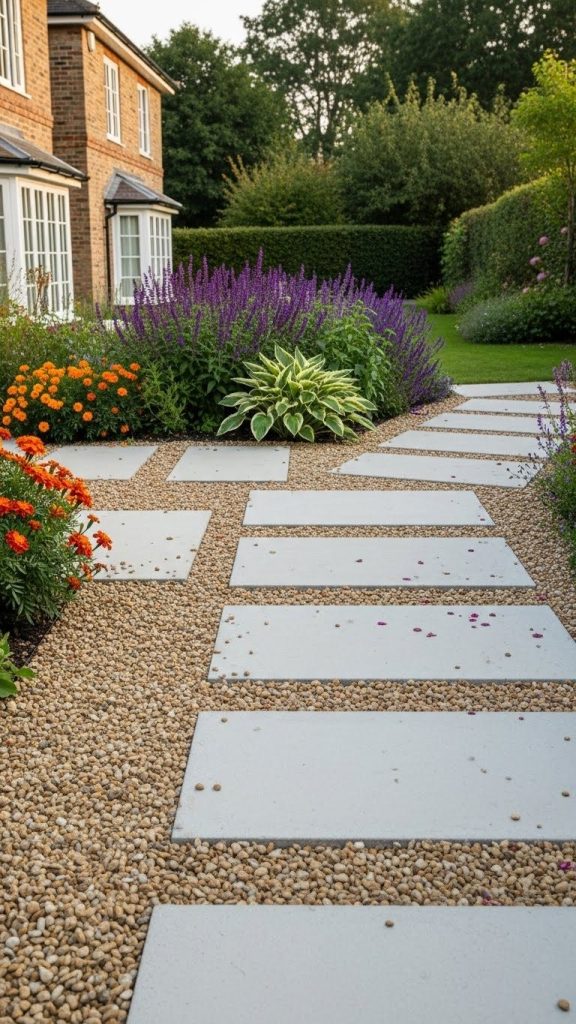
Combining gravel paths with paved sections creates visual layers and keeps traffic areas distinct from leisure spaces.
This technique works in medium to large gardens and adds interest without overwhelming the eye.
Pros
- Adds dimension and sophistication
- Can define zones like play, seating, or walking
- Cost-effective compared to full paving
Cons
- Gravel may spread outside intended areas
- Maintenance needed to keep surfaces clean
Mini Takeaway
Mixing textures subtly elevates the space, making functional areas feel intentional and stylish.
13. Paved Steps With Integrated Planting
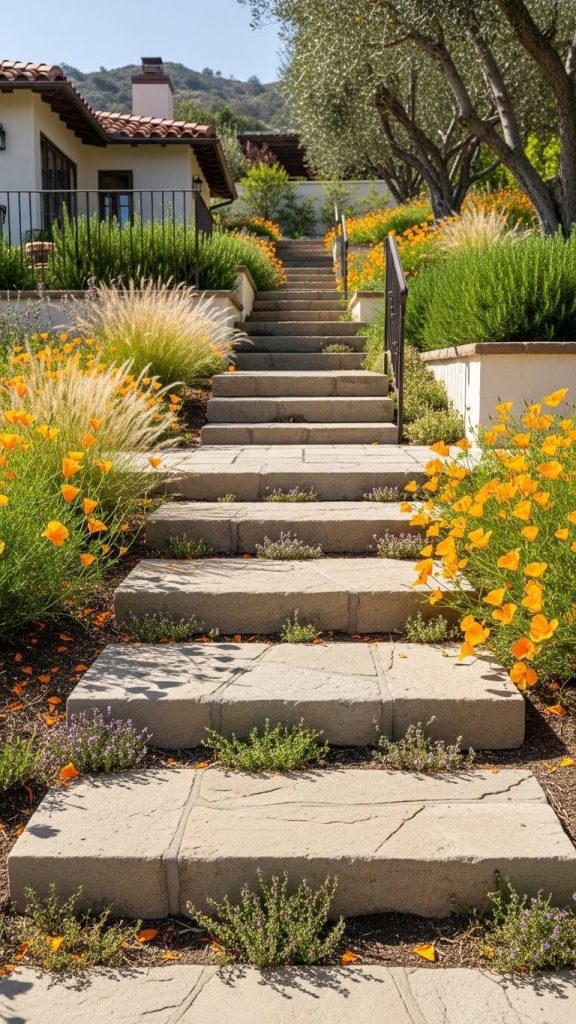
Steps are rarely just functional—they can be decorative. Integrating low plants between paved steps softens hard edges and enhances appeal.
This method is particularly effective on sloped gardens, offering both safety and beauty.
Pros
- Visually appealing and functional
- Supports greenery in vertical spaces
- Guides movement naturally
Cons
- Plants require ongoing care
- Needs careful drainage to prevent slipperiness
Mini Takeaway
Smart step design blends utility with aesthetics, making every transition in the garden engaging.
14. Circular Stone Fire Pit Areas
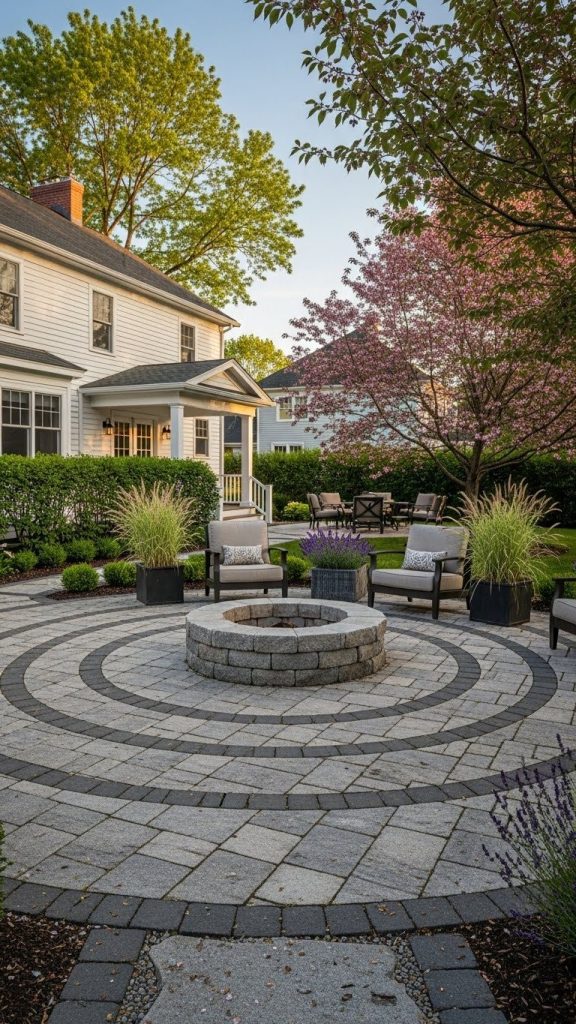
A circular paved area around a fire pit is perfect for cozy evening gatherings. The shape fosters conversation while clearly defining the social space.
Materials like natural stone or concrete pavers withstand heat and weather, creating a long-lasting hub.
Pros
- Encourages outdoor socializing
- Durable and low maintenance
- Adds a focal point to the garden
Cons
- Fire safety considerations required
- Installation can be costly
Mini Takeaway
A fire pit with circular paving turns a garden into a year-round living space.
15. Patterned Tiles for Small Courtyards
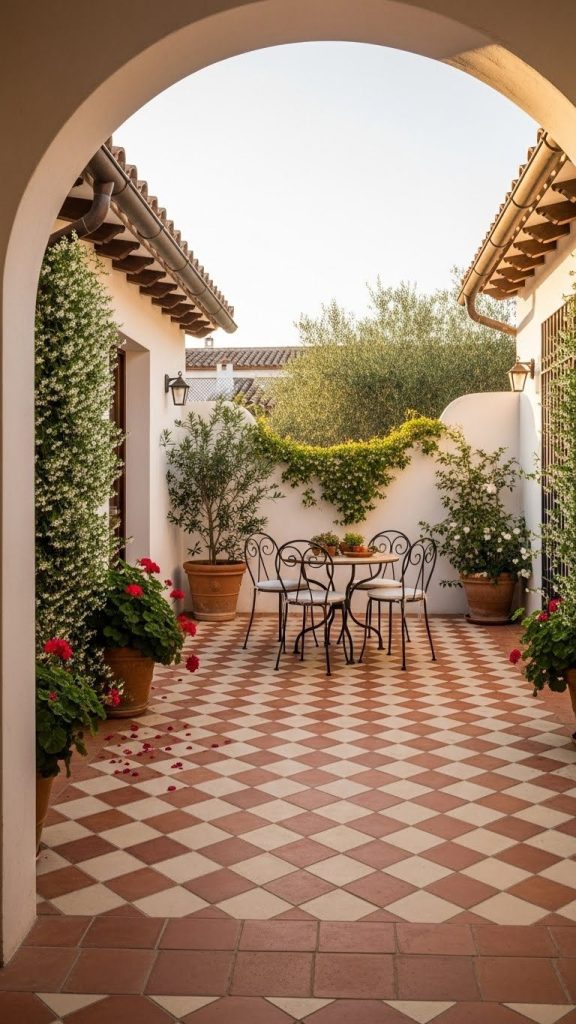
Even a tiny courtyard benefits from patterned tiles. Bold patterns add energy and charm, creating a mini “wow” factor.
Tiles can be geometric, Moroccan-inspired, or simple mosaics, elevating the smallest outdoor spaces.
Pros
- Adds personality to compact gardens
- Easy to clean and maintain
- Offers limitless design possibilities
Cons
- Tiles can be slippery when wet
- Installation requires level precision
Mini Takeaway
Patterned tiles make a small courtyard unforgettable, proving that size doesn’t limit design impact.
Conclusion
Paved garden ideas offer endless opportunities to blend beauty, function, and personality. From stepping stones to patterned tiles, gravel paths to flagstone patios, each design element guides movement, enhances usability, and creates visual impact. What makes these ideas truly exciting is their accessibility—many can be implemented with modest budgets and basic DIY skills, yet they instantly elevate a garden.
The key is thinking about how people will use each paved area: will it be a casual walkway, a social hub, or a tranquil retreat? Start with one idea, observe how it interacts with your space, and expand gradually. With thoughtful paving, any garden can feel intentional, inviting, and completely transformed.
Pick a style that resonates and start experimenting—your garden’s personality is just waiting to emerge.

Ashley Ellison is a skilled writer and avid bowler. Her passion for storytelling and dedication to the sport have led her to participate in various national bowling leagues. With a unique combination of talents, Ashley approaches every challenge with creativity and a relentless drive to succeed.