Raised Garden Beds Netting: 15 Smart Ideas to Protect and Perfect Your Garden
Let’s be honest—gardening isn’t all sunshine and butterflies (well, sometimes it’s too many butterflies). If you’ve ever spent weeks nurturing your vegetables only to find them shredded by birds, rabbits, or sneaky bugs, you know the frustration. That’s where raised garden beds netting comes in — the unsung hero of garden defense.
I’ve been there, fighting off pests with everything from DIY scarecrows to chili spray (FYI, it doesn’t end well for your eyes). Over time, I learned that netting doesn’t just protect your plants — it actually makes your garden look more polished, structured, and professional.
So, if you’re ready to keep your veggies safe and make your garden look like something out of a Pinterest dream board, let’s talk about 15 creative ways to use raised garden beds netting.
1. Classic Mesh Netting Over Wooden Frames
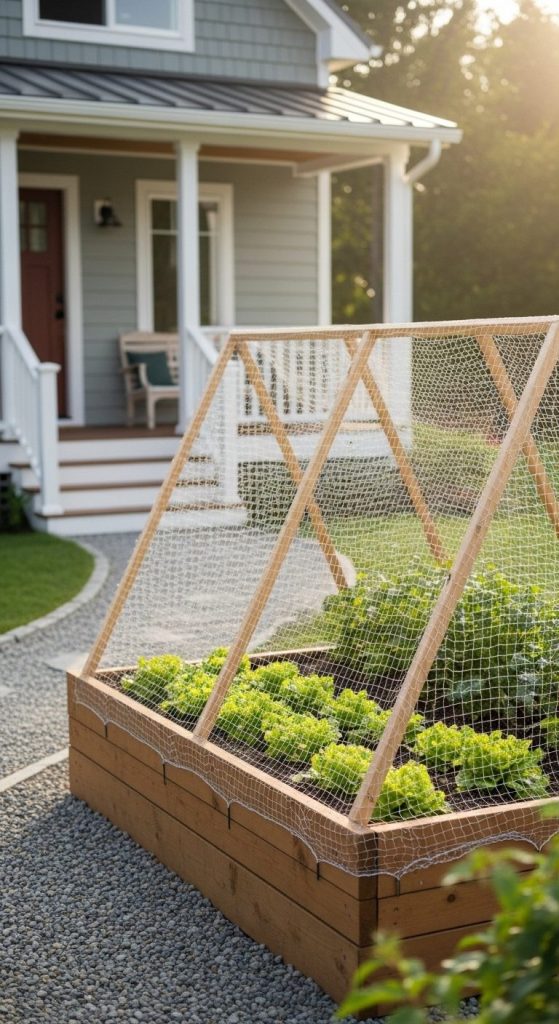
Simple. Reliable. Classic.
Mesh netting stretched over a wooden frame is one of the oldest tricks in the book — and for good reason. It’s easy to install, looks natural, and blends beautifully with rustic wooden beds.
Pros:
- Keeps out birds, squirrels, and large insects.
- Durable in all weather conditions.
- Easy to lift or remove during harvest.
Cons:
- Not ideal for smaller pests like aphids.
- Needs periodic tightening to stay effective.
Pro Tip: Use UV-resistant mesh. It lasts longer under the sun and doesn’t sag over time. Ever wondered why your neighbor’s lettuce always looks perfect? Yup — probably this setup.
2. Hoop Netting Tunnels for Raised Beds
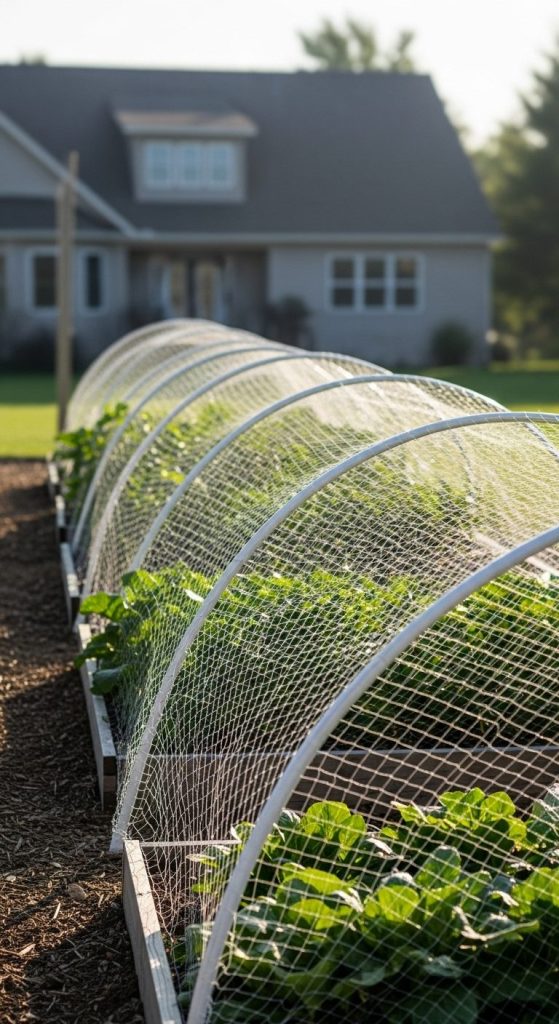
This one’s a favorite among serious gardeners. Picture this: your bed covered in an elegant arching tunnel made from flexible PVC hoops and mesh netting. It’s practical and gives your garden a professional greenhouse vibe.
Pros:
- Great air circulation and sunlight exposure.
- Protects against birds and leaf-eating bugs.
- Easy to access for watering and harvesting.
Cons:
- Can look bulky if not done neatly.
Hoop tunnels are like mini greenhouses — perfect for anyone who wants to protect crops without overcomplicating things. Plus, they’re fun to build!
3. Removable Hinged Frames

If you love convenience (and who doesn’t?), hinged netting frames are a must. You attach netting to wooden frames that open and close like a lid. This lets you check your plants without disassembling anything.
Pros:
- Total control and easy access.
- Great for raised garden beds with heavy soil.
- Looks neat and organized.
Cons:
- Slightly more time-consuming to build.
This setup feels oddly satisfying. Lift, water, close — it’s like opening a treasure chest full of spinach and tomatoes.
4. Bird-Proof Netting Domes
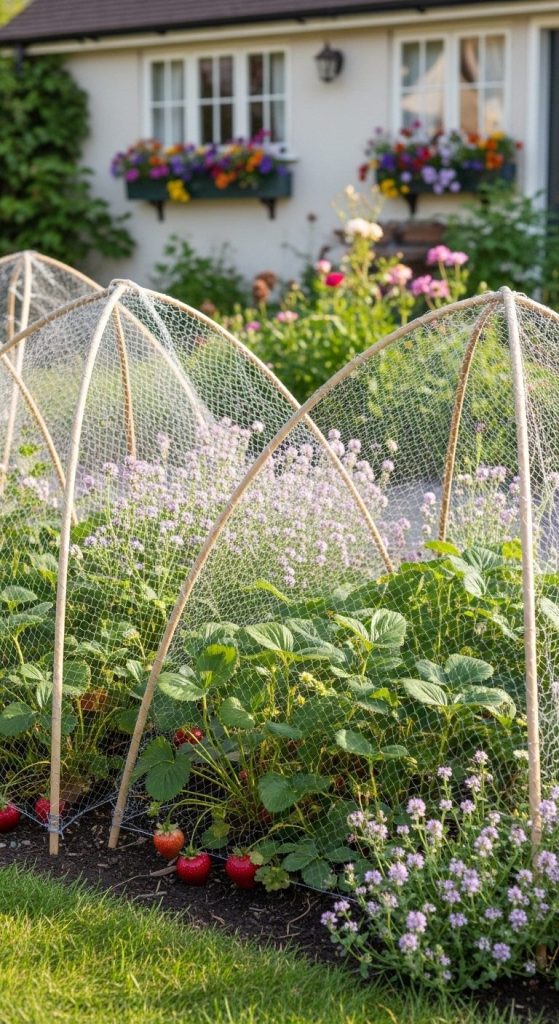
Tired of birds stealing your berries before you even get a chance? A dome-style netting cover keeps everything out without making your garden look like a prison for plants.
Pros:
- Full protection from birds and small critters.
- Stylish, rounded shape adds height and charm.
Cons:
- Might need stronger stakes for windy areas.
You can create these domes using flexible bamboo sticks or metal rods. IMO, it’s one of the best aesthetic options for small raised beds.
5. Fine Insect Netting for Tiny Pests
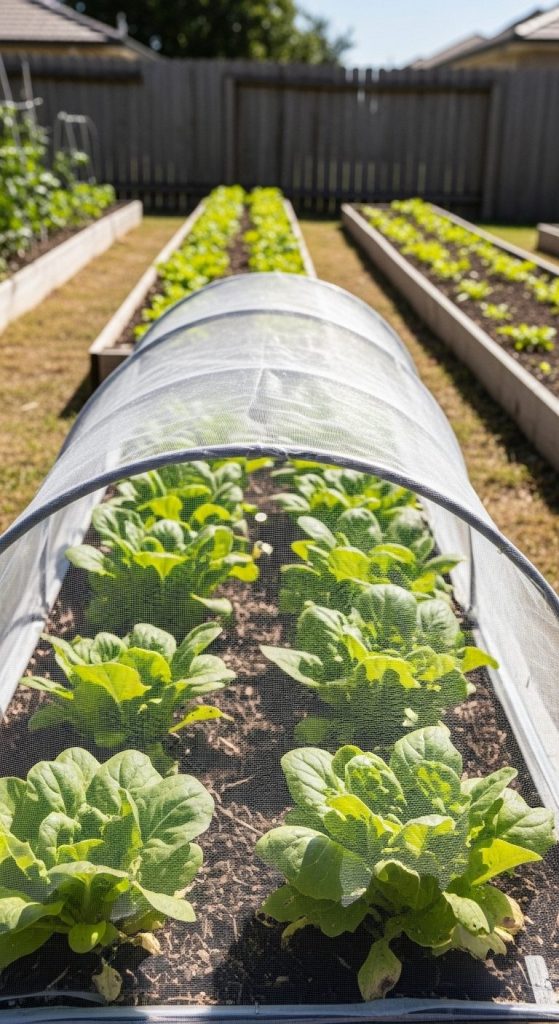
Bugs might be small, but man, can they destroy an entire lettuce crop overnight. Fine mesh netting with tight holes is perfect for stopping aphids, cabbage moths, and whiteflies.
Pros:
- Keeps out the smallest pests.
- Excellent light and water penetration.
Cons:
- Slightly pricier than regular mesh.
Think of it like a mosquito net for your plants — total protection without smothering them.
6. Shade Netting for Hot Climates

If you’re in the southern U.S., you know summer sun can be brutal. Shade netting helps diffuse sunlight, keeping plants cooler and healthier.
Pros:
- Reduces leaf burn and evaporation.
- Keeps soil moisture balanced.
Cons:
- Less useful in cooler or cloudy regions.
Ever seen those dreamy desert gardens that somehow thrive under scorching heat? Shade netting is their secret weapon.
7. Seasonal Netting Systems
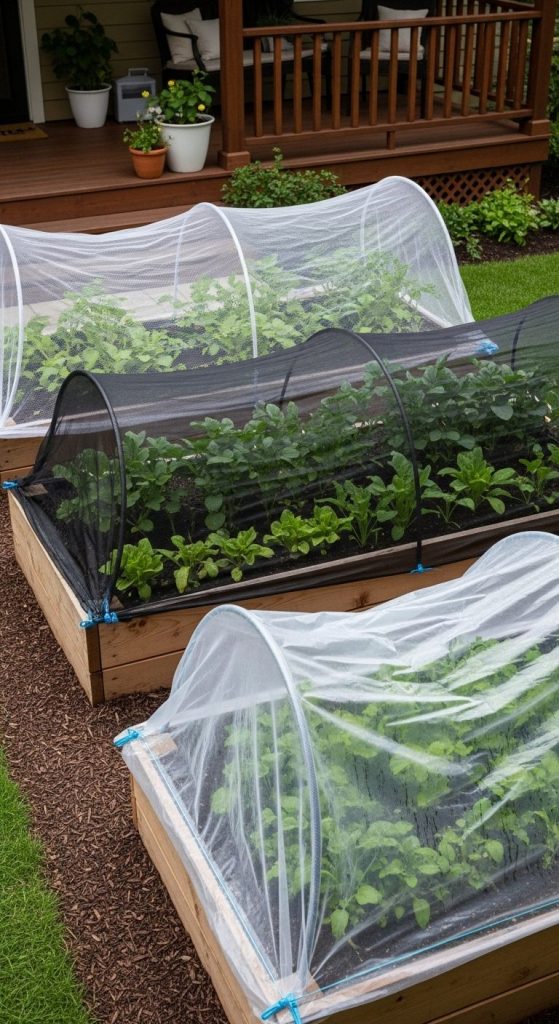
Why commit to one netting type year-round? Rotate your netting setup based on the season — shade in summer, fine mesh in spring, thicker plastic in winter.
Pros:
- Adapts to weather and pest cycles.
- Prolongs plant productivity.
Cons:
- Requires planning and organization.
This idea feels like gardening with strategy. It’s not just protection; it’s plant management with purpose.
8. Decorative Netting with Metal Frames
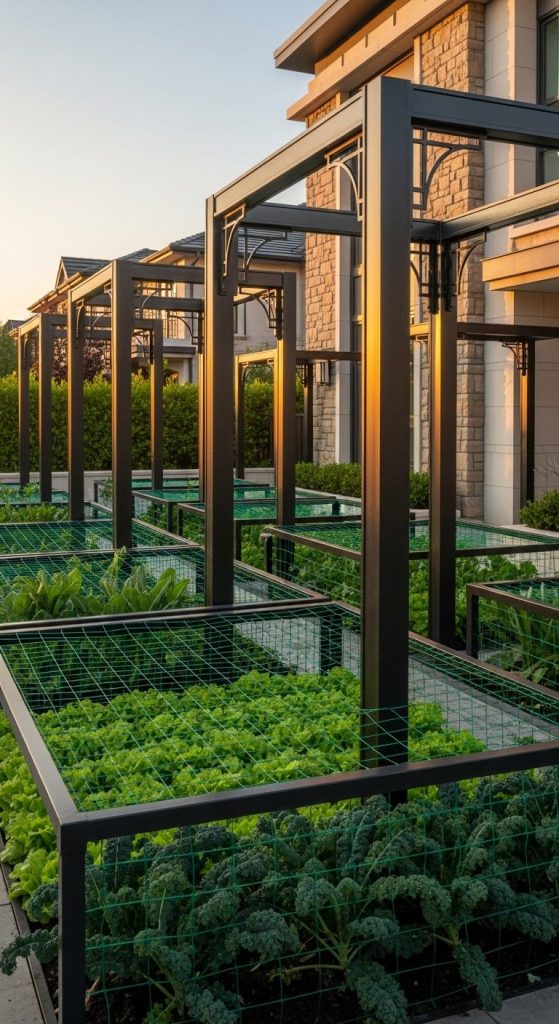
Who said netting has to look boring? You can turn your garden into a design statement using painted metal frames and black or dark green mesh.
Pros:
- Sleek, modern aesthetic.
- Rust-resistant metal lasts for years.
Cons:
- More expensive upfront.
A friend once told me, “If your garden looks good, you’ll care for it better.” Totally true. Stylish netting makes the whole space feel more intentional.
9. Elevated Raised Beds with Built-In Netting
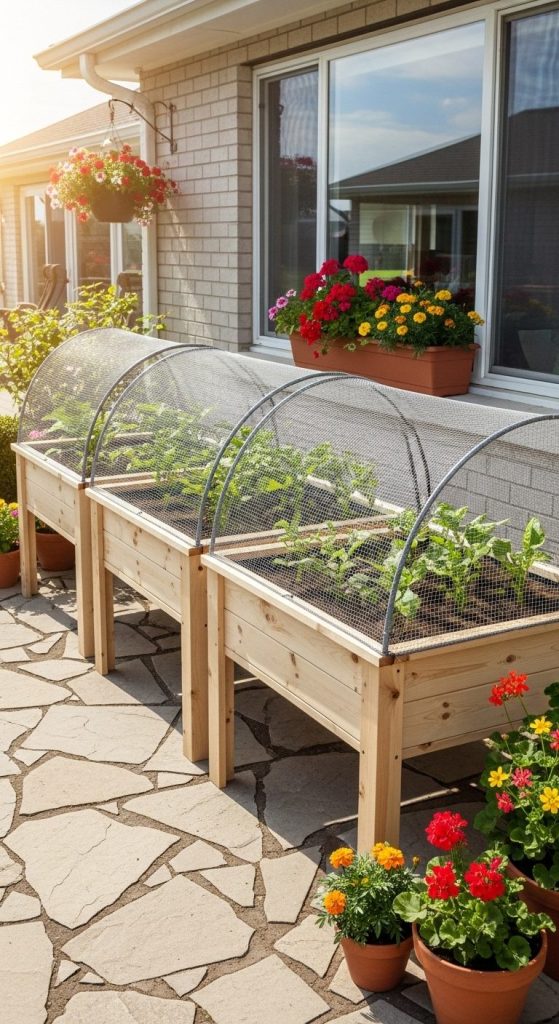
Here’s one for folks who hate bending over. Elevated beds with built-in netting covers look elegant and save your back. The structure stands waist-high with mesh already attached.
Pros:
- Easier access and maintenance.
- Excellent pest control built-in.
Cons:
- Can be costly to build from scratch.
It’s like the VIP section of your garden — no pests allowed.
10. Magnetic or Clip-On Netting Systems
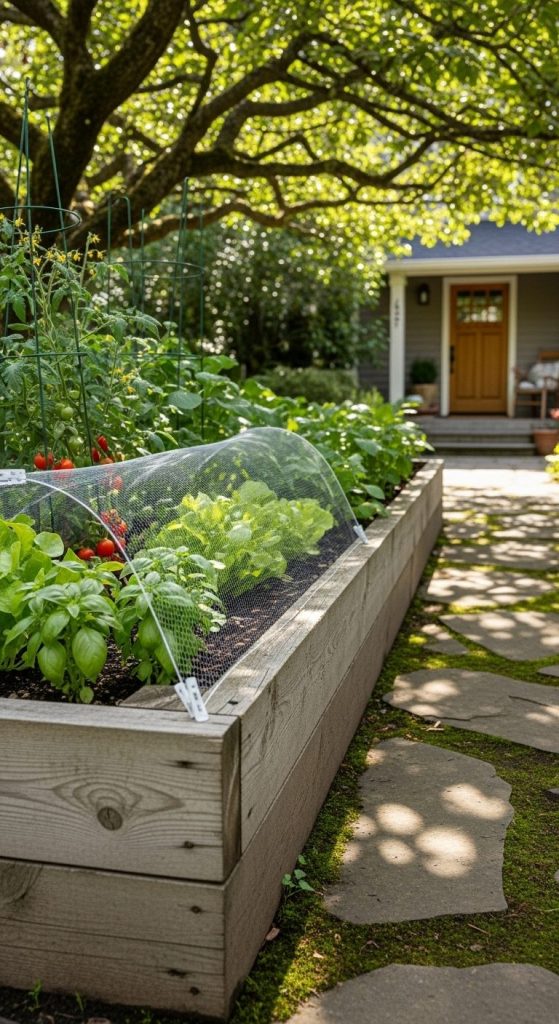
Say goodbye to zip ties and knots. Magnetic or clip-on systems let you attach and detach netting in seconds.
Pros:
- Easy to use and remove.
- Perfect for frequent harvesters.
Cons:
- Not great for windy conditions unless reinforced.
Ever had your netting tangled around your plants like Christmas lights? Yeah, this system ends that nightmare.
11. Rainproof Plastic Mesh Hybrid

Want to protect your plants from pests and rainstorms? Combine mesh netting with clear plastic sheeting on top for a dual-purpose system.
Pros:
- Protects from bugs and heavy rain.
- Retains warmth for early planting.
Cons:
- Can trap excess humidity if sealed too tight.
This hybrid approach works wonders for herbs and leafy greens that hate getting drenched.
12. Vertical Netting for Climbing Plants
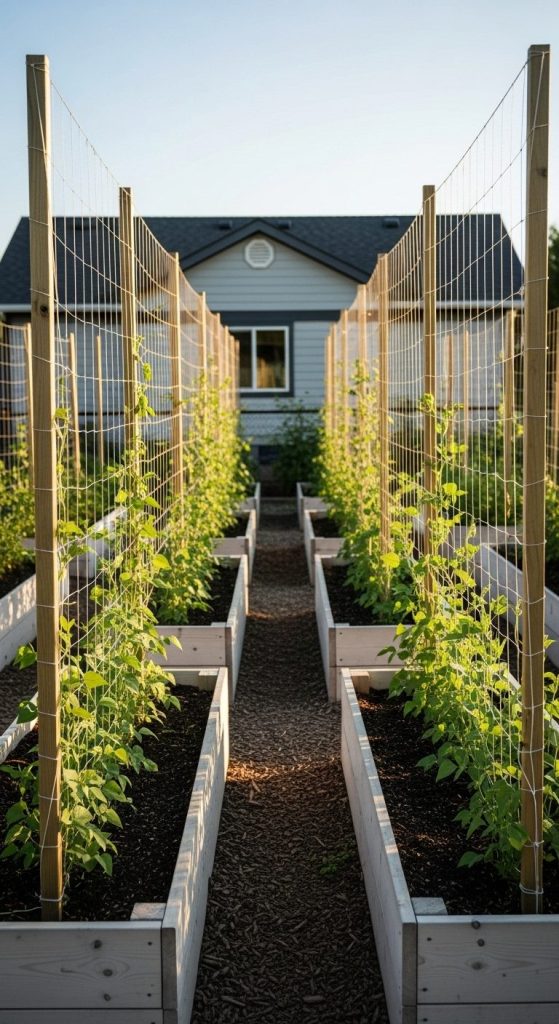
Cucumbers, beans, peas — they all love to climb. Adding vertical netting around raised beds gives them support while keeping pests off the ground-level plants.
Pros:
- Encourages vertical growth and saves space.
- Improves air circulation and reduces rot.
Cons:
- Needs sturdy stakes for heavy plants.
Plus, it makes your garden look structured and full — like an outdoor art installation.
13. DIY Bamboo Frame Netting
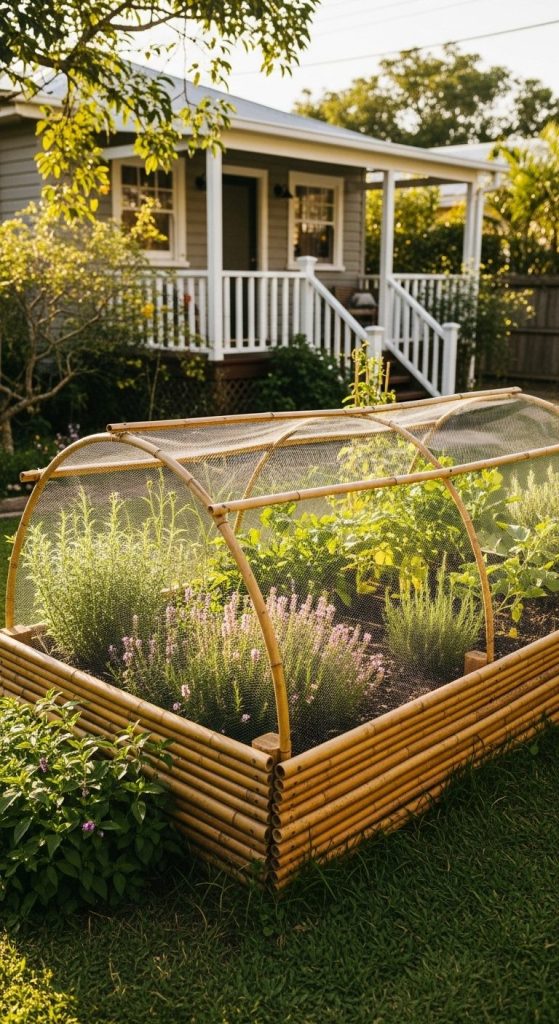
Bamboo is eco-friendly, lightweight, and surprisingly durable. Create a simple frame and drape netting over it for a natural, tropical aesthetic.
Pros:
- Sustainable and budget-friendly.
- Blends beautifully into garden scenery.
Cons:
- May require occasional tightening or replacement.
This idea gives a laid-back, island-garden vibe — perfect for gardeners who love a natural, organic touch.
14. Netting with Automatic Roll-Up Covers

If you’re into tech or convenience, roll-up netting systems are game changers. Just roll it up during watering and unroll it after — no fuss.
Pros:
- Saves time.
- Great for large raised garden beds.
Cons:
- Mechanism may jam over time.
It’s like giving your garden automation without electricity. Easy, smart, and efficient.
15. Artistic Garden Bed Netting Designs
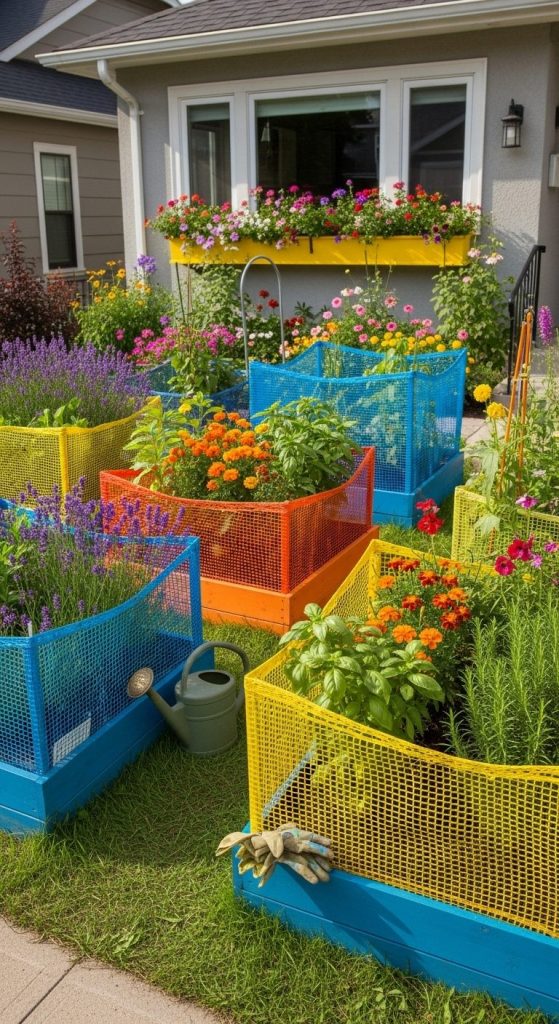
Why not get creative? Some gardeners mix colorful mesh netting, patterned frames, and artistic shapes for pure visual appeal.
Pros:
- Adds artistic personality to your garden.
- Inspires creativity and conversation.
Cons:
- Takes more planning and design effort.
Your garden shouldn’t just grow food — it should reflect your personality. And custom netting design? That’s next-level self-expression.
Conclusion: Protect, Beautify, and Simplify
Raised garden beds netting isn’t just about pest control. It’s about mastering your space. From classic mesh covers to high-tech roll-ups, there’s a netting solution for every style, budget, and climate.
Whether you’re shielding your strawberries or building a garden that could win awards, the right netting makes all the difference. So grab your mesh, pick your frame, and give your plants the VIP treatment they deserve. After all, a protected plant is a happy plant — and happy plants make happy gardeners.

Ashley Ellison is a skilled writer and avid bowler. Her passion for storytelling and dedication to the sport have led her to participate in various national bowling leagues. With a unique combination of talents, Ashley approaches every challenge with creativity and a relentless drive to succeed.