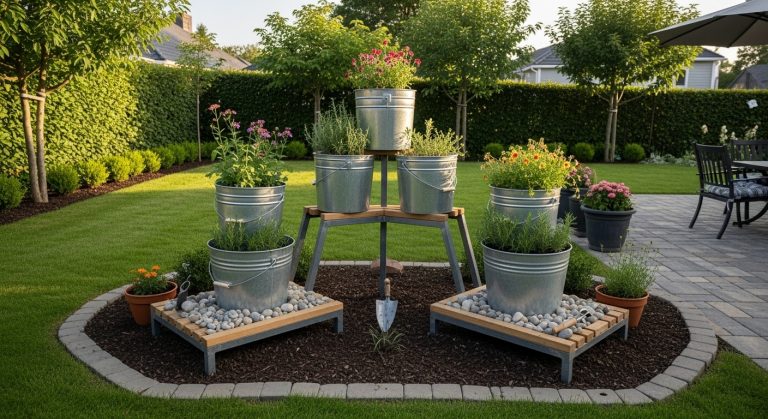
Shabby Chic Garden Ideas: 15 Dreamy Ways to Create a Vintage Outdoor Haven
Ever walked into a garden that felt like stepping into a romantic old painting?
That’s the magic of a shabby chic garden — it’s imperfect, nostalgic, and heart-meltingly beautiful.
I remember the first time I tried creating one — I mixed some chipped white chairs, faded pink roses, and a weathered wooden table I found at a flea market. It wasn’t perfect, but it had soul. That’s what shabby chic is all about — embracing flaws, mixing vintage charm with relaxed comfort, and letting the space tell a story.
In this article, we’ll explore 15 stunning shabby chic garden ideas you can actually bring to life — each with pros, cons, and a quick takeaway. Whether you have a sprawling yard or a tiny patio, these ideas will help you craft a space that feels cozy, elegant, and delightfully imperfect.
So grab your sunhat and a cup of tea — let’s stroll through some beautifully “undone” garden inspiration together.
1. Weathered Furniture with Soul
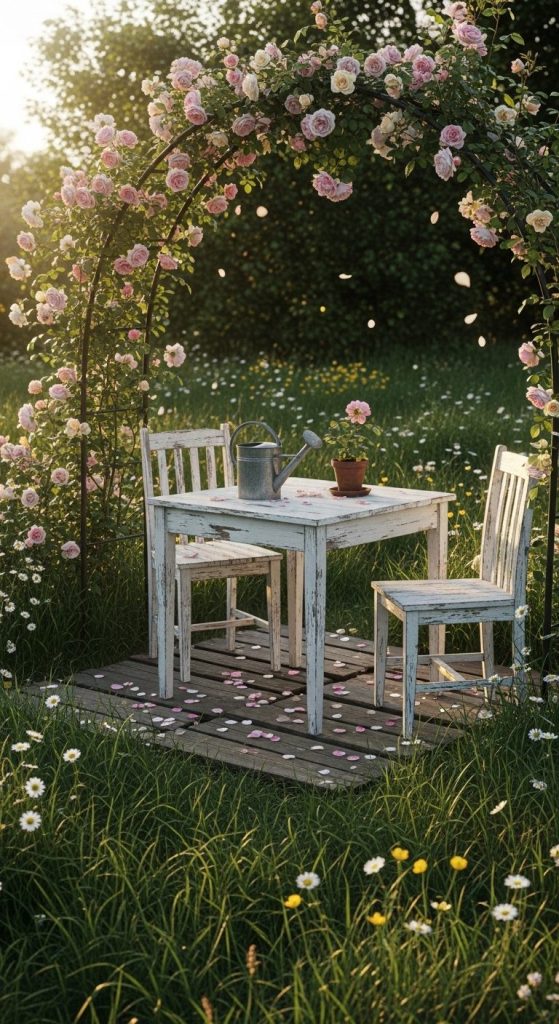
There’s something deeply charming about furniture that’s lived a little — the chipped paint, the faded color, the rustic edges.
Pros
- Instant vintage vibe — old chairs, tables, or benches add that authentic, timeworn look.
- Budget-friendly — you can thrift or upcycle old furniture instead of buying new.
- Customizable — a bit of chalk paint can make it pastel-pretty or rustic-neutral.
Cons
- Weather damage — untreated wood or metal can deteriorate outdoors.
- Regular care — may need sealing or repainting to preserve charm without rot.
Takeaway: Don’t buy new — repurpose the old. The more worn, the better. Each nick and scrape adds character.
2. Pastel Color Palette

A soft, faded color scheme is at the heart of shabby chic style — think blush pinks, mint greens, sky blues, and creamy whites.
Pros
- Soothing ambiance — pastels create a calm, romantic garden feel.
- Easy coordination — they blend beautifully with florals and greenery.
- Brightens small spaces — light colors reflect sunlight and open up tight corners.
Cons
- Can feel too pale — without texture or darker accents, it might look washed out.
- Maintenance — lighter paints and fabrics show dirt faster.
Takeaway: Stick to soft, dusty hues — and sprinkle in a few deeper tones for depth.
3. Vintage Garden Decor Finds
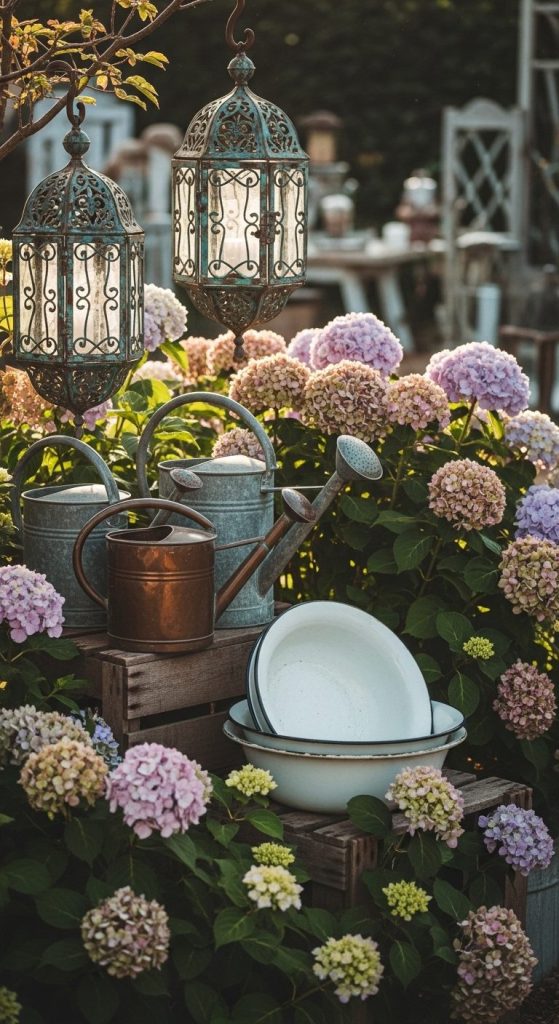
The hunt is half the fun! Antique markets and thrift stores are goldmines for unique shabby chic treasures.
Pros
- Adds authenticity — old watering cans, enamel basins, or wrought-iron décor pieces tell a story.
- Sustainable — reusing vintage finds keeps them out of landfills.
- Conversation starters — every piece has history and charm.
Cons
- Can get cluttered — too many knick-knacks can overwhelm the garden.
- Weather exposure — old items may rust or fade outdoors.
Takeaway: Curate, don’t crowd. A few meaningful vintage pieces will make your space shine.
4. Distressed Planters and Pots
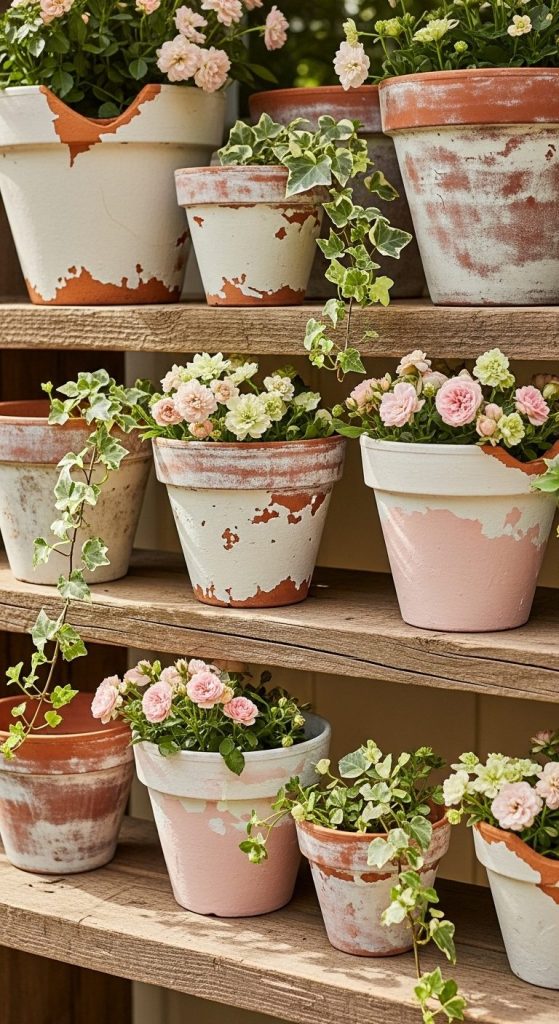
Cracked terracotta, faded paint, or mismatched containers? Perfect! That’s the shabby chic spirit.
Pros
- Affordable DIY — distress your own pots with sandpaper or chalk paint.
- Unique aesthetic — every planter looks one-of-a-kind.
- Layered texture — imperfections add personality and warmth.
Cons
- Durability — chipped pots can crack further over time.
- Water retention — some old containers may lack proper drainage.
Takeaway: Embrace imperfections — your garden should look lovingly aged, not factory-fresh.
5. Lace, Linens & Outdoor Fabrics
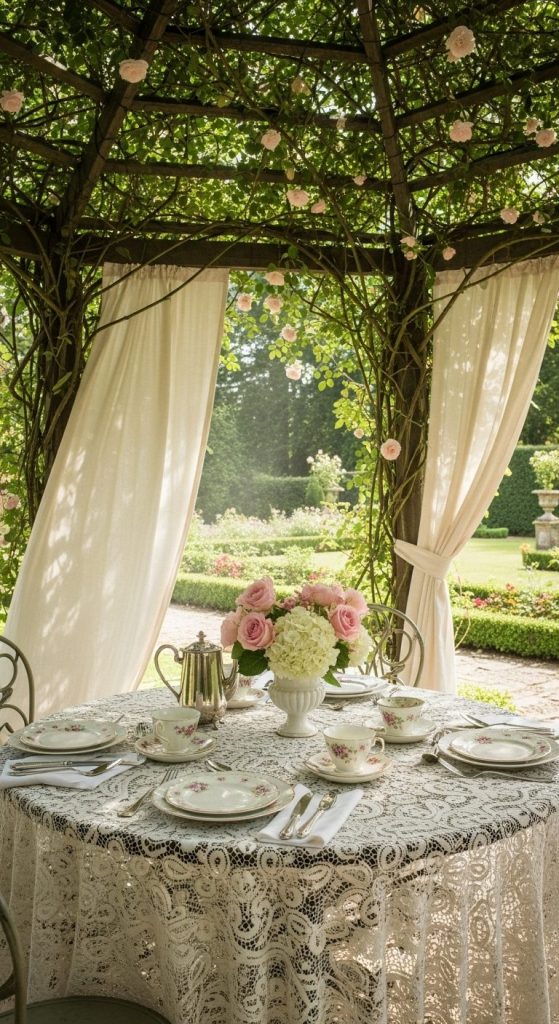
Soft textiles transform outdoor areas into cozy retreats. A lace tablecloth fluttering in the breeze? Instant charm.
Pros
- Romantic feel — lace, linen, and faded florals add delicacy and comfort.
- Easily swappable — change fabrics seasonally or by mood.
- Perfect for garden parties — create picnic-ready setups in minutes.
Cons
- Weather damage — fabrics fade or mold if left out in rain.
- High maintenance — needs frequent washing or storing indoors.
Takeaway: Use washable fabrics strategically — draped under a canopy or over a tea table for that soft, ethereal vibe.
6. Blooming Cottage-Style Flowers
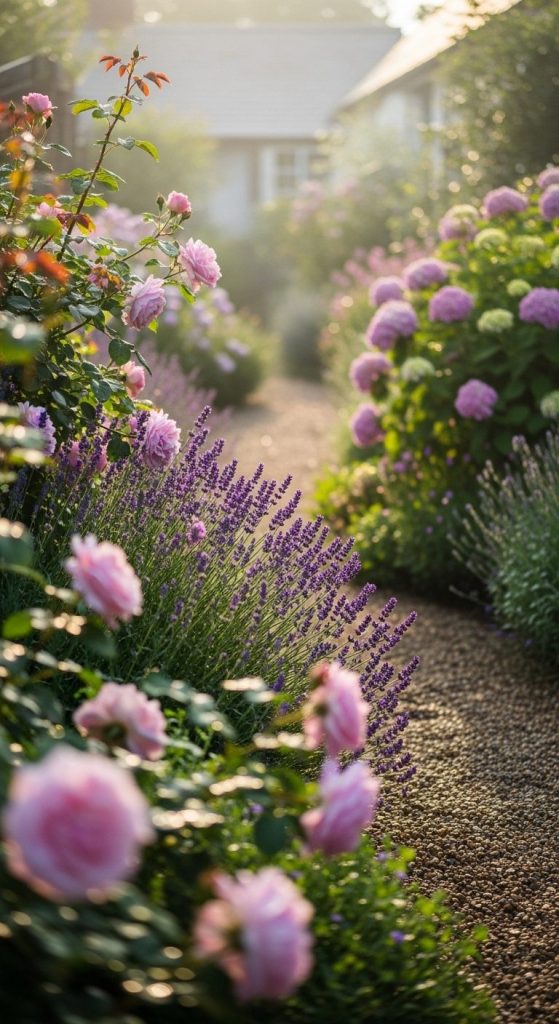
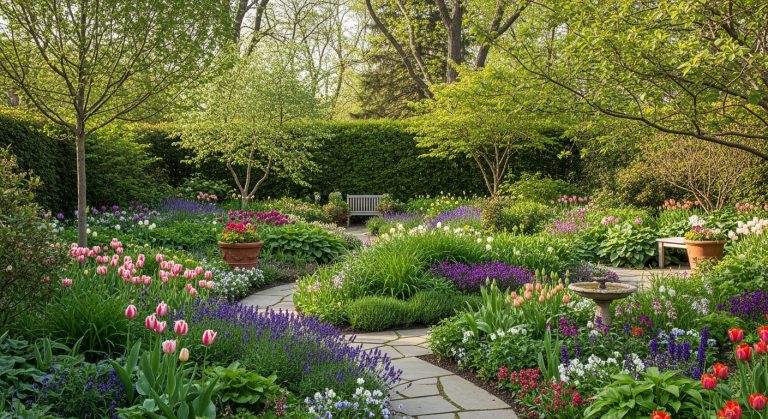
The shabby chic garden blooms in abundance — think overflowing roses, lavender, hydrangeas, and peonies.
Pros
- Classic romance — nothing says shabby chic like pastel blooms and floral scent.
- Pollinator-friendly — attracts bees and butterflies.
- Color harmony — pastel petals echo the vintage palette.
Cons
- Seasonal upkeep — some cottage flowers need pruning or deadheading.
- Pest issues — delicate blooms may attract aphids or mildew.
Takeaway: Choose classic cottage plants for dreamy texture and timeless beauty.
7. Repurposed Garden Treasures

Old ladders, milk cans, or shutters can become plant stands or art backdrops.
Pros
- Eco-friendly creativity — upcycle instead of discard.
- Unique focal points — every object adds story and charm.
- Budget win — you probably already have usable items at home.
Cons
- Rust and wear — some materials may deteriorate quickly outdoors.
- Overdoing it — too many repurposed items can feel messy.
Takeaway: Reinvent the old — it’s not junk, it’s shabby chic gold.
8. Soft Lighting Magic
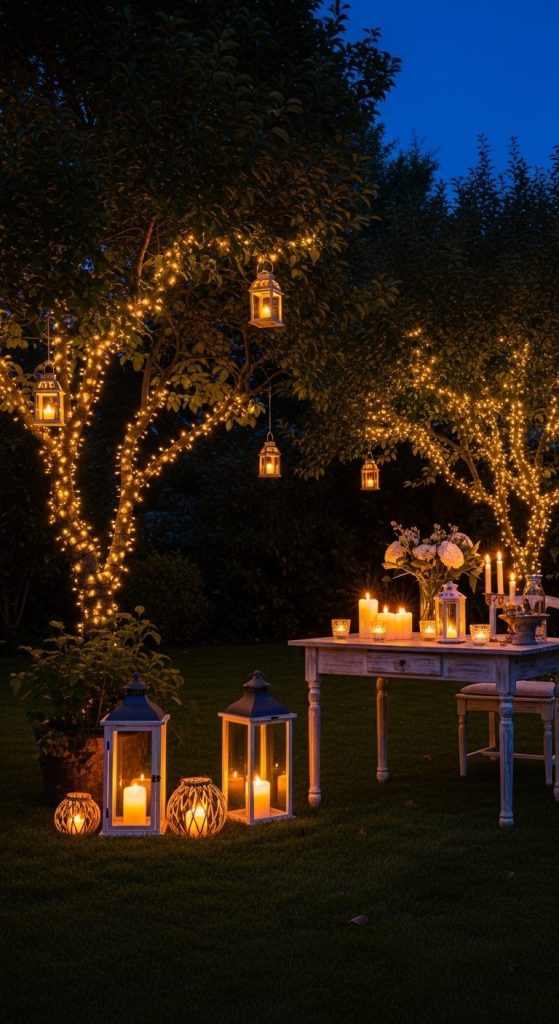
Fairy lights, lanterns, and candles create a romantic nighttime glow that feels like a fairy tale.
Pros
- Dreamy ambiance — lighting makes evening gardens irresistible.
- Low cost — solar lights and candles are budget-friendly.
- Flexible setup — drape, hang, or scatter as you like.
Cons
- Battery or fire hazards — always use safe, weatherproof lighting.
- Maintenance — bulbs burn out, candles melt.
Takeaway: Let there be soft light. It’s what turns rustic into romantic.
9. Shabby Garden Arches & Trellises
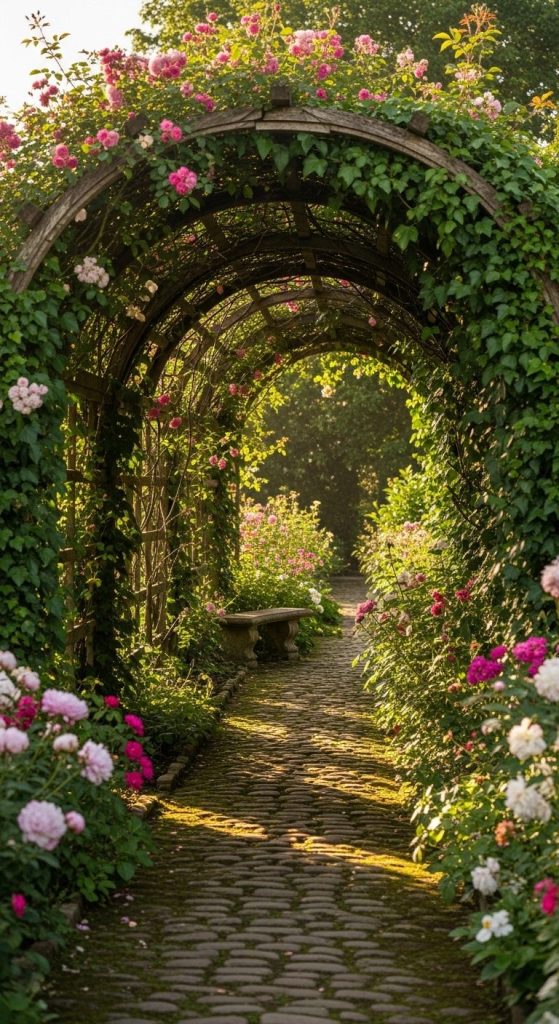
Worn wooden arches covered in roses or ivy? Pure poetry.
Pros
- Instant focal point — frames your garden beautifully.
- Supports climbers — ideal for sweet peas, roses, or clematis.
- Adds structure — even small gardens feel layered and deep.
Cons
- Wood decay — untreated wood may rot over time.
- Installation effort — heavier arches need proper anchoring.
Takeaway: Let your climbers climb — shabby trellises create timeless garden drama.
10. Mismatched Garden Furniture Sets

Forget perfect matching sets — the shabby chic look thrives on charming mismatch.
Pros
- Effortless style — mix and match old chairs, stools, and benches.
- Budget-friendly — collect over time from flea markets.
- Unique identity — no two pieces alike.
Cons
- Cohesion risk — too many clashing colors or shapes may look chaotic.
- Maintenance variety — different materials age differently.
Takeaway: Mismatch with purpose — aim for harmony through color or texture, not uniformity.
11. Rustic Garden Signs
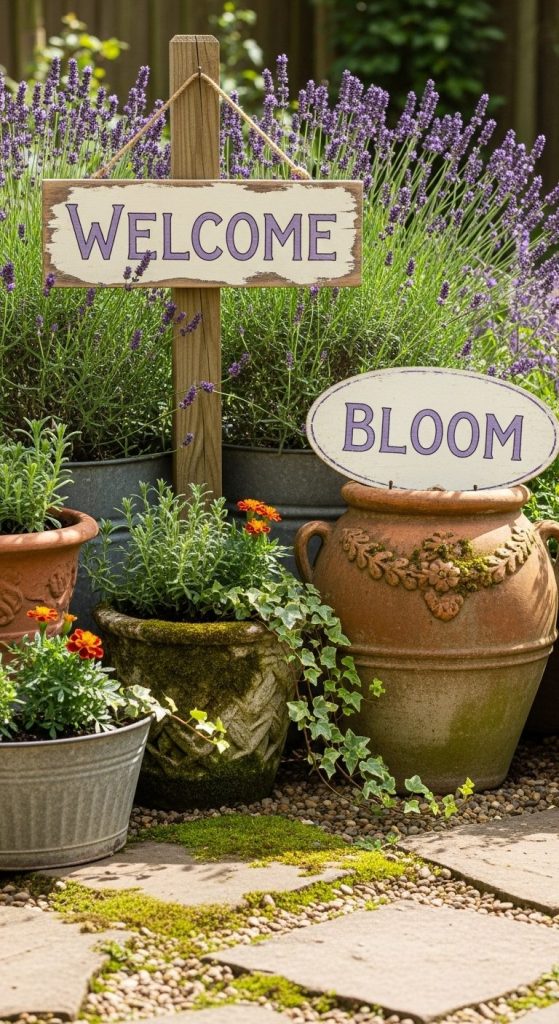
Hand-painted or stenciled wooden signs with words like “Welcome” or “Bloom” instantly set the mood.
Pros
- Whimsical touch — brings personality and humor.
- Easy DIY — make your own from scrap wood.
- Instagram-worthy — simple but photo-friendly.
Cons
- Weather fade — paint may peel after rain or sun exposure.
- Too kitschy — if overdone, can cheapen the look.
Takeaway: Keep signage simple and heartfelt — let one or two pieces speak softly.
12. Gravel Paths and Stepping Stones

A meandering gravel path through blooming beds screams relaxed elegance.
Pros
- Natural charm — fits perfectly with the rustic aesthetic.
- Low maintenance — weeds are manageable, and gravel drains well.
- Budget option — cheaper than brick or concrete.
Cons
- Scattering issue — gravel can spread beyond the path.
- Unstable footing — not ideal for wheelbarrows or heels.
Takeaway: Keep paths simple, curved, and organic — just like the shabby chic spirit.
13. Vintage Containers and Tins
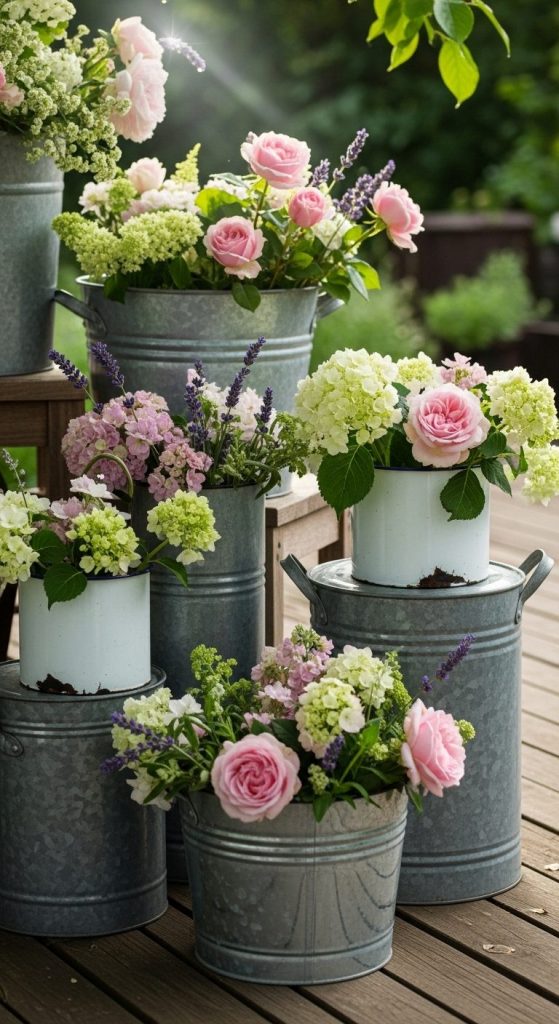
Metal watering cans, galvanized tubs, and enamel buckets make fabulous planters.
Pros
- Industrial-meets-romantic — metal textures contrast beautifully with soft flowers.
- Portable — move them easily as the seasons change.
- Eco-chic — reuses what you already have.
Cons
- Rusting — untreated metal may corrode over time.
- Drainage holes — often need to be drilled manually.
Takeaway: Turn forgotten tins into treasures — it’s shabby chic magic in minutes.
14. Garden Nooks and Reading Corners
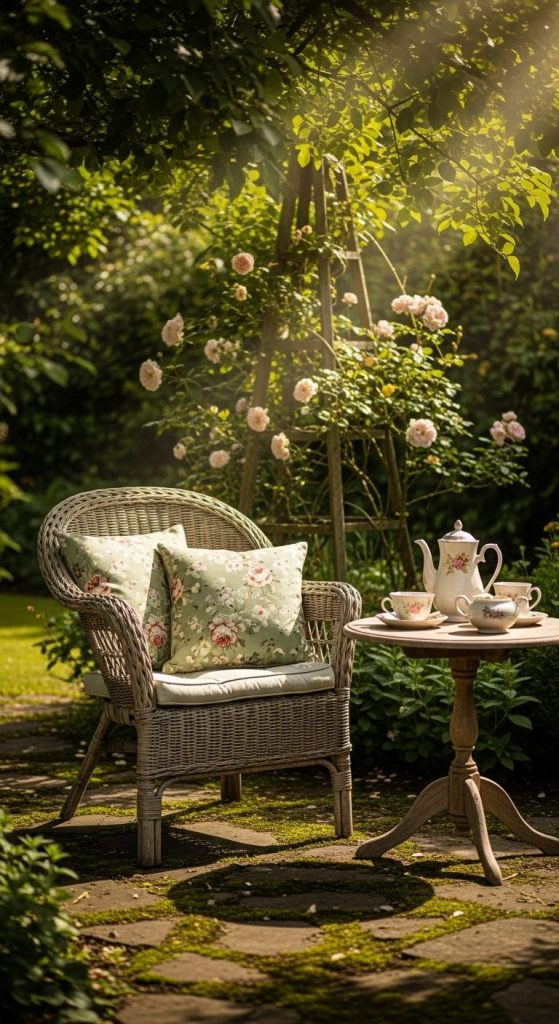
Every shabby chic garden needs a quiet nook — a spot to sip tea or read under dappled light.
Pros
- Personal sanctuary — turns your garden into a retreat.
- Simple setup — a chair, cushion, and side table are enough.
- Perfect backdrop — looks amazing in photos!
Cons
- Space limitation — small gardens might struggle to fit full setups.
- Shade or bugs — location matters for comfort.
Takeaway: Carve out your cozy nook — where books, blooms, and breezes meet.
15. Floral Patterns Everywhere
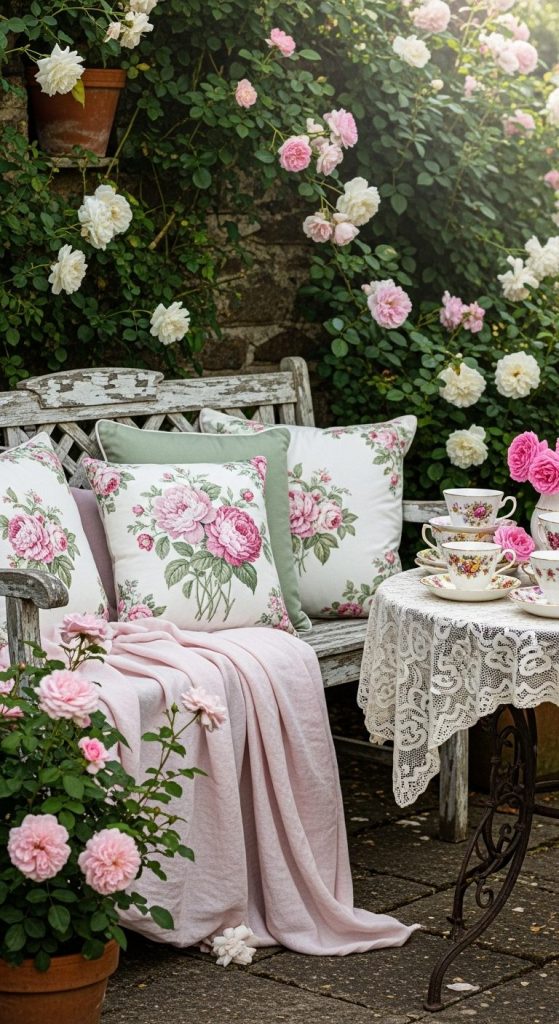
From fabrics to garden accessories, floral prints tie everything together.
Pros
- Cohesive theme — connects indoor and outdoor décor.
- Timeless femininity — softens rustic edges beautifully.
- Easy to add — through cushions, planters, or wall art.
Cons
- Overdoing it — too many florals can overwhelm.
- Fading — printed fabrics lose color with sun exposure.
Takeaway: Sprinkle florals like confetti — just enough to keep it sweet, not sugary.
Conclusion
Creating a shabby chic garden isn’t about perfection — it’s about personality.
It’s mismatched, relaxed, and nostalgic in all the best ways. From distressed furniture to pastel blooms, every element tells a quiet love story of time and tenderness.
My best advice? Start small. Find one corner — a chair, a trellis, or a tiny table — and build around it. Let age, weather, and whimsy take their course. Before long, you’ll have a garden that feels as soft and welcoming as your favorite quilt.
Because in the end, a shabby chic garden isn’t built — it’s grown.

Ashley Ellison is a skilled writer and avid bowler. Her passion for storytelling and dedication to the sport have led her to participate in various national bowling leagues. With a unique combination of talents, Ashley approaches every challenge with creativity and a relentless drive to succeed.