Violet Garden: 15 Enchanting Ways to Transform Your Outdoor Space
There’s something utterly magical about the color violet in a garden. Maybe it’s the way lavender sways in the breeze, or how deep purple pansies pop against green foliage. Honestly, stepping into a violet garden feels like stepping into a dream — calm, cozy, and slightly whimsical all at once. If you’ve ever thought about creating a space that’s not just a garden but an emotional experience, then a violet garden might just be your jam.
Violets, lavenders, and other purple-hued blooms aren’t just beautiful; they have a knack for attracting pollinators, soothing the mind, and giving any outdoor space an instant charm upgrade. And the best part? You don’t need a sprawling estate to pull it off. From compact balcony planters to sprawling backyard beds, there’s a violet garden style for every space and every gardener. I’ve put together 15 violet garden ideas that will make your outdoor area not only visually stunning but emotionally refreshing too.
1. Lavender Borders for Tranquil Paths
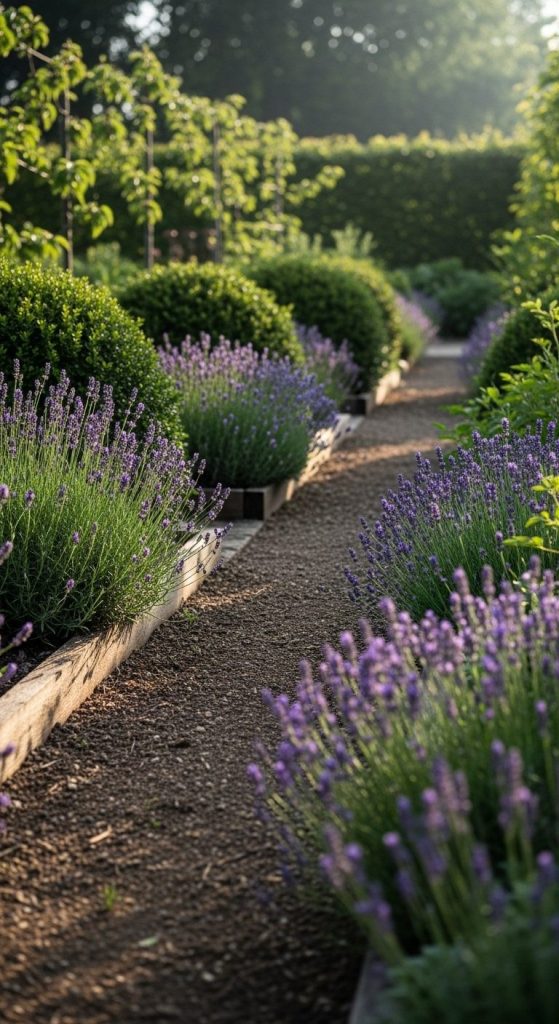
Ever noticed how lavender-lined paths feel instantly peaceful? Planting lavender along walkways creates a natural guide through your garden while delivering a subtle, calming scent.
Pros:
- Aromatherapy benefits for a relaxing garden stroll.
- Attracts bees and butterflies, boosting biodiversity.
- Low-maintenance once established.
Cons:
- Needs full sun to thrive.
- May require pruning to maintain neat edges.
Takeaway: Lavender borders combine beauty, fragrance, and wildlife support — a classic violet garden starter idea.
2. Pansy-Packed Planters
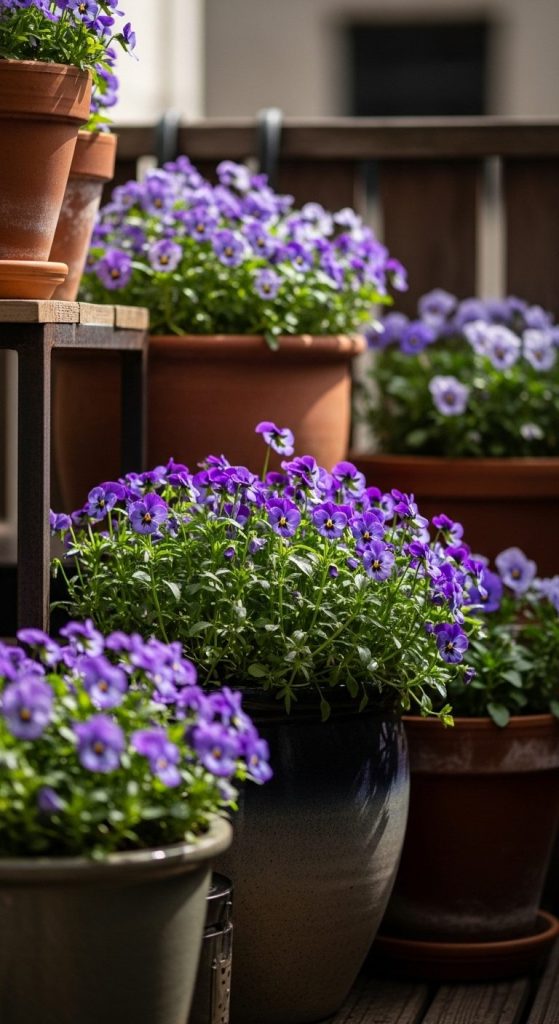
Pansies are versatile, hardy, and come in gorgeous shades of violet. Container gardening with pansies can transform patios and balconies with minimal effort.
Pros:
- Quick bloomers, providing instant color.
- Perfect for small spaces or mixed arrangements.
- Can withstand cooler temperatures.
Cons:
- Short-lived; may need replanting seasonally.
- Can be sensitive to heat waves.
Takeaway: For a splash of violet with low commitment, pansies in planters are your friend.
3. Purple-Flowered Perennial Beds

A perennial bed filled with violets, delphiniums, and salvia ensures seasonal consistency and layers of interest.
Pros:
- Comes back year after year, reducing replanting.
- Adds height and depth with varied blooms.
- Attracts pollinators and beneficial insects.
Cons:
- Takes planning for bloom times and spacing.
- Some perennials may require staking or support.
Takeaway: Perennial violet beds give your garden structure, rhythm, and ongoing charm.
4. Mixed Violet and White Flower Schemes
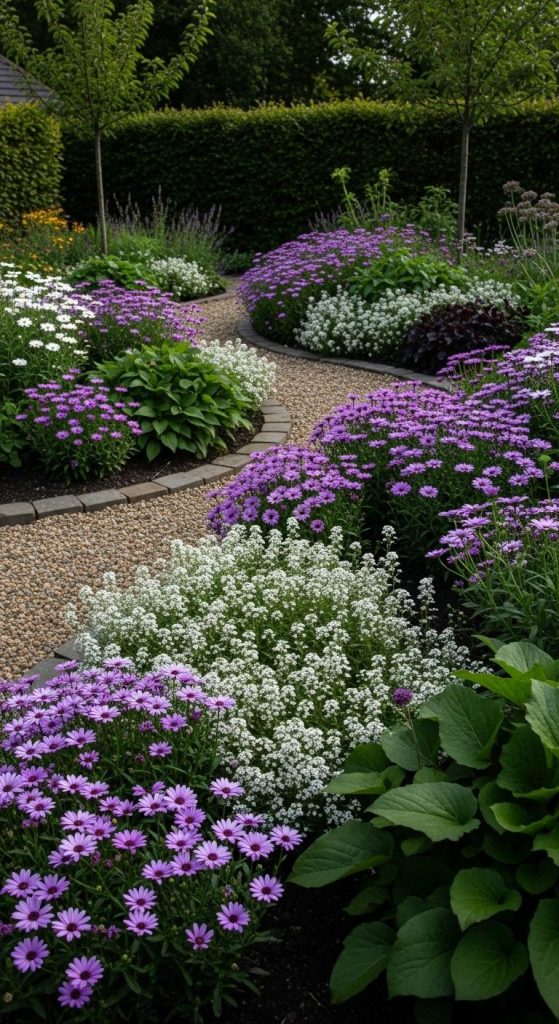
Contrasting violet flowers with white blooms like daisies or alyssum creates a visually striking effect.
Pros:
- Brightens shady spots without overpowering.
- Creates natural highlights and visual flow.
- Encourages diversity in pollinators.
Cons:
- Needs careful selection to avoid clashing bloom cycles.
- White flowers may show dirt or require more watering.
Takeaway: A violet-and-white palette balances boldness and subtlety, perfect for formal or cottage-style gardens.
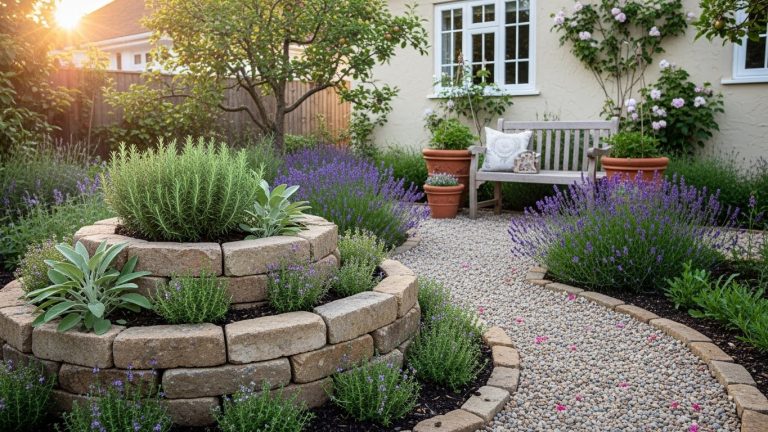
5. Violet-Themed Herb Garden
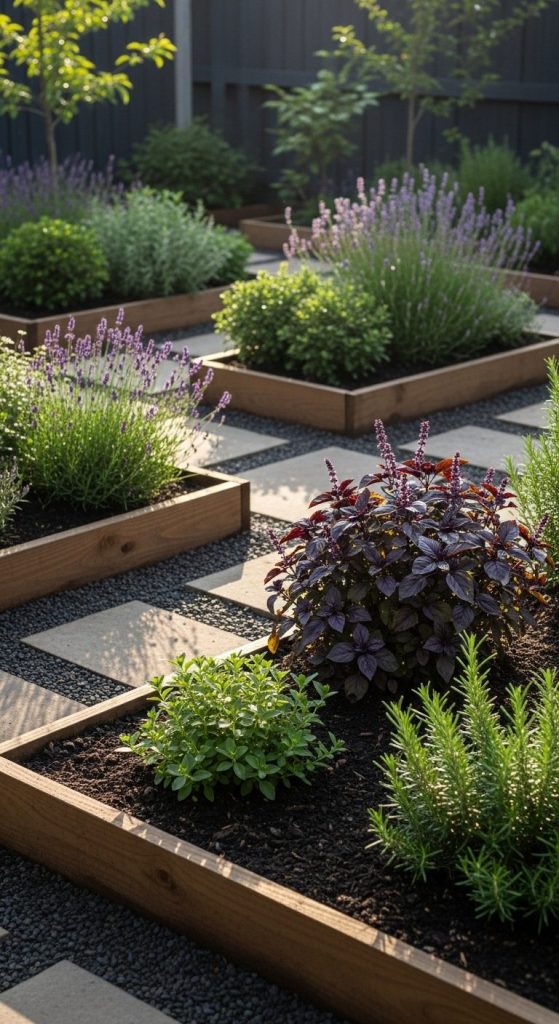
Combine aesthetics and utility with herbs like lavender, purple basil, and rosemary.
Pros:
- Fresh herbs for cooking, tea, and aromatherapy.
- Adds fragrance and texture variety.
- Attracts bees and other beneficial insects.
Cons:
- Requires sun exposure and proper soil.
- Harvesting may disturb aesthetic flow if not managed.
Takeaway: A violet herb garden is functional, fragrant, and visually appealing — the best of all worlds.
6. Vertical Violet Walls
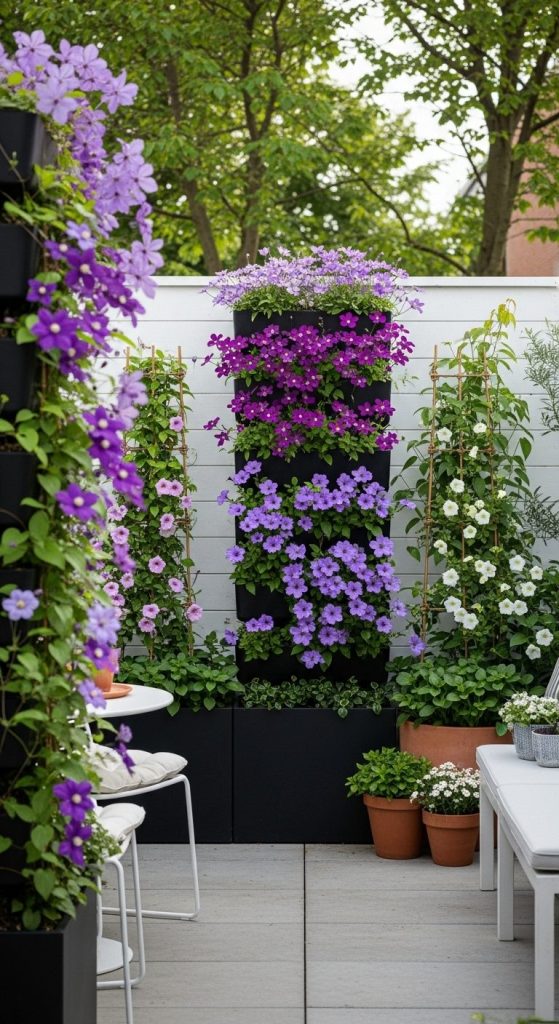
For limited space, vertical gardens with violet flowers like clematis or petunias can turn blank walls into lush, living canvases.
Pros:
- Saves ground space in small yards or patios.
- Provides instant privacy and greenery.
- Dramatic visual statement.
Cons:
- Needs proper support and irrigation planning.
- Can be heavy when fully planted.
Takeaway: Vertical violet walls are a small-space game-changer with massive visual impact.
7. Woodland Violet Corners

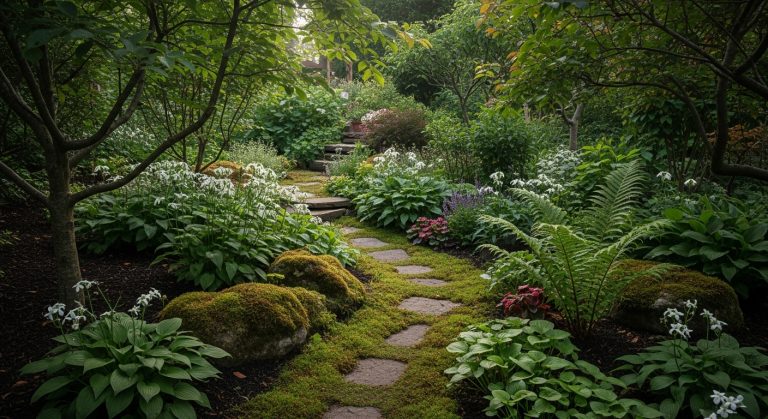
Use violets as groundcover beneath shade-loving trees and shrubs to create a mystical woodland feel.
Pros:
- Adds color to shady areas.
- Suppresses weeds naturally.
- Creates a lush, serene environment.
Cons:
- Needs consistent moisture for best growth.
- Some violets may self-seed aggressively.
Takeaway: Woodland corners bring soft, enchanting color to underutilized shady spots.
8. Violet Water Garden Accents
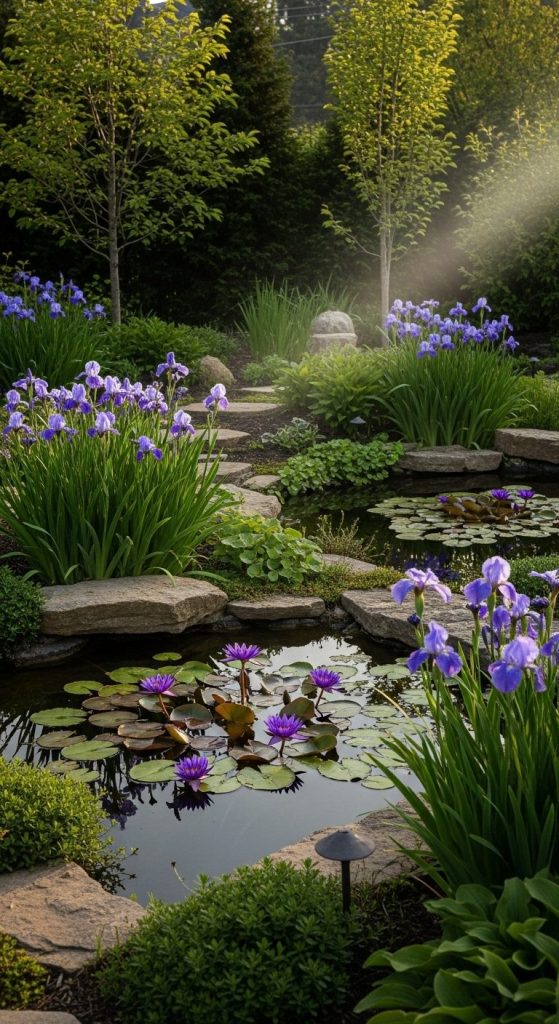
Floating purple water lilies or violet-hued irises make ponds and fountains mesmerizing focal points.
Pros:
- Adds reflective beauty and serenity.
- Attracts dragonflies, frogs, and pollinators.
- Creates dynamic seasonal interest.
Cons:
- Requires pond maintenance and careful planting.
- Sensitive to water temperature changes.
Takeaway: Violet accents in water features amplify tranquility and visual appeal.
9. Cottage-Style Violet Beds
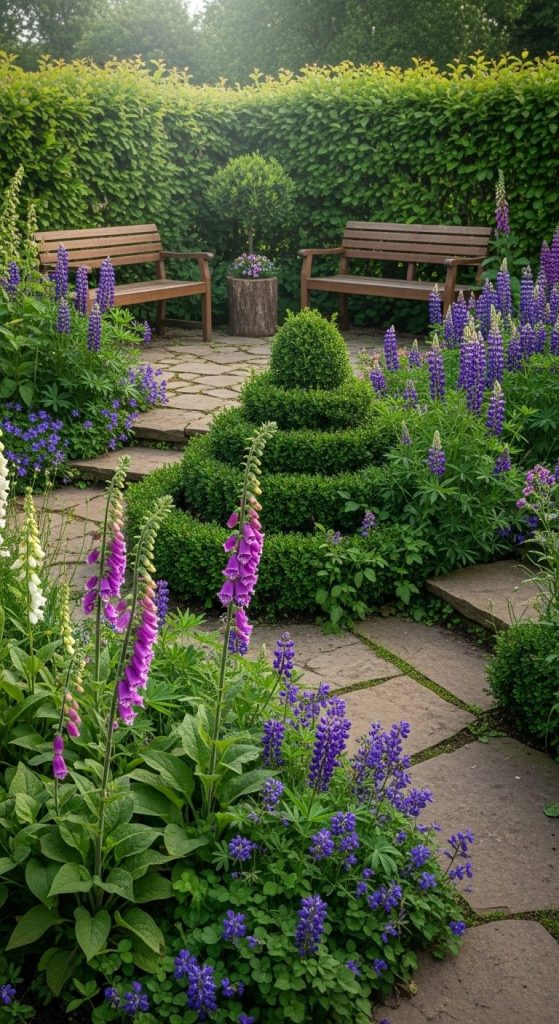
Plant a mix of violets, foxgloves, and lupins for a charming, informal cottage feel.
Pros:
- Encourages a romantic, whimsical aesthetic.
- Supports biodiversity with layered plantings.
- Works in small or medium gardens.
Cons:
- Can appear messy if not maintained.
- Needs planning for bloom timing and sun/shade.
Takeaway: Cottage-style violet beds create a dreamy, lived-in garden vibe.
10. Violet Pathway Edging
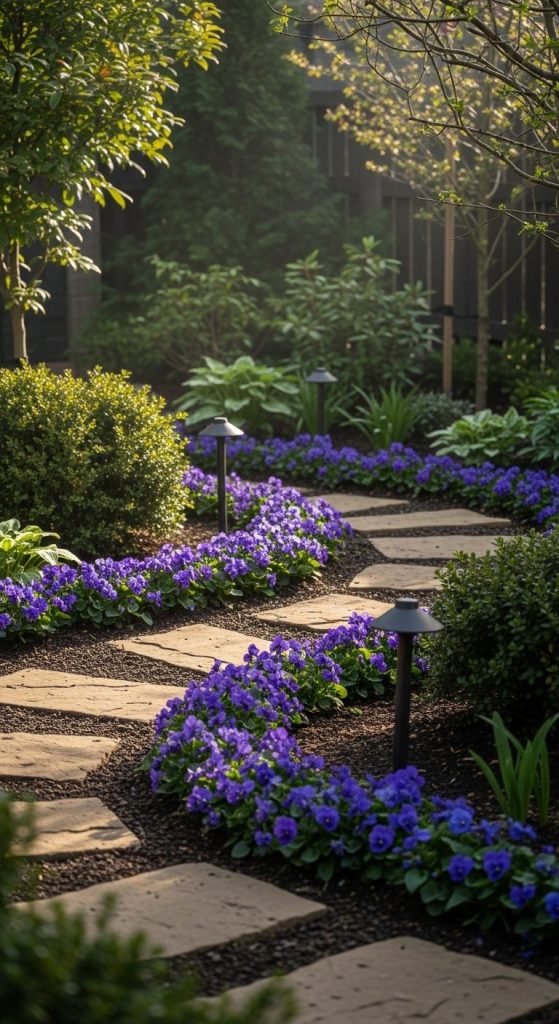
Line garden paths with low-growing violets for subtle, aromatic borders.
Pros:
- Defines walking areas aesthetically.
- Fragrant and attractive to pollinators.
- Easy to maintain once established.
Cons:
- May need trimming to prevent encroachment.
- Fragile in high-foot-traffic areas.
Takeaway: A violet pathway is a simple, elegant detail that elevates garden design.
11. Violet Rock Garden Integration
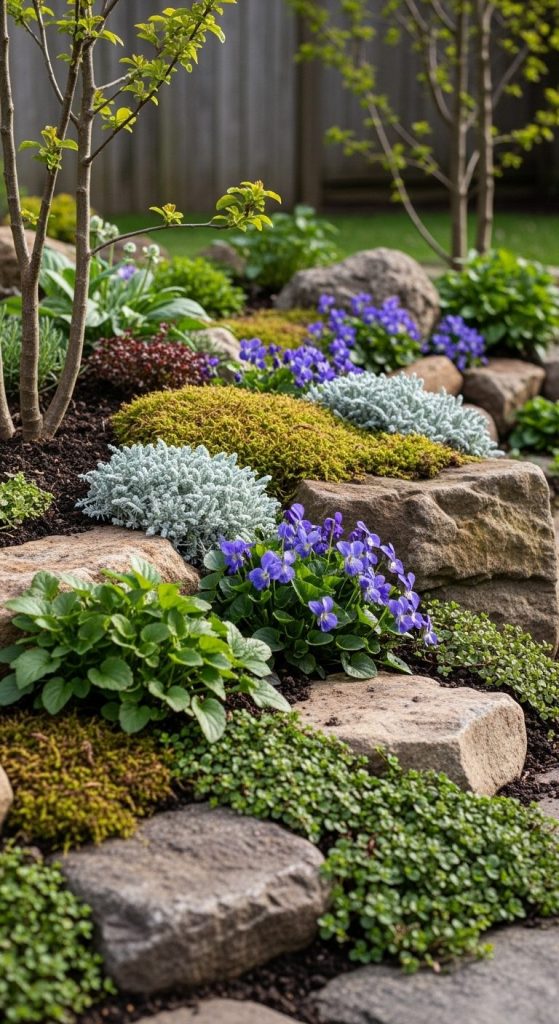
Mix violets with alpine plants and moss in rock gardens for color contrast and texture variety.
Pros:
- Low maintenance and drought-tolerant options.
- Adds height, depth, and focal points naturally.
- Can be integrated into small spaces.
Cons:
- Some violets may need more water than rock garden plants.
- Rocks need careful placement for stability.
Takeaway: Rock gardens with violet accents are timeless, textural, and visually engaging.
12. Hanging Violet Baskets
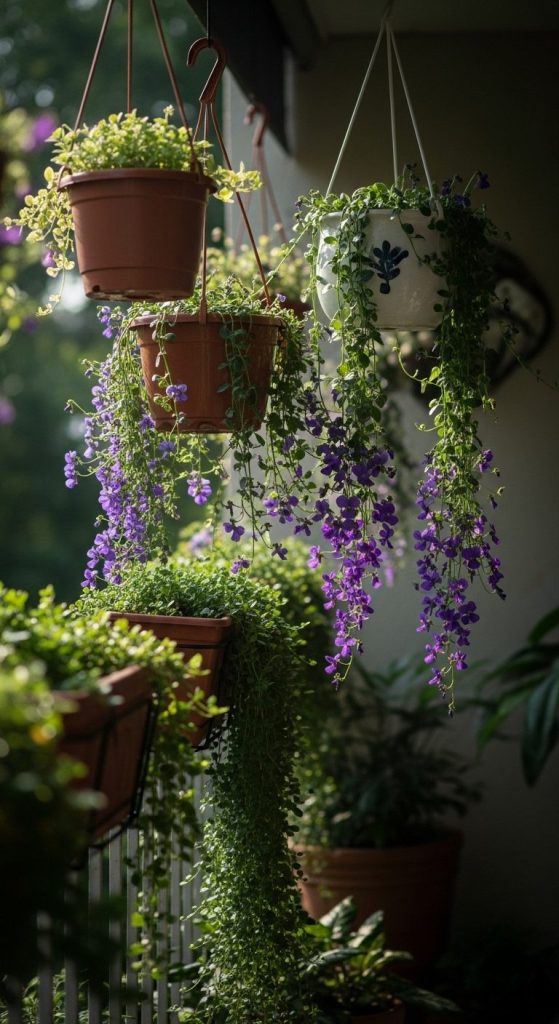
Suspend baskets filled with trailing violets for vertical interest and movement.
Pros:
- Great for balconies or patios with limited ground space.
- Adds layers and depth.
- Creates whimsical, soft focal points.
Cons:
- Requires frequent watering.
- Delicate stems may be wind-sensitive.
Takeaway: Hanging violet baskets make small spaces feel lush and lively.
13. Violet Seasonal Rotation Beds
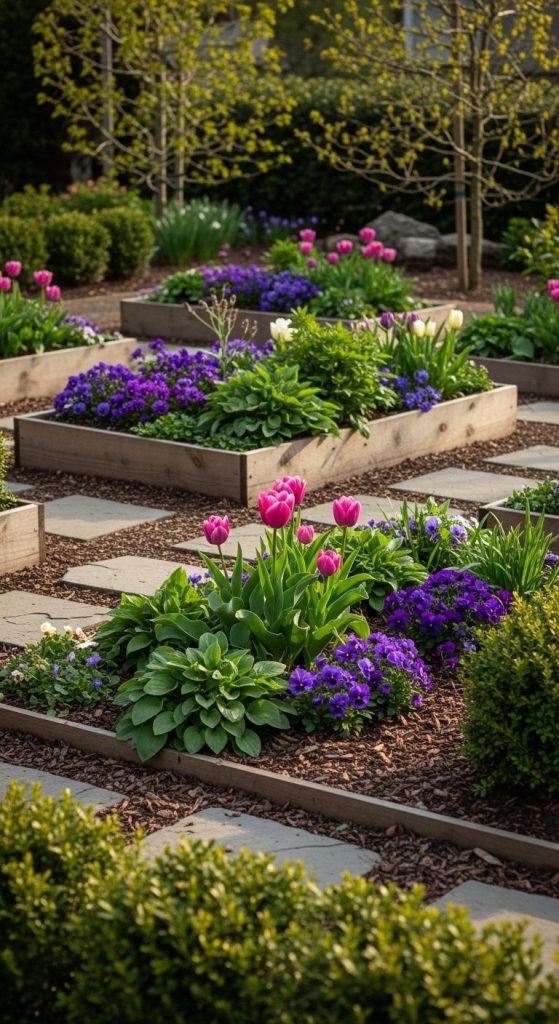
Change violet blooms with the seasons — tulips in spring, pansies in winter, and perennials in summer.
Pros:
- Keeps the garden fresh and exciting year-round.
- Attracts seasonal pollinators.
- Allows creative experimentation with color palettes.
Cons:
- Needs planning and regular replanting.
- Some species may be sensitive to weather extremes.
Takeaway: Seasonal rotation ensures your violet garden never feels static.
14. Violet-Themed Meditation Nook
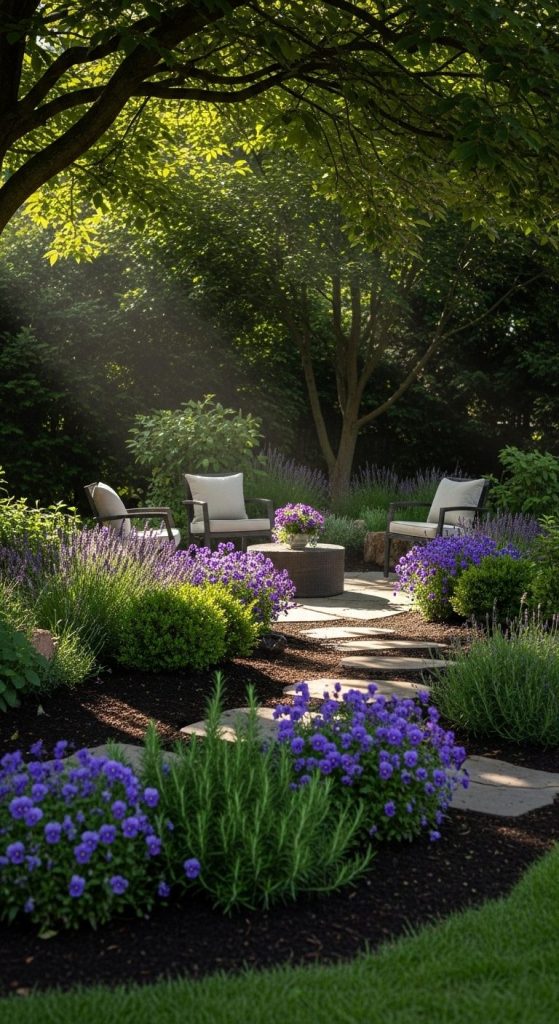
Create a secluded corner with violet flowers, comfy seating, and aromatic herbs for mindfulness and relaxation.
Pros:
- Encourages outdoor relaxation and reflection.
- Enhances sensory experience through sight and scent.
- Can be adapted to any garden size.
Cons:
- Needs maintenance to keep paths and seating accessible.
- Flowers may need seasonal replacement for peak vibrancy.
Takeaway: A violet meditation nook is a personal sanctuary, combining visual beauty with mental well-being.
15. Violet Mix with Green Foliage Textures
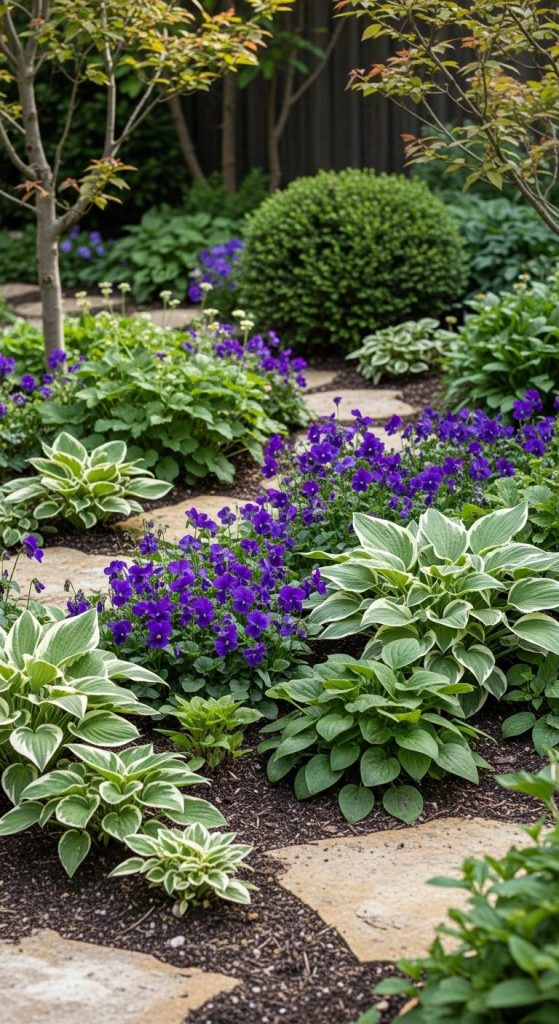
Combine deep purple flowers with variegated green leaves to enhance contrast and richness in garden beds.
Pros:
- Adds depth and visual interest.
- Works in both formal and informal garden layouts.
- Easy to adjust plant density and placement.
Cons:
- Requires careful selection to avoid overpowering foliage.
- Maintenance needed to prevent crowding.
Takeaway: Mixing violet blooms with diverse green foliage creates a lush, sophisticated garden palette.
Conclusion
Violet gardens are more than just a pretty color scheme — they’re immersive experiences. From fragrant lavender borders to vertical walls and serene meditation nooks, incorporating violet blooms gives your outdoor space charm, biodiversity, and personality. The key is layering textures, balancing colors, and allowing nature to thrive with minimal constraints.
Personally, I find the combination of deep purple flowers and greenery absolutely mesmerizing — it makes even a small balcony feel like a secret retreat. Whether you’re planting pansies in containers or crafting woodland violet corners, these ideas prove that violet gardens are flexible, functional, and downright enchanting. Pick a few favorites, experiment with textures, and let your garden become a violet haven that changes with the seasons.

William Martin is a passionate bowler who spends most of his weekends playing the sport. With years of intense experience under his belt, William decided to share his knowledge by creating BOWLING OCEAN. Join me on this journey to explore the world of bowling and discover the tips and tricks to becoming a pro.