15 Affordable Garden Edging Ideas That Look Clean and Stylish
Have you ever looked at your yard and thought, “There has to be a cheaper way to make this look neat”? I’ve had that thought way too many times. Edging plays a huge role in how finished a garden feels, but it usually feels like a pricey upgrade. The funny thing? Some of the nicest borders I’ve seen come from simple, inexpensive materials that anyone can use. People love ideas that look polished without draining the wallet, and edging fits that category perfectly.
I started noticing how many homeowners create crisp borders with materials they already own. It almost feels like a little magic trick: small change, big difference. And honestly, that’s the kind of upgrade I appreciate because it rewards effort more than money. Good edging shapes a yard, guides the eye, and makes beds look intentional even when you still fight a few weeds here and there. If you want affordable garden edging ideas that feel satisfying and doable, this list will give you options you can try this week.
1. Reclaimed Brick Rows That Look Effortlessly Charming
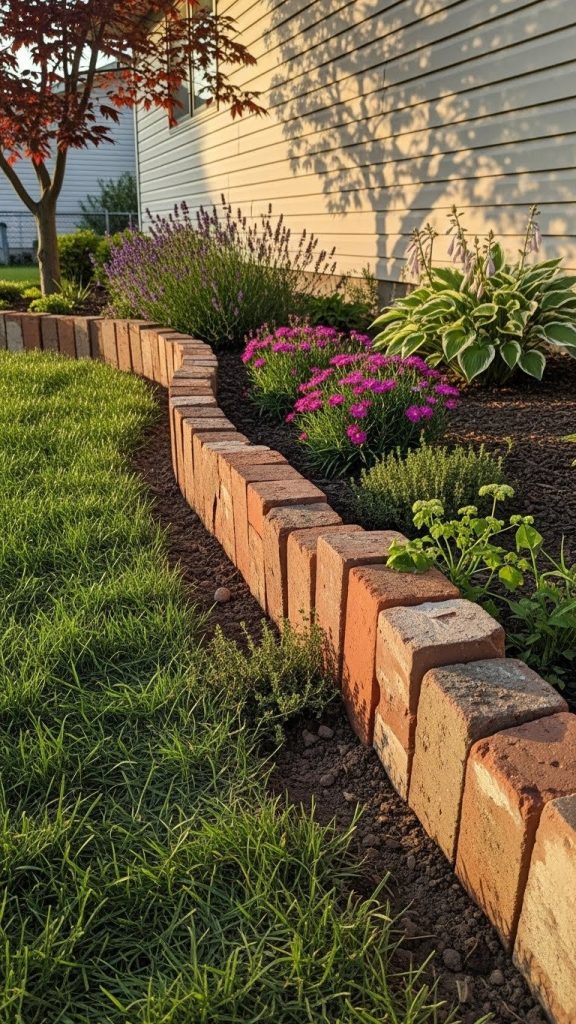
A row of old bricks instantly adds structure, and you don’t need perfect pieces to make it work. People often find leftover bricks in renovation piles, and those mismatched colors bring quiet character to a garden bed. I love this approach because the installation feels simple: dig a shallow trench, stand the bricks vertically or lay them flat, and let the irregular textures tell their own story.
You also gain a little sense of history. Bricks age gracefully, and they soften next to greenery. They suit cottages, small suburban yards, and even clean modern spaces when you place them in straight lines. If you ever feel unsure about edging choices, bricks usually solve the problem without much thinking.
Pros
- Strong durability
- Soft, warm color tones
- Easy to install without special tools
- Low cost if you use leftovers
Cons
- Uneven bricks require patience
- Weeds sneak through gaps if you skip compacting
Mini takeaway
Old bricks give your garden a solid, grounded look, and you don’t need perfection. Imperfection actually makes the border feel more natural.
2. Simple Stone Scatter Edging For Organic Pathway Lines
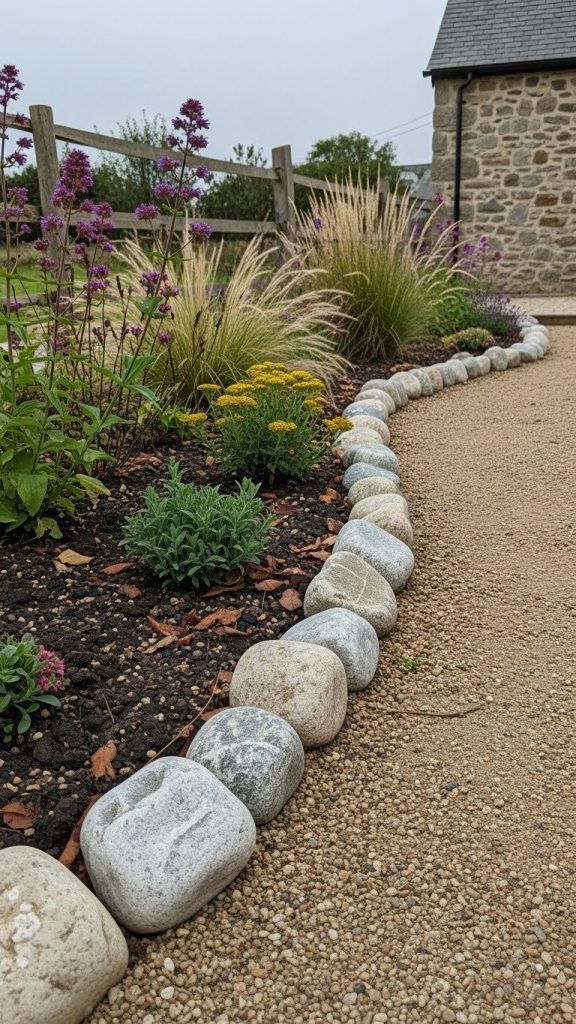
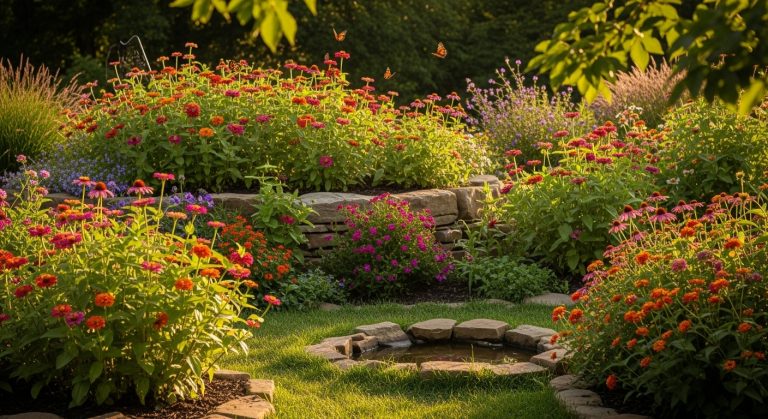
A loose line of medium-sized stones offers an easy way to outline beds without any strict symmetry. This style works for people who want effortless, slightly wild landscaping. I like how stones create a natural transition from planting areas to lawn without sharp edges. If you gather stones from your own property or buy mixed bags, the cost stays low.
Stones lend a relaxed outdoor feeling. They blend into mulch or gravel and look best when you keep shapes irregular. People often place them around curved beds because they follow bends easily. When the lawn grows, the stones still hold their shape.
Pros
- No digging required
- Blends well with most garden styles
- Adjusts easily over time
- Budget-friendly when using found stones
Cons
- Stones shift after heavy rain
- Grass creeps in if you don’t maintain the border
Mini takeaway
Stones create gentle, natural borders that feel calm and approachable. They suit anyone who prefers informal edging.
3. Wood Slice Edging From Fallen Logs
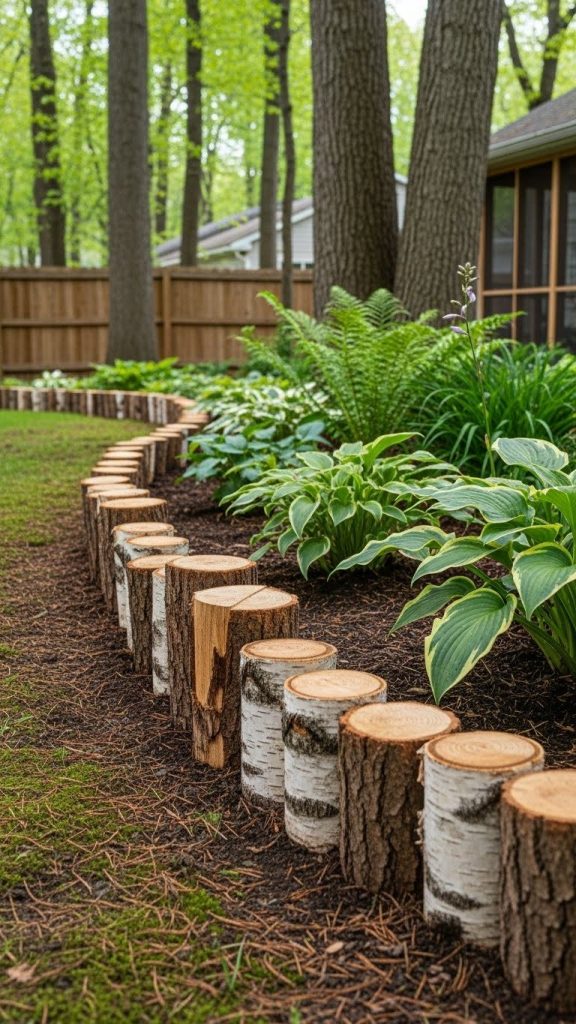
If you ever cut down a branch or small tree, those leftover logs can become a surprisingly stylish border. Slice them into rounds, stand them upright, and you get rustic edging with real personality. Wood slices bring woodland charm with almost no cost. I see many people use this method in gardens where they want texture without strong lines.
The height variation adds interest, and the wood ages into a silvery tone. That natural weathering feels extremely cozy. You can tighten the slices together or leave tiny gaps for a relaxed look. It works near herbs, hostas, and shade beds because the organic feel fits the planting style.
Pros
- Free if you already have logs
- Soft, natural aesthetic
- Easy cutting and installation
- Works for curving shapes
Cons
- Wood decays faster than stone
- Requires occasional replacement
Mini takeaway
Log slices create an earthy vibe that suits informal, nature-inspired landscapes.
4. Black Plastic Pound-In Edging For Clean, Minimal Lines
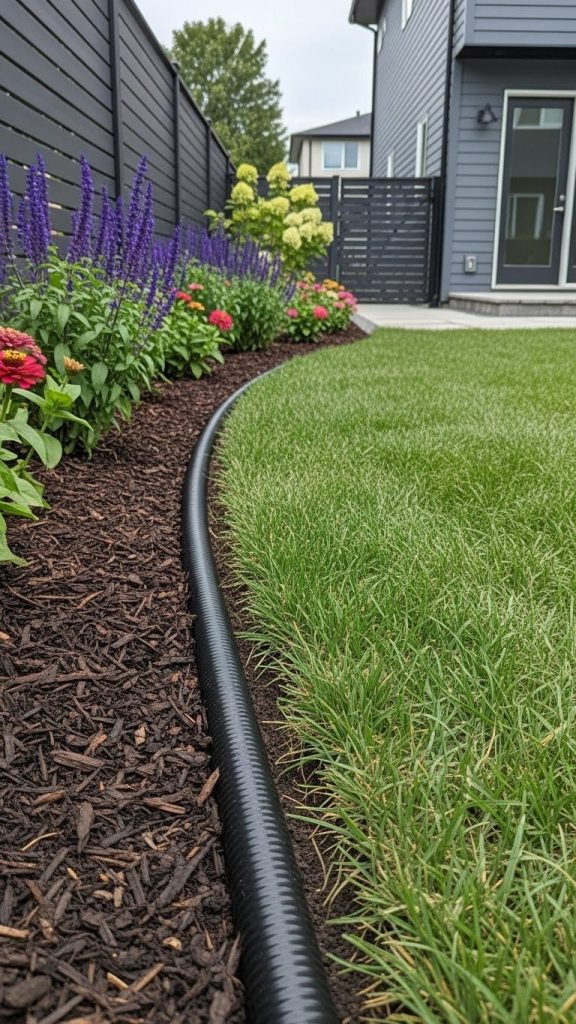
Sometimes you want crisp edges without complicated installation. Black plastic pound-in strips give you that clean finish. They create neat curves and stop grass from creeping into beds. I like how they stay subtle and disappear into soil, making the plants feel like the highlight.
This option also works in tight spaces where you need practical control. Many homeowners combine it with mulch because the dark tones match. You can reshape it anytime by loosening a section and adjusting the line.
A recent landscaping survey found that nearly 65% of homeowners choose flexible edging for curved designs because it allows easier adjustments compared to rigid materials.
Pros
- Very affordable
- Invisible finish
- Fast installation
- Great long-term control
Cons
- Can lift over seasons
- Not ideal for decorative effect
Mini takeaway
Flexible edging works when you want a clean, practical outline that stays in the background.
5. Terracotta Pot Shards With Warm Color Accents
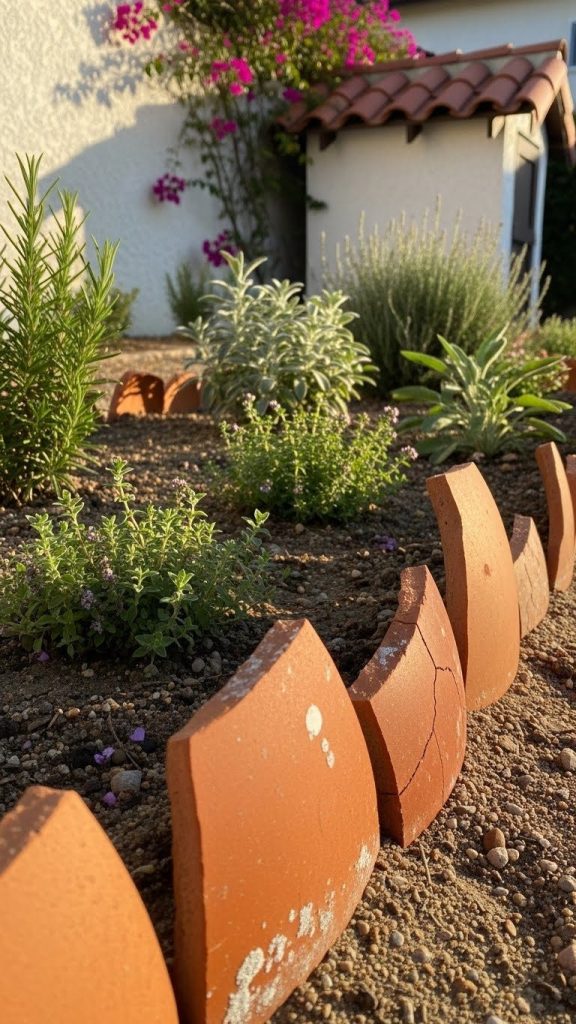
Broken terracotta pots feel like a waste, but they become charming edging pieces when you arrange the shards along a bed. The warm clay tones always stand out against dark soil. This look fits smaller gardens where you want a unique border without spending anything.
I enjoy how the varying shapes catch sunlight. You can bury the shards halfway to create a subtle scalloped look. If you enjoy gardening with herbs or Mediterranean plants, this edging connects the whole theme.
Pros
- Free if you already use terracotta
- Warm color that pops against greenery
- Easy shaping along curves
- Adds visual texture
Cons
- Fragile pieces break more over time
- Sharp edges require careful placement
Mini takeaway
Terracotta shards bring character and warmth while keeping costs close to zero.
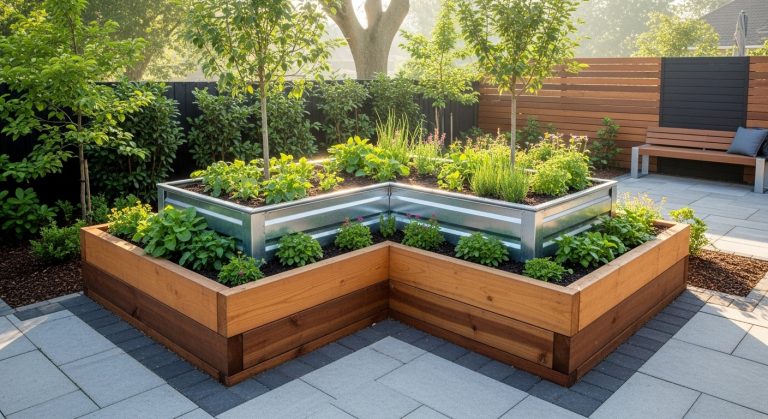
6. Recycled Metal Roofing Strips For Slim Modern Edges
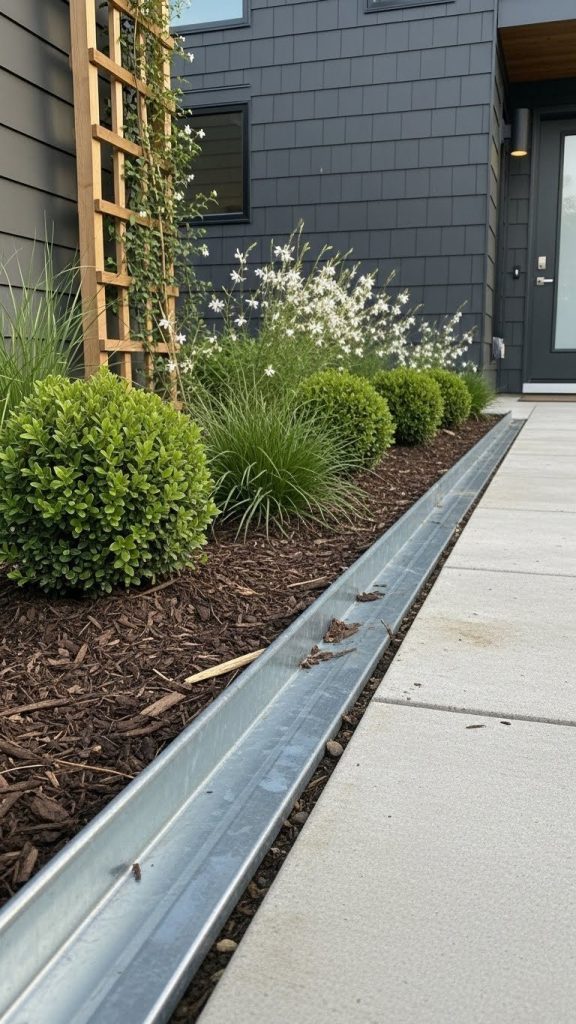
If you like modern lines, thin metal strips from old roofing panels make surprisingly stylish borders. Cut them into straight sections and secure them with stakes. The metallic edge creates a sharp contrast between lawn and soil. People who enjoy clean, minimal gardens often love this look.
Metal strips also help retain soil on sloped beds. That little barrier keeps mulch from sliding every time it rains. And when morning sunlight hits the metal, it gives a soft gleam that feels intentional rather than industrial.
Pros
- Very low cost when using scrap pieces
- Modern look
- Helps with soil control
- Durable over time
Cons
- Requires gloves and safe handling
- Sharp edges need smoothing
Mini takeaway
Recycled metal strips give your garden a sleek frame that costs almost nothing if you source leftover materials.
7. Gravel Bands Around Beds For Relaxed Drainage
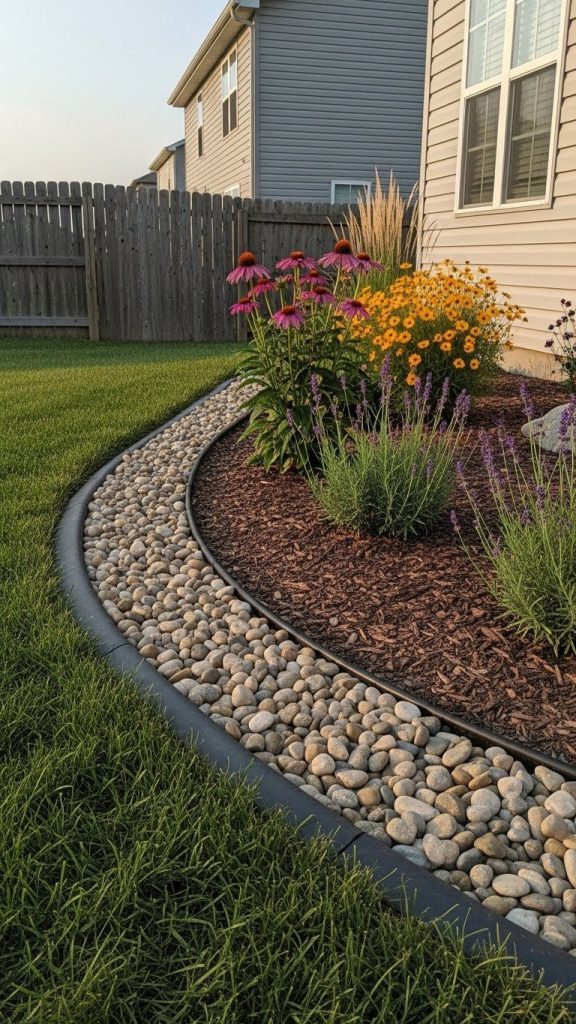
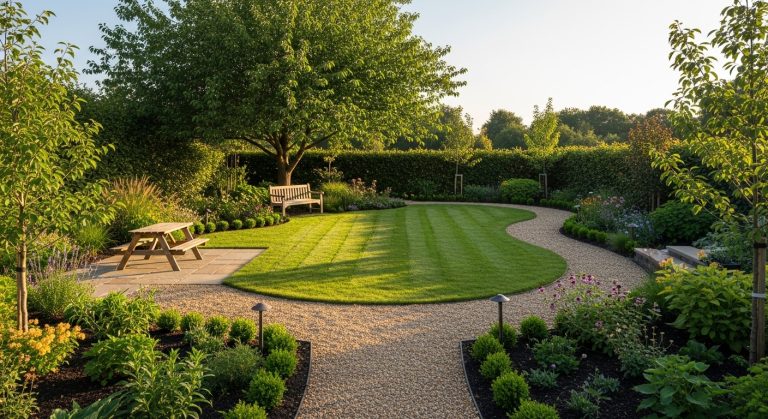
A slim band of gravel around a planting area creates tidy separation while improving drainage. If you already plan to use gravel somewhere else, you can reuse a small leftover portion for edging. I like this approach because gravel works in almost any yard style.
The look stays soft yet defined, especially around drought-tolerant or minimalist plantings. A three-inch band offers enough contrast to keep the lawn from blending into the bed. It also stays low-maintenance when you refresh the top layer once a year.
Studies from home improvement retailers show that gravel remains one of the lowest-cost landscape materials for edging and pathways.
Pros
- Excellent drainage
- Affordable and easy to spread
- Works for modern or rustic yards
- Smooth curves or straight lines
Cons
- Small stones scatter into the lawn
- Needs occasional raking
Mini takeaway
Gravel edges give a soft, natural border that never overwhelms the garden.
8. Pallet Wood Strips For a Quick DIY Frame
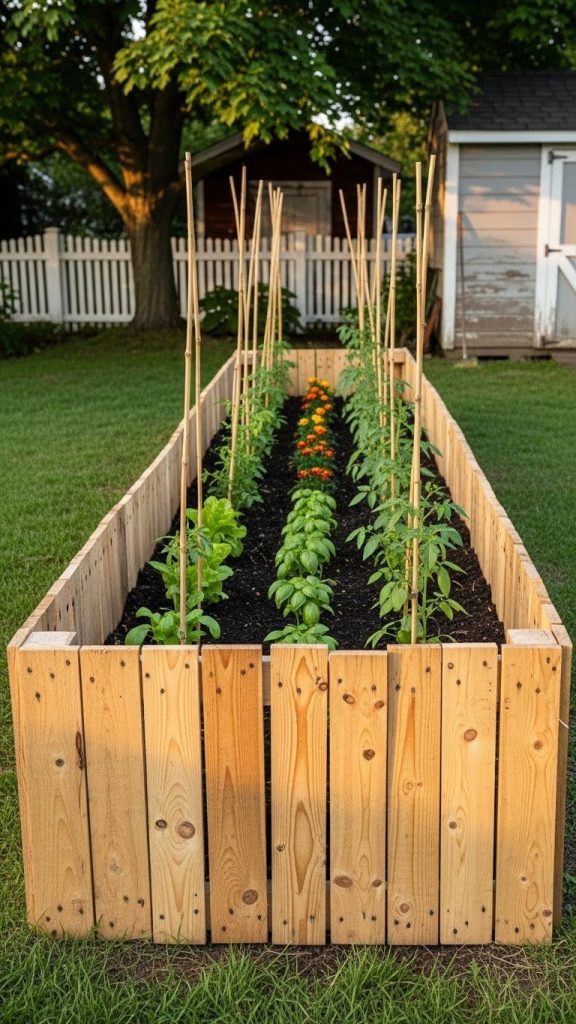
Pallet wood gives you endless possibilities, and edging counts as one of the easiest projects. Cut the boards into equal lengths and secure them with stakes. The look feels warm and slightly coastal, especially when the wood fades naturally.
This edging works near vegetable beds, raised planters, or flower borders. The boards create low, tidy lines without trying to look like expensive lumber. If you enjoy weekend projects, this idea offers big satisfaction with little effort.
Pros
- Free or very cheap material
- Easy to cut
- Works with rustic or casual yards
- Adjustable shapes
Cons
- Wood wears down in damp climates
- Needs sealing if you want longer life
Mini takeaway
Pallet wood creates friendly, approachable edging that suits simple backyard spaces.
9. Upside-Down Glass Bottles For Colorful Borders
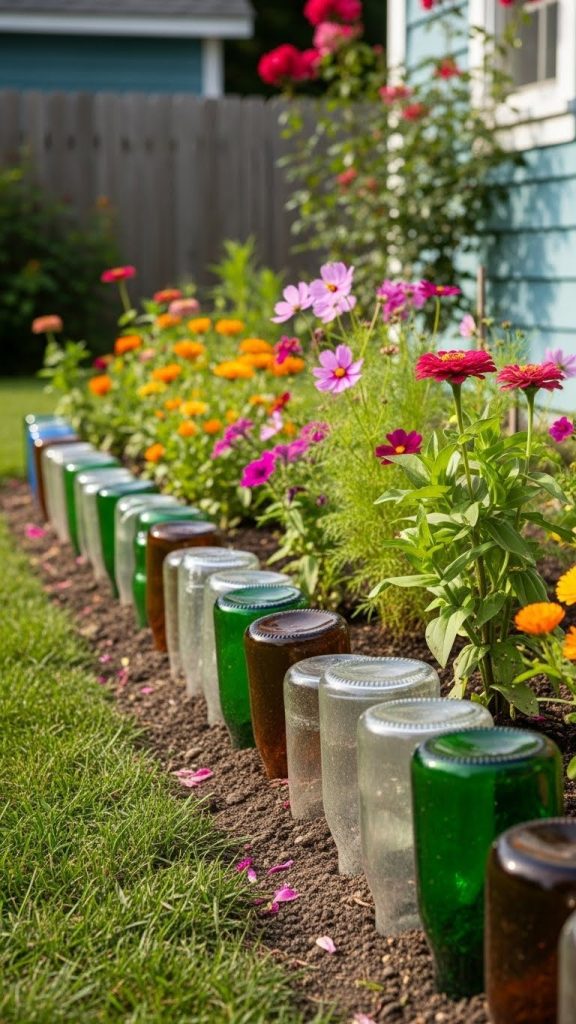
Glass bottles create playful edging when you plant them upside down into a shallow trench. People often use green or brown bottles for a cohesive look, but mixed colors give a fun mosaic effect. The smooth tops catch light and bring surprising charm to the garden.
This approach costs almost nothing if you collect bottles over time. It suits informal gardens with herbs, cottage plants, or vegetables. Kids tend to love the colorful effect too, which makes this a family-friendly project.
Pros
- Free if you reuse bottles
- Sparkling color effect
- Easy installation
- Durable in all weather
Cons
- Uneven bottle heights show easily
- Requires careful placement
Mini takeaway
Glass bottles create cheerful borders that add personality without costing anything.
10. Clay Paver Chips For Soft, Neutral Outlines
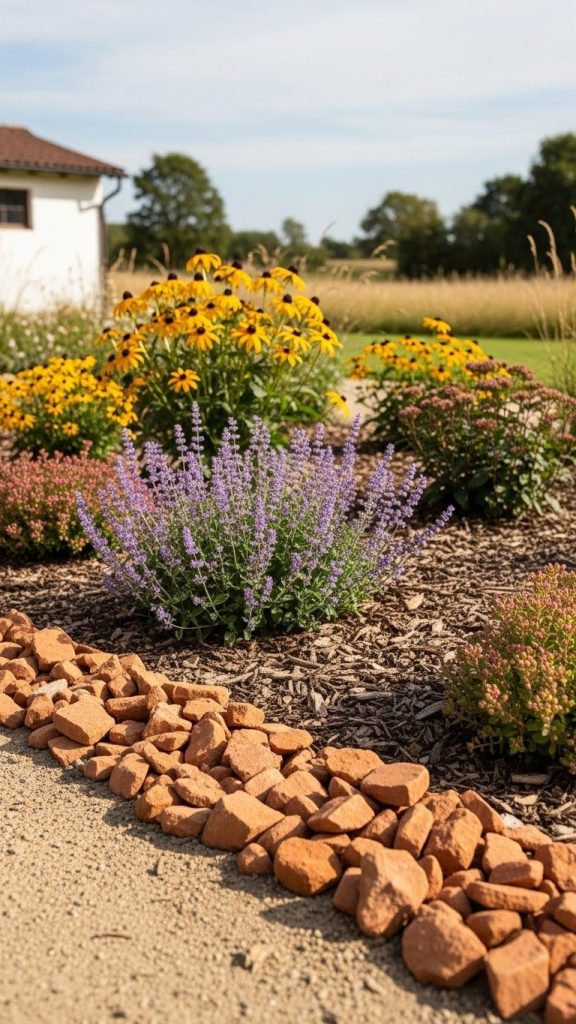
Clay paver chips give you a warm brick-like edging without buying full bricks. They come from chipped pavers or leftovers from bigger projects. When you line them along garden beds, they create subtle, tidy borders with cozy color tones.
This edging works near shrubs, perennials, or mixed beds. The irregular pieces soften the look compared to straight brick rows. You only need a shallow trench, and the pavers settle naturally.
Pros
- Gentle, neutral color palette
- Very inexpensive
- Easy to adjust shape
- Works with casual landscapes
Cons
- Chips shift if you skip compacting
- Not as bold as full bricks
Mini takeaway
Paver chips give your garden a soft, budget-friendly frame that feels warm and welcoming.
11. Bamboo Sections For Lightweight, Natural Borders
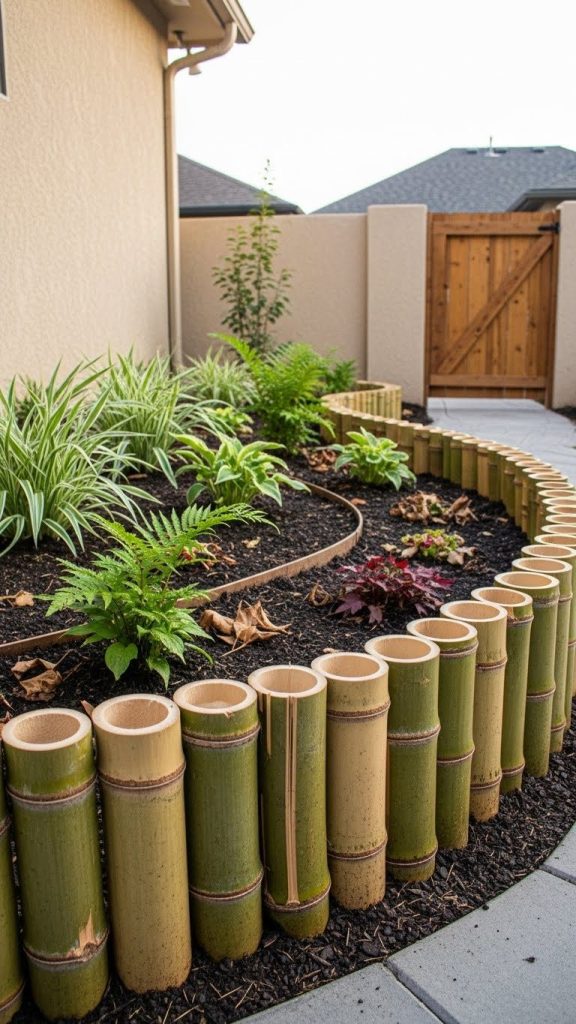
Short bamboo sections offer a fresh, breezy look. Cut the canes into equal pieces and secure them with garden ties or stakes. The texture feels lively and instantly makes your beds more inviting. Bamboo suits people who prefer natural materials without heavy labor.
This edging thrives in small spaces where bulkier borders feel overwhelming. The light height variation adds charm, and the soft tan tones complement greenery beautifully.
Pros
- Affordable and lightweight
- Easy cutting
- Natural and eco-friendly
- Gentle, airy look
Cons
- Bamboo dries and splits over time
- Needs occasional tightening
Mini takeaway
Bamboo gives your garden a fresh, simple outline that feels bright and organic.
12. Half-Buried River Stones Around Curved Beds
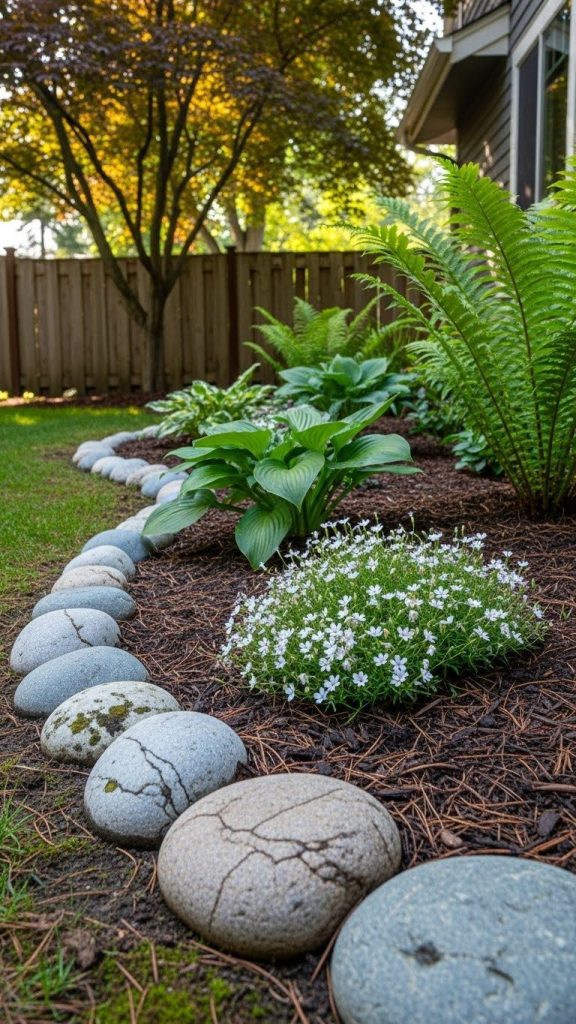
River stones bring calm energy to any planting area. Their smooth shapes and soft colors complement lush foliage. I enjoy how half-burying the stones creates a sturdy, anchored line. This edging feels especially nice in gardens with hostas, ferns, or ornamental grasses.
You only need basic tools: a small trench, a few buckets of stones, and time to arrange them. The stones stay in place when you bury them deeply enough. Their rounded edges also allow easy mowing along the border.
Pros
- Beautiful natural texture
- Strong edging line
- Easy maintenance
- Great near water features
Cons
- Stones can be heavy
- Slightly higher cost if you need many bags
Mini takeaway
River stones create peaceful, grounded borders with timeless appeal.
13. Painted Scrap Wood Stakes For Cottage-Style Color
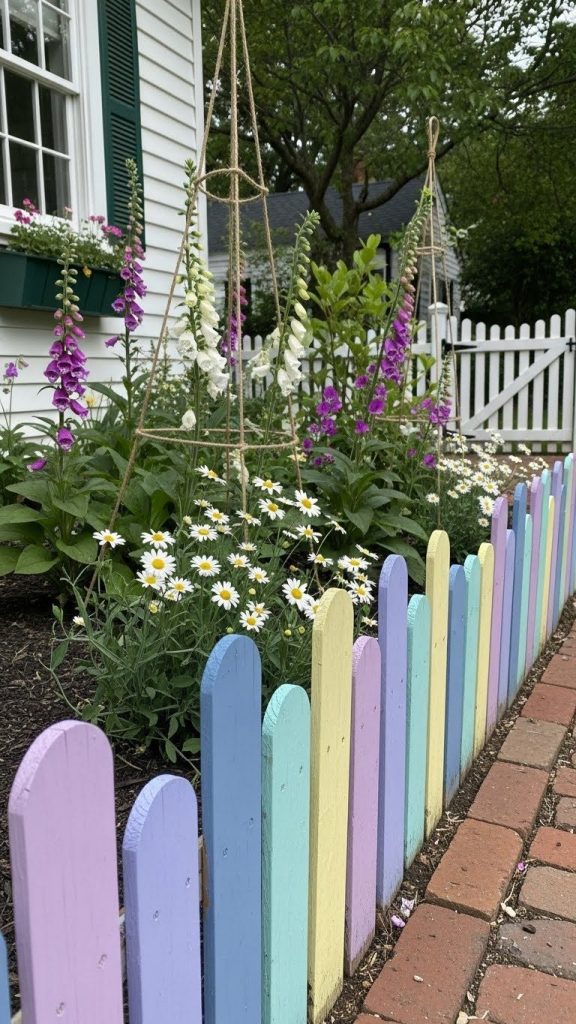
Scrap wood turns into charming edging when you cut it into stakes and paint each one a soft pastel or neutral color. This style feels cheerful and cozy. It suits cottage gardens, herb beds, and playful landscaping.
You can choose coordinated colors or a full mix. When the stakes sit close together, they form a cute picket effect without building an actual fence. The slight irregularity adds character.
Pros
- Fun DIY project
- Extremely inexpensive
- Customizable colors
- Cute cottage aesthetic
Cons
- Paint fades under strong sun
- Stakes need occasional replacement
Mini takeaway
Scrap-wood stakes let you express creativity while keeping costs near zero.
14. Rolled Log Edging For Warm, Curved Borders
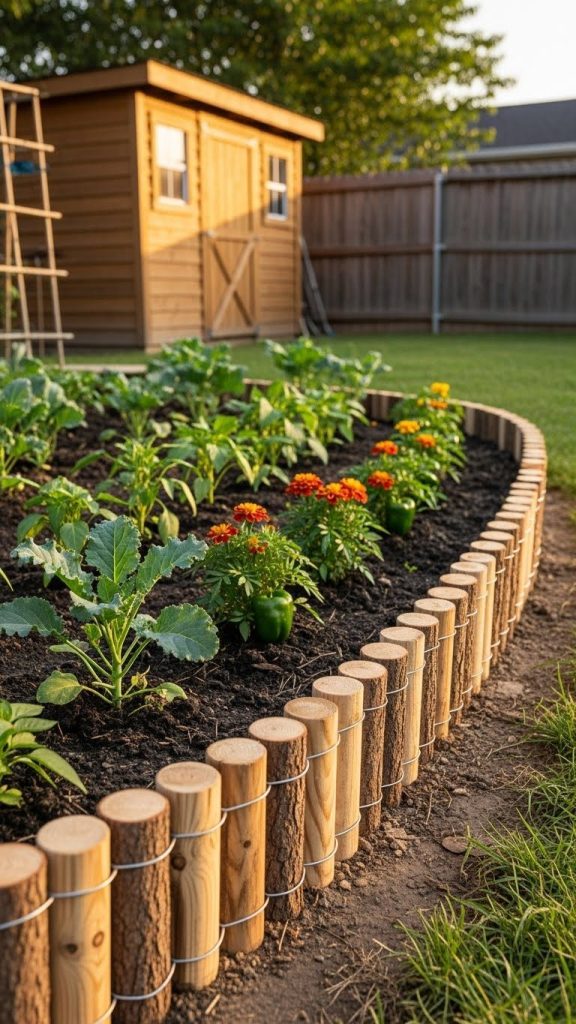
Rolled log edging looks cozy and classic. You find these logs in home improvement stores at a low cost, or you can make your own from cut branches. When you lay them in gentle curves, they frame beds in a friendly way.
They suit vegetable patches, small seating areas, and shaded gardens. The rounded top softens the edge compared to straight planks. If you secure the logs well, they last several seasons without shifting.
Pros
- Soft, friendly appearance
- Works well around curved beds
- Affordable compared to full timber
- Easy to install
Cons
- Logs weather and darken
- Requires staking to stay stable
Mini takeaway
Rolled logs create approachable borders that feel homey and warm.
15. Cheap Concrete Pavers Turned Sideways for a Slim Urban Look
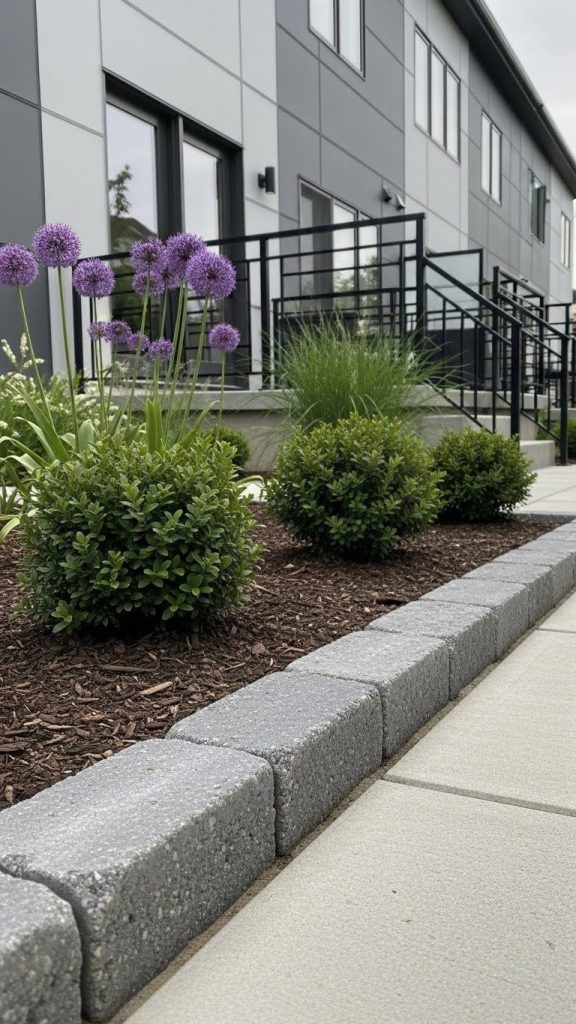
Concrete pavers offer a surprisingly sleek border when you stand them on their narrow edge. This technique gives the garden a polished look similar to pricier materials. I see many homeowners use old pavers from patio replacements.
The slim vertical line feels modern without trying too hard. It works beautifully along straight beds or walkways. You only need a small trench and compacted soil to hold everything in place.
Pros
- Very sturdy
- Urban, clean look
- Low cost when using leftovers
- Minimal maintenance
Cons
- Requires careful leveling
- Heavy pieces take effort to move
Mini takeaway
Turning pavers sideways gives you a crisp, stylish border at a fraction of the typical cost.
Conclusion
You don’t need a huge budget or fancy materials to create neat borders. Small, inexpensive ideas often shape a yard more effectively than big projects. I like how each option on this list brings its own personality. Some ideas feel relaxed, some feel structured, and others spark a little creativity. You can try one border this weekend and instantly see a difference, which always feels rewarding.
Pick the edging that matches your style and your energy level. Start with one small bed, and notice how the entire yard feels more intentional afterward. Sometimes that tiny line between lawn and soil changes everything. Try your favorite idea first and enjoy the small win.

William Martin is a passionate bowler who spends most of his weekends playing the sport. With years of intense experience under his belt, William decided to share his knowledge by creating BOWLING OCEAN. Join me on this journey to explore the world of bowling and discover the tips and tricks to becoming a pro.