Zen Garden Ideas for Small Spaces: 15 Creative Ways to Create Calm in Compact Corners
There’s something magical about a Zen garden — that quiet, balanced energy that makes you instantly breathe slower. But here’s the catch: not everyone has the luxury of a big backyard to build one. The good news? You don’t need acres of land or fancy landscaping to create your own peaceful escape. With the right mix of texture, plants, and design tricks, even the tiniest balcony or patio can feel like a Zen haven.
Let’s talk Zen garden ideas for small spaces that actually work — simple, elegant, and realistic setups you can pull off without breaking the bank (or your back).
1. Mini Gravel Garden with Stone Path
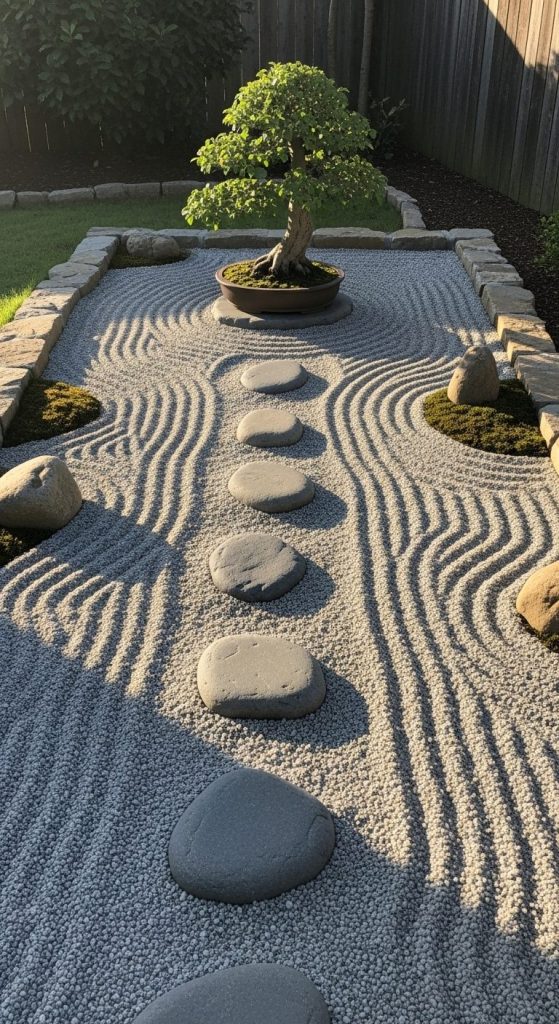
A classic Zen setup doesn’t need to be huge. A mini gravel garden can fit even in the corner of a small patio or courtyard. Rake fine white gravel into soothing patterns, then add smooth river stones or stepping stones for that authentic Japanese touch.
Pros:
- Super low-maintenance and budget-friendly.
- Instantly gives a meditative, minimalist look.
- Works perfectly in tight spaces or between existing features.
Cons:
- Gravel can scatter in windy areas.
- Requires occasional raking to keep it neat.
Ever noticed how a small corner suddenly feels spacious when it’s clean and symmetrical? That’s the Zen trick. It’s all about calm through simplicity.
2. Vertical Zen Wall Garden
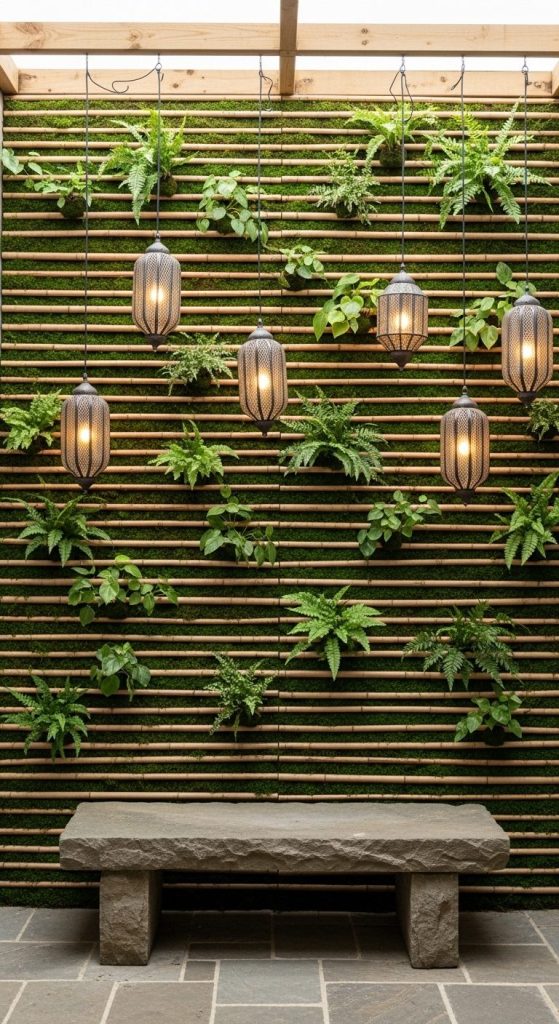
Who says gardens have to grow horizontally? A vertical Zen wall lets you bring greenery to small patios or balconies without losing floor space. Use wooden slats, bamboo panels, or modular planters to grow moss, succulents, or ferns.
Pros:
- Saves tons of space.
- Adds fresh oxygen and a lush texture to hardscapes.
- Doubles as privacy screen.
Cons:
- Needs occasional pruning.
- May require proper irrigation setup.
According to a Houzz survey, over 40% of small-home gardeners now prefer vertical planters for compact spaces. It’s efficient and beautiful.
3. Tabletop Zen Garden
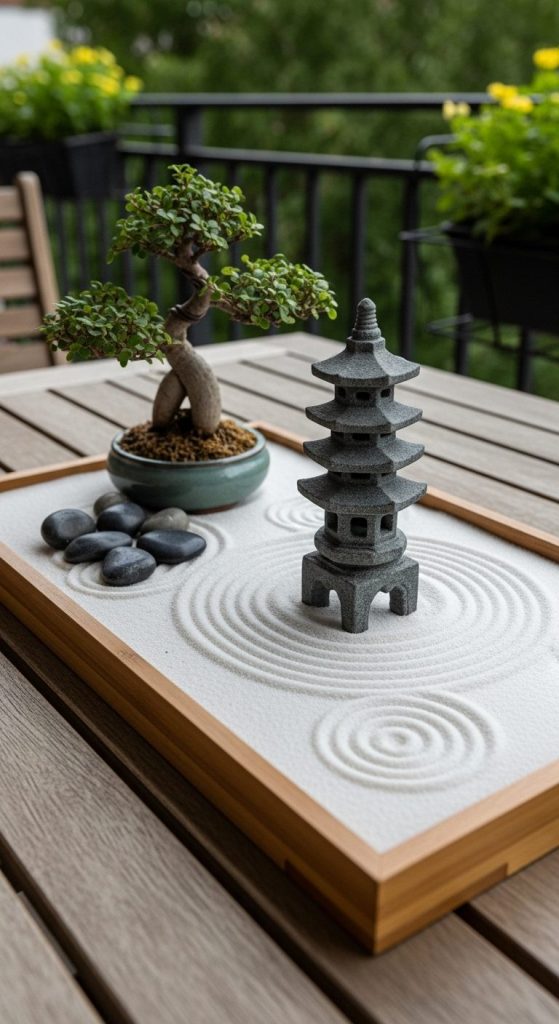
Sometimes, the best Zen garden fits right on your coffee table. Create a mini Zen tray with fine sand, small rocks, and a few decorative elements like a tiny pagoda or bonsai.
Pros:
- Perfect for apartments or offices.
- Portable — move it wherever you want peace.
- Great stress-relief tool.
Cons:
- Not weatherproof — better indoors.
Ever tried raking sand while you think? It’s oddly calming. Seriously, this little thing can be your therapy on tough days.
4. Corner Bamboo Oasis
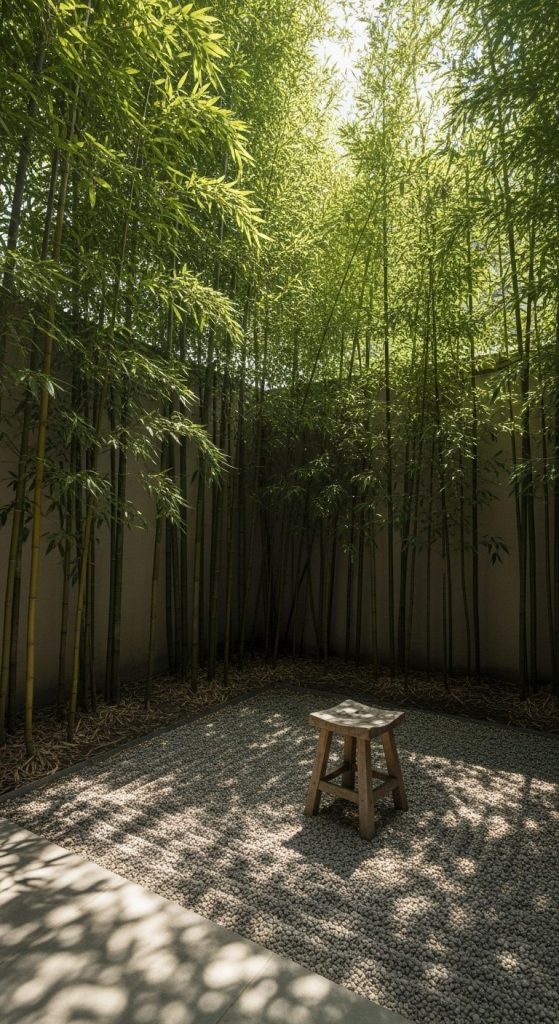
Even a small corner can become your private retreat with bamboo planters. They grow tall, create privacy, and move gently in the breeze — pure Zen energy.
Pros:
- Natural sound barrier and screen.
- Very low-maintenance once established.
- Adds instant texture and movement.
Cons:
- Needs root containment; bamboo spreads fast.
IMO, bamboo is the secret weapon of small-space Zen design — light, airy, and serene.
5. Zen Garden with Water Bowl
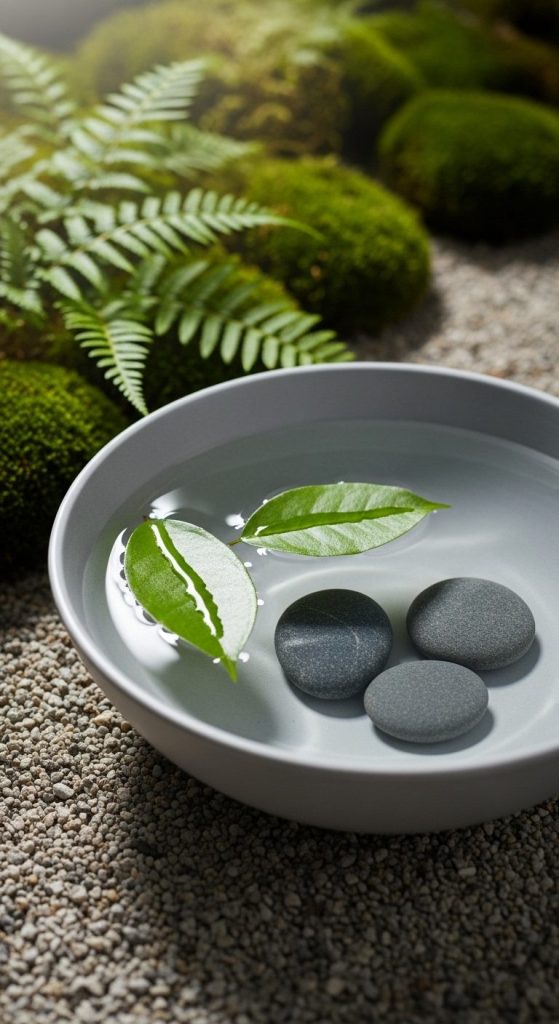
Water adds instant calm. For small spaces, skip large fountains and use a stone or ceramic water bowl with floating leaves or pebbles. The subtle sound of trickling water works wonders.
Pros:
- Compact yet adds sensory depth.
- Great for meditative focus.
- Enhances humidity for nearby plants.
Cons:
- Needs regular water refills.
FYI, studies show that the sound of flowing water reduces stress by up to 30%, according to the National Institute for Health. That’s science meeting serenity.
6. Balcony Zen Retreat
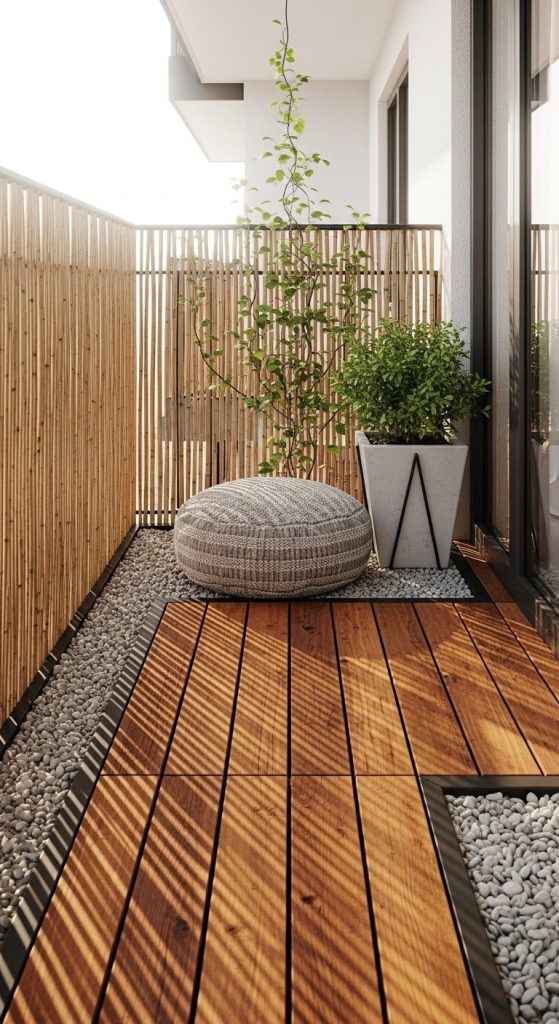
Turn your balcony into a calm sanctuary with wooden decking, small pebbles, and low planters. Add a cushion seat or meditation mat — voilà, your balcony Zen garden is ready.
Pros:
- Ideal for apartments.
- Customizable to your style — rustic, modern, or minimalist.
- Adds instant resale appeal.
Cons:
- Limited weight capacity on some balconies.
Imagine sipping tea out there every morning — not bad for a few planters and stones, right?
7. Bonsai-Centered Zen Garden
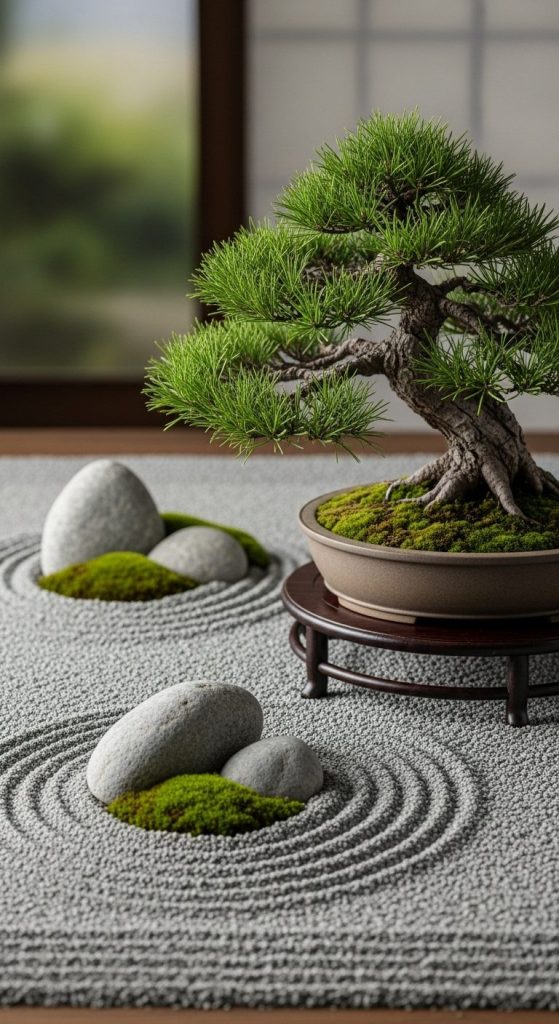
Bonsai trees practically define Zen living. Build your small Zen setup around a single, stunning bonsai in a pot, surrounded by gravel and accent rocks.
Pros:
- Visually powerful focal point.
- Symbolizes balance and patience.
- Minimal space requirement.
Cons:
- Requires pruning and care.
There’s something deeply satisfying about trimming bonsai — like editing chaos into calm.
8. Modern Minimalist Zen Layout
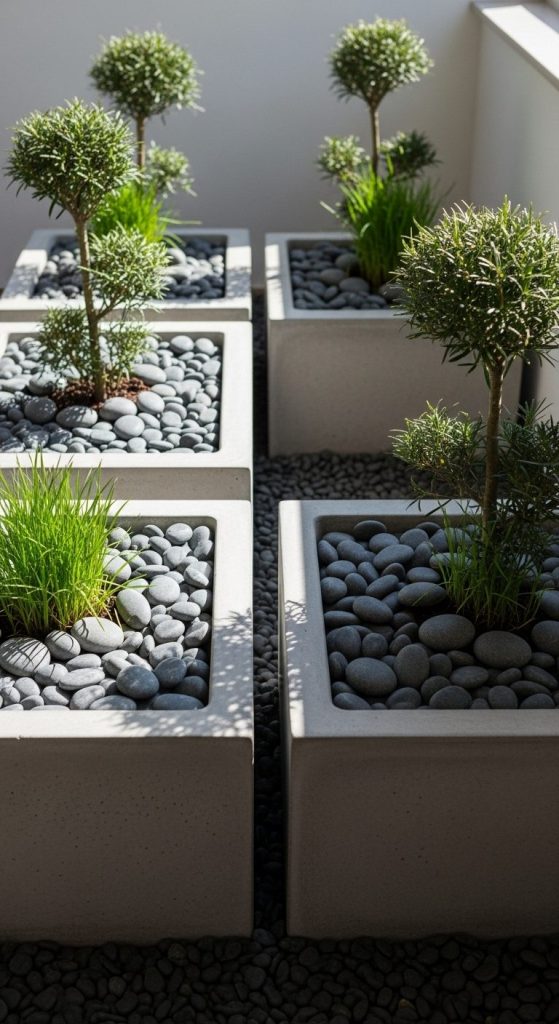
If you like clean lines and geometric order, try a modern Zen setup: rectangular planters, monochrome gravel, and structured plants like dwarf grasses.
Pros:
- Matches contemporary architecture.
- Low clutter and easy to maintain.
- Perfect for narrow patios.
Cons:
- May feel a bit sterile if overdone.
Keep it balanced — too little feels cold, too much breaks the Zen.
9. Moss and Stone Harmony
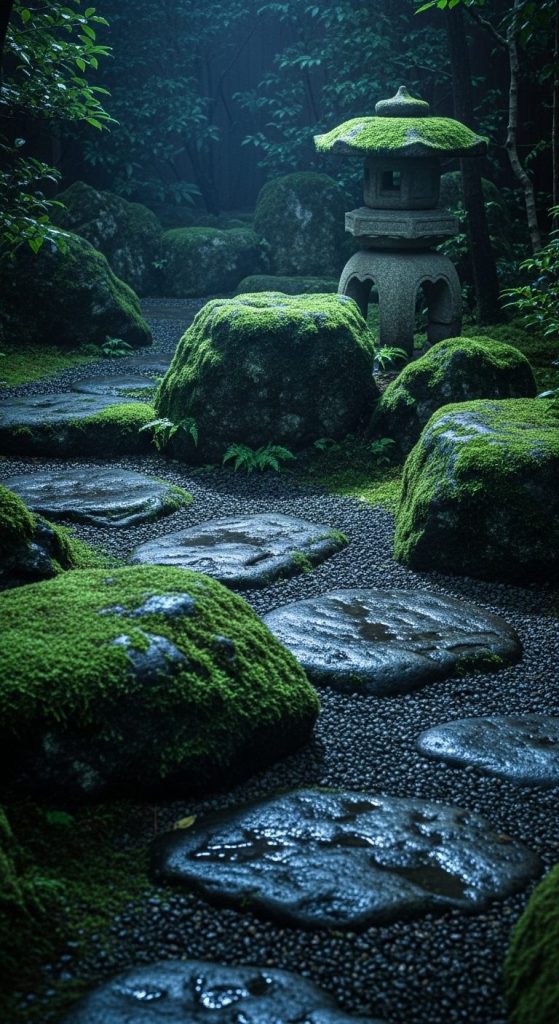
If you’ve got shady areas, moss is your best friend. Mix mossy rocks, stone lanterns, and damp textures to create a lush, earthy mini Zen space.
Pros:
- Thrives in shade and moisture.
- Adds organic softness and quiet texture.
- No mowing, no fuss.
Cons:
- Doesn’t do well in hot, dry zones.
Ever seen a moss garden after rain? It glows like emerald velvet — pure tranquility.
10. Zen Garden in a Pot
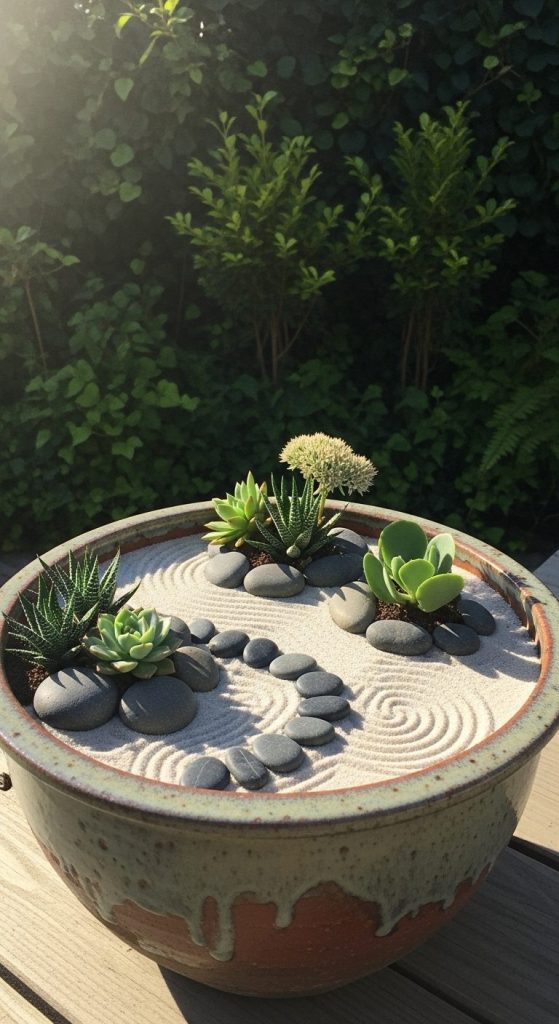
Yup, you can literally grow peace in a pot. Fill a large container with sand, stones, and tiny succulents for an easy portable Zen garden.
Pros:
- Great for renters.
- Easy to rearrange and redesign.
- Cheap and fast to build.
Cons:
- Needs occasional dusting or refresh.
Perfect for coffee tables, patios, or small corners that need life.
11. Lantern-Lit Zen Path
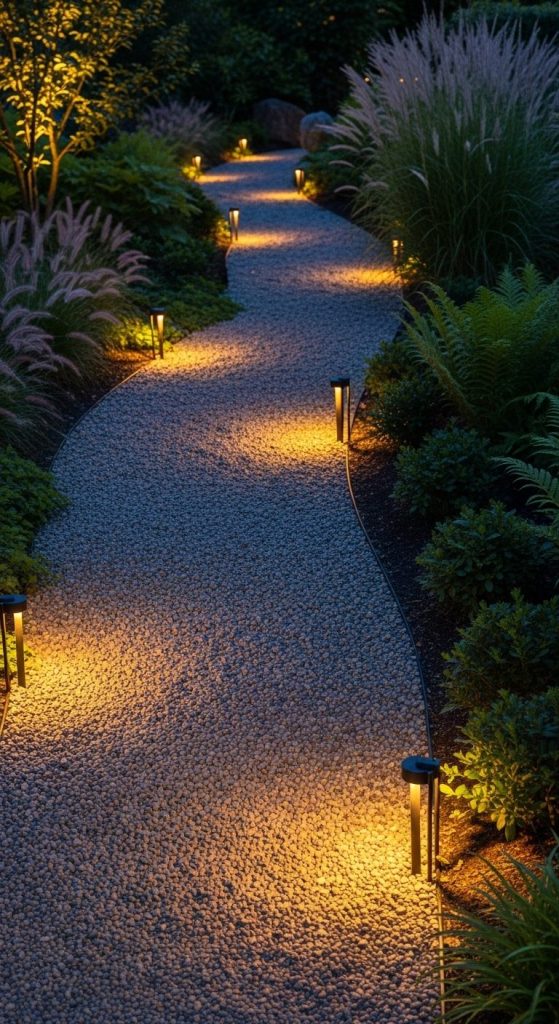
Lighting is everything. Use small LED lanterns or solar lights along a gravel or stepping-stone path to bring a magical evening glow to your Zen corner.
Pros:
- Extends usability at night.
- Adds cozy ambiance.
- Increases safety around garden paths.
Cons:
- Solar lights fade over time.
Light and shadow balance — it’s the essence of Zen design.
12. Mini Meditation Zone
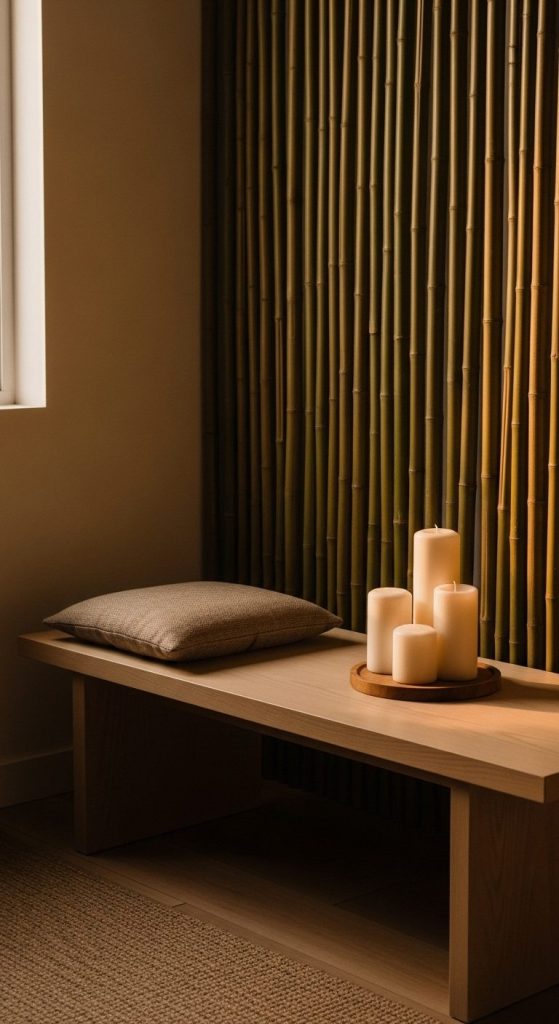
Even a 4×4 space can hold a personal meditation corner. Use a small bench, bamboo backdrop, and candles. Keep decor minimal and calming.
Pros:
- Encourages mindfulness and relaxation.
- Easy to adapt anywhere.
- Budget-friendly.
Cons:
- Needs regular decluttering.
This setup reminds you to just sit and breathe — the simplest form of therapy.
13. Zen Succulent Garden
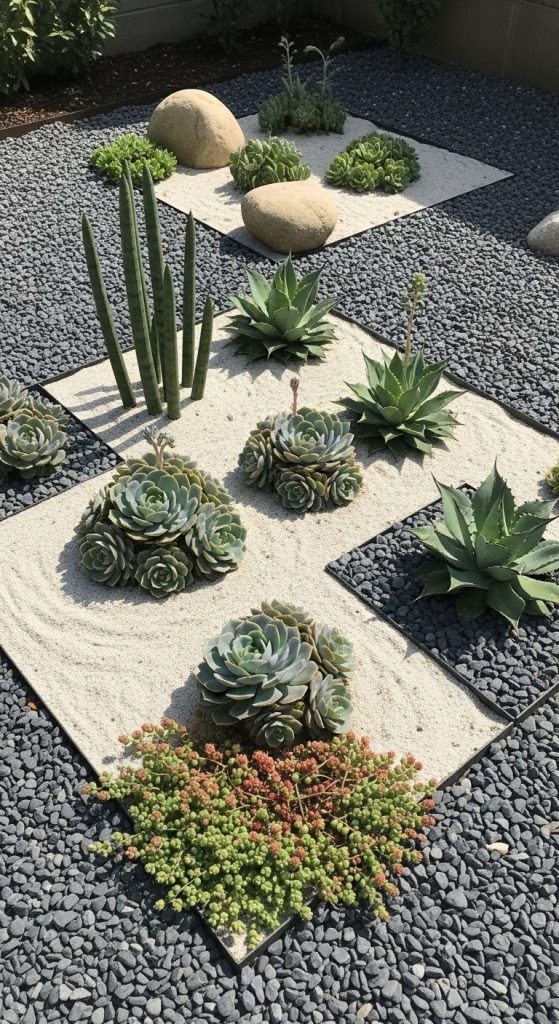
Succulents aren’t traditional in Zen design, but they’re great for small spaces. Arrange succulents in sand or gravel beds for a drought-friendly, minimalist look.
Pros:
- Almost zero maintenance.
- Works in hot, dry climates.
- Endless color and shape options.
Cons:
- Not ideal for humid areas.
Succulent Zen gardens are like modern art — compact, stylish, and full of personality.
14. Pebble Mosaic Centerpiece

Get a bit creative and design a pebble mosaic in your small Zen yard or patio. Form patterns like waves, circles, or lotus shapes with contrasting stone colors.
Pros:
- Unique and artistic.
- Durable — lasts years.
- Reflects your personal creativity.
Cons:
- Needs time and patience to design.
It’s hands-on, meditative, and honestly fun — your own artistic therapy session.
15. Portable Tray Zen Garden for Outdoors
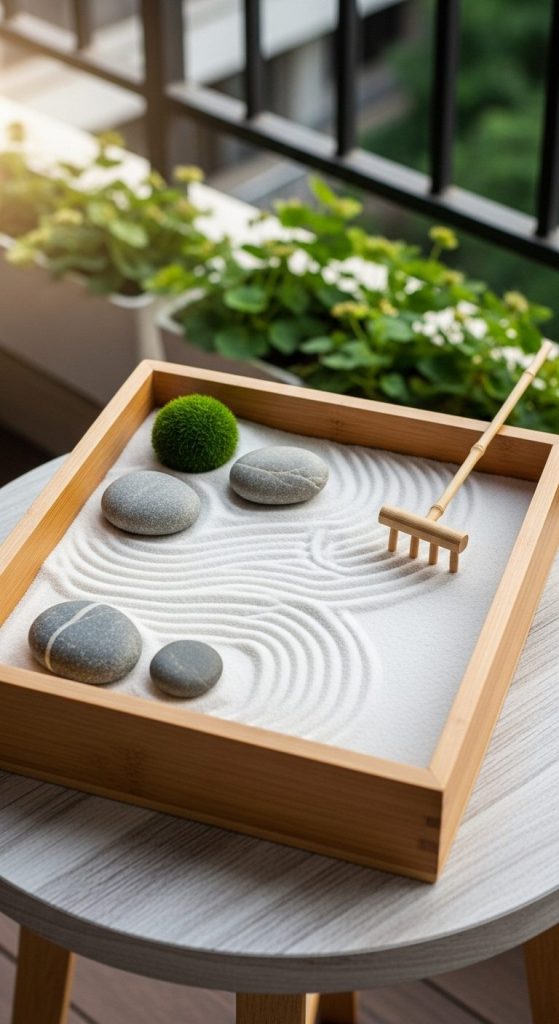
For renters or travelers, a portable Zen tray is the perfect solution. Create a weatherproof version with sand, stones, and mini decor in a wooden tray you can move indoors or outdoors.
Pros:
- Totally flexible placement.
- Compact and lightweight.
- Great introduction to Zen design.
Cons:
- Limited visual scale compared to ground setups.
This is how you bring serenity anywhere — even a studio balcony can feel like Kyoto for a moment.
Conclusion
Creating a Zen garden in small spaces isn’t about size — it’s about sensation. It’s about texture, balance, and a quiet moment that reminds you life can be peaceful, even when space (and time) are tight. Whether you’re designing a gravel corner, a tabletop tray, or a vertical wall garden, remember that Zen isn’t built — it’s felt.
Start small, stay consistent, and watch how your tiny garden transforms your mood every day. Because peace doesn’t need space — just intention.

William Martin is a passionate bowler who spends most of his weekends playing the sport. With years of intense experience under his belt, William decided to share his knowledge by creating BOWLING OCEAN. Join me on this journey to explore the world of bowling and discover the tips and tricks to becoming a pro.