15 Cottage Garden Allotment Ideas That Actually Work in Real Life
I remember the day I got my first allotment key. That feeling of walking onto a bare patch of earth, knowing it could become anything I wanted, was both thrilling and terrifying. Fast forward through years of trial, error, and plenty of happy accidents, and I’ve learned that the best approach is blending beauty with productivity.
The thing about a cottage garden allotment is that it’s not just about growing food—it’s about creating a space that feeds your soul too. Historically, cottage gardens were practical spaces where peasants grew food, herbs, and flowers together in abundance. That same spirit lives on in modern allotments, and honestly, it makes so much sense.
Why grow only vegetables when you can have flowers spilling everywhere, pollinators buzzing, and a space that feels like a little sanctuary? Here are 15 genuine, achievable ways to bring cottage garden charm to your allotment plot.
1. The Productive Flower and Veg Mix Border
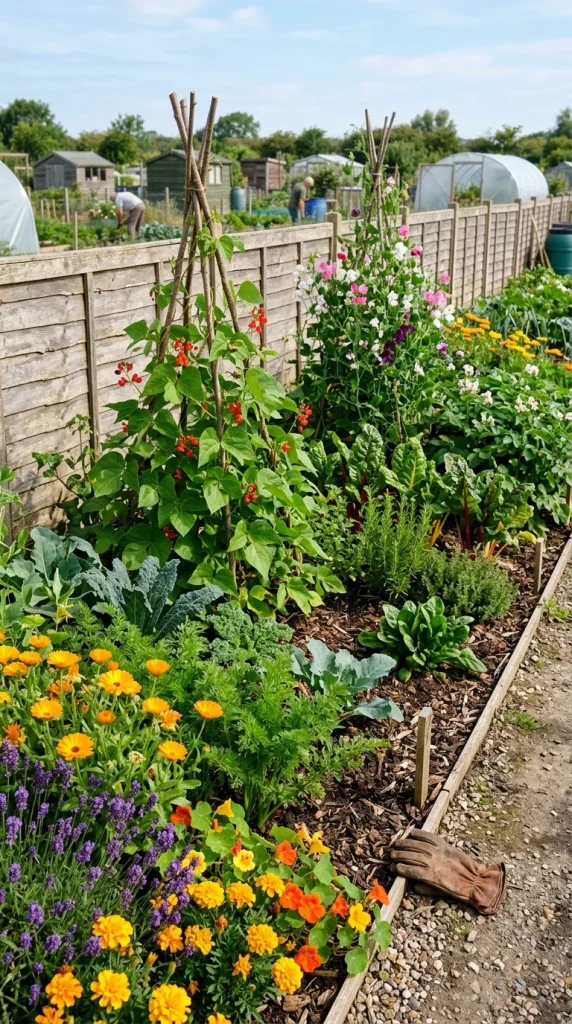
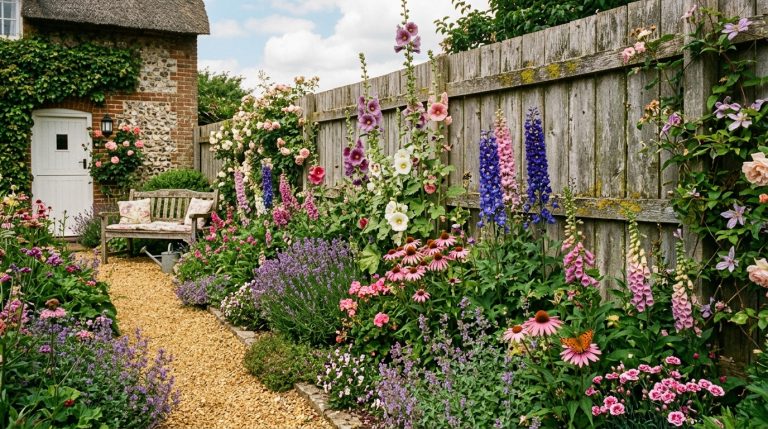
This is where the magic happens. Instead of separating your vegetables into neat rows and flowers into a separate bed, mix them together. Plant climbing beans next to sweet peas, let calendula grow between your brassicas, and tuck lavender at the edges of your onion bed.
The flowers attract pollinators that boost your veg yields, and the combination looks stunning. I started doing this after reading how traditional cottage gardens worked this way, and my plot has never looked better or been more productive.
Pros
- Boosts pollination for your vegetables
- Creates a beautiful, abundant look
- Maximises every inch of space
Cons
- Takes more planning than single-crop rows
- Can make harvesting trickier
The blending is the whole point. It’s not messy—it’s intentional abundance.
2. Accessible Paths Hidden in Plain Sight
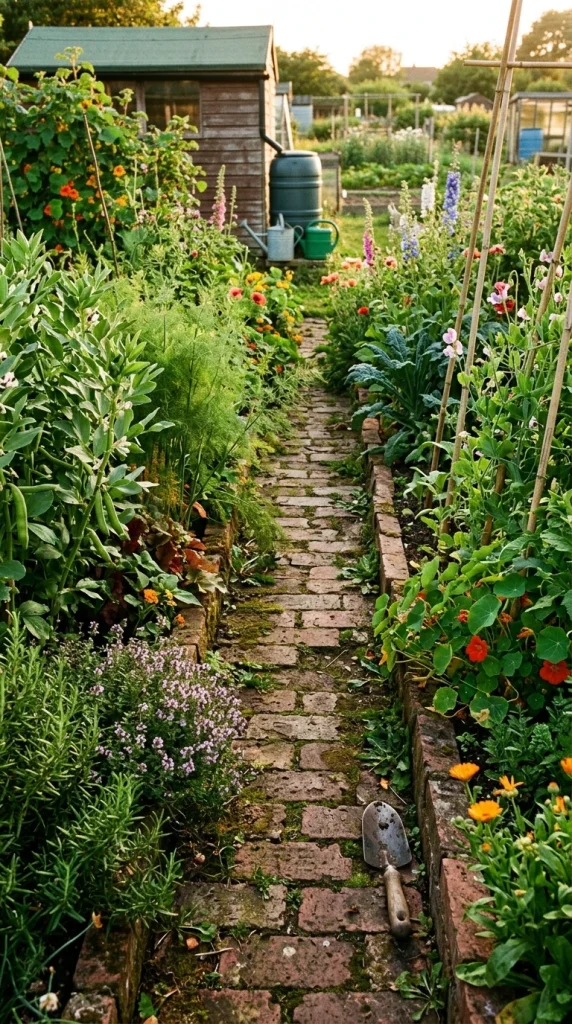
One of the biggest challenges with a cottage garden allotment is getting in to weed and harvest without trampling your plants. The solution? Create narrow paths that disappear when everything is in full growth.
A brick path about a foot wide, spaced every 3-4 feet, gives you access points that vanish under foliage by midsummer. It’s a simple trick that makes maintenance so much easier.
Pros
- Allows easy access for weeding and harvesting
- Paths disappear when plants are mature
- Creates structure without formality
Cons
- Requires initial installation work
- Bricks can harbour weed seeds
I learned this one the hard way after years of balancing on boards to reach the back of beds. A few bricks made all the difference.
3. The Rustic Brick Layout
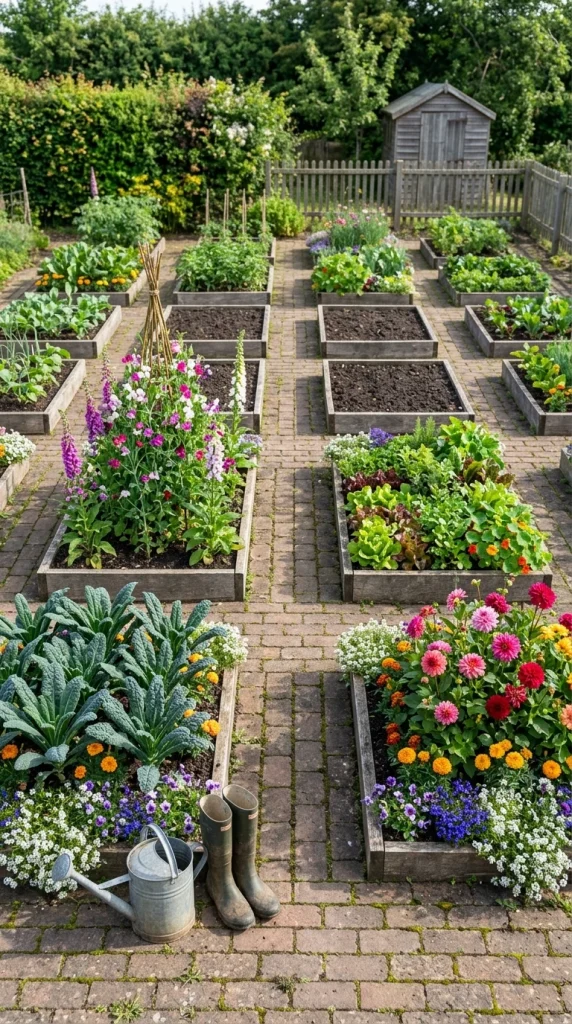
If you’re starting from scratch, consider a formal bed layout with informal planting. One plotter described creating 16 squares measuring about 3.5 feet each, separated by brick paths. The structure is tidy, but the planting is riotous.
This approach gives you clear access while allowing flowers to spill over the edges. It’s perfect for a cottage garden allotment because it combines practicality with charm.
Pros
- Clear, manageable bed system
- Brick paths are durable and attractive
- Easy to rotate crops
Cons
- Bricks can be heavy to source and lay
- May not suit very wet sites
This structure gives you bones, then you let the plants do the softening work.
4. Bee-Friendly Planting Zones
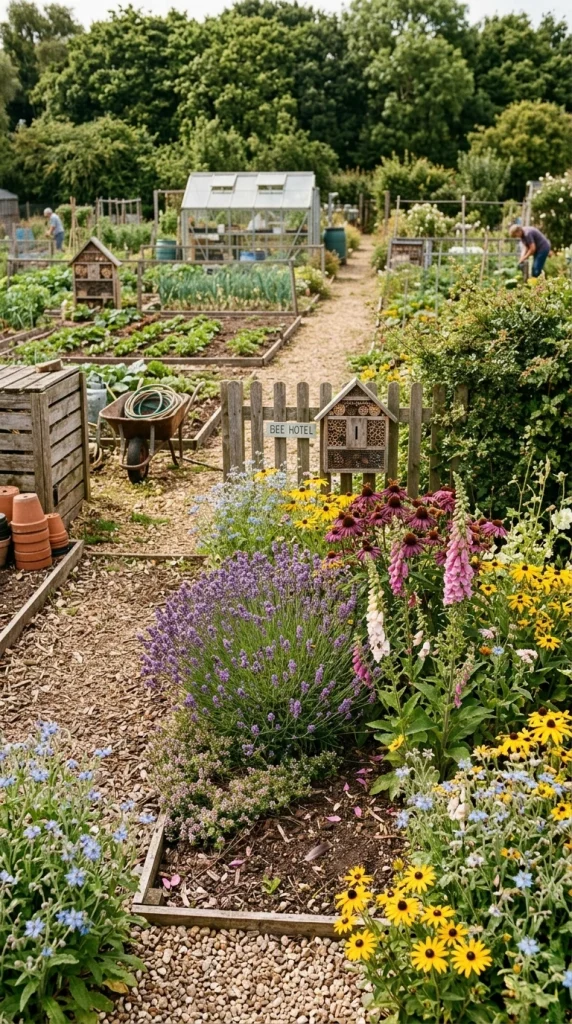
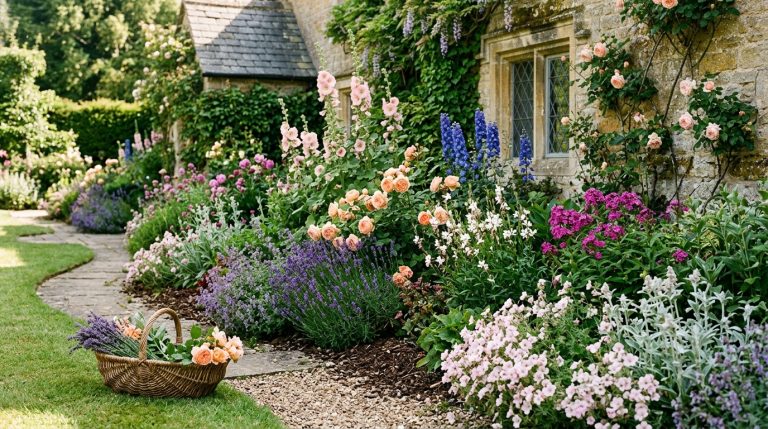
Modern allotment design increasingly incorporates biodiversity features. Dedicate a section of your plot to pollinator-friendly plants like lavender, echinacea, and foxgloves.
These plants not only look gorgeous but also draw in bees that will pollinate your fruit and veg. It’s a win-win. One allotment gardener I know created a wildlife pond as part of her cottage garden allotment, and the difference it made to the local insect life was incredible.
Pros
- Supports local pollinators and biodiversity
- Beautiful to look at
- Helps your vegetables produce more
Cons
- Takes space away from edible crops
- Some flowers can self-seed aggressively
The bees will thank you, and your neighbours will appreciate the flowers too.
5. Recycled and Second-Hand Structures
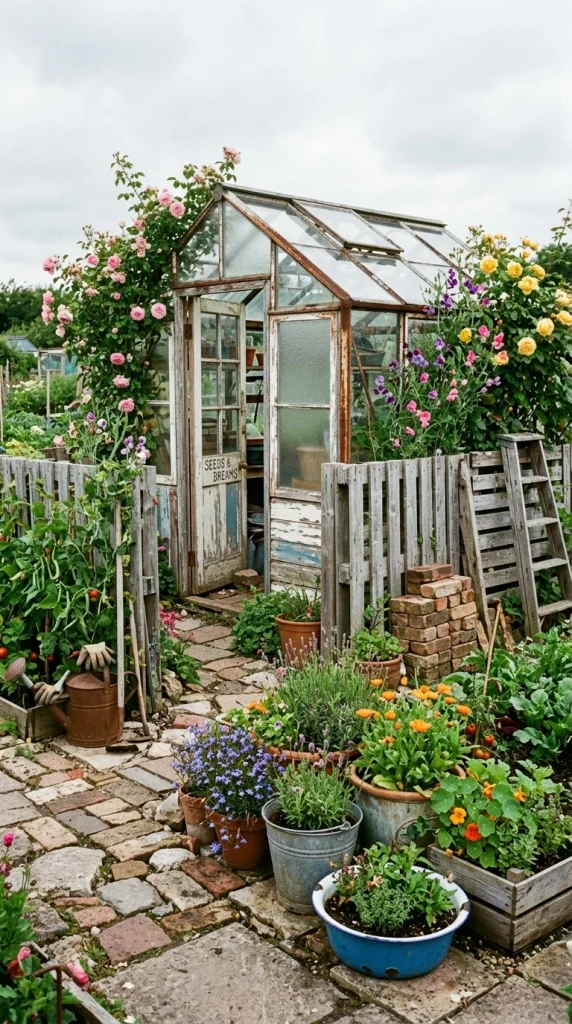
You don’t need new everything. Many successful allotment gardens are built from salvaged materials. Think a greenhouse from a local seller, paving slabs from marketplace, and pallets turned into fencing.
This approach keeps costs down and gives your cottage garden allotment a beautifully eclectic, lived-in feel. One plotter even got paint free from their local tip.
Pros
- Budget-friendly
- Eco-friendly and sustainable
- Creates unique character
Cons
- Takes time to source materials
- Some items may need repair
I’ve found that second-hand structures often have more character than anything new. Plus, the hunt is half the fun.
6. A Small Wildlife Pond
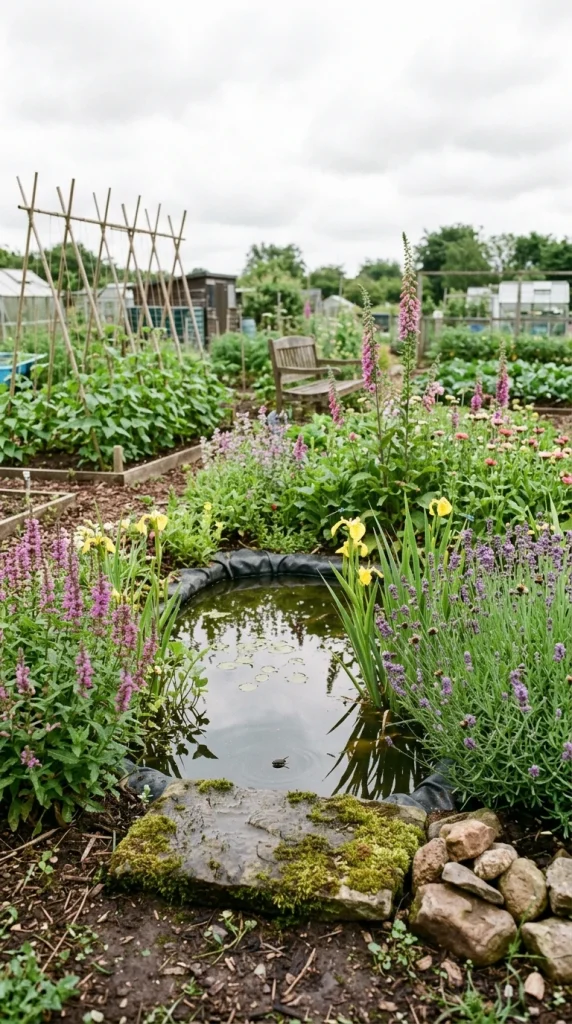
A pond doesn’t have to be huge to make a difference. Even a small lined area, about a metre across, brings frogs, newts, and dragonflies to your cottage garden allotment.
It becomes a focal point, attracts wildlife that eats pests, and adds a soothing element to the space. Plant native marginal plants around the edges to soften it and give creatures somewhere to hide.
Pros
- Increases biodiversity significantly
- Attracts pest-eating amphibians
- Creates a beautiful feature
Cons
- Needs topping up in dry weather
- Safety considerations if children visit
This was a game-changer on my plot. The frogs arrived within weeks and the slugs disappeared.
7. Cottage-Style Planters for Patio Areas
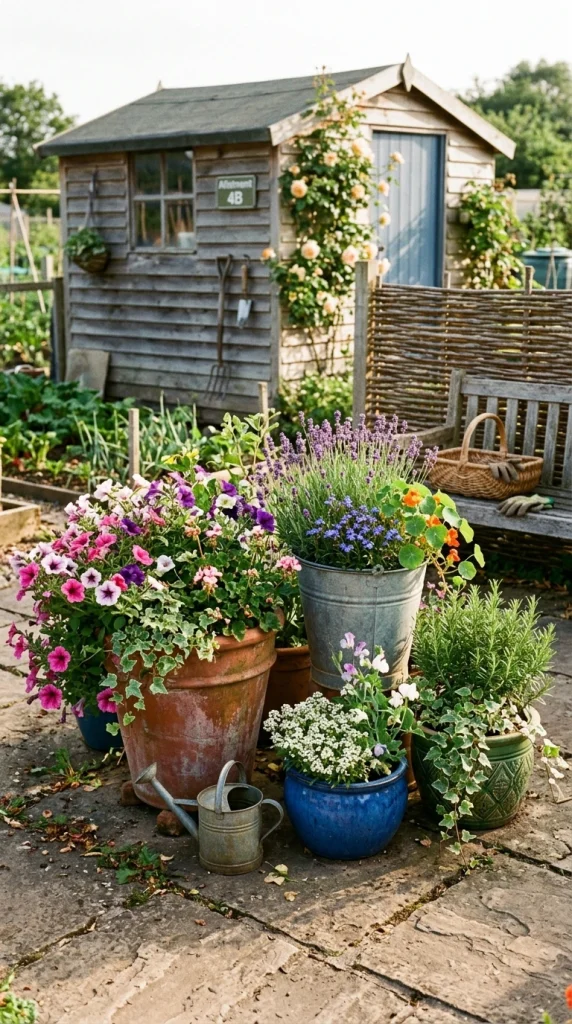
If your allotment has a hardstanding area or communal space, bring the cottage garden feel with containers. Terracotta pots, old buckets, or even wellies can be planted with colourful annuals and trailing plants.
Group them around your seating area or shed entrance for instant charm. It’s a flexible way to add colour without committing to permanent beds.
Pros
- Flexible and movable
- Instant colour and impact
- Great for small or hardstanding spaces
Cons
- Need regular watering
- Plants may need replacing seasonally
Containers are like jewellery for the plot—they add personality and sparkle.
8. A Climbing Archway at the Entrance
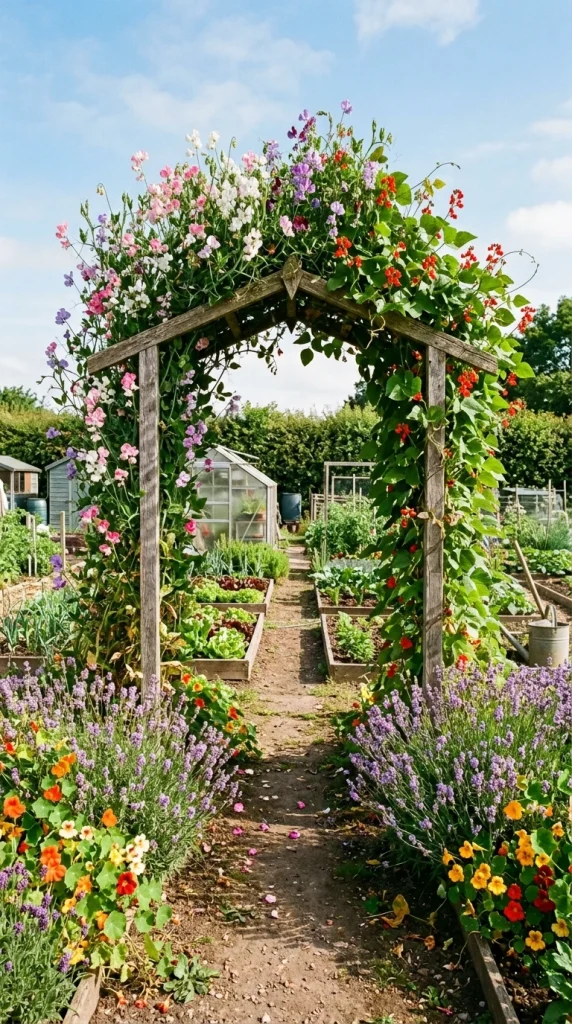
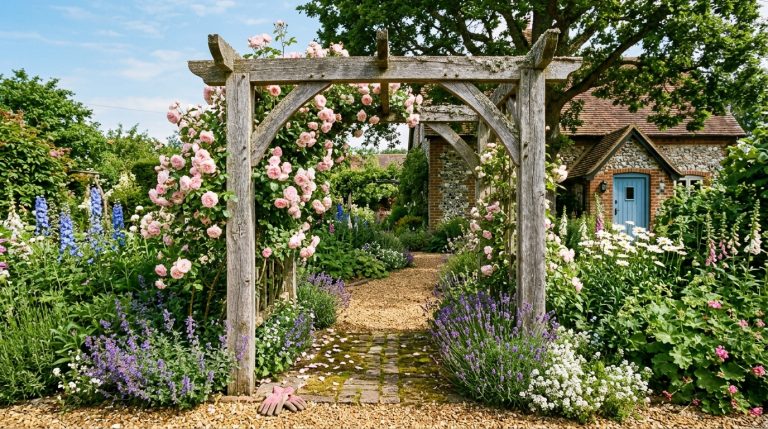
Mark the entrance to your cottage garden allotment with a wooden arch or metal obelisk. Train sweet peas, runner beans, or climbing roses over it.
It creates a stunning first impression and signals that this plot is something special. Plus, the climbers use vertical space, so you’re not losing ground area.
Pros
- Creates a striking entrance
- Maximises vertical growing space
- Supports both flowers and veg
Cons
- Needs annual maintenance and training
- Takes a season or two to establish
Stepping through a flower-covered arch never gets old. It’s the moment the plot becomes a destination.
9. Mixed-Species Native Hedging Around the Edge
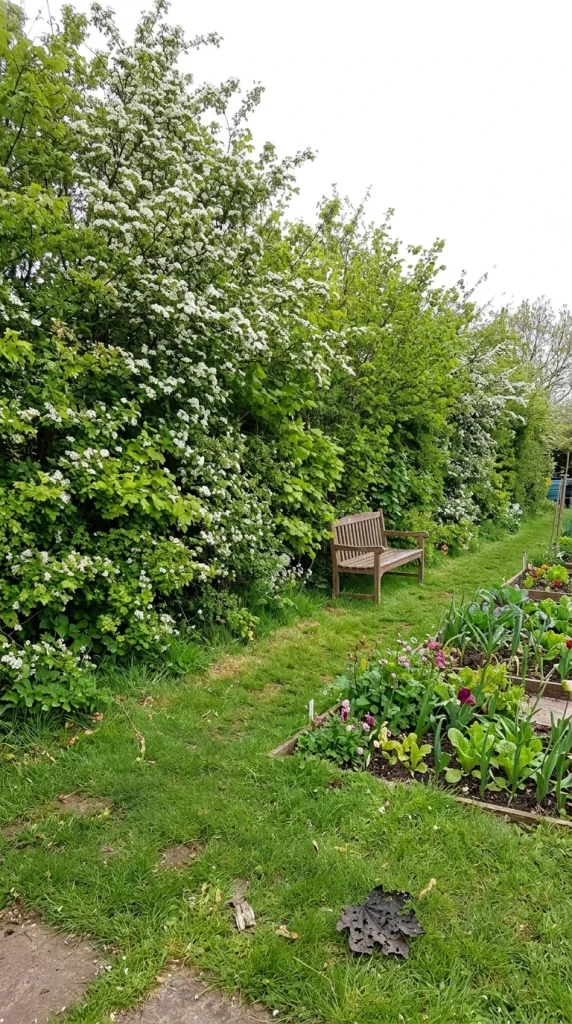
Instead of a solid fence, consider planting a native hedge around part of your plot. Mixed species like hawthorn, hazel, and field maple provide habitat for wildlife and act as a natural windbreak.
This aligns beautifully with the cottage garden allotment aesthetic, softening boundaries and supporting biodiversity. It takes patience to establish, but the long-term benefits are huge.
Pros
- Supports wildlife and biodiversity
- Creates a natural, beautiful boundary
- Acts as a windbreak for your crops
Cons
- Takes several years to establish
- Needs annual pruning
- Can encroach on neighbour’s plot
This is the slow route to beauty, but it’s so worth it. A hedge has more character than any fence.
10. Permanent Features Within a Productive Plot
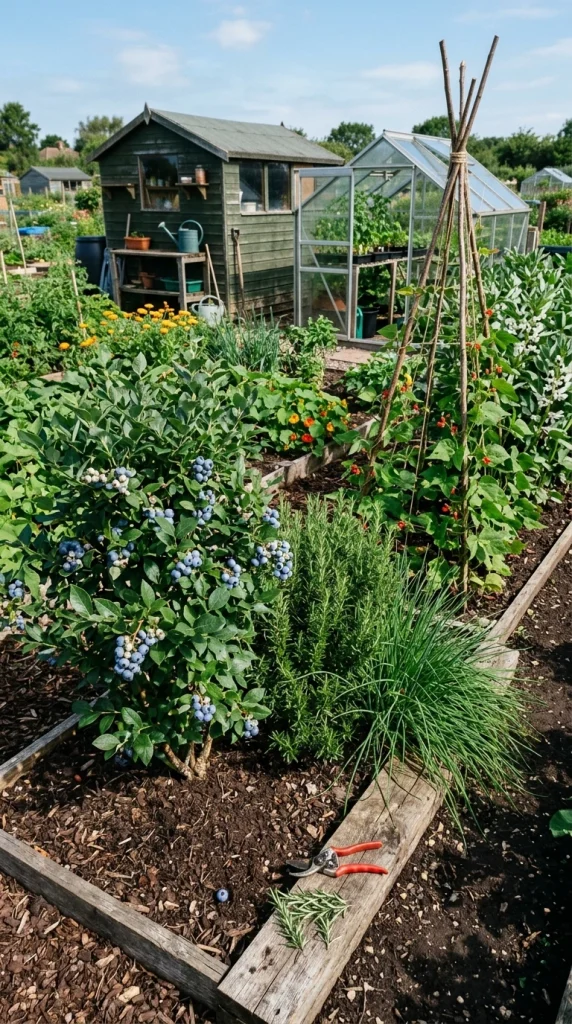
Designate a small area of your allotment for permanent planting. This might include fruit bushes, herbs, or perennial flowers that don’t need annual digging.
These areas add structure and reduce the amount of ground you need to dig each year. Plus, they provide food and habitat for wildlife. Just ensure at least two-thirds of your plot remains in cultivation, as most tenancy agreements require.
Pros
- Reduces annual digging workload
- Provides year-round structure
- Supports perennial crops and flowers
Cons
- Reduces flexibility for crop rotation
- Roots can compete with neighbouring crops
I’ve found that having a few established plants gives my plot a sense of permanence and history.
11. A Drying Station for Herbs and Flowers
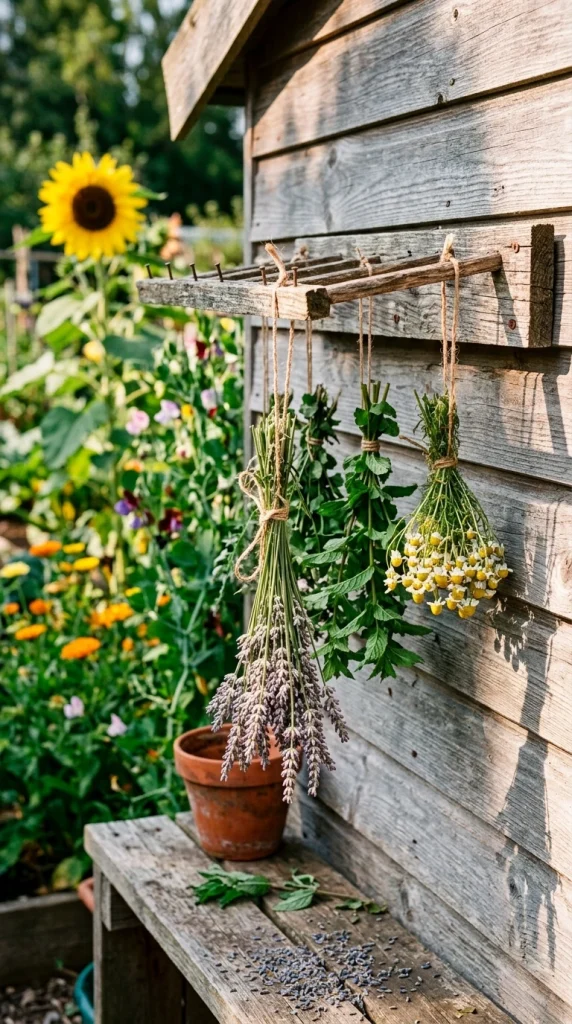
A simple wooden rack attached to a shed or fence can hold bundles of drying herbs and flowers. This practical feature fits perfectly into the cottage garden aesthetic.
Hang lavender, mint, chamomile, or seed heads to dry. It’s functional, beautiful, and a great conversation starter with neighbouring plotholders.
Pros
- Practical and useful
- Visually interesting
- Uses vertical space
Cons
- Needs a sunny, dry spot
- Can attract pests if not maintained
This is one of those features that feels so satisfying. You’re literally harvesting the fruits of your labour.
12. A Small Seating Area for Enjoying the Plot
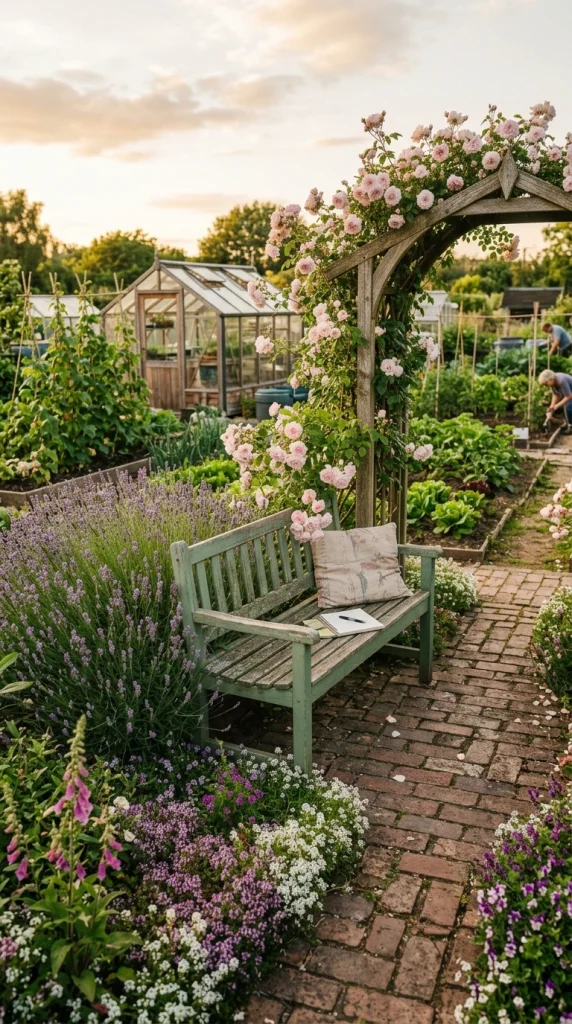
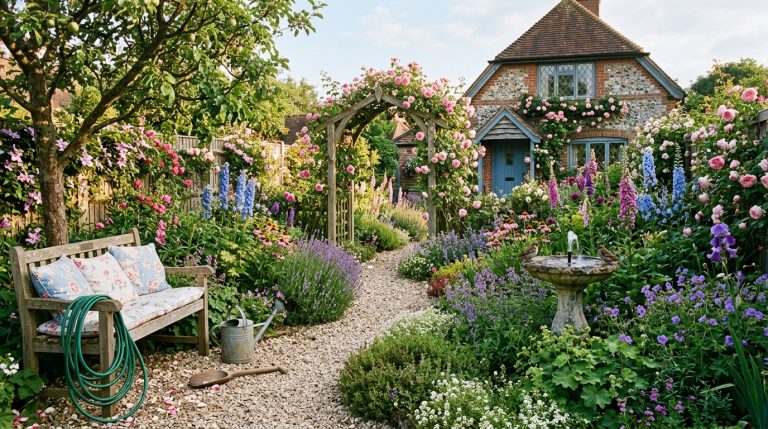
Don’t forget to include somewhere to sit. Even a single wooden chair or a bench tucked into a corner of your cottage garden allotment makes a huge difference.
Surround it with fragrant plants like lavender or roses, and you’ve created a space to pause and appreciate the view. It turns the plot from a workspace into a haven.
Pros
- Encourages rest and relaxation
- Creates a personal sanctuary
- Makes the plot feel more like a garden
Cons
- Takes up valuable growing space
- Furniture needs weather protection
I spend more time sitting on my plot than I care to admit. Sometimes that’s the most productive thing you can do.
13. Formal Raised Beds with Informal Planting
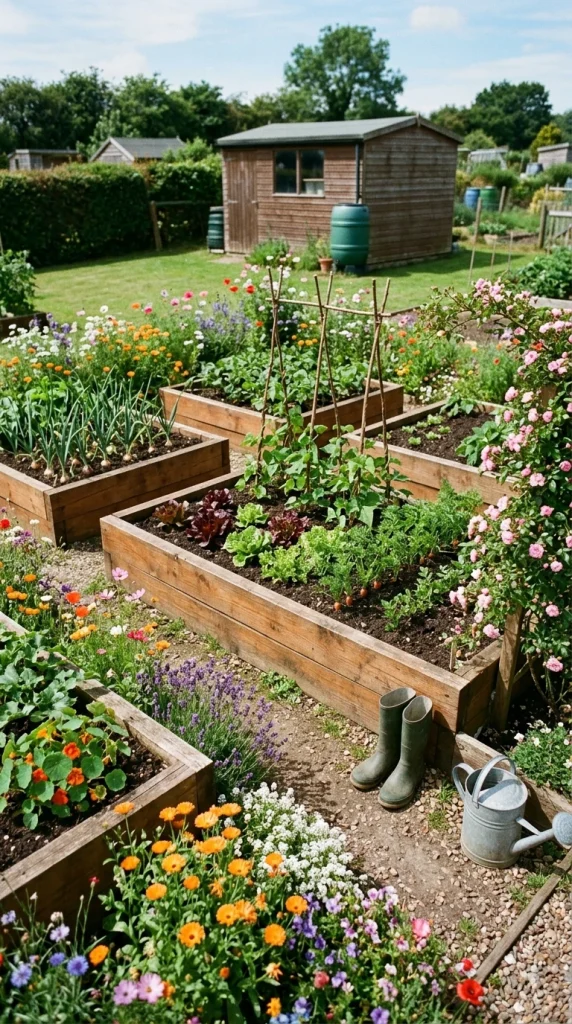
Consider raised beds for your vegetable growing, then plant flowers and herbs in the gaps. The beds provide structure and good drainage, while the soft planting softens the edges.
This combination works beautifully on allotments where soil quality may vary. The raised beds give you control over your growing medium, while the flowers attract pollinators and add colour.
Pros
- Improves drainage and soil control
- Reduces bending and weeding
- Creates a clear growing area
Cons
- Can be expensive to build
- May require more watering
Raised beds give you the best of both worlds—order for the veg, chaos for the flowers.
14. A Cutting Garden Area
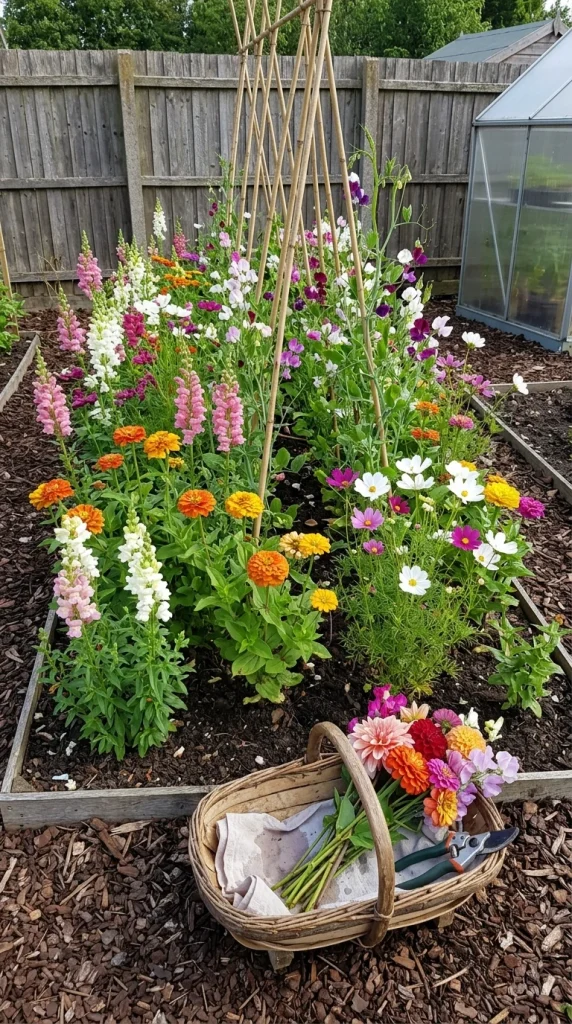
Dedicate a section of your plot to flowers specifically for cutting. Dahlias, cosmos, and sweet peas are perfect choices.
Having a cutting garden means you can bring fresh flowers home regularly without stripping your main borders. It adds another layer of joy to the allotment experience.
Pros
- Provides flowers for the house
- Encourages repeat flowering
- Beautiful to look at
Cons
- Takes space from vegetables
- Some cut flowers need regular picking
There’s nothing quite like walking home with a bunch of flowers you grew yourself. It’s the best kind of souvenir.
15. A Small Greenhouse with Cottage Garden Surroundings
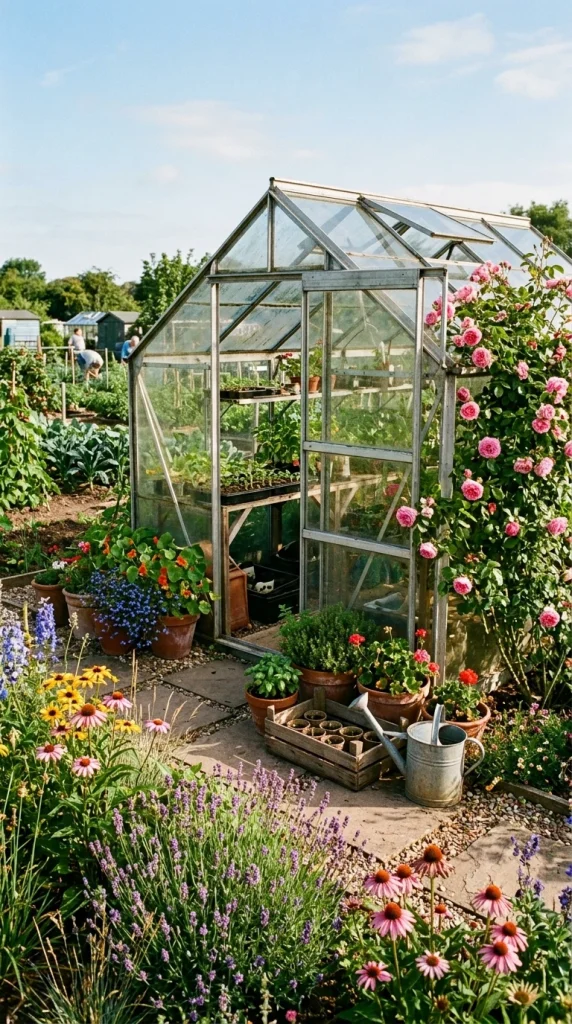
A small greenhouse is a huge asset for seed starting and extending the season. Surround it with cottage-garden style plantings to soften its edges.
Plant climbing beans or sweet peas to scramble up the sides, and put herbs in pots at the base. It blends the practical with the beautiful, creating a focal point that pulls the whole plot together.
Pros
- Extends the growing season
- Provides protected space for seedlings
- Adds structure and height
Cons
- Can be expensive
- Needs a level base
- Requires annual cleaning
My greenhouse is the heart of my plot. It looks even better with flowers climbing over it.
Wrapping Up Your Allotment Journey
A cottage garden allotment is about so much more than just growing food. It’s about creating a space that feeds you in every way—with fresh produce, with beauty, with peace. The best plots have flowers alongside the veg, structure alongside the chaos.
I’ve learned that the key is to make it work for you, not to copy anyone else’s idea exactly. Your plot, your style, your rules. Mix the practical with the pretty, and don’t be afraid to experiment. Some things will flourish, some will fail, and that’s all part of the adventure.
Start with one idea that excites you. Maybe it’s a cutting garden, maybe it’s a wildlife pond. Then see where it takes you. Your perfect cottage garden allotment is waiting to be created.

William Martin is a passionate bowler who spends most of his weekends playing the sport. With years of intense experience under his belt, William decided to share his knowledge by creating BOWLING OCEAN. Join me on this journey to explore the world of bowling and discover the tips and tricks to becoming a pro.