Drought Tolerant Garden Ideas: Create Beauty That Thrives Without Constant Watering
Ever noticed how some gardens look lush and alive even during scorching heat waves? I used to think those homeowners had some secret irrigation magic — until I discovered the world of drought-tolerant gardening. The truth is, you can build a stunning, vibrant garden that sips water instead of guzzling it. And the best part? It doesn’t have to look dry or barren.
Whether you live in a dry climate or just want to cut your water bill, drought tolerant garden ideas are a game-changer. It’s about smarter design, resilient plants, and embracing a more natural look that works with your environment, not against it.
Let’s explore 15 creative, down-to-earth ideas to help you design a water-wise oasis that’s as stunning as it is sustainable.
1. Embrace Native Plants — Nature’s Built-In Drought Solution
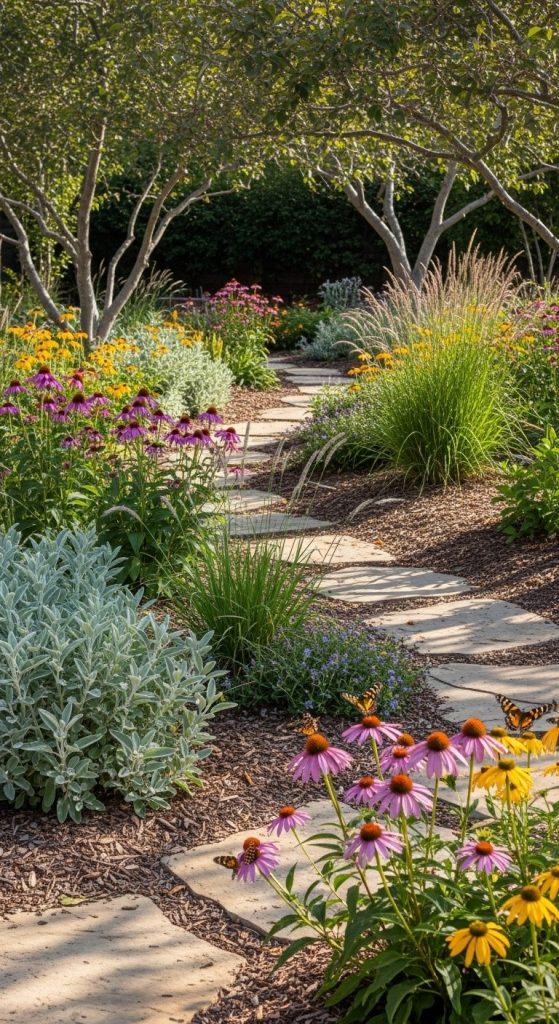
The easiest way to go drought-tolerant? Choose plants that already thrive in your local climate. Native plants evolved to handle your weather patterns — including dry spells.
Pros:
- Low maintenance once established.
- Naturally resistant to local pests and diseases.
- Require minimal water after the first growing season.
Cons:
- Limited selection depending on your region.
- May not match every garden style.
I once swapped half my lawn for native grasses and wildflowers, and honestly, it transformed everything — fewer chores, more butterflies. IMO, starting with native species is the smartest (and easiest) foundation for a drought-resistant garden.
2. Swap Grass for Gravel or Ground Covers
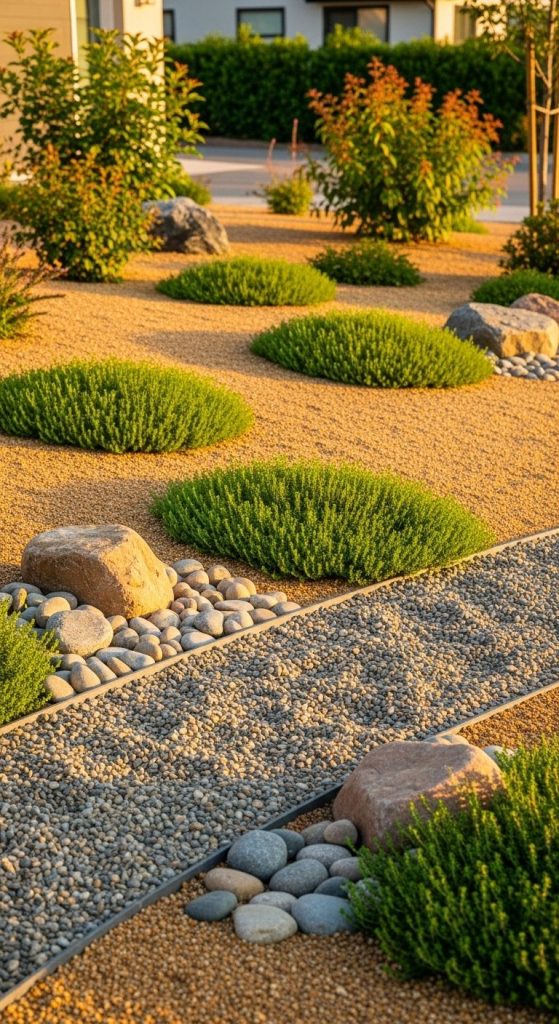
Lawns are thirsty. Replacing grass with gravel paths, decomposed granite, or low-growing ground covers saves gallons of water every week.
Pros:
- Massive water savings.
- Adds interesting textures and layers.
- Great for modern, minimalist garden styles.
Cons:
- Gravel can heat up under direct sun.
- Needs occasional weeding to stay tidy.
A mix of crushed stone and creeping thyme feels soft underfoot but still drought-friendly. Once you see how effortless it is to maintain, you won’t miss mowing one bit.
3. Design with Succulents for Sculptural Impact
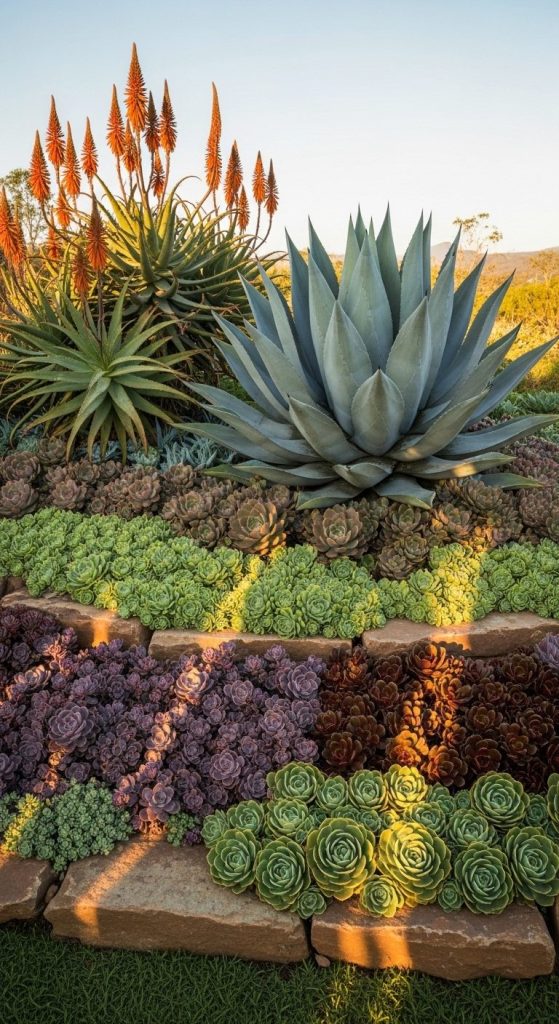
Succulents aren’t just for planters — they make jaw-dropping landscape elements. Their geometry and color variety make every corner feel alive.
Pros:
- Store water efficiently, perfect for dry climates.
- Require minimal watering and thrive in poor soil.
- Offer endless shapes, from rosettes to spiky bursts.
Cons:
- Some varieties can suffer in cold climates.
- Can look sparse if not balanced with other textures.
I’ve used succulents like agave, aloe, and sedum along pathways — they’re tough as nails and ridiculously photogenic.
4. Add Mulch — The Unsung Hero of Water Retention
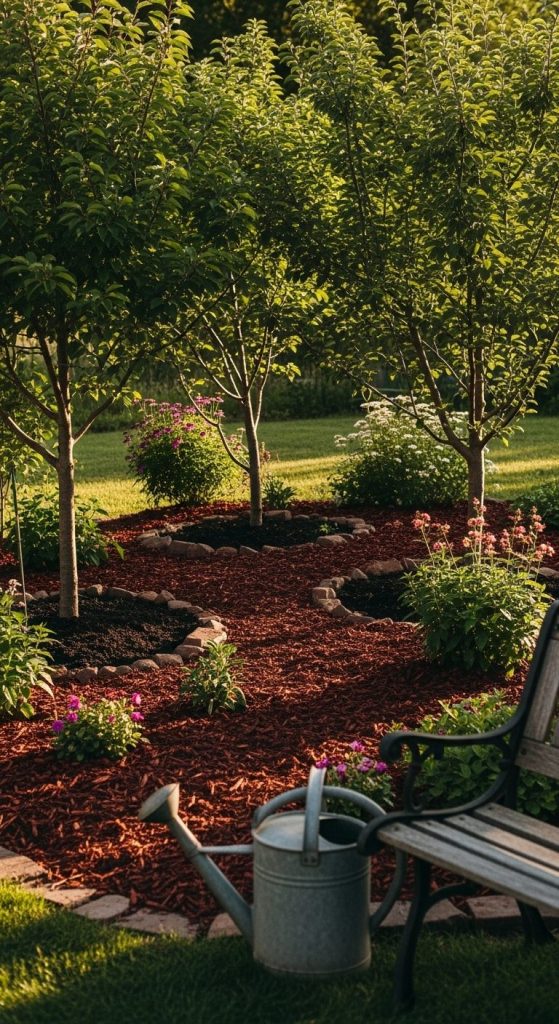
Mulch might not sound glamorous, but it’s a drought garden’s best friend. It keeps moisture locked in, roots cool, and weeds down.
Pros:
- Reduces evaporation and water loss.
- Improves soil health as it decomposes.
- Gives garden beds a clean, finished look.
Cons:
- Needs topping up every year or two.
- Can attract bugs if piled against stems.
Think of mulch as your soil’s sunscreen — it protects everything beneath. A thick, even layer can make a huge difference in keeping plants hydrated.
5. Build a Rock Garden for Drama and Drainage

Rocks are both decorative and practical. They channel rainwater where you want it and retain coolness beneath the surface.
Pros:
- Excellent drainage — prevents root rot.
- Adds contrast and structure to soft foliage.
- Virtually zero maintenance.
Cons:
- Can trap heat in exposed spots.
- Rocks may shift over time and need resetting.
I love how rock gardens turn water scarcity into an art form. Plus, they pair beautifully with succulents and ornamental grasses.
6. Use Drip Irrigation for Efficient Watering
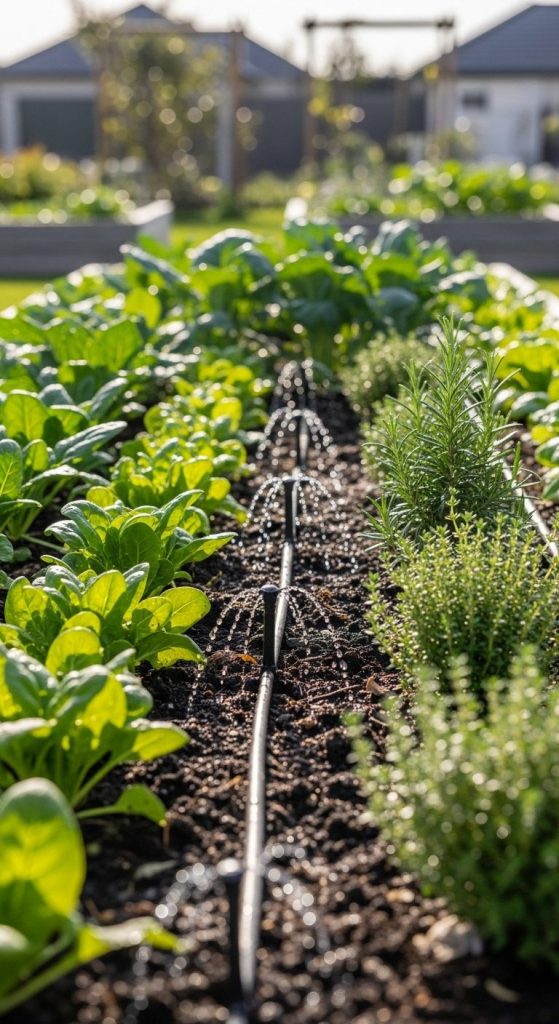
Traditional sprinklers waste tons of water through evaporation. A drip system targets roots directly — efficient and plant-friendly.
Pros:
- Saves up to 50% more water than sprinklers.
- Reduces weeds by limiting water spread.
- Easy to automate with timers.
Cons:
- Needs occasional flushing to prevent clogs.
- Initial setup takes time and planning.
Once I switched to drip irrigation, my plants thrived, and my water bill dropped noticeably. Smart irrigation truly pays for itself.
7. Create Shade with Trees and Pergolas
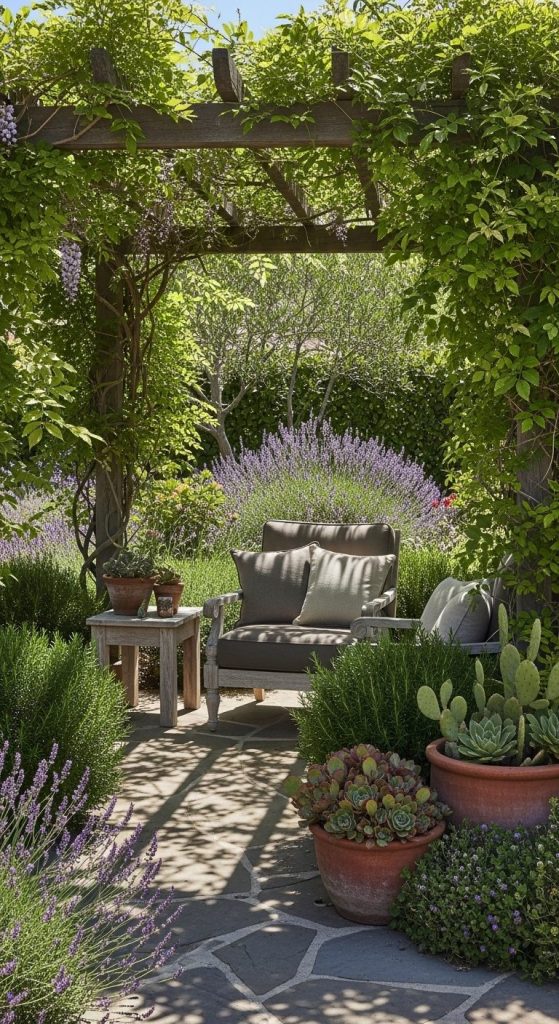
It’s not just plants that need relief from the sun — soil does too. Shaded areas lose less moisture, keeping your garden cooler overall.
Pros:
- Reduces water evaporation.
- Adds comfort for people and plants.
- Enhances the visual layering of your landscape.
Cons:
- Trees take time to mature.
- Shade-loving plants must be chosen carefully.
Even a simple wooden pergola draped with vines can make a world of difference. Shade is a natural ally in water-wise design.
8. Choose Ornamental Grasses for Texture and Movement
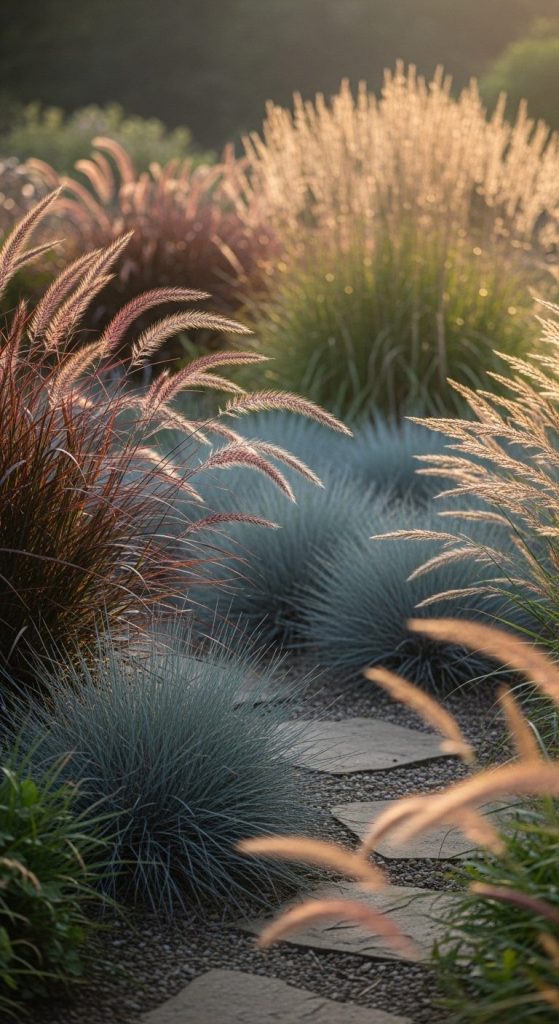
Grasses like blue fescue, feather reed grass, and fountain grass are stunning in dry landscapes. They add softness and rhythm with every breeze.
Pros:
- Tolerate heat and low moisture.
- Require little maintenance once established.
- Create movement and sound in the garden.
Cons:
- Need annual trimming to look neat.
- Some can spread if not contained.
When backlit by evening sun, ornamental grasses glow like they’re on fire — it’s a showstopper moment every single day.
9. Plant in Layers to Maximize Moisture Retention
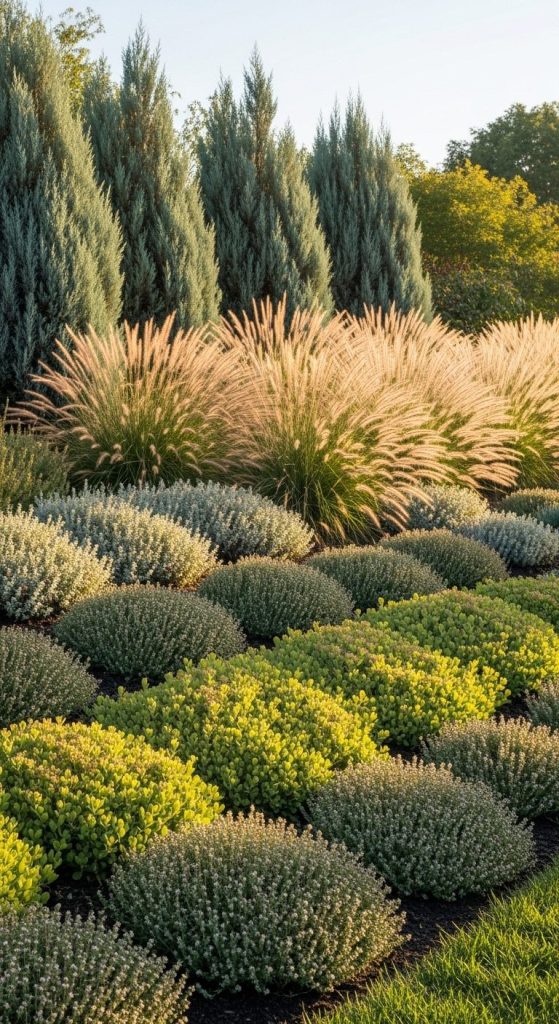
Layering plants isn’t just for looks — it helps the ecosystem within your garden retain moisture naturally.
Pros:
- Upper layers shade lower ones, reducing evaporation.
- Mimics natural forest ecosystems.
- Allows a mix of textures and heights.
Cons:
- Needs thoughtful planning for sun and root space.
- Some plants may compete if overcrowded.
I often use taller shrubs in the back, mid-level grasses, and ground covers in front — a natural water-saving design that looks lush, not sparse.
10. Use Containers Strategically
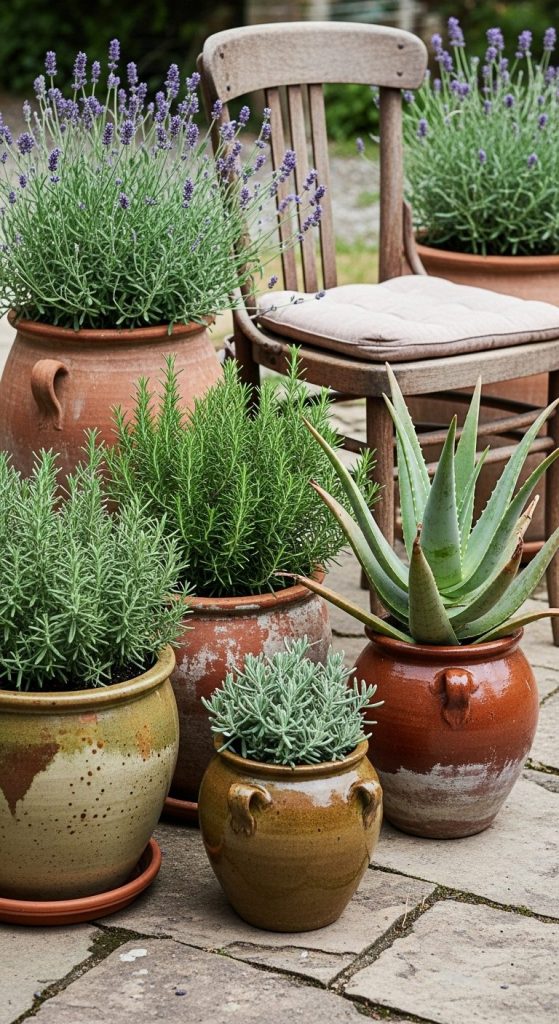
Container gardens don’t just belong on patios. With the right soil mix, you can create portable, drought-tolerant arrangements anywhere.
Pros:
- Easy to move for optimal sunlight or shade.
- Require less overall watering than in-ground beds.
- Perfect for small spaces or renters.
Cons:
- Dry out faster in intense sun.
- Need occasional repotting or soil refresh.
My trick? Add a bit of coconut coir to retain moisture and use self-watering planters. Works like a charm even in heatwaves.
11. Install Rain Barrels and Collect Runoff
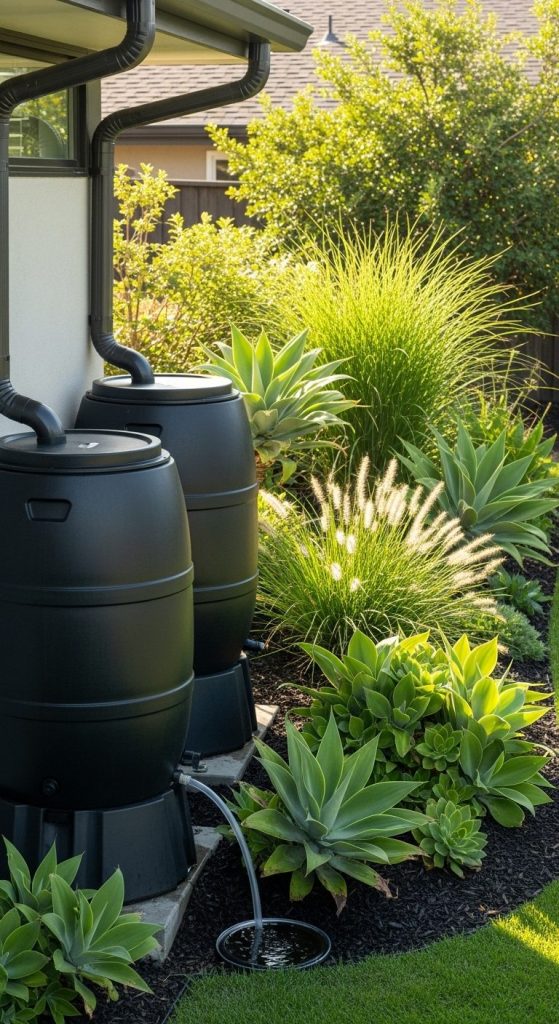
Yes, drought-tolerant gardens still use water — just wisely. Harvesting rainwater gives you a sustainable, free resource.
Pros:
- Cuts down on water bills.
- Provides chemical-free hydration for plants.
- Encourages mindful water use.
Cons:
- Requires setup and occasional cleaning.
- May be restricted in some regions (check local laws).
It’s satisfying watching barrels fill during a rare rainstorm, knowing that water will keep your plants happy for weeks.
12. Design with Desert Inspiration
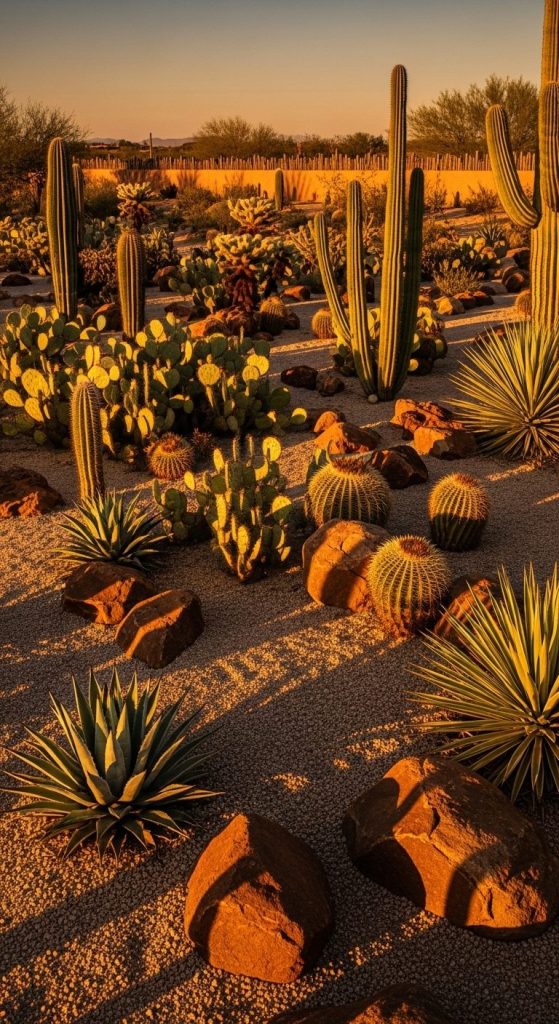
You don’t need to live in Arizona to channel desert vibes. Cacti, agave, gravel, and rust-hued stone bring warmth and structure.
Pros:
- Minimal water requirement.
- Architectural plants create bold silhouettes.
- Works well with modern and minimalist designs.
Cons:
- Prickly varieties can be unfriendly to kids or pets.
- Sparse look may not appeal to everyone.
A desert-inspired garden feels timeless and cinematic — like you’ve captured a piece of the Southwest in your backyard.
13. Add Art and Sculptural Elements
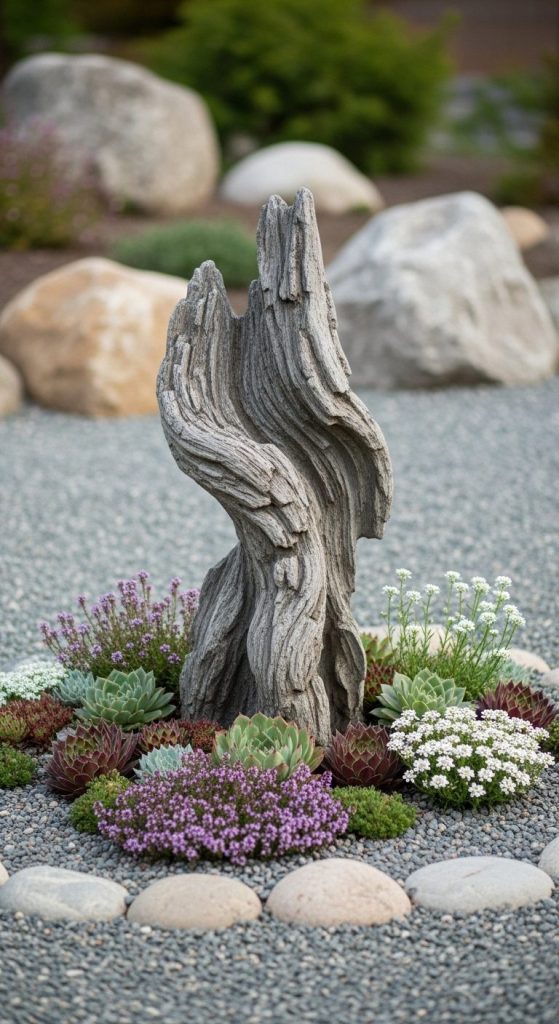
When plants take a backseat, art steps forward. Garden sculptures, ceramic pots, and minimalist benches add personality without needing a drop of water.
Pros:
- Adds visual interest even during dry seasons.
- Defines focal points and structure.
- Low maintenance and long-lasting.
Cons:
- Can feel cluttered if overdone.
- Quality pieces can be pricey.
I like pairing stone lanterns or driftwood sculptures among succulents — it adds soul and storytelling to the space.
14. Opt for Permeable Paths and Patios
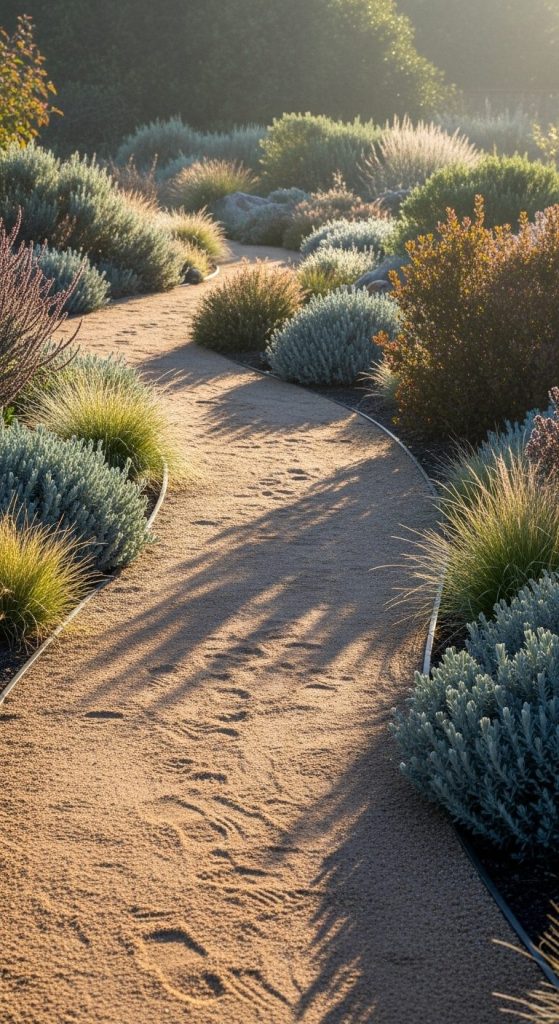
Solid concrete surfaces trap heat and waste rainwater. Instead, use permeable materials that let water soak back into the soil.
Pros:
- Reduces runoff and erosion.
- Keeps soil hydrated longer.
- Eco-friendly and visually softer than pavement.
Cons:
- Needs occasional leveling or weed control.
- May cost more upfront than poured concrete.
Gravel, pavers, or decomposed granite paths blend beautifully with drought-tolerant planting — functional, sustainable, and gorgeous.
15. Choose Smart Color Palettes
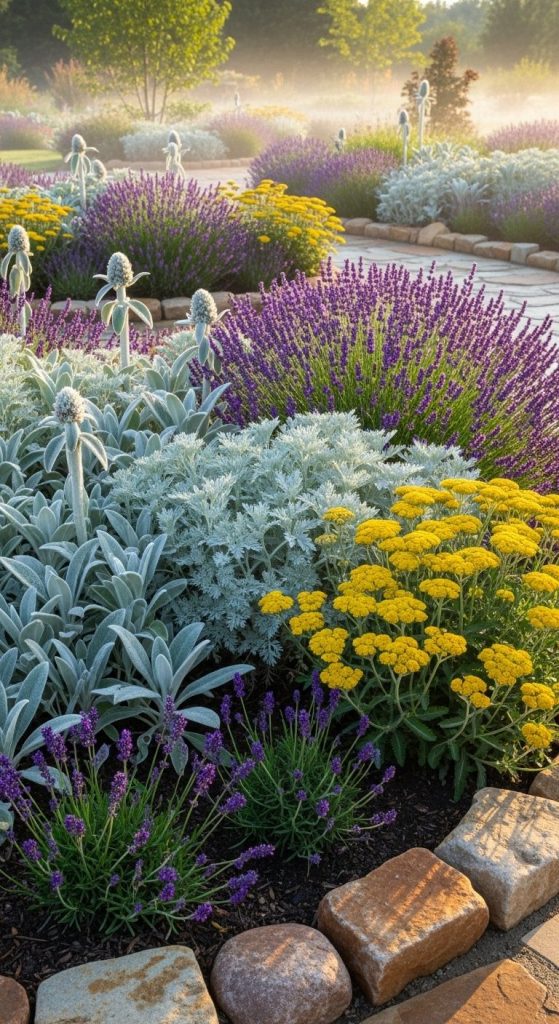
Drought-tolerant doesn’t mean dull. Mix silver foliage, warm-toned rocks, and pops of vibrant flowers like lavender, yarrow, and salvia.
Pros:
- Creates contrast and energy in dry gardens.
- Reflective leaves reduce heat absorption.
- Color helps break up neutral landscapes.
Cons:
- Some bright flowers may have shorter bloom cycles.
- Balancing colors requires a practiced eye.
A well-chosen palette gives your garden personality. IMO, silver foliage with purple blooms under golden sunlight — that’s perfection.
Conclusion: Low Water, High Reward
Creating a drought-tolerant garden isn’t about giving up beauty — it’s about redefining it. You’re building a landscape that respects nature, saves resources, and still brings you joy every time you step outside.
The magic lies in the mix: plants that thrive on less, smart water-saving designs, and textures that play with light and shadow. Whether it’s a succulent border or a native wildflower meadow, every idea above helps you cultivate resilience and serenity.
Next time you see your garden after a dry week, notice how it stands tall, unbothered, and graceful — proof that beauty and sustainability can absolutely bloom together.

William Martin is a passionate bowler who spends most of his weekends playing the sport. With years of intense experience under his belt, William decided to share his knowledge by creating BOWLING OCEAN. Join me on this journey to explore the world of bowling and discover the tips and tricks to becoming a pro.