Garden Stairs Ideas: 15 Stylish Ways to Upgrade Outdoor Spaces
Ever notice how one small outdoor upgrade suddenly makes your whole yard feel intentional? Garden stairs do that. They take uneven ground, awkward slopes, or random corners and turn them into something structured and inviting. I’ve always been a little obsessed with how different materials change the mood — one staircase feels rustic and wooded, another feels modern and sculptural, and another looks like it’s always been part of the landscape.
And the best part? These ideas aren’t “architect-only” or “massive yard required.” They’re real, doable projects that work in everyday outdoor spaces. Some can be tackled in a single weekend, while others offer that bigger transformation if you’re ready for a slightly larger project.
If you’ve been thinking about adding charm, function, and a sense of flow to your yard, these fifteen garden stairs ideas might be exactly the spark you need. Let’s walk through them — literally.
1. Stone Slab Staircase Through a Slope
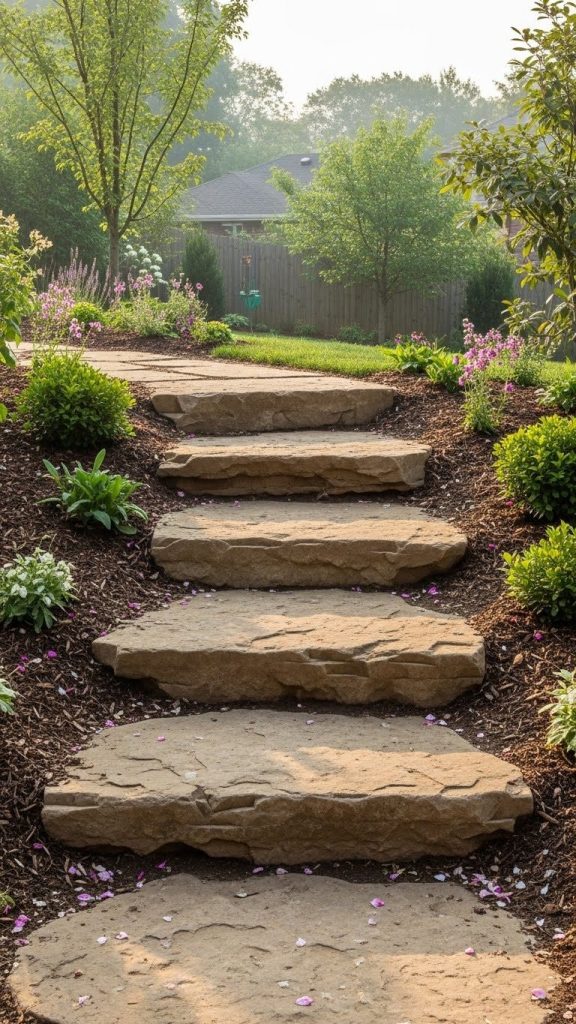
There’s something grounding about those thick, wide stone slabs set straight into a slope. They don’t look like an addition — they look like part of the earth. I’ve seen more homeowners leaning toward this style because it blends beautifully with planting beds, shrubs, and natural landscapes. If your yard has a hillside that’s annoying to climb, this kind of staircase instantly solves that without feeling too “constructed.”
It’s especially great for gardens with a cottage or wooded vibe. And here’s a tip: stone yards often have slab remnants for a fraction of the usual cost.
Pros
- Extremely durable with long-term value
- Naturally slip-resistant
- Works well with all types of planting
Cons
- Heavy materials can require help during installation
- Prices vary based on local stone availability
Takeaway: A stone slab staircase feels timeless — like a natural extension of your garden rather than a project.
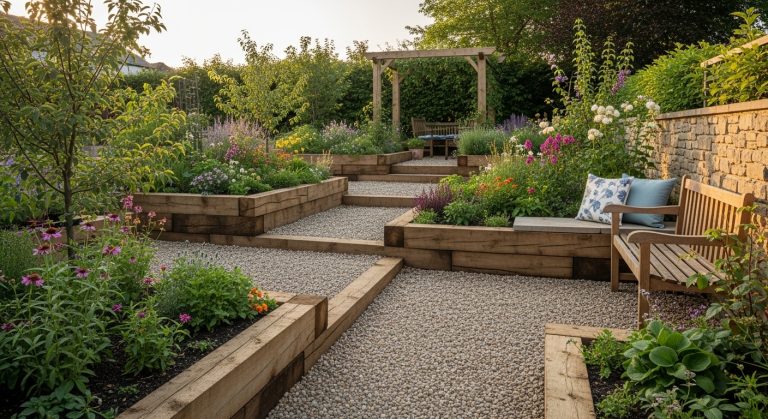
2. Timber Steps With Gravel Infill
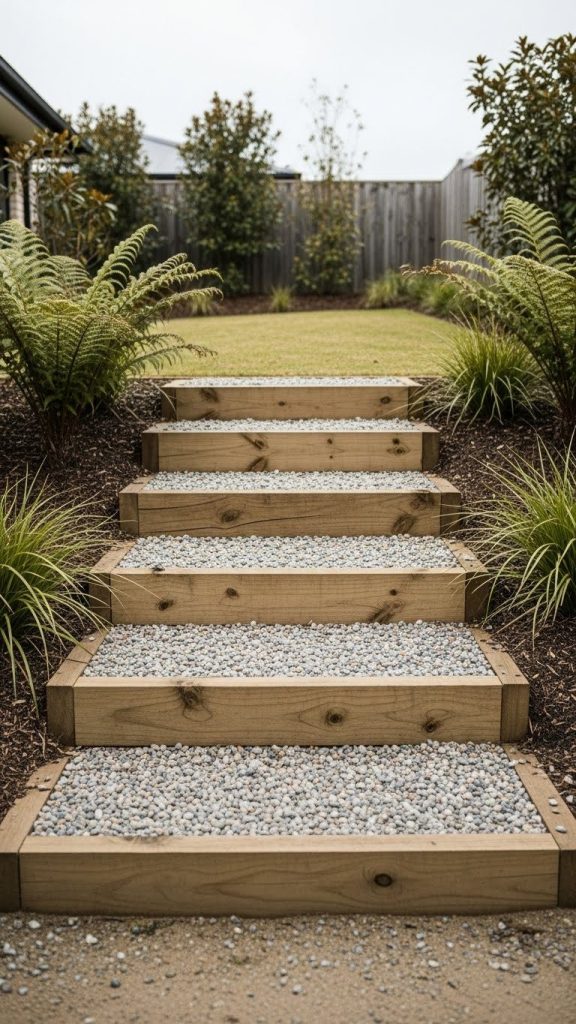
Timber steps with a gravel infill have this warm, outdoor-camp feel that’s surprisingly stylish in suburban yards. Think thick wooden risers paired with small, contrasting gravel. This combination creates texture, drains well, and stays cooler underfoot in hot climates. I love how approachable this project feels — even beginners pull it off with great results.
It works beautifully on mild slopes and pairs well with ferns, ornamental grasses, and lantern-style lighting.
Pros
- Budget-friendly and DIY-friendly
- Excellent drainage
- Soft visual look that suits casual gardens
Cons
- Wood needs periodic sealing
- Not ideal for very steep slopes
Takeaway: If you want something cozy and practical, timber-and-gravel steps fit almost any relaxed outdoor style.
3. Brick Garden Stairs for a Classic Look
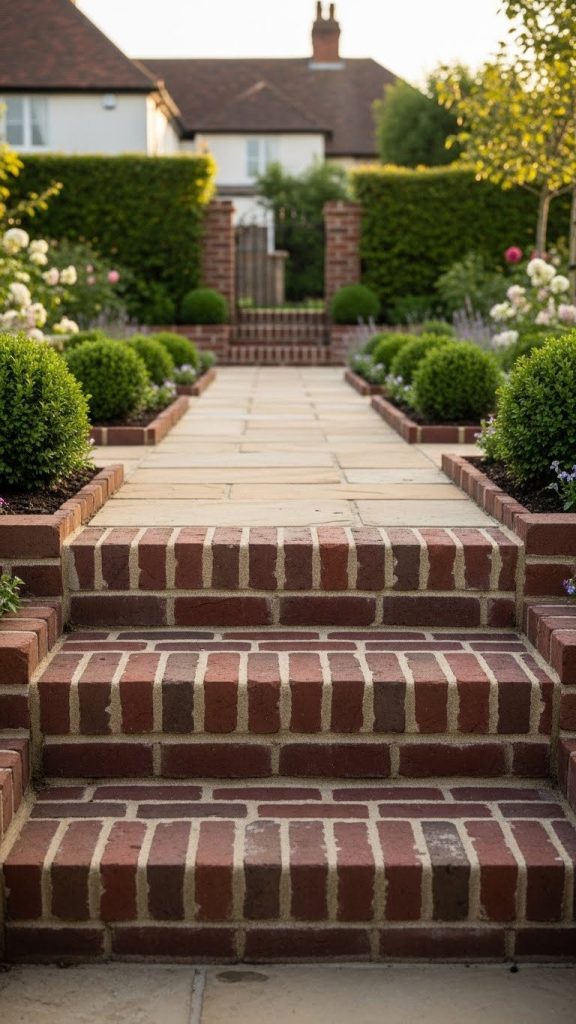
Brick never tries too hard — it just quietly looks good for decades. Brick garden stairs instantly create that “established home” feeling, especially when surrounded by hedges or flowering borders. They’re sturdy, charming, and low maintenance. I’ve noticed more people choosing brick lately because it complements both old homes and newer builds.
A fun fact from a landscape design survey last year noted that brick is one of the top three most requested materials for traditional garden renovations.
Pros
- Ages well and gains character
- Great footing in wet weather
- Works with traditional and farmhouse styles
Cons
- Requires a solid base for best results
- Color options are limited
Takeaway: Brick stairs bring an elegant, lived-in feel to the yard — perfect if you want lasting character.
4. Wide Garden Steps That Double as Seating

Wide steps create that grand, spacious feeling you usually see in outdoor resorts. They’re especially great near patios or leading to outdoor dining areas. The trick is using deep treads — almost bench-like — so the stairs feel open and inviting. Kids love sitting on them, pets lounge on them, and honestly, they make the whole yard feel more social.
Wider stairs also help with slopes that don’t need tall risers.
Pros
- Adds visual openness
- Creates extra seating without buying furniture
- Makes transitions safer and more comfortable
Cons
- Needs extra material
- Requires a bit more planning
Takeaway: These feel surprisingly luxurious without being complicated — ideal for gathering spaces.
5. Natural Boulder Steps
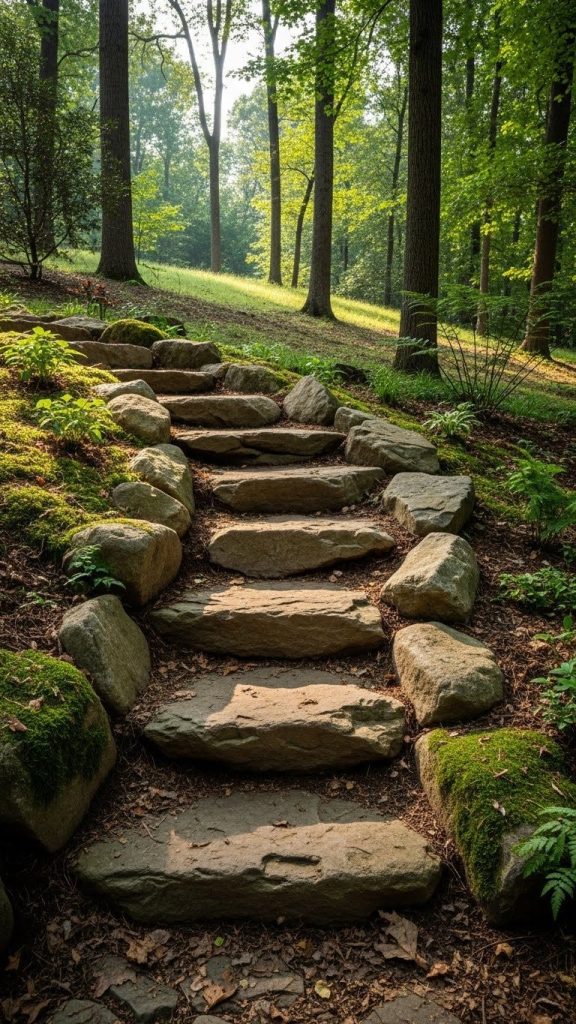
If your yard already features big rocks or a natural hillside, boulder steps fit flawlessly. They look rugged, earthy, and practically indestructible. Every piece is unique, giving the stairs character. I’ve seen gardeners use them to create little woodland paths that look like they belong on a nature trail.
They work best in informal landscapes — the kind with moss, groundcover, and trees.
Pros
- Extremely durable
- Organic look
- Great for rustic or forested yards
Cons
- Heavy machinery may be needed
- Not suited for formal garden layouts
Takeaway: Boulder steps bring wild, natural charm — perfect if your yard leans toward the untamed side.
6. Concrete Steps With Clean, Modern Lines
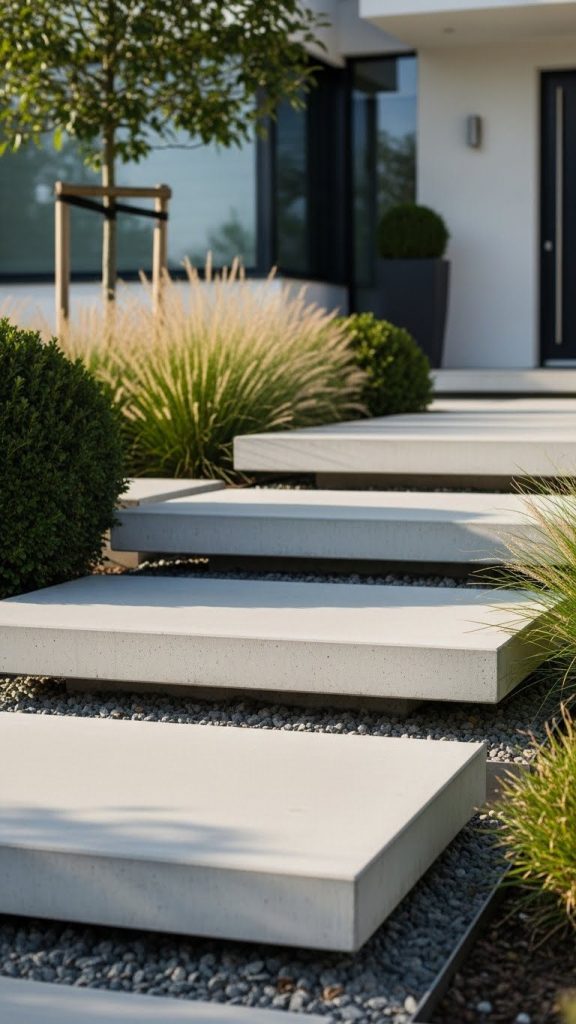
If your home has a more contemporary look, clean floating-style concrete stairs might be your match. They offer this crisp, sculptural presence that feels both stylish and functional. Concrete stays cool, lasts forever, and plays well with minimalist planting.
Interestingly, a home design report last year showed modern hardscaping growing faster than any other outdoor trend — concrete stairs included.
Pros
- Sleek and modern
- Low maintenance
- Works well with lighting accents
Cons
- Concrete cracks if not installed correctly
- Less forgiving visually — precision matters
Takeaway: If you love clean lines and modern design, concrete steps deliver that upscale feel without excess fuss.
7. Railroad Tie Garden Stairs
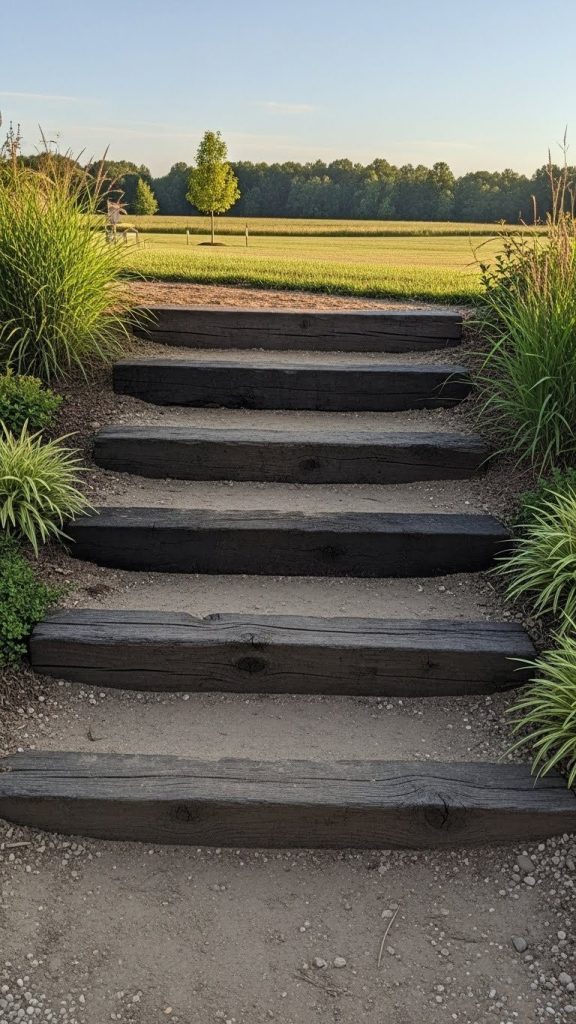
Railroad ties have that rustic, homestead charm that feels warm and familiar. When framed with gravel or soil, they create sturdy, earthy steps perfect for large yards or sloped gardens. The dark, weathered wood adds instant texture and depth.
For longevity, always choose ties rated for outdoor landscaping.
Pros
- Strong, thick, and long-lasting
- Affordable material
- Ideal for rustic or farmhouse gardens
Cons
- Heavier than standard lumber
- Not ideal for modern-style yards
Takeaway: Railroad ties offer rugged character and excellent durability, especially on wide slopes.
8. Garden Stairs Lined With Low-Level Lighting
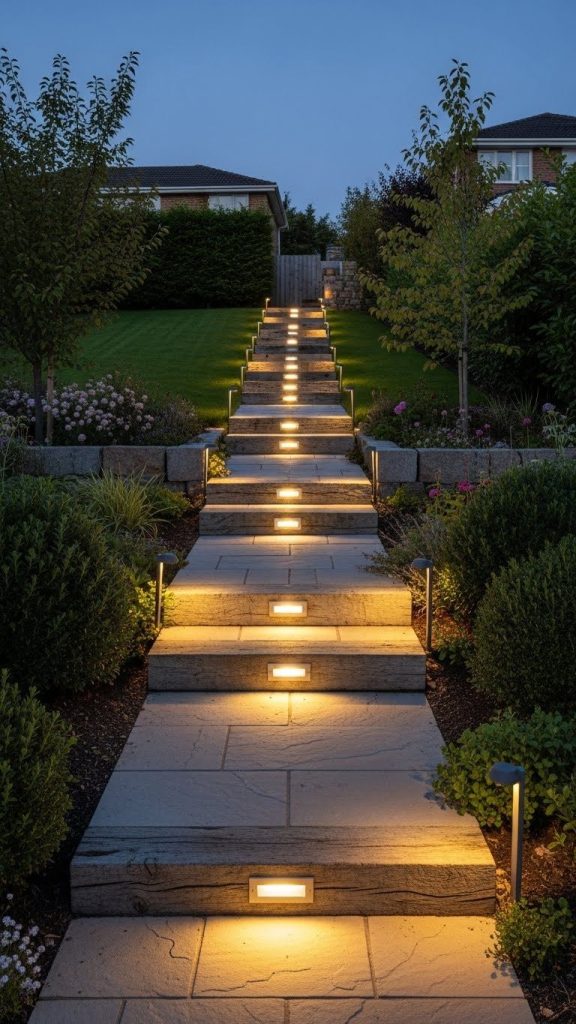
Adding lighting along stairs transforms them from functional to beautiful. Soft, low-level illumination is more than pretty — it makes evening gardening, entertaining, and moving around outdoors safer. You can choose solar caps, recessed side lights, or lantern-style fixtures.
Lighting actually ranks as one of the most common safety upgrades homeowners add to outdoor stairs.
Pros
- Dramatically improves visibility
- Creates nighttime ambience
- Pairs with any material
Cons
- Higher upfront cost
- Solar lighting varies in brightness
Takeaway: Lighting instantly elevates garden stairs and makes them feel magical at night.
9. Gravel Steps With Stone Risers

Gravel steps framed by stone upright pieces give you a lightweight, budget-conscious option that still looks polished. They drain perfectly and suit cottage, coastal, or relaxed landscapes. I love how customizable they are — different gravels completely change the texture.
They’re also great for gently sloped yards where full stone slabs feel too heavy.
Pros
- Affordable
- Drains well
- Flexible design options
Cons
- Gravel needs top-ups
- Can shift if not packed well
Takeaway: A great project if you want style, practicality, and affordability all at once.
10. Terraced Steps With Flower Beds
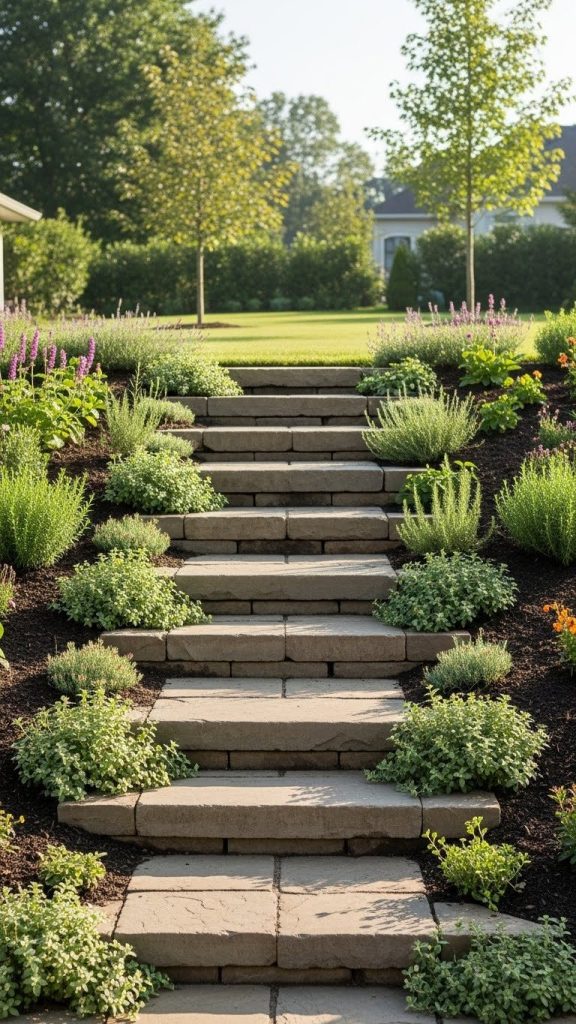
Why choose between stairs and landscaping when you can blend them? Terraced steps include small planting pockets or adjacent beds between the risers. It feels lush, layered, and garden-forward — a great way to soften the structure.
It’s perfect for homeowners who want more greenery without losing walkable space.
Pros
- Adds dimension and softness
- Great for herbs, trailing plants, and color
- Turns slopes into usable planting areas
Cons
- Requires weekly maintenance
- Works best with irrigation
Takeaway: This style turns ordinary stairs into part of the garden story.
11. Reclaimed Brick and Stone Mixed Stairs
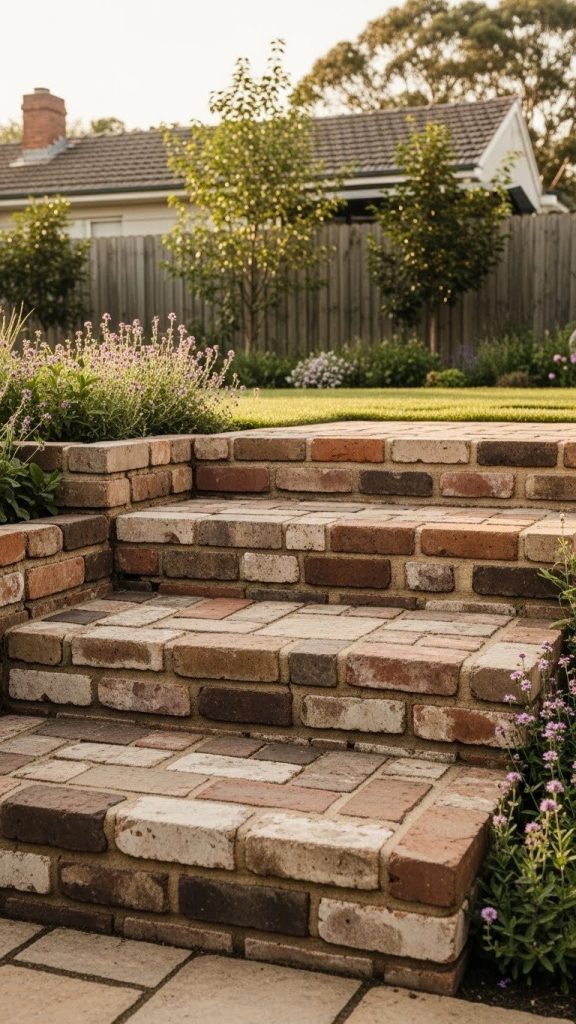
If you’re a fan of vintage charm, mixing reclaimed bricks and stones creates beautiful, patchwork-like steps that feel collected over time. Every piece has character, and the imperfections give them personality.
Reclaimed materials are trending with eco-conscious homeowners who want sustainable options.
Pros
- Eco-friendly
- Unique appearance
- Affordable if locally sourced
Cons
- Color variations require planning
- Some pieces may need trimming
Takeaway: These stairs feel soulful — perfect if you love a lived-in, timeless aesthetic.
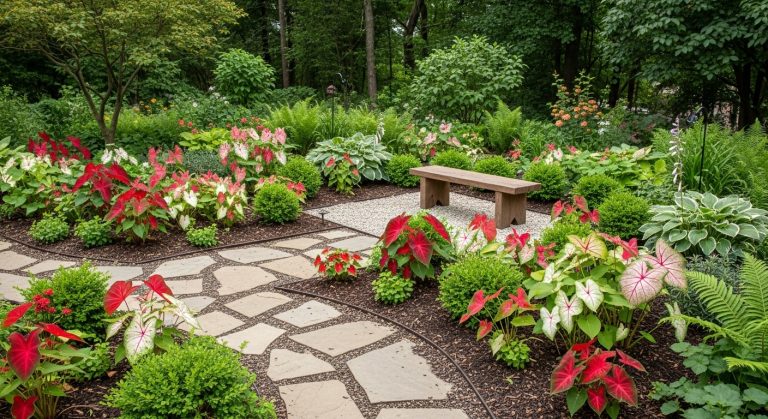
12. Flagstone Steps With Groundcover
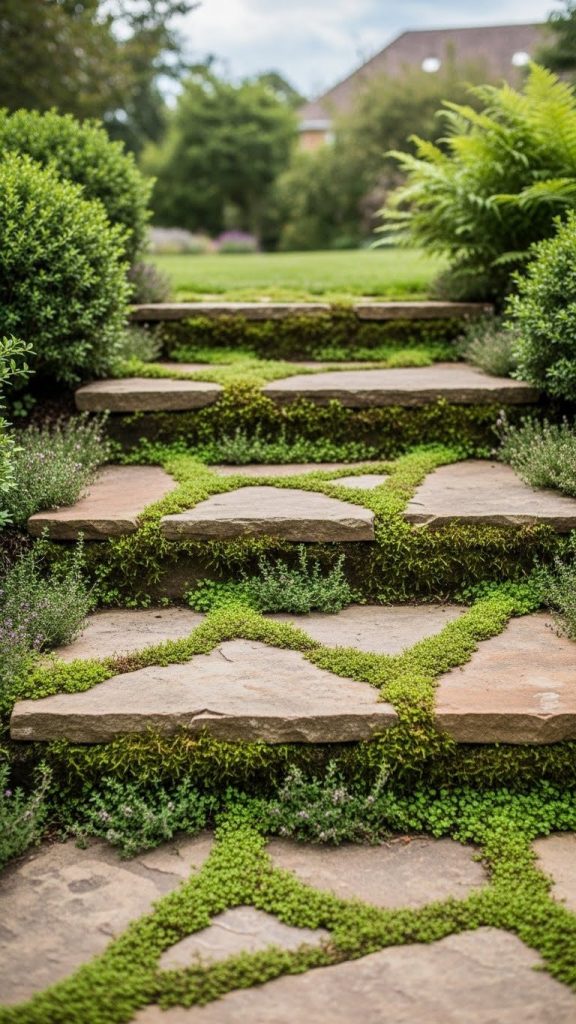
Flagstone steps paired with creeping thyme or Irish moss in the joints give off the softest, coziest look. The plants settle in naturally, soften hard edges, and release scent when brushed. It’s incredibly inviting.
This idea works especially well in partial shade where groundcovers stay fresh-looking.
Pros
- Gentle, natural appearance
- Planting adds fragrance
- Stones stay cool
Cons
- Groundcover needs watering
- Not ideal for high-traffic slopes
Takeaway: A lovely choice if you want garden stairs that blend into greenery rather than stand out.
13. Floating Wood Steps Over Pebbles
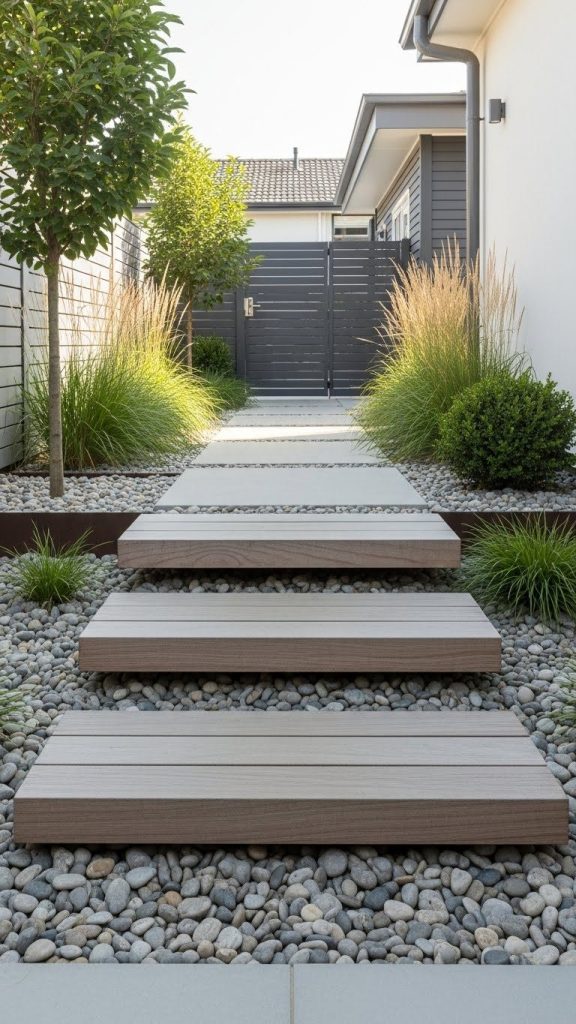
Floating steps — where wooden treads sit slightly apart over pebbles — create a modern but warm look. They feel airy, almost like stepping stones, and work beautifully along pathways or side yards.
This design shines in smaller outdoor areas, offering structure without heaviness.
Pros
- Light, modern aesthetic
- Great for smaller yards
- Quick installation
Cons
- Requires level ground
- Wood needs sealing over time
Takeaway: Floating wood steps strike a great balance between modern style and natural warmth.
14. Curved Garden Staircases
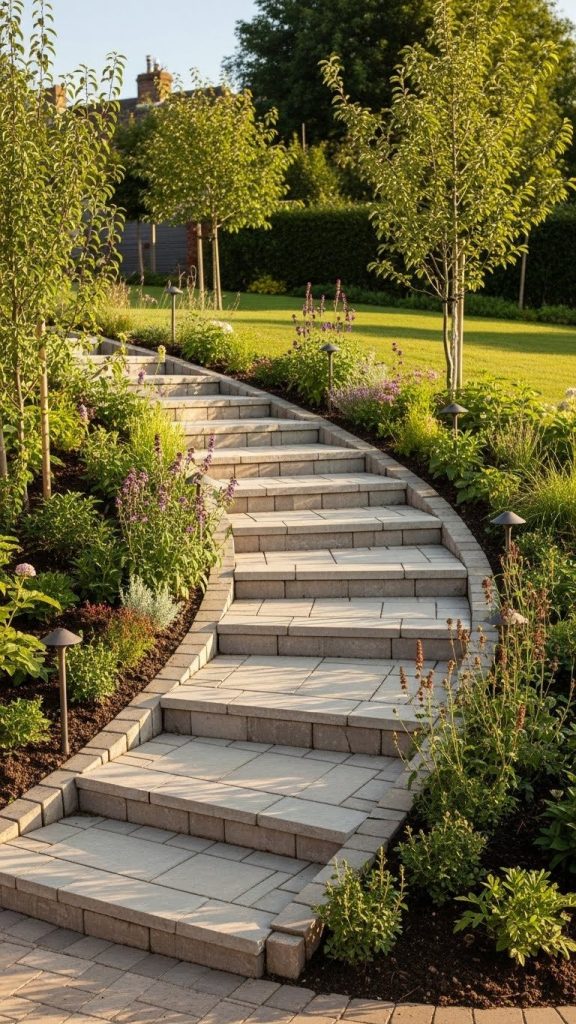
Straight lines feel structured, but curves feel welcoming. A curved staircase following the natural slope of your yard creates movement and softness. It makes even narrow spaces feel intentional.
Curved designs often work best with natural materials like stone, timber, or brick.
Pros
- Elegant, flowing shape
- Softer visual impact
- Works well with planted borders
Cons
- More complex layout
- Takes longer to install
Takeaway: Curved steps add quiet sophistication, especially in gardens that already have organic shapes.
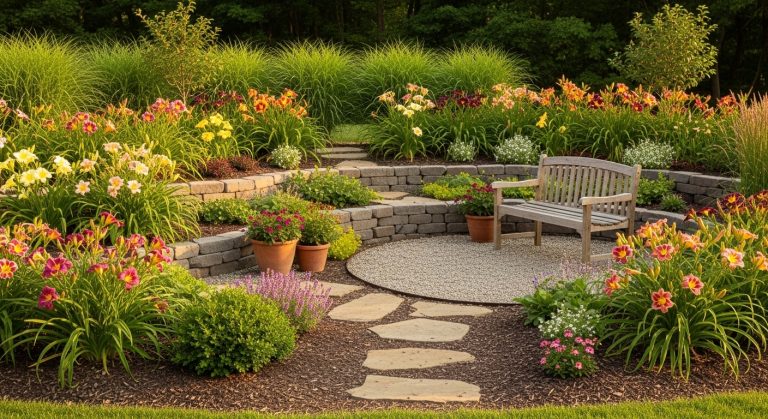
15. Short Steps Built Into a Rock Garden
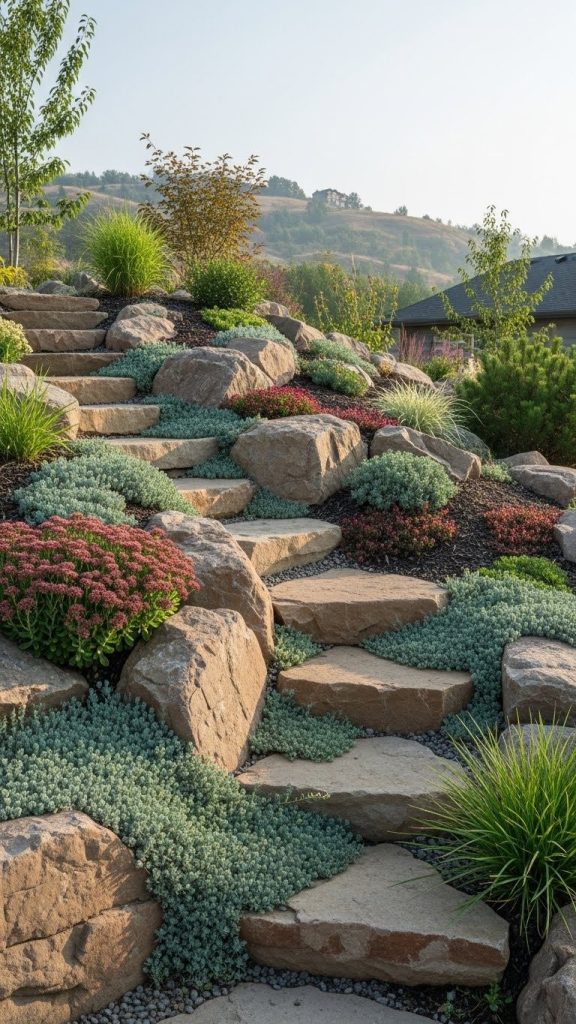
Small steps tucked between rocks create a layered, nature-inspired look that works amazingly well on steep slopes. You don’t need a full staircase — just occasional steps where the grade becomes tricky. This creates a meandering, almost trail-like feel.
It’s also a smart solution for yards where a full staircase would look too formal.
Pros
- Great for steep or irregular slopes
- Easy to blend with plants
- Looks casual yet intentional
Cons
- Requires thoughtful placement
- Rocks must be stable and secure
Takeaway: These steps give you flexibility — functional where necessary, subtle everywhere else.
Conclusion
The right set of garden stairs does more than make a slope easier to walk. It shapes your outdoor space, gives direction, creates gathering spots, and adds personality you simply can’t get from flat ground alone. What surprised me while collecting these ideas is how much variety exists — from rugged boulder steps to polished concrete to wide, social-friendly treads. There’s truly a version for every yard, every style, and every budget.
If anything caught your eye, start with that one. Sometimes the smallest outdoor changes turn into the upgrades you love the most. Whether you go for something natural, modern, rustic, or lush with plants, your garden will feel more connected and comfortable. And honestly, once you build one set of steps, you might find yourself imagining what else is possible. Try your favorite idea first and see where it takes you.

William Martin is a passionate bowler who spends most of his weekends playing the sport. With years of intense experience under his belt, William decided to share his knowledge by creating BOWLING OCEAN. Join me on this journey to explore the world of bowling and discover the tips and tricks to becoming a pro.