15 Stunning 4th of July Quilts That Will Make Your Celebration Unforgettable
There’s something magical about the way a handmade quilt transforms a 4th of July gathering. I remember the first time I draped a red, white, and blue quilt over my picnic table at our neighborhood celebration. My grandmother had pieced it together decades ago, and watching everyone gather around it, touching the fabric, sharing stories—it felt like the quilt itself was part of the celebration. That’s the power of a well-crafted 4th of July quilt.
The problem is, most people think patriotic quilting means settling for the same old star patterns or predictable color schemes. They end up with something that looks like it came from a mass-produced catalog rather than something that captures the spirit of their family’s celebration. But here’s what I’ve learned after years of creating and collecting these quilts: the best ones tell a story. They’re not just decorations; they’re conversation starters, memory keepers, and functional art that brings people together.
Whether you’re a seasoned quilter looking for fresh inspiration or someone who wants to understand what makes a truly special patriotic quilt, I’ve gathered 15 ideas that go beyond the ordinary. These aren’t just patterns—they’re concepts that will make your 4th of July quilt stand out and become a cherished part of your celebration for years to come.
1. Vintage Star Medallion Quilt
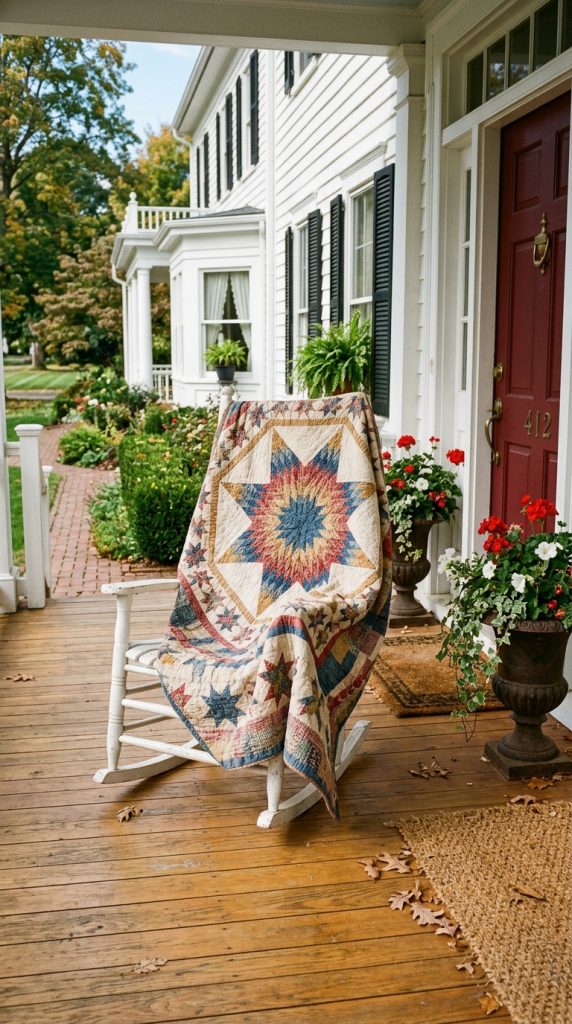
There’s something deeply satisfying about a quilt that looks like it could have been stitched during the Bicentennial celebration. The vintage star medallion design captures that nostalgic feeling perfectly. I stumbled upon this idea while flipping through my grandmother’s pattern collection, and honestly, it took my breath away.
This design centers on a single, large star block surrounded by concentric borders of smaller stars and patriotic fabrics. The key is choosing reproduction fabrics that mimic the faded, slightly muted reds and blues of vintage quilts. Think indigo blues, madder reds, and unbleached cottons that feel like they’ve been loved for generations.
Pros:
- Creates an instant heirloom-quality piece
- Works as a stunning wall hanging or bed quilt
- The medallion structure makes it forgiving for less experienced quilters
- Allows for creative fabric mixing without looking chaotic
Cons:
- Requires careful fabric selection to achieve the vintage look
- Can be time-consuming due to the multiple borders
The beauty of this approach is that it doesn’t have to be perfect. In fact, slightly wonky points or uneven seams add to the vintage charm. I’ve found that quilts made with this design become the centerpiece of any 4th of July gathering, drawing people in to examine the details and share their own quilting memories.
2. Fireworks Burst Quilt
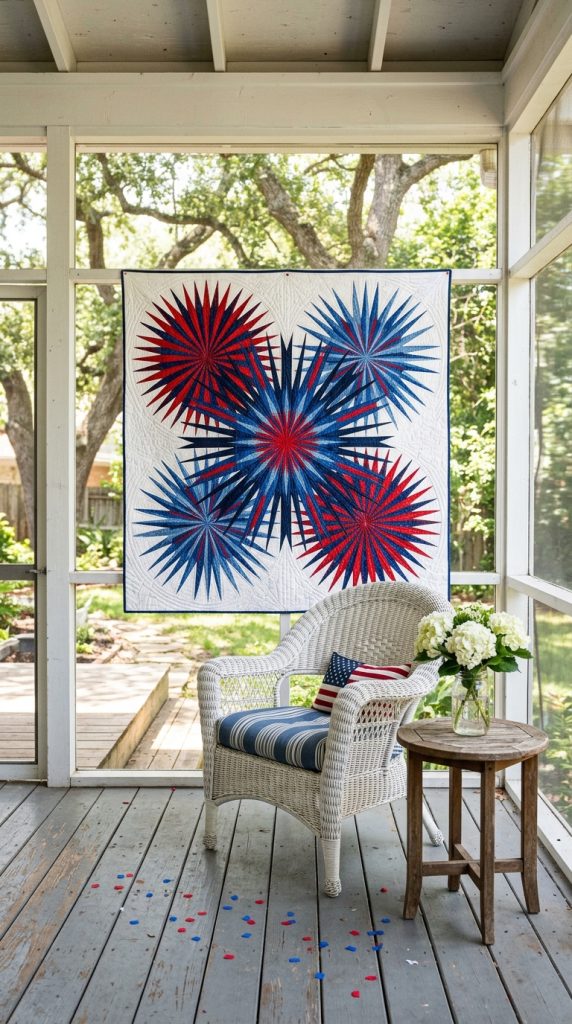
If there’s one thing that defines the 4th of July, it’s the spectacular fireworks displays that light up the night sky. Capturing that explosive energy in a quilt might sound challenging, but I’ve discovered a technique that makes it surprisingly achievable and absolutely stunning.
The fireworks burst quilt uses strip piecing and foundation paper piecing to create dramatic, radiating patterns that mimic fireworks explosions. By using bright white backgrounds with intense red and blue bursts, you create a quilt that practically vibrates with excitement. The secret is varying the intensity of the colors—some bursts should be bold and saturated while others are softer, just like real fireworks.
Pros:
- Creates dramatic visual impact
- Perfect for modern patriotic decor
- Works well with both traditional and contemporary fabrics
- The burst patterns hide minor piecing errors
Cons:
- Foundation paper piecing requires some learning
- Can be fabric-heavy due to the radiating designs
What I love most about this design is how it captures the fleeting beauty of fireworks in a permanent, tangible form. Last summer, I watched a family gather around one of these quilts, pointing out which burst reminded them of their favorite fireworks from years past. It’s these moments that remind me why I love creating these quilts.
3. Patriotic Colorwash Quilt
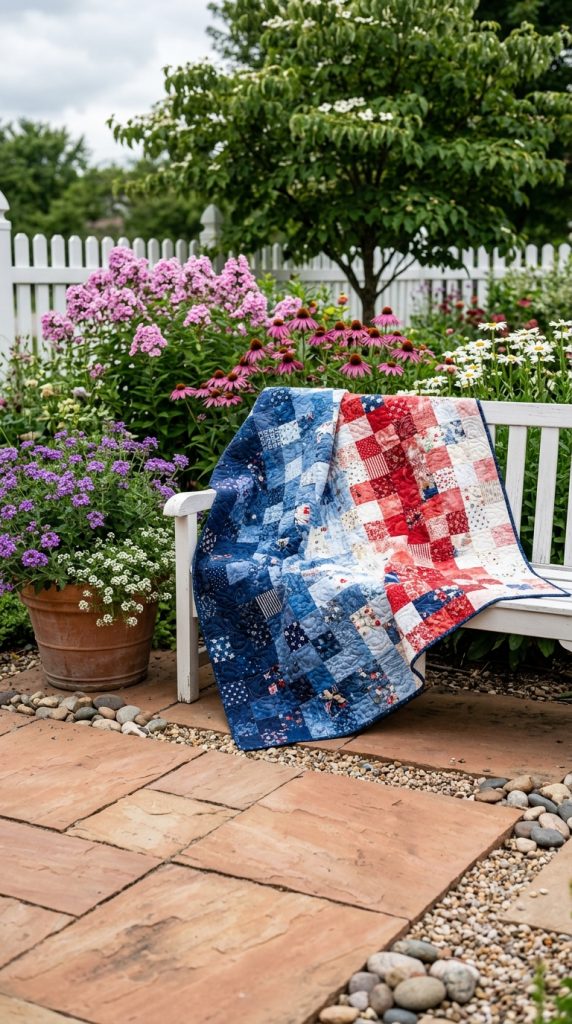
Have you ever looked at a quilt and felt like you could get lost in it? That’s exactly what a colorwash quilt does. This technique creates a gradual, almost watercolor-like transition between colors that feels both soothing and celebratory.
The concept is simple but the execution requires patience: you arrange small fabric squares in a gradient that transitions from deep navy blues through medium blues and into bright reds, with splashes of white throughout. The result is a quilt that reads as a unified patriotic statement rather than a collection of separate blocks. I’ve found that silk or cotton lawn fabrics work particularly well for this technique because they allow light to filter through and create that ethereal effect.
Pros:
- Creates a sophisticated, artistic look
- Works beautifully as a wall hanging
- The gradual color transition is visually soothing
- Allows for creative fabric placement
Cons:
- Requires careful color planning
- Need a wide variety of fabric values
According to quilt historian Barbara Brackman’s research on color theory in quilting, this technique has roots in the 19th-century “crazy quilting” movement but takes it to an entirely new artistic level. The colorwash approach transforms simple patriotic fabrics into something that feels almost painterly.
4. Star-Spangled Banner Appliqué Quilt
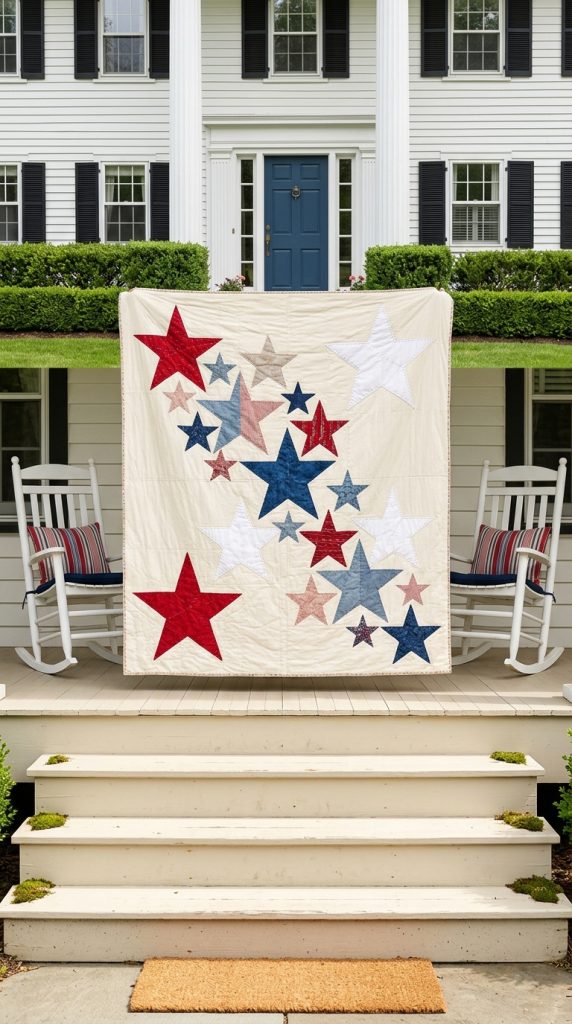
There’s a reason why the Star-Spangled Banner remains such a powerful symbol of American pride. When you translate that into a quilt through appliqué, you’re creating something that connects deeply with both history and personal celebration.
This design focuses on creating large-scale star shapes through careful appliqué, often combining several different star variations in a single quilt. I prefer to use a combination of needle-turn appliqué and fusible appliqué, depending on the intricacy of the design. The stars can be arranged in a traditional grid, cascading diagonally across the quilt, or clustered in a dramatic center medallion.
Pros:
- Stars are universally recognized symbols of patriotism
- Appliqué allows for creative fabric mixing
- Can be as simple or complex as you desire
- Creates dimensional interest
Cons:
- Appliqué requires patience and precision
- Fusible appliqué can make the quilt stiffer
One quilter I follow on Instagram created a version where she used vintage French linen for the background and hand-stitched each star with perle cotton. The texture and depth she achieved made me rethink everything I thought I knew about patriotic quilting. It’s proof that sometimes the simplest ideas, executed with care, create the most memorable pieces.
5. Campfire Cozy Quilt
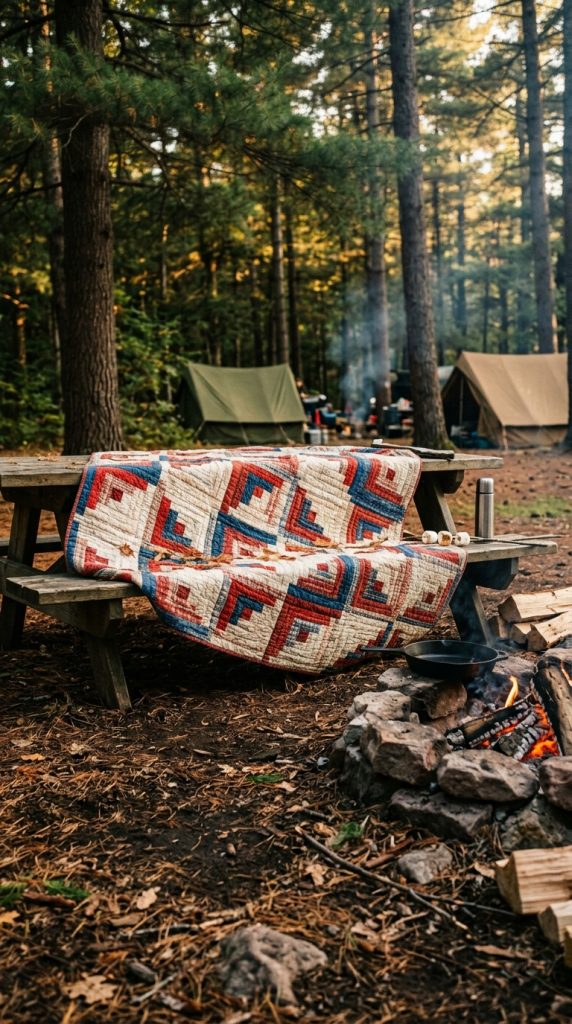
Here’s a confession: I used to think quilts were purely for indoor use. That changed the first time I brought a quilt to a beachside 4th of July celebration and watched it become the unofficial gathering spot. The campfire cozy quilt is designed specifically for outdoor use while maintaining that patriotic spirit.
This design emphasizes durability and warmth while still delivering on the patriotic theme. Use heavier cotton or even cotton/wool blends, and focus on quilt patterns that create extra warmth, like dense quilting or thicker batting. The patriotic colors remain prominent, but the design often features larger blocks or simpler patterns that hold up better to outdoor use. I’ve found that a log cabin variation works brilliantly—the alternating red and blue strips around a white center create a subtle patriotic feel that works perfectly for evening gatherings around a campfire.
Pros:
- Functional and warm for evening celebrations
- Durable enough for outdoor use
- Works well for family gatherings
- Easy to spot from a distance
Cons:
- Heavier fabrics can make quilting more challenging
- Outdoor use requires careful fabric selection
The best part about this quilt is watching how it becomes the heart of the celebration. At our family’s 4th of July camping trip last year, my campfire cozy quilt became the designated story-telling spot. Everyone wanted to sit on it, share their favorite holiday memories, and snuggle up as the evening cooled down.
6. Heritage Blend Quilt
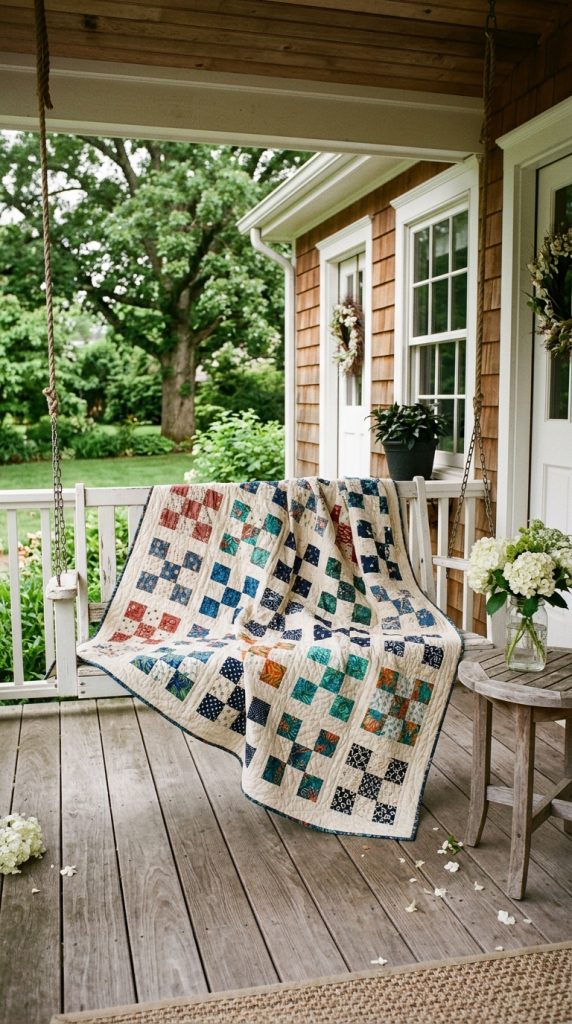
Every family has a story, and sometimes the best way to tell that story is through fabric. The heritage blend quilt combines modern and vintage patriotic prints to create something that feels both timeless and personal.
This design focuses on mixing reproduction fabrics from different eras—maybe some 1940s patriotic prints with modern batiks or contemporary geometric patterns. The key is finding a unifying element, like a consistent background color or a particular quilt pattern that ties everything together. I’ve found that simple square block patterns or nine-patch variations work best because they let the fabric do the talking rather than complex piecing overshadowing the material.
Pros:
- Creates a deeply personal quilt
- Allows for creative fabric mixing
- Works well for smaller quilts or baby quilts
- Each quilt becomes unique
Cons:
- Finding vintage fabrics requires effort
- Can be challenging to balance different fabric eras
According to a survey by the Quilting Guild of America, approximately 64% of quilters report that using vintage or family fabrics significantly increases their emotional connection to their quilts. This isn’t just about creating a beautiful object; it’s about weaving family history into the fabric of your celebration.
7. Symmetrical Strip Quilt
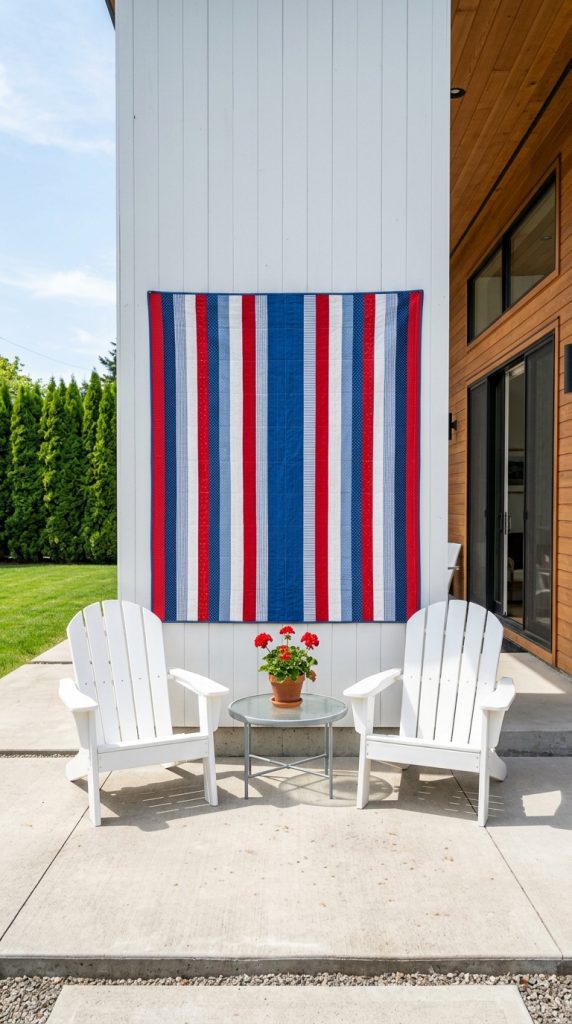
Sometimes the most striking designs are the simplest. The symmetrical strip quilt proves that you don’t need complex piecing or intricate patterns to create a memorable 4th of July quilt.
This design uses carefully arranged strips of red, white, and blue fabric in a symmetrical pattern that creates a bold, architectural feel. I’ve experimented with variations like using different widths of strips or alternating vertical and horizontal sections to create visual interest. The key is achieving perfect symmetry while maintaining visual variety through fabric selection—using different shades of red and blue, mixing solids with prints, and adding subtle pattern variations.
Pros:
- Simple construction makes it beginner-friendly
- Bold visual impact
- Works well as a large quilt or wall hanging
- Quick to piece together
Cons:
- Symmetry requires careful measuring
- Can appear too simple if fabric selection isn’t thoughtful
The strip quilt became one of my favorites after I made one for our local library’s 4th of July display. Something about the crisp lines and bold colors caught everyone’s attention. Visitors kept asking about the pattern, and I realized that sometimes the simplest designs are the ones that resonate most deeply.
8. Alternative Flag Quilt
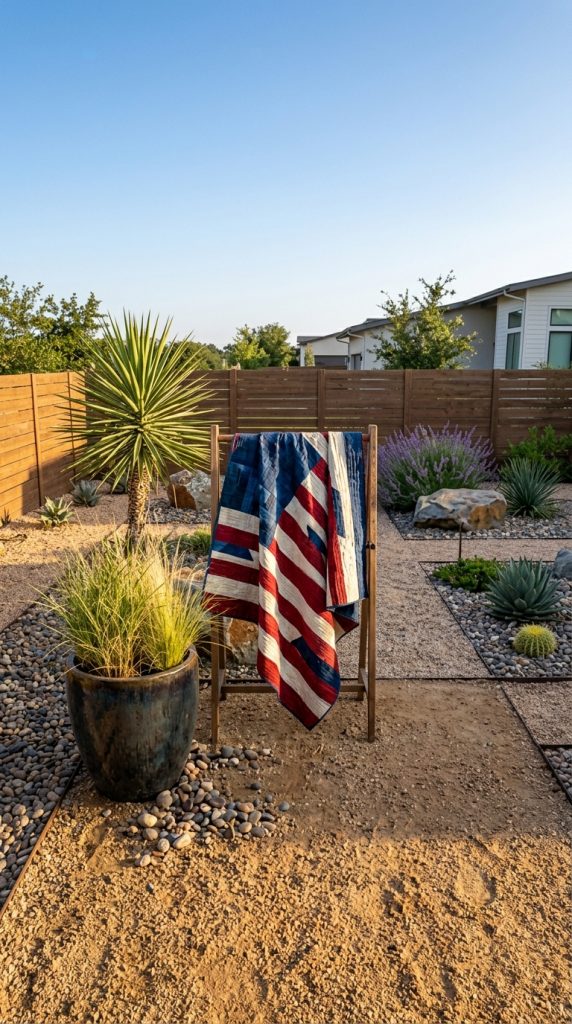
Let’s be honest—the traditional flag design is beautiful, but it’s been done countless times. The alternative flag quilt offers a fresh perspective on patriotic quilting by using colors and patterns that suggest the American flag without directly copying it.
Think along the lines of using deep indigo blues paired with barn reds and creamy whites in unexpected configurations. Perhaps you arrange the colors in diagonal stripes or create a pattern that suggests the movement of a flag in the wind. I’ve seen stunning versions using modern art influences, where the flag’s essence is captured through color and movement rather than exact recreation. The effect is both familiar and fresh, creating a quilt that’s unmistakably patriotic without being predictable.
Pros:
- Creates unique, artistic pieces
- Perfect for modern home decor
- Provides creative freedom
- Avoids cliché patriotic imagery
Cons:
- May not appeal to traditional quilters
- Requires artistic confidence
There’s something liberating about this approach. It frees you from the pressure of achieving perfect stars or stripes and lets you focus on capturing the feeling of patriotism rather than just recreating symbols. The results can be breathtaking—quilts that people stop and stare at because they feel both familiar and completely new.
9. Bold Stars Quilt
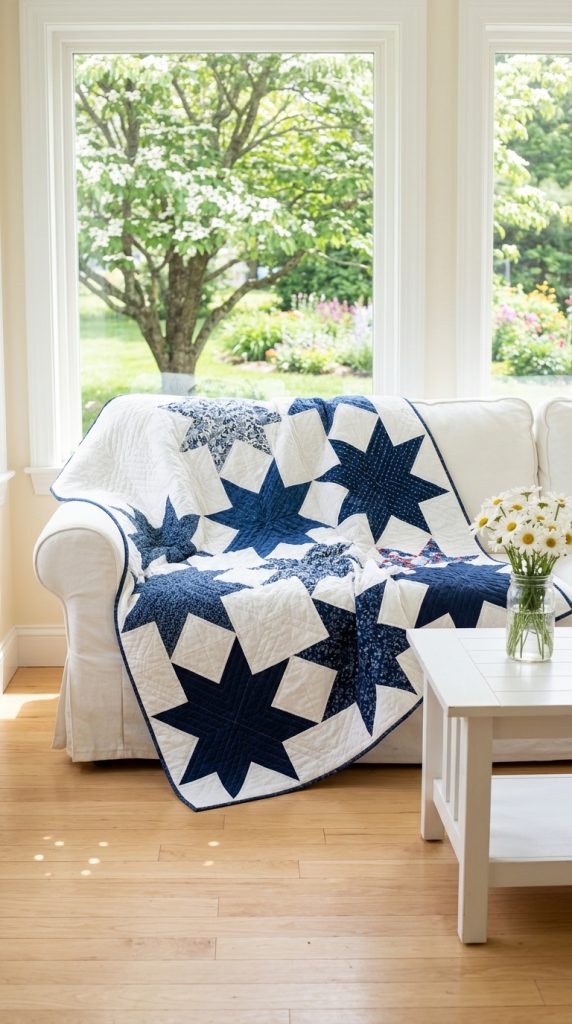
Stars are the undeniable icon of 4th of July quilts, but here’s the thing—most quilters play it too safe with their star designs. The bold stars quilt throws caution to the wind and creates dramatic, oversized stars that command attention.
This design uses a mix of solid and patterned fabrics to create large star blocks that dominate the quilt surface. I prefer to use a different fabric for each point of the star, creating visual complexity while maintaining the overall shape. The stars can be arranged in various configurations—scattered randomly, arranged in rows, or clustered in groups. The scale is what makes it work; these aren’t subtle accents but bold statements that anchor the entire quilt.
Pros:
- Dramatic visual impact
- Works well as a focus piece
- Allows for extensive fabric mixing
- Showcases your best fabrics
Cons:
- Large star patterns can be intimidating
- Requires careful fabric coordination
One of the most memorable bold stars quilts I’ve seen featured stars ranging from white to deep navy, creating a gradient effect that made the quilt feel almost three-dimensional. The quilter had thoughtfully arranged each star to create this movement, and the result was a quilt that drew you in from across the room.
10. Functional Picnic Perfect Quilt
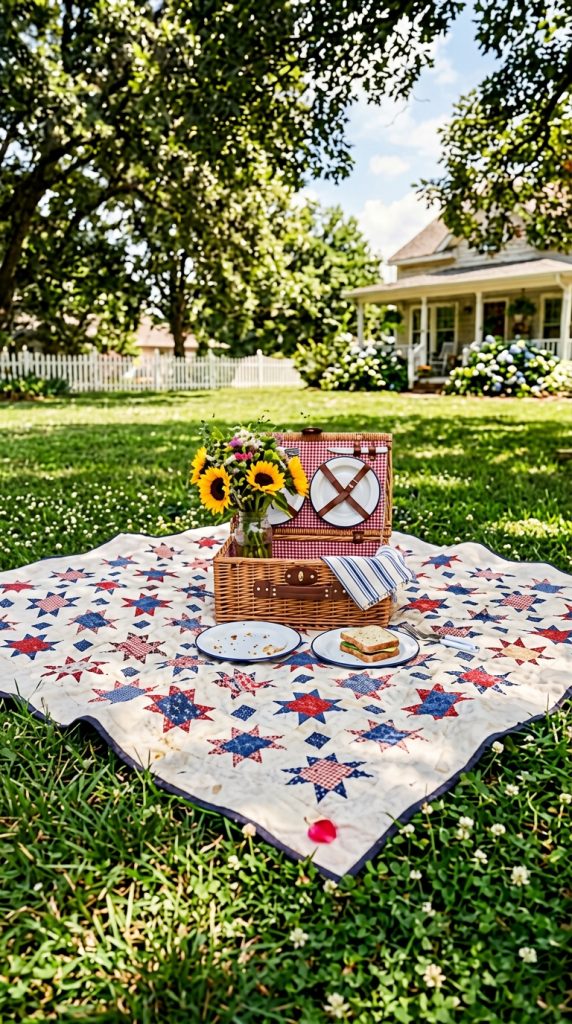
Here’s a reality check: not every quilt needs to be a wall hanging or a bed cover. The functional picnic perfect quilt is designed with one purpose in mind—making your 4th of July picnic more comfortable and enjoyable.
This design emphasizes durability, easy cleaning, and practical size while maintaining the patriotic theme. Use fabrics that can withstand the rigors of outdoor use, like heavy cotton or canvas blends, and consider waterproof backing for those dewy morning picnics. The pattern should be simple enough that you don’t mind if it gets a little dirty, but charming enough that you’re proud to display it. I’ve found that simple check patterns or repeating small star blocks work beautifully for this purpose.
Pros:
- Perfect for outdoor celebrations
- Easy to clean and maintain
- Functional and beautiful
- Makes picnics more memorable
Cons:
- Outdoor use limits fabric choices
- May require special care for longevity
A recent survey by the Outdoor Recreation Association found that families who use specialized picnic blankets report significantly higher satisfaction with their outdoor dining experiences. It makes sense—when you have a beautiful, comfortable place to sit, suddenly the picnic feels less like a chore and more like a celebration.
11. Layer Cake Pattern Quilt
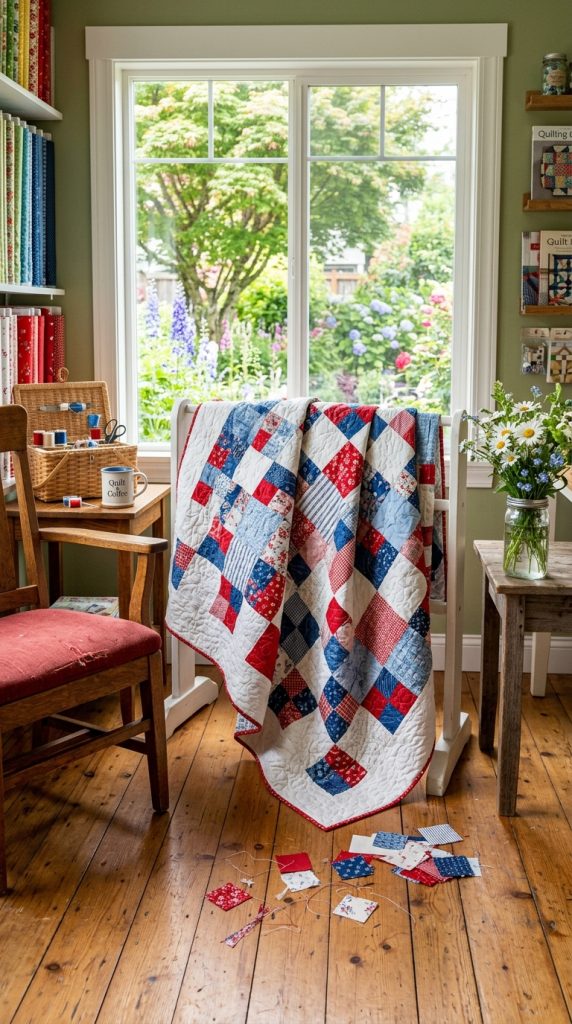
The layer cake pattern quilt takes its name from the precut fabric bundles that make quilting more accessible. But beyond the convenience, this approach offers a clever way to create complex-looking designs with minimal effort.
This design focuses on using precut 10-inch squares to create a patriotic quilt that feels sophisticated without requiring extensive cutting or planning. You can use the layer cakes to create disappearing nine-patches, simple rail fences, or even complex-looking medallions. The key is in the fabric selection—choosing layer cakes that offer a good mix of reds, whites, blues, and coordinating neutrals.
Pros:
- Quick and efficient construction
- Great for beginner to intermediate quilters
- Reduces fabric waste
- Precuts ensure color coordination
Cons:
- Limited fabric selection within a layer cake
- May require additional fabric for borders
What I appreciate most about this approach is how it democratizes quilting. You don’t need a massive fabric stash or years of experience to create something beautiful. One afternoon of strategic arrangement and sewing, and you have a quilt that looks like it took weeks to make.
12. Modern Minimalist Quilt
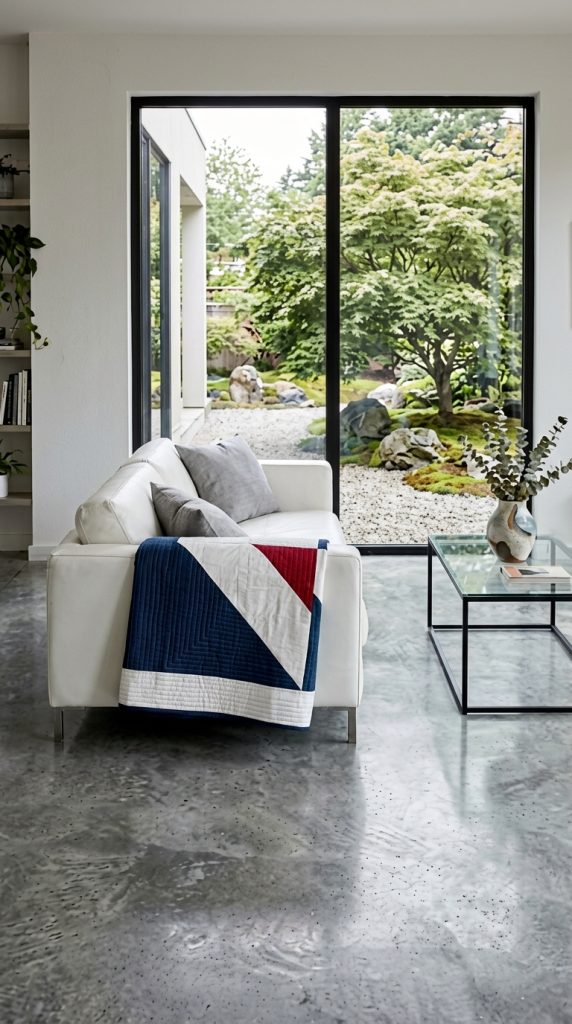
If you follow quilt trends, you’ve probably noticed that minimalism has been making waves in the quilting community. The modern minimalist 4th of July quilt strips away unnecessary complexity to focus on clean lines, simple patterns, and sophisticated color arrangements.
This design uses restrained color palettes—perhaps a deep navy paired with pure white and a single accent red—and simple geometric patterns to create a quilt that feels contemporary and fresh. Think negative space, asymmetrical designs, and fabric textures that add depth without visual clutter. I’ve found that using high-quality solids in these quilts elevates them from simple to stunning.
Pros:
- Fits modern home decor
- Timeless design
- Less intimidating for beginners
- Highlights quality fabric
Cons:
- May not appeal to traditional quilters
- Requires careful fabric selection
The beauty of minimalist design is how it lets the quilt speak for itself. There’s nowhere to hide imperfections, so every detail must be considered. When done right, these quilts look like they belong in an art gallery while still feeling warm and approachable for family gatherings.
13. String Quilt Scraps
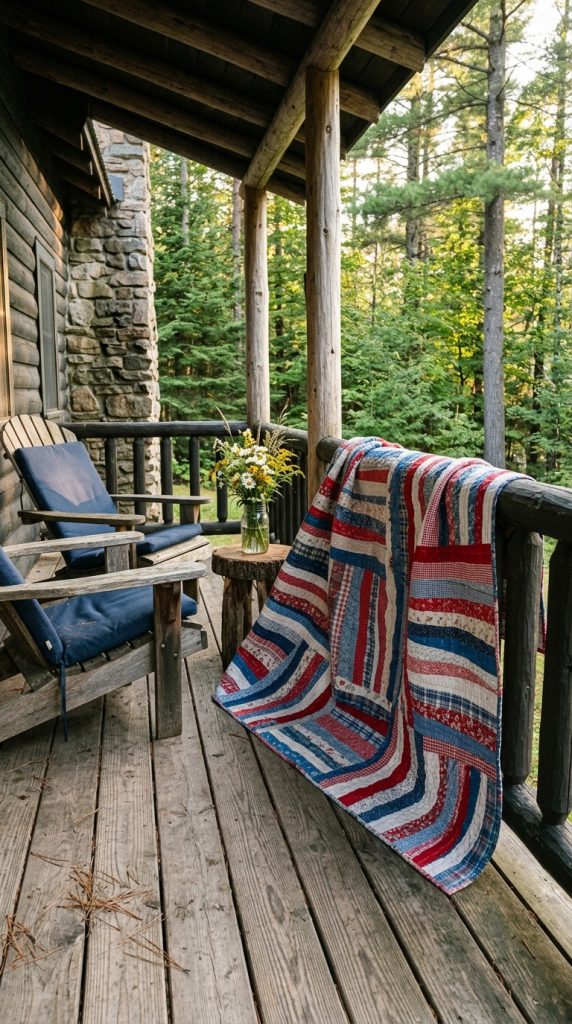
Is there anything more satisfying than using up fabric scraps? The string quilt concept embraces the idea of making something beautiful from what might otherwise be discarded. This design uses fabric strips in various red, white, and blue tones to create a scrappy, cozy quilt that’s all about resourcefulness and creativity.
The construction involves sewing fabric strips onto foundation paper to create blocks that you then arrange in a patriotic color scheme. The random nature of strip quilting means every quilt becomes unique, with its own personality and character. I’ve made several string quilts over the years, and I’m always amazed at how the random arrangement of strips creates unexpected beauty—a wavy blue section here, a sudden pop of red there.
Pros:
- Uses up fabric scraps
- Creates a one-of-a-kind quilt
- Perfect for cozy, homey aesthetics
- Environmentally friendly
Cons:
- Requires foundation paper or fabric
- Can be fabric-heavy for larger quilts
To put it simply, string quilts capture the essence of American resourcefulness. There’s something deeply American about taking what you have and turning it into something beautiful, which makes this approach particularly appropriate for 4th of July quilts.
14. Redwork Embellished Quilt
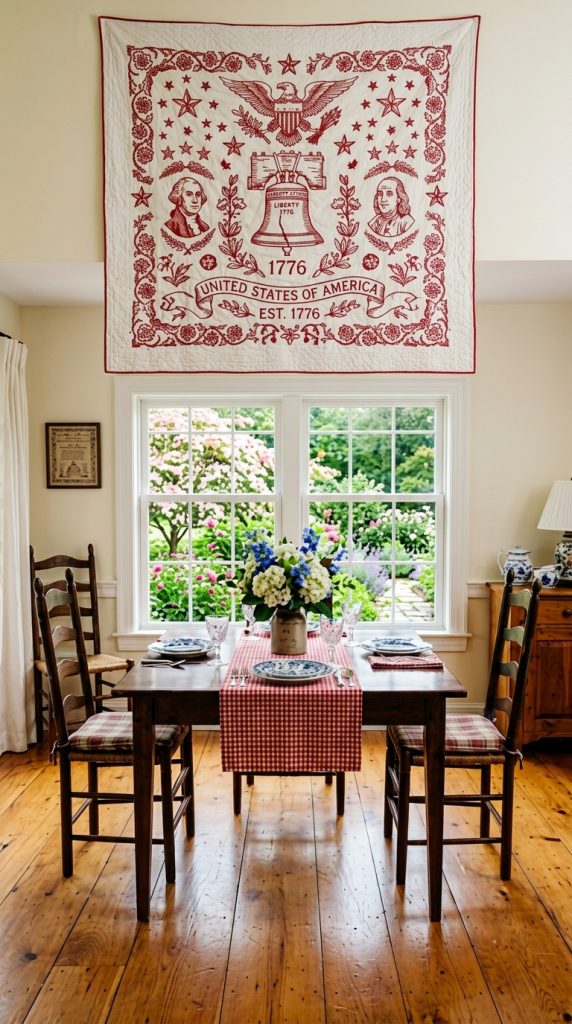
Redwork has a rich history in American quilting, and using it for 4th of July celebrations feels incredibly fitting. This design incorporates red embroidery into patriotic quilts, adding texture and storytelling elements that printed fabrics can’t match.
The embroidery can be traditional redwork patterns—think Liberty Bell, patriotic eagles, or founding fathers—or more contemporary designs that celebrate modern American ideals. I’ve seen stunning quilts where the redwork elements tell the story of a family’s American journey, incorporating dates, names, and meaningful symbols. The red thread stands out beautifully against the white quilt background, creating visual interest while maintaining a traditional feel.
Pros:
- Creates a unique, handmade look
- Tells a personal story
- Adds texture and dimension
- Portable project
Cons:
- Time-consuming
- Requires embroidery skills
According to the Smithsonian’s Archives of American Art, redwork embroidery was among the most popular forms of expression in American quilting between 1880 and 1920. This technique connects us to our quilting ancestors in a meaningful way while allowing for modern creative expression.
15. Patchwork Memory Quilt
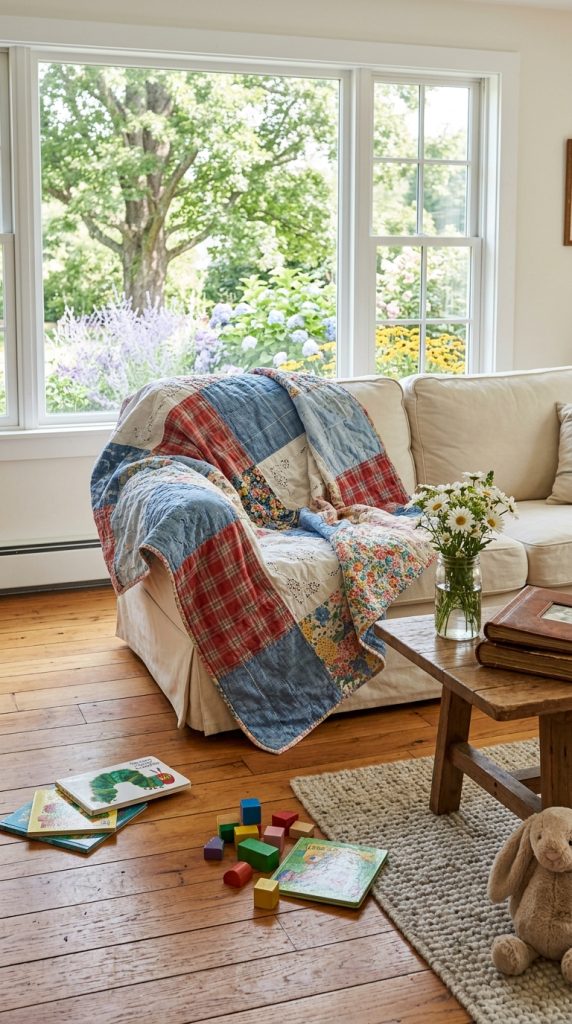
This might be my personal favorite approach because it combines craftsmanship with sentiment in the most beautiful way. The patchwork memory quilt uses fabric from meaningful sources—maybe old patriotic shirts, vintage tablecloths, or fabric from family members’ clothing—to create a quilt that’s both beautiful and deeply personal.
The design emphasizes incorporating these meaningful fabrics in a balanced way, perhaps creating a sampler of patriotic memories or a more structured pattern that showcases the most significant pieces. I once made one using my grandfather’s old red flannel shirts, my grandmother’s blue table linens, and a white tablecloth from my parents’ wedding. The result was a quilt that told my family’s American story through fabric.
Pros:
- Deeply personal and meaningful
- Creates a true family heirloom
- Tells a unique family story
- Uses fabric with history
Cons:
- Requires gathering meaningful fabrics
- Can be emotionally challenging to cut into treasured items
In the words of quilt historian Merikay Waldvogel, “Quilts are records of women’s lives, told in fabric and thread.” This approach takes that truth to heart, creating a quilt that records not just American history but your family’s place within it.
Conclusion
As I wrap up these 15 ideas, I find myself thinking about the quilts hanging in my own home. Each one tells a story—some of family gatherings around campfires, others of quiet evenings spent stitching, a few of celebrations that brought communities together. That’s the real magic of 4th of July quilts: they’re never just decoration.
Whether you choose the dramatic bold stars that command attention, the sentimental memory quilt that weaves together family history, or the practical picnic quilt designed for comfortable celebration, you’re creating something that matters. These aren’t just things we make; they’re how we celebrate, how we remember, and how we connect with the people and traditions that matter most.
I encourage you to look at these ideas with fresh eyes, pick the one that resonates most deeply, and start creating. Your quilt might not be perfect—my first one certainly wasn’t—but it will be yours, and that’s what makes it special. There’s something deeply satisfying about watching people gather around your quilt, sharing stories and making memories that will last as long as the fabric itself.
So which idea caught your attention first? Maybe the alternative flag design called to you, or perhaps you’re already pulling out family fabrics for a memory quilt. Whatever you choose, know that you’re creating more than a quilt—you’re creating a centerpiece for celebrations, a conversation starter for gatherings, and a legacy for the future. Happy quilting, and here’s to creating something beautiful for your next 4th of July celebration.
15 Modern 4th of July Quilts to Make (58 characters)
Create stunning patriotic quilts with 15 innovative designs that blend tradition with modern style for unforgettable holiday celebrations. (158 characters)

Ashley Ellison is a skilled writer and avid bowler. Her passion for storytelling and dedication to the sport have led her to participate in various national bowling leagues. With a unique combination of talents, Ashley approaches every challenge with creativity and a relentless drive to succeed.