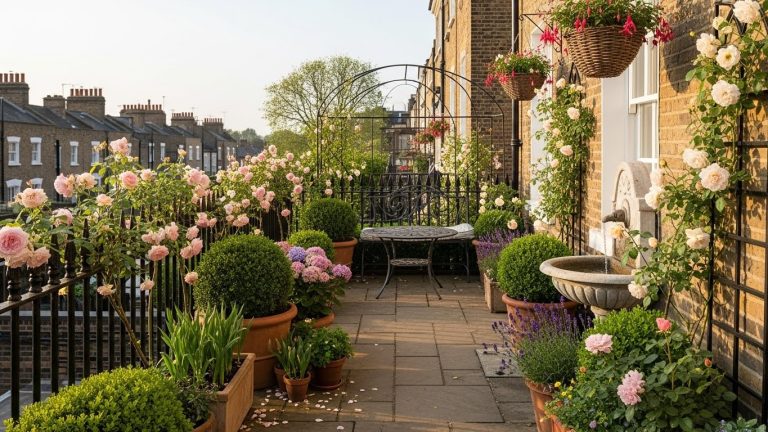
15 Gray Exterior House Paint Ideas That Actually Work
You know that feeling when you’re driving through a neighborhood and a house just stops you in your tracks? Not because it’s flashy or over-the-top, but because it looks so effortlessly put together. That’s exactly what happened to me last fall. I was taking my usual walk, coffee in hand, and this beautiful gray farmhouse made me literally stop mid-sip. The color wasn’t boring or sad like people sometimes assume about gray. It was rich, warm, and somehow made the whole house look like it belonged in a magazine.
Here’s the thing I’ve learned after spending way too many hours researching this topic. Gray exterior paint isn’t just one color. It’s actually hundreds of different personalities wrapped into one neutral family. And the right gray can completely transform how your house feels, how it photographs, and honestly, how much you love coming home to it.
I’ve put together fifteen real-world gray exterior house paint ideas that actual homeowners are using right now. No fantasy concepts or Pinterest-perfect illusions that cost a fortune. Just honest, achievable looks that work in real life with real budgets and real weather. Let me walk you through my favorites.
1. Warm Greige with Cream Trim for Farmhouse Charm

I used to think gray was gray until I discovered greige. It’s that perfect marriage between gray and beige, and honestly, it’s been a total game changer for farmhouse-style homes. My neighbor just painted her siding in this beautiful warm greige, and suddenly her whole house looks like it belongs on a lifestyle blog. The warmth keeps it from feeling cold, but the gray undertones give it that modern edge.
Pros:
- Works beautifully with natural wood elements like front doors or porch columns
- Hides dust and dirt surprisingly well compared to lighter neutrals
- Feels welcoming rather than stark or institutional
Cons:
- Can look slightly beige in direct afternoon sunlight if undertones lean too warm
- Requires testing multiple samples since greige varies wildly by brand
The thing about greige is that it plays nice with almost every trim color. Cream trim especially makes the whole combination feel soft and inviting. If you’ve got a wrap-around porch or lots of windows, this pairing will make those architectural details sing.
2. Charcoal Gray with Bright White Trim for High Contrast Drama

Let me tell you about the house down the street that I’m genuinely jealous of. The owners went with a deep charcoal gray body and crisp white trim, and the effect is absolutely stunning. This isn’t your shy, subtle gray. This is the gray that walks into a room and owns it. Charcoal works best on houses with strong architectural features because the contrast highlights every corner, every gable, every window frame.
Pros:
- Creates incredible curb appeal that stands out in any neighborhood
- Makes white windows and doors look custom and expensive
- Hides imperfections in siding better than lighter colors
Cons:
- Absorbs heat, which matters if you live in a hot climate
- Shows every bit of pollen, dust, and water spots
- Fades faster than lighter grays in direct sun
A recent survey from the National Association of Home Builders found that high-contrast exterior color combinations are among the top requested upgrades for new construction. People want drama, and charcoal delivers it without being tacky.
3. Light Silver Gray with Navy Blue Shutters

This combination surprised me the first time I saw it. Light silver gray reads almost ethereal in the morning light, almost like the house is glowing a little bit. Then you add navy blue shutters and a front door to match, and suddenly you’ve got this coastal-meets-classic look that feels fresh without being trendy. I’ve recommended this to three friends already, and every single one has loved the result.
Pros:
- Silver undertones reflect light beautifully, making the house look brighter
- Navy accents add depth without overwhelming the neutral base
- Works on both traditional and transitional home styles
Cons:
- Light grays show dirt and mildew more obviously
- Navy paint fades faster than darker shades, requiring more frequent touch-ups
The trick with silver gray is finding the right balance of cool undertones. Too blue and it looks like a storm cloud. Too green and it reads as muddy. Benjamin Moore’s Gray Owl is a fantastic starting point if you want to explore this direction.
4. Slate Gray with Natural Stone Accents

Have you ever noticed how some houses just look like they’ve always been there? Like they grew out of the landscape instead of being plopped onto it? That’s what slate gray does when you pair it with natural stone. I saw this on a ranch-style home in the foothills, and the combination was so perfect it almost hurt. The slate gray siding blended with the gray-blue tones in the stone veneer, and the whole house felt anchored and grounded.
Pros:
- Creates seamless flow between exterior materials
- Looks expensive without requiring expensive materials throughout
- Ages gracefully as stone naturally weathers
Cons:
- Natural stone accents add significant cost to a project
- Matching undertones between paint and stone takes patience and samples
This approach works especially well if you already have a stone fireplace chimney, a stone retaining wall, or stone foundation accents. You’re not adding stone everywhere. You’re just making what you already have look intentional.
5. Pewter Gray with Black Window Frames
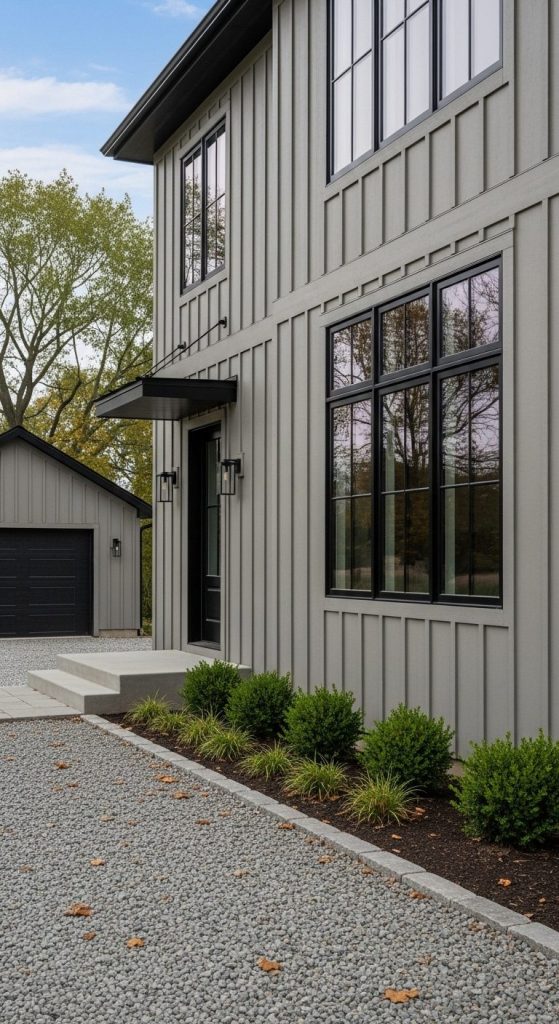
Okay, this one is for the modern farmhouse lovers and the contemporary crowd alike. Pewter gray sits right between medium and dark, with enough pigment to feel substantial but not so much that it swallows the light. When you pair it with black window frames, something magical happens. The windows don’t just sit on the house. They become graphic elements, almost like artwork against the gray backdrop.
Pros:
- Black frames make windows pop without being distracting
- Pewter works in both full sun and shady lots
- Hides imperfections in older siding better than light colors
Cons:
- Black window frames can be expensive if you’re replacing rather than painting
- Shows every smudge and fingerprint on trim around doors
A design expert from Sherwin-Williams once told me that pewter is the new beige. It’s becoming the default neutral because it works with absolutely everything. Warm wood door? Works. Cool stone walkway? Works. Bright landscaping? Works even better.
6. Dove Gray with Sage Green Shutters

I almost didn’t believe this combination until I saw it in person. Dove gray is soft, almost fluffy looking, like the color of a peaceful morning sky. Sage green shutters add just enough color to be interesting without screaming for attention. Together, they create a look that feels English countryside meets American four-square. It’s unexpected, and that’s exactly why it works.
Pros:
- Soft palette feels calming and welcoming
- Sage green connects the house to surrounding landscaping
- Works beautifully on craftsman and cottage-style homes
Cons:
- Dove gray can look washed out on cloudy days
- Sage needs the right undertone to avoid looking muddy against gray
The house that sold me on this combo had a sage green front door to match the shutters, plus window boxes overflowing with white flowers. The whole thing felt like something from a storybook. If you want your house to feel like a hug, this is your direction.
7. Deep Iron Gray with Cedar Shake Accents

Here’s what I love about deep iron gray. It’s not quite black, not quite charcoal, but something richer and more complex. Think about the color of cast iron cookware after it’s been seasoned for years. That depth is what you’re going for. When you pair this with cedar shake accents on gables or porch ceilings, the warm wood against the cool dark gray creates one of the most stunning combinations I’ve ever seen.
Pros:
- Cedar adds natural warmth that balances the dark gray
- Iron gray hides dirt and weathering incredibly well
- Creates a lodge or mountain modern aesthetic without being theme-y
Cons:
- Cedar requires maintenance and sealing every few years
- Dark colors show every bird dropping and pollen patch
Real talk. This combination isn’t cheap. Cedar shakes cost more than siding, and deep grays require quality paint to prevent fading. But if you’ve got the budget, this is the kind of exterior that makes realtors weak in the knees.
8. Misty Gray with Brick Red Front Door

Misty gray is exactly what it sounds like. It’s the color of fog rolling in over a field, soft and atmospheric. This gray has strong blue undertones that read as cool and calming. Then you add a brick red front door, and suddenly the whole house wakes up. The contrast between cool gray and warm red is visually exciting without being chaotic. I’ve seen this on colonial revival homes and simple ranch houses alike, and it works every time.
Pros:
- Red door adds instant personality and warmth
- Misty gray recedes visually, making the house feel further from the street
- Cool gray helps red pop without clashing
Cons:
- Blue-toned grays can feel cold in northern climates during winter
- Red is a commitment that not every homeowner feels comfortable with
According to color psychology research, red doors are statistically associated with homes that sell faster and for more money. People subconsciously see a red door as welcoming and confident. Add a misty gray body, and you’ve got approachable sophistication.
9. Taupe Gray with Dark Brown Trim

Let me be honest. I wasn’t sure about taupe gray at first. It sounded like one of those colors that tries too hard to be everything at once. But then I saw it on a mid-century modern home, and I finally got it. Taupe gray has purple and brown undertones that make it feel earthy and organic. When you trim it in dark brown instead of white, the whole house feels grounded and masculine in the best way.
Pros:
- Works beautifully in wooded lots or homes with lots of trees
- Dark brown trim hides dirt and doesn’t show water spots
- Feels more unique than the standard gray-white combination
Cons:
- Taupe can look purple in certain lighting conditions
- Dark brown trim can feel heavy on smaller houses
This look is perfect for homes with lots of wood elements already present. Wood decks, wood front doors, wood fences all play nicely with taupe gray and brown trim. You’re basically creating a monochromatic earth tone palette that feels intentional and serene.
10. Storm Gray with Yellow Front Door

Okay, hear me out because this sounds wild until you see it. Storm gray is a true neutral medium gray with no obvious warm or cool bias. It’s reliable, predictable, and honestly a little plain on its own. But then you paint your front door a cheerful butter yellow, and suddenly the gray becomes the perfect backdrop instead of the main event. The yellow sings against the gray, and the gray keeps the yellow from feeling like a circus.
Pros:
- Yellow door adds joy and personality without overwhelming
- Storm gray works in any lighting and any season
- Neutral gray means you can change door colors whenever you want
Cons:
- Yellow is a bold choice that some potential buyers might hate
- True neutral grays can feel boring without strong accent colors
I talked to a homeowner who did exactly this. She said every single person who walks past her house smiles at the yellow door. Kids point at it. Delivery drivers compliment it. Sometimes the best thing your gray paint can do is make something else look amazing.
11. Graphite Gray with Copper Gutters and Downspouts
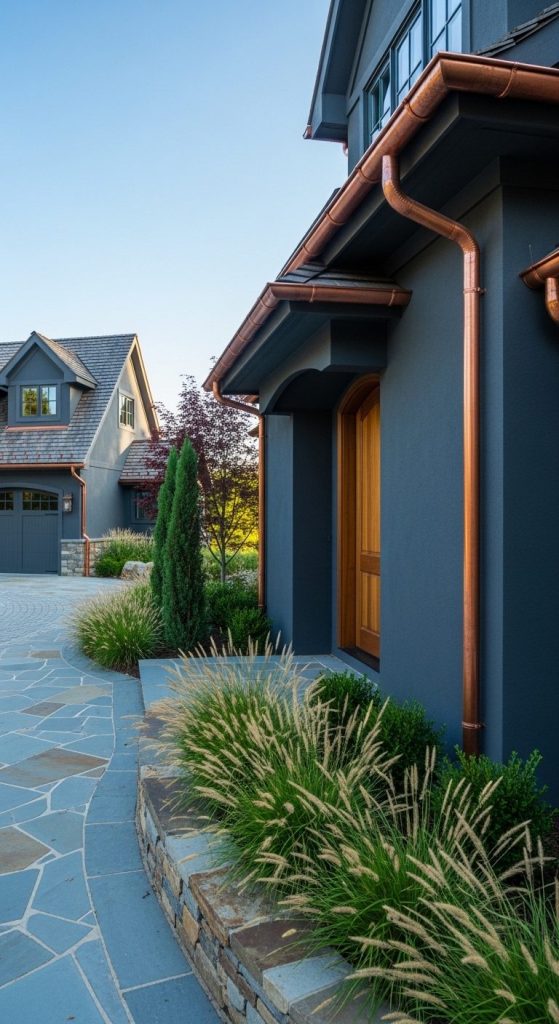
This is the luxury option, and I’m not going to pretend otherwise. Graphite gray is dark, sophisticated, and slightly mysterious. It’s the gray equivalent of a little black dress. But what makes this idea truly special is the copper accents. Copper gutters and downspouts against dark gray siding is the kind of detail that architecture nerds lose their minds over. The copper starts out bright and shiny, then slowly develops a green patina that looks even better with age.
Pros:
- Copper develops character over time that paint never can
- Graphite provides the perfect dark backdrop for metallic accents
- Increases perceived home value significantly
Cons:
- Copper gutters cost three to five times more than aluminum
- Graphite shows every scratch and imperfection in siding
Is this practical for most homeowners? Not really. But if you’re doing a full renovation or building new, and you want something that will stop traffic, this is it. I’ve seen exactly two houses with this combination in real life, and I remember both of them years later.
12. Flint Gray with Lavender Shutters

Before you click away, let me explain. Flint gray is a cool, slightly green-toned gray that feels natural and understated. Lavender shutters sound insane until you understand that lavender is basically a pastel purple with strong gray undertones. The two grays work together, with the lavender just adding a whisper of color. This is not for everyone, but for the right Victorian or folk Victorian home, it’s absolutely magical.
Pros:
- Unforgettable color combination that no neighbor will have
- Lavender complements the cool tones in flint gray perfectly
- Works especially well on homes with lots of decorative trim
Cons:
- Very specific look that only suits certain architectural styles
- Future resale value could be tricky with unconventional colors
I found this combination in a historic district where homeowners are required to use period-appropriate colors. Lavender was actually a popular trim color in the late 1800s. So this isn’t me being weird. This is historically accurate weird, which is somehow better.
13. Ash Gray with Burgundy Accents

Ash gray has green undertones that remind me of the dusty color left behind after a campfire. It’s organic and a little moody in the best way. Burgundy accents on shutters, the front door, or even just garage doors create a rich, jewel-toned contrast that feels luxurious. I saw this on a Tudor revival home, and the combination was so striking that I pulled over to take a picture.
Pros:
- Burgundy adds warmth and richness without being bright or childish
- Ash gray reads as natural and organic
- Works beautifully with brick or stone foundations
Cons:
- Green-toned grays can look muddy next to cool white trim
- Burgundy is a dark accent that can feel heavy on small houses
According to paint manufacturer data, burgundy is having a quiet moment as an exterior accent color. It’s replacing the navy and black that dominated for the last decade. People want depth and richness, and burgundy delivers that in spades.
14. Pearl Gray with Teal Front Door

Pearl gray has subtle iridescent qualities in the right light. It’s not metallic, exactly, but it has a soft luminosity that lighter grays can lack. Then you add a teal front door, and suddenly you’ve got a coastal grandmother situation that feels fresh and current. Teal and pearl gray share blue undertones, so they harmonize rather than fighting each other.
Pros:
- Teal feels unexpected and cheerful without being childish
- Pearl gray reflects light and keeps the house looking bright
- Works beautifully on beach houses and suburban homes alike
Cons:
- Pearl gray can look flat and lifeless on overcast days
- Teal is trendy, which means it might feel dated in five years
A real estate agent friend told me that homes with blue-green front doors photograph exceptionally well for listings. Something about the color draws the eye and makes the entrance feel inviting. Pearl gray just enhances that effect by keeping the rest of the house calm and supportive.
15. Weathered Gray with White Porch Railings
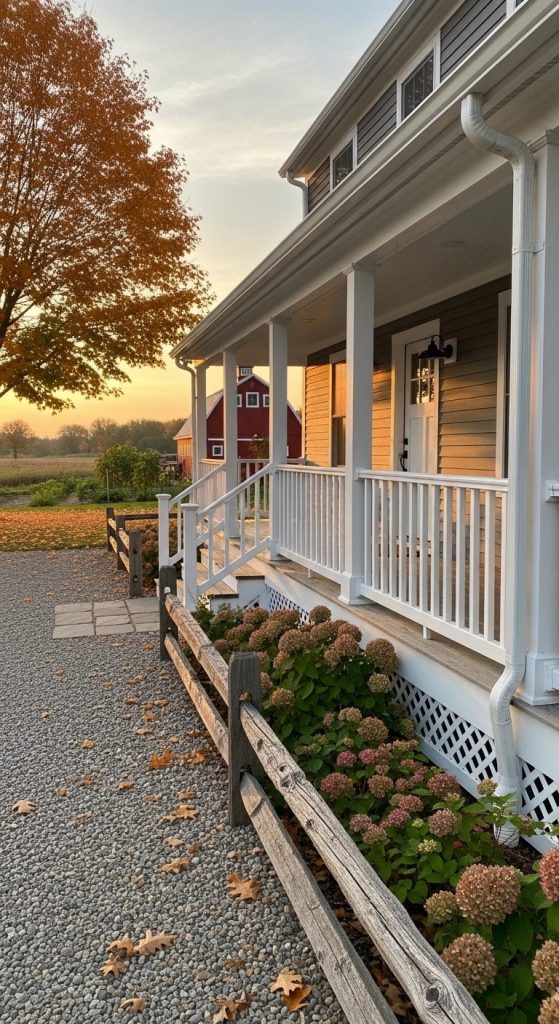
Let me end with something that almost anyone can do. Weathered gray looks like an old barn that’s been silvered by decades of sun and rain. It’s imperfect, slightly uneven, and full of character. The secret is that you don’t actually need old barn wood to get this look. Certain paint colors mimic that weathered effect perfectly. Then you add bright white porch railings and columns, and the contrast between rustic and crisp is just chef’s kiss.
Pros:
- Forgiving finish that hides siding imperfections beautifully
- Works on new construction and old homes equally well
- White railings pop against the muted gray background
Cons:
- Can look intentionally distressed, which isn’t everyone’s style
- May read as brown or beige in certain lighting
The house that inspired this idea had a wrap-around porch with those classic white spindles and a weathered gray body. It looked like a house that had stories to tell. Like it had been hosting lemonade summers and cozy autumn evenings for a hundred years, even though it was only built in 2005.
Putting Your Gray Exterior House Paint Ideas into Action
Here’s what I want you to take away from all of this. Gray is not boring. Gray is not a cop-out neutral that shows you were afraid of color. Gray is actually one of the most versatile, expressive, and sophisticated choices you can make for your home’s exterior. The key is finding the right gray for your specific house, your specific light, and your specific personality.
My honest advice? Pick three favorites from this list. Buy sample quarts of each. Paint large swatches on different sides of your house. Look at them in the morning, at noon, and at sunset. Live with them for a week. The right gray will announce itself. You’ll walk outside one morning, look at the swatch, and just know.
Start with whichever idea made you nod your head first. That’s almost always the right answer. Your house deserves to feel like you, and now you’ve got fifteen real-world ways to make that happen.

William Martin is a passionate bowler who spends most of his weekends playing the sport. With years of intense experience under his belt, William decided to share his knowledge by creating BOWLING OCEAN. Join me on this journey to explore the world of bowling and discover the tips and tricks to becoming a pro.