Sloped Garden Ideas: Transform Your Hillside Landscaping into a Stunning Outdoor Escape
Ever stared at your steep backyard and wondered, “How on earth am I supposed to make this beautiful?” I know the feeling—I once stared down a hillside that looked more like a mini cliff than a garden. But here’s the thing: sloped gardens aren’t a problem; they’re an opportunity. With the right ideas, you can turn a tricky incline into a dramatic, lush, and functional landscape. Today, we’re walking through 15 sloped garden ideas that will make your hillside not just manageable, but magical.
Hillside landscaping might feel intimidating, but it’s also incredibly rewarding. Slopes naturally create layers, depth, and dynamic views, which flat yards just can’t compete with. From terraced beds to water features that cascade naturally, there’s so much potential to explore. I’ll be sharing ideas that are practical, eye-catching, and sometimes even whimsical—so your slope doesn’t feel like a chore anymore, but a canvas.
Whether you’re dreaming of a rocky retreat, lush green oasis, or structured tiered paradise, these concepts will give you the tools and inspiration to transform your hill. Plus, I’ll cover both the perks and the challenges of each idea, so you know exactly what you’re getting into. Ready? Let’s dive in.
1. Terraced Garden Beds
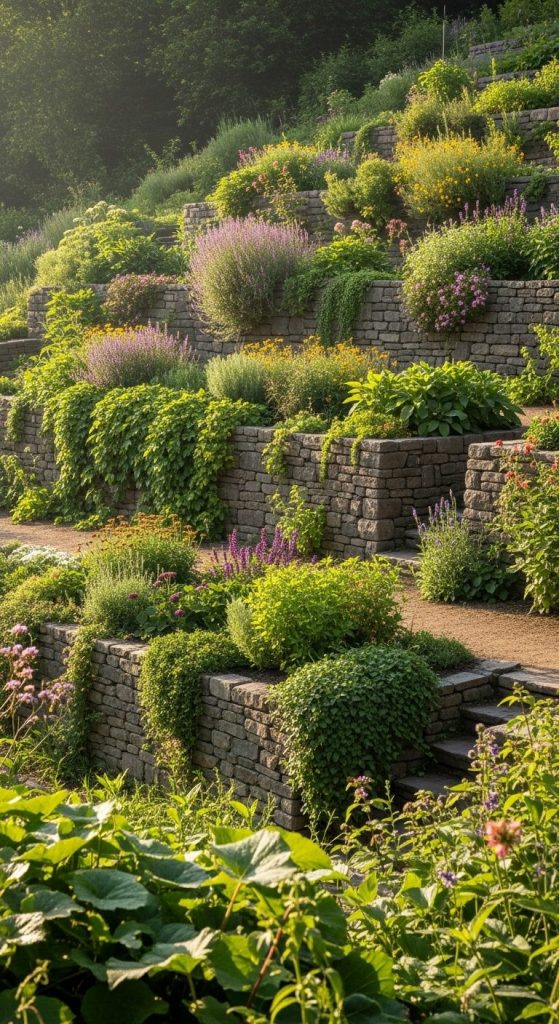
If your slope is steep, terracing is a game-changer. By cutting the hill into flat planting platforms, you make gardening much easier while creating an elegant layered look.
Pros:
- Prevents soil erosion by slowing down water runoff.
- Creates flat spaces for flowers, shrubs, or even small trees.
- Adds architectural interest to your landscape—each tier is a visual pause.
Cons:
- Construction requires effort and sometimes professional help.
- Improper drainage can lead to water pooling if not planned correctly.
Takeaway: Terraces transform a slope from a challenge into a structured, usable garden—IMO, the foundation of any successful hillside landscape.
2. Retaining Walls with Planters
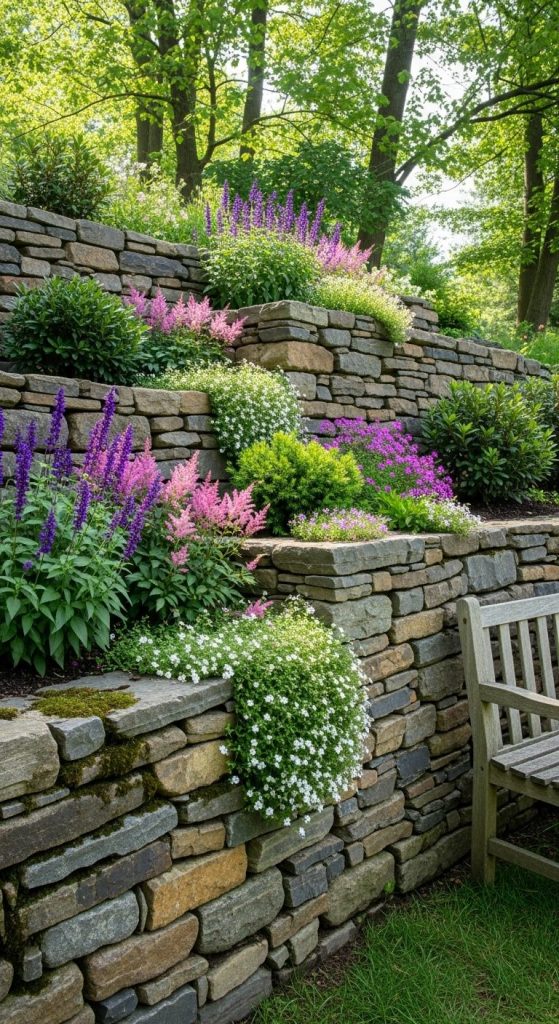
Retaining walls aren’t just functional—they can double as stunning planting areas. Imagine stone or timber walls that cradle vibrant greenery.
Pros:
- Stabilizes soil and prevents landslides.
- Creates distinct levels for different plant types.
- Can incorporate benches or decorative elements.
Cons:
- Installation costs can add up, especially with natural stone.
- Heavy walls need proper engineering to avoid future issues.
Takeaway: Combining structure with planting maximizes both utility and beauty—your slope becomes safe and elegant.
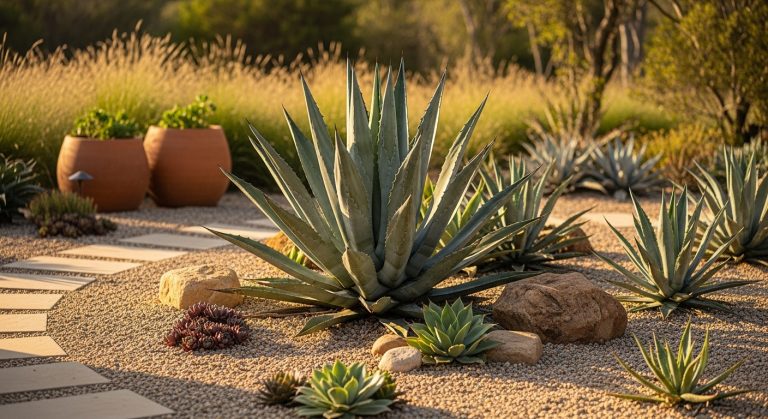
3. Rock Gardens & Boulders
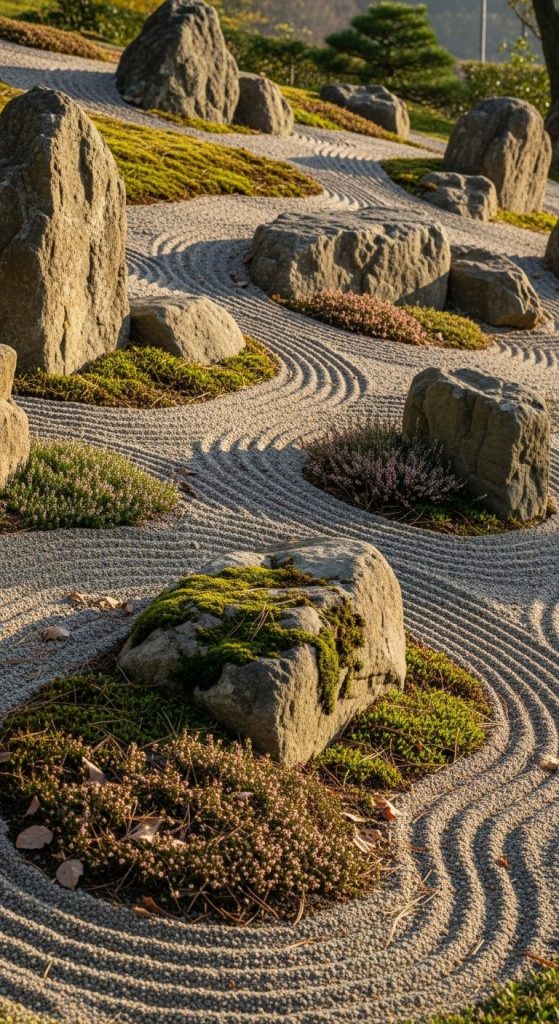
Slopes naturally lend themselves to rocky landscapes. Strategically placed boulders and gravel beds can make your hillside feel rugged yet curated.
Pros:
- Low maintenance and drought-tolerant.
- Provides texture, color contrast, and a natural aesthetic.
- Perfect for alpine or Mediterranean planting schemes.
Cons:
- Large boulders may require machinery to install.
- Limited soil space can restrict certain plant choices.
Takeaway: A rock garden embraces the hill’s natural form, turning potential chaos into artful composition.
4. Stepped Pathways & Stairs
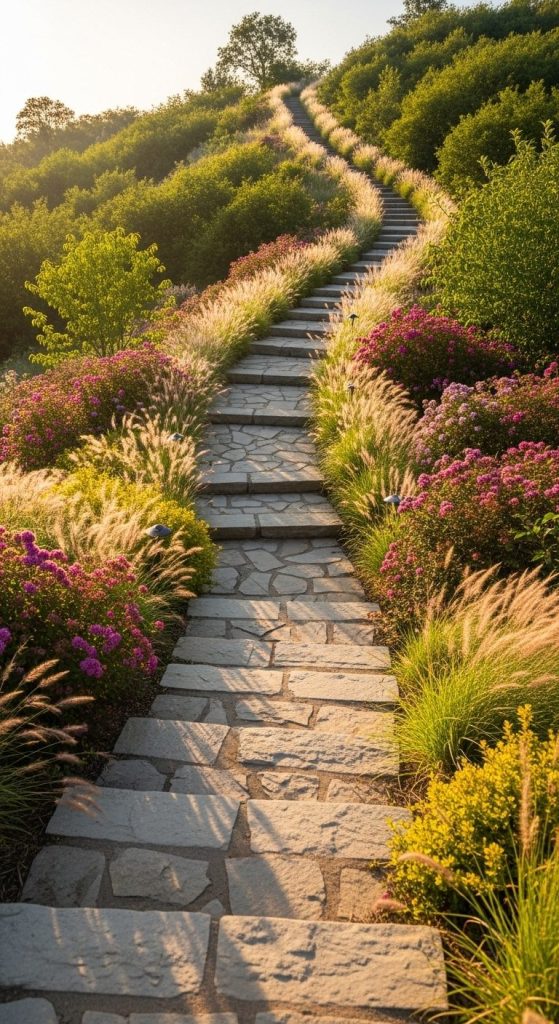
Curved or straight staircases and pathways make your slope accessible and inviting, guiding visitors through your garden.
Pros:
- Adds safety and prevents slipping.
- Guides the eye and encourages exploration of your hillside.
- Can incorporate lighting for ambiance and night-time usability.
Cons:
- Hardscape materials can be expensive.
- Poor design may create awkward transitions or disrupt planting areas.
Takeaway: A pathway transforms your slope into a journey—walking it becomes as enjoyable as admiring the view.
5. Retaining Walls with Seating
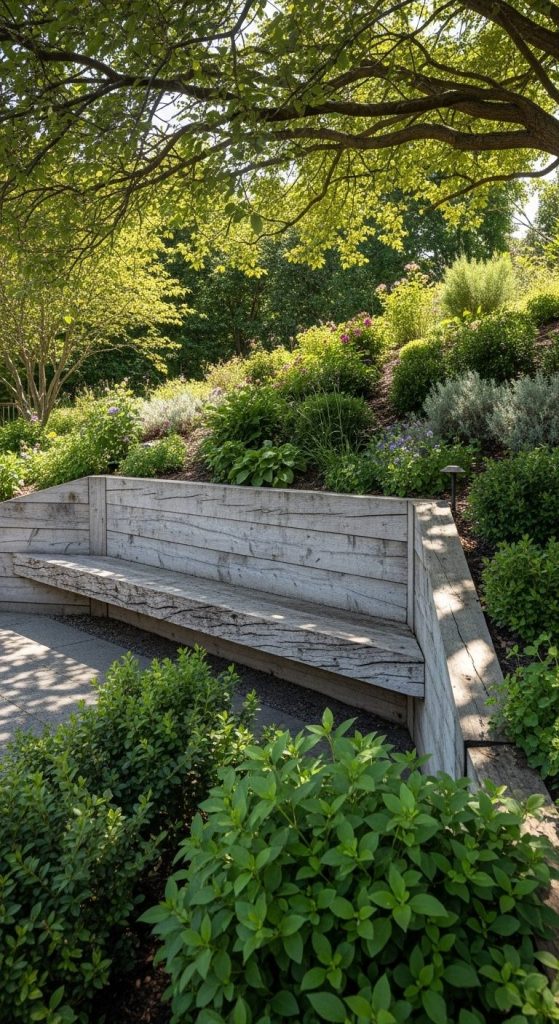
Combine function and comfort: retaining walls can double as benches, offering views and resting spots throughout the hill.
Pros:
- Maximizes space in steep areas.
- Adds a social element to the garden.
- Blends seamlessly with plantings.
Cons:
- Needs sturdy construction to bear weight.
- Limited flexibility for repositioning once built.
Takeaway: Functional seating turns the hillside into a living space, not just a visual spectacle.
6. Water Features & Mini Waterfalls
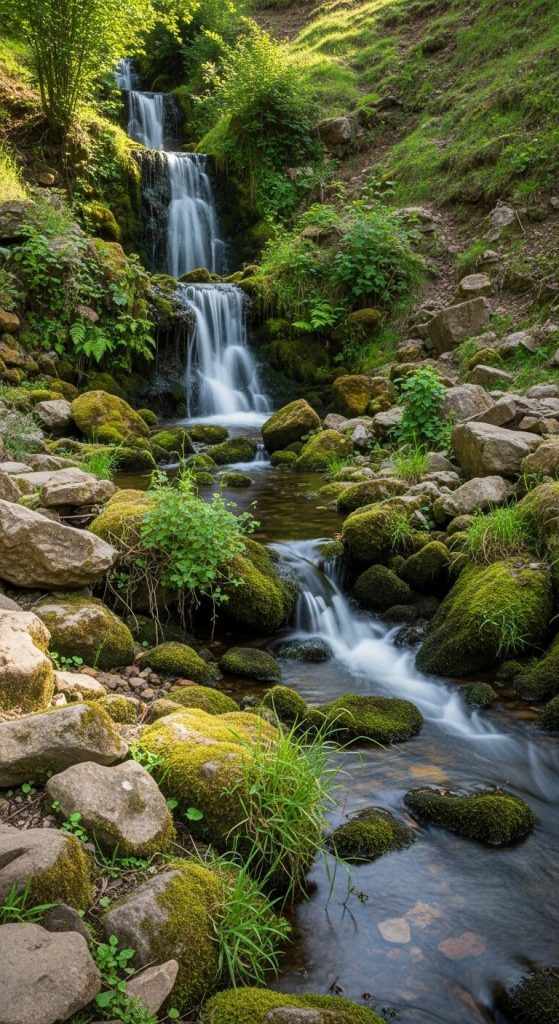
Slopes are perfect for gravity-fed water features. A cascading waterfall or stream can make your garden feel tranquil and luxurious.
Pros:
- Adds sound and motion, enhancing the sensory experience.
- Can help with irrigation if designed thoughtfully.
- Creates natural focal points along the slope.
Cons:
- Pumps, plumbing, and maintenance can be tricky.
- Water runoff needs careful planning to prevent erosion.
Takeaway: Let the hill do the work—water flows naturally, giving life and ambiance to your landscape.
7. Native Plantings & Ground Covers
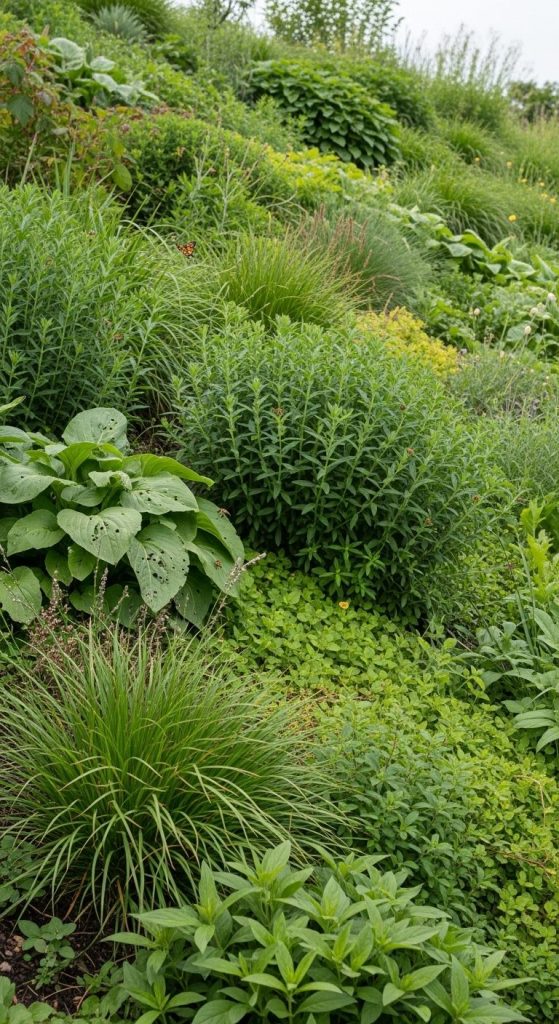
Using native shrubs, grasses, and ground covers stabilizes soil while embracing a natural hillside look.
Pros:
- Low maintenance and drought-tolerant.
- Reduces erosion with dense root systems.
- Supports local wildlife like bees and birds.
Cons:
- Some native species may need time to establish.
- Less control over color schemes or formal patterns.
Takeaway: Planting native greenery marries sustainability with style—your slope thrives with minimal fuss.
8. Layered Shrubs & Trees
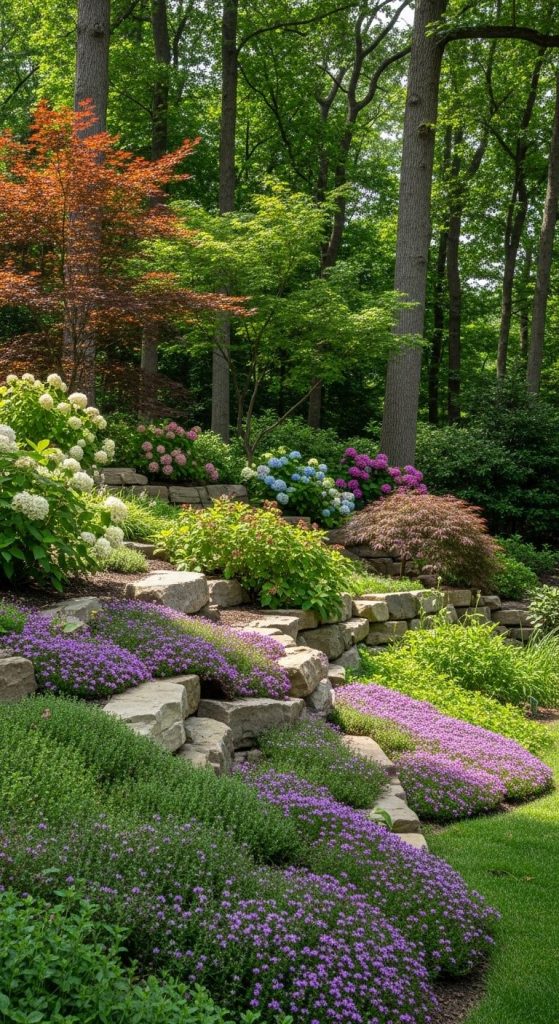
Planting in layers—low groundcovers, medium shrubs, and tall trees—adds depth and creates visual interest.
Pros:
- Offers habitat and privacy.
- Softens the slope and creates a cohesive landscape.
- Provides shade and microclimate benefits.
Cons:
- Requires careful planning for sunlight and root competition.
- Taller trees may block views if not placed thoughtfully.
Takeaway: Vertical layering transforms a bare slope into a lush, three-dimensional garden.
9. Steep Slope Terraces with Herbs & Edibles
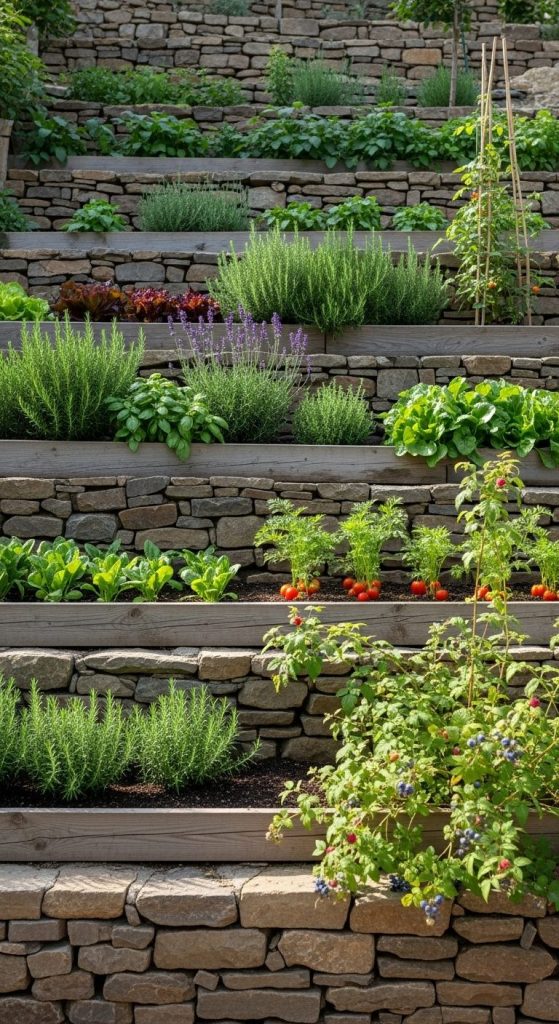
Turn your hillside into a productive garden. Terraces are perfect for herbs, vegetables, and small fruit bushes.
Pros:
- Combines beauty with functionality.
- Easier maintenance than flat, sprawling beds.
- Encourages sustainable, home-grown produce.
Cons:
- Soil depth may vary; irrigation is critical.
- Harvesting on a slope can be awkward without proper steps or access.
Takeaway: Productivity doesn’t mean compromising beauty—your slope can feed both eyes and stomach.
10. Wildlife-Friendly Hillside
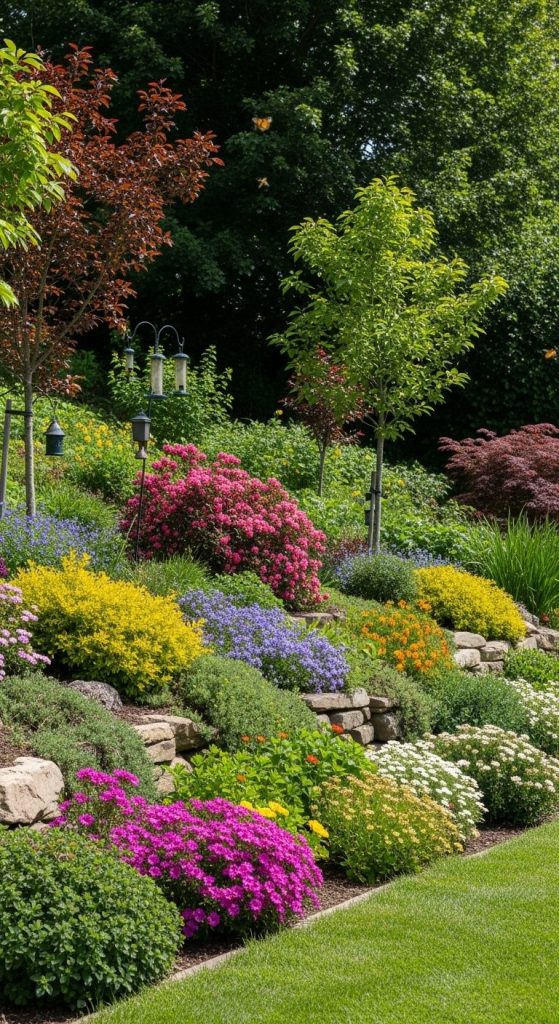
Create a slope that attracts birds, butterflies, and pollinators with layered planting, water, and shelter.
Pros:
- Boosts biodiversity and ecosystem health.
- Adds movement, sound, and life to your garden.
- Supports pollination for other plantings.
Cons:
- Some wildlife can be pests.
- Requires consideration of plants safe for animals and humans.
Takeaway: Life on the slope makes it feel dynamic and ever-changing—a living landscape, not static décor.
11. Sculptural Features & Art
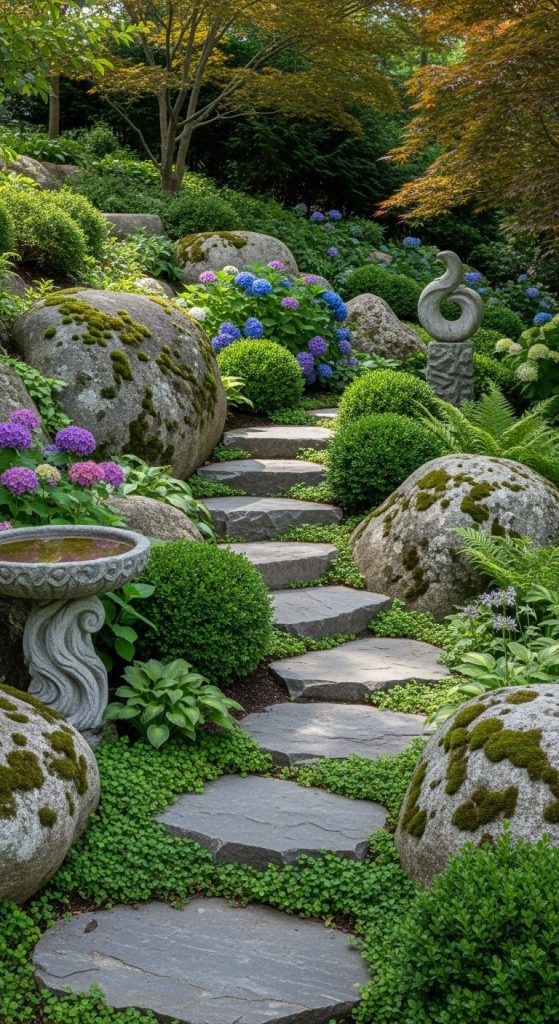
Integrate artistic elements like sculptures, decorative stones, or garden obelisks to highlight the hillside.
Pros:
- Creates focal points and anchors views.
- Adds personality and narrative to your garden.
- Works well with natural contours for dramatic effect.
Cons:
- Art can feel out of scale if not chosen carefully.
- Maintenance depends on materials exposed to the elements.
Takeaway: Sculpture and art turn a garden into a gallery—your slope becomes a curated experience.
12. Pergolas & Elevated Decks
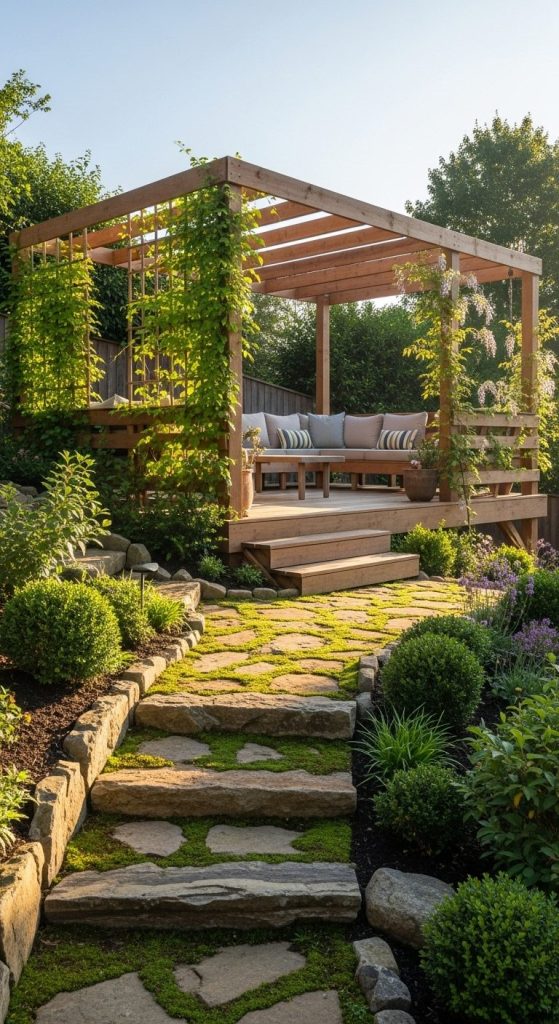
A pergola or elevated deck creates usable outdoor rooms on challenging terrain.
Pros:
- Provides shade and entertainment areas.
- Enhances views from elevated positions.
- Integrates climbing plants for vertical interest.
Cons:
- Construction is more complex on a slope.
- Permits may be required for structural additions.
Takeaway: Elevation becomes a feature, not a problem—your hillside can host gatherings and views in style.
13. Rock Steps & Natural Stone Paths
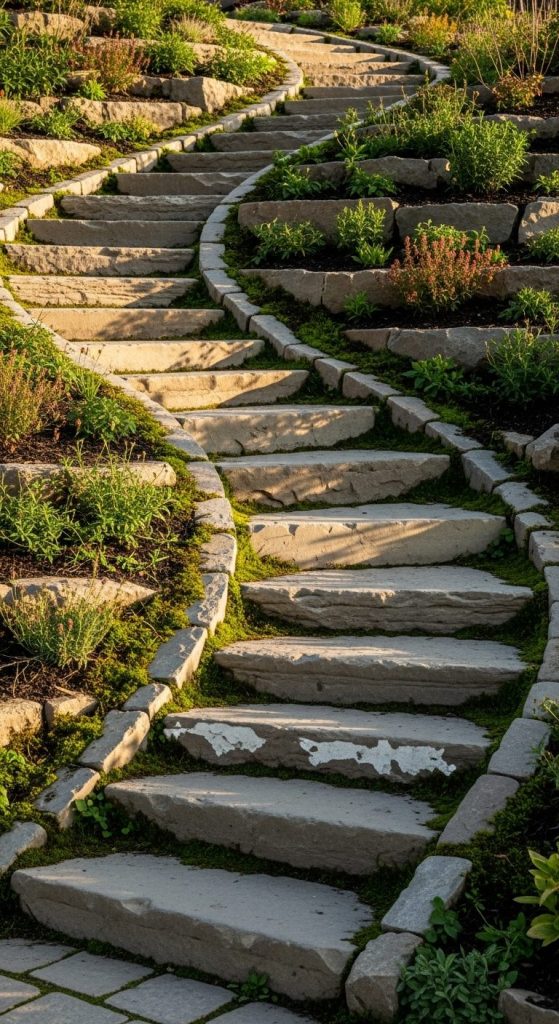
Instead of harsh stairs, use natural stone steps that feel organic and blend with the slope.
Pros:
- Adds charm and blends with landscaping.
- Minimizes erosion compared to flat dirt paths.
- Durable and long-lasting if installed well.
Cons:
- Slippery when wet if not textured properly.
- Labor-intensive installation.
Takeaway: Integrate paths with the natural terrain, and your slope feels like an enchanting journey.
14. Mulching & Erosion Control
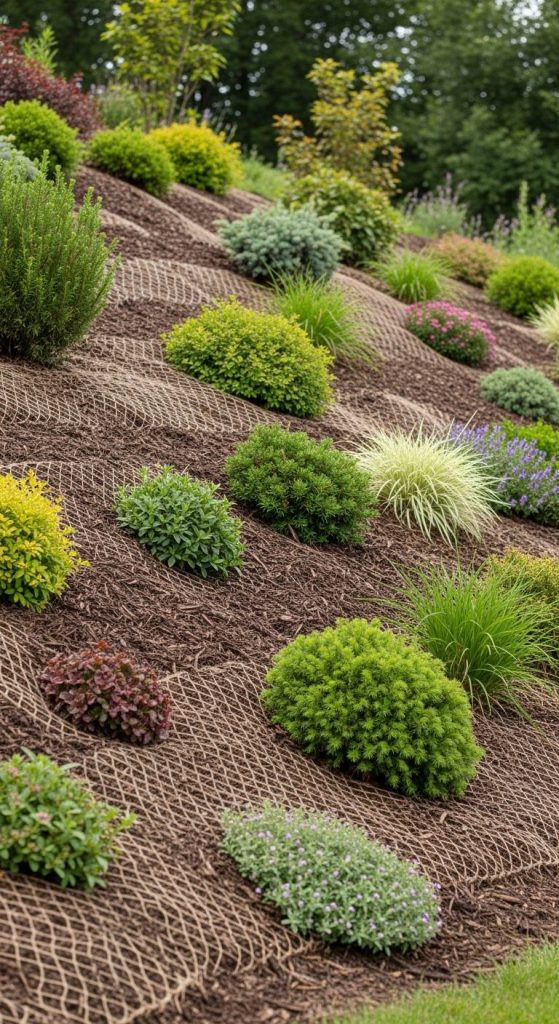
Mulch and erosion fabrics stabilize soil, retain moisture, and improve hillside aesthetics.
Pros:
- Prevents soil washing during rain.
- Reduces maintenance and watering needs.
- Improves soil quality over time.
Cons:
- Mulch needs periodic replacement.
- Fabrics can interfere with certain plant roots if misapplied.
Takeaway: Protecting the slope ensures all your landscaping efforts last longer and look better.
15. Creative Lighting & Nighttime Ambience
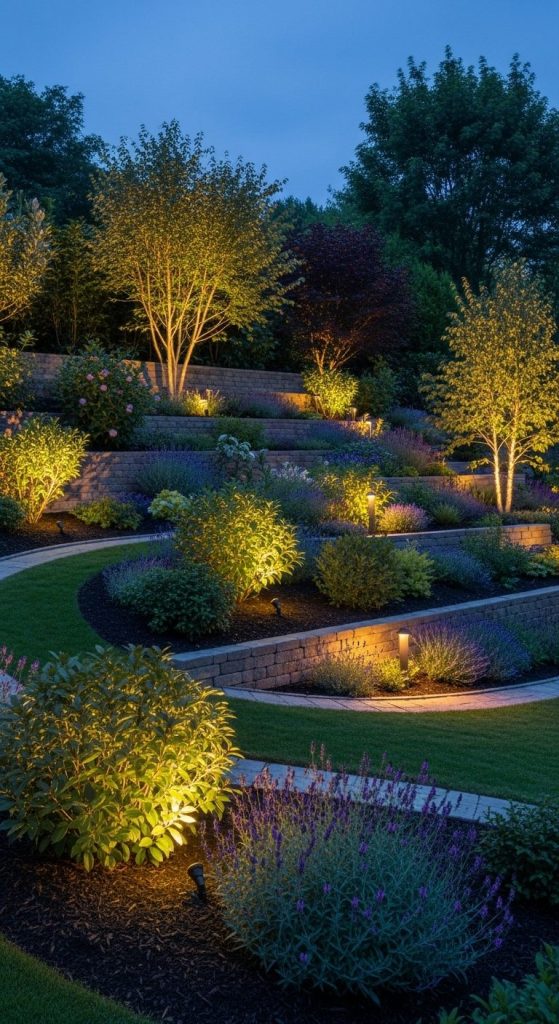
Slopes can be magical at night with soft uplighting, path lights, and spotlights on key features.
Pros:
- Extends usable time outdoors.
- Highlights plants, paths, and structures dramatically.
- Adds safety while enhancing aesthetics.
Cons:
- Electrical work can be tricky on slopes.
- Too much lighting can spoil the natural feel.
Takeaway: Thoughtful lighting transforms the slope from functional by day to enchanting by night.
Conclusion
Sloped gardens aren’t obstacles—they’re opportunities for dynamic, layered, and functional landscapes. From terraced beds to cascading water features, from wildlife-friendly zones to elegant paths, your hillside can be both practical and breathtaking. The key is combining structure, texture, planting, and personal touches to make a slope that’s alive, usable, and uniquely yours.
Take one idea and let it grow; your sloped garden doesn’t need to be perfect—it just needs heart. Step back, sip a coffee, and enjoy the view. Your hillside paradise is within reach.

Ashley Ellison is a skilled writer and avid bowler. Her passion for storytelling and dedication to the sport have led her to participate in various national bowling leagues. With a unique combination of talents, Ashley approaches every challenge with creativity and a relentless drive to succeed.