15 Best Walkable Ground Cover Plants That Handle Real Traffic
Last summer, I watched my cousin tear out his entire front lawn because his kids kept running through the flower beds. The grass was patchy, the mulch ended up everywhere, and his wife finally said enough. He replaced everything with a ground cover you can actually walk on. Now the kids play there daily, and it looks better than the grass ever did.
That moment made me realize something. Most of us think grass is the only option for high-traffic areas. But grass gets muddy, brown, and needy.
There is a whole world of walkable ground cover plants that handle footsteps, look beautiful, and ask for way less maintenance. Here are fifteen real options that survive being stepped on.
1. Creeping Thyme (Thymus serpyllum)
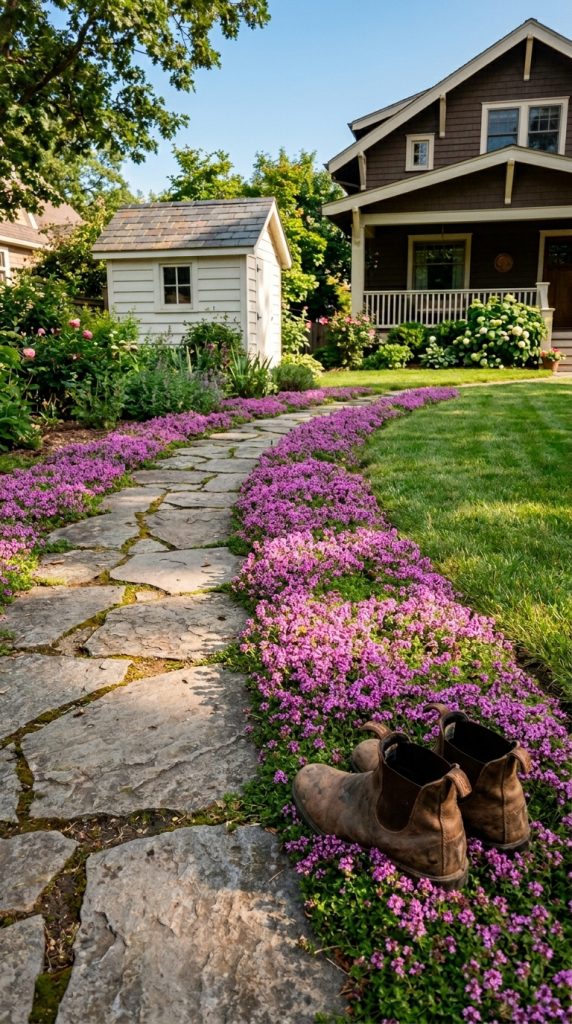
I planted this between my stepping stones three years ago, and it changed my life. Every time I walk on it, the leaves release this amazing herbal smell. It is like having an automatic air freshener built into your garden path.
Pros:
- Handles moderate foot traffic easily. Bounces back within hours.
- Tiny purple flowers in summer attract bees like crazy.
- Stays under three inches tall. No mowing ever.
Cons:
- Takes a full season to establish. Be patient the first year.
- Needs full sun. Shade turns it into a sad, leggy mess.
The secret with Creeping Thyme is to buy plugs instead of seeds. Seeds take forever. Plugs from a nursery fill in within one summer. Walk on it lightly for the first few months, then let the kids run wild.
2. Irish Moss (Sagina subulata)

Irish Moss looks like a green velvet pillow. It is so soft that people actually take their shoes off to walk on it. I am not kidding. I visited a garden where the owner had a full Irish Moss lawn, and guests kept asking if they could go barefoot.
Pros:
- Extremely soft texture feels amazing under bare feet.
- Tiny white flowers appear in spring for extra charm.
- Grows in partial shade, which most walkable ground covers hate.
Cons:
- Does not handle heavy, constant traffic. Moderate use only.
- Needs consistent moisture. Dries out fast in hot climates.
Think of Irish Moss as the fancy rug of ground covers. It works beautifully between flagstones or as a small-area lawn replacement. But do not install it if your dog runs laps around the yard every day.
3. Corsican Mint (Mentha requienii)
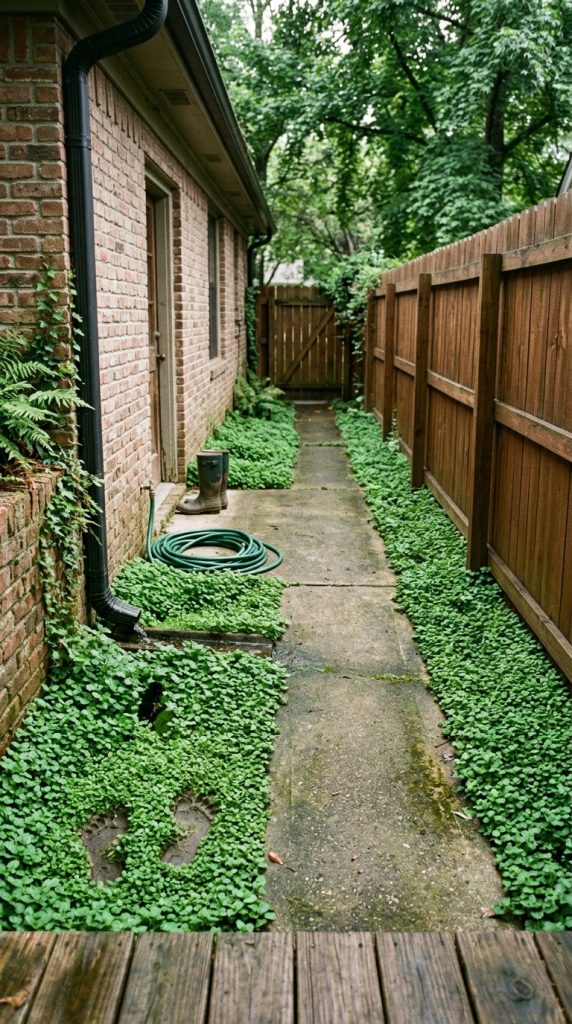
This is the tiniest mint you have ever seen. The leaves are smaller than your pinky nail. But when you step on them, they release the most intense peppermint smell. It is like walking on a box of Christmas candy.
Pros:
- Intense fragrance with every step. Better than any air freshener.
- Grows in part shade to full shade. Rare for a walkable plant.
- Self-spreads but stays polite. Easily pulled back from edges.
Cons:
- Needs frequent watering. Does not tolerate drought at all.
- Can get leggy if light is too low. Trim it back monthly.
I have Corsican Mint growing in the shady path behind my garage. It gets maybe two hours of morning sun. The rest of the day is deep shade. It carpets the whole area and smells incredible every time I take out the trash.
4. Blue Star Creeper (Isotoma fluviatilis)

This one spreads like crazy, and that is actually a good thing. Blue Star Creeper fills in faster than almost any other walkable ground cover. Within one season, you get a dense mat that laughs at foot traffic.
Pros:
- Very fast spreading. Covers bare soil in months, not years.
- Tolerates light foot traffic daily without damage.
- Tiny blue flowers bloom from spring to fall. Color for months.
Cons:
- Can become aggressive in warm climates. Watch it near flower beds.
- Goes dormant in cold winters. Turns brown but returns in spring.
A landscape designer friend uses Blue Star Creeper around swimming pools constantly. It handles wet feet from splashing water, takes kids running by, and never needs mowing. If you want instant gratification, this is your plant.
5. Woolly Thyme (Thymus pseudolanuginosus)
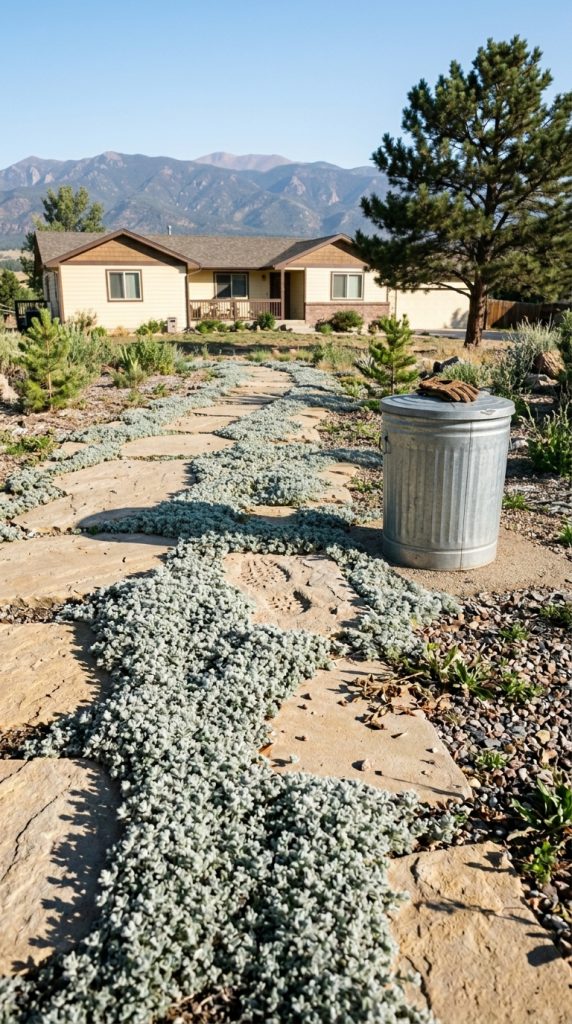
Remember Creeping Thyme? Woolly Thyme is its fuzzy cousin. The leaves have tiny gray hairs that make the whole plant feel like felt. You can stand on it for an hour, walk away, and it looks untouched.
Pros:
- Extremely tolerant of foot traffic. One of the toughest options.
- Gray-green color contrasts beautifully with darker plants.
- Never needs fertilizer. Poor soil makes it happier.
Cons:
- Rarely flowers. You get foliage only.
- Needs sharp drainage. Rot occurs in heavy clay soil.
I use Woolly Thyme on the path to my compost bin. That area gets stomped daily, sometimes with heavy boots. Four years later, it is still thriving. No brown patches, no thinning. Just fuzzy, forgiving perfection.
6. Creeping Wire Vine (Muehlenbeckia axillaris)
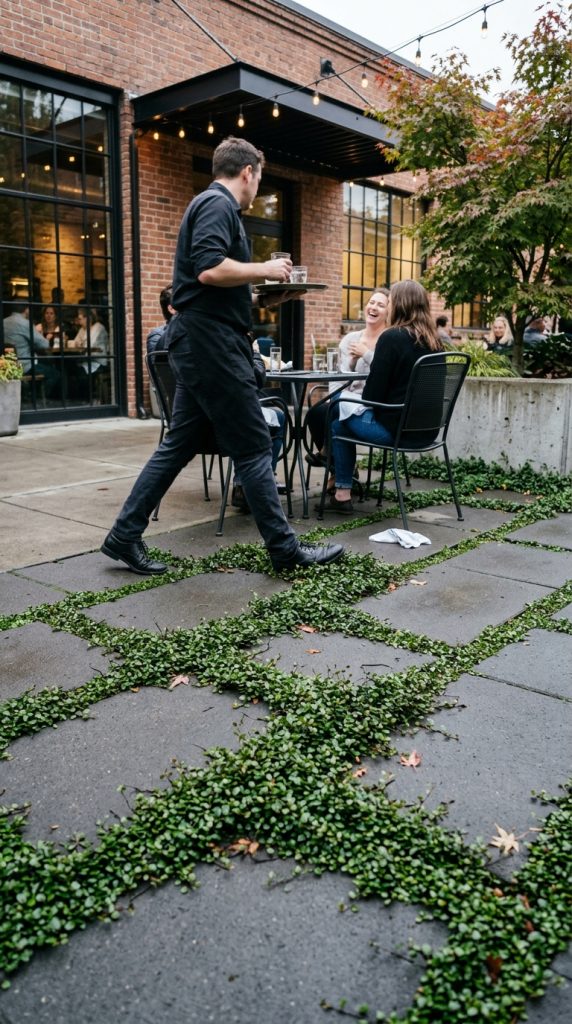
This one looks totally different from everything else. Creeping Wire Vine has tiny, dark green leaves on wiry black stems. It creates a dense, tangled mat that feels springy under your feet. Like walking on a gymnast’s floor.
Pros:
- Handles surprisingly heavy traffic. The wiry stems do not break.
- Grows in full sun to part shade. Very adaptable.
- Semi-evergreen in mild winters. Stays green year-round.
Cons:
- Can climb fences or walls if not contained. Trim the edges.
- Difficult to remove once established. Choose the location carefully.
A restaurant near me uses Creeping Wire Vine between their outdoor patio pavers. Waiters walk over it hundreds of times per day. The plant looks perfect. That is a real-world stress test if I have ever seen one.
7. Leptinella (Leptinella squalida)
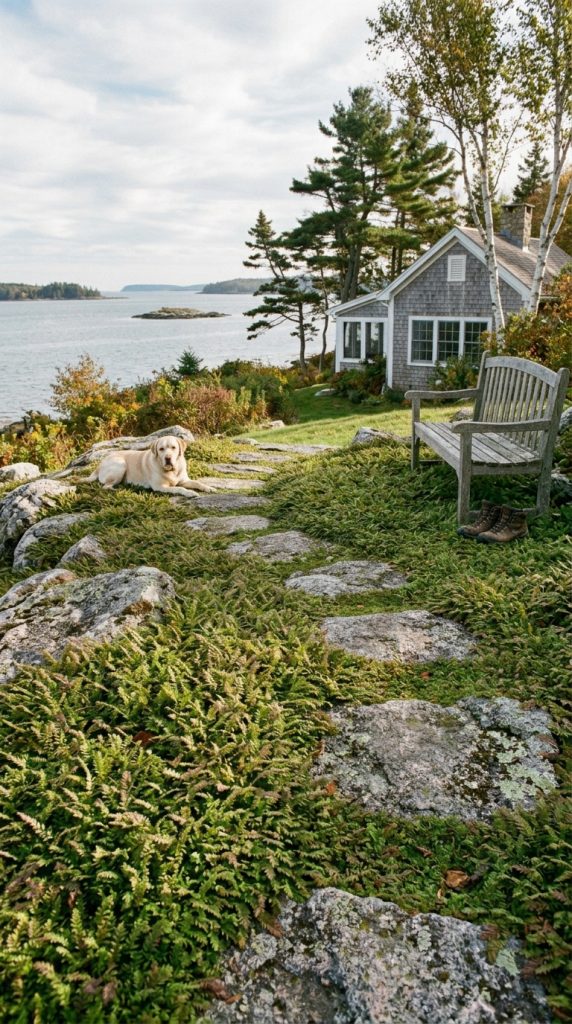
Also called Brass Buttons because the tiny leaves look like little brass circles. This New Zealand native is tough as nails. It handles foot traffic, cold weather, and even light frost without blinking.
Pros:
- Very fine texture looks like a miniature fern.
- Bronze or purple tones appear in cooler weather.
- Tolerates moderate shade better than most walkable options.
Cons:
- Needs consistent moisture. Dries out quickly in heat.
- Slower spreader than other options. Be patient.
Leptinella works beautifully in rock gardens or between widely spaced pavers. The texture is so unique that guests will stop and ask what it is. Just keep it watered during dry spells, and it will reward you.
8. Sedum (Sedum spurium varieties)
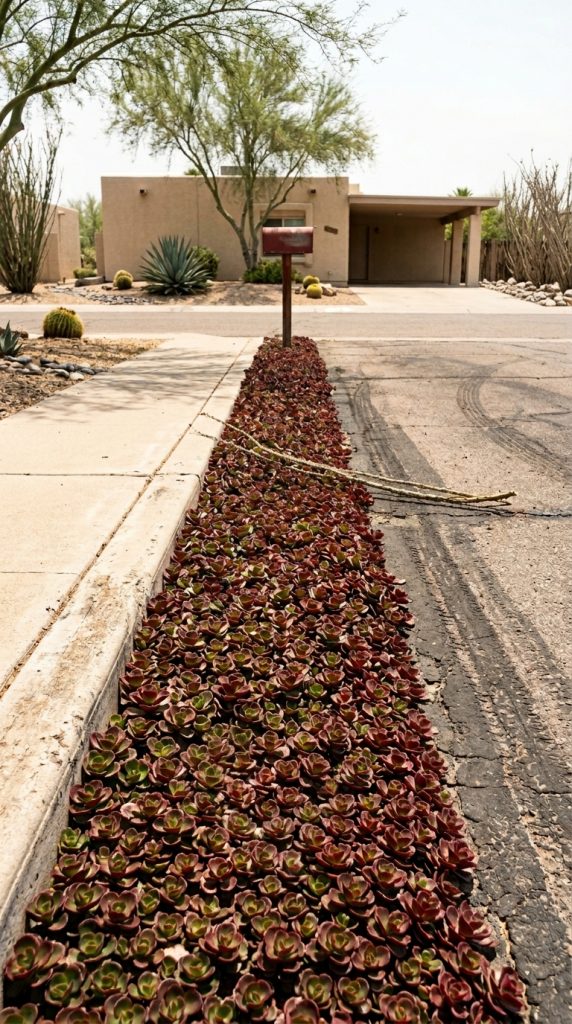
Most people think of tall sedums. But ground cover sedums like ‘Dragon’s Blood’ or ‘John Creech’ stay flat and tough. These succulents store water in their leaves, so they survive dry conditions that kill other walkable plants.
Pros:
- Extremely drought-tolerant. Water once a month after establishment.
- Handles light foot traffic very well. Stems are flexible, not brittle.
- Brilliant fall color. Red, bronze, or purple tones appear.
Cons:
- Does not like heavy clay soil. Amend with sand or gravel.
- Can look sparse in deep shade. Needs at least partial sun.
I have Sedum growing in the gravel driveway strip where no other plant would survive. Cars occasionally drive over the edge. It does not care. If you need a walkable ground cover for a hot, dry hellstrip, buy Sedum immediately.
9. Dwarf Mondo Grass (Ophiopogon japonicus ‘Nana’)
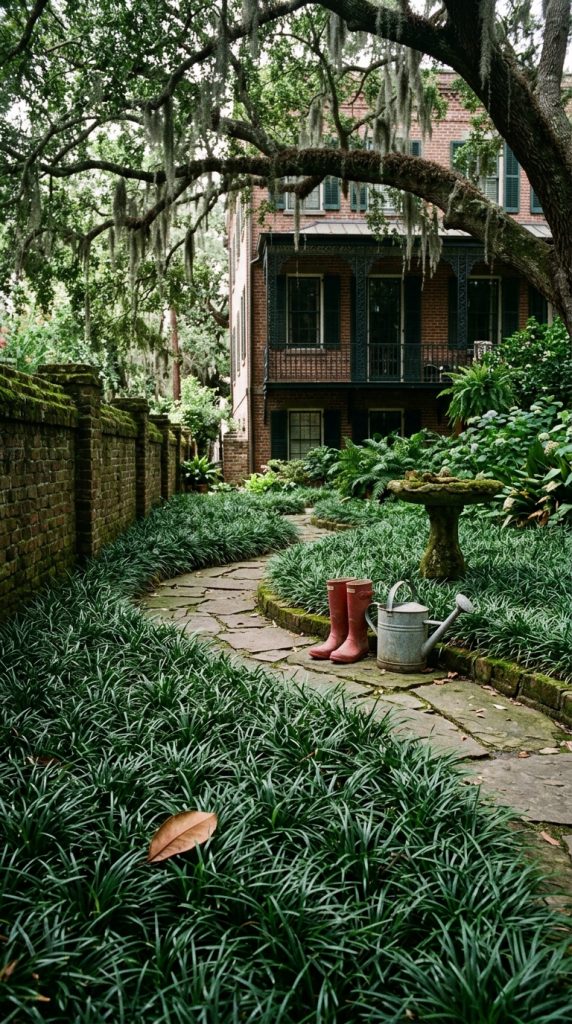
This looks like grass but is not grass. Dwarf Mondo Grass grows in dense clumps that form a solid carpet over time. The leaves are dark green and glossy. And it grows in deep shade where real grass dies immediately.
Pros:
- Tolerates heavy foot traffic extremely well. Bounces back quickly.
- Grows in full shade. Finally, a walkable plant for dark yards.
- Never needs mowing. Stays under four inches tall.
Cons:
- Very slow grower. Takes two to three years to fill in.
- Expensive to buy in large quantities. Plugs cost more than seeds.
A university study on shade-tolerant turf alternatives found that Dwarf Mondo Grass maintained density even after thousands of simulated footsteps. Real grass died. Mondo kept going. That is science backing up my personal experience.
10. Lippia (Phyla nodiflora)
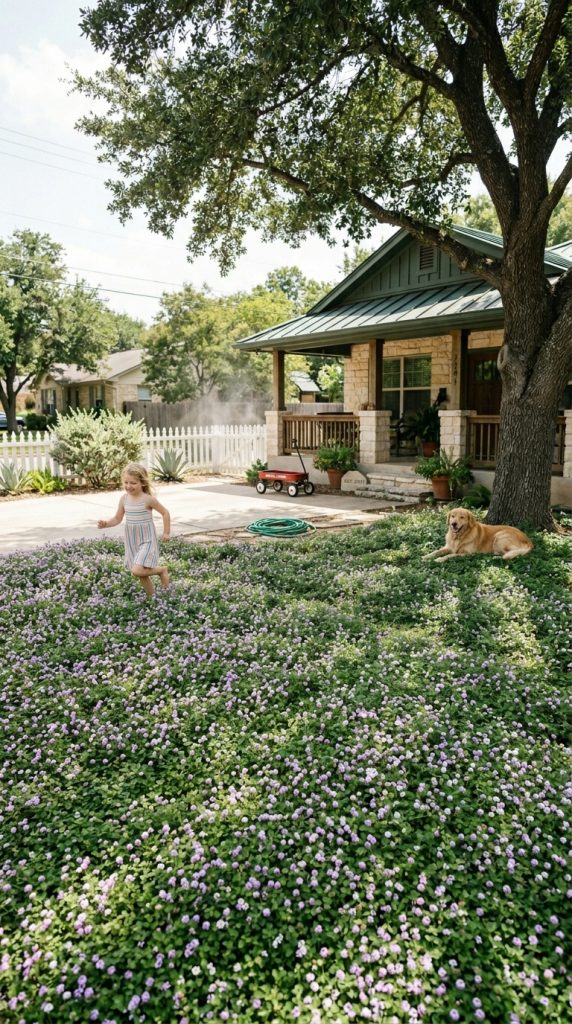
If you live somewhere hot, listen up. Lippia is a heat-loving, drought-toting monster of a ground cover. It survives southern summers that melt regular grass. It also produces tiny purple flowers that bees adore.
Pros:
- Extremely heat and drought tolerant. Water twice a month.
- Handles dog urine better than grass. No yellow burn spots.
- Stays green year-round in frost-free climates.
Cons:
- Dies back in freezing winters. Returns in spring.
- Gets a bit crunchy in extreme heat. Recovers with water.
People in Texas and Arizona use Lippia as a full lawn replacement. It uses a fraction of the water that grass needs. You can walk on it, play on it, and park on it occasionally. For hot climates, this is the best walkable ground cover hands down.
11. Baby’s Tears (Soleirolia soleirolii)
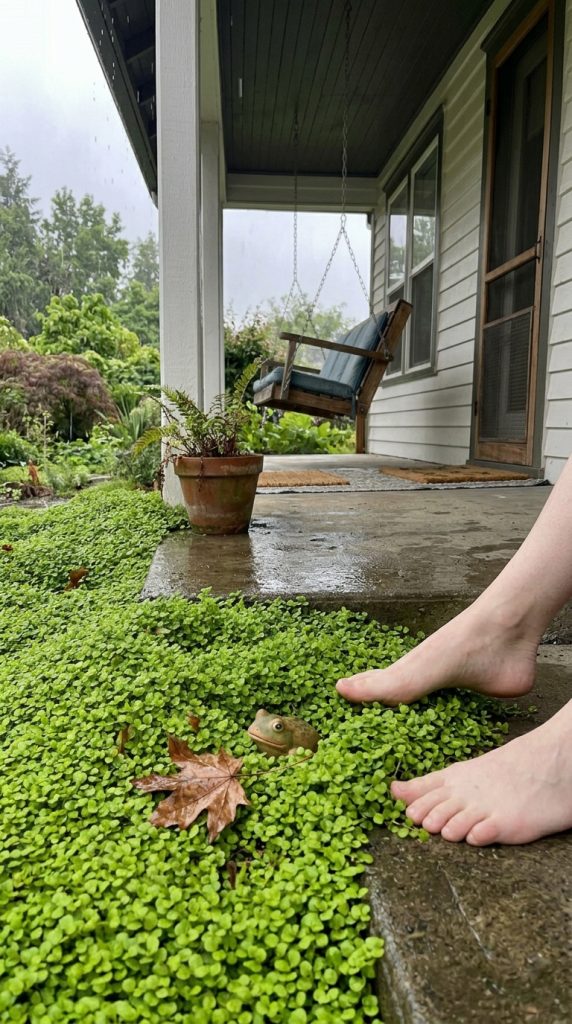
This one is delicate looking but secretly tough. Baby’s Tears forms a dense mat of tiny, round leaves that feels like walking on a sponge. It loves shade and moisture, making it perfect for those damp, dark corners where nothing else grows.
Pros:
- Grows in full shade. Perfect for north-facing yards.
- Very soft texture. Bare feet love this plant.
- Spreads quickly in moist conditions. Fills in fast.
Cons:
- Needs constant moisture. Do not let it dry out.
- Dies back in frost. Treat it as an annual in cold climates.
I have Baby’s Tears growing under my shaded front porch. Rain blows in occasionally, but direct sun never touches it. The plant forms a thick, two-inch tall carpet that survived my nephew stomping on it for an entire afternoon.
12. Green Carpet Rupturewort (Herniaria glabra)
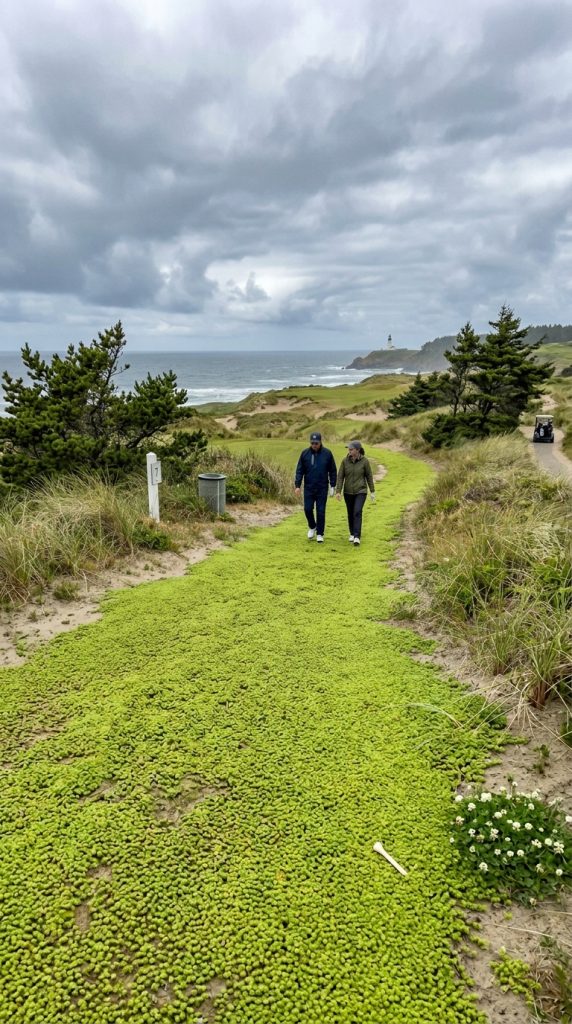
Say the name three times fast. Green Carpet Rupturewort sounds like a medical condition, but it is actually a fantastic walkable ground cover. The tiny, bright green leaves form a dense mat that handles traffic beautifully.
Pros:
- Extremely durable. One of the toughest options for feet.
- Grows in poor, sandy soil where other plants fail.
- Turns bronze in cold weather for winter interest.
Cons:
- Inconspicuous flowers. Do not buy this for blooms.
- Can thin out in deep shade. Needs some sun.
A golf course superintendent told me they use Rupturewort on paths between tee boxes. Golfers walk there constantly. So do maintenance carts. If it survives a golf course, it will survive your backyard.
13. Sweet Woodruff (Galium odoratum)
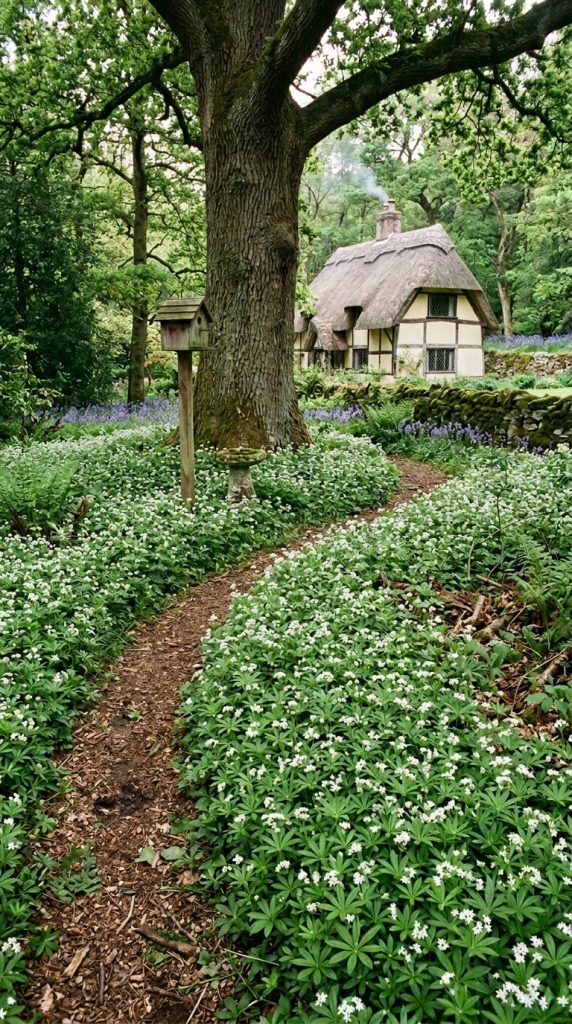
Here is the shade lover you have been looking for. Sweet Woodruff grows in deep shade, produces white spring flowers, and smells like fresh hay when crushed. It handles light to moderate foot traffic without complaint.
Pros:
- Grows in full shade under trees and overhangs.
- Fragrant leaves. That hay-vanilla smell is intoxicating.
- Spreads steadily without being aggressive.
Cons:
- Goes dormant in hot, dry summers. Looks sad for a few weeks.
- Slower spreader than sun-loving options.
Sweet Woodruff is the classic ground cover for shady woodland gardens. Plant it under a large oak tree where grass refuses to grow. Walk on it occasionally to release that lovely fragrance. Your shaded path just became the best part of your yard.
14. Soapwort (Saponaria ocymoides)
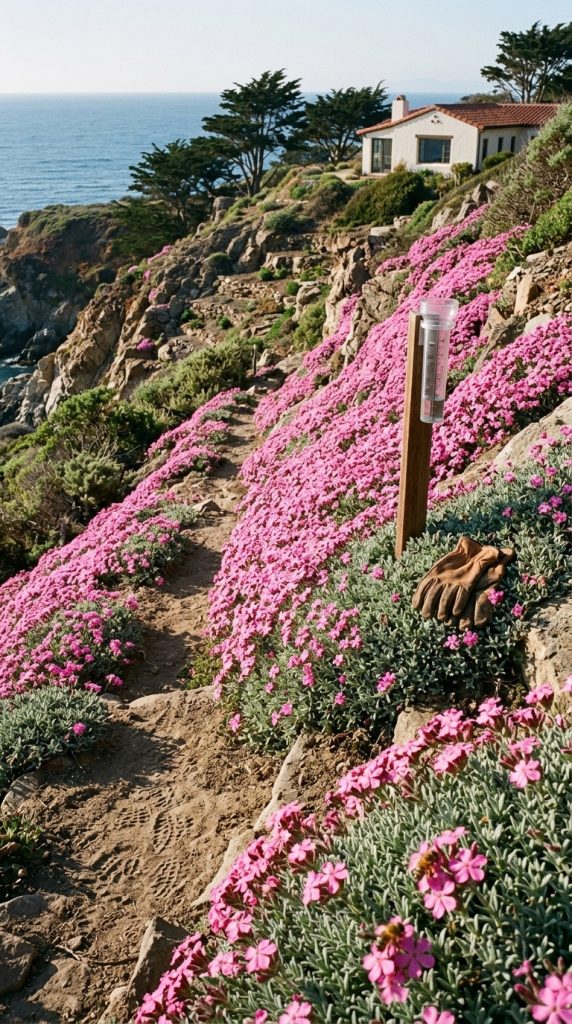
Soapwort gets its name because the leaves contain saponins, which create suds in water. But as a walkable ground cover, it shines. The plant forms a low mat covered in pink flowers every spring. And it handles foot traffic like a champ.
Pros:
- Covered in bright pink flowers for weeks. Stunning display.
- Very drought-tolerant once established.
- Grows well in rocky, poor soil. Perfect for hillsides.
Cons:
- Goes semi-dormant after flowering. Foliage looks tired.
- Can get woody after a few years. Shear it back hard.
I planted Soapwort on a steep slope where I walk to check my rain gauge. The slope faces west, gets scorched afternoon sun, and has terrible soil. Soapwort does not care. It flowers every spring and stays green all summer with zero help.
15. Micro Clover (Trifolium repens var. ‘Pirouette’)
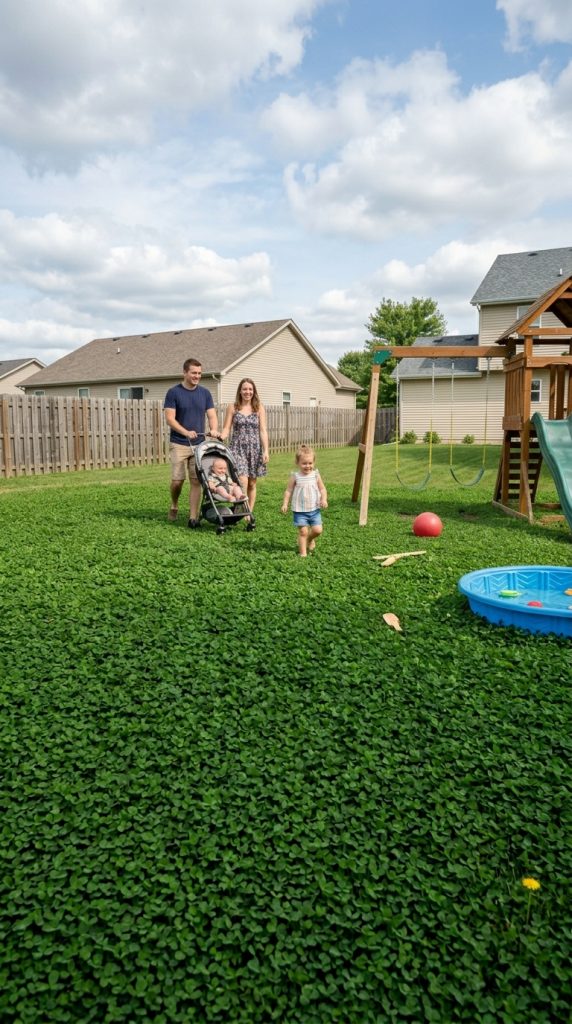
Okay, this one is technically a clover. But modern micro clover varieties stay small, produce few flowers, and handle traffic beautifully. Mixed with grass, it stays green without fertilizer. On its own, it forms a dense, walkable lawn.
Pros:
- Naturally fixes nitrogen. No fertilizer needed ever.
- Stays green during droughts that kill grass.
- Tolerates heavy foot traffic and pet urine.
Cons:
- Attracts bees when flowering. Mow before blooms appear.
- Not as soft as traditional clover under bare feet.
A recent university trial found that micro clover lawns required sixty percent less water than traditional grass. They also remained green through heat waves that turned grass brown. If you care about water bills or the environment, micro clover is a serious contender.
Your Feet Will Thank You
I used to believe that grass was the only option for areas I actually walked on. Everything else felt like it would crush under my boots. But these fifteen plants proved me wrong repeatedly.
The best part is that most of them cost less than sod. They spread on their own. They never need mowing. And they look more interesting than a boring green lawn.
Pick one that matches your sun exposure and foot traffic level. Buy a few flats or plugs this spring. Plant them a foot apart. Water them for the first month. Then start walking.
Within one season, you will wonder why you ever messed with grass.

Ashley Ellison is a skilled writer and avid bowler. Her passion for storytelling and dedication to the sport have led her to participate in various national bowling leagues. With a unique combination of talents, Ashley approaches every challenge with creativity and a relentless drive to succeed.