
Zen Garden Ideas: 15 Calm, Creative Ways to Bring Peace to Your Space
Ever feel like your brain’s stuck in traffic? Same here. That’s where a Zen garden comes in — that little pocket of peace where you can literally rake your stress away. Whether you’ve got a huge backyard or just a tiny balcony, there’s a way to make it work. I’ve gathered 15 zen garden ideas that’ll help you turn your chaos into calm. And no worries, they’re totally doable (even if you don’t own a samurai sword or a meditation robe ).
1. Mini Tabletop Zen Garden
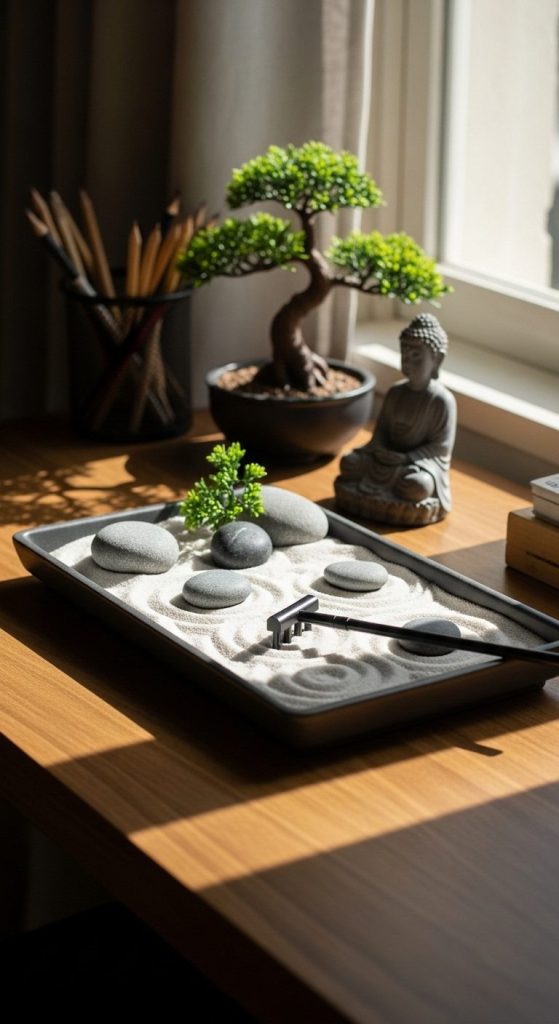
If you think you need acres of land to build a Zen space, think again. A mini tabletop Zen garden brings the vibe right to your desk. Perfect for apartments, home offices, or small nooks.
Pros:
- Fits anywhere — even on your work desk.
- Cheap and customizable.
- Great stress reliever during boring Zoom calls.
Cons:
- Easy to spill if you’re clumsy (been there).
- Doesn’t give that outdoor feel.
Tip: Use fine white sand, smooth pebbles, and a tiny rake. You can even toss in a mini Buddha statue for that “I’ve got my life together” aesthetic.
2. Raked Sand Meditation Space
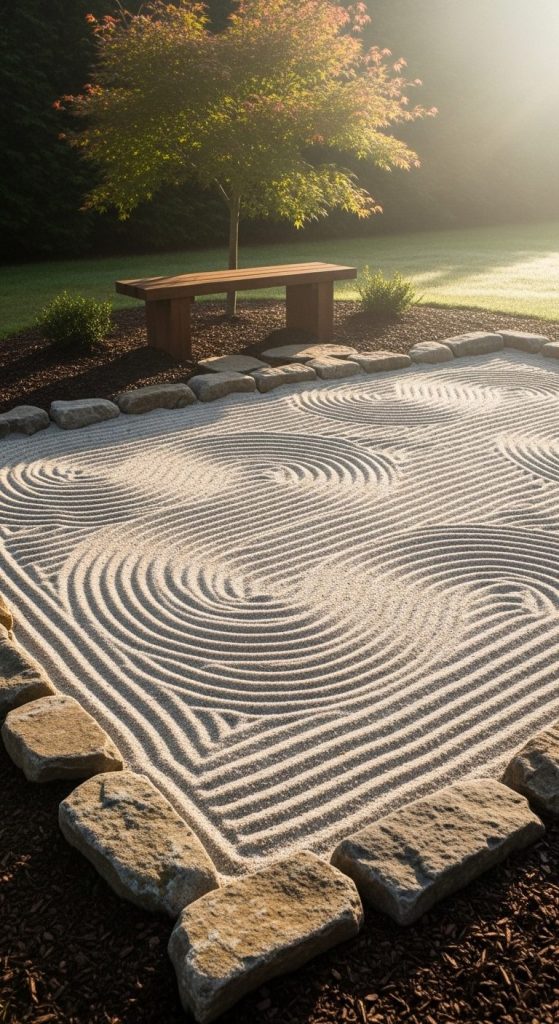
This one’s classic Zen garden 101. The art of raking sand isn’t just for show — it represents flowing water and helps calm your mind.
Pros:
- Easy to design and maintain.
- Meditative activity that slows down your thoughts.
- Looks stunning under soft lighting.
Cons:
- Sand can scatter if it’s windy.
- Needs occasional re-raking to stay pretty.
Ever wondered why monks seem so calm? Try raking patterns for 10 minutes and you’ll get it. Trust me — your brain chills out faster than after scrolling through memes.
3. Zen Garden with Water Feature
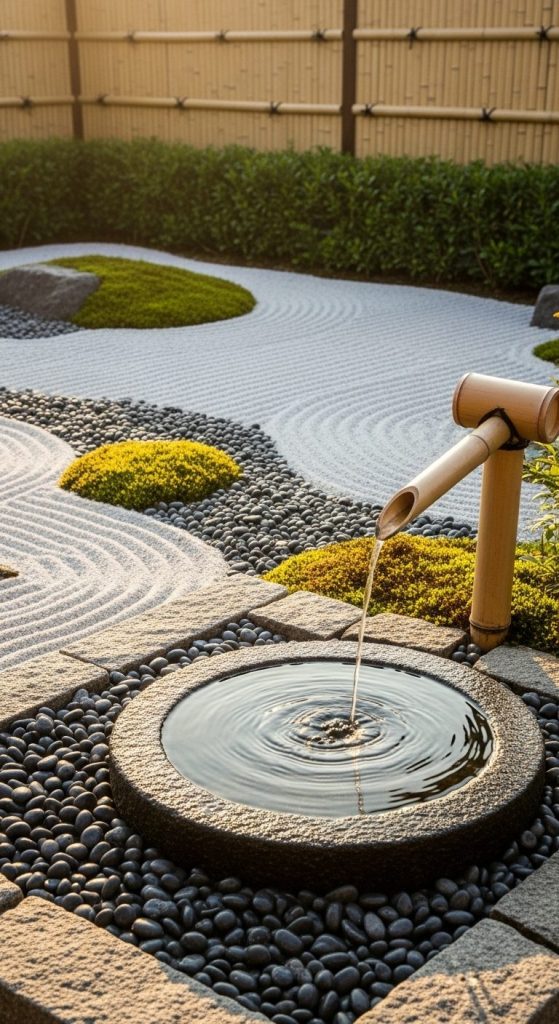
Want that gentle trickling sound that makes everything feel magical? Add a small fountain or bamboo water spout. Water brings balance, movement, and that “spa day every day” vibe.
Pros:
- The sound of water is incredibly relaxing.
- Adds movement and natural beauty.
- Boosts humidity (plants love it).
Cons:
- Needs cleaning to prevent algae buildup.
- May attract bugs outdoors.
Fact: According to a Houzz survey, 68% of homeowners said adding water features improved their mood and relaxation. Coincidence? Nope.
4. Moss-Covered Serenity Corner
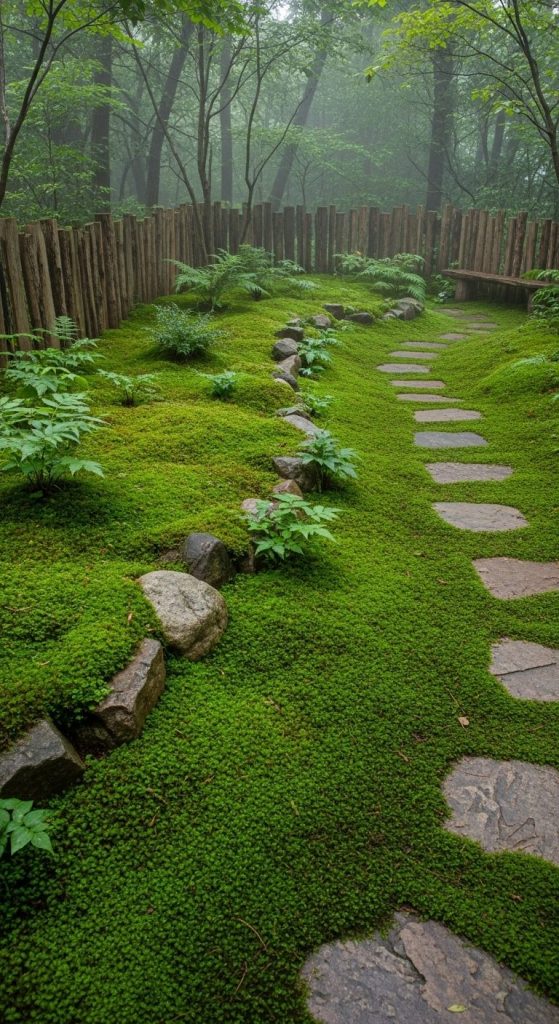
Moss is the underappreciated hero of Zen gardens. It’s lush, green, and symbolizes longevity and harmony. Perfect for shaded outdoor areas.
Pros:
- Minimal upkeep — moss thrives in shade.
- Adds a soft, natural carpet look.
- Environmentally friendly and peaceful.
Cons:
- Needs consistent moisture.
- Doesn’t love direct sun.
It’s like nature’s velvet. Step on it barefoot once, and you’ll understand why monks use moss gardens for meditation.
5. Stone Path Zen Garden
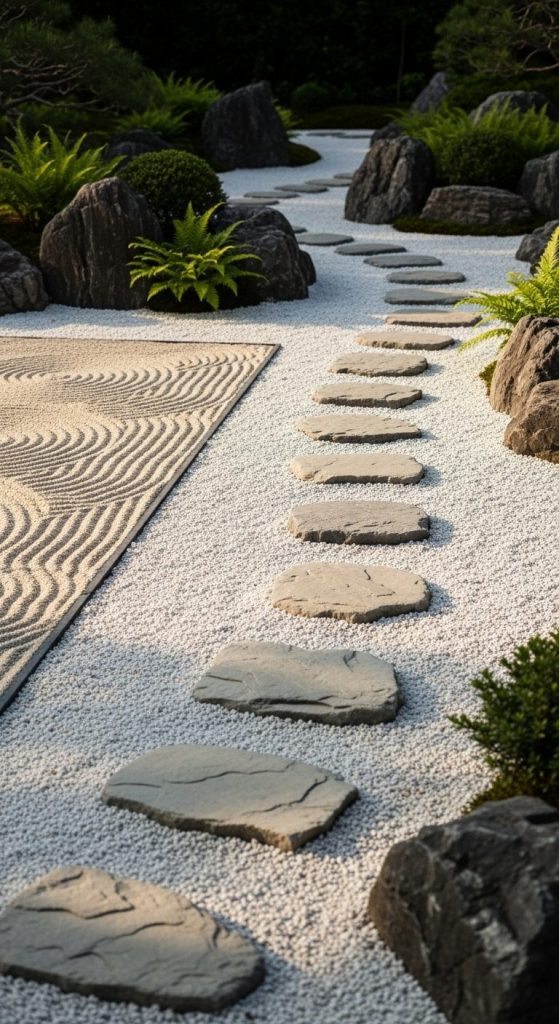
Rocks represent mountains in Zen philosophy — stable, timeless, and grounded. A stone path garden creates a meditative walkway through your space.
Pros:
- Elegant and timeless.
- Defines your garden layout.
- Great for both large and small yards.
Cons:
- Requires leveling the ground.
- Stones can shift over time.
Pro tip: Combine gray river rocks with white sand for a visual contrast that screams tranquility.
6. Japanese Lantern Garden
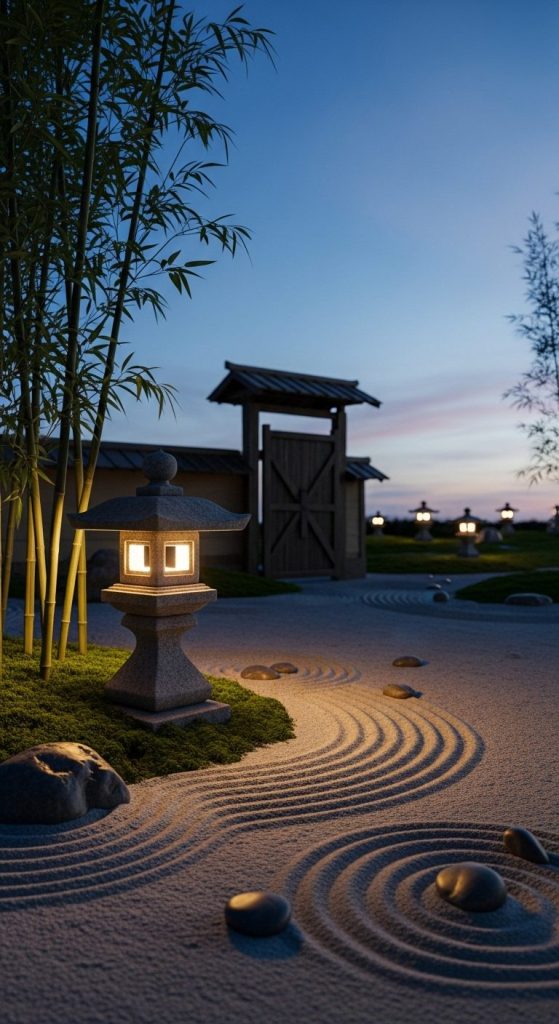
Add a traditional stone lantern (tōrō) for that authentic Japanese aesthetic. These beauties glow softly at night, making your garden feel like a scene from a Studio Ghibli movie.
Pros:
- Adds structure and elegance.
- Provides soft, calming light at night.
- Pairs beautifully with bonsai and bamboo.
Cons:
- Can be pricey depending on size/material.
- Needs wiring or solar setup for lighting.
A subtle lantern glow among raked sand and pebbles? Instant meditation mode.
7. Bamboo Border Zen Space

Bamboo is strong, flexible, and naturally calming. Using bamboo fencing or plants creates privacy and a soothing green backdrop.
Pros:
- Eco-friendly and fast-growing.
- Excellent for privacy and noise reduction.
- Adds vertical interest.
Cons:
- Spreads quickly — can be invasive.
- Needs pruning to stay neat.
FYI, in Feng Shui, bamboo is believed to attract good luck. So, plant it near your entrance — can’t hurt, right? 🙂
8. Rock and Pebble Balance Garden
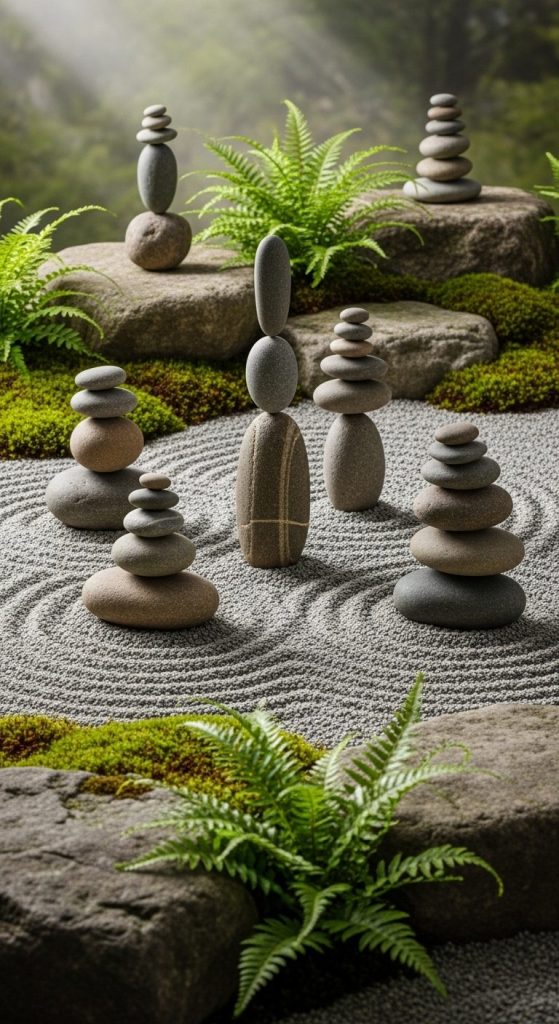
Want to play with art and physics? Try stacking smooth river stones. Balancing rocks is oddly satisfying — and surprisingly therapeutic.
Pros:
- Encourages patience and focus.
- Visually stunning and meditative.
- No maintenance needed.
Cons:
- Can topple in wind or rain.
- Tricky to balance perfectly.
It’s like nature’s version of Jenga — except instead of losing, you find peace.
9. Bonsai-Focused Zen Garden
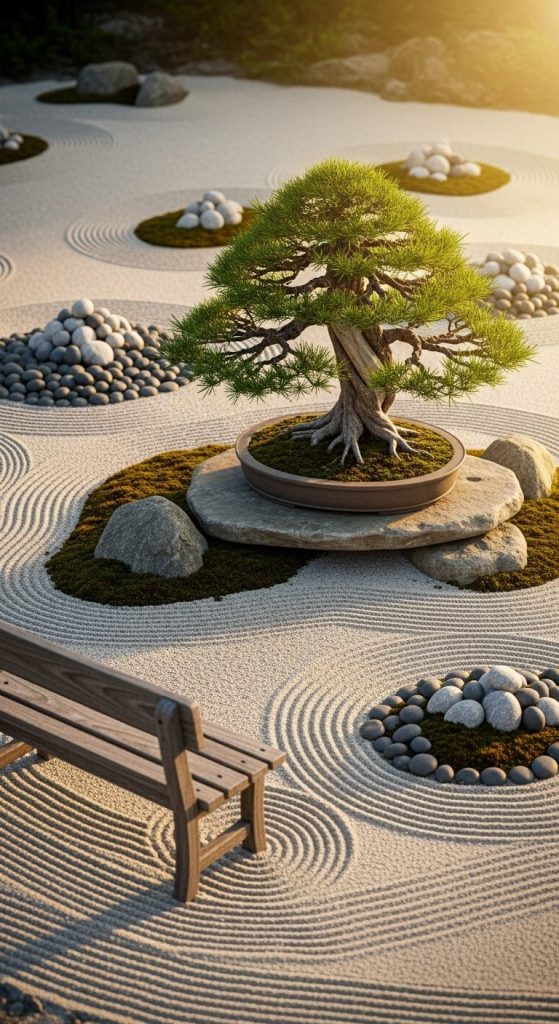
Ah, the mighty bonsai tree — a living symbol of patience. Integrating one into your Zen garden turns it into a miniature masterpiece.
Pros:
- Timeless and symbolic.
- Enhances focus and mindfulness.
- Works indoors or outdoors.
Cons:
- Requires pruning and care.
- Can be costly to start.
Fun fact: The global bonsai market is projected to grow by 4.2% annually (Statista, 2024). People are realizing calm can come in tiny tree form.
10. Zen Garden with Fire Element
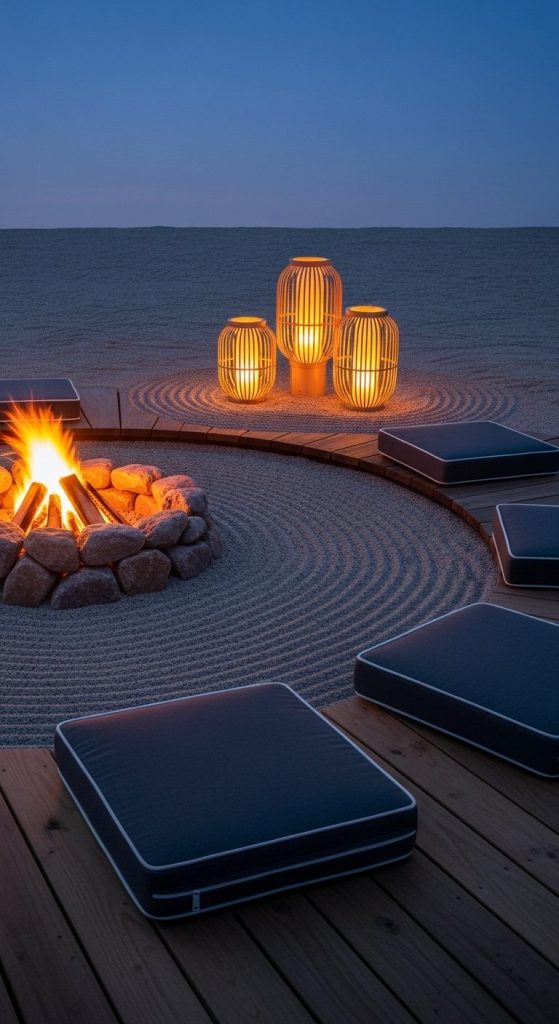
Yes, fire in a Zen garden! A small fire pit contrasts the coolness of stone and sand — creating balance between elements.
Pros:
- Warm, cozy, and perfect for evening reflection.
- Adds dramatic visual appeal.
- Encourages outdoor relaxation.
Cons:
- Needs safety precautions.
- Can disrupt tranquility if too large.
Imagine meditating by the flicker of flames — primal yet peaceful. Pretty Zen, right?
11. Indoor Zen Corner

No yard? No problem. Create an indoor Zen corner using a tray of sand, stones, and a few small plants. Instant calm in your living room.
Pros:
- Space-efficient and portable.
- Great for apartments or offices.
- Easy to clean and rearrange.
Cons:
- Lacks the natural outdoor vibe.
- Requires indirect lighting.
I once set mine near my bookshelf — and guess what? My reading time doubled. Coincidence? Probably not.
12. Minimalist Zen Garden
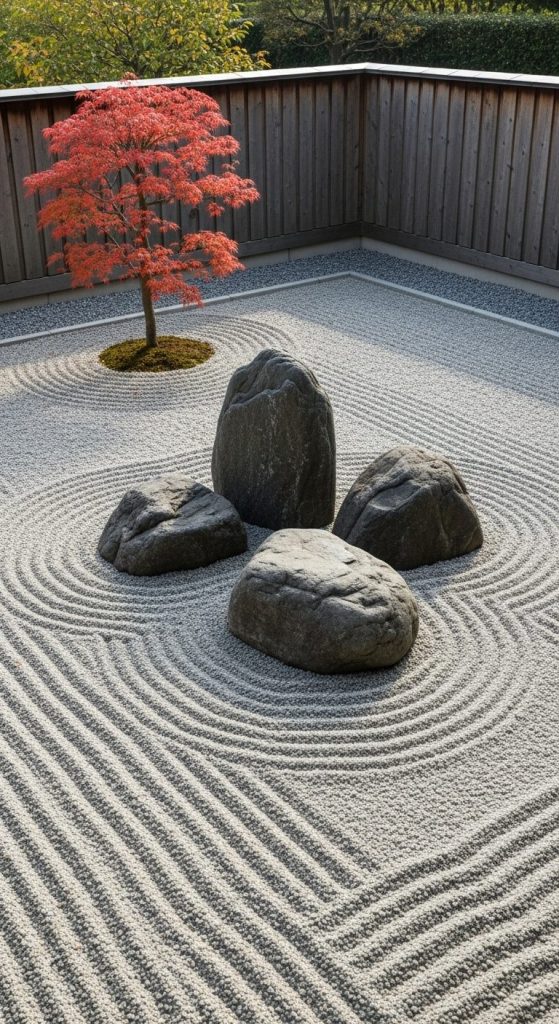
Sometimes less is really more. A minimalist Zen setup uses only sand, a few stones, and maybe one plant. The emptiness is the message.
Pros:
- Elegant and clutter-free.
- Easy to maintain.
- Perfect for modern aesthetics.
Cons:
- Might feel too sparse for some tastes.
- Lacks color variety.
Zen is all about simplicity — and this design nails it. It’s like the Marie Kondo of garden layouts.
13. Zen Garden with Succulents
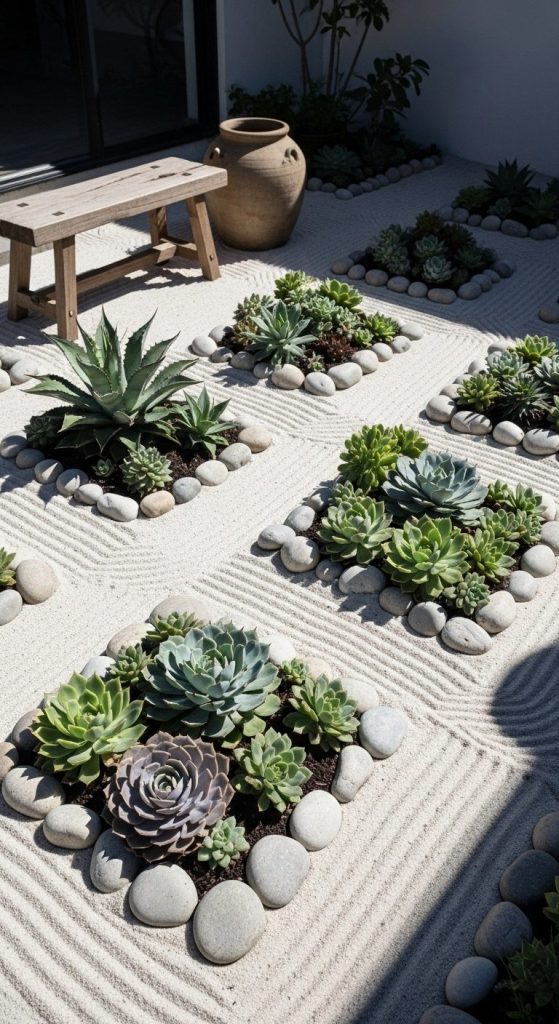
Mix tradition with modern style using succulents instead of moss or shrubs. They bring texture and color while staying low-maintenance.
Pros:
- Hardy and drought-tolerant.
- Adds visual variety.
- Perfect for sunny spaces.
Cons:
- Doesn’t match “classic” Zen symbolism.
- Some succulents grow too fast.
Succulents are like introverts — quiet, beautiful, and low-drama. Totally Zen material.
14. Gravel and Wooden Platform Zen Deck
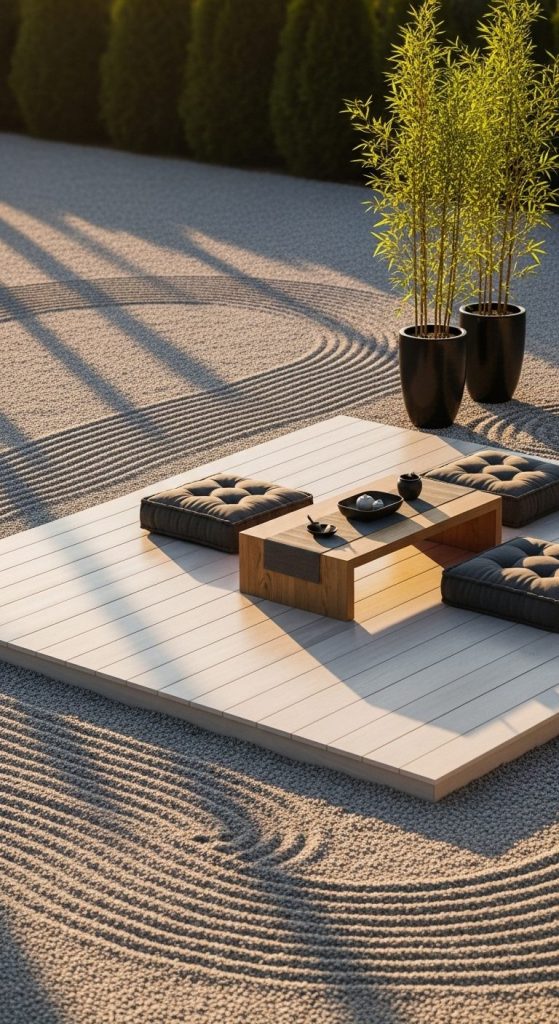
Combine gravel beds with wood decking for a spa-like outdoor retreat. The contrast between rough and smooth textures enhances tranquility.
Pros:
- Adds warmth and texture.
- Great for yoga or tea corners.
- Visually stunning and balanced.
Cons:
- Requires regular sweeping.
- Wood needs weatherproofing.
Pro tip: Add low seating or cushions, and you’ve got yourself a meditation lounge worthy of Pinterest fame.
15. Seasonal Zen Garden Transformation
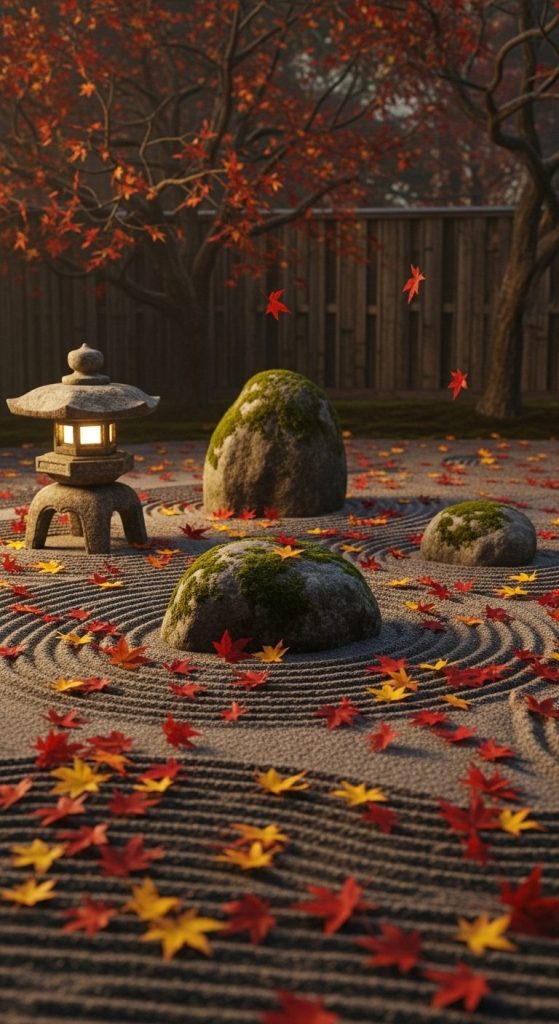
Why stick to one look? Adapt your Zen garden by season — blossoms in spring, lanterns in summer, foliage in fall, and stones in winter.
Pros:
- Keeps your space dynamic.
- Lets you enjoy year-round interest.
- Encourages mindfulness through change.
Cons:
- Needs seasonal maintenance.
- Slightly higher cost and effort.
The Japanese call this wabi-sabi — finding beauty in impermanence. And honestly, that’s what a Zen garden is all about.
Conclusion
There you go — 15 Zen garden ideas that’ll help you reclaim your peace (and maybe your sanity). From tiny tabletop setups to full-blown backyard sanctuaries, each one brings a piece of stillness into your world.
Remember, a Zen garden isn’t about perfection — it’s about presence. Whether you’re raking sand, lighting a lantern, or just staring at pebbles after a long day, it’s your quiet rebellion against chaos.
So grab some sand, rocks, and maybe a bit of moss — your inner calm is waiting.

William Martin is a passionate bowler who spends most of his weekends playing the sport. With years of intense experience under his belt, William decided to share his knowledge by creating BOWLING OCEAN. Join me on this journey to explore the world of bowling and discover the tips and tricks to becoming a pro.