15 Backyard Patio Ideas That Transform Your Outdoor Space
Ever notice how a simple backyard patio can feel like either a forgotten slab of concrete… or the place where every good conversation somehow ends up?
I’ve seen friends transform a dull outdoor space into their favorite “room” of the house with just a few thoughtful upgrades. And honestly, that shift always feels a little magical. You walk outside with coffee, sit down, and suddenly the day feels calmer.
That’s why I love talking about backyard patio ideas. They’re not about fancy show-home designs. They’re about real spaces where you eat, relax, host, and breathe. And the right idea can make your patio feel intentional instead of accidental.
Below are 15 practical, visually pleasing, and achievable ideas that people actually build and save. No fantasy builds. No vague tips. Just concrete ways to make your patio better.
1. Multi-Zone Patio Layout
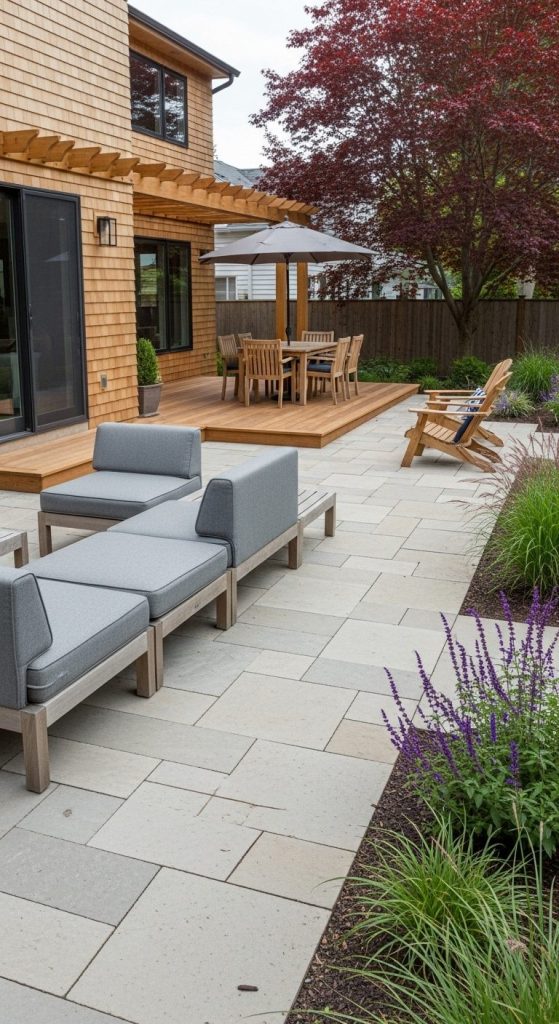
Sometimes the patio feels awkward because everything sits in one lump. A multi-zone layout fixes that fast.
Think of it like designing a tiny outdoor apartment: one area for eating, one for relaxing, one for movement.
Pros
- Creates natural flow for gatherings
- Makes small patios feel larger
- Helps furniture feel purposeful
Cons
- Needs careful measuring
- Requires more planning upfront
Mini takeaway
Zoning turns chaos into structure. Even a small patio feels premium when each section has a job.
2. Sunken Patio Seating Area
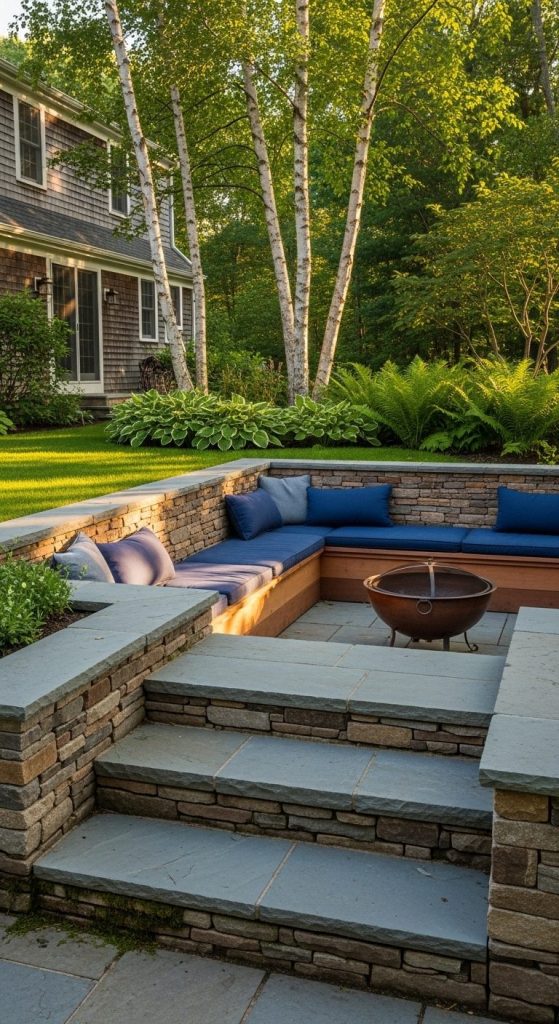
A slightly lowered seating section adds depth and drama without huge construction. It feels cozy, like a conversation pit but outdoors.
Pros
- Creates an instant focal point
- Adds privacy from wind
- Feels custom-built and architectural
Cons
- Requires excavation
- Higher labor cost
Mini takeaway
This one feels high-end without being over-the-top. Honestly, it’s a showstopper.
3. Raised Platform Patio
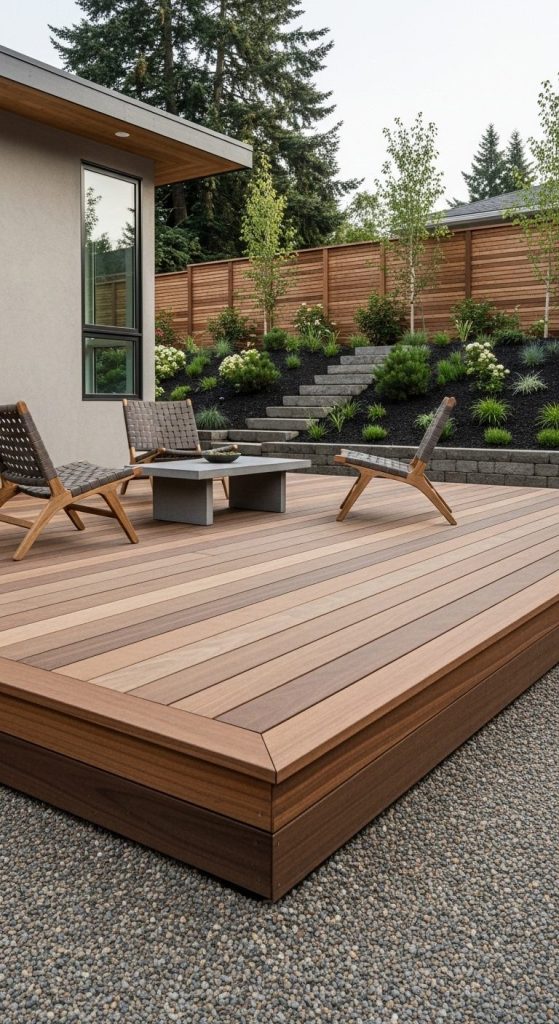
If your yard slopes or drains poorly, a raised platform patio solves both style and function. Wood, composite, or concrete platforms work.
Pros
- Improves drainage
- Defines the patio clearly
- Adds subtle height interest
Cons
- Needs structural framing
- Requires permits in some areas
Mini takeaway
Height changes make outdoor spaces feel designed, not accidental.
4. Mixed Material Patio Surface
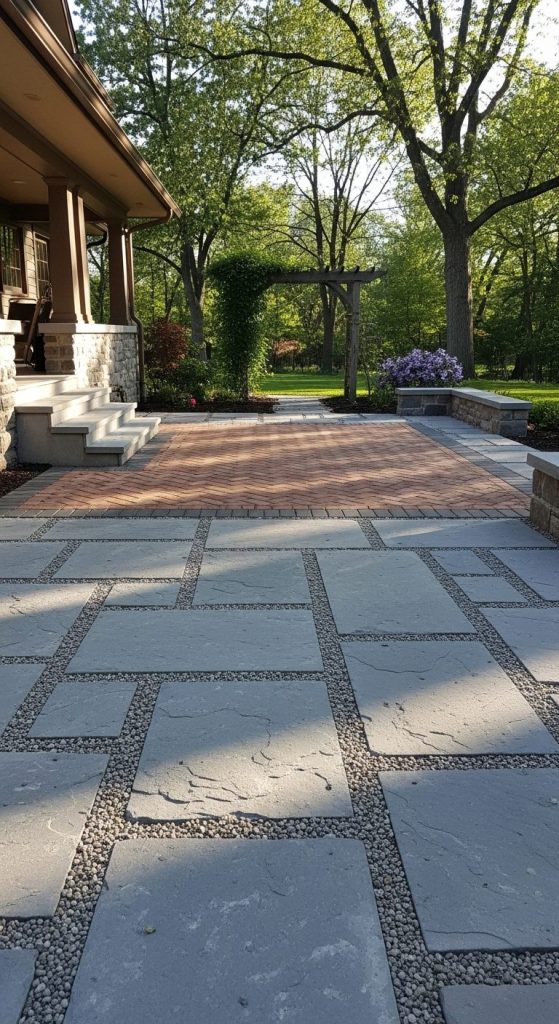
Using more than one surface material creates visual interest. For example: concrete slabs with gravel joints, or stone with wood borders.
Pros
- Breaks up large flat surfaces
- Lets you mix budget-friendly and premium materials
- Adds texture without clutter
Cons
- Needs precise installation
- Slightly higher material coordination
Mini takeaway
Mixing materials feels intentional and modern. It also hides wear better.
5. Permeable Paver Patio
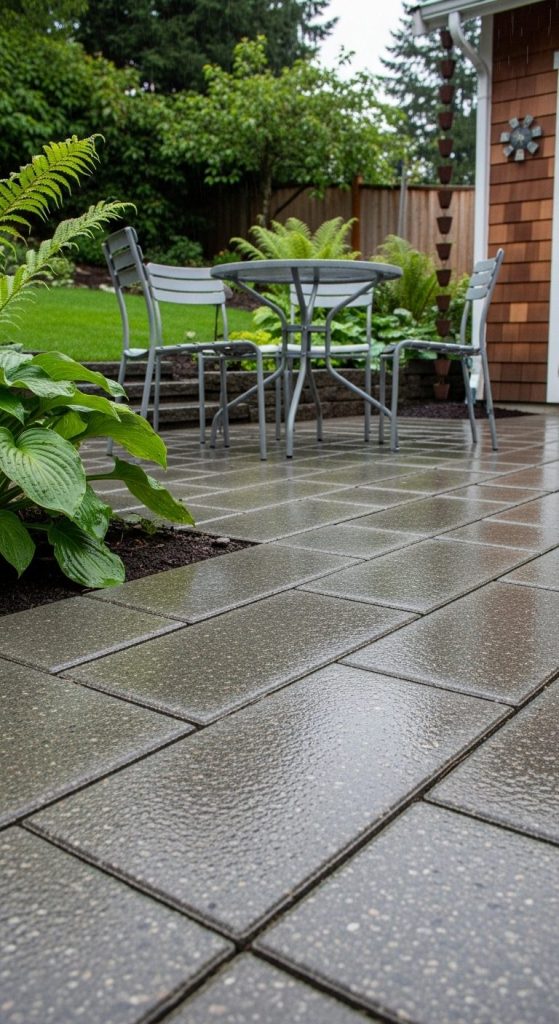
Permeable pavers allow water to drain through, reducing puddles and runoff. This design also works great in rainy climates.
Pros
- Eco-friendly drainage
- Reduces water pooling
- Prevents soil erosion
Cons
- Requires base preparation
- Slightly higher install cost
Mini takeaway
It’s practical and sustainable. Your patio stays usable after storms.
6. Built-In Bench Seating
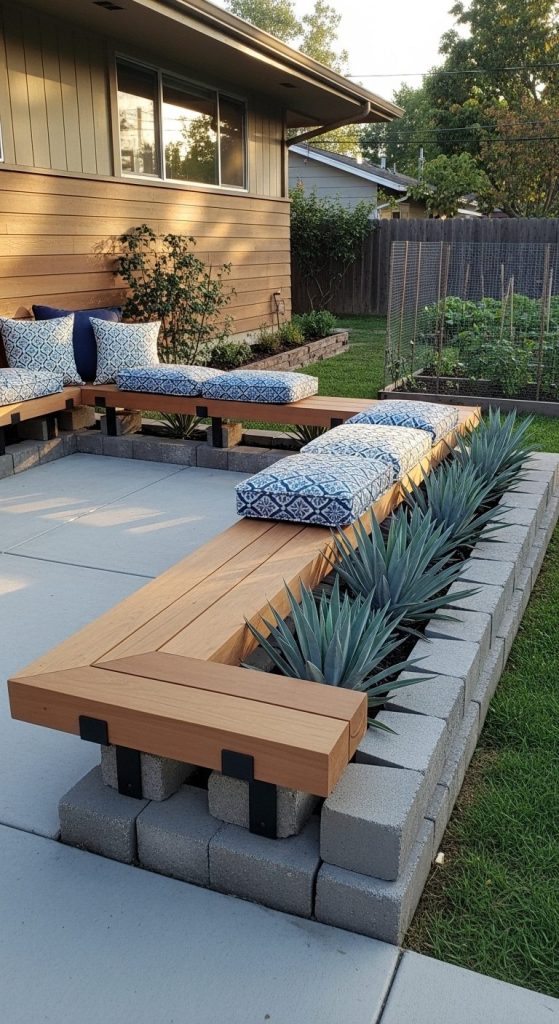
Permanent bench seating along the patio edges saves space and looks clean. Add storage underneath for cushions or tools.
Pros
- Saves floor space
- Looks custom and streamlined
- Adds extra seating without clutter
Cons
- Permanent installation
- Needs weather-resistant materials
Mini takeaway
Built-ins make patios feel planned instead of pieced together.
7. Integrated Fire Pit Patio Design
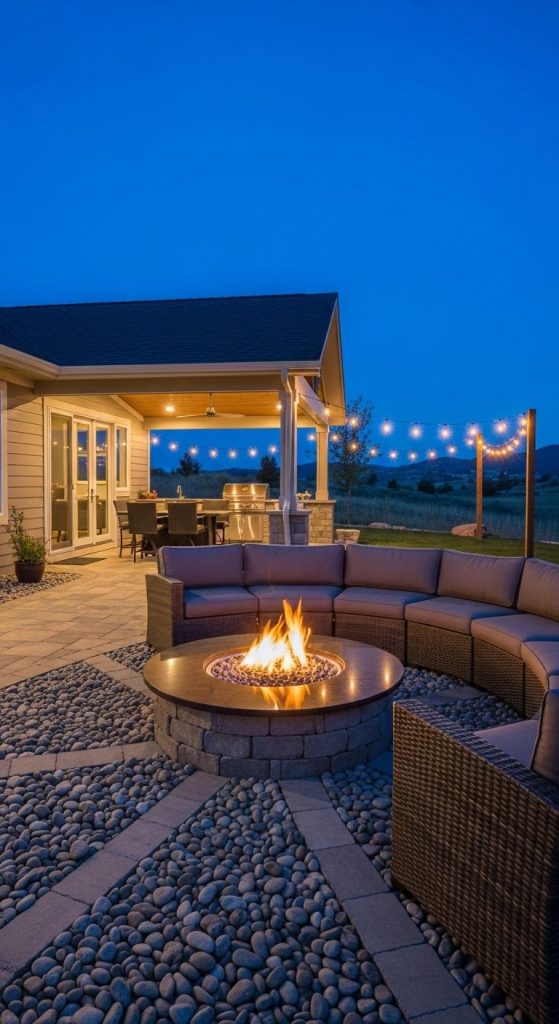
A patio designed around a fire pit feels social and warm. Place seating in a circular or semi-circle layout for natural conversation flow.
Pros
- Extends patio use into cooler seasons
- Creates a central gathering point
- Boosts resale appeal
Cons
- Fire safety considerations
- Fuel or gas line costs
Mini takeaway
People naturally gather around fire. Designing for that changes how the patio gets used.
8. Covered Pergola Patio Structure
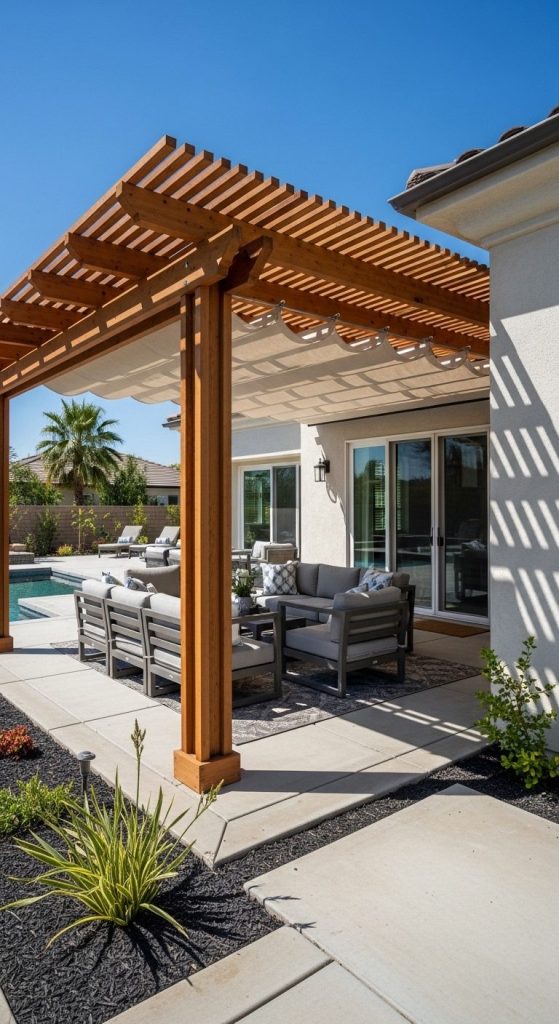
A pergola adds shade while keeping the space airy. You can add retractable fabric or polycarbonate panels for rain protection.
Pros
- Defines the patio visually
- Adds shade without full enclosure
- Increases usability in harsh sun
Cons
- Requires structural anchoring
- Fabric covers need replacement over time
Mini takeaway
Pergolas make patios feel like outdoor rooms without walls.
9. Fully Enclosed Screened Patio
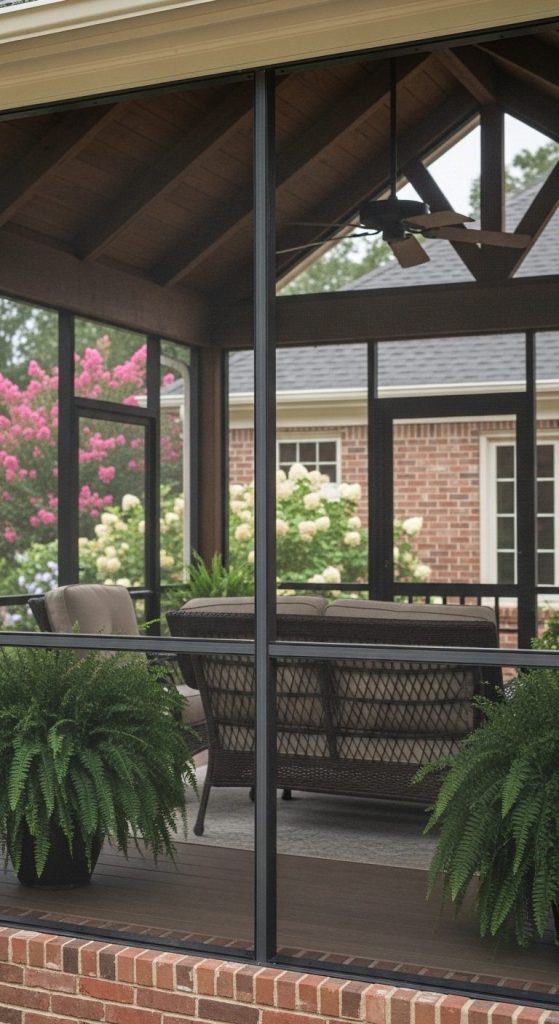
A screened patio keeps bugs out while letting air flow. It’s especially useful in warm climates with insects.
Pros
- Bug protection
- Extends seasonal use
- Adds a semi-indoor feel
Cons
- Higher build cost
- Screens need maintenance
Mini takeaway
If bugs ruin evenings, this upgrade changes everything.
10. Patio With Integrated Outdoor Kitchen Zone
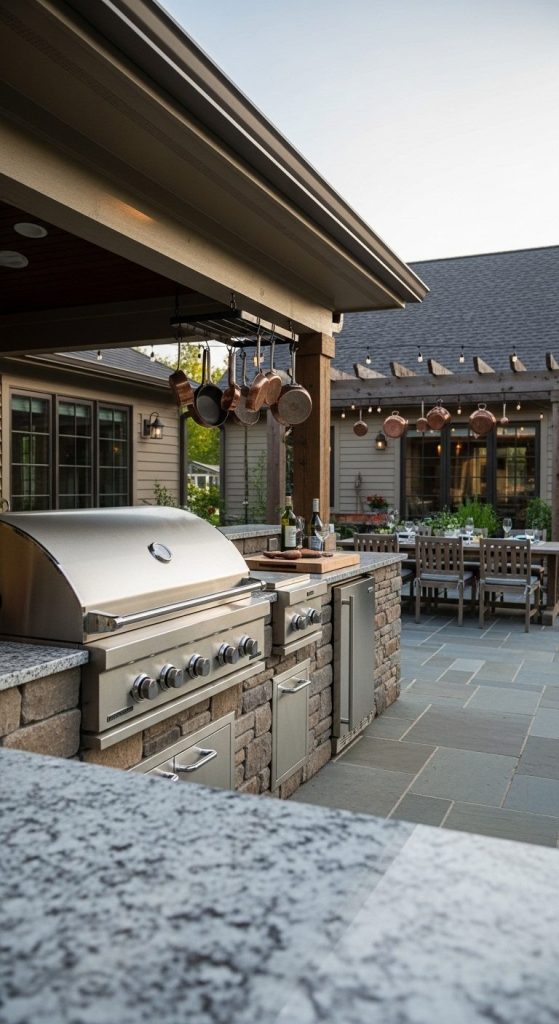
Designing a dedicated cooking zone makes the patio functional for hosting. Include counters, built-in grill, and prep space.
Pros
- Keeps cooking outdoors
- Makes hosting smoother
- Increases property value
Cons
- Expensive installation
- Needs utilities planning
Mini takeaway
Outdoor kitchens turn patios into entertainment hubs, not just seating areas.
11. Stepped Patio Levels
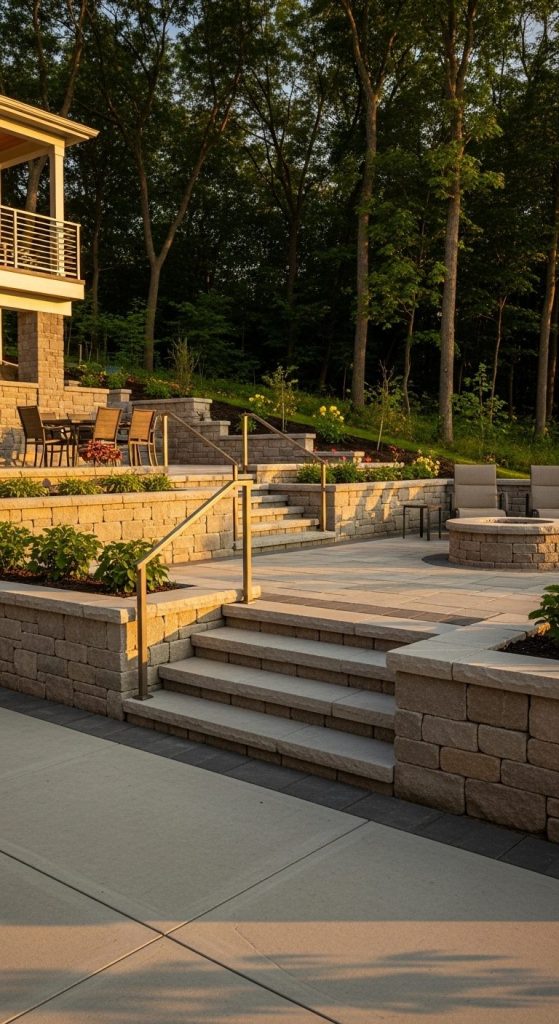
Multiple patio levels add architectural interest and solve uneven yard grading. Each step can serve a purpose—dining, lounging, or sunbathing.
Pros
- Solves sloped terrain
- Adds visual drama
- Defines separate activities naturally
Cons
- Requires careful engineering
- Higher construction complexity
Mini takeaway
Levels make patios look designed by an architect, even on a modest budget.
12. Curved Patio Layout
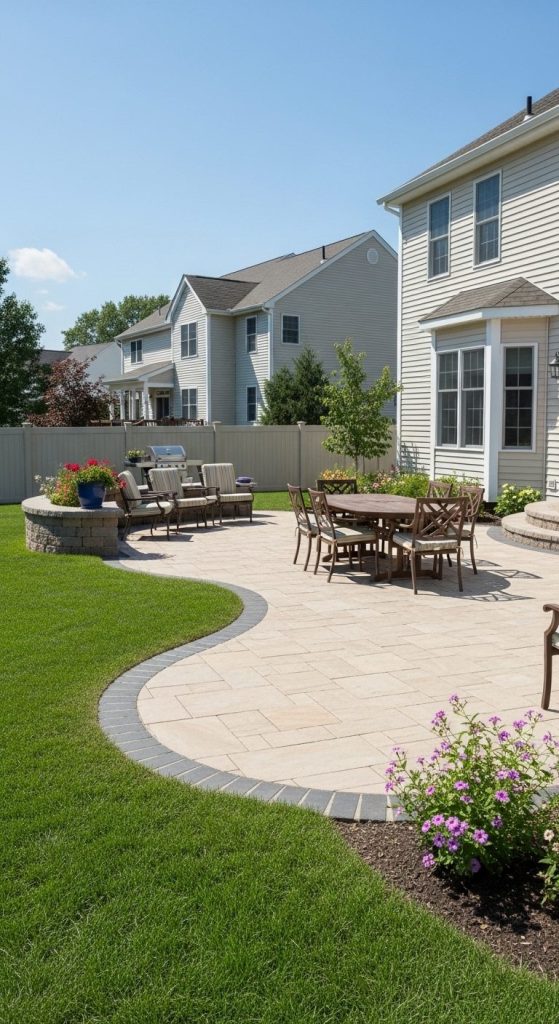
Curved edges soften the look of a patio and blend it into the landscape. Circular or organic shapes feel more relaxed than straight lines.
Pros
- Feels natural and organic
- Breaks rigid yard geometry
- Adds visual flow
Cons
- Harder to install
- Requires custom cutting
Mini takeaway
Curves feel inviting. Straight lines feel formal. Choose the vibe you want.
13. Floating Patio With Gravel Border
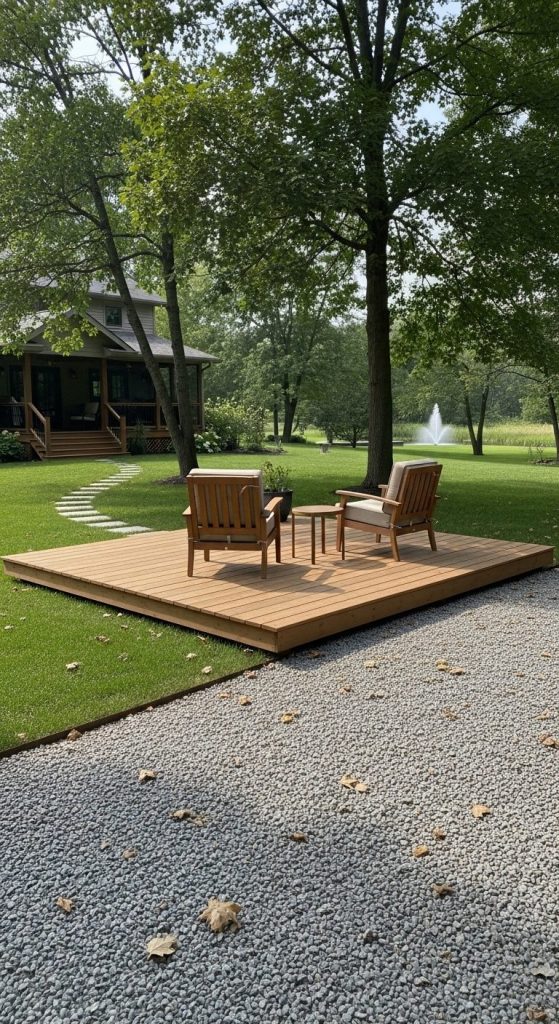
A floating patio sits within a gravel border instead of connecting to the house. It works great for detached backyard seating areas.
Pros
- Improves drainage
- Creates a defined footprint
- Budget-friendly materials
Cons
- Gravel maintenance
- Not ideal for heavy furniture
Mini takeaway
Detached patios feel like backyard retreats rather than extensions of the house.
14. Modular Concrete Slab Patio
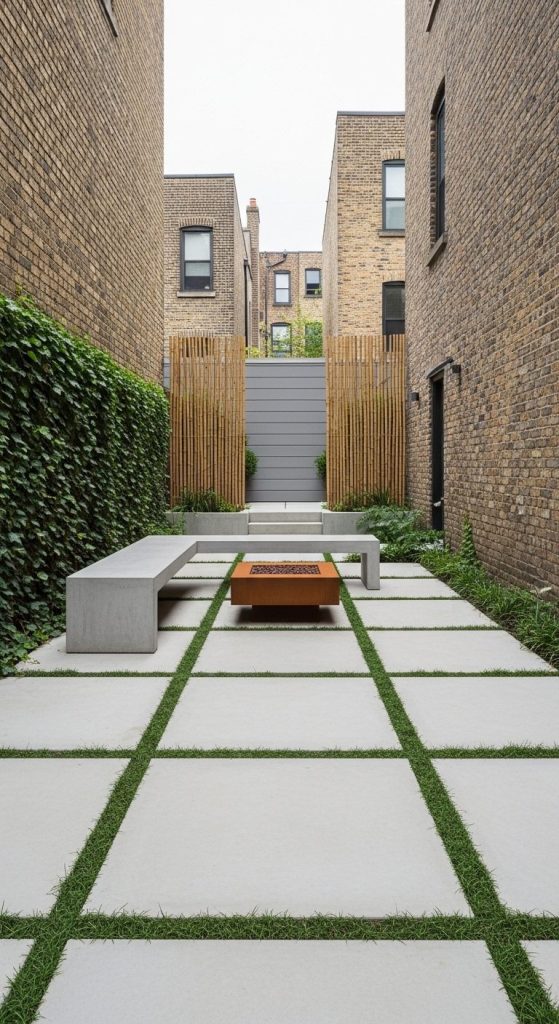
Large modular slabs create a modern grid layout. You can space them with grass or gravel joints for contrast.
Pros
- Clean, modern look
- Easy to replace individual slabs
- Flexible layout options
Cons
- Requires level base
- Heavy slabs to install
Mini takeaway
This style looks expensive but scales to different budgets.
15. Integrated Drainage Channel Patio Design
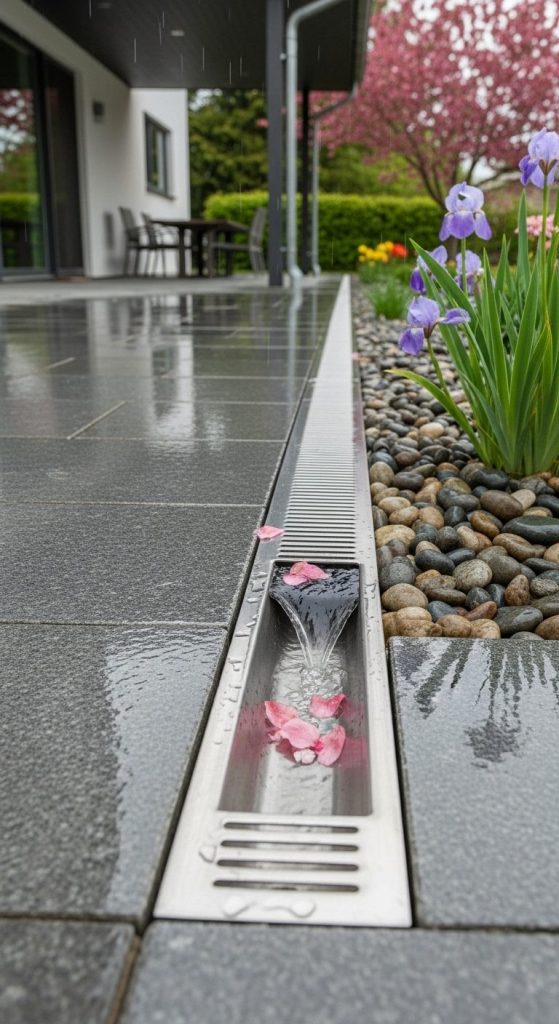
Adding subtle drainage channels prevents water damage and pooling. These can run along edges or between slabs.
Pros
- Protects foundation and surface
- Prevents slippery puddles
- Extends patio lifespan
Cons
- Needs careful planning
- Slight extra installation cost
Mini takeaway
Drainage isn’t glamorous, but it saves headaches later.
A Few Helpful Facts
- According to the National Association of Realtors, outdoor living upgrades like patios can return over 50% of their cost in resale value, depending on materials and region.
- A Houzz survey found that more than 40% of homeowners prioritize outdoor spaces when renovating, especially patios and decks.
- Landscape architects often recommend permeable surfaces to reduce runoff and improve soil health, especially in urban areas.
Final Thoughts
Backyard patios are funny spaces. They’re technically outdoors, but emotionally they feel like another living room.
The best upgrades don’t scream “renovation.” They quietly make you want to step outside more often. A multi-zone layout, a raised platform, or a pergola changes how you use the space without forcing a huge lifestyle shift.
If I had to pick one starting point, I’d go with zoning or surface materials. They’re the easiest way to make a patio feel intentional. From there, you can layer in structure, levels, or integrated features over time.
Try one idea first. See how it feels. Then build from there. Outdoor spaces evolve best when you treat them like living rooms with fresh air.

William Martin is a passionate bowler who spends most of his weekends playing the sport. With years of intense experience under his belt, William decided to share his knowledge by creating BOWLING OCEAN. Join me on this journey to explore the world of bowling and discover the tips and tricks to becoming a pro.