15 Best Plants To Plant Along Fence Border (No More Bare Edges)
That skinny strip of dirt running along your fence has probably been bothering you for years. I know mine did. Every time I mowed the lawn, I had to get off the mower and weed whack that useless strip where nothing seemed to grow right. Grass looked patchy. Mulch washed away. It was just this sad, forgotten gutter next to the fence line.
Then a friend asked me why I was trying to grow grass in a place grass never wanted to be.
She was right. That fence border is a unique environment. The fence casts shade, reflects heat, blocks wind, and creates rain shadows. Regular lawn grass hates it. But certain plants absolutely love the protection and structure a fence provides. After testing a bunch of options along my own six-foot cedar privacy fence, I finally found the plants that turn that awkward strip into the best part of the yard.
Here are fifteen of the best plants to plant along fence border that actually work in real gardens.
1. Hydrangea (Hydrangea macrophylla)
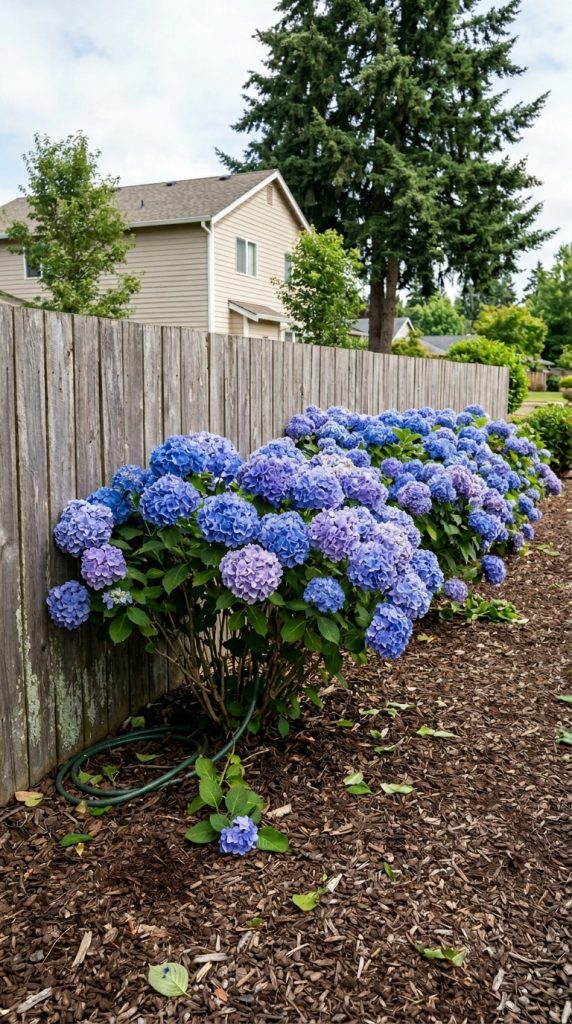
I planted a row of ‘Nikko Blue’ hydrangeas along my back fence five years ago, and now that fence has disappeared behind a wall of softball-sized blue blooms. The fence gives them afternoon shade, which hydrangeas crave, and the wood slats protect them from drying winds.
Pros:
- Huge, showy flowers from June through September.
- The fence acts as a natural trellis for support against heavy blooms.
- Very cold hardy. Survives zone 5 winters without protection.
Cons:
- Needs consistent water. Wilts dramatically in drought.
- Pruning mistakes remove next year’s flowers. Prune right after blooming.
The secret is spacing. Plant hydrangeas four feet apart from center to center. They look sparse for one year, but by year three, they touch and form that solid flowering wall everyone wants.
2. Boxwood (Buxus sempervirens)
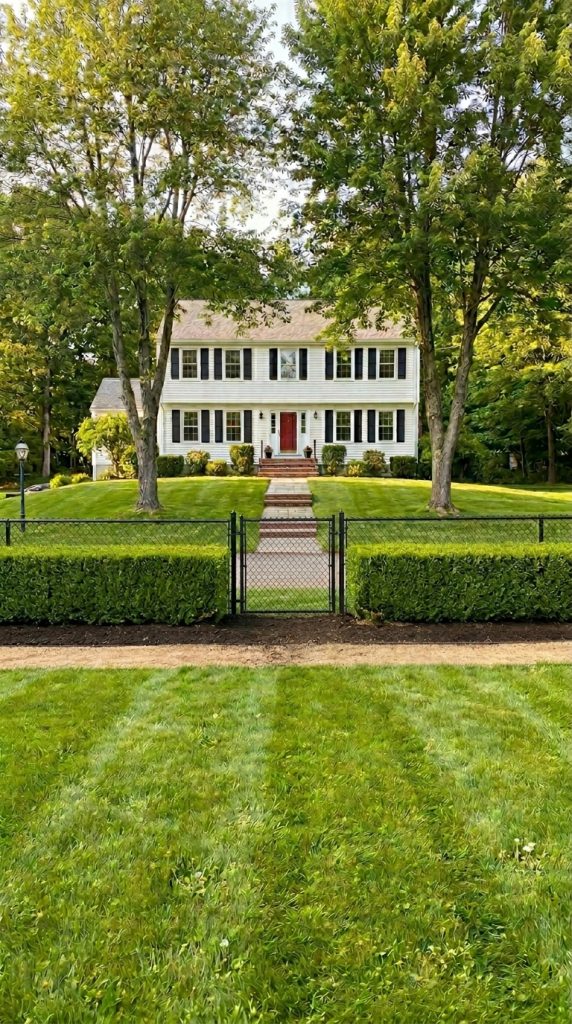
Do you want something formal and evergreen? Boxwoods along a fence create that tidy, manicured look that real estate agents love. I used dwarf boxwoods along my front fence line, and they hide the ugly chain-link without blocking the view of my porch.
Pros:
- Stays green all winter. No bare brown sticks when snow falls.
- Can be sheared into any shape. Hedges, balls, or natural.
- Very slow growing. Low maintenance after establishment.
Cons:
- Boxwood blight is real. Buy from reputable nurseries only.
- Smells like cat urine to some people. Seriously, smell one before buying.
A study from the University of Georgia found that boxwood hedges reduce airborne particulate matter by nearly thirty percent along property lines. So your fence border is also cleaning the air.
3. Lavender (Lavandula angustifolia)
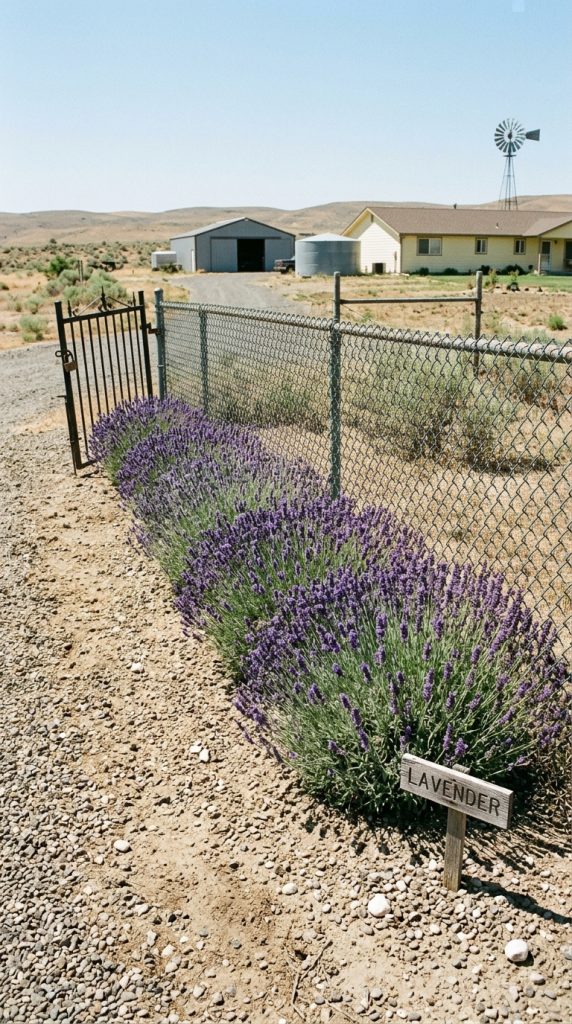
Sunny fence line with terrible soil? Lavender is your answer. I put a row of ‘Hidcote’ lavender along my south-facing chain-link fence, and that hot, dry, gravelly strip produced the most fragrant purple blooms I have ever grown.
Pros:
- Thrives in poor, sandy, alkaline soil where other plants die.
- The fence reflects heat, which lavender loves.
- Dried flowers last for years in sachets.
Cons:
- Must have full sun and perfect drainage. Wet soil rots it fast.
- Gets woody and open after five years. Replace or heavily prune.
Cut lavender back by two-thirds every spring after new growth appears. Do not cut into the old wood. That kills it. Follow that rule, and your fence line stays purple for a decade.
4. Climbing Rose (Rosa varieties)
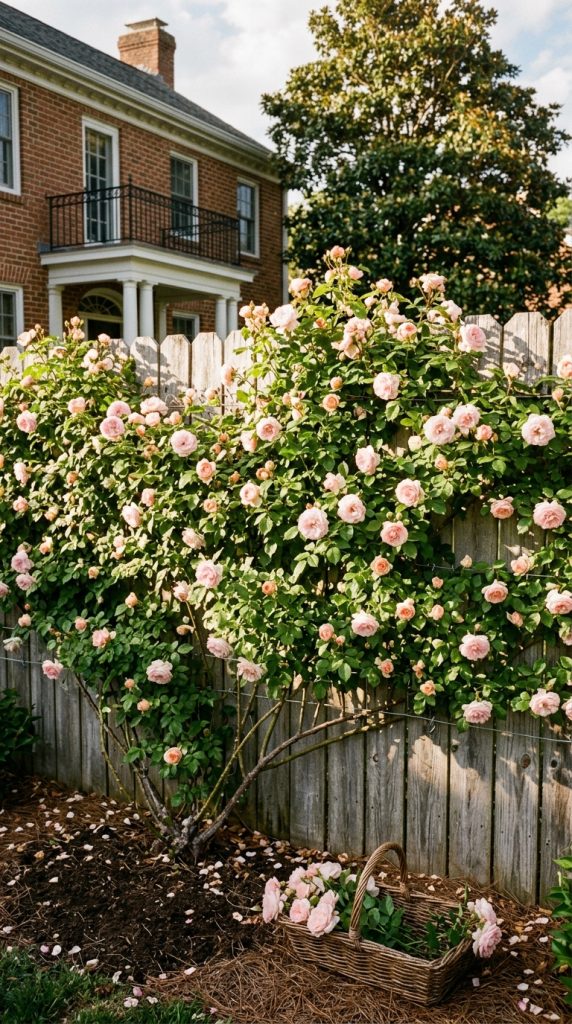
A fence is just a vertical surface waiting for a rose. I trained ‘New Dawn’ climbing roses along my six-foot wooden privacy fence, and within three seasons, the entire fence was covered in pale pink blooms. The fence provided the support, and the roses provided the romance.
Pros:
- Turns an ugly fence into a flower wall.
- Repeat bloomers flower from June until frost.
- Thorny stems deter intruders. Security and beauty combined.
Cons:
- Needs annual pruning and training. Not a plant-and-forget option.
- Black spot fungus in humid climates. Choose disease-resistant varieties.
Do not buy climbing roses from big box stores without research. Look for varieties labeled “own root” and “disease resistant.” ‘Zephirine Drouhin’ is thornless and fragrant. Start there.
5. Ornamental Grass (Miscanthus sinensis ‘Gracillimus’)
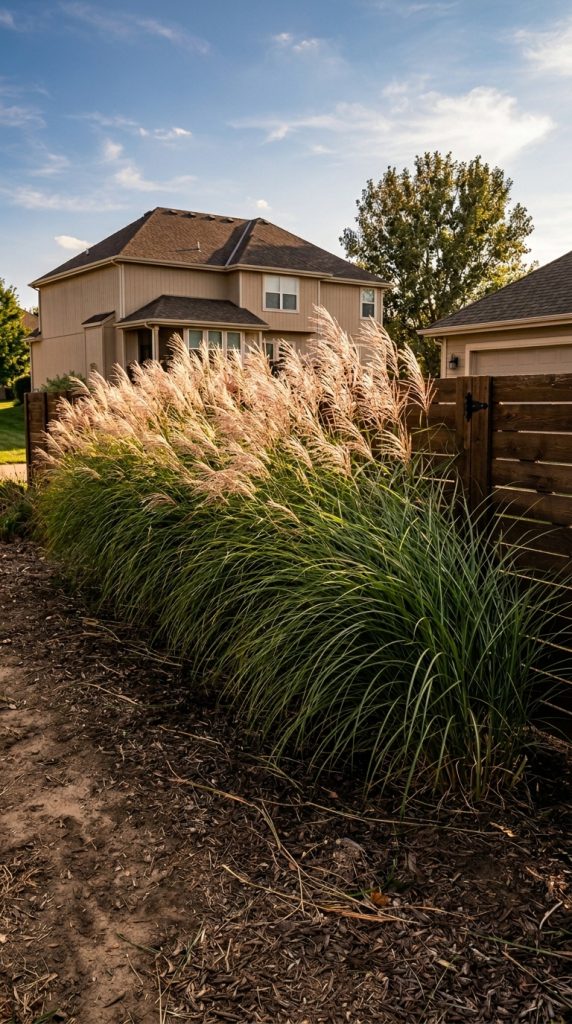
Skinny fence border that gets baked by afternoon sun? Ornamental grasses laugh at those conditions. I planted a row of maiden grass along a fence line that faces west, and that strip used to cook everything I put there. The grass grew to seven feet tall and moved beautifully in the wind.
Pros:
- Extremely drought tolerant once established.
- The fence blocks wind, so the grasses stand upright instead of flopping.
- Winter interest. Those plumes catch frost and snow.
Cons:
- Needs cutting down to the ground every late winter.
- Some varieties spread aggressively. Choose clump-forming types.
The RHS recommends leaving the dried grasses standing through winter for wildlife shelter. Cut them down in February before new growth emerges. Your fence border will look good every month of the year.
6. Hosta (Hosta species)
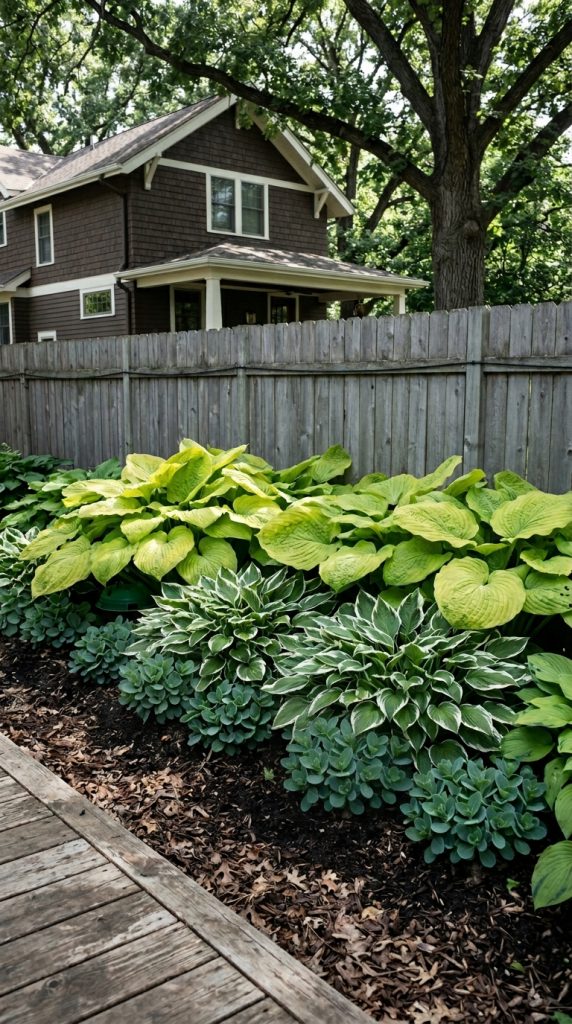
Shady fence on the north side of the house? Hostas turn that dark strip into a leafy paradise. My north fence gets maybe two hours of morning sun, then deep shade the rest of the day. Hostas have multiplied into a solid carpet of blue, green, and gold leaves that completely hides the fence base.
Pros:
- Tolerates root competition from nearby trees.
- Hundreds of varieties. Mix sizes and colors for texture.
- Very cheap to buy or get free divisions from friends.
Cons:
- Deer love them. Fencing around your fence border is ironic but necessary.
- Slugs eat holes in leaves. Use organic slug bait in spring.
Plant large hostas like ‘Sum and Substance’ in the back against the fence. Put smaller ones like ‘Blue Mouse Ears’ in front. That layering makes the border look designed instead of just planted.
7. Spirea (Spiraea japonica ‘Goldflame’)
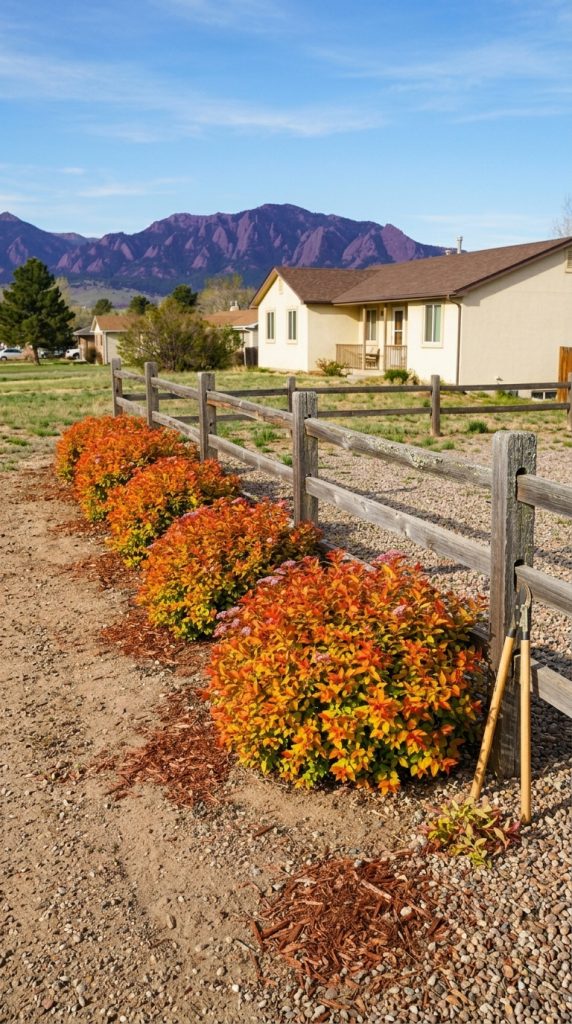
Do you want a plant that gives you three different looks in one season? Spirea along a fence border does exactly that. New leaves emerge bright orange-red in spring, turn chartreuse yellow in summer, then shift to deep orange again in fall. The pink flowers in June are just a bonus.
Pros:
- Very forgiving of poor soil and occasional neglect.
- The fence helps train the arching branches upward instead of sprawling.
- Cut it to the ground every few years to refresh it completely.
Cons:
- Can look messy if not pruned annually.
- Not evergreen. Bare branches in winter.
Spirea is the plant I recommend to new gardeners who feel intimidated. You literally cannot kill this thing. Chop it wrong? It grows back. Forget to water? Fine. Plant it along your fence and stop worrying.
8. Clematis (Clematis varieties)
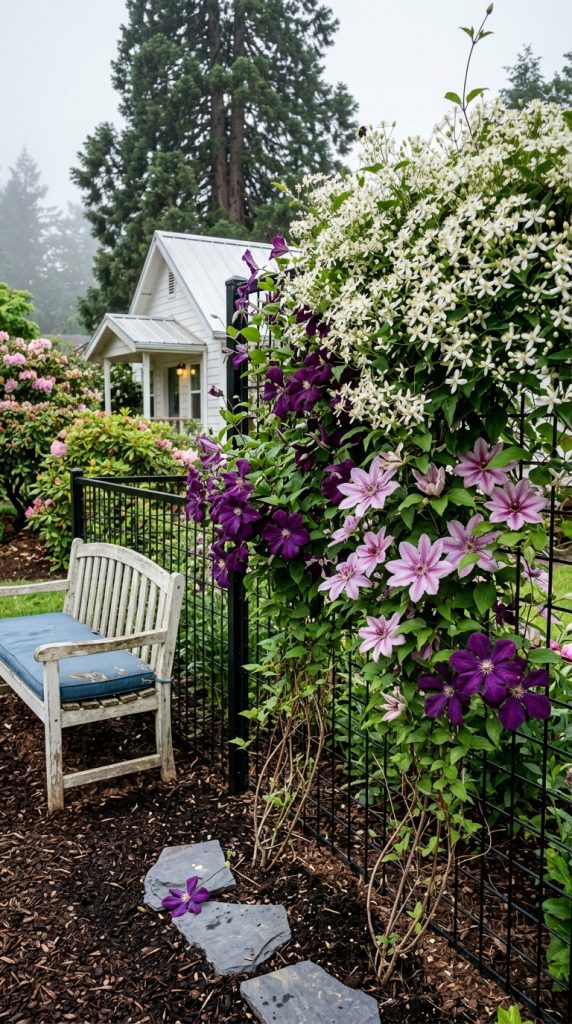
A fence is basically a giant trellis. Why not use it that way? Clematis vines twine their leaf stems around fence pickets and climb without any help from you. I planted three different clematis along my back fence, and they weave together into a tapestry of purple, white, and pink blooms.
Pros:
- The fence provides the perfect support structure for climbing.
- Different varieties bloom in spring, summer, and fall.
- Very easy to propagate from cuttings.
Cons:
- Needs “cool roots.” Plant something at the base to shade the soil.
- Pruning groups are confusing. Read the tag carefully.
Remember the rule: clematis like their heads in the sun and their feet in the shade. The fence gives them the sun. Plant a low ground cover or put a flat stone at the base to keep the roots cool.
9. Yew (Taxus baccata ‘Repandens’)
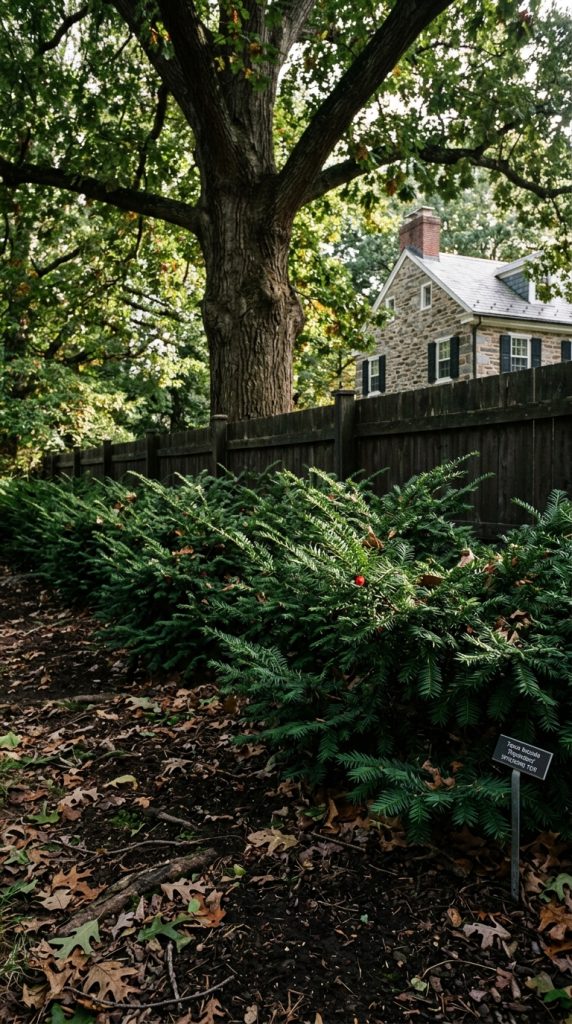
Evergreen, shade-tolerant, and indestructible. Yews are the workhorses of fence borders. I planted a row of spreading yews along a fence that sits under a massive oak tree. The oak roots are aggressive, and the shade is dense. The yews did not care at all.
Pros:
- Thrives in deep shade where nothing else grows.
- Responds well to shearing. Can be kept any height.
- Very long-lived. Those fence-line yews will outlive you.
Cons:
- All parts are toxic to pets and people. Be careful if you have dogs.
- Slow to establish. First year they look like they are doing nothing.
A university extension study found that yews are one of the few conifers that tolerate heavy clay soil and urban pollution. That fence line next to the street? Perfect yew habitat.
10. Daylily (Hemerocallis varieties)
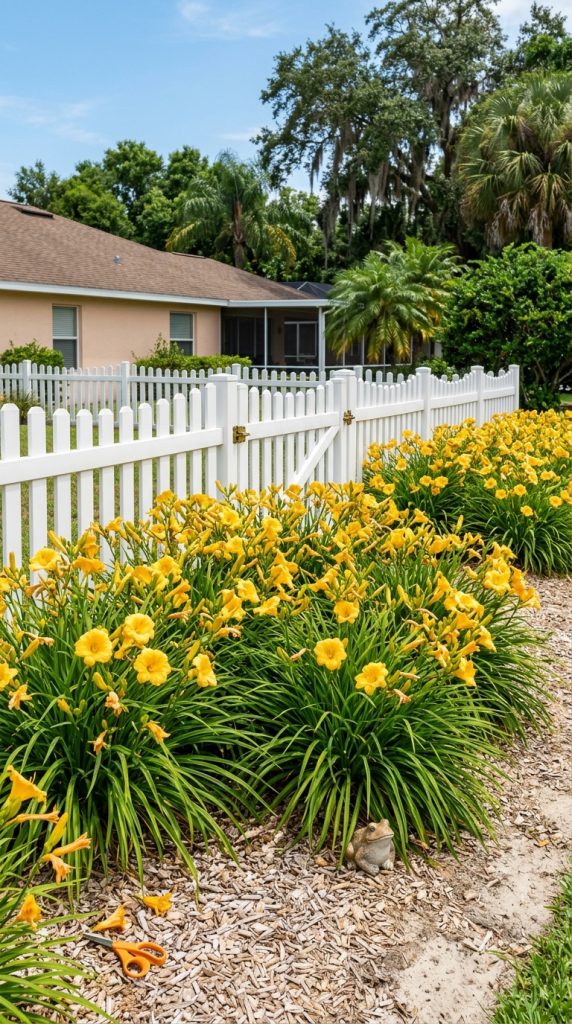
The ultimate low-maintenance fence border plant. Daylilies form dense clumps that spread over time, creating a solid wall of grassy foliage and colorful flowers. I have a hundred feet of fence lined with daylilies, and they require almost zero work.
Pros:
- Extremely tolerant of drought, heat, and poor soil.
- Each plant produces dozens of flowers over several weeks.
- Divide them every few years and spread them further along the fence.
Cons:
- Each flower lasts only one day. The name is accurate.
- Foliage looks ratty by late summer. Cut it back hard.
Daylilies are the answer for the gardener who wants color but has no time. Plant them along your fence in spring. Walk away. Come back in summer to flowers. That is it.
11. Holly (Ilex crenata)

Boxwood alternative that actually likes wet soil. Japanese holly has tiny, glossy leaves that look like boxwood but tolerate damp conditions that rot real boxwood. I used these along a fence line where the downspout drains, and they stay green and happy.
Pros:
- Evergreen with a fine texture that looks formal.
- Berries on female plants attract birds in winter.
- Tolerates shearing into perfect hedges.
Cons:
- Needs both male and female plants for berries.
- Can get spider mites in hot, dry locations.
Plant Japanese holly four feet apart for a low hedge or two feet apart for a denser screen. The fence behind them will disappear within three years. Your neighbors will ask what you did.
12. Coneflower (Echinacea purpurea)

Sunny fence border that needs pollinator action? Coneflowers bring every bee and butterfly in the neighborhood. I planted a row of purple coneflowers along my chain-link fence, and the fence line turned into a butterfly highway. The fence kept the tall stems from flopping into the lawn.
Pros:
- Very drought tolerant. Water once a week at most.
- Blooms for months from midsummer to fall.
- Birds eat the dried seed heads all winter.
Cons:
- Needs full sun. Shady fence kills them.
- Can get aster yellows disease. Pull infected plants immediately.
Do not fertilize coneflowers. Rich soil makes them floppy. The fence behind them helps hold them upright, but lean soil keeps them shorter and sturdier.
13. Viburnum (Viburnum dentatum)
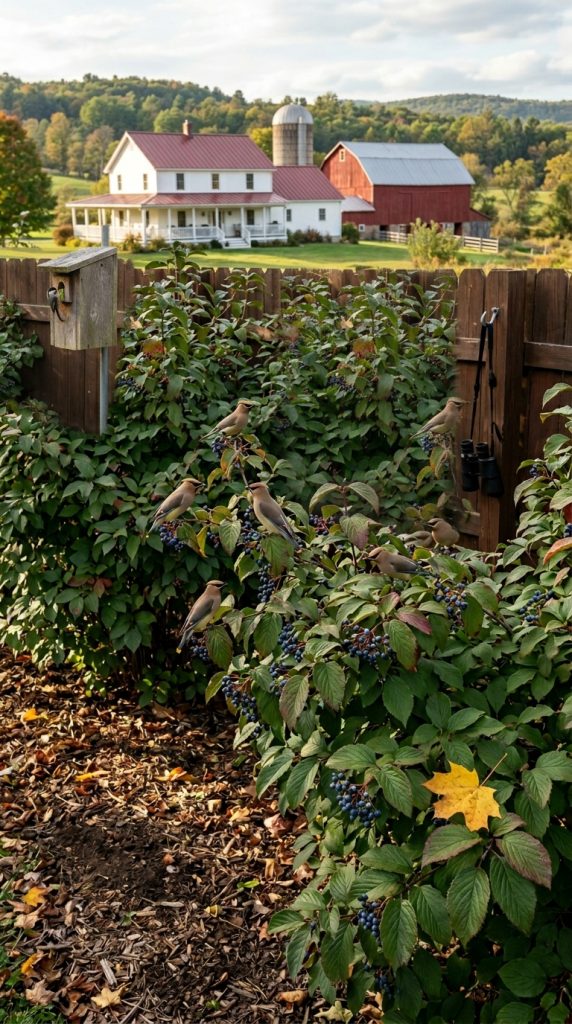
Do you want something that looks like a real shrub instead of a hedge? Viburnums along a fence border give you that loose, naturalistic look. I planted arrowwood viburnums along my back property line, and they grew into eight-foot-tall bushes that completely hide the fence and the neighbor’s shed behind it.
Pros:
- Native to North America. Supports local caterpillars and birds.
- White spring flowers, blue fall berries, red fall color.
- The fence protects the shrubs from wind damage.
Cons:
- Needs room. Plant at least six feet apart.
- Suckers to form colonies. That is great for screening but not for small spaces.
The National Wildlife Federation recommends viburnums as top plants for backyard wildlife. That fence border is not just pretty anymore. It is an ecosystem.
14. Coral Bells (Heuchera)
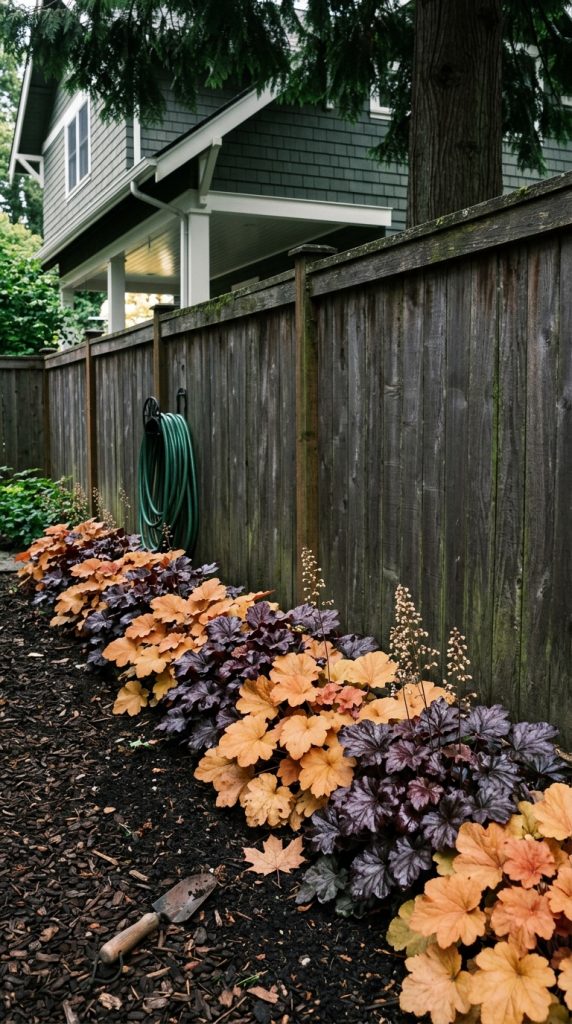
Shady fence line with shallow, rocky soil? Coral Bells are your colorful solution. I have a strip along my north fence where the soil is two inches deep over solid clay. Heucheras in ‘Caramel’ and ‘Palace Purple’ have thrived there for years, their colorful leaves brightening the dark corner.
Pros:
- Evergreen in mild winters. Color year-round.
- Hundreds of leaf colors. Purple, orange, lime green, silver.
- Tiny flower spikes attract hummingbirds.
Cons:
- Heavier clay soil causes root rot. Amend with compost.
- Can heave out of the ground in freeze-thaw cycles.
Plant Coral Bells along the fence edge where you can actually see them. Do not bury them behind bigger plants. Their whole value is the colorful leaves, so put them front and center against that fence line.
15. Annabelle Hydrangea (Hydrangea arborescens ‘Annabelle’)
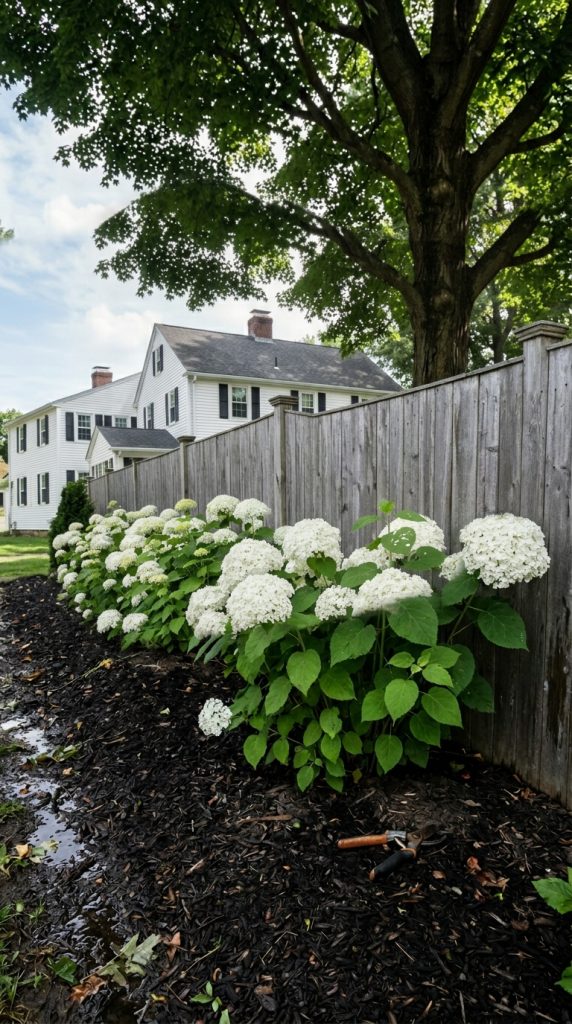
One more hydrangea, but this one is different. Annabelle has massive, round, white flower heads that can reach a foot across. The stems are weak, though, and the flowers flop over after rain. That is where the fence comes in. I planted Annabelle right against my fence, and the fence holds the flowers upright.
Pros:
- Blooms on new wood. Prune anytime without losing flowers.
- Very cold hardy. Zones 3 to 9.
- The huge white blooms glow at dusk.
Cons:
- Stems flop without support. The fence is that support.
- Needs consistently moist soil.
Cut Annabelle to the ground every spring. Yes, to the ground. It grows back to five feet tall and flowers by July. The fence behind it keeps the heavy blooms from sprawling into your yard.
That Ugly Fence Strip Is About to Become Your Favorite Spot
I used to hate that narrow strip of dirt along my fence. It felt like a landscaping mistake I could never fix. Now it is the part of my yard I am most proud of. The plants I listed turned a problem area into a destination.
Pick one. Just one. Plant it this weekend. Water it for the first month. Then watch what happens. By next season, you will be planning the next section.
Your fence has been waiting for this.

Ashley Ellison is a skilled writer and avid bowler. Her passion for storytelling and dedication to the sport have led her to participate in various national bowling leagues. With a unique combination of talents, Ashley approaches every challenge with creativity and a relentless drive to succeed.