15 Backyard Fence Ideas That Actually Improve Your Yard
Ever notice how a backyard fence can quietly make or break the entire outdoor vibe? I didn’t really get it until a neighbor replaced their old leaning panels with a smart, intentional fence upgrade—and suddenly their whole yard felt calmer, cleaner, more “put together.” Same grass, same patio. Totally different energy.
That’s the thing about backyard fences ideas. They’re not just about marking property lines or keeping the dog in. They shape privacy, mood, light, airflow, and even how big your yard feels. And honestly, most people settle for whatever fence style came with the house, even though fences are one of the easiest structural upgrades you can actually control.
I’ve spent way too many hours saving fence inspiration, talking to contractors, and watching what homeowners actually build (not just what looks good in photos). What keeps popping up are smart, functional fence upgrades—things that solve real problems like noise, privacy, durability, or awkward yard layouts.
Below are 15 specific, non-generic backyard fence ideas that people genuinely implement. No fluff. No random décor add-ons. Just fence-focused upgrades that change how a backyard works and feels.
1. Horizontal Slat Fence With Varied Board Widths

The first time I saw this in person, I had to stop and stare. Same wood, same height—just different board widths—and suddenly the fence looked custom instead of cookie-cutter.
Instead of evenly spaced planks, this design mixes wide and narrow horizontal boards in a repeating pattern. It adds subtle movement without being loud.
Pros
- Feels modern without looking trendy
- Breaks visual monotony on long fence runs
- Works with wood, composite, or cedar
Cons
- Slightly higher material planning
- Needs careful spacing to stay balanced
Mini takeaway
If you want a fence that feels designed—not default—this is a small tweak with big payoff.
2. Double-Layer Privacy Fence With Offset Panels
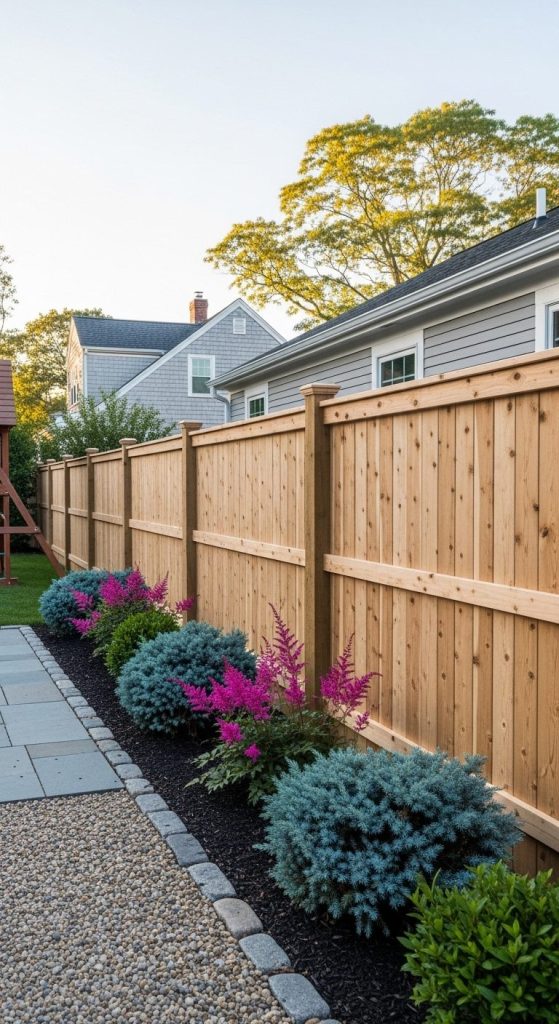
This one surprised me. It looks like a standard fence from a distance, but up close, you notice depth.
Two layers of vertical panels overlap slightly, blocking sightlines without fully sealing airflow. Builders often offset the inner and outer layers by a few inches.
Pros
- Strong privacy without solid-wall heaviness
- Reduces wind tunnel effect
- Adds sound dampening (noticeable, FYI)
Cons
- Higher lumber cost
- More labor to install
Mini takeaway
This is privacy fencing for people who hate the boxed-in feeling.
3. Board-on-Board Fence for Full Visual Coverage

If privacy matters more than aesthetics, this one earns its keep.
Unlike standard side-by-side panels that shrink and gap over time, board-on-board fences overlap boards on alternating sides. Even when wood expands or contracts, there’s no see-through.
Pros
- Zero gaps, even as wood ages
- Looks clean from both sides
- Ideal for close neighbors
Cons
- Uses more lumber
- Slightly heavier structure
Mini takeaway
When you want “no peeking ever,” this fence delivers.
4. Stepped Fence Design for Sloped Yards

Sloped yards and straight fences never get along. The result? Awkward gaps or crooked lines.
A stepped fence follows the slope in intentional drops, keeping panels level while adjusting height gradually.
Pros
- Solves uneven ground cleanly
- Maintains consistent panel alignment
- Easier to repair panel-by-panel
Cons
- Requires precise measuring
- More planning during layout
Mini takeaway
This turns a tricky yard into a design feature instead of a headache.
5. Shadowbox Fence With Asymmetrical Spacing

Shadowbox fences usually look… fine. This version looks intentional.
By varying the spacing slightly instead of using uniform gaps, the fence gains rhythm and visual interest while still allowing airflow.
Pros
- Better airflow than solid fencing
- Balanced privacy from both sides
- Lighter visual weight
Cons
- Requires careful layout
- Less privacy than full coverage styles
Mini takeaway
It’s a breathable fence that doesn’t feel boring.
6. Mixed Material Fence Using Wood and Steel Frames

This isn’t decorative metal slapped on a fence. The steel acts as the structural frame, with wood infill panels.
The result feels solid, modern, and long-lasting.
Pros
- Stronger than all-wood fences
- Clean, architectural lines
- Less warping over time
Cons
- Higher upfront cost
- Needs professional welding or prefabricated frames
Mini takeaway
If longevity matters, this combo pays for itself.
7. Tall Fence With Narrow Vertical Pickets

Height doesn’t have to mean bulk.
Using narrow vertical pickets spaced tightly creates a tall fence that feels elegant instead of heavy.
Pros
- Makes yards feel taller, not boxed in
- Strong privacy when spacing stays tight
- Works well in modern or classic homes
Cons
- More pickets = more labor
- Requires precise alignment
Mini takeaway
This proves that vertical lines can feel light, even at full height.
8. Fence With Integrated Access Panels

This one’s genius for small yards.
Instead of one large gate, the fence includes narrow access panels—think wheelbarrow width or utility access.
Pros
- Saves space
- Easier daily movement
- Cleaner fence lines
Cons
- Custom framing required
- Hardware costs add up
Mini takeaway
Functional upgrades often beat flashy designs.
9. Concrete Base Fence With Wood Upper Panels

This design quietly solves two big issues: rot and uneven ground.
A low concrete base supports wood panels above, protecting them from moisture and soil contact.
Pros
- Extends fence lifespan
- Cleaner bottom edge
- Strong wind resistance
Cons
- Concrete work adds cost
- Less DIY-friendly
Mini takeaway
This is durability disguised as design.
10. Acoustic Fence Panels for Noise Reduction

If road noise or neighbors drive you nuts, this matters.
Specially layered fence panels use dense cores and tight seams to reduce sound transmission.
According to the U.S. Department of Transportation, solid barriers can reduce noise by 5–10 decibels, which the human ear perceives as a noticeable drop.
Pros
- Quieter backyard experience
- Maintains privacy
- Available in wood-look finishes
Cons
- Higher price point
- Thicker panels
Mini takeaway
Peace and quiet has a structure—and it’s a fence.
11. Modular Fence Panels for Easy Replacement

This fence installs in sections designed to swap individually.
Damage one panel? Replace just that piece.
Pros
- Easy maintenance
- Budget-friendly long term
- Flexible layouts
Cons
- Limited design options
- Needs precise initial setup
Mini takeaway
Low drama, low maintenance. Honestly refreshing.
12. Semi-Solid Fence With Adjustable Slats

These fences use angled or movable slats to control visibility.
Open them slightly for airflow, close them for privacy.
Pros
- Adjustable privacy
- Modern look
- Good airflow control
Cons
- Moving parts need upkeep
- Higher installation cost
Mini takeaway
Control beats compromise.
13. Fence With Integrated Retaining Wall Function

In yards with grade changes, fences can double as retaining structures.
Engineered fence posts anchor into retaining blocks, stabilizing soil and defining boundaries at once.
Pros
- Saves space
- Solves erosion issues
- Clean yard transitions
Cons
- Requires engineering approval
- Higher labor costs
Mini takeaway
When one structure does two jobs, it’s worth considering.
14. Dark-Stained Fence for Visual Recession

Here’s a visual trick designers love: darker fences fade back.
Charcoal, espresso, or deep brown finishes make boundaries feel farther away.
Pros
- Makes yards feel larger
- Hides dirt and wear
- Pairs well with greenery
Cons
- Shows dust in dry climates
- Needs UV-resistant stain
Mini takeaway
Dark doesn’t mean heavy—it can mean expansive.
15. Fence With Consistent Post Spacing (No Panels)

Instead of prefabricated panels, this fence builds pickets directly between evenly spaced posts.
The result feels custom and balanced.
Pros
- Clean proportions
- Easy to repair single boards
- Timeless look
Cons
- Slower installation
- Requires skilled layout
Mini takeaway
Details matter more than people think.
Final Thoughts
Backyard fences rarely get the credit they deserve. Yet they quietly shape how private, calm, open, or secure a space feels. The right fence doesn’t scream for attention—it simply works better every day.
What I love most about these backyard fences ideas is that none of them rely on trends that fade fast. They’re practical upgrades rooted in how people actually use their yards: blocking noise, gaining privacy, managing slopes, or just making the space feel finished.
If you’re planning a fence update, don’t try to do everything at once. Pick one idea that solves your biggest pain point first. That single improvement often changes the entire backyard experience.
And honestly? Once you notice the difference, you’ll never look at fences the same way again.

William Martin is a passionate bowler who spends most of his weekends playing the sport. With years of intense experience under his belt, William decided to share his knowledge by creating BOWLING OCEAN. Join me on this journey to explore the world of bowling and discover the tips and tricks to becoming a pro.