15 Backyard Spa Ideas That Feel Luxurious Yet Livable
Sometimes you scroll past a backyard photo and instantly feel calmer. You can almost hear the water bubbling, smell the fresh air, and imagine that first deep exhale after a long day. That’s the exact feeling that keeps pulling people toward backyard spa ideas right now. Life feels loud, busy, and honestly a little overwhelming. Turning your own outdoor space into a place to unwind just makes sense.
What excites me most about backyard spas is how doable they’ve become. This isn’t about building a luxury resort or spending years planning. It’s about smart upgrades, intentional layouts, and features that make daily life feel better. I’ve seen friends transform small yards, awkward corners, and even plain patios into calming retreats that actually get used, not just admired.
Below are 15 practical, achievable ideas that focus on the spa itself — how it works, feels, and fits into real life. No fluff. Just upgrades that quietly make your backyard the place you want to be.
1. Built-In Hot Tub With Flush Deck Integration
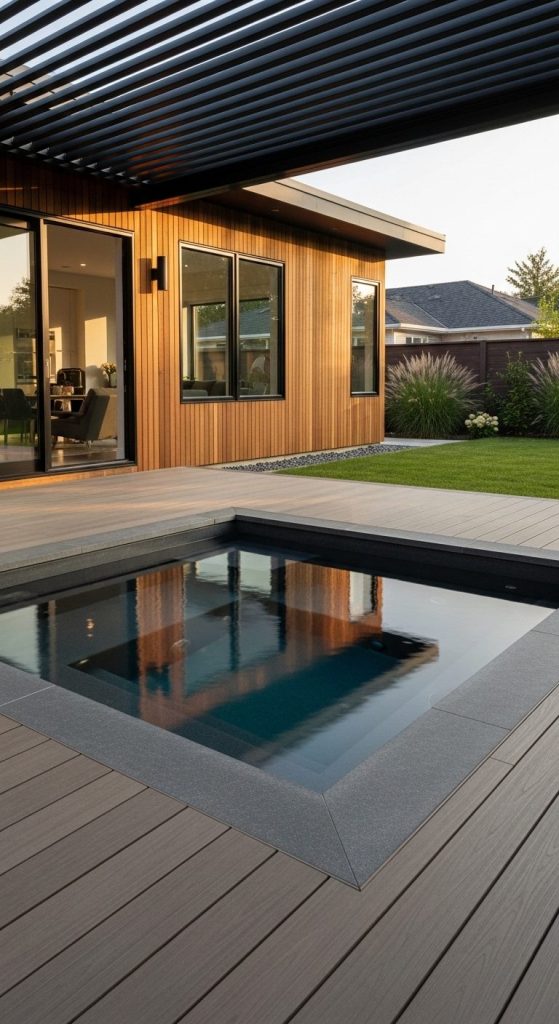
There’s something about stepping into a spa rather than climbing up and over that feels instantly more relaxing. A flush-mounted hot tub built directly into the deck creates that seamless, spa-like experience people crave.
This setup works especially well in small or medium yards because it visually lowers the profile of the tub. Everything feels intentional instead of plopped down.
Pros
- Easier entry and exit, especially after dark
- Cleaner visual lines that elevate the whole yard
- Makes the spa feel permanent and high-end
Cons
- Requires deck modification or planning
- Slightly higher upfront installation cost
Mini takeaway: If you want your spa to feel custom rather than temporary, this is one of the most impactful upgrades you can make.
2. Zoned Spa Layout With Clear Circulation Paths
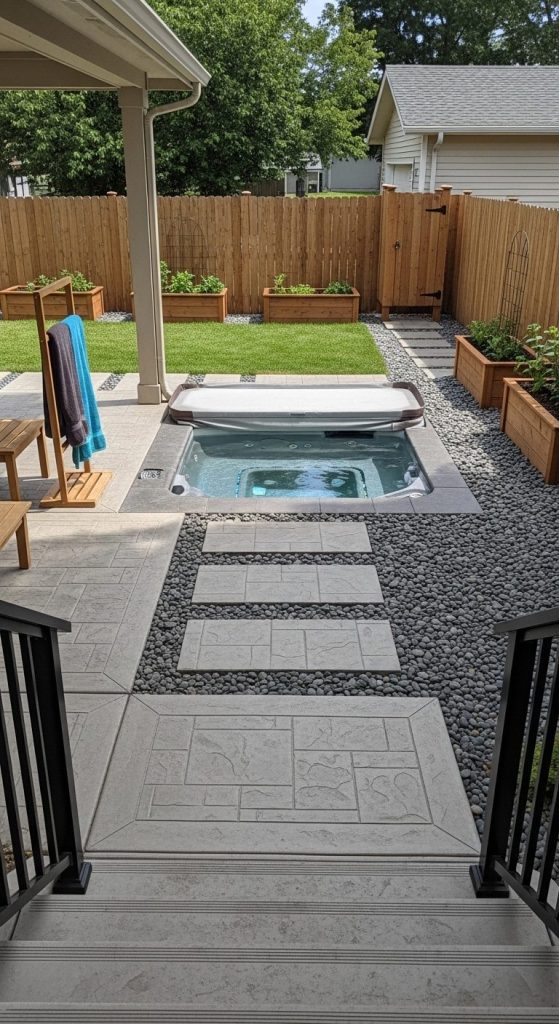
Ever notice how some backyard spas feel cramped even when they’re not small? That usually comes down to layout. Zoning your spa area into clear “move” and “relax” paths changes everything.
Think direct access from the house, space to towel off, then the soaking zone. No awkward sidestepping around furniture or squeezing past edges.
Pros
- Makes the spa easier to use daily
- Reduces wear on surrounding surfaces
- Improves safety when surfaces are wet
Cons
- Takes planning before installation
- May require minor yard reconfiguration
Mini takeaway: A spa feels more relaxing when movement feels natural and obvious.
3. In-Ground Plunge Spa for Compact Backyards
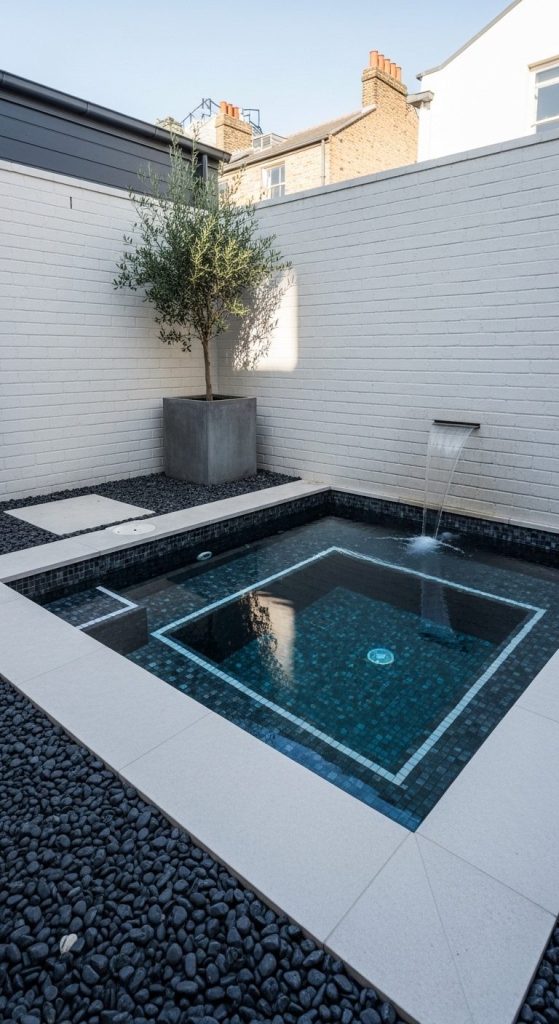
Not everyone wants or needs a full-size hot tub. In-ground plunge spas are gaining popularity because they fit tighter spaces while still delivering that spa experience.
These compact units work beautifully for heat therapy, cold plunges, or quick relaxation sessions.
Pros
- Fits narrow or urban backyards
- Uses less water and energy
- Looks sleek and minimal
Cons
- Not ideal for large groups
- Less room to stretch out
Mini takeaway: Smaller doesn’t mean less luxurious — it often means more intentional.
4. Integrated Spa Steps With Hidden Storage
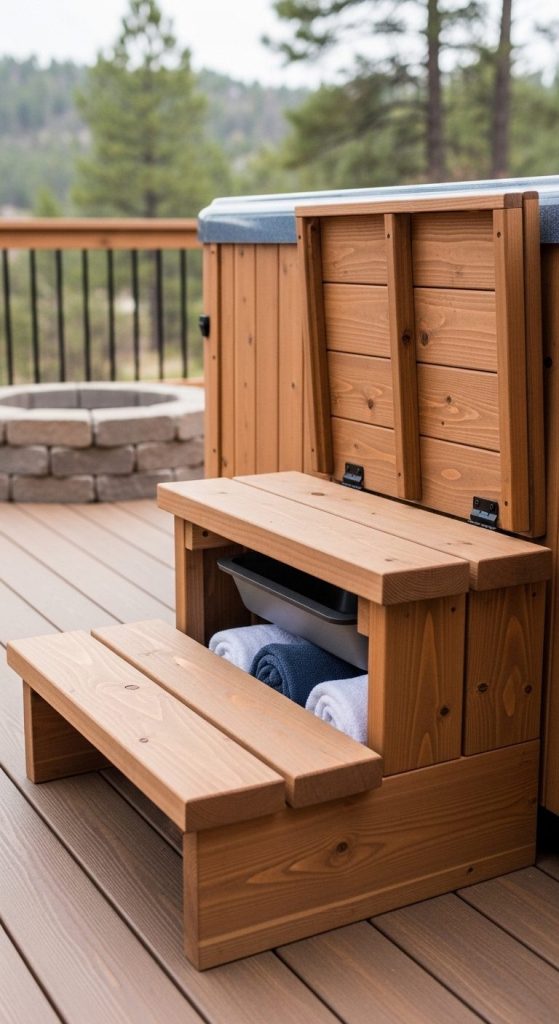
This one surprised me when I first saw it in action. Spa steps that double as storage solve two problems at once: safe entry and clutter control.
Hidden compartments can store towels, spa chemicals, or covers without dragging bins across the yard.
Pros
- Keeps spa essentials close but hidden
- Improves safety with wider, stable steps
- Reduces visual clutter
Cons
- Custom build required
- Slightly higher material cost
Mini takeaway: Smart storage quietly upgrades the entire spa experience.
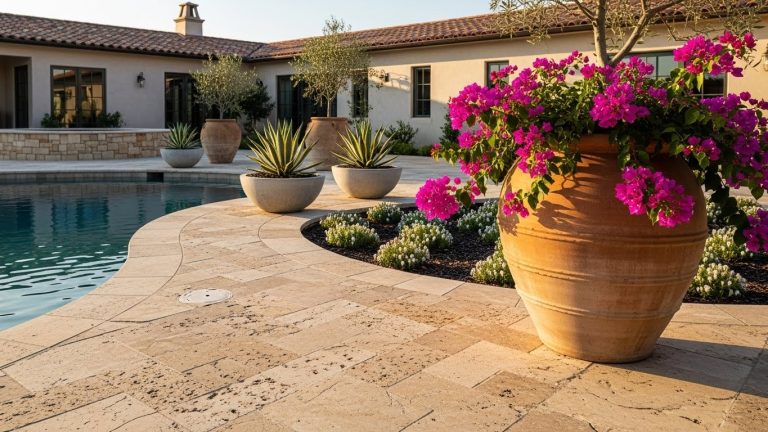
5. Natural Stone Spa Surrounds Instead of Synthetic Panels
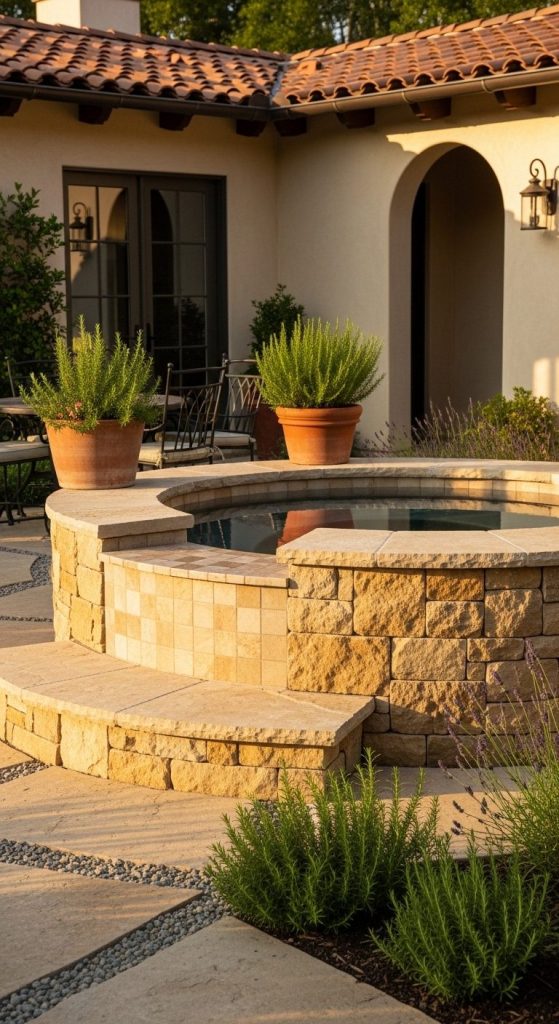
Switching out plastic or composite spa panels for natural stone instantly changes the vibe. Stone holds heat differently, ages beautifully, and feels grounded in the landscape.
According to the National Association of Landscape Professionals, natural materials consistently rank higher for long-term satisfaction in outdoor spaces due to durability and aesthetics.
Pros
- Timeless, high-end appearance
- Better heat retention near the spa
- Blends naturally with outdoor settings
Cons
- Higher initial cost
- Requires professional installation
Mini takeaway: Stone adds weight, warmth, and permanence — all good things in a spa.
6. Partially Sunken Spa for Wind Protection
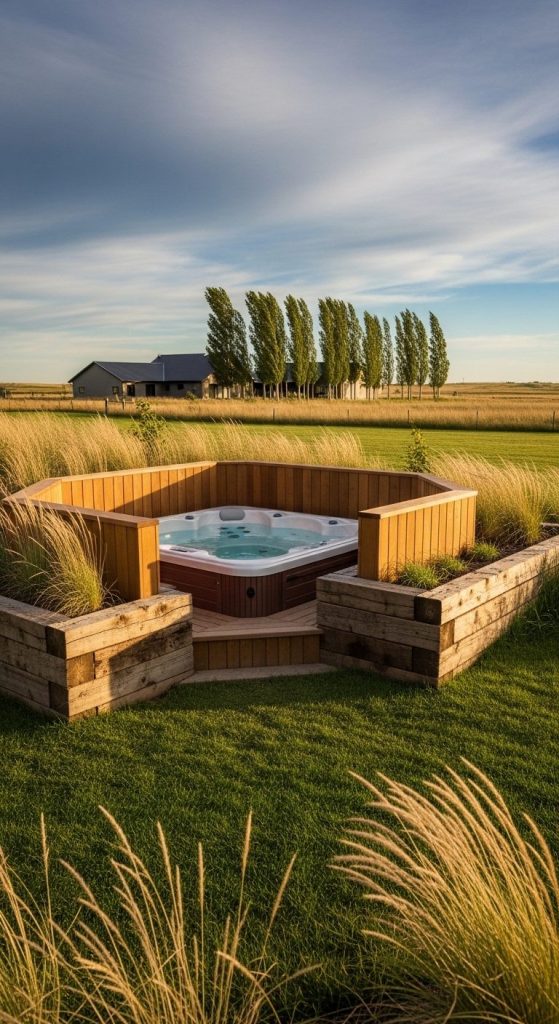
Wind can kill a relaxing soak faster than you’d expect. A partially sunken spa lowers exposure while keeping views open.
Lowering the spa just a foot or two can dramatically improve comfort, especially in cooler climates.
Pros
- Reduces wind chill
- Retains heat longer
- Feels more sheltered and cozy
Cons
- Requires excavation
- Drainage planning is essential
Mini takeaway: Less wind equals longer, more enjoyable spa sessions.
7. Dedicated Spa Platform With Anti-Slip Surface
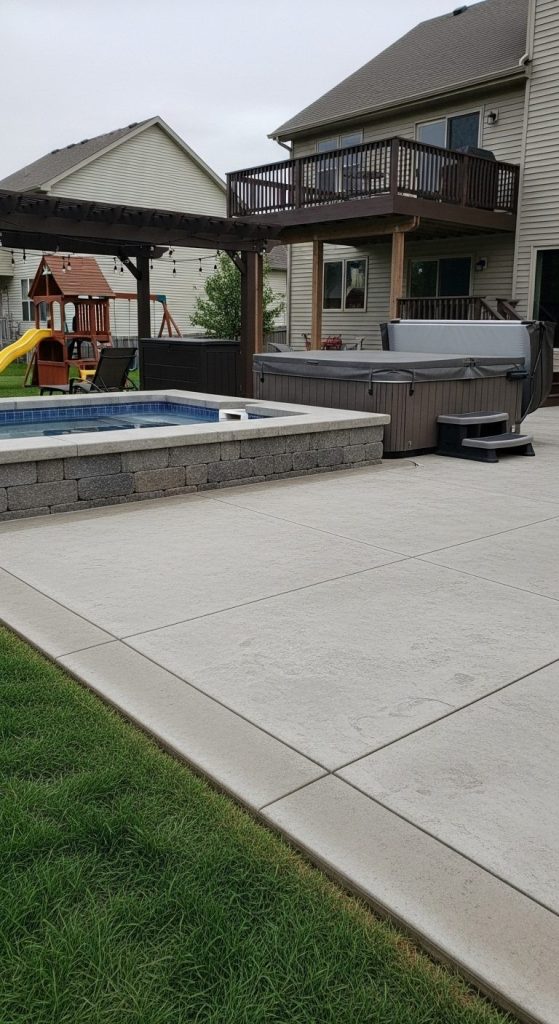
Spa decks get wet. Slippery surfaces turn relaxation into stress real fast. A dedicated spa platform with textured, anti-slip materials makes a noticeable difference.
Look for treated wood, brushed concrete, or textured porcelain rated for outdoor use.
Pros
- Safer footing year-round
- Cleaner transitions in and out of the spa
- Easier maintenance
Cons
- Limited material options
- Requires proper installation
Mini takeaway: Feeling safe helps your body actually relax.
8. Privacy-Oriented Spa Placement (Not Screens)
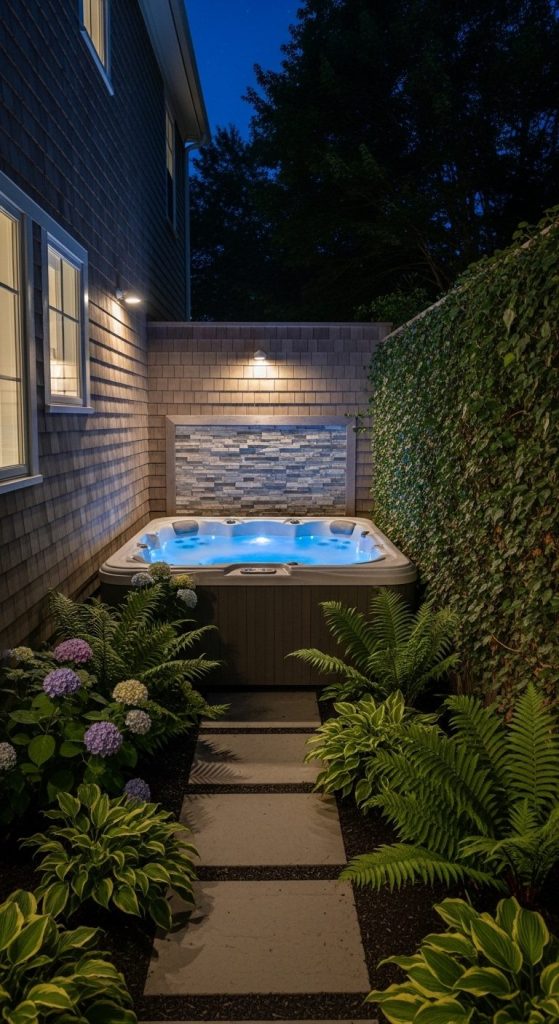
Instead of adding fences or screens later, smart spa placement uses the yard itself for privacy. Positioning the spa near existing walls, corners, or elevation changes creates natural enclosure.
Landscape architects often recommend using terrain before adding structures, which reduces cost and visual clutter.
Pros
- No additional structures needed
- Feels natural, not boxed-in
- Maintains open-air atmosphere
Cons
- Depends on yard layout
- Limited flexibility once installed
Mini takeaway: The best privacy doesn’t feel like privacy at all.
9. Dual-Temperature Spa System (Hot + Cool)
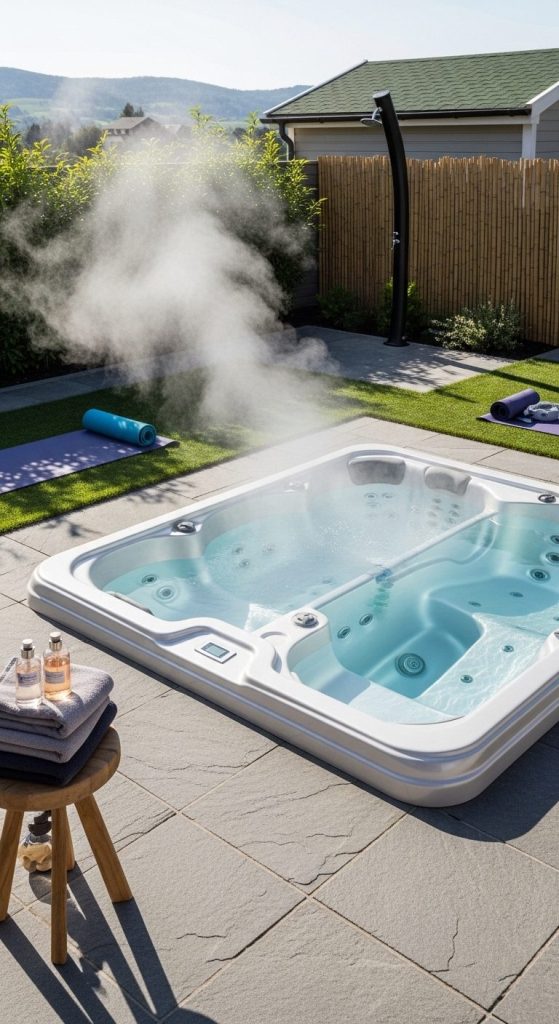
This is one of those upgrades you don’t realize you want until you try it. A dual-temperature system allows switching between hot soaking and cooler recovery sessions.
Fitness and wellness experts note that contrast hydrotherapy can improve circulation and muscle recovery when used properly.
Pros
- More versatile spa use
- Great for post-workout recovery
- Encourages regular use
Cons
- Higher system complexity
- Increased energy planning required
Mini takeaway: One spa, multiple benefits — without extra space.
10. Raised Spa With Integrated Bench Seating
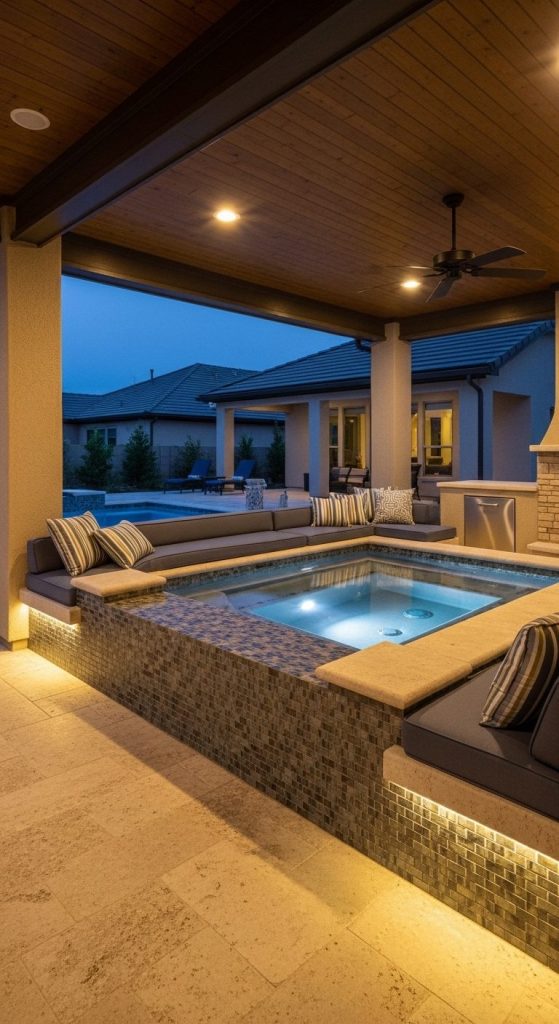
A raised spa creates built-in seating around its perimeter, making it social without crowding the water itself.
This setup works well for families or anyone who hosts often but still wants a calm soaking area.
Pros
- Comfortable seating without extra furniture
- Keeps wet areas contained
- Improves visual balance
Cons
- Requires height planning
- Not ideal for very small yards
Mini takeaway: Not everyone needs to be in the water to enjoy the spa.
11. Covered Spa Roof With Open Sides
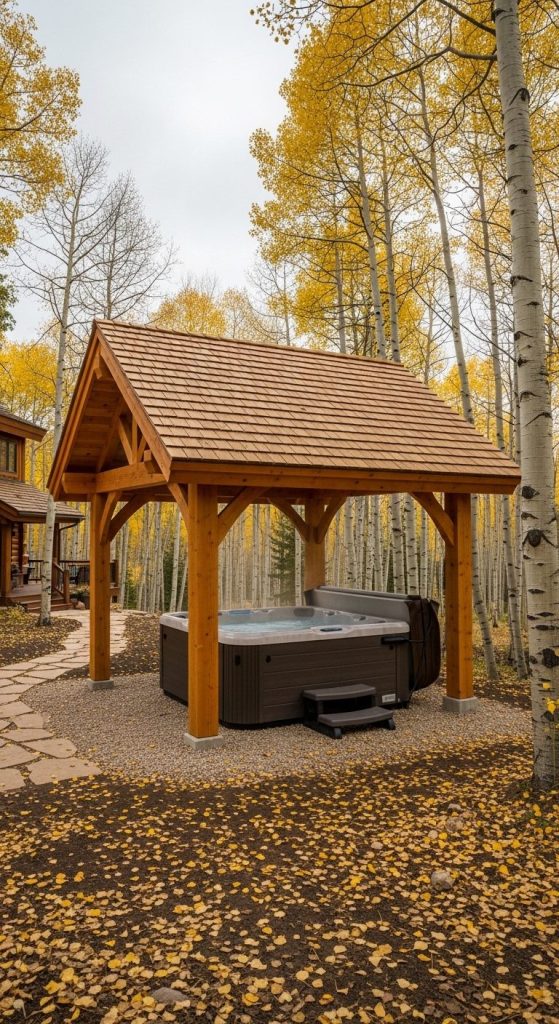
A solid spa roof — not a full enclosure — protects from sun and rain while keeping airflow open. Think pergola-style coverage designed specifically for the spa footprint.
The American Society of Landscape Architects reports that partial coverings increase outdoor space usage by up to 30%.
Pros
- Extends spa use across seasons
- Reduces water temperature fluctuation
- Maintains outdoor feel
Cons
- Structural planning required
- Must meet local codes
Mini takeaway: Shelter without isolation is the sweet spot.
12. Linear Overflow Spa Design
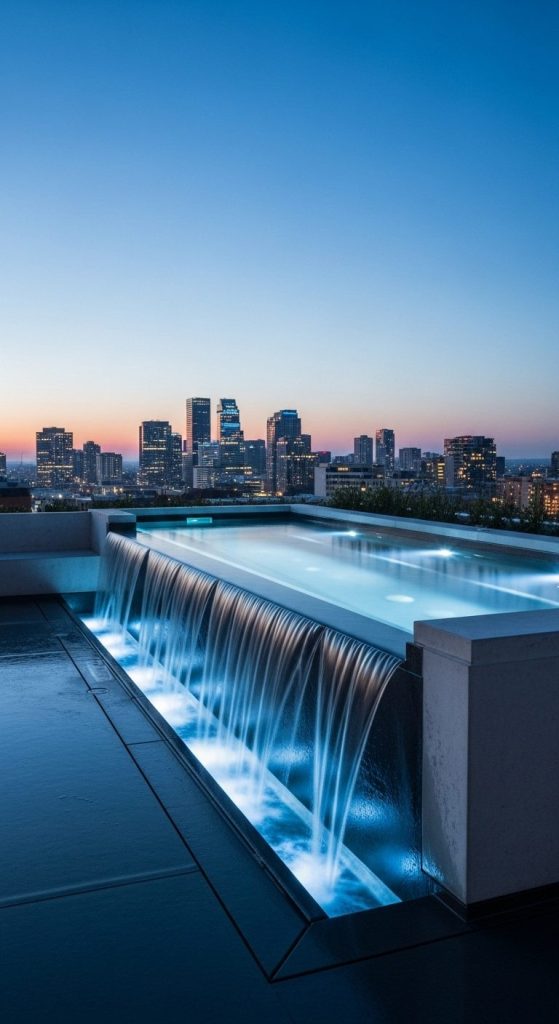
Overflow spa designs allow water to spill evenly over one edge, creating a continuous circulation effect. It looks clean, modern, and surprisingly calming.
This feature isn’t just visual — it helps maintain consistent water levels.
Pros
- Sleek, modern aesthetic
- Improved water circulation
- Reduced splash outside the spa
Cons
- More complex plumbing
- Higher installation cost
Mini takeaway: Flowing water changes the entire mood.
13. Built-In Spa Access From the House
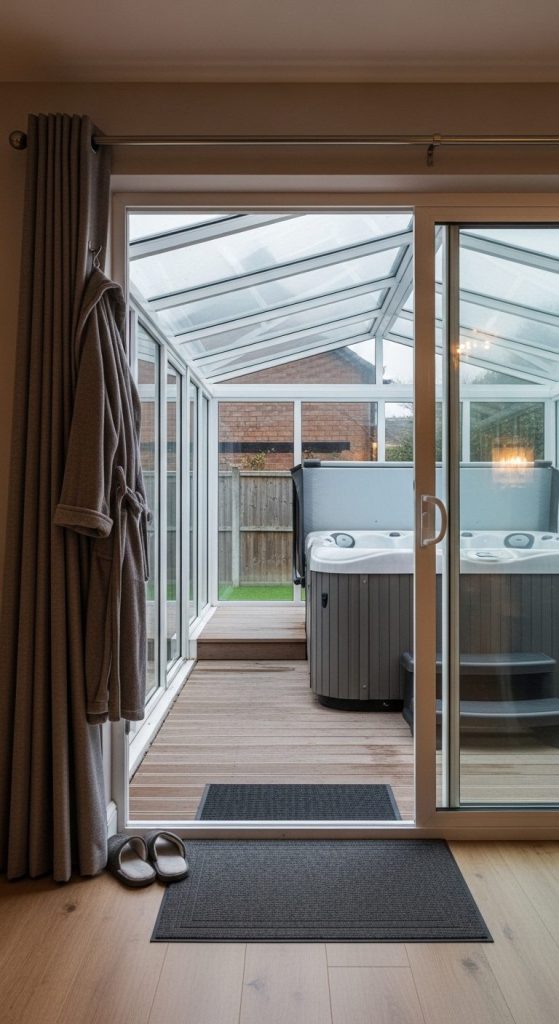
Direct access from the house to the spa — through a patio door or short walkway — makes spontaneous use more likely. If it’s easy, you’ll use it more.
This design choice feels small but impacts daily habits.
Pros
- Encourages frequent use
- Reduces exposure in cold weather
- Keeps towels and essentials nearby
Cons
- Requires layout coordination
- Limited by house design
Mini takeaway: Convenience is the real luxury.
14. Energy-Efficient Insulated Spa Base
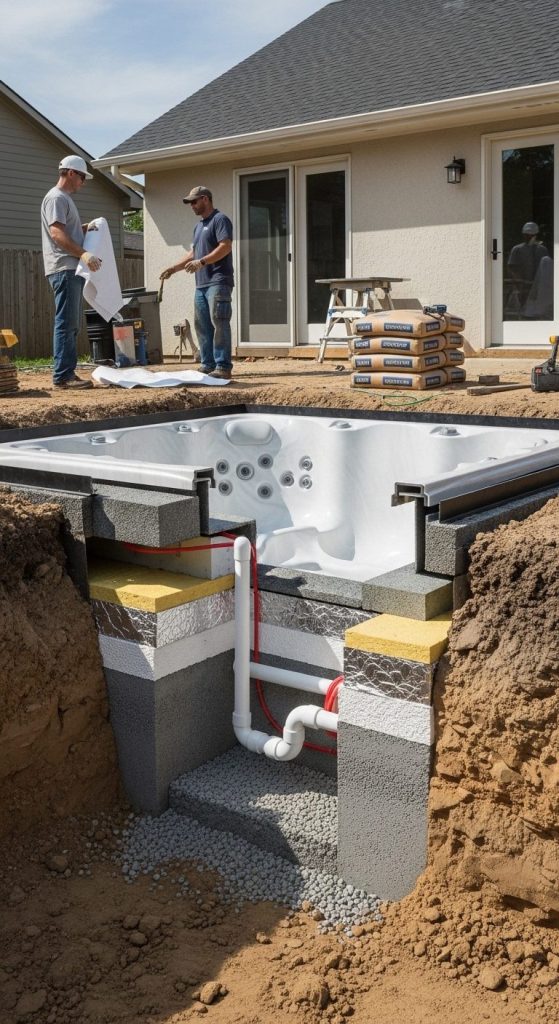
A well-insulated spa base reduces heat loss through the ground, which directly lowers energy costs. It’s invisible, but your utility bills will notice.
According to energy efficiency studies, proper insulation can cut spa heating costs by up to 20%.
Pros
- Lower monthly energy costs
- Maintains consistent water temperature
- Longer equipment lifespan
Cons
- Added upfront expense
- Requires correct materials
Mini takeaway: The smartest upgrades often hide underground.
15. Minimalist Spa Design With Fewer Jets
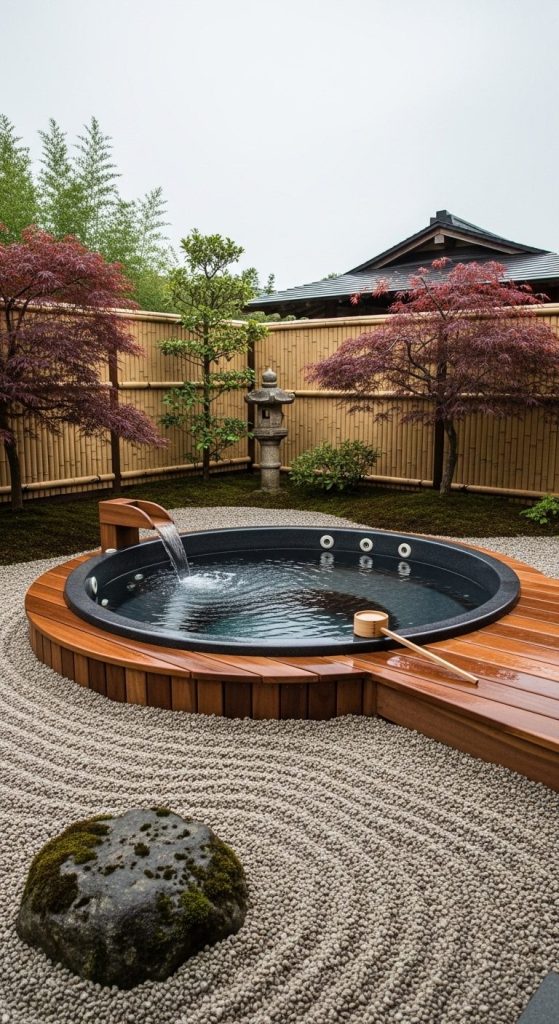
More jets don’t always mean more relaxation. Minimalist spa designs focus on fewer, well-placed jets that target key muscle areas without overwhelming the body.
Honestly, this one changed my opinion on what a spa should feel like.
Pros
- Easier maintenance
- Quieter operation
- More calming experience
Cons
- Less customizable pressure
- Not ideal for hydrotherapy enthusiasts
Mini takeaway: Sometimes less stimulation equals more relaxation.
Final Thoughts
Creating a spa at home isn’t about copying a resort. It’s about shaping a space that fits your habits, your body, and your pace of life. The best backyard spa ideas aren’t flashy. They’re thoughtful. They remove friction. They make relaxation easier to access on a random Tuesday night.
What I love most is that you don’t need to do everything at once. Pick one idea that solves your biggest pain point — wind, access, privacy, comfort — and start there. Small changes stack up fast.
Once your backyard starts working with you instead of against you, you’ll wonder how you ever relaxed without it.

William Martin is a passionate bowler who spends most of his weekends playing the sport. With years of intense experience under his belt, William decided to share his knowledge by creating BOWLING OCEAN. Join me on this journey to explore the world of bowling and discover the tips and tricks to becoming a pro.