15 Backyard Walkway Ideas That Look Clean and Practical
Sometimes the smallest path changes the entire backyard vibe.
I noticed this when a neighbor replaced a worn dirt trail with a simple stone walkway. Suddenly, their yard felt intentional, calm, and almost curated. People walked slower through it. Kids followed the path like it was a mini adventure trail.
That’s the power of backyard walkway ideas. A path guides movement, frames the landscape, and quietly sets the mood. It’s functional, but it also tells a story about how you want people to move through your space.
Below are 15 practical, visually pleasing, and achievable ideas that people actually build. Each one focuses on structure, layout, materials, or usability—no fluff, no random decor talk. Just real upgrades you can plan, measure, and install.
1. Straight-Line Concrete Slab Walkway
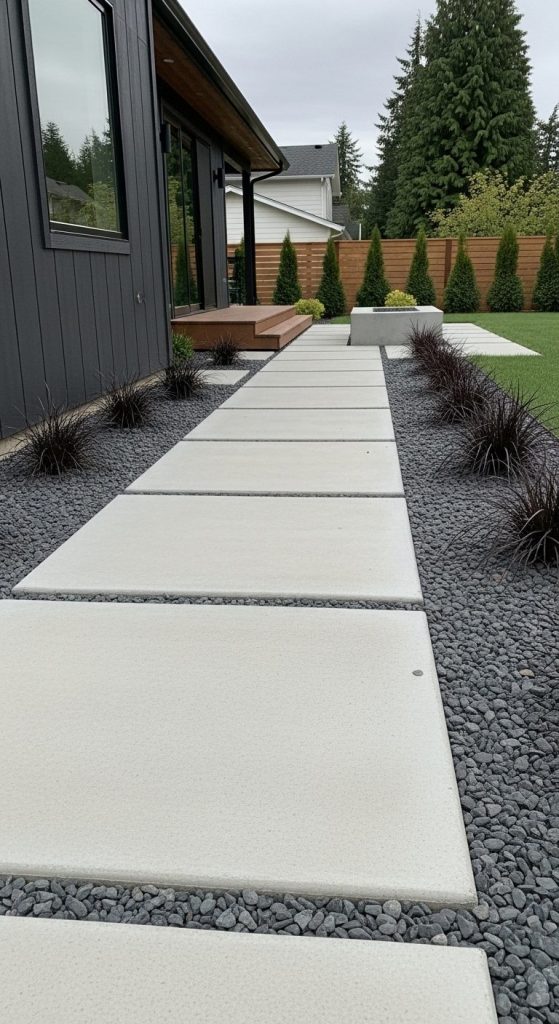
A straight-line slab walkway feels modern and intentional. It works great for direct routes from the house to the garden or patio.
Pros
- Clean, modern look
- Easy to plan and measure
- Durable and low maintenance
Cons
- Requires proper base prep
- Can feel rigid in organic landscapes
Mini takeaway
Straight slabs suit modern yards and clear, purposeful routes.
2. Stepping Stone Garden Walkway
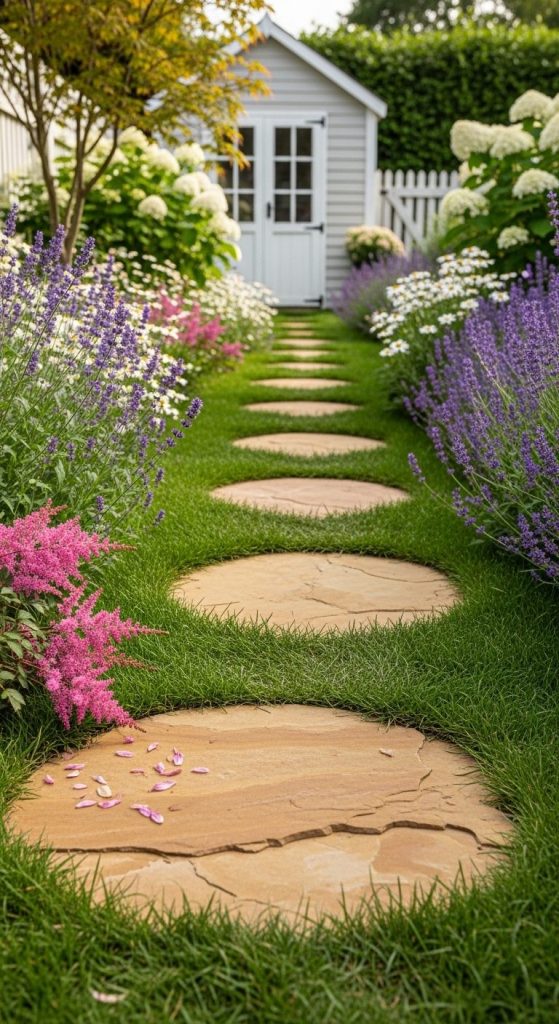
Stepping stones spaced across grass or gravel feel casual and relaxed. This style works well in informal gardens.
Pros
- Easy DIY installation
- Budget-friendly materials
- Flexible spacing and layout
Cons
- Not ideal for heavy foot traffic
- Requires mowing or gravel upkeep
Mini takeaway
Stepping stones feel natural and playful without heavy construction.
3. Curved Stone Walkway
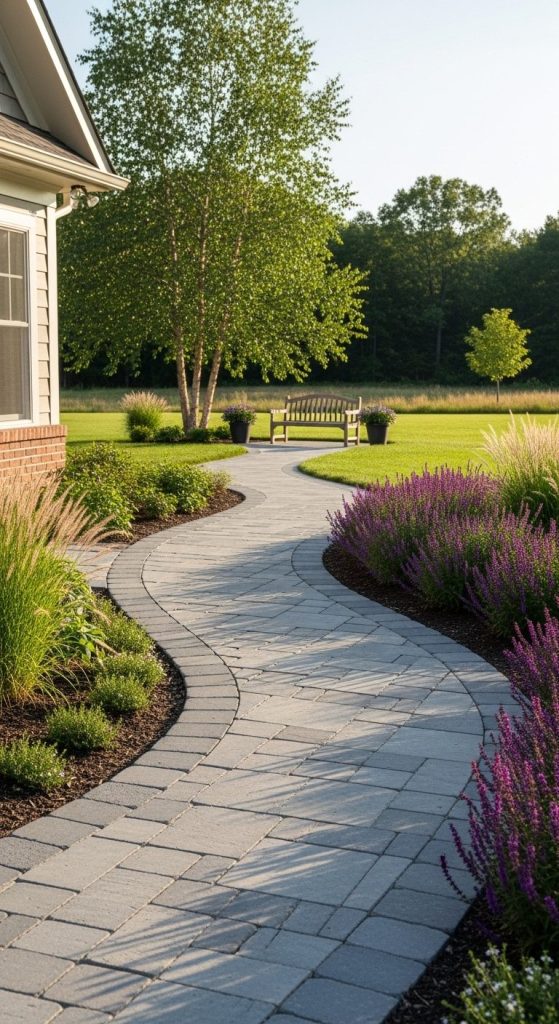
Curved walkways guide people slowly and create a softer landscape flow. They work especially well in larger yards.
Pros
- Feels organic and inviting
- Breaks up straight yard lines
- Encourages leisurely movement
Cons
- Requires custom stone cuts
- More complex layout planning
Mini takeaway
Curves feel relaxed and scenic, perfect for garden strolls.
4. Brick Herringbone Walkway
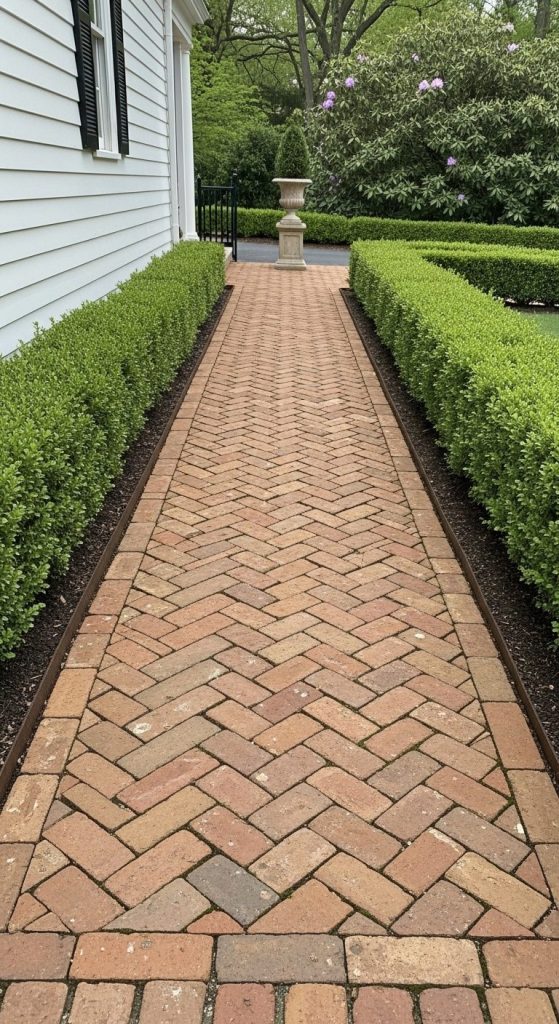
Herringbone brick patterns add texture and classic charm. They also handle foot traffic well.
Pros
- Strong interlocking pattern
- Timeless visual appeal
- Easy to repair individual bricks
Cons
- Labor-intensive installation
- Needs edge restraints
Mini takeaway
Brick patterns bring character without looking trendy or dated.
5. Gravel Path With Stabilized Base
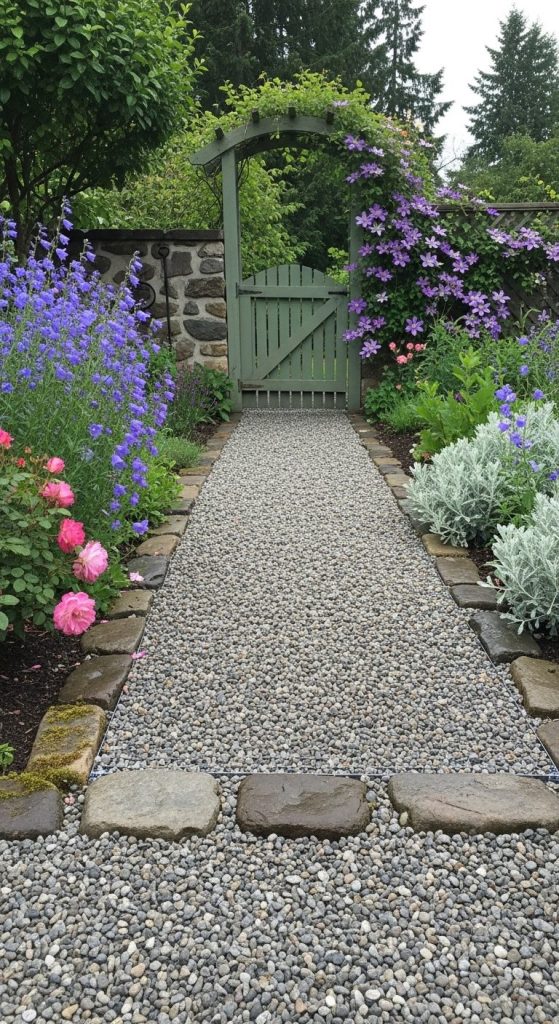
A gravel walkway with a compacted base feels rustic and drains well. It’s a favorite for cottage-style yards.
Pros
- Excellent drainage
- Budget-friendly materials
- Easy to reshape
Cons
- Gravel migration
- Needs occasional topping up
Mini takeaway
Gravel paths feel casual and practical, especially in rainy climates.
6. Wooden Boardwalk Walkway
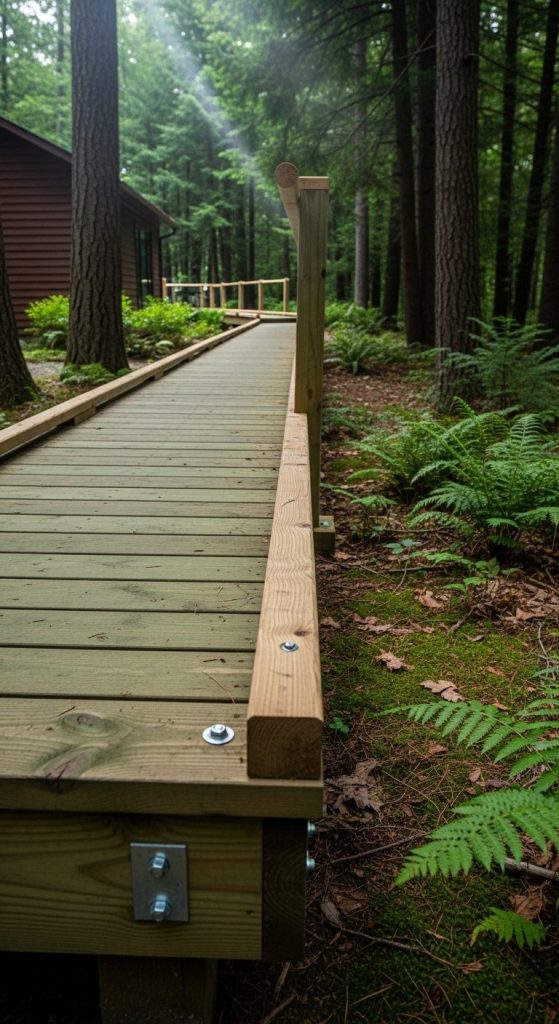
A raised wooden boardwalk suits uneven terrain or damp areas. It also adds a natural, park-like feel.
Pros
- Solves muddy ground issues
- Adds elevation interest
- Comfortable underfoot
Cons
- Requires treated wood
- Needs periodic sealing
Mini takeaway
Boardwalks feel cozy and functional when the ground stays wet.
7. Paver Grid Walkway With Grass Joints
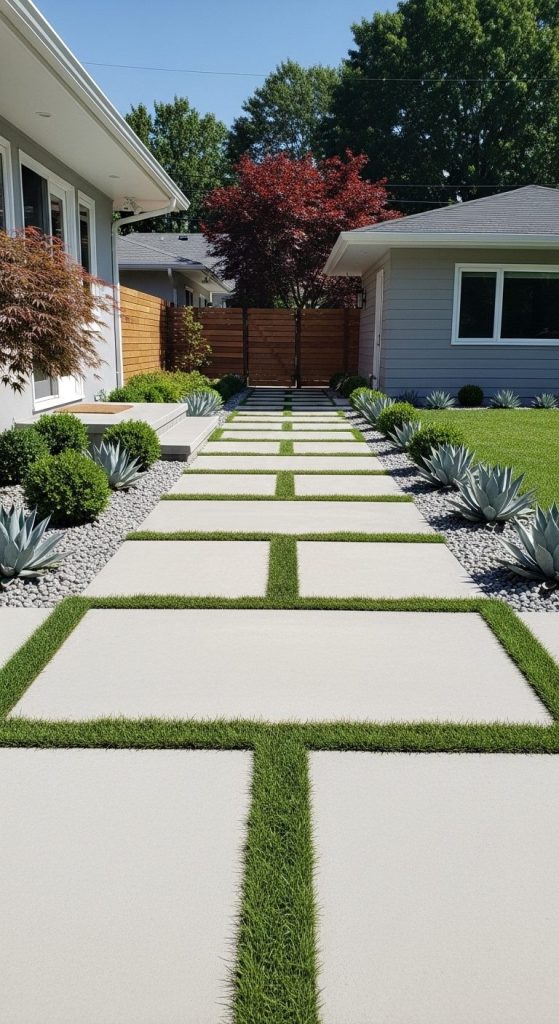
Concrete or stone pavers with grass between joints create a modern grid effect.
Pros
- Permeable and eco-friendly
- Visually striking pattern
- Reduces runoff
Cons
- Grass maintenance
- Precise installation needed
Mini takeaway
This layout blends hardscape and lawn in a balanced way.
8. Flagstone Irregular Walkway
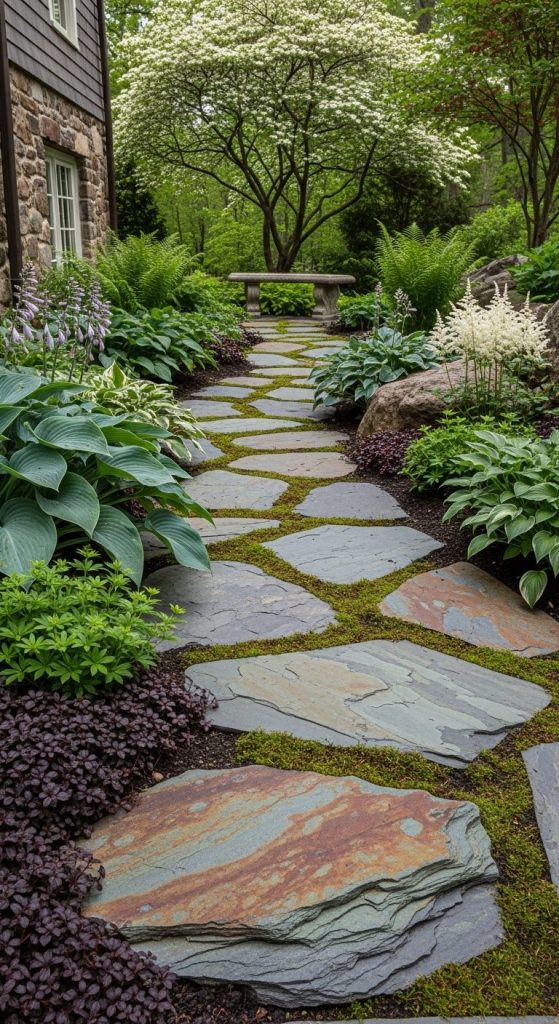
Flagstone in irregular shapes creates a natural, high-end garden path. Each stone feels unique.
Pros
- Organic, natural appearance
- Durable stone material
- Flexible layout
Cons
- Higher stone cost
- Skilled placement required
Mini takeaway
Irregular flagstone feels like a curated garden trail.
9. Raised Edged Walkway With Concrete Borders
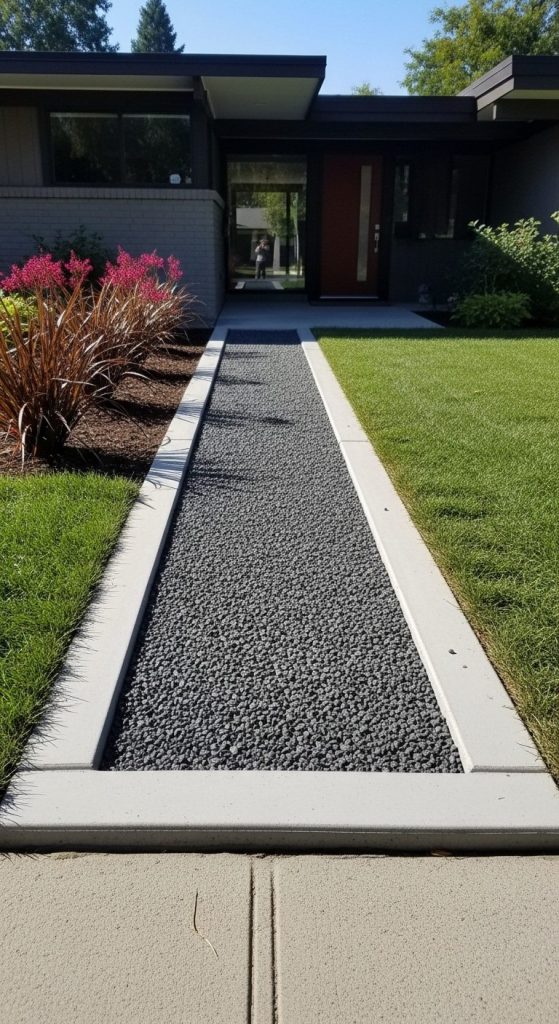
Adding raised concrete or stone borders keeps materials contained and defines the path.
Pros
- Prevents material spread
- Adds clean visual lines
- Improves durability
Cons
- Extra material cost
- Requires formwork
Mini takeaway
Edges make walkways look finished and intentional.
10. Decomposed Granite Walkway
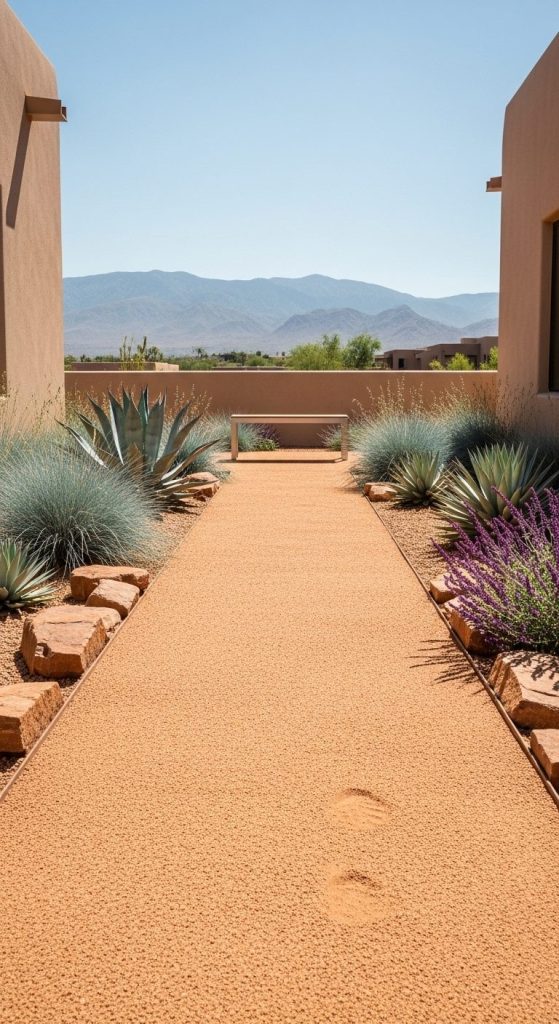
Decomposed granite compacts into a smooth, natural surface. It suits desert and minimalist gardens.
Pros
- Natural earthy color
- Good drainage
- Smooth underfoot when compacted
Cons
- Needs stabilizer for durability
- Can track dust indoors
Mini takeaway
DG paths feel natural and subtle while staying functional.
11. Mixed Material Stepping Walkway
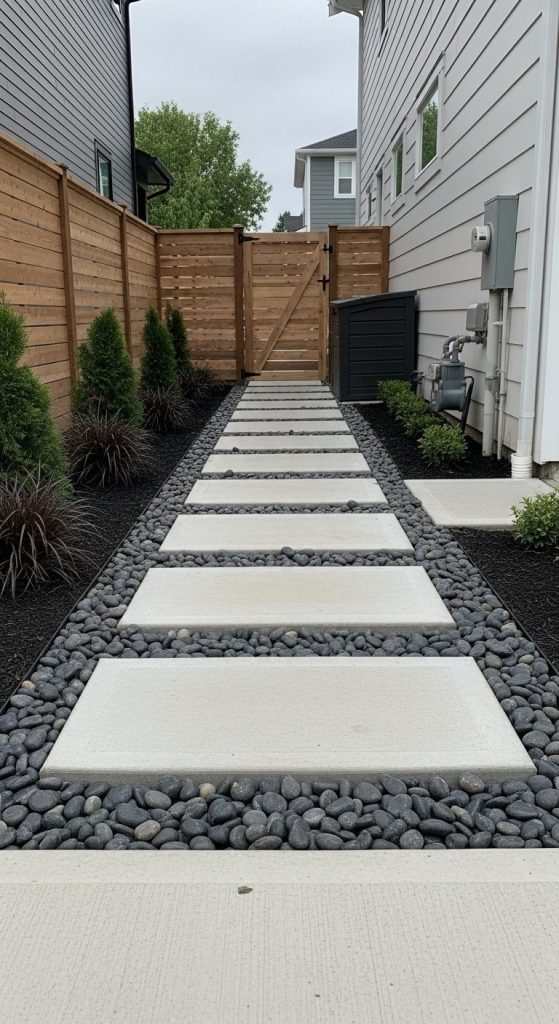
Combine large slabs with gravel or grass between them for visual contrast.
Pros
- High visual interest
- Flexible design options
- Budget control with mixed materials
Cons
- More planning required
- Multiple materials to source
Mini takeaway
Mixing materials adds depth without cluttering the yard.
12. Straight Gravel Path With Metal Edging
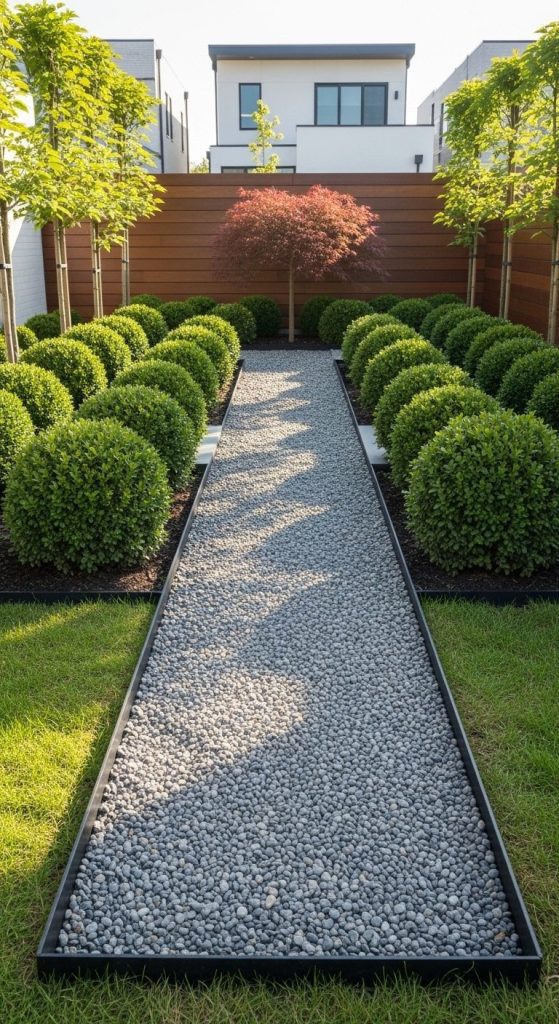
Metal edging creates crisp lines for gravel walkways, giving them a modern look.
Pros
- Keeps gravel contained
- Sharp, clean edges
- Easy DIY installation
Cons
- Edging can be costly
- Needs precise placement
Mini takeaway
Metal edging turns simple gravel into a designer-style path.
13. Concrete Path With Textured Finish
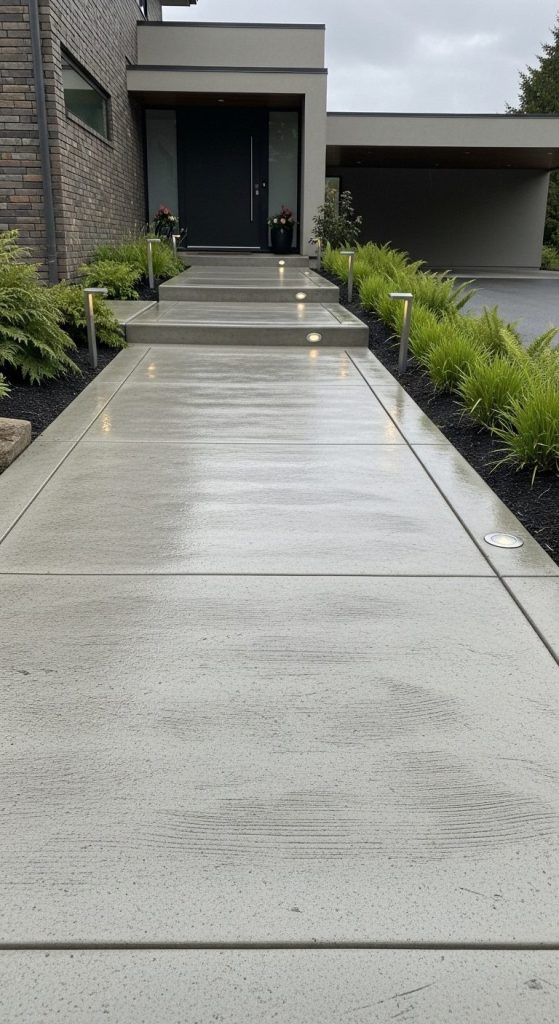
Stamped or brushed concrete adds grip and visual interest without separate materials.
Pros
- Slip-resistant surface
- Durable and long-lasting
- Low maintenance
Cons
- Permanent once poured
- Professional finish recommended
Mini takeaway
Textured concrete combines safety and style in one surface.
14. Stepped Walkway on Sloped Yard
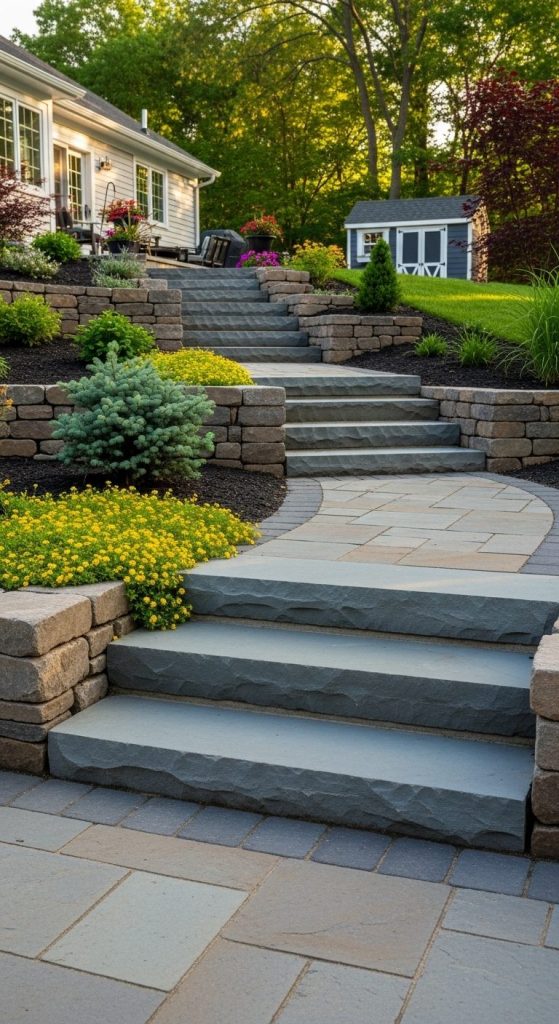
Adding steps into a walkway solves steep slopes and improves safety.
Pros
- Safe for elevation changes
- Prevents erosion
- Creates defined route
Cons
- Requires careful measurement
- More construction effort
Mini takeaway
Steps turn tricky slopes into usable, safe pathways.
15. Permeable Concrete Paver Walkway
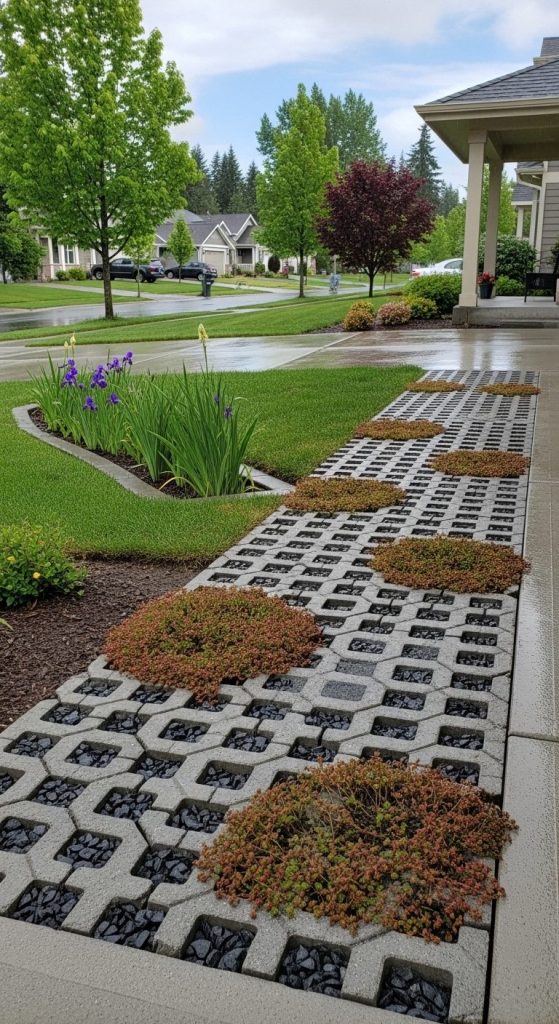
Permeable pavers allow water to drain through, reducing runoff and puddles.
Pros
- Eco-friendly drainage
- Reduces surface water
- Durable and modular
Cons
- Higher material cost
- Requires base layers
Mini takeaway
Permeable systems protect your yard and foundation long-term.
A Few Helpful Facts
- The American Society of Landscape Architects recommends permeable surfaces to reduce stormwater runoff and improve soil health in residential landscapes.
- A HomeAdvisor cost guide notes that concrete and paver walkways can increase perceived home value by improving curb appeal and usability.
- Landscape designers often use curved paths to slow movement and create a sense of exploration in gardens, according to multiple garden design studies.
Final Thoughts
Walkways do more than connect points. They quietly control how people experience your yard. A straight concrete path feels direct and modern. A curved stone trail feels calm and scenic. Gravel feels relaxed and casual.
I always think of walkways as storytelling tools. They guide guests, create anticipation, and frame the landscape. And unlike many backyard upgrades, they don’t require massive budgets to make a big impact.
If you want a simple starting point, try stepping stones or gravel with edging. They’re manageable and instantly change how the backyard feels. From there, you can upgrade to slabs, pavers, or raised paths when budget and time allow.
Pick one idea that matches your yard’s personality and start there. You’ll notice how people naturally follow the path—and how the yard suddenly feels designed instead of accidental.

Ashley Ellison is a skilled writer and avid bowler. Her passion for storytelling and dedication to the sport have led her to participate in various national bowling leagues. With a unique combination of talents, Ashley approaches every challenge with creativity and a relentless drive to succeed.