15 Front Yard Bench Ideas for Cozy Curb Appeal
Last spring, I added a simple wooden bench near my front walkway. Nothing dramatic. Just a sturdy seat under a small tree. And somehow, neighbors started waving more. Delivery drivers paused for a second glance. The whole house felt… friendlier.
That’s the quiet power of a front yard bench. It turns your yard from “drive-by scenery” into a lived-in space. It signals warmth. It invites pause. It makes your home feel like someone actually enjoys being there.
Right now, people crave cozy, usable outdoor spaces — not just perfectly trimmed lawns. A well-placed bench adds character, function, and curb charm without a massive renovation.
If your front yard feels flat or unfinished, these front yard bench ideas will help you rethink it completely — with practical, buildable upgrades you can actually pull off.
1. Classic Wooden Slat Front Yard Bench Along the Walkway
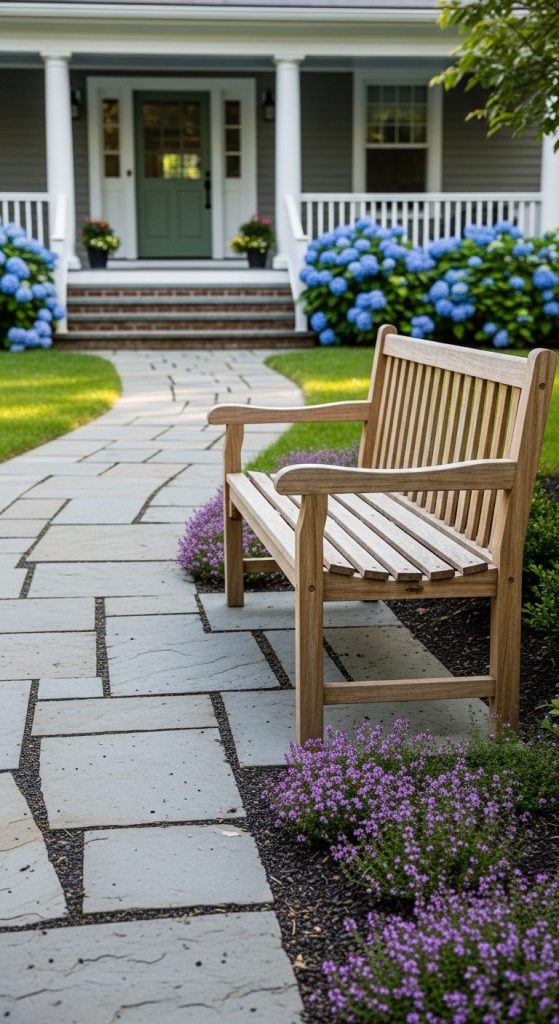
There’s something timeless about a simple wooden slat bench facing the street. It feels welcoming without trying too hard.
Placing it along the walkway creates a natural pause point before reaching the door. It frames the entry path and adds structure instantly.
Pros:
- Affordable and widely available
- Works with most home styles
- Easy to refinish or repaint
Cons:
- Requires sealing or staining
- Wood can weather over time
Mini takeaway: A classic wooden front yard bench never feels out of place.
2. Built-In Bench Attached to a Low Retaining Wall
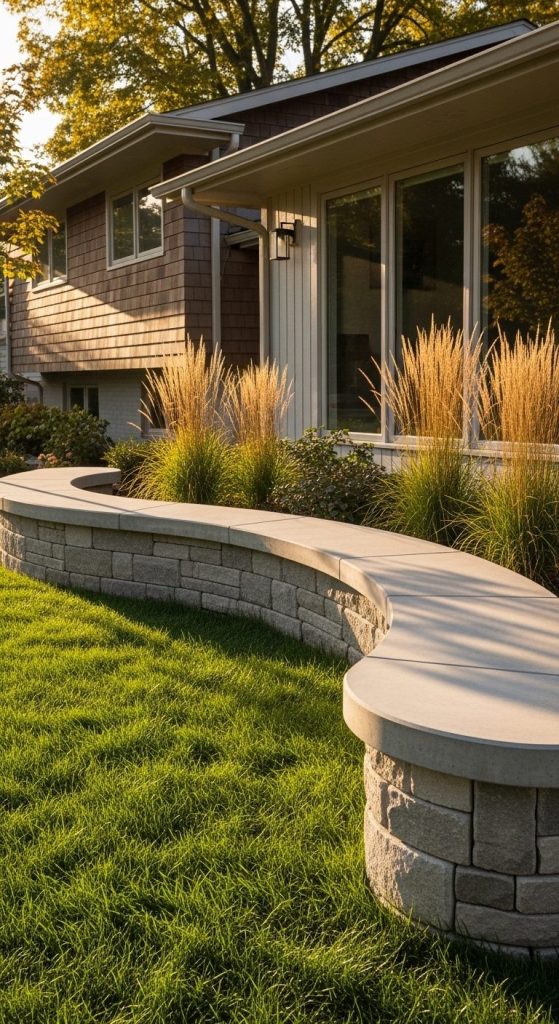
If your yard has a slight slope, this option makes sense. Integrate the bench directly into a retaining wall using stone or concrete blocks.
You gain seating without adding bulky furniture.
Pros:
- Saves space
- Feels permanent and custom
- Doubles as landscape structure
Cons:
- Requires masonry work
- Higher upfront labor
Mini takeaway: Built-ins look intentional and polished, especially in smaller yards.
3. Curved Front Yard Bench Around a Tree Base
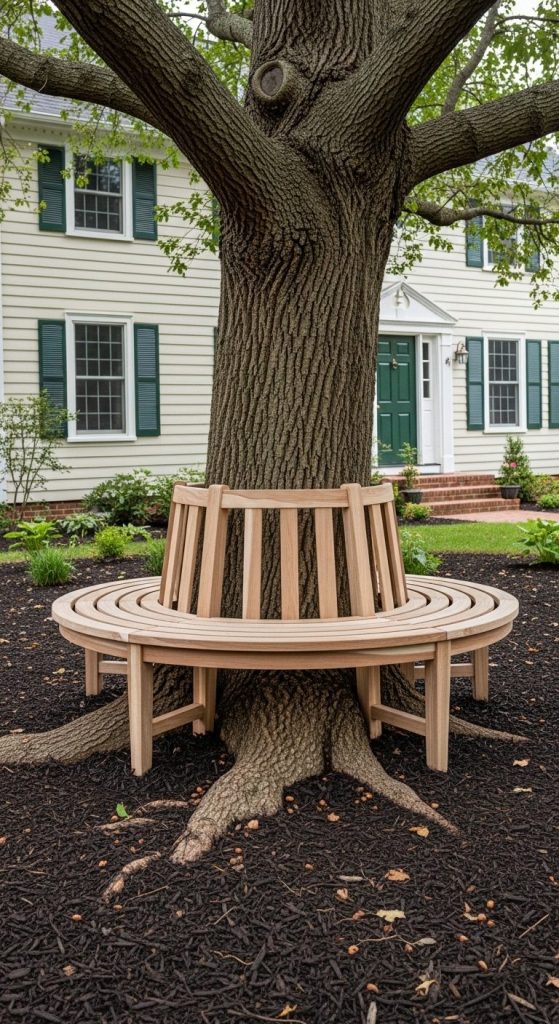
A curved bench hugging a mature tree creates instant charm. It uses space creatively and anchors the yard visually.
This setup feels cozy and communal without blocking pathways.
Pros:
- Maximizes shaded areas
- Creates focal point
- Encourages gathering
Cons:
- Custom sizing required
- Needs stable, level base
Mini takeaway: If you have a strong tree feature, this design feels magical in a grounded way.
4. Concrete Modern Bench for Minimalist Homes
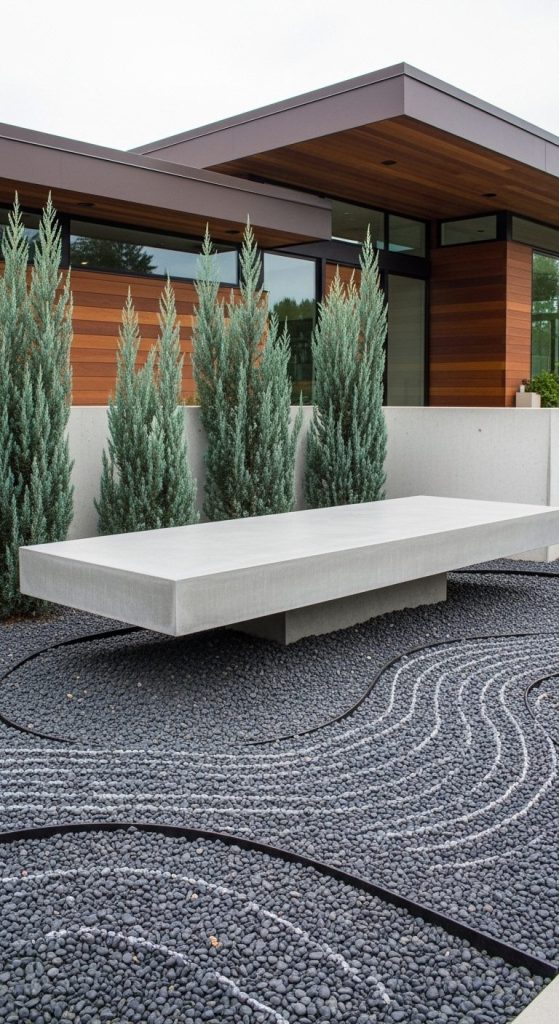
Clean lines, smooth finish, no fuss. A poured concrete front yard bench suits modern architecture beautifully.
You position it near the entrance or within a landscaped bed for a gallery-like look.
Pros:
- Extremely durable
- Weather-resistant
- Low maintenance
Cons:
- Heavy and permanent
- Less forgiving to sit on without cushioning
Mini takeaway: Concrete brings bold simplicity that lasts decades.
Credible fact: Concrete outdoor seating often lasts over 20 years with minimal maintenance, making it a cost-effective long-term investment.
5. Bench Facing the Street for Social Connection
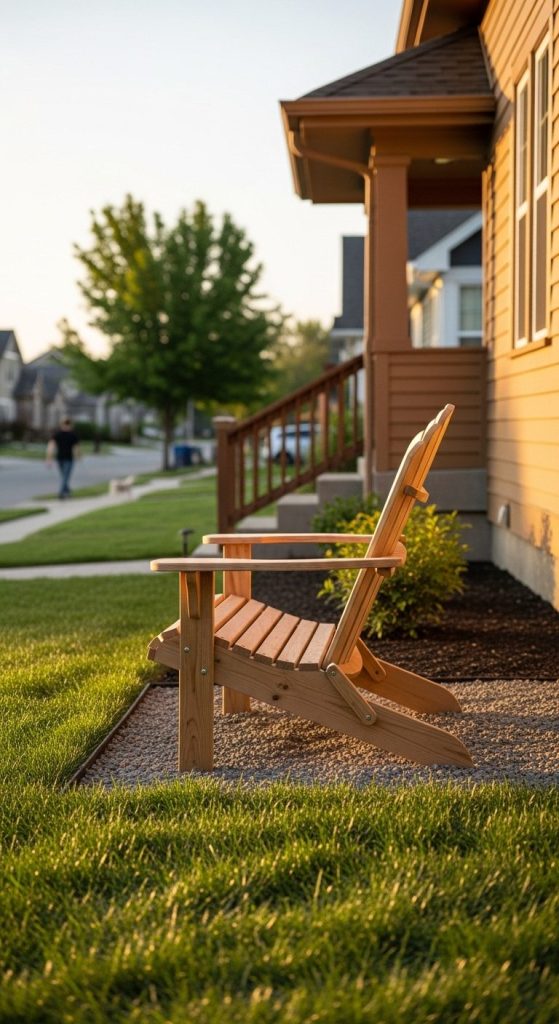
Instead of facing the house, angle your front yard bench toward the street. This subtle shift encourages neighbor interaction.
It creates an open, approachable vibe.
Pros:
- Encourages casual conversation
- Makes the yard feel active
- Adds welcoming energy
Cons:
- Less privacy
- Requires thoughtful placement
Mini takeaway: Orientation changes everything. Small adjustment, big impact.
6. Bench Framed Between Two Shrubs for Balance
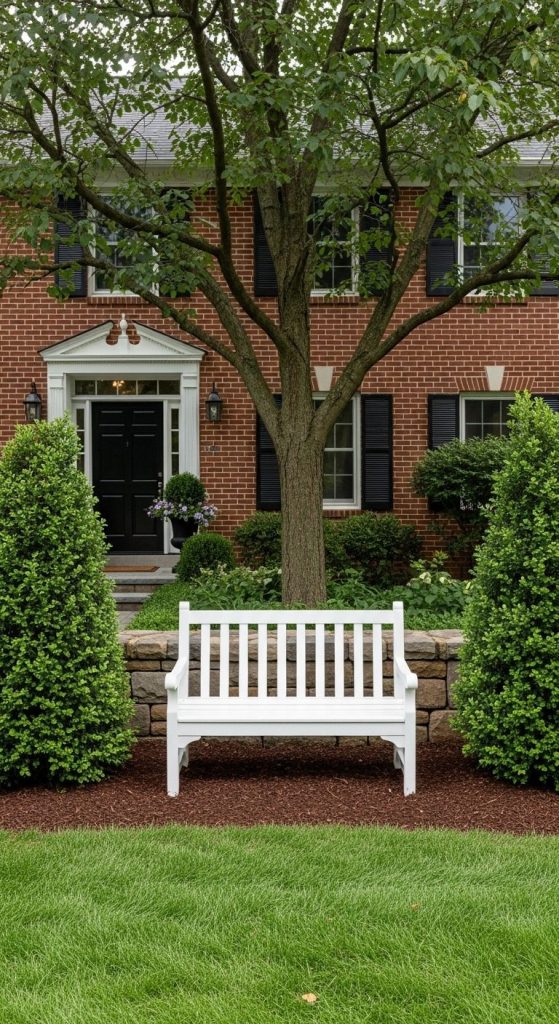
Placing a bench symmetrically between two structured shrubs instantly elevates curb appeal.
It creates a framed vignette that feels designed.
Pros:
- Adds visual symmetry
- Anchors landscaping
- Enhances overall structure
Cons:
- Requires pruning maintenance
- Needs proper spacing
Mini takeaway: Balance makes a front yard bench feel intentional, not random.
7. Storage Bench for Hidden Functionality
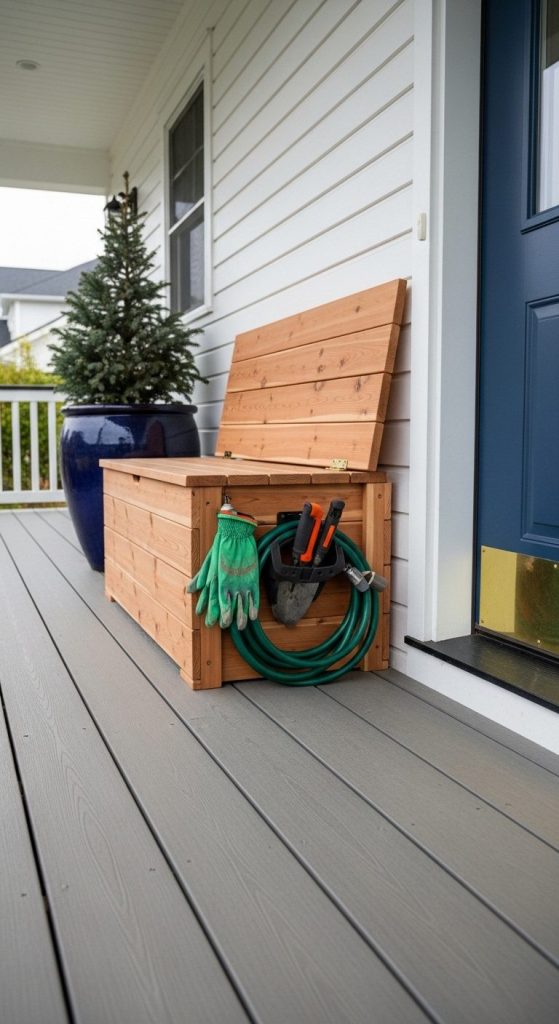
A front yard bench with built-in storage keeps outdoor essentials tucked away.
You can store small tools, gardening gloves, or seasonal decor neatly inside.
Pros:
- Multi-functional
- Reduces clutter
- Practical for smaller properties
Cons:
- Hinges require upkeep
- Slightly bulkier design
Mini takeaway: Functional upgrades feel satisfying. IMO, hidden storage always wins.
8. Metal Garden Bench for Classic Cottage Charm
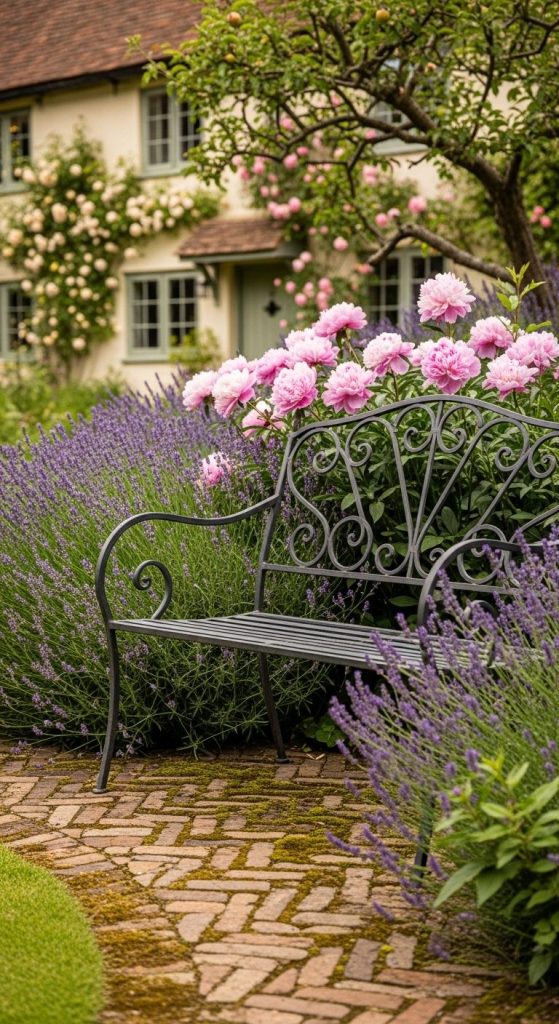
An iron or powder-coated metal bench adds delicate detail to a front yard without overwhelming it.
It pairs beautifully with flowering plants and softer landscaping.
Pros:
- Durable
- Lightweight and movable
- Elegant silhouette
Cons:
- Can rust without proper coating
- Heats up in direct sun
Mini takeaway: Metal benches bring old-world charm in a manageable way.
9. Bench Positioned Under a Front Arbor
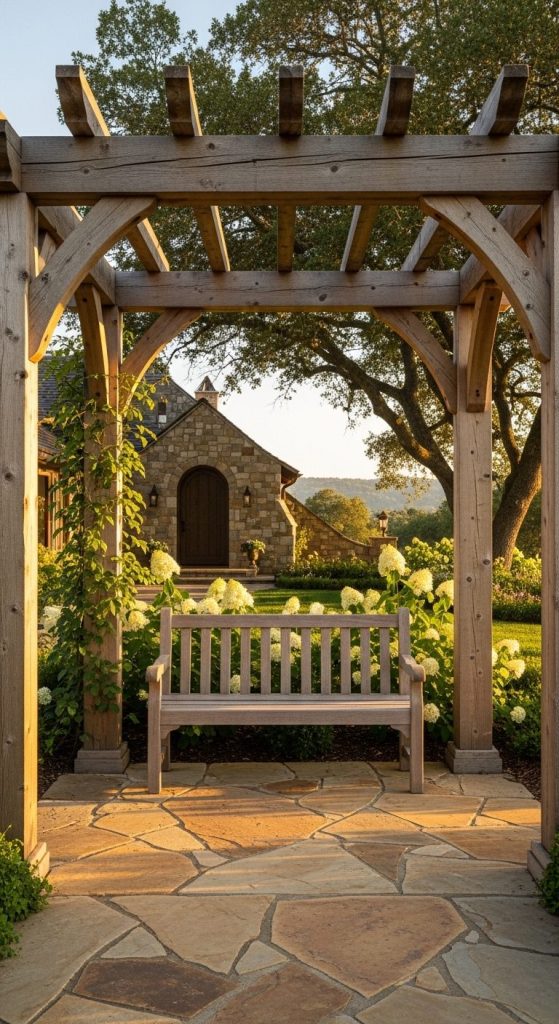
Placing a front yard bench beneath an arbor creates depth and layered structure.
It turns a simple walkway into a framed sitting nook.
Pros:
- Creates cozy focal point
- Enhances architectural features
- Encourages relaxation
Cons:
- Requires correct spacing
- Needs stable base
Mini takeaway: Pairing vertical and horizontal elements adds visual interest effortlessly.
10. Narrow Bench for Small Front Yards
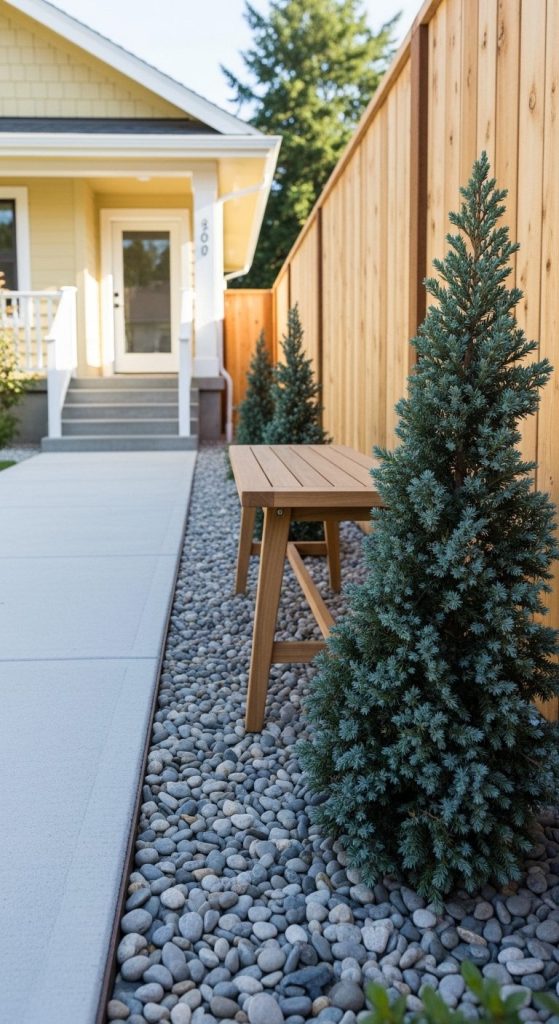
Tiny front yards deserve seating too. A slim-profile bench fits along fences or beside walkways without crowding space.
It provides function without visual clutter.
Pros:
- Space-saving
- Budget-friendly
- Easy to reposition
Cons:
- Limited seating capacity
- Less dramatic impact
Mini takeaway: Small scale still delivers charm when proportion stays right.
11. Painted Statement Bench as a Focal Point
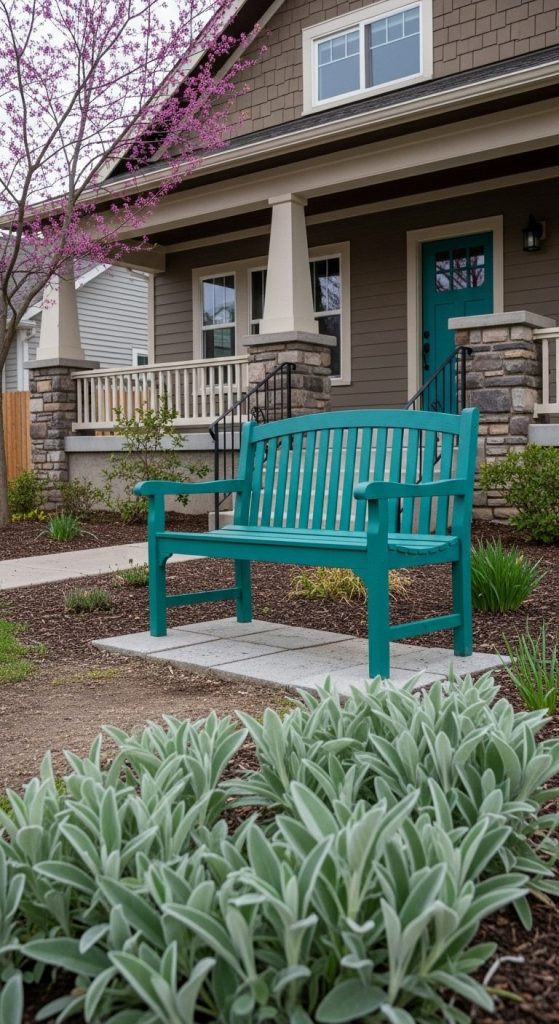
Instead of neutral wood, choose a bold color that complements your front door.
A deep teal or matte black front yard bench creates personality.
Pros:
- Adds visual interest
- Highlights entry area
- Easy weekend project
Cons:
- Requires repainting over time
- Bold colors need confidence
Mini takeaway: Color injects personality instantly.
Credible fact: Color psychology studies show bold exterior accents increase memorability and perceived character of a home.
12. Bench Integrated Into a Gravel Seating Zone
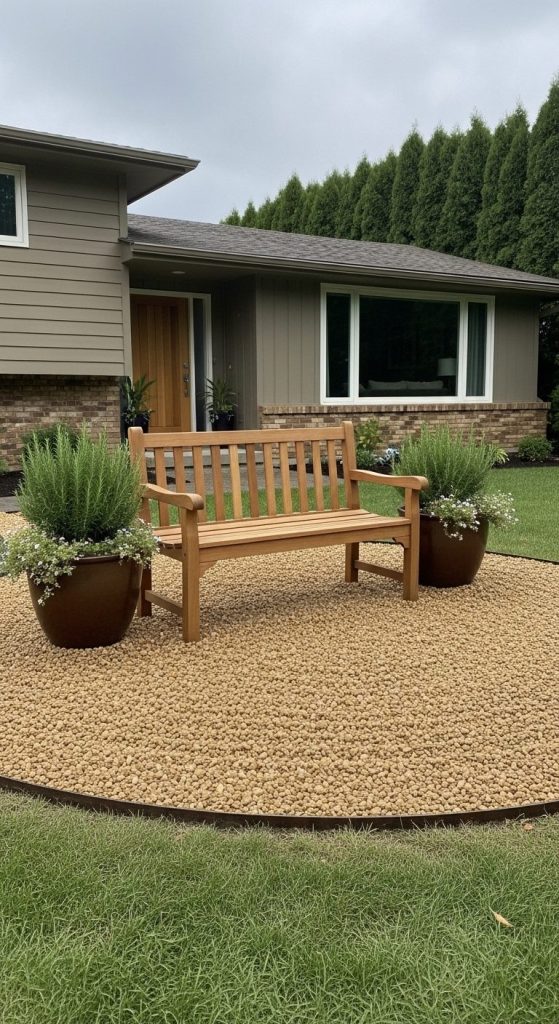
Creating a small gravel pad under your bench defines a seating area clearly.
It prevents muddy feet and improves drainage.
Pros:
- Clean boundary
- Improves stability
- Reduces grass wear
Cons:
- Requires edging to contain gravel
- Needs occasional leveling
Mini takeaway: Defined zones make your front yard bench feel purposeful.
13. Floating Bench Mounted Against a Low Wall
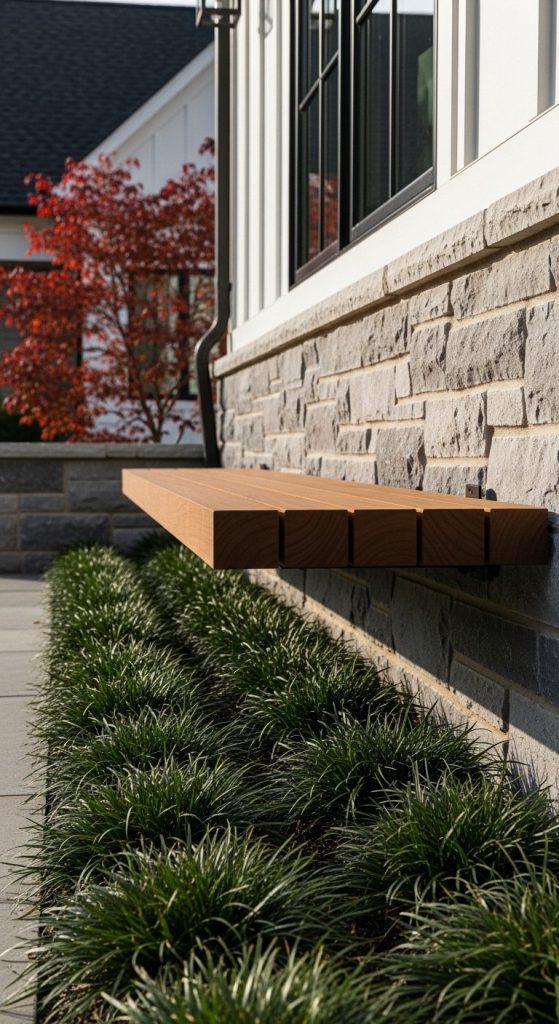
Mounting a bench directly to a low masonry wall creates a floating look.
It saves ground space and adds modern edge.
Pros:
- Clean lines
- Space-efficient
- Feels custom-built
Cons:
- Requires precise installation
- Structural anchoring needed
Mini takeaway: Floating designs look sleek and smart.
14. Rustic Reclaimed Wood Bench for Texture
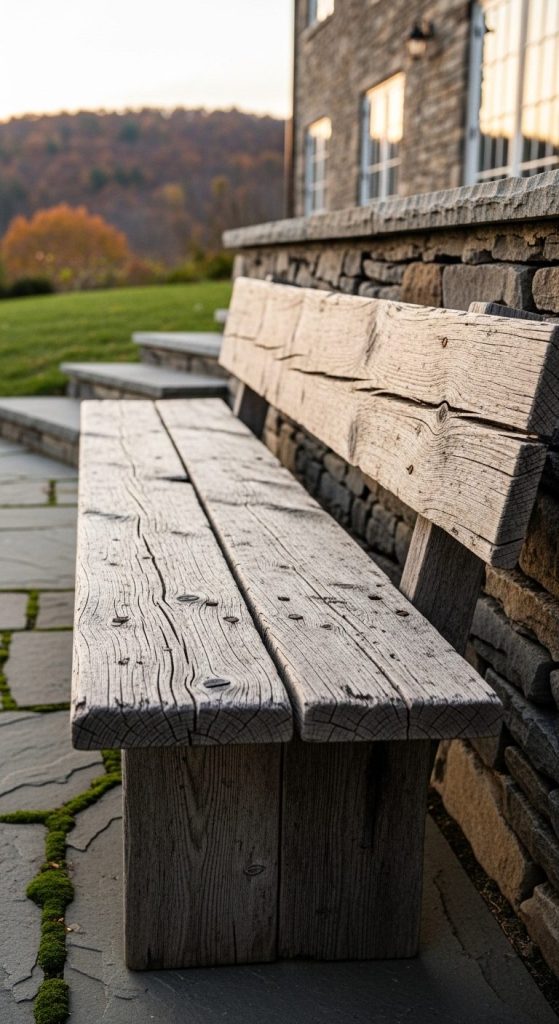
Reclaimed wood adds character and warmth. It feels lived-in without looking messy.
Each plank tells a story, which enhances curb personality.
Pros:
- Sustainable option
- Unique texture
- Budget-friendly if sourced locally
Cons:
- Requires sanding and sealing
- Surface may feel uneven
Mini takeaway: Imperfections create charm, not flaws.
Credible fact: Sustainable materials continue to grow in popularity, with homeowners increasingly prioritizing eco-friendly outdoor features.
15. Bench Anchored to Concrete Pavers for Stability
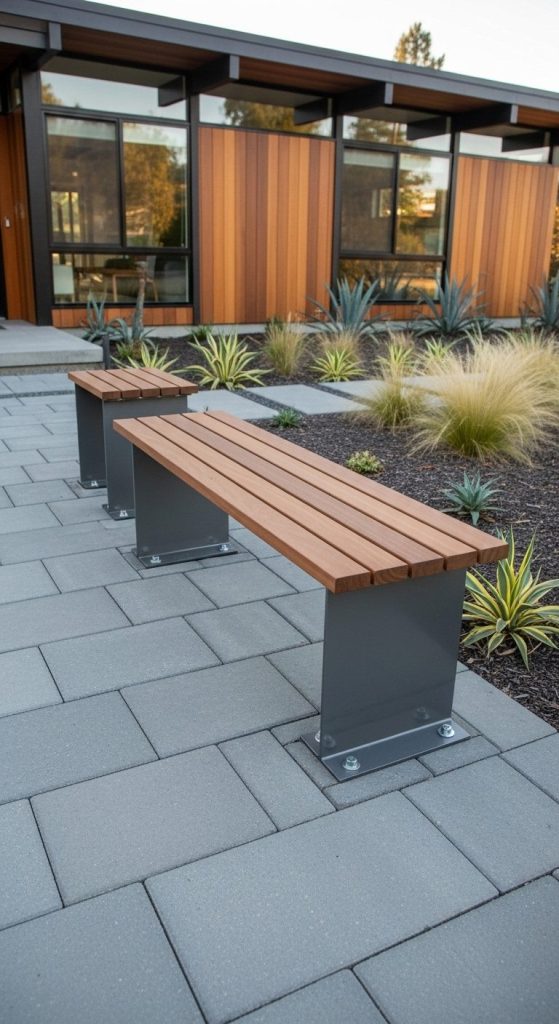
Anchoring your front yard bench directly into pavers or a concrete slab prevents tipping and movement.
This option works well in high-traffic neighborhoods.
Pros:
- Secure placement
- Improves safety
- Reduces shifting over time
Cons:
- Permanent installation
- Requires drilling
Mini takeaway: Stability ensures your seating feels intentional, not temporary.
Conclusion
A front yard bench does more than offer a place to sit. It signals comfort. It invites connection. It transforms empty space into something human.
Some options focus on structure. Others emphasize style, placement, or functionality. Each approach adds personality in a different way.
Personally, I love how such a simple addition changes the energy of a home. You stop treating the front yard as something decorative and start seeing it as usable space.
Choose the style that fits your home’s character and scale. Keep proportions balanced. Secure it properly. Then step back and notice how different your entry feels.
Start with the idea that excites you most. Your front yard might become your favorite place to pause.

William Martin is a passionate bowler who spends most of his weekends playing the sport. With years of intense experience under his belt, William decided to share his knowledge by creating BOWLING OCEAN. Join me on this journey to explore the world of bowling and discover the tips and tricks to becoming a pro.