15 Front Yard Arbor Ideas for Stunning Entry Style
There’s something about walking through a front yard arbor that instantly shifts your mood. It feels intentional. Welcoming. Almost storybook — but in a grounded, achievable way.
I remember visiting a friend’s house where the arbor framed the walkway perfectly. Nothing flashy. Just wood posts, clean lines, and climbing vines starting to take hold. Yet somehow, it made the entire home feel finished. That’s when I realized: a front yard arbor doesn’t just decorate a yard — it defines it.
Right now, homeowners crave structure in outdoor spaces. Clean framing. Defined entry points. A sense of arrival. And the right arbor can do exactly that without blowing your budget.
Let’s break down 15 genuinely useful, practical ways to upgrade your front yard arbor so it feels custom, solid, and worth every inch of space.
1. Classic Wooden Entry Arbor with Square Posts
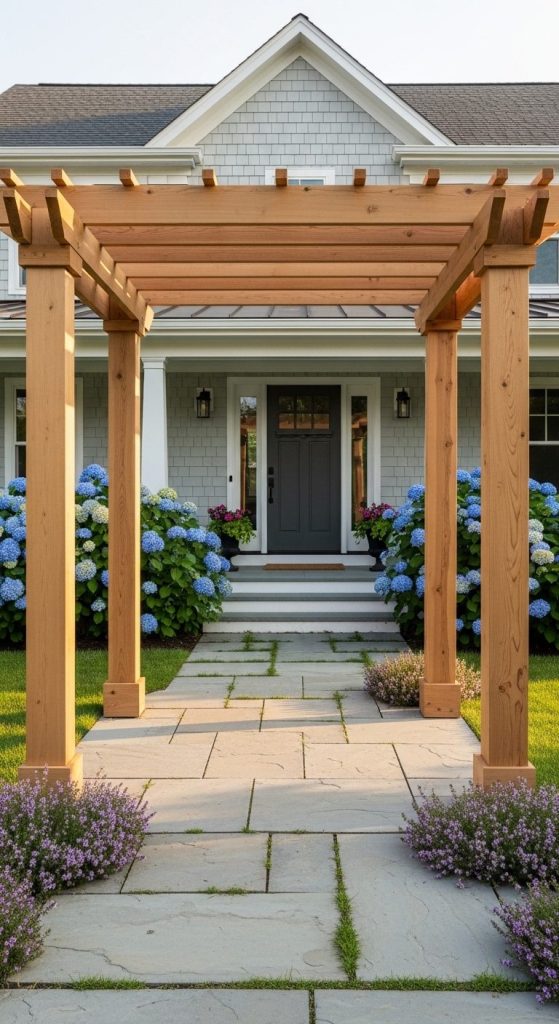
There’s a reason this design never fades. A solid wood arbor with square 4×4 or 6×6 posts creates a clean, grounded entry feature.
It works in suburban neighborhoods, farmhouse settings, even modest starter homes. You install it directly over a walkway to define the transition from sidewalk to home.
Pros:
- Timeless look that fits most home styles
- DIY-friendly with basic carpentry tools
- Accepts stain or paint easily
Cons:
- Requires sealing or staining every few years
- Wood can warp without proper treatment
Mini takeaway: If you want reliability and versatility, this version of a front yard arbor rarely disappoints.
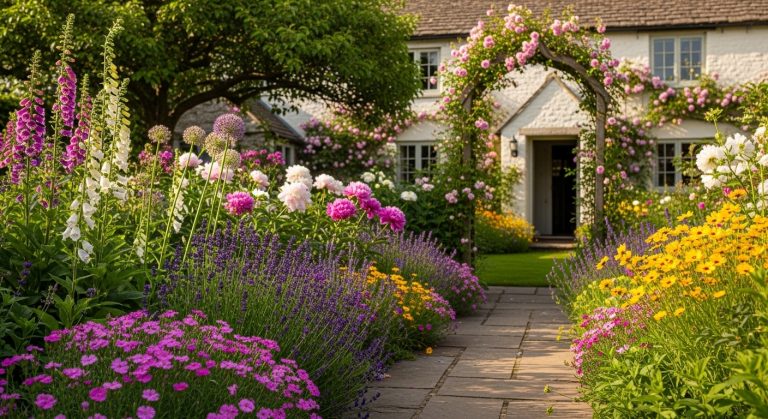
2. Arched Top Arbor for Soft Architectural Lines
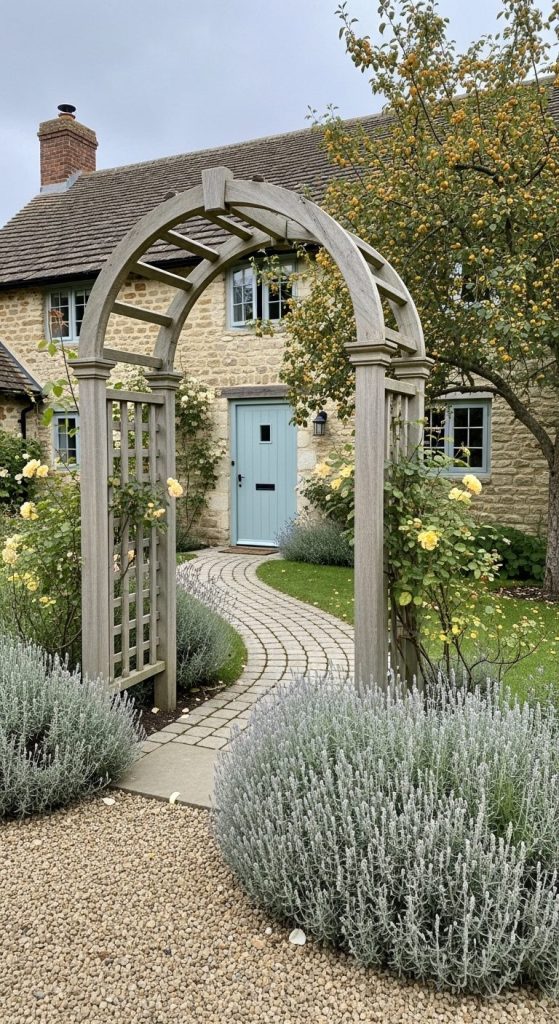
Straight lines feel strong, but an arched top adds softness. That gentle curve instantly feels romantic and welcoming.
This design pairs beautifully with cottage-style or traditional homes.
Pros:
- Adds elegance without complexity
- Softens harsh landscaping lines
- Works well with climbing plants
Cons:
- Slightly more complex to build
- Requires precision cutting
Mini takeaway: A curved top subtly elevates curb appeal without overwhelming the yard.
3. Front Yard Arbor with Integrated Gate
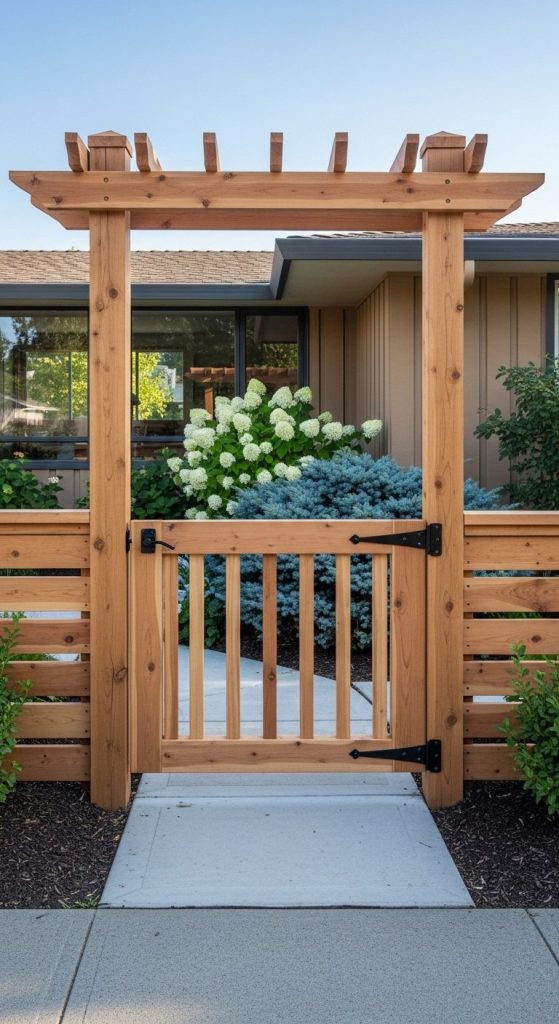
Now this feels intentional. Adding a gate turns your arbor into a defined entry point instead of just a frame.
Even a simple wooden or metal gate between the posts adds structure.
Pros:
- Creates privacy boundary
- Improves safety for pets or kids
- Makes entry feel more formal
Cons:
- Hardware installation required
- Needs proper alignment to avoid sagging
Mini takeaway: A gated front yard arbor transforms your yard from open space into a defined property.
4. Wider Arbor for Double Pathways
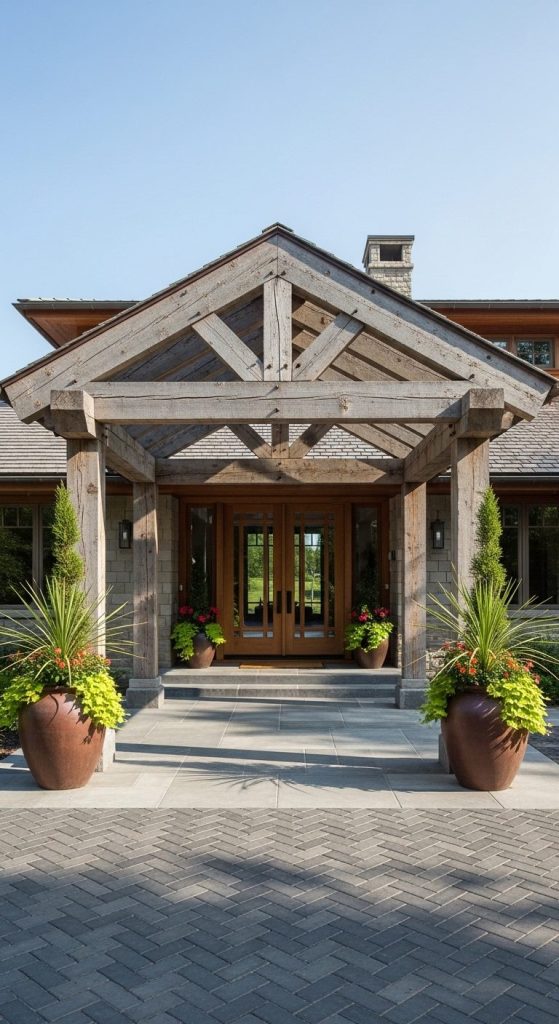
If your front walkway spans wide or splits, a broader arbor makes sense. Instead of narrow framing, you create a substantial overhead presence.
This design suits larger homes beautifully.
Pros:
- Balances larger facades
- Creates dramatic entry
- Adds visual weight
Cons:
- Higher material cost
- Needs solid anchoring
Mini takeaway: Scale matters. Match the arbor width to your home’s proportions.
Credible fact: Landscape designers often emphasize proportional balance as a key factor in curb appeal value, according to the American Society of Landscape Architects.
5. Modern Minimalist Metal Arbor
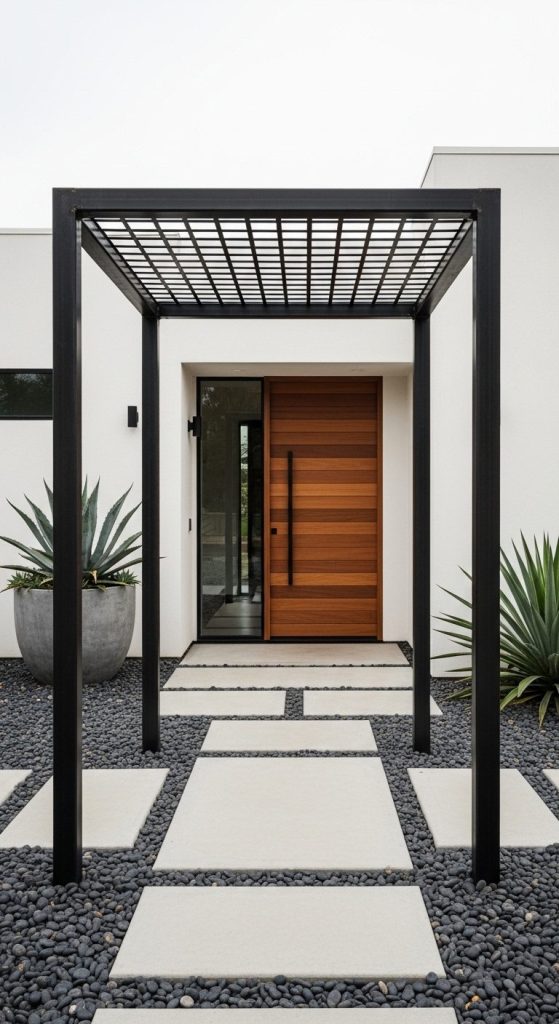
Clean black metal lines feel sharp and contemporary. This front yard arbor style pairs especially well with modern architecture.
Powder-coated steel offers durability and slim structure.
Pros:
- Low maintenance
- Strong and weather-resistant
- Clean modern aesthetic
Cons:
- Higher upfront cost
- Requires proper anchoring in concrete
Mini takeaway: If you love crisp lines, metal feels sleek and confident.
6. Cedar Arbor for Natural Warmth
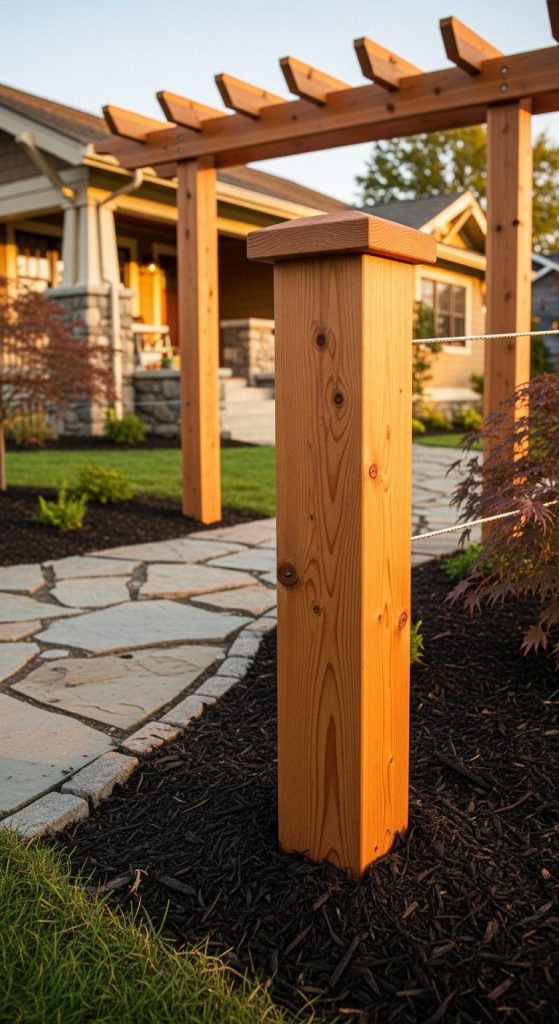
Cedar brings warmth and natural resistance to rot. It smells good, ages beautifully, and handles weather well.
Many homeowners choose cedar for its durability without chemical treatment.
Pros:
- Naturally rot-resistant
- Beautiful grain pattern
- Lower maintenance than pine
Cons:
- More expensive than pressure-treated wood
- Fades without sealing
Mini takeaway: Cedar adds authenticity and longevity to a front yard arbor.
7. Arbor Anchored in Concrete Footings
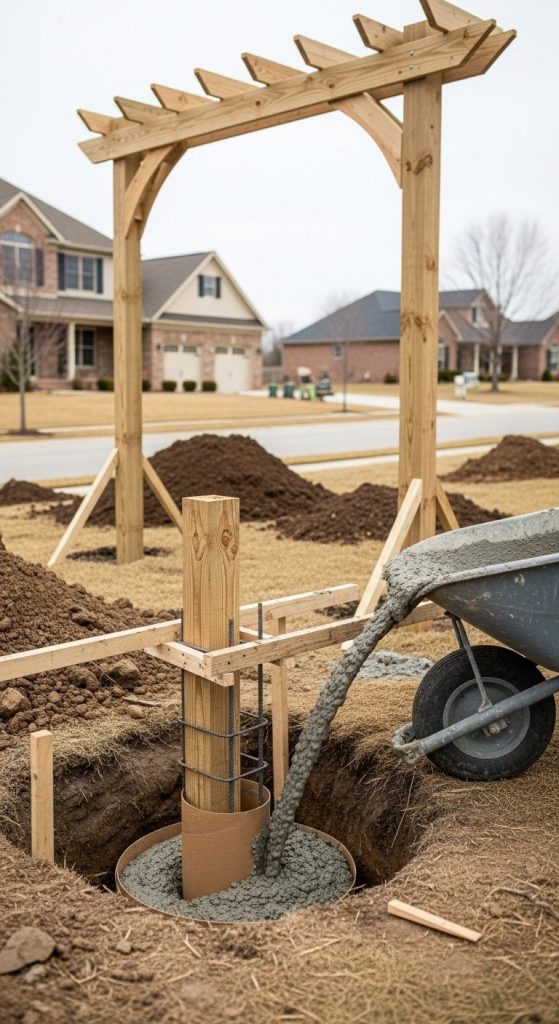
Structure matters more than style. A properly anchored arbor with deep concrete footings prevents shifting and leaning.
This matters especially in windy regions.
Pros:
- Long-term stability
- Prevents tilting over time
- Improves safety
Cons:
- Requires digging and leveling
- Labor-intensive installation
Mini takeaway: Solid foundation equals long-lasting curb presence. IMO, never skip this step.
8. Pergola-Style Arbor with Extended Rafters
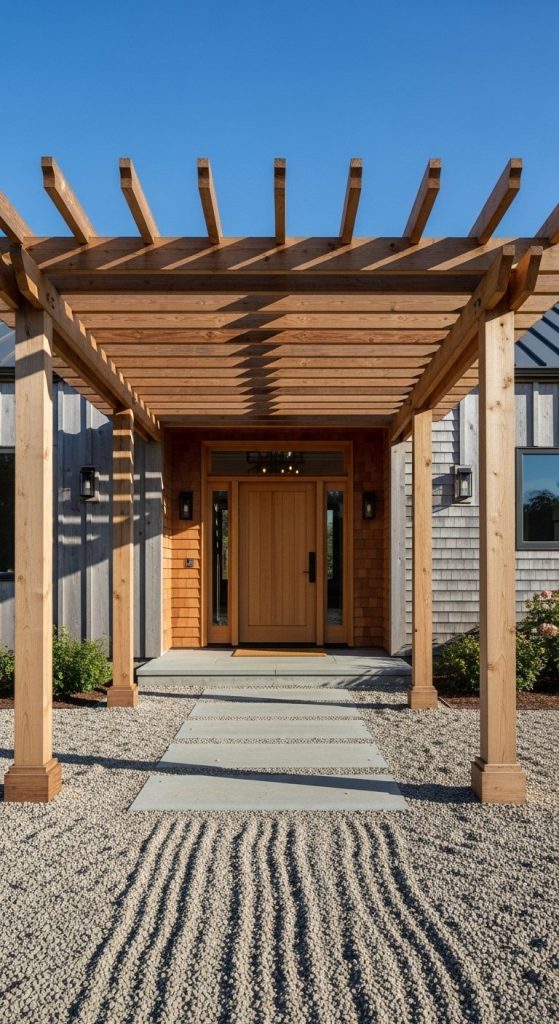
Extending the top beams slightly beyond the posts creates a mini pergola effect.
Those shadow lines add depth and architectural interest.
Pros:
- Creates dimension
- Looks custom-built
- Enhances overhead framing
Cons:
- Requires accurate spacing
- Slightly higher lumber cost
Mini takeaway: Those small beam extensions add serious visual punch.
9. Front Yard Arbor with Climbing Vines
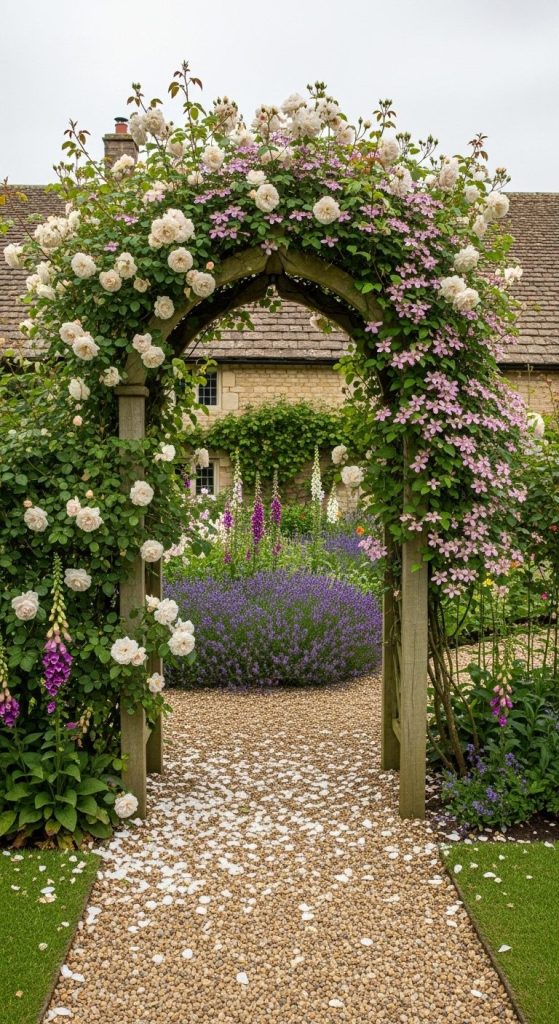
This classic combination never feels outdated. Climbing roses, jasmine, or clematis soften the structure.
The arbor acts as a living frame as plants mature.
Pros:
- Seasonal beauty
- Natural shade over time
- Adds color and texture
Cons:
- Requires plant care
- Takes time to fill in
Mini takeaway: Nature + structure creates a powerful curb statement.
Credible fact: Studies from horticultural associations show vertical plant growth improves perceived garden density and appeal.
10. Painted White Arbor for Crisp Contrast
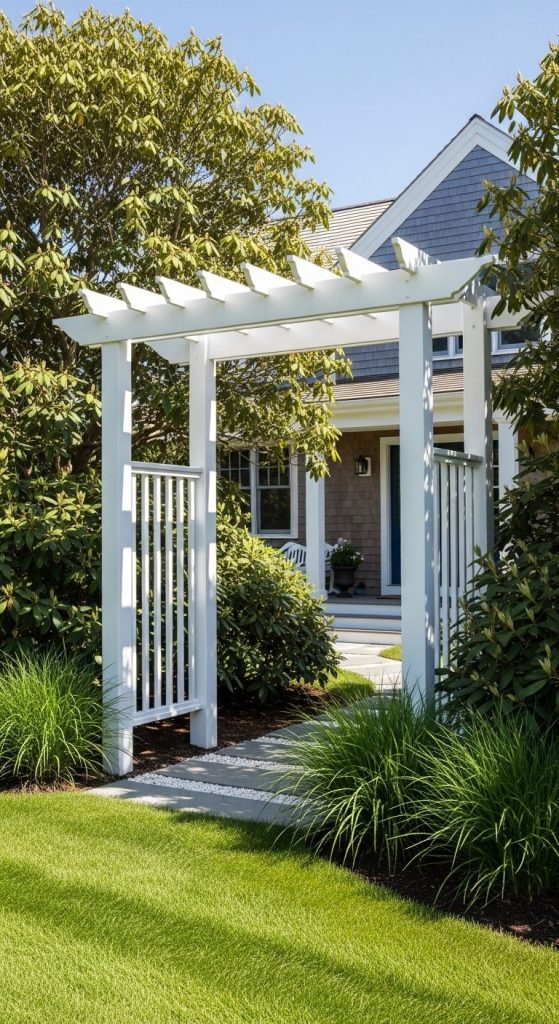
White paint against greenery creates instant brightness. It works beautifully in coastal or farmhouse-style homes.
A white front yard arbor pops visually without extra ornamentation.
Pros:
- Brightens darker exteriors
- Classic and clean look
- Photographs beautifully
Cons:
- Shows dirt easily
- Needs repainting periodically
Mini takeaway: White feels fresh and welcoming every single time.
11. Stained Dark Wood Arbor for Drama
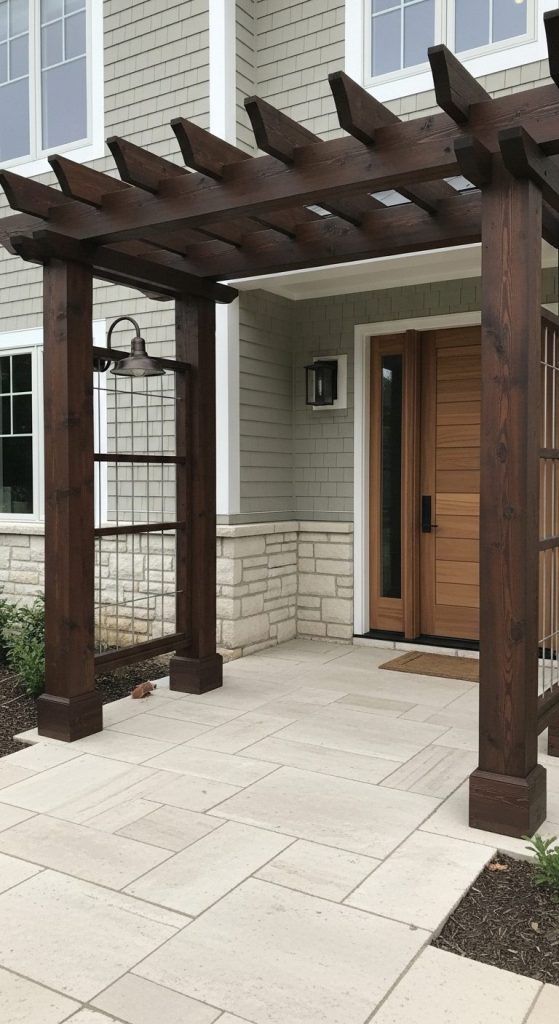
Deep espresso or walnut stain adds richness. This choice works especially well with light-colored siding.
It grounds the entrance visually.
Pros:
- Sophisticated appearance
- Hides dirt better than white
- Adds contrast
Cons:
- Requires re-staining over time
- Dark colors absorb heat
Mini takeaway: Dark stain creates bold presence without extra decoration.
12. Arbor Positioned Closer to the Sidewalk
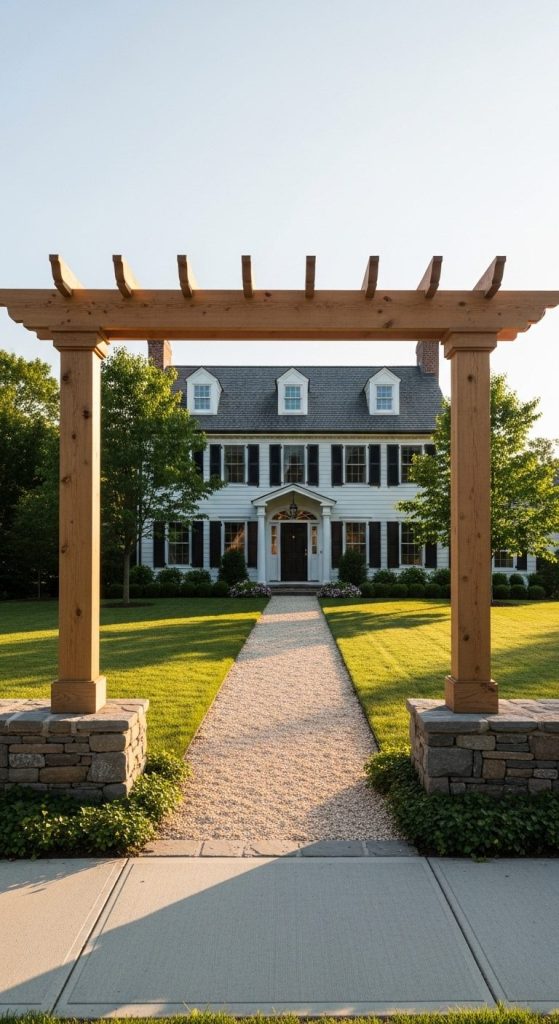
Placement changes everything. Installing your front yard arbor near the sidewalk instead of near the porch creates an immediate visual welcome.
It frames the property boundary clearly.
Pros:
- Strong first impression
- Defines entry early
- Enhances street presence
Cons:
- Must check local setback regulations
- May require repositioning walkway
Mini takeaway: Placement often matters more than size.
13. Dual Arbor Entry for Split Pathways
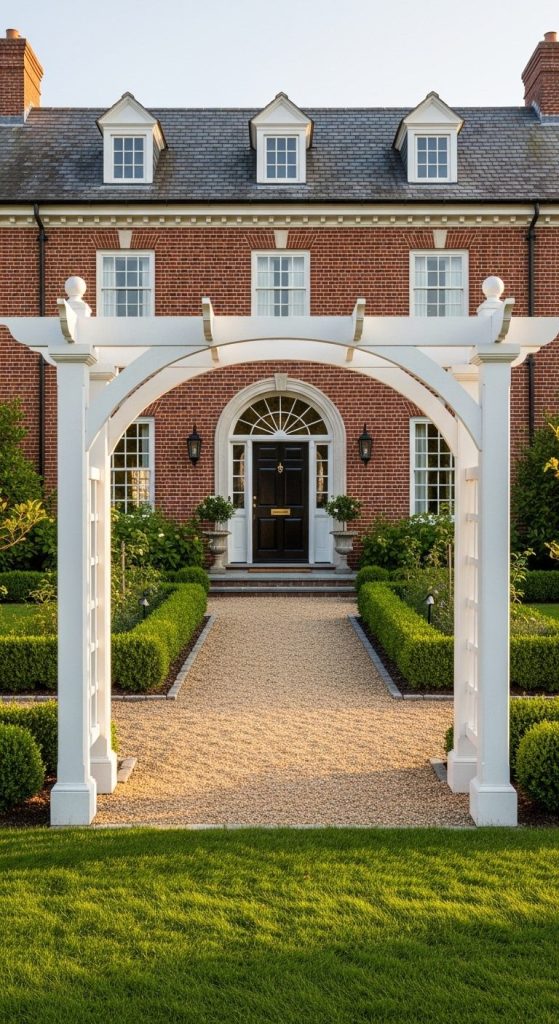
If your yard has two walkways, installing matching arbors on each side creates balance.
Symmetry instantly feels intentional.
Pros:
- Enhances symmetry
- Frames multiple entrances
- Boosts architectural rhythm
Cons:
- Doubles material cost
- Requires precise spacing
Mini takeaway: Balanced repetition adds sophistication.
Credible fact: Symmetrical entry features often increase buyer perception of order and care, according to real estate staging professionals.
14. Arbor with Built-In Side Panels for Structure
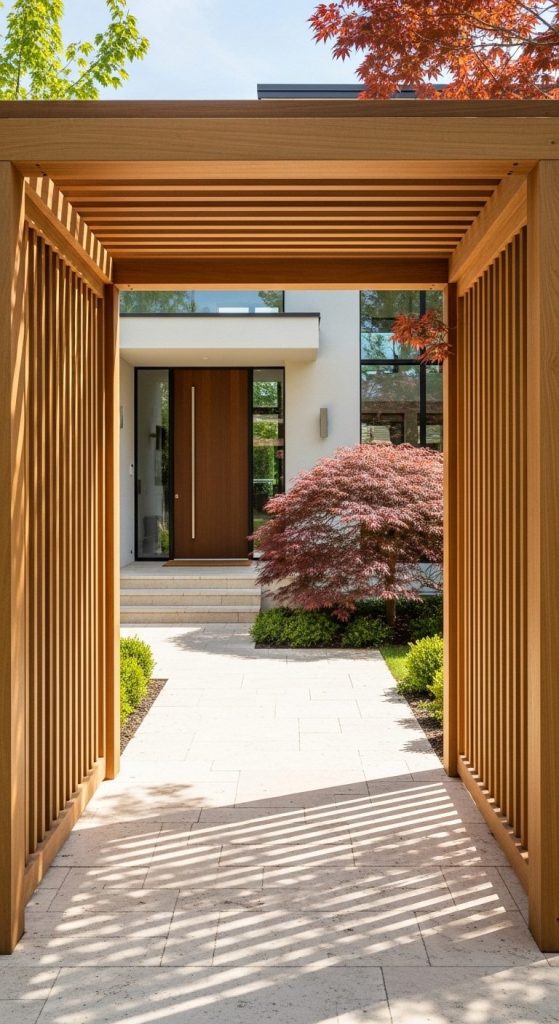
Side lattice or slatted panels create partial enclosure without blocking openness.
This adds architectural framing and extra support for climbing plants.
Pros:
- Increased structural stability
- Adds visual depth
- Supports vertical growth
Cons:
- Slightly higher material cost
- More complex build
Mini takeaway: Side panels transform a simple arbor into a focal feature.
15. Compact Arbor for Small Front Yards
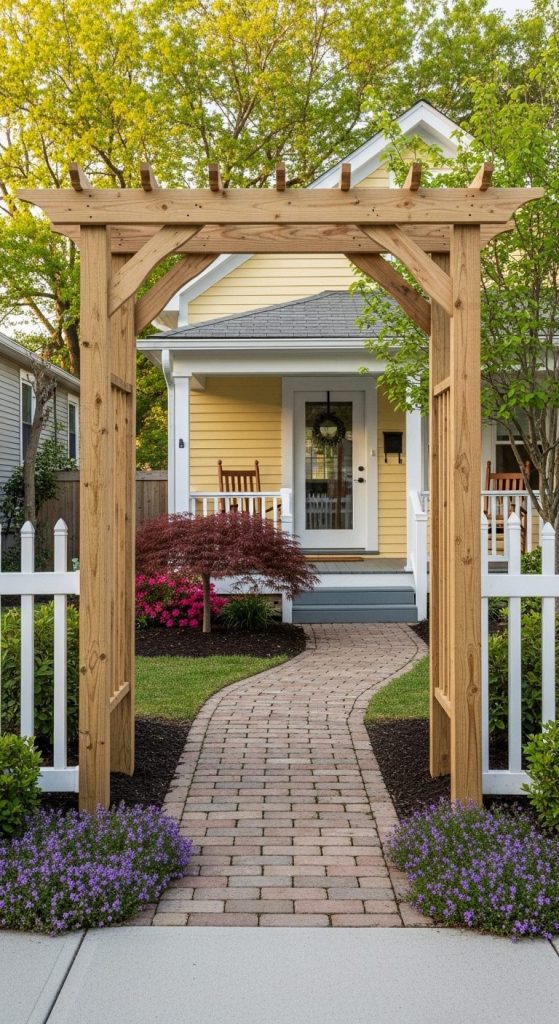
Small spaces deserve structure too. A narrow, lower-profile arbor prevents overwhelming limited yard space.
You scale down width and height while keeping proportions balanced.
Pros:
- Fits tight spaces
- Budget-friendly
- Maintains walkway openness
Cons:
- Less dramatic impact
- Requires careful measurement
Mini takeaway: Even small yards benefit from a defined frame.
Conclusion
A front yard arbor does more than sit over a walkway. It frames your home. It sets tone. It tells visitors they’ve arrived somewhere intentional.
Some designs focus on material. Others focus on scale, placement, or structural upgrades. Each one changes the personality of your yard in a distinct way.
Personally, I love how an arbor adds instant architecture without a massive renovation. It feels approachable. Achievable. And genuinely transformative.
Start with the style that matches your home’s character. Pay attention to scale and anchoring. Choose quality materials. The rest falls into place naturally.
Pick the idea that resonates most with your space and bring it to life. Your front yard will never feel unfinished again.

William Martin is a passionate bowler who spends most of his weekends playing the sport. With years of intense experience under his belt, William decided to share his knowledge by creating BOWLING OCEAN. Join me on this journey to explore the world of bowling and discover the tips and tricks to becoming a pro.