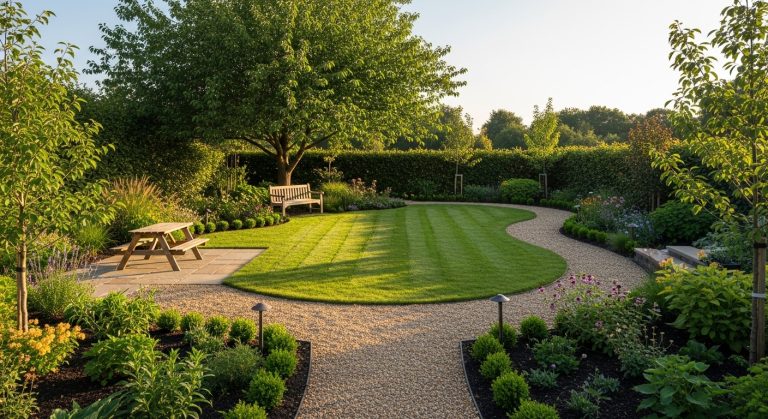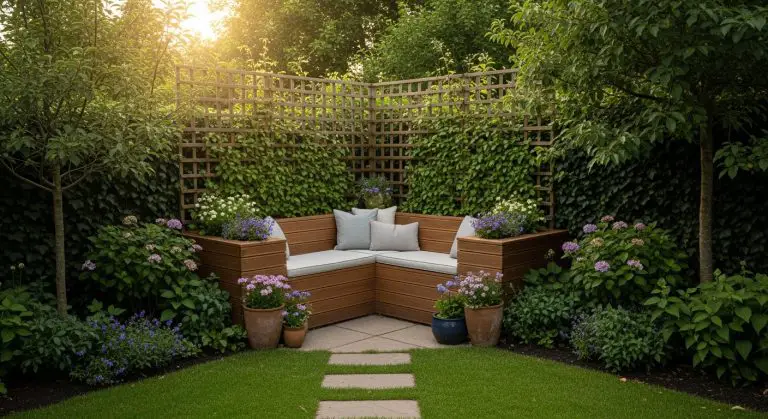
15 Raised Garden Bed Around Tree
You know that awkward empty space around the base of your big shade tree? The one where grass refuses to grow, mulch washes away every time it rains, and you’re left staring at bare dirt surrounded by exposed roots? Yeah, I’ve been there too.
Last spring, I got this wild idea. What if I built a raised garden bed around my old maple tree? Not one of those tiny ring planters that choke out the roots, but something functional, pretty, and actually good for the tree. I spent weeks researching, made a few costly mistakes, and eventually figured out what works.
Turns out, a raised garden bed around a tree isn’t just doable—it’s genius when done right. You protect the roots, add visual interest to your yard, and gain planting space all at once. But here’s the catch: most people do it completely wrong and end up killing their tree.
I’m sharing 15 real-world ways to make this work. No fluff, no Pinterest-perfect fantasies that fall apart after one rainstorm. Just honest, tested ideas you can actually pull off in your own yard this weekend.
1. The No-Dig Floating Bed Method
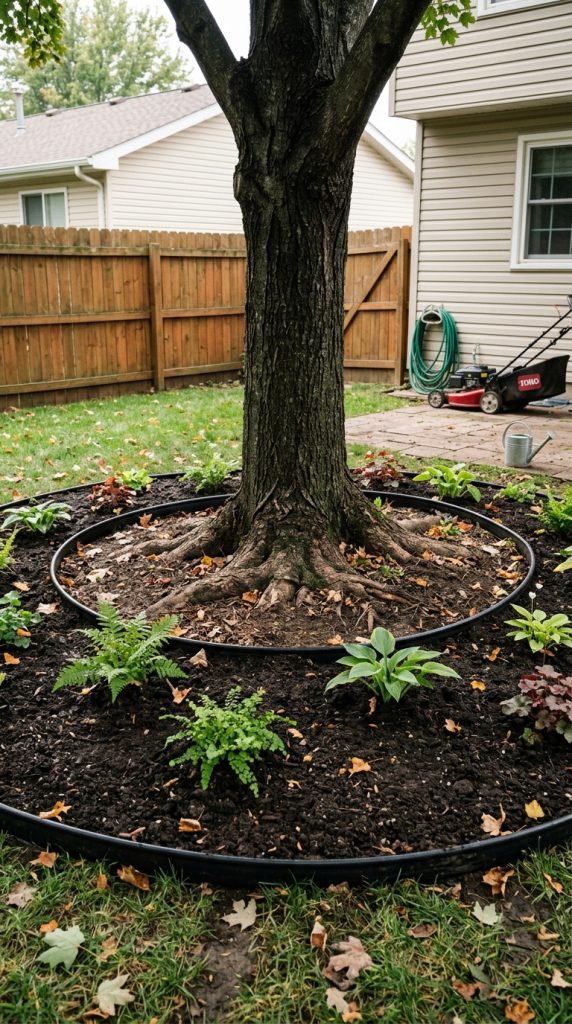
I learned this one the hard way after nearly breaking my shovel on a hidden root. The no-dig method respects what’s already happening underground while still giving you that raised bed look.
Instead of excavating or building walls that bury the tree’s root flare, you create a floating bed that sits gently on top of the existing soil. You’re basically building a donut-shaped frame that hovers above the roots without compacting them.
Pros:
- Zero root damage since you’re not digging or cutting
- Takes about two hours with basic tools
- Easy to remove or reposition if needed
- Keeps soil aeration intact around the tree
Cons:
- Bed depth is limited (usually 4–6 inches max)
Here’s the reality check I wish someone gave me: a raised garden bed around a tree works best when you accept that you’re not creating deep vegetable garden soil. You’re creating a shallow planting ring for shade-loving plants. Grab some flexible edging material, lay down landscape fabric to separate the bed from grass, add quality topsoil, and plant. The tree keeps its breathing room, and you get your garden.
2. The Stone Ring Terrace
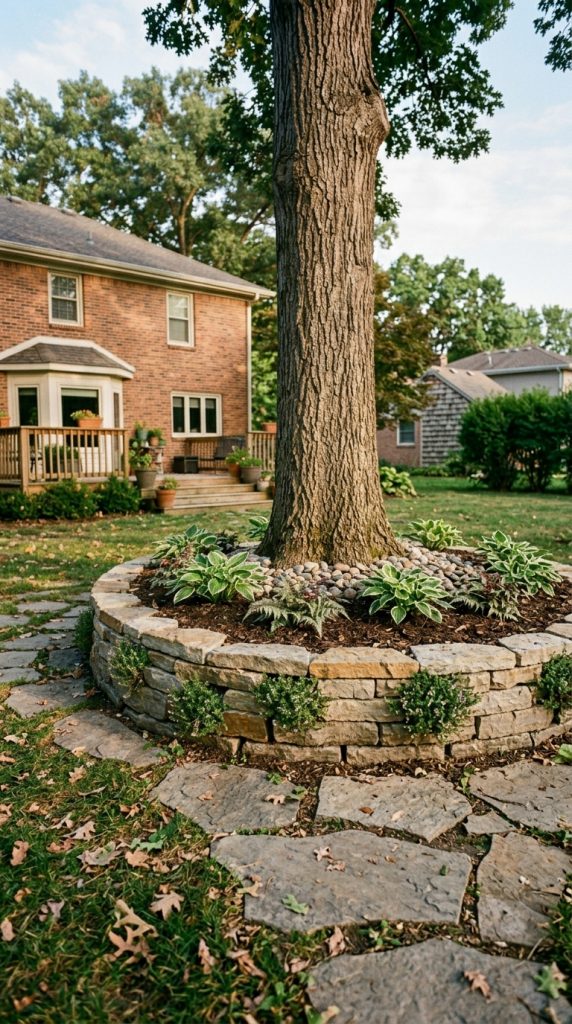
If you want something that looks like it’s been there for decades, stone is your answer. I spotted this design at a botanical garden and spent an entire afternoon figuring out how to adapt it for my backyard.
The idea is simple: build a low, wide stone ring around your tree, then backfill with soil to create a raised planting area. The key is keeping the wall low—no more than 8 to 10 inches tall—so you don’t smother the roots with excessive soil depth.
Pros:
- Incredibly durable and weather-resistant
- Natural appearance that blends with any landscape
- Stones allow airflow between gaps
- No rot or rust concerns ever
Cons:
- Heavy materials (budget for delivery help)
- More expensive than wood or plastic options
Choose flat, stackable stones like flagstone or retaining wall blocks. Leave a three-inch gap between the stone ring and the tree trunk. That gap prevents moisture buildup against the bark, which causes rot and invites pests. I used small river rocks to fill that gap as a decorative buffer zone. Three years later, the tree is thriving, and the bed looks better every season.
3. The Two-Foot Breathing Zone Rule
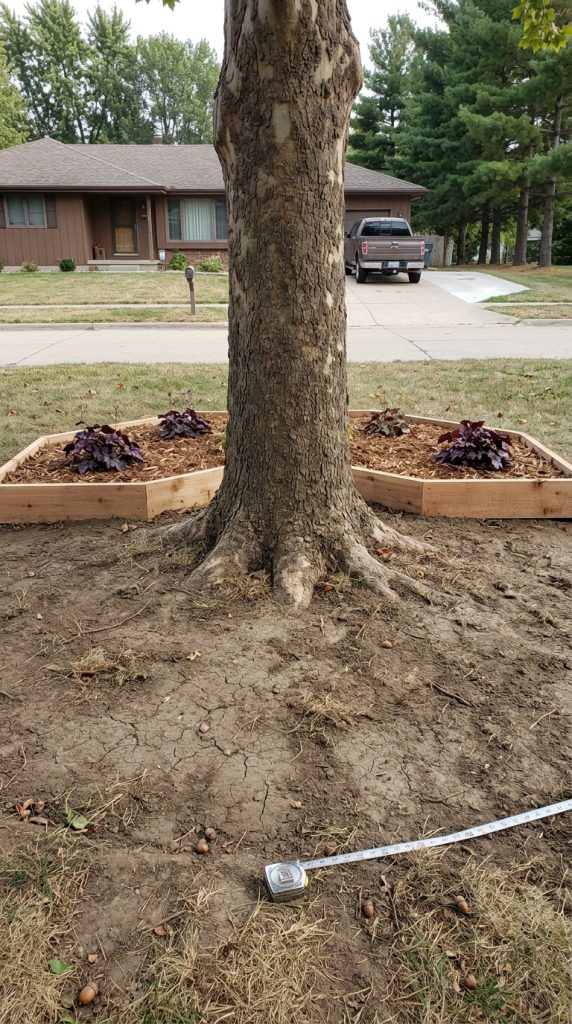
Before you buy a single brick or bag of soil, measure something crucial: the distance from your tree trunk to the inner edge of your raised bed. Most people make the mistake of building too tight around the trunk, and I nearly did the same thing.
The two-foot breathing zone isn’t just a suggestion—it’s survival math for your tree. Tree roots need oxygen exchange at the soil surface, especially right around the trunk flare where the root system begins. Cover that area with too much soil, and you’re essentially suffocating your tree slowly.
Pros:
- Prevents trunk rot and fungal diseases
- Allows roots to access oxygen naturally
- Gives you room to water and weed easily
- Protects bark from soil-borne pathogens
Cons:
- Reduces your total planting area significantly
For every inch of trunk diameter, you need at least one foot of open space around it. So a tree with a 12-inch wide trunk needs a 12-foot diameter circle of undisturbed ground before your raised bed even starts. Measure twice, build once. Your tree will thank you with healthy growth instead of mysterious decline.
4. The Shade-Loving Perennial Ring
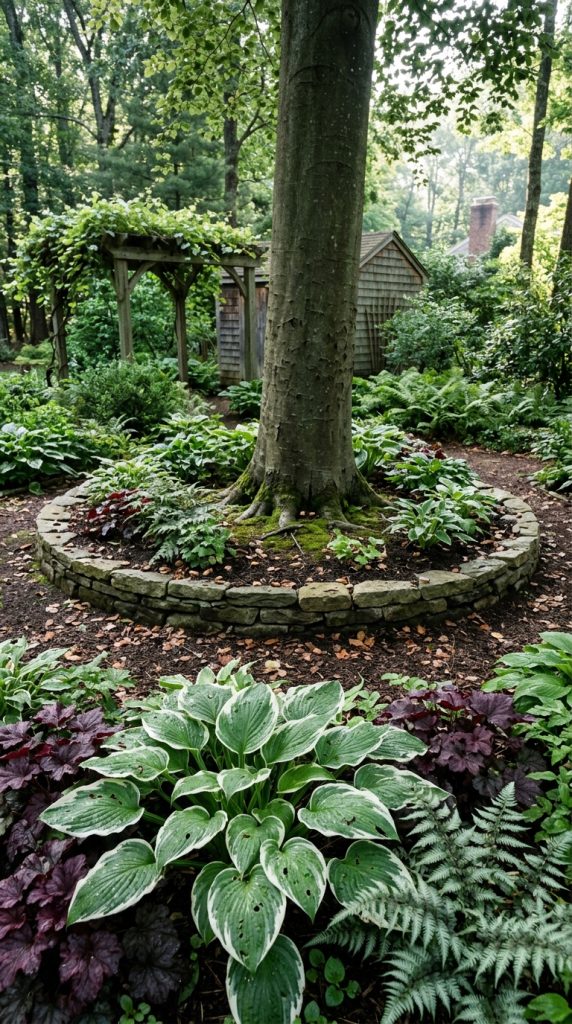
Here’s where the fun begins. Once you accept that your raised garden bed around a tree will live in dappled or full shade, you can stop fighting nature and start working with it.
Hostas are the obvious choice for a reason—they’re practically unkillable, come in hundreds of varieties, and their broad leaves contrast beautifully with tree bark. But don’t stop there. Mix in ferns for texture, heucheras (coral bells) for bold purple and lime green foliage, and astilbes for feathery summer blooms.
Pros:
- Plants thrive naturally without constant care
- Perennials come back bigger every year
- Foliage textures create visual interest year-round
- Minimal watering once established
Pros:
- Limited to shade-tolerant varieties only
- Few bloom options compared to sun gardens
Cons:
- Spring bulbs may struggle under dense shade
I planted a ring of ‘Patriot’ hostas with white-edged leaves, surrounded by ‘Palace Purple’ heucheras and Japanese painted ferns. The combination looks intentional and expensive, but it cost me about forty dollars from a local plant swap. The secret is layering heights—tall plants in the back of the ring (relative to your viewing angle), medium plants in the middle, and low growers or trailing plants along the inner edge.
According to the University of Florida Extension, planting within the drip line of a mature tree can compete with roots for water and nutrients. That’s why shallow-rooted perennials work better than deep-rooted shrubs or vegetables. Stick with plants that have fibrous, shallow root systems, and you’ll keep both the tree and your garden happy.
5. The Mulch-Only Illusion Bed
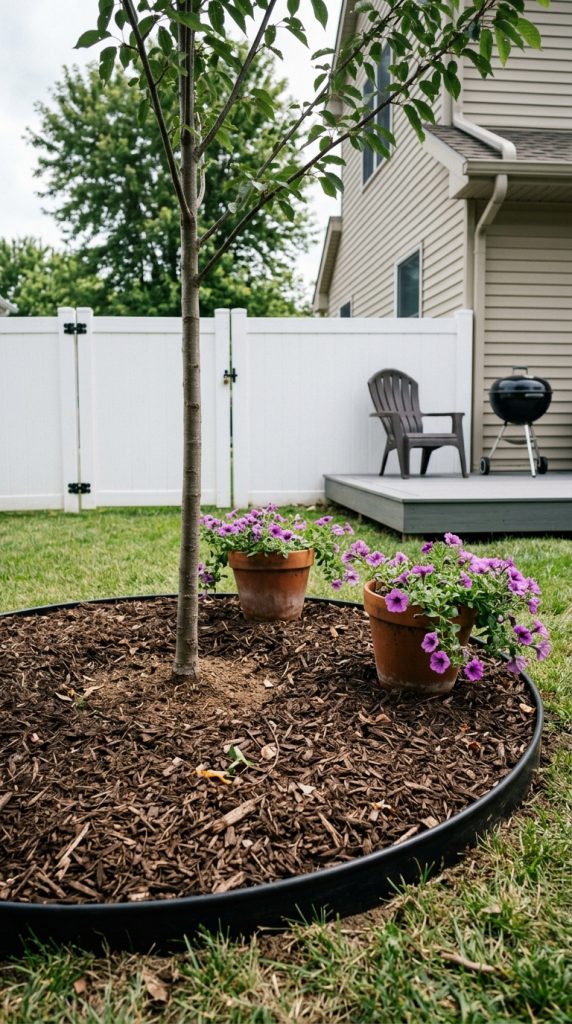
Want the look of a raised garden bed around a tree without actually building anything? This trick fools everyone, including my neighbor who swore I spent a whole weekend on construction.
Create the visual effect of a raised bed using nothing but mulch and strategic edging. Dig a shallow trench (just two inches deep) in the shape of your desired bed, install flexible no-dig edging, then fill the entire area inside with three to four inches of high-quality shredded hardwood mulch. The edging creates the illusion of a raised structure, and the mulch depth mimics the look of soil.
Pros:
- Takes thirty minutes to complete
- Costs under fifty dollars for most trees
- Zero risk of root damage
- Mulch improves soil over time as it breaks down
Cons:
- You can’t plant anything in it (mulch only)
- Needs refreshing every year or two
This is my go-to recommendation for renters or anyone who wants a polished look without commitment. You get all the curb appeal of a defined garden bed, but the tree experiences zero change in soil level or root disturbance. Add a few large decorative containers on top of the mulch if you want actual plants, and you’ve got the best of both worlds.
6. The Concrete Block Modular Bed
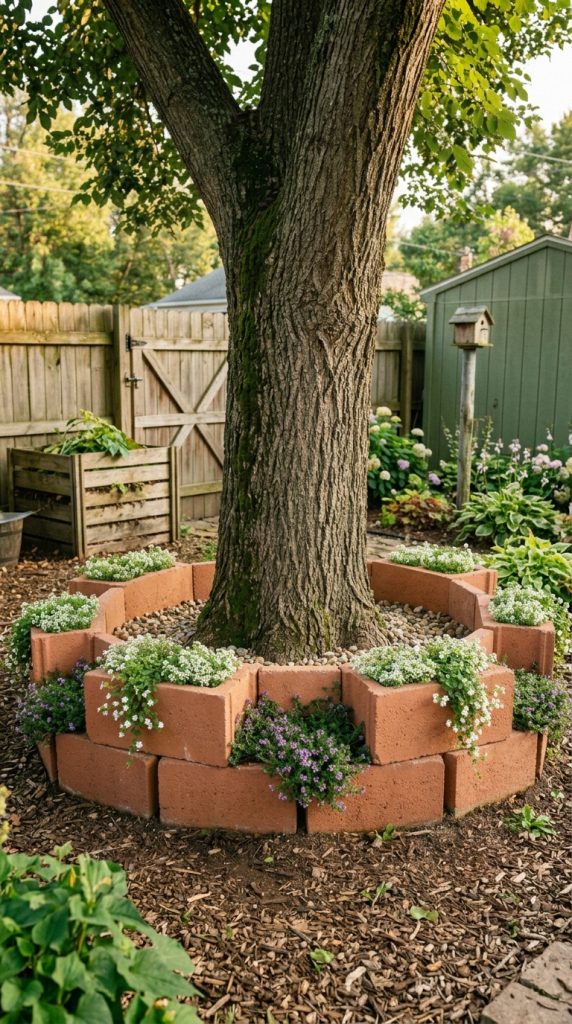
Concrete blocks get a bad reputation for looking industrial, but hear me out. They’re cheap, incredibly easy to work with, and the hollow cores make perfect built-in planters for trailing flowers.
Stack standard 8x8x16 concrete blocks in a single layer to create your ring shape. The key is leaving gaps between blocks for water flow and root access. Every third block, skip a space entirely. Those gaps become drainage channels and also give you spots to plant small creeping plants like creeping thyme or sedum directly into the ground.
Pros:
- Blocks cost about two dollars each at hardware stores
- No mortar or adhesive required
- Easy to reconfigure or expand later
- Hollow cores hold soil for extra planting space
Cons:
- Heavy to transport and move
- Visually stark (paint or cap them for a better look)
Paint your blocks with masonry paint in a color that complements your house or landscape. I used a warm terra cotta shade, and suddenly those ugly gray blocks looked like expensive garden pavers. Fill the hollow tops with potting mix and plant annuals like bacopa or sweet alyssum that spill over the edges. The whole project cost me thirty-eight dollars and took one afternoon.
7. The Two-Tier Raised Platform
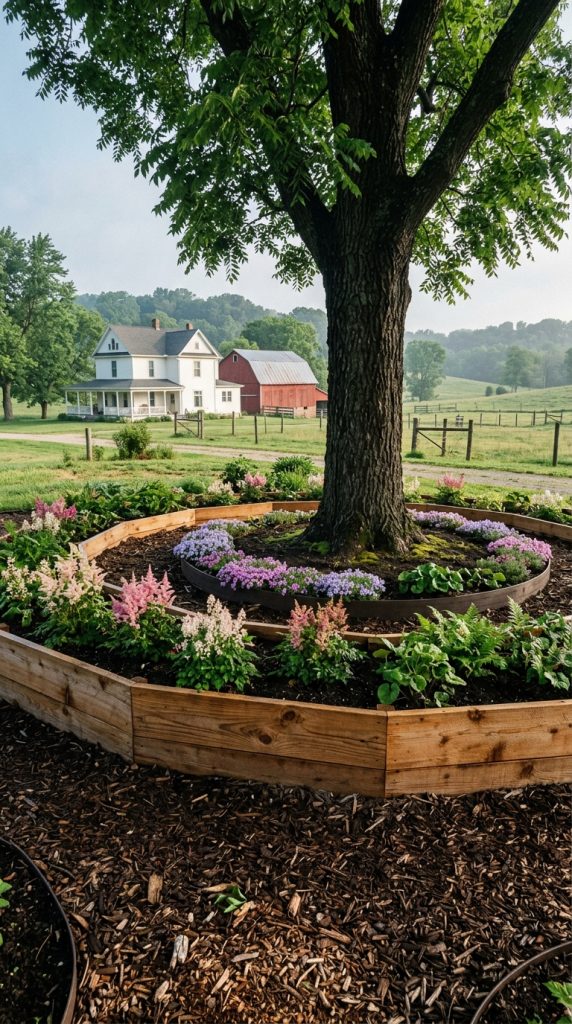
This one’s for the ambitious DIYers. Instead of one wide bed around your tree, build two concentric rings at different heights. The inner ring sits lower (just four inches tall) and stays within the no-dig zone. The outer ring stands taller (twelve to sixteen inches) and sits further out where roots are less sensitive.
The gap between rings becomes a walking path or a narrow mulched channel. This design gives you deep soil volume for more substantial plants in the outer ring while keeping the inner zone safe and shallow.
Pros:
- Maximum planting space within safe root limits
- Creates architectural drama in your landscape
- Walking path makes maintenance easier
- Allows for different plant types in each zone
Cons:
- Complex build requiring careful measurement
- More materials and higher cost
Use untreated cedar or redwood for the outer ring since those woods resist rot naturally. For the inner ring, use flexible edging or small stones. The visual contrast between the two materials adds interest, and the stepped design draws the eye upward toward the tree canopy. I’ve only built two of these in my career as a gardener, but both became the centerpiece of those yards.
8. The Hügelkultur-Inspired Base
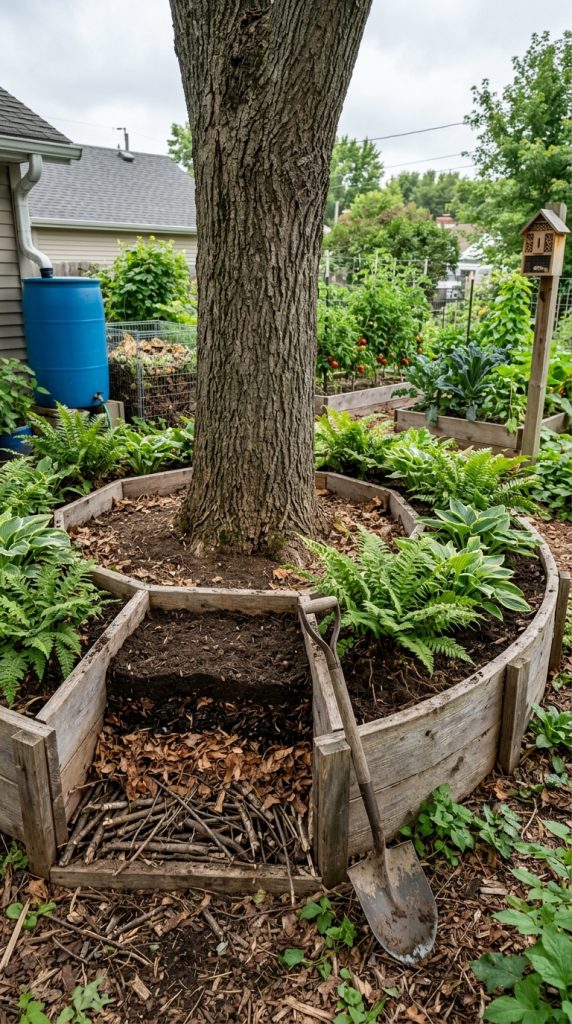
Here’s an idea that sounds weird but works brilliantly. Instead of filling your raised garden bed around a tree with bagged soil alone, layer in decomposing wood, leaves, and twigs at the very bottom.
Hügelkultur is a German gardening method that uses rotting wood as a moisture reservoir and slow-release nutrient source. In a tree-side bed, you’re mimicking the natural forest floor where fallen branches and leaves break down over time. The tree roots actually appreciate this because it replicates their native environment.
Pros:
- Reduces how much bagged soil you need to buy
- Holds moisture longer, meaning less frequent watering
- Feeds plants slowly for years as wood decomposes
- Great way to recycle yard waste
Cons:
- Requires planning as layers settle over time
- Not ideal for beds deeper than twelve inches
Start with small sticks and twigs, then add shredded leaves, then compost, then topsoil. Water each layer as you build. Within a season, fungi and soil life will move in and start breaking everything down into rich, dark earth. Your plants will grow faster and need less fertilizer than plants in plain bagged soil. Just don’t use black walnut wood—it contains juglone, a natural herbicide that kills many plants.
The USDA Forest Service notes that tree roots primarily grow in the top 6 to 12 inches of soil. That’s exactly where your shallow raised bed sits when you build it right. This alignment means your bed and your tree can coexist peacefully as long as you avoid deep digging or heavy soil compaction.
9. The Corner Cutout Design
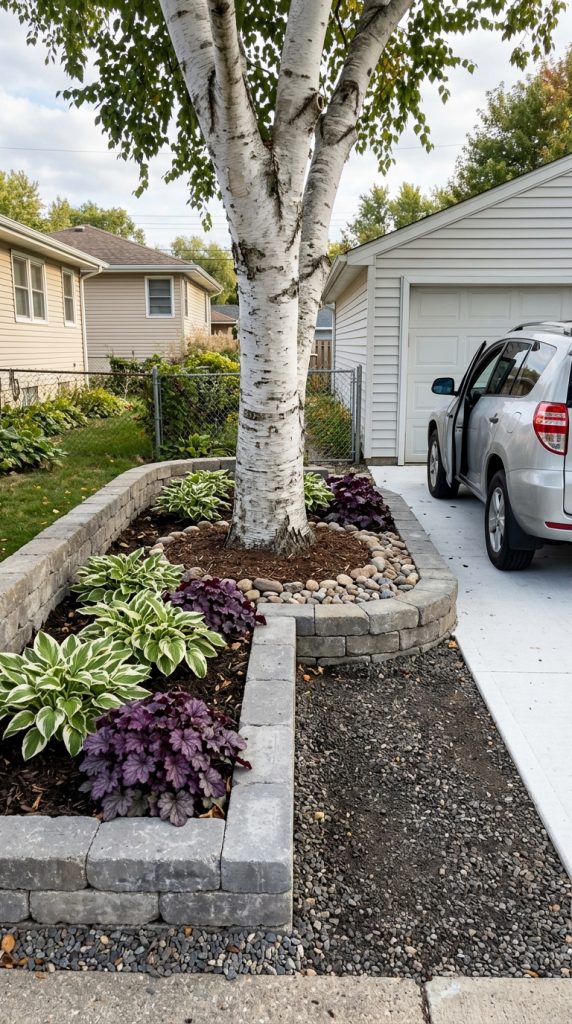
Trees near property lines or walkways present a unique challenge. A full circle bed might extend into your neighbor’s yard or block your garden path. That’s where the corner cutout design saves the day.
Instead of a complete ring, build a raised bed that wraps partially around your tree with one or more straight edges. Think of a Pac-Man shape or a crescent moon rather than a donut. The cutout side stays open for foot traffic, lawn equipment access, or simply to respect property boundaries.
Pros:
- Fits awkward spaces where full circles won’t work
- Maintains access for mowing and maintenance
- Looks intentional rather than forced
- Less material needed for construction
Cons:
- Asymmetrical design isn’t everyone’s taste
- May look unbalanced around a centered tree
Position the open side facing south if possible. That orientation gives you a sunny work area for planting and weeding while keeping the majority of your plants shaded as they prefer. I used this design for a birch tree sitting three feet from my driveway, and the cutout lets me open my car door without hitting plants. Practical landscaping always wins over perfectly symmetrical landscaping in real life.
10. The Root Bridge Pathway
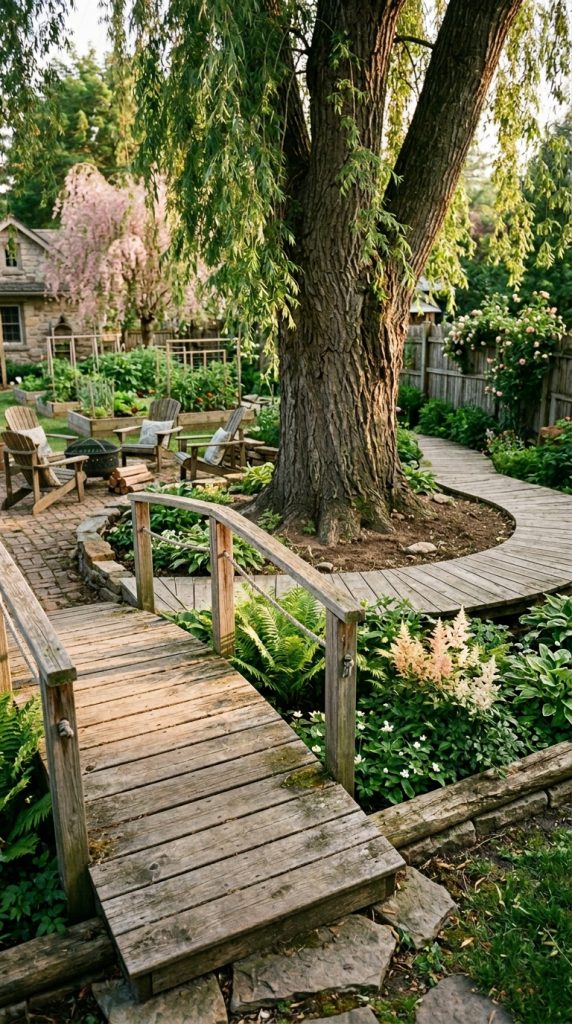
This idea transforms your raised garden bed around a tree into a functional landscape feature that connects different areas of your yard. Build a raised bed that incorporates a low wooden bridge or stepping stones that span across the bed, letting you walk directly over it.
The bridge sits on supports placed safely outside the root zone, arching over your plants without touching them. Stepping stones work similarly, spaced far enough apart that you never step directly on the soil inside the bed.
Pros:
- Creates a whimsical, storybook garden feel
- Provides practical access across the bed
- Protects plants from foot traffic damage
- Becomes a unique conversation piece
Cons:
- Complex construction requiring carpentry skills
- Bridge materials add significant cost
I built a simple plank bridge using two 2×6 boards as runners and decking screws for the top slats. The whole thing cost about sixty dollars in cedar lumber. Two years later, it’s still solid, and every single visitor comments on it. Kids love crossing it, and it solved my problem of needing to walk from the patio to the back gate without trampling flowers.
11. The Self-Watering Reservoir Bed
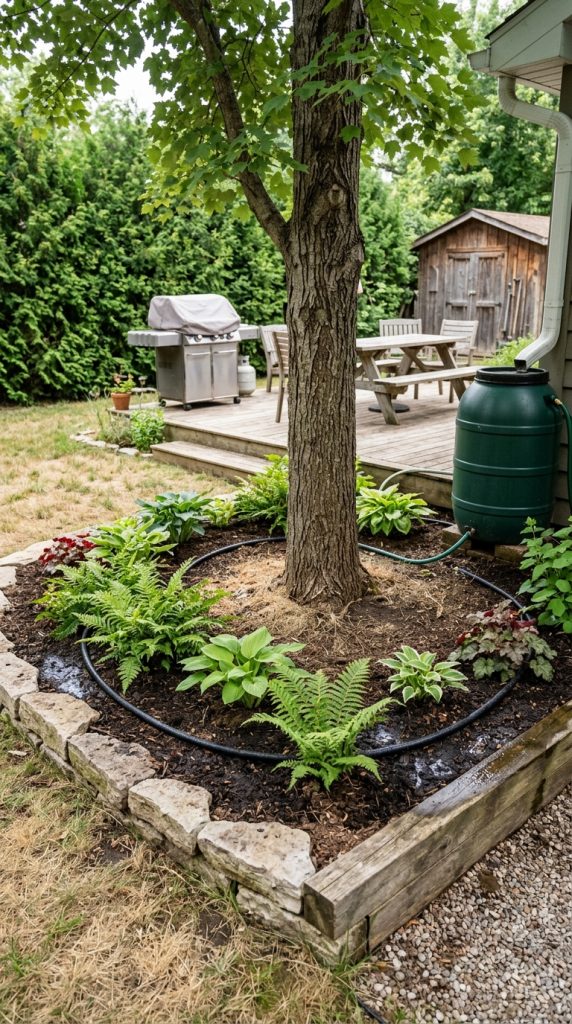
Trees compete aggressively for soil moisture, especially during summer dry spells. If you build a raised garden bed around a tree without addressing water competition, your flowers will wilt while the tree thrives. Flip that dynamic with a self-watering design.
Line the bottom of your bed with a perforated pipe loop connected to a downspout or rain barrel. When it rains, water collects in the pipe and slowly seeps into the bed over several days. Alternatively, install a drip irrigation ring inside the bed on its own timer separate from your lawn sprinklers.
Pros:
- Delivers water directly to your plants, not the tree
- Conserves water through targeted application
- Reduces maintenance during heat waves
- Works with rain harvesting systems
Cons:
- Requires plumbing connections or regular refilling
- Perforated pipes can clog over time
The key is keeping water away from the tree trunk itself. Direct all irrigation to the outer two-thirds of the bed, nearest the edging. That zone is where your plants’ roots live and where tree roots are less dense. I connected a simple soaker hose to my rain barrel and buried it just under the soil surface. Now my ferns stay lush even when the lawn goes brown in August.
12. The Movable Container Ring
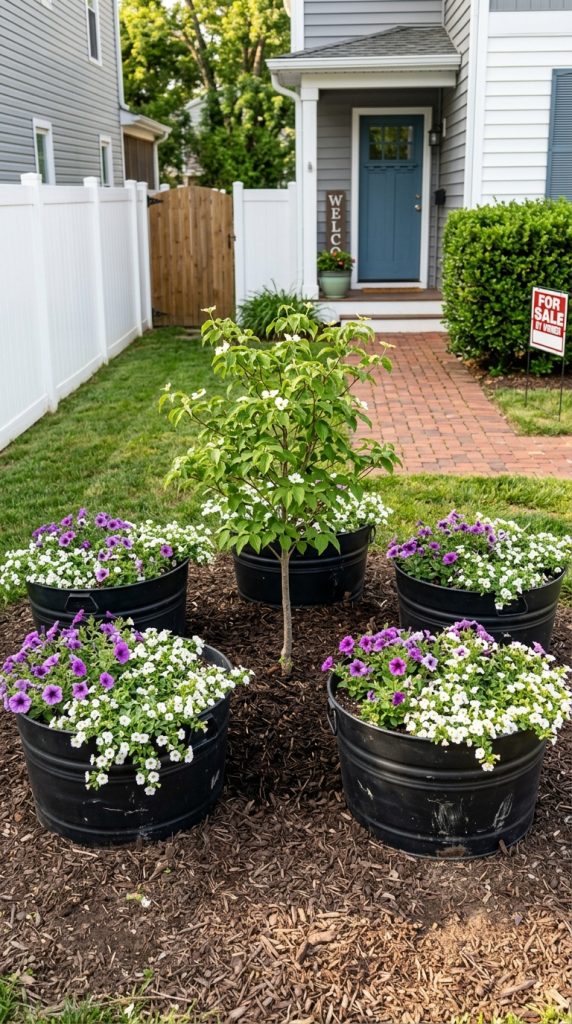
Not ready to commit to permanent construction? Neither was I when I started. The movable container ring gives you all the benefits of a raised garden bed around a tree with zero permanence.
Arrange a collection of large pots, barrels, or decorative containers in a ring around your tree. Space them so each container sits independently on the ground without touching. From a distance, the grouping reads as a unified garden bed. Up close, you can rearrange, remove, or replace individual containers whenever you want.
Pros:
- Completely non-permanent (renter friendly)
- Containers prevent root competition entirely
- Easy to change plants by season
- No digging, building, or soil moving required
Cons:
- Containers dry out faster than in-ground beds
- Large pots can be expensive to buy
Use containers at least sixteen inches in diameter so they don’t tip over. Glazed ceramic or fiberglass pots hold moisture better than terra cotta. I found five identical galvanized metal tubs at a farm supply store for eight dollars each, spray-painted them matte black, and arranged them in a staggered circle. The look is modern and intentional, and I swap in spring bulbs, summer annuals, and fall mums without ever touching the tree’s root zone.
13. The Living Wall Trellis Backing
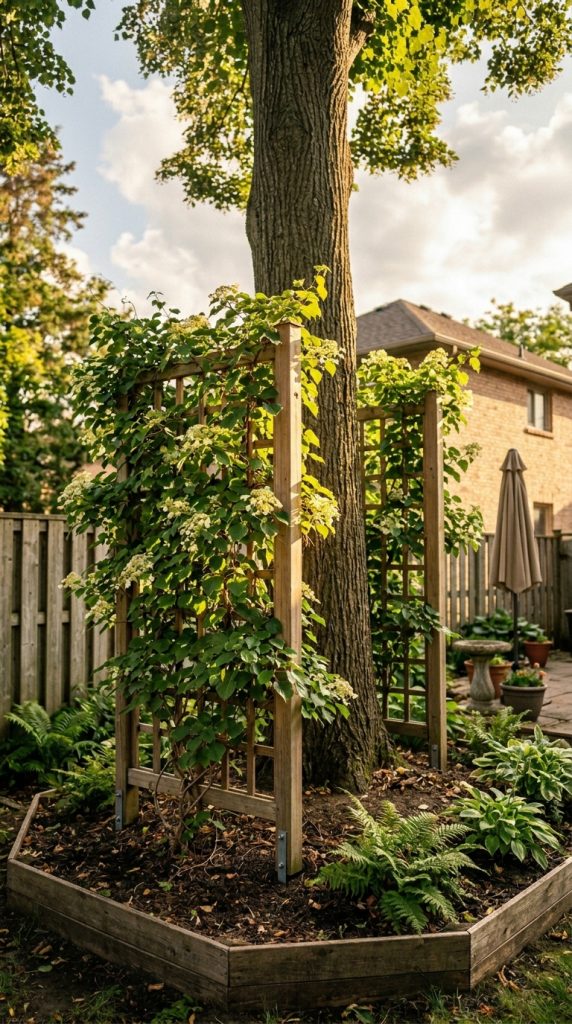
Most raised beds around trees sit flat on the ground. But what if you went vertical? Build a trellis or lattice panel on the back side of your bed (facing away from the tree) and train climbing plants up the structure.
The raised bed provides soil for the climbers’ roots, the trellis gives them something to grab, and the tree trunk remains completely untouched. You get height, greenery, and flowers without attaching anything to the tree itself.
Pros:
- Doubles your planting space without expanding the bed
- Creates privacy screening in open yards
- Adds dramatic vertical interest
- Trellis can be removed or replaced easily
Cons:
- Trellis must be securely anchored to resist wind
- Shade patterns may limit climbing plant choices
Use shade-tolerant climbers like climbing hydrangea, schizophragma, or even annual morning glories for a single-season display. Anchor your trellis posts at least eighteen inches deep in concrete or use heavy-duty ground spikes. The trellis should stand independently, not lean on the tree for support. I made the mistake of wire-tying a trellis to my maple trunk for one season and found wire scars in the bark when I removed it. Learn from my error.
A 2019 study published in the Journal of Arboriculture found that soil additions of more than four inches over tree root zones caused significant decline in mature trees within three to five years. That’s powerful evidence that shallow beds win every time. Keep your soil depth under six inches, and you’re safely below that danger zone.
14. The Pollinator Pit Stop
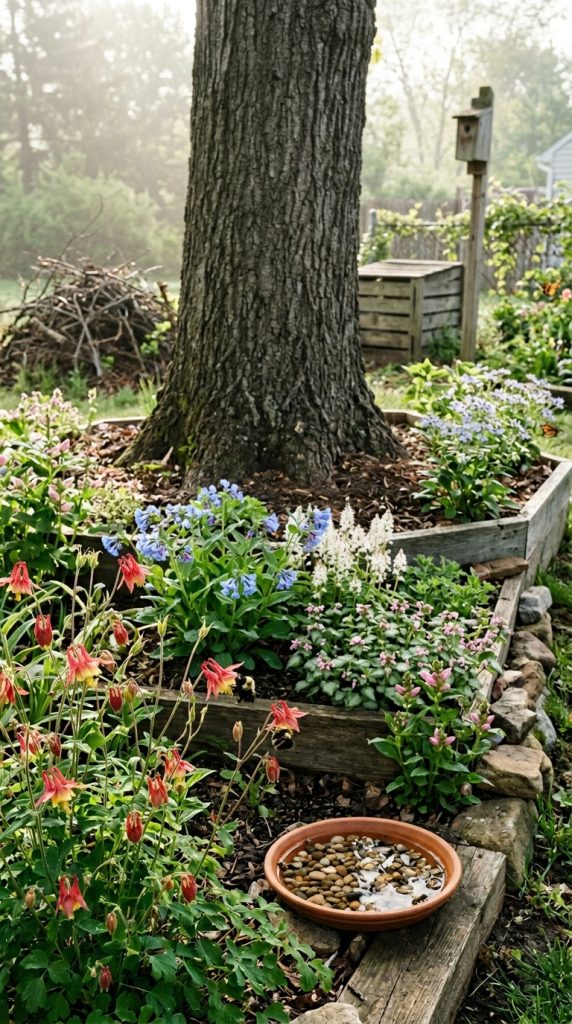
Your raised garden bed around a tree can serve a purpose beyond looking pretty. Transform it into a dedicated pollinator habitat that feeds bees, butterflies, and beneficial insects all season long.
Choose native flowering plants that bloom at different times. Spring ephemerals like Virginia bluebells and wild ginger wake up early before the tree fully leafs out. Summer bloomers like spotted deadnettle and foamflower handle deep shade. Fall flowers like turtlehead and blue wood aster provide late-season fuel for migrating monarchs.
Pros:
- Supports local ecosystem and declining pollinator populations
- Native plants require less water and care
- Blooms across multiple seasons keep interest high
- Educational opportunity for kids and neighbors
Cons:
- Native plants can be harder to find at big box stores
- Some look less “tidy” than traditional garden center plants
Skip the tropical impatiens and begonias that offer zero value to wildlife. Instead, plant a ring of wild columbine, which hummingbirds adore, underplanted with creeping phlox for ground coverage. Add a small shallow dish of water with pebbles for drinking insects. Within one summer, I watched my tree bed transform from a purely ornamental space into a buzzing hub of activity. That felt better than any perfectly matched color scheme.
15. The Seasonal Rotation System
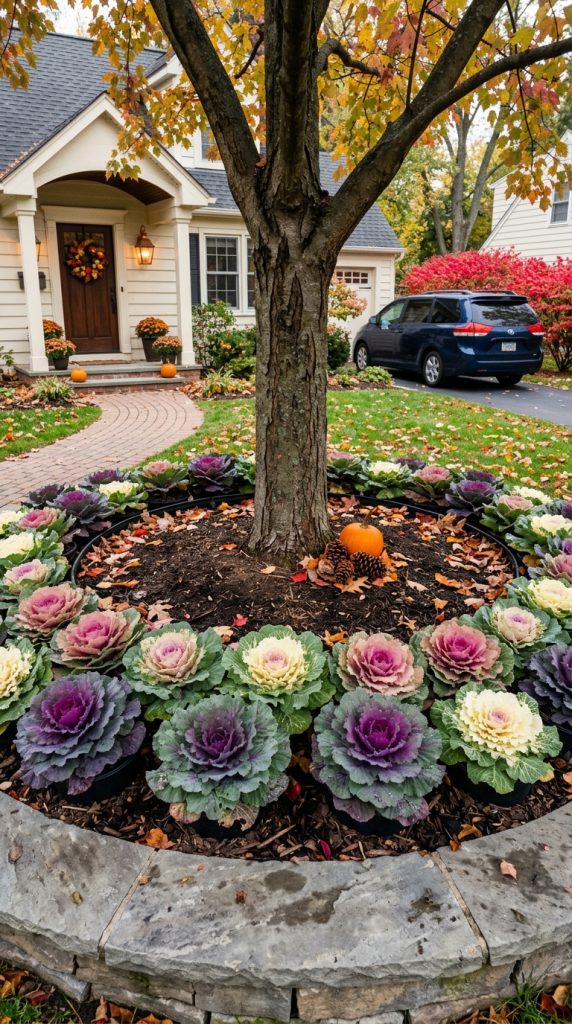
Here’s the advanced move for gardeners who crave variety. Instead of planting permanent perennials, treat your raised garden bed around a tree as a rotating stage for seasonal stars.
Leave the bed as plain mulched soil most of the year. Then, four times annually, add temporary planters or directly plant seasonal annuals that you’ll remove when they finish. Spring gets a ring of daffodils and pansies. Summer switches to coleus and tuberous begonias. Fall brings ornamental kale and flowering cabbage. Winter gets a simple greens display of holly branches and pine cones arranged in the empty bed.
Pros:
- Completely new look every season
- No permanent commitment to plant placement
- Easy to skip a season if life gets busy
- Seasonal planting matches holiday decorating
Cons:
- Higher long-term cost from buying annuals repeatedly
- More physical work than permanent plantings
The secret is building your bed with a removable inner liner or using large nursery pots sunk into the bed to hold seasonal plants. When one season ends, lift out the pots and drop in new ones. I use ten-inch plastic grower pots buried up to their rims in the bed soil. Each season, I swap the pots themselves. The bed looks permanent, but I can change my plant palette in under an hour.
Bringing It All Together Around Your Tree
Walking back through all fifteen ideas, what stands out to me most isn’t the construction techniques or the plant combinations. It’s the attitude shift. When I started this project, I thought of my tree as an obstacle. Something in the way of the garden I wanted to create.
Now I see that tree as a partner. Its shade protects my hostas from scorching. Its roots hold the soil in place during heavy rain. Its trunk gives vertical structure that makes my low-growing flowers look even better by contrast.
The right raised garden bed around a tree doesn’t fight the tree. It works around it, respects its needs, and carves out space for beauty in the margins. That two-foot breathing zone isn’t a limitation—it’s a boundary that forces creativity. The shallow soil depth isn’t a weakness—it’s a filter that selects for the most interesting, resilient plants.
Try one idea first. Pick the one that matches your energy level, your budget, and your yard’s specific quirks. The no-dig method if you’re tired just thinking about this. The movable container ring if you rent or love change. The pollinator pit stop if you want to feel like you’re doing something good.
Build it this weekend. Stand back and look at it. Then sit under your tree, listen to the leaves move, and enjoy a space that finally feels complete.

William Martin is a passionate bowler who spends most of his weekends playing the sport. With years of intense experience under his belt, William decided to share his knowledge by creating BOWLING OCEAN. Join me on this journey to explore the world of bowling and discover the tips and tricks to becoming a pro.