15 Raised Garden Bed Animal Protection Ideas
I still remember the morning I walked outside with my coffee, excited to check on my new tomato seedlings, only to find what looked like a miniature war zone. My beautiful raised garden bed was half-empty. Something had used it as a buffet, a bathroom, and a digging pit all in one night.
I stood there holding my empty coffee mug, feeling that unique mix of heartbreak and frustration that only a gardener understands. You build these perfect little soil boxes. You fill them with expensive potting mix. You tuck in your baby plants. And then the local wildlife treats it like a free salad bar.
After years of trial and error, losing countless peppers to mysterious nibblers, and learning the hard way what actually works, I have finally cracked the code. Whether you are fighting squirrels, rabbits, chipmunks, raccoons, or your neighbor’s curious cat, there is a solution that fits your budget and skill level.
Let me walk you through 15 real-world ways to protect your raised garden beds. No fluff. No weird theories. Just honest advice from someone who has tried it all so you do not have to.
1. The Hardware Cloth Floor Liner
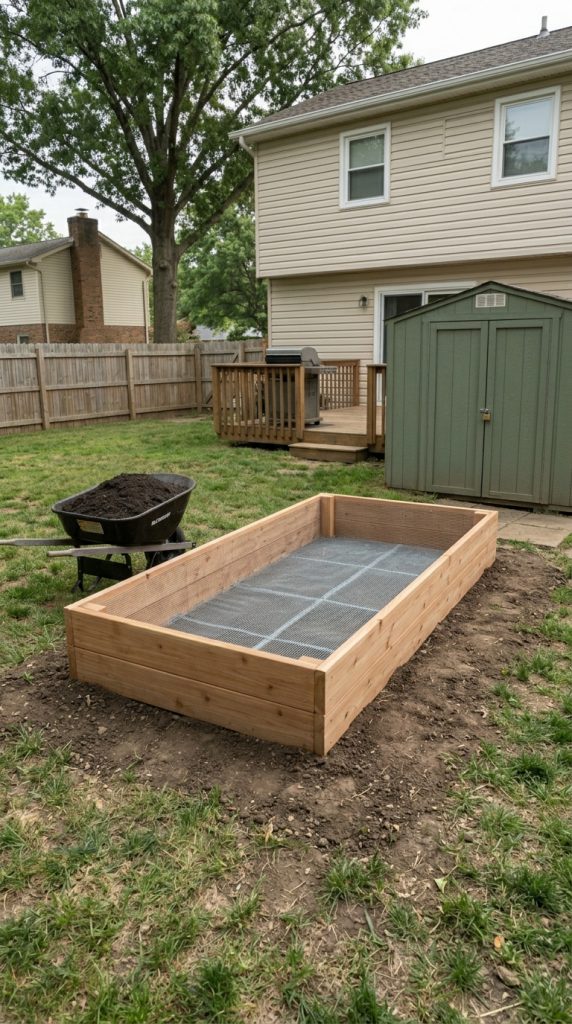
I learned this lesson after watching a groundhog emerge from inside my carrot bed like it was his personal apartment. Digging from underneath is a sneak attack most beginners do not see coming. The solution is stopping them before they ever enter the soil.
You want to grab a roll of half-inch hardware cloth. This is not chicken wire. Chicken wire is too flimsy. Hardware cloth is thick, galvanized steel mesh that rodents cannot chew through. Cut it to fit the exact footprint of your raised bed, then staple it to the bottom frame before you add a single scoop of dirt.
Pros
- Permanently blocks voles, moles, gophers, and groundhogs
- Lasts for over a decade without rusting
- Does not harm animals, just blocks their path
- Adds structural strength to the bottom of your bed
Cons
- Costs more than landscape fabric upfront
- Takes thirty extra minutes during initial build
Think of this as an insurance policy you install once and forget about. I added this to all four of my beds five years ago, and not a single digger has broken through since. If you are building new beds, do not skip this step.
2. A DIY PVC Hoop Tunnel with Netting
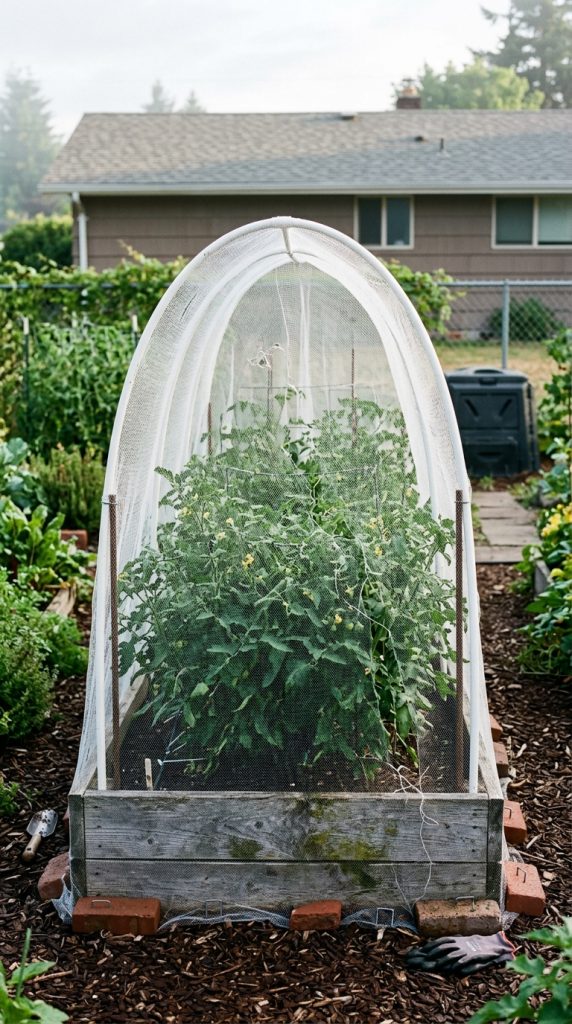
Sometimes the enemy comes from above. Birds pecking at your strawberries, squirrels yanking out your bean sprouts, or chickens scratching up your mulch. I tried draping loose nets over my beds, but they tangled, tore, and looked terrible. Then I discovered the magic of PVC hoops.
Buy some half-inch PVC pipes and a bag of rebar stakes. Cut the PVC into long arcs, slide the ends over the rebar hammered into the bed corners, and you have a simple hoop frame. Drape lightweight bird netting or insect mesh over the hoops and secure the edges with brick pieces or garden staples.
Pros
- Lifts netting off your plants so they can grow freely
- Easy to remove for weeding and harvesting
- Costs under twenty dollars for a standard bed
- Protects against birds, squirrels, and even heavy rain
Cons
- Netting can snag on clothing and gloves
- Not strong enough against raccoons or large dogs
The first time you walk outside and see a squirrel sitting on the netting, confused about why he cannot reach your tomatoes, you will feel like a genius.
3. Motion-Activated Sprinkler
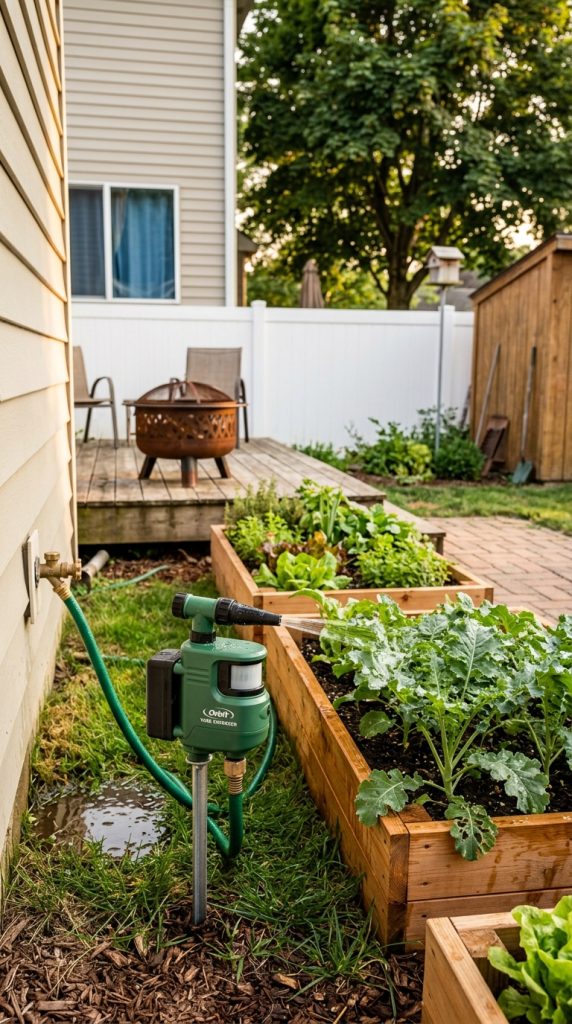
I resisted this idea for years because it sounded silly. A sprinkler that attacks animals? But after losing an entire kale crop to rabbits in three nights, I got desperate. And honestly, this thing is hilarious to watch.
The device connects to your garden hose and uses a motion sensor to blast a sudden burst of water toward any movement. Animals hate surprises. One spray teaches them that your garden is a scary, wet place they should avoid. You can position it to cover multiple raised beds at once.
Pros
- Works on every animal including deer, cats, and raccoons
- No chemicals or traps involved
- Waters your garden at the same time
- The surprise effect trains animals to stay away permanently
Cons
- You will forget it is on and scare yourself at least twice
- Requires a water hose connection nearby
- Not ideal for freezing climates in winter
Set it up for two weeks, and the local wildlife will reroute their path around your yard. Just warn your delivery driver.
4. A Sturdy Wooden Cage with Chicken Wire
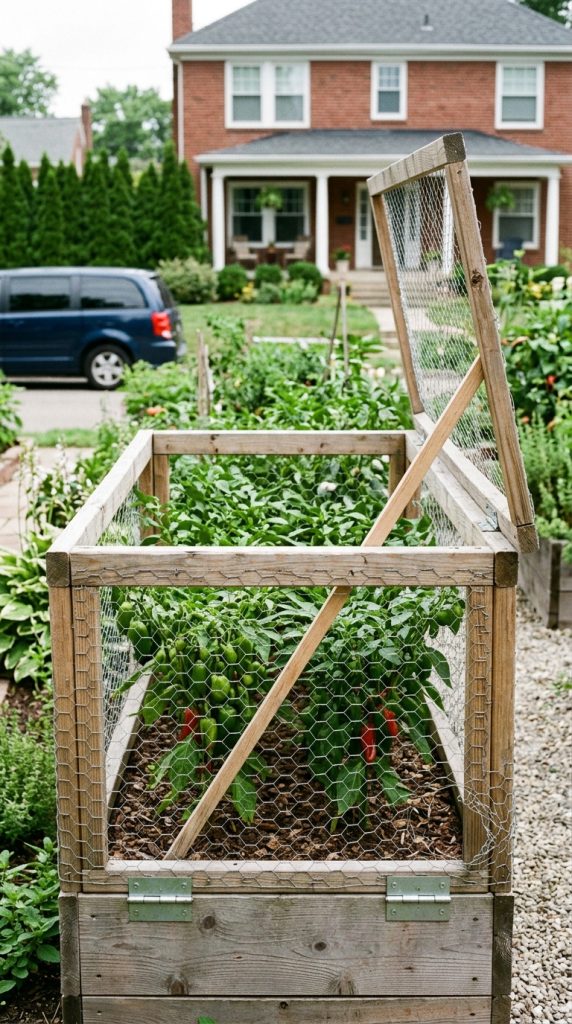
For gardeners dealing with persistent raccoons or opossums, netting and sprinklers will not cut it. Those clever little hands can undo clips and push through weak barriers. You need a fortress. I built my first cage after a raccoon family threw a party in my corn bed and left nothing but destroyed stalks.
Build a rectangular frame using two-by-two lumber that sits directly on top of your raised bed. Staple half-inch chicken wire over every side and the top. Attach the whole box using hinges on one side so you can lift it open like a car hood to tend your plants.
Pros
- Physically impossible for animals to breach
- Lasts for years with basic outdoor wood sealant
- Doubles as a trellis for climbing plants
- Keeps out every pest from squirrels to bears
Cons
- Requires basic saw and drill skills
- Makes harvesting slightly less convenient
- Costs around fifty to seventy dollars in materials
Yes, it looks a bit industrial. But when you are eating fresh green beans while your neighbor complains about rabbits, you will not care.
5. Spicy Pepper Powder Barrier
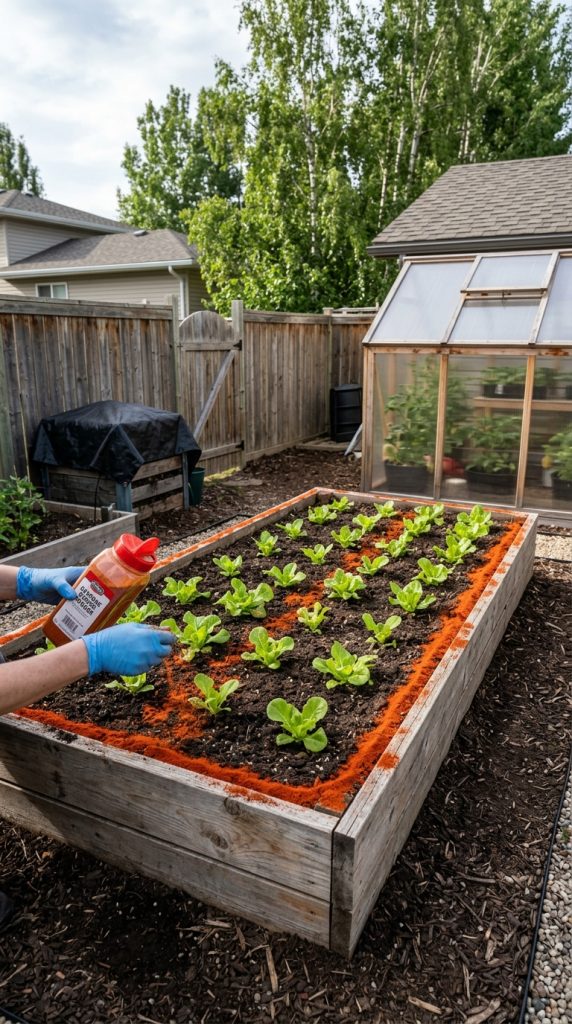
This is my favorite low-budget trick. Animals have incredibly sensitive noses and taste buds. Capsaicin, the compound that makes peppers hot, irritates mammals while leaving birds completely fine. You can use this to your advantage without hurting anything.
Buy a large container of cayenne pepper powder or crushed red pepper flakes from any grocery store. Sprinkle a generous line around the entire perimeter of your raised bed and lightly dust the soil surface. Reapply after heavy rain.
Pros
- Costs under five dollars per application
- Completely natural and non-toxic
- Does not harm plants or soil life
- Works on rabbits, squirrels, chipmunks, and groundhogs
Cons
- You will inevitably get some on your hands and rub your eyes
- Needs reapplication every few days
- Less effective in very wet climates
Wear gloves when applying this stuff. Future you will thank present you when you are not sobbing over the kitchen sink.
6. Upside-Down Plastic Forks

Let me share something that sounds absolutely ridiculous but works surprisingly well. Take a handful of plastic forks from the takeout drawer. Push them into the soil around your tender seedlings with the tines pointing up. The fork prongs create an uncomfortable texture that cats and squirrels avoid.
I laughed when my grandmother suggested this. Then I tried it around my lettuce starts after something kept digging them up overnight. The next morning, everything was undisturbed. The forks create a physical deterrent that feels wrong under little paws.
Pros
- Essentially free if you save disposable forks
- Takes thirty seconds to install
- Completely harmless to animals and children
- Blends in once plants grow large enough
Cons
- Looks a little strange for the first few weeks
- Plastic forks can break in freezing temperatures
- Does not stop determined large animals
This is not your permanent solution. But it is a fantastic stopgap while you build something sturdier.
7. Companion Planting with Repellent Herbs
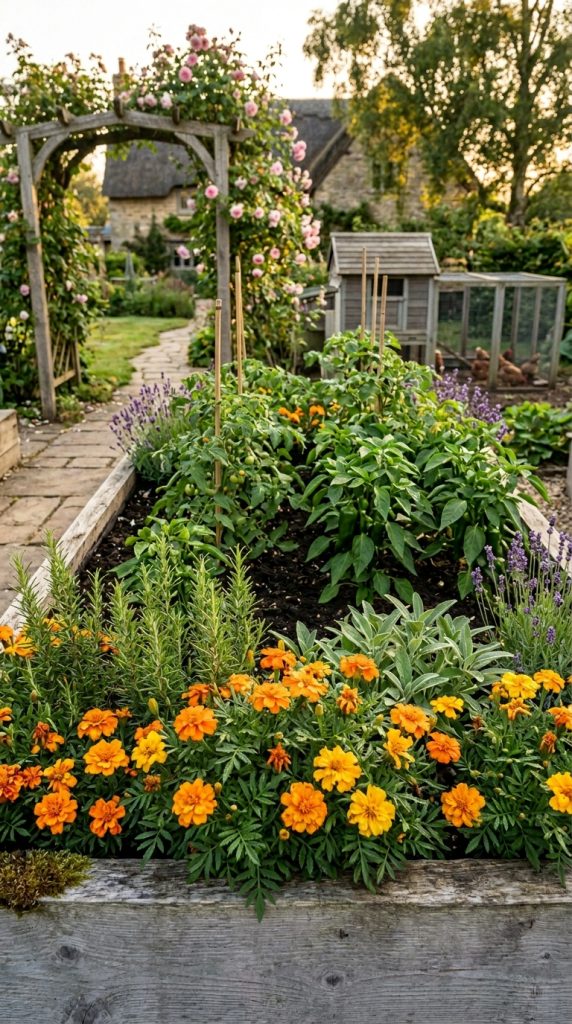
Nature has its own pest control system if you know which plants to use. Certain herbs give off strong scents that confuse and repel common garden pests. The best part is you get to eat the repellent.
Plant marigolds around the edge of your raised bed to deter rabbits and rodents. Add rosemary, sage, and lavender throughout your garden. These herbs release essential oils that mask the smell of your vegetables and irritate animal noses. Onions and garlic work well as border plants too.
Pros
- Makes your garden more beautiful and fragrant
- Provides free herbs for your kitchen
- Requires no extra work beyond normal planting
- Attracts beneficial pollinators
Cons
- Repels, but does not physically block animals
- Less effective against very hungry pests
- Some herbs can spread aggressively
I plant marigolds in every corner of every bed now. They look cheerful, bloom all season, and my rabbit damage dropped by about eighty percent.
8. A Foldable Metal Trellis Cover
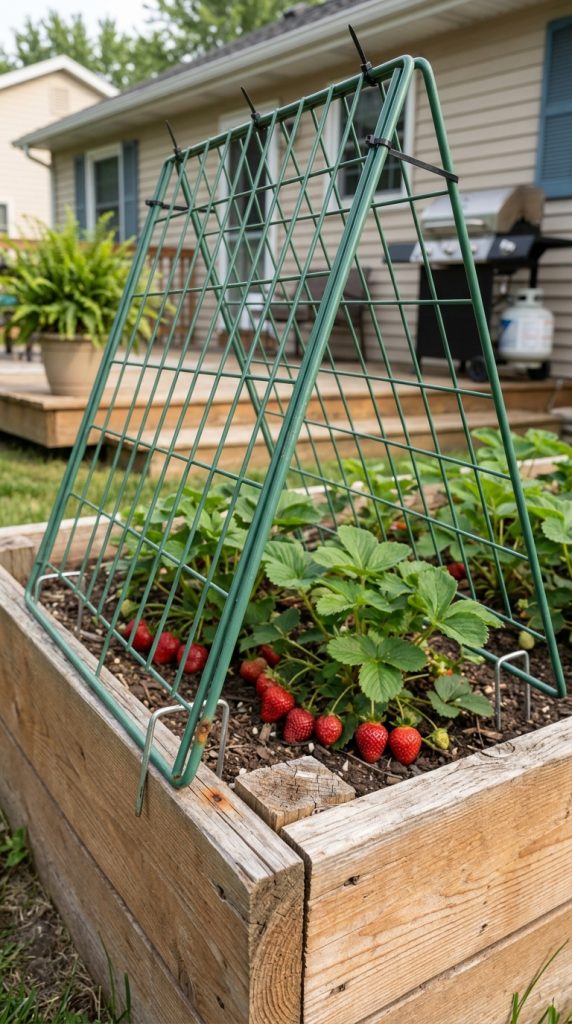
If you already use trellises for peas, cucumbers, or pole beans, you are halfway to animal protection. Buy lightweight metal garden trellis panels from a hardware store. Lean them together over your bed to create an A-frame shape. Zip-tie the tops together and secure the bottoms with landscape staples.
The metal grid creates a physical barrier that animals cannot squeeze through while still letting in full sun and rain. When you need to work in the bed, simply lift off the panels and lean them against a fence.
Pros
- Uses materials you may already own
- Sets up and breaks down in under a minute
- Extremely durable against chewing and scratching
- Looks attractive compared to netting
Cons
- Metal panels cost around twenty dollars each
- Not ideal for very wide beds
- Heavy panels can crush small plants if dropped
This became my go-to solution for my strawberry bed after I got tired of untangling bird netting every single day.
9. Blood Meal Fertilizer as a Scent Deterrent
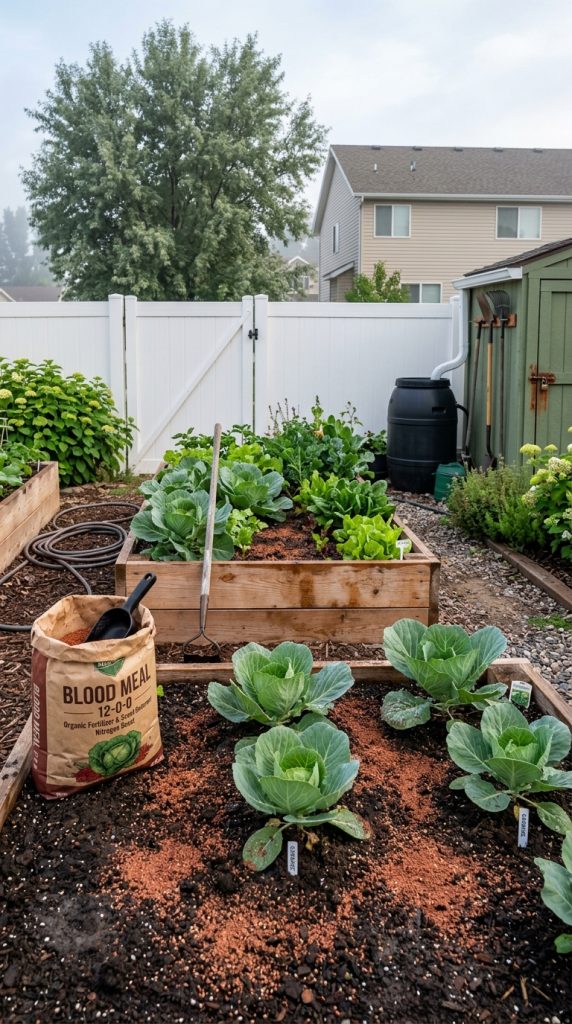
Blood meal is a common organic fertilizer made from dried animal blood. It is packed with nitrogen, so your plants love it. But herbivores like rabbits and deer hate the smell because it reminds them of predators.
Sprinkle blood meal on the soil surface around your vulnerable plants. Reapply every two to three weeks or after heavy rain. The scent fades naturally as it breaks down, adding nutrients to your soil the whole time.
Pros
- Feeds your plants while protecting them
- Completely natural and organic
- Readily available at any garden center
- Effective against deer, rabbits, and groundhogs
Cons
- Smells exactly like you would expect dried blood to smell
- Dogs may try to roll in it
- Can attract unwanted scavengers if over-applied
Apply this in the evening after watering. The smell dissipates overnight, but the deterrent effect lingers for days.
10. An Elevated Bed on Legs with Smooth Metal
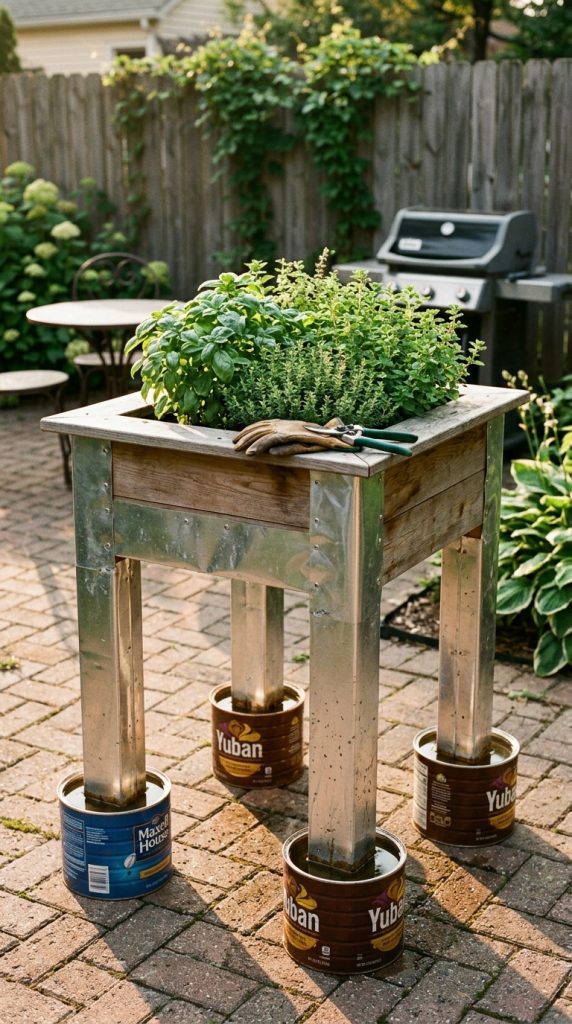
Raising your entire garden off the ground changes the game completely. Standard raised beds sit on the soil, giving animals easy access. Elevated beds on tall legs create a distance that many creatures cannot or will not cross.
You can buy pre-made elevated beds or build your own using cedar boards and four-by-four legs. Wrap each leg in smooth aluminum flashing. The slippery metal prevents squirrels and raccoons from climbing up. Place the legs inside wide coffee cans filled with water as a moat against ants and slugs.
Pros
- Saves your back from bending over constantly
- Makes weeding and harvesting genuinely pleasant
- Blocks access for rabbits, groundhogs, and small rodents
- Extends your growing season by warming faster
Cons
- Costs significantly more than ground-level beds
- Requires more frequent watering
- Limits root depth for large plants like tomatoes
My elevated herb bed sits right outside my kitchen door. I can snip fresh basil without putting shoes on, and nothing has touched it in two years.
11. A Reflective Tape Spiral
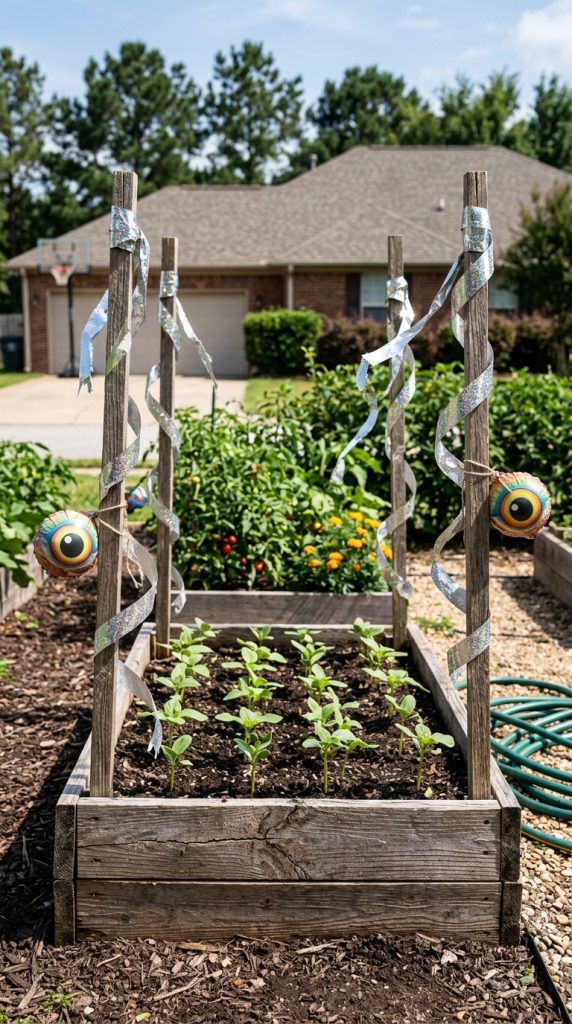
Birds and squirrels rely heavily on eyesight to find food. You can confuse their vision using cheap reflective materials without building any structures. Buy a roll of reflective scare tape from a garden center. Cut long strips and twist them before tying to stakes around your bed.
The twisting creates random flashes of light as the wind moves the tape. Predator eye decoys, which are simply balloons or cutouts with large painted eyes, add another layer of visual confusion when placed around your garden.
Pros
- Costs under ten dollars
- Takes five minutes to install
- Moves with the wind so the effect never stops
- Harmless to all animals
Cons
- Only works during daylight hours
- Animals can eventually figure out it is fake
- The flashing light can annoy some people
Replace the tape every two months as the sun breaks it down. Spin your spirals loosely so they dance in the breeze.
12. A Buried Ledge of Hardware Cloth
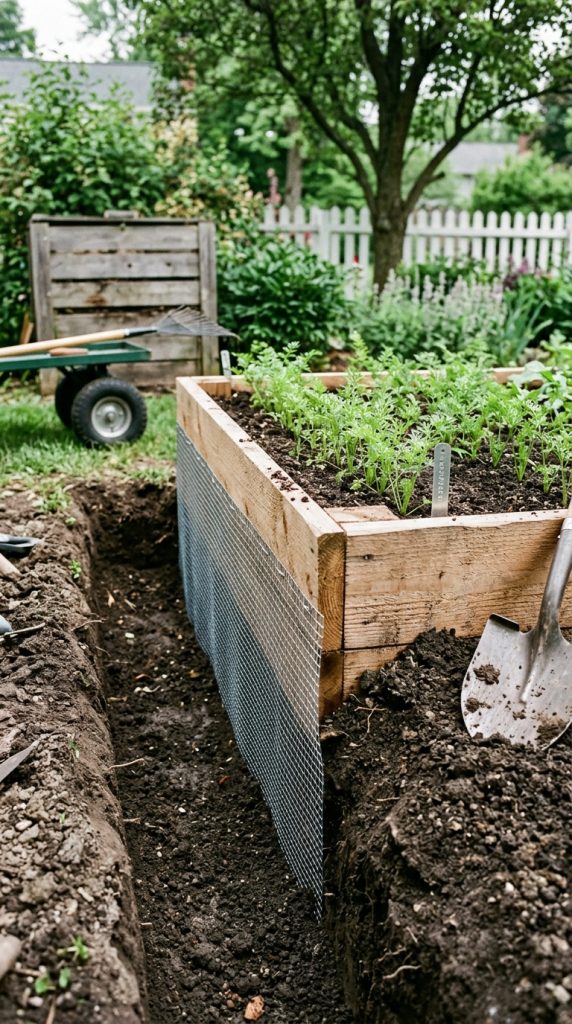
Some diggers do not come up from below. They come from the side and tunnel under your raised bed frame. I discovered this when I found a tunnel entering my bed from the outside, traveling under the wooden wall, and emerging right next my carrot roots.
You stop this by creating an underground apron. Dig a shallow trench around your raised bed. Bury a twelve-inch wide strip of hardware cloth vertically, with the top edge stapled to the bottom of your bed frame. Animals dig down, hit the metal, and give up.
Pros
- Stops determined diggers permanently
- Works alongside the floor liner for complete protection
- Invisible once covered with mulch or grass
- Does not interfere with plant roots
Cons
- Requires digging a trench around your entire bed
- Adds another hour to installation time
- Harder to retrofit on existing beds
Do this during initial installation. Trying to add it later means emptying your bed or doing very awkward trenching.
13. Ultrasonic Solar Repellent Stakes
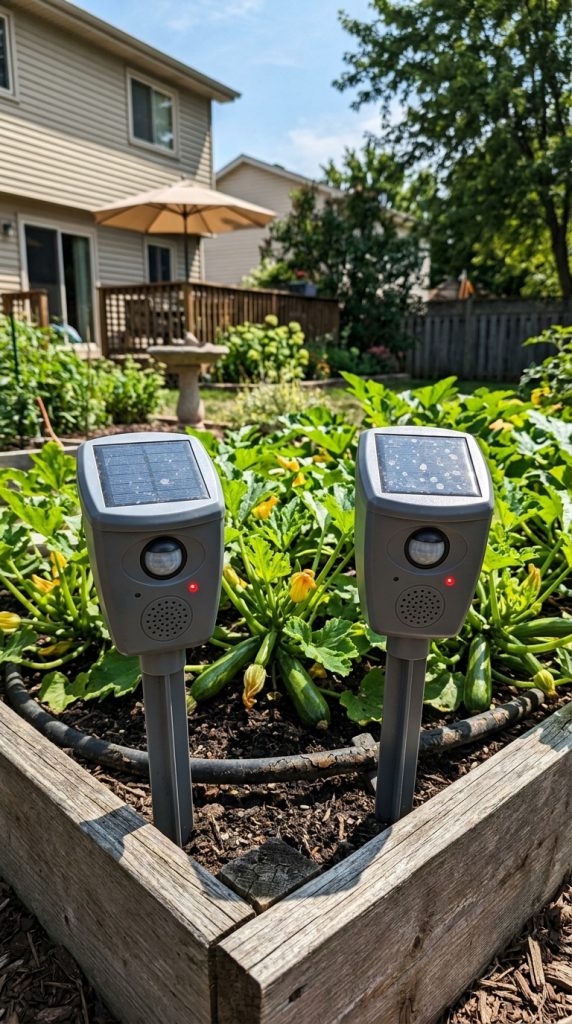
Electronic repellents felt like a gimmick to me until a friend let me borrow hers after a skunk moved into her garden. The stakes emit a high-frequency sound every time a motion sensor detects movement. Humans cannot hear it. Animals find it deeply unpleasant.
Place two to three stakes around your raised garden beds facing outward. The solar panel on top keeps them charged during the day so they work all night. Most models let you switch between frequencies for different animals.
Pros
- Covers a large area with one device
- No batteries to replace if solar works well
- Weatherproof and durable
- Effective on multiple pest types at once
Cons
- Costs thirty to fifty dollars per stake
- Some young people and pets can hear the frequency
- Does not work well in shady locations
Read reviews before buying because quality varies wildly. The cheap ones break after one rainstorm. Spend a little more for a reputable brand.
14. Tightly Woven Insect Mesh Instead of Netting
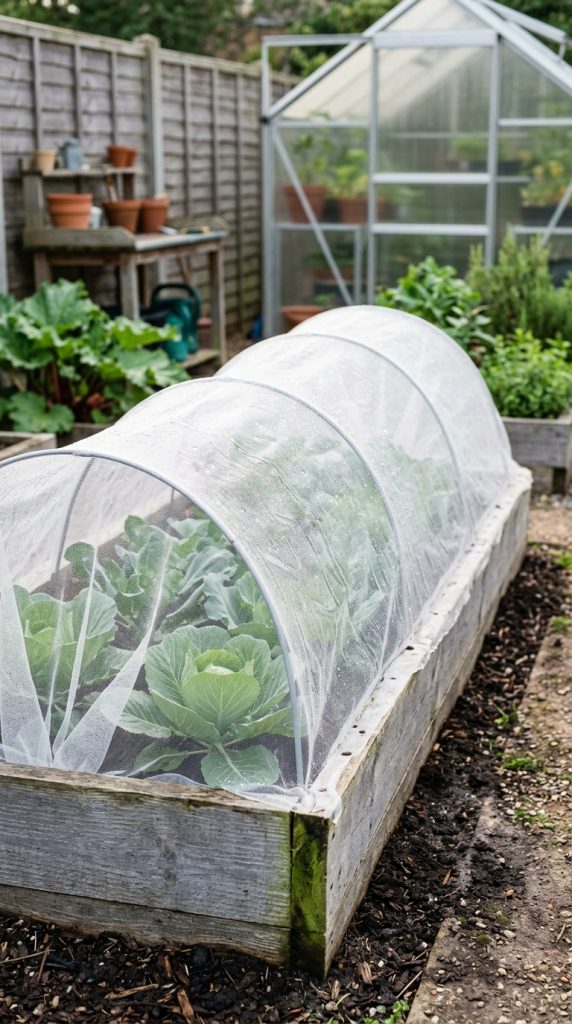
Standard bird netting has one major flaw. Small snakes, lizards, and even baby mice slip right through the holes. If you are protecting against tiny invaders, you need smaller gaps. Insect mesh or floating row cover has holes measured in millimeters rather than inches.
Drape the mesh directly over your plants or attach it to a hoop frame. The fabric still lets through ninety percent of sunlight and all the rain your plants need. But it stops cabbage moths, grasshoppers, and tiny rodents completely.
Pros
- Blocks the smallest garden pests effectively
- Provides light frost protection in spring and fall
- Soft fabric will not snag or tear easily
- Allows water and air to pass through freely
Cons
- Can trap heat on very hot summer days
- More expensive than standard netting
- Slightly reduces light transmission
I use this on my brassica bed exclusively because cabbage moths were destroying everything. Not a single caterpillar since I switched.
15. A Scentsational Rotation System
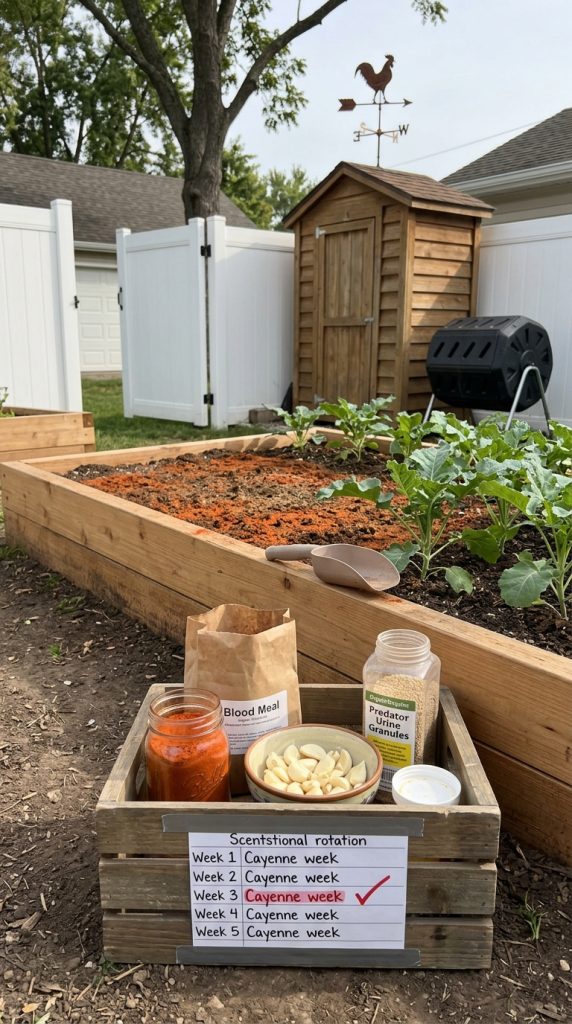
Animals are smart. They learn. If you use the same deterrent every day, eventually they figure out it is not actually dangerous. The secret to long-term success is variety. Keep them guessing.
Create a rotation of scent-based repellents and switch them every week. One week use cayenne pepper. The next week use blood meal. The following week use crushed garlic cloves scattered around. Week four use predator urine granules from a garden center. Just when the animals start ignoring one smell, you hit them with a new one.
Pros
- Prevents animals from acclimating to any single deterrent
- Uses inexpensive, readily available materials
- Works synergistically with physical barriers
- Keeps your garden adaptable to different pest pressures
Cons
- Requires remembering to switch products weekly
- You will need to buy multiple products upfront
- Less effective if you only have one pest type
Write your rotation on a calendar taped inside your garden shed door. Future you will appreciate the organization when you are not losing sleep over nibbled lettuce.
Putting It All Together Without Losing Your Mind
Here is what I want you to take away from this entire guide. You do not need to build a military-grade bunker around your vegetables on day one. Start small. Pick the one pest causing you the most frustration right now. Choose two ideas from this list that fit your budget and energy level. Install them this weekend.
Gardening is supposed to bring you peace, not stress. Every single idea I shared here came from my own failures and late-night Google searches after finding destroyed plants. You get to skip all that trial and error. You get to start with solutions that actually work.
My favorite combination is the hardware cloth floor liner installed once and forgotten, plus a motion-activated sprinkler for everything above ground. That pair handles ninety percent of my pest problems across four large beds. Find your own favorite pair. Try one idea first. Add another next month if you need it.
Your raised garden beds hold the food you worked hard to grow. You deserve to eat that food instead of feeding the local wildlife. Pick one idea today. Just one. Get it done. Then enjoy your coffee tomorrow morning without that dread of walking outside to see the damage.

William Martin is a passionate bowler who spends most of his weekends playing the sport. With years of intense experience under his belt, William decided to share his knowledge by creating BOWLING OCEAN. Join me on this journey to explore the world of bowling and discover the tips and tricks to becoming a pro.