Raised Garden Beds Cinder Blocks: 15 Clever and Stylish Ways to Build the Perfect Garden
If you’ve ever scrolled through Pinterest and thought, “I could totally build that garden,” then cinder block raised beds might be your next weekend obsession. They’re cheap, durable, easy to design, and surprisingly stylish if you play your cards (or rather, your blocks) right. Whether you’re growing tomatoes, herbs, or a full veggie patch that screams “urban farmer,” raised garden beds made from cinder blocks can transform your outdoor space into something both beautiful and productive.
Let’s walk through 15 design-savvy, practical ideas for creating raised garden beds with cinder blocks that blend creativity, durability, and just the right touch of personality.
1. The Classic Rectangular Bed (Timeless and Functional)
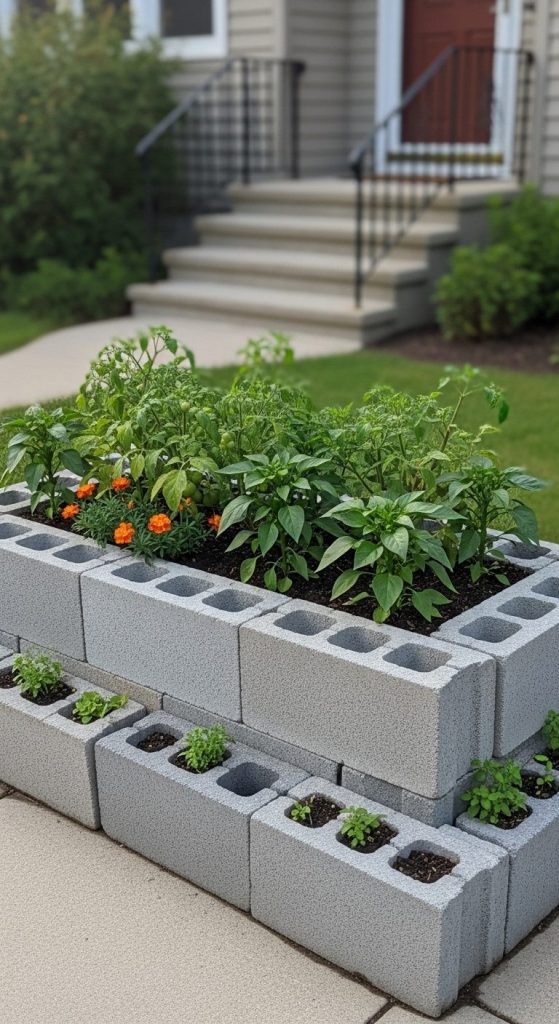
Sometimes simple is perfect. A rectangular cinder block garden bed gives you that clean, geometric shape that looks great in almost any yard.
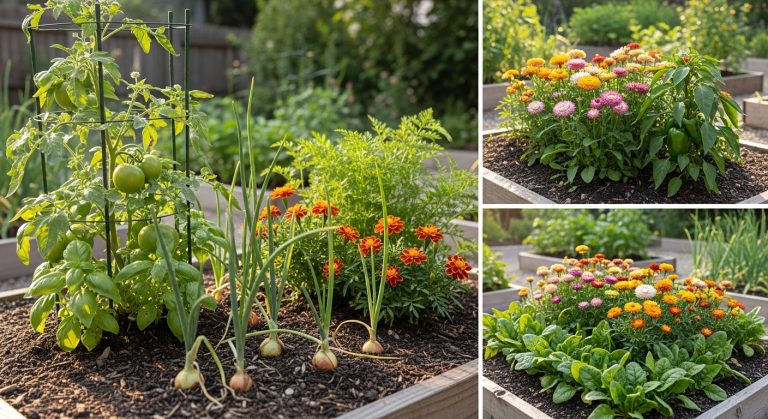
You can line up the cinder blocks two layers high, leaving the hollow spaces upright for planting herbs or marigolds. This dual-purpose layout looks neat and helps repel pests naturally.
Pros:
- Sturdy and beginner-friendly design.
- Easy to expand or modify.
- Works for both flowers and vegetables.
Cons:
- Straight edges can look a little industrial unless softened with plants or mulch borders.
Design Tip: Paint the exterior blocks in soft earth tones or terracotta for a natural look that blends with your garden’s soil and greenery.
2. L-Shaped Corner Bed for Small Yards
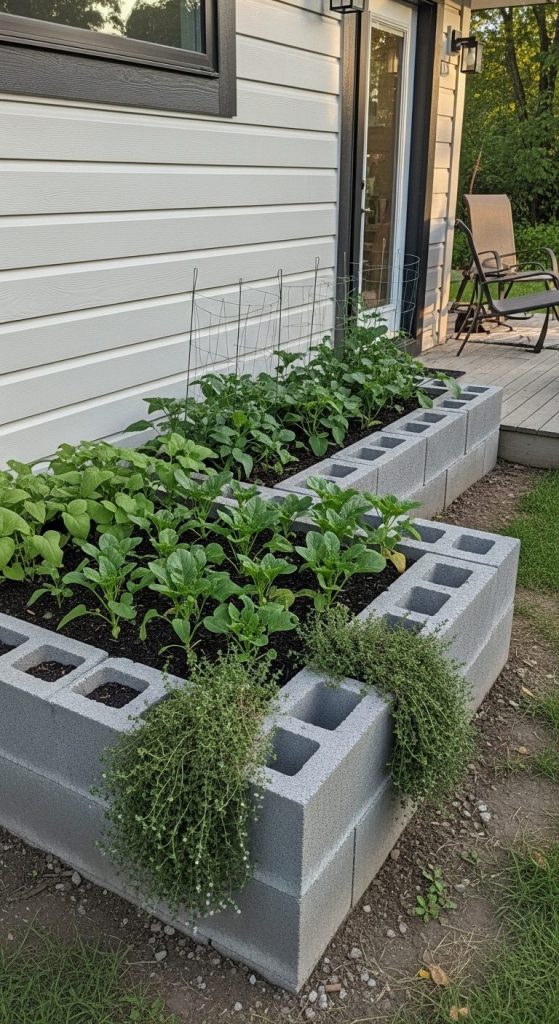
If your backyard feels more like a balcony, the L-shape layout makes the most of limited space. It tucks neatly into corners while giving plenty of depth for soil and root growth.
Why it works: It creates two long rows of planting space, perfect for different crops—say, lettuce on one side, peppers on the other.
Pros:
- Space-efficient for small gardens.
- Easy to reach from both sides.
- Adds structure to unused corners.
Cons:
- Can require more precise measuring to fit neatly.
Design Tip: Use the cinder block holes as mini planters for creeping thyme or trailing vines that drape beautifully over the edge.
3. Cinder Block Herb Spiral
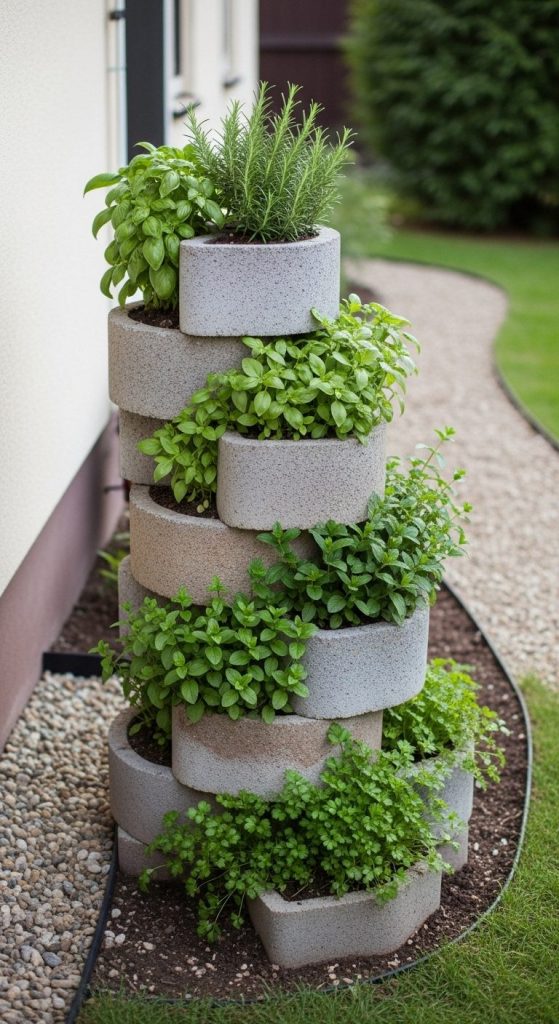
A twist—literally—on the traditional garden bed. Stack the blocks in a spiral formation that rises gradually toward the center.
It’s visually stunning and allows different herbs to enjoy their preferred microclimates: basil at the top for warmth, mint near the cooler base.
Pros:
- Adds a sculptural element to your yard.
- Ideal for compact herb gardens.
- Excellent drainage control.
Cons:
- Slightly trickier to stack evenly.
Design Tip: Mix gray and white blocks for contrast or cover the exterior with climbing rosemary for a rustic Mediterranean feel.
4. Tiered Cinder Block Vegetable Garden
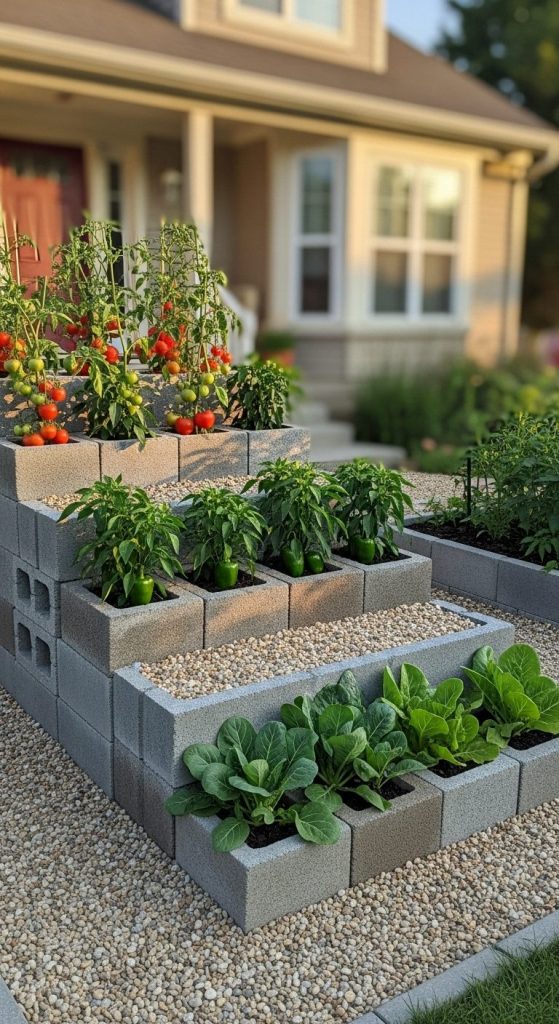
Want to make your garden look like a magazine feature? Create a tiered design—think of it like garden steps made of cinder blocks.
Each level can hold different plants according to sunlight needs. Taller plants (like tomatoes) go up top, and leafy greens (like spinach) enjoy partial shade below.
Pros:
- Visually dynamic and practical.
- Great for sloped yards.
- Easy access for watering and harvesting.
Cons:
- Needs careful leveling to prevent shifting.
Design Tip: Add pea gravel between tiers for a polished, modern look.
5. Cinder Block Garden with Built-In Bench
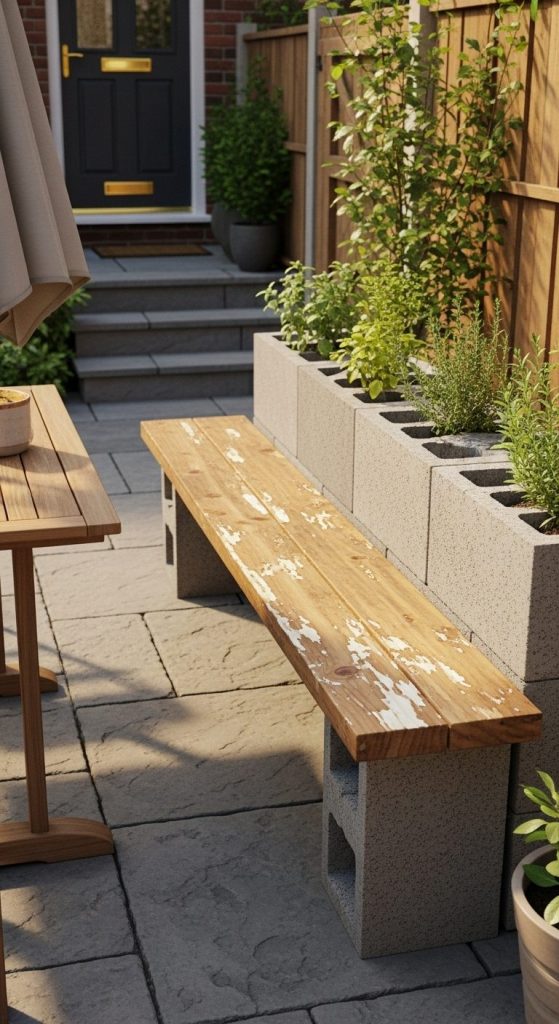
Who says garden beds can’t double as furniture? With a few extra blocks, you can extend one side of your bed and add a wooden plank to create a bench.
It’s a great way to combine seating with functionality—perfect for sipping morning coffee while checking on your seedlings.
Pros:
- Space-saving two-in-one design.
- Looks stylish and intentional.
- Adds comfort and accessibility.
Cons:
- Slightly heavier structure to move later.
Design Tip: Stain the wood in a warm tone to contrast beautifully against the raw gray blocks.
6. Painted Cinder Block Garden Art Bed
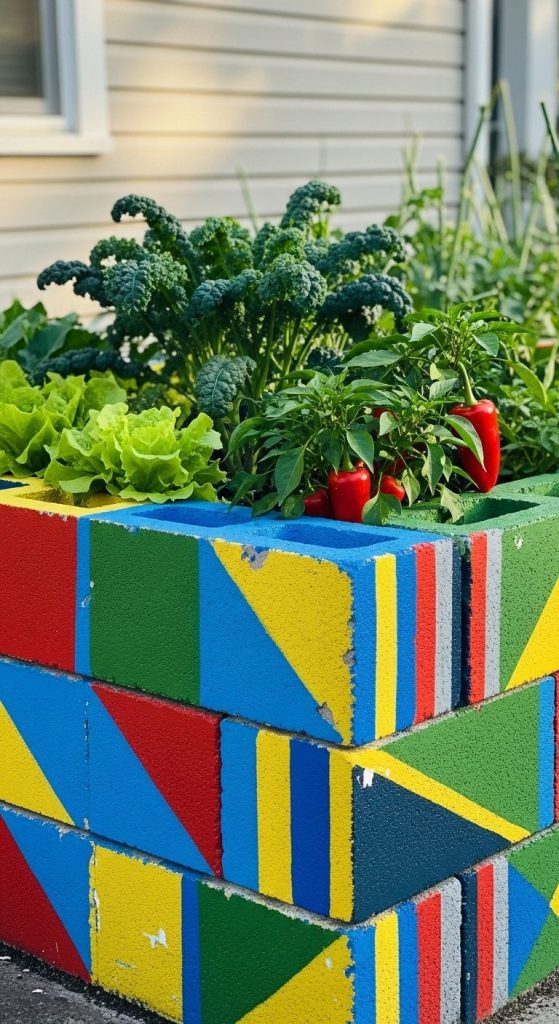
Turn your raised bed into an art project. Paint your cinder blocks with colorful patterns, stencils, or even simple solid hues for a bold statement.
Pros:
- Customizable and expressive.
- Perfect for family projects.
- Brightens up dull backyards.
Cons:
- Paint may fade under strong sun; use exterior-grade paint.
Design Tip: Try geometric murals or abstract gradients that match your outdoor décor.
7. Vertical Block Wall Garden
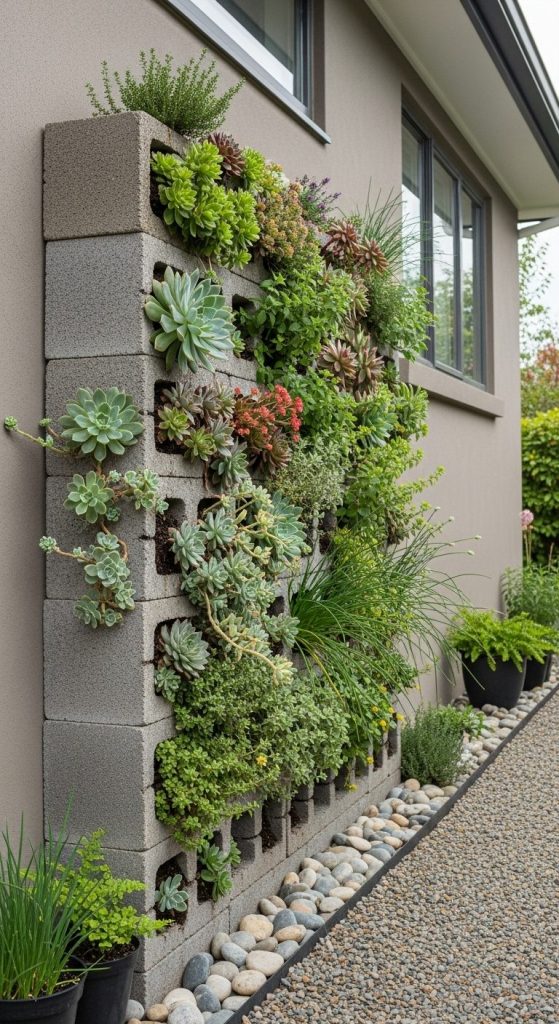
Running out of floor space? Go vertical. Stack cinder blocks into a wall formation with their hollow sections facing outward for planting pockets.
This method turns plain blocks into mini planters, ideal for herbs, succulents, or strawberries.
Pros:
- Saves ground space.
- Modern, minimal aesthetic.
- Great for balcony or patio gardens.
Cons:
- Requires careful balancing or mortar to stabilize.
Design Tip: Mix in white river stones or moss between the blocks for a softer finish.
8. Cinder Block Raised Bed with Wood Inlay
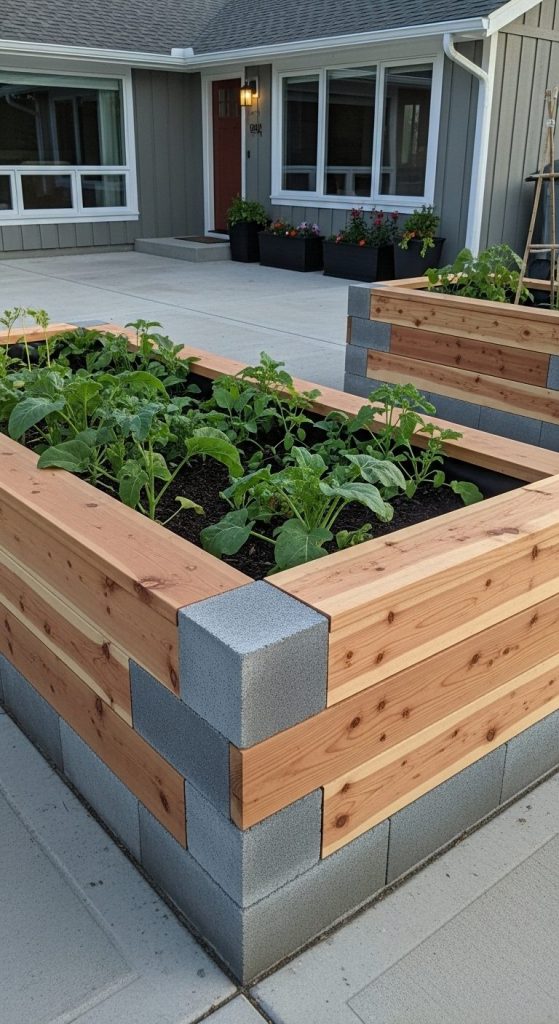
Combine the durability of cinder blocks with the warmth of wood. Use wooden planks inside the bed frame to line the walls, creating a visually appealing contrast.
Pros:
- Modern, upscale look.
- Prevents soil contact with concrete.
- Adds warmth and texture to design.
Cons:
- Wood may need sealing over time.
Design Tip: Use cedar or redwood—they’re naturally rot-resistant and look gorgeous against gray concrete.
9. The Modular Garden Grid
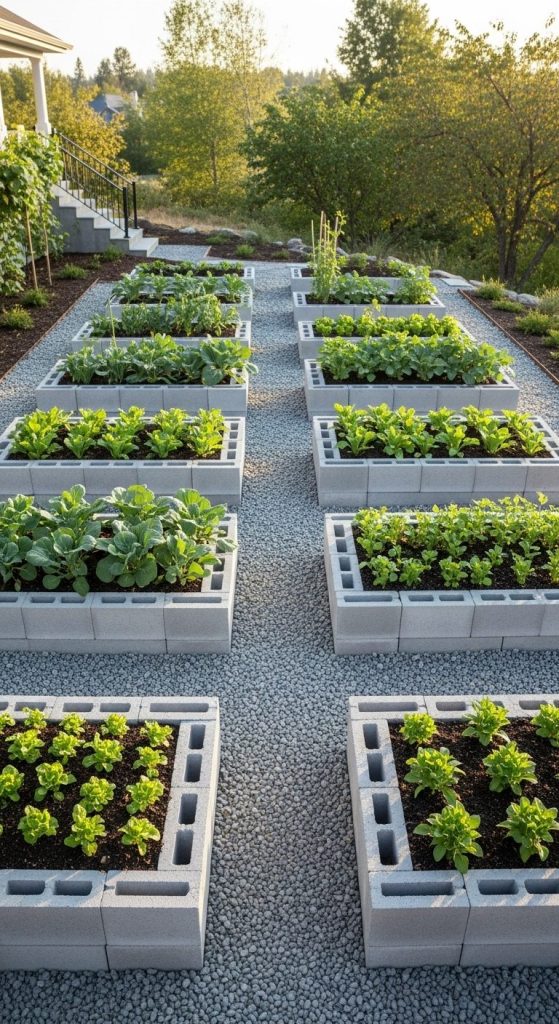
Here’s one for the perfectionists. Create multiple small square or rectangular plots using cinder blocks, arranged in a tidy grid.
This approach makes crop rotation and companion planting a breeze—you can dedicate each section to different veggies each season.
Pros:
- Organized and easy to maintain.
- Ideal for experimenting with plant combinations.
- Scalable to any yard size.
Cons:
- May look too structured for rustic gardens.
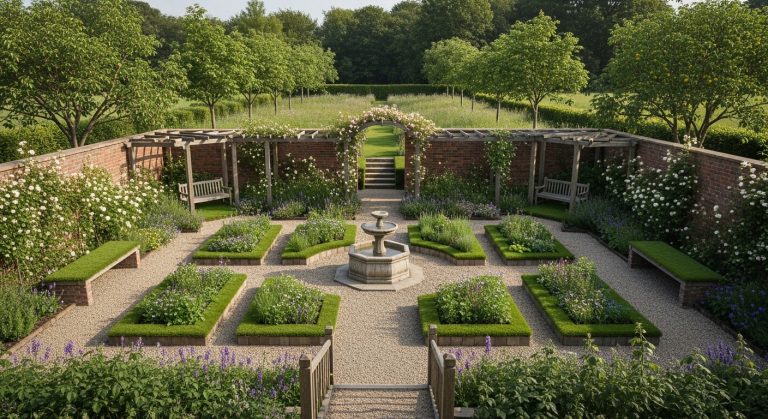
Design Tip: Border each mini bed with gravel paths for that clean, architectural feel.
10. Raised Bed with Built-In Compost Corner
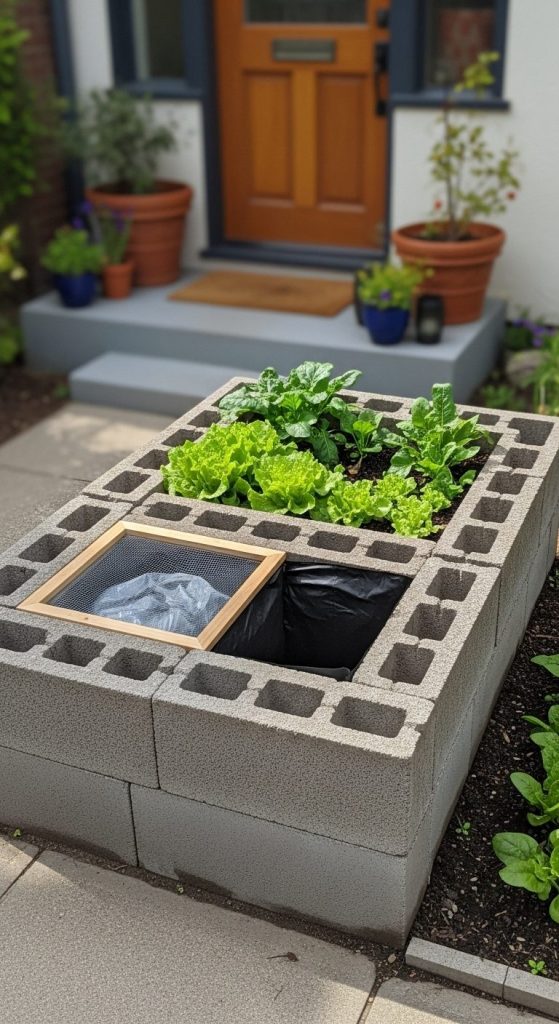
Why separate composting from gardening? Dedicate one cinder block section as a small composting area. The porous nature of cinder blocks allows air flow, aiding decomposition.
Pros:
- Efficient and sustainable.
- Reduces waste and fertilizer cost.
- Keeps everything compact.
Cons:
- Requires attention to prevent odor or pests.
Design Tip: Use a metal mesh cover to maintain airflow while keeping critters out.
11. Cinder Block U-Shaped Garden Layout
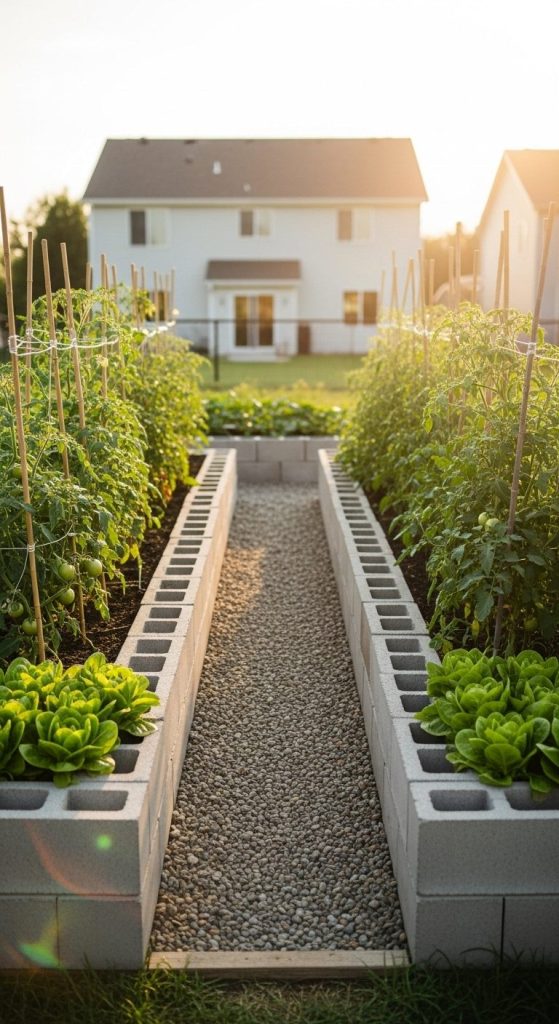
Ever wished you could stand inside your garden bed? The U-shaped layout surrounds you with plants, allowing easy access from the center.
It’s a favorite for serious gardeners because it maximizes reach without constant bending.
Pros:
- Ergonomic and accessible.
- Great visual centerpiece.
- Perfect for larger spaces.
Cons:
- Requires more blocks and space.
Design Tip: Create a focal point in the center—like a birdbath or dwarf fruit tree—to elevate the design.
12. Mini Greenhouse Cinder Block Bed
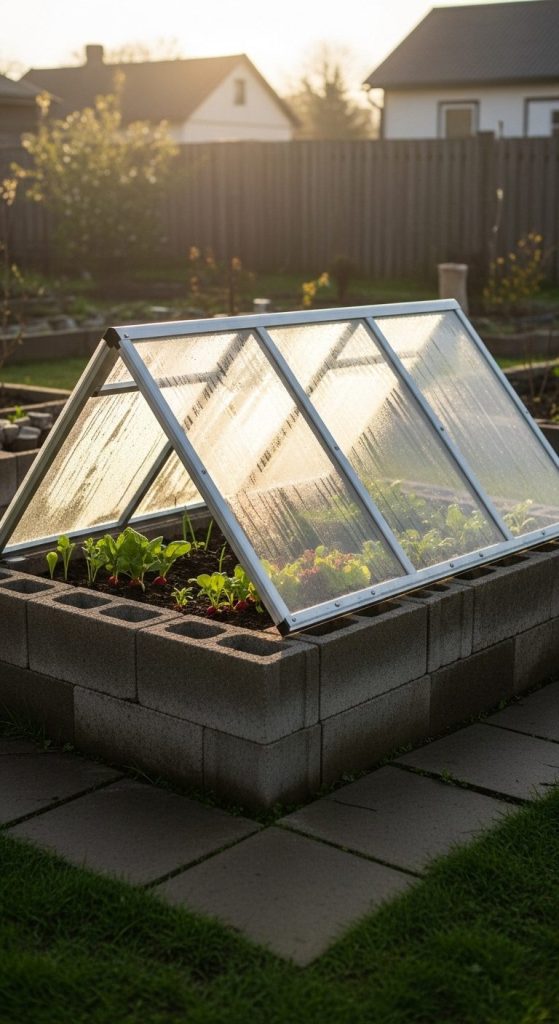
Want to extend your growing season? Build your raised bed with cinder blocks, then add a clear polycarbonate cover or arched PVC frame over it.
Pros:
- Protects plants from frost and pests.
- Ideal for early seedlings or year-round herbs.
- Adds a futuristic aesthetic.
Cons:
- Slightly more complex build.
Design Tip: Use black-painted blocks to retain warmth and help the soil stay cozy for longer.
13. Multi-Color Mosaic Bed
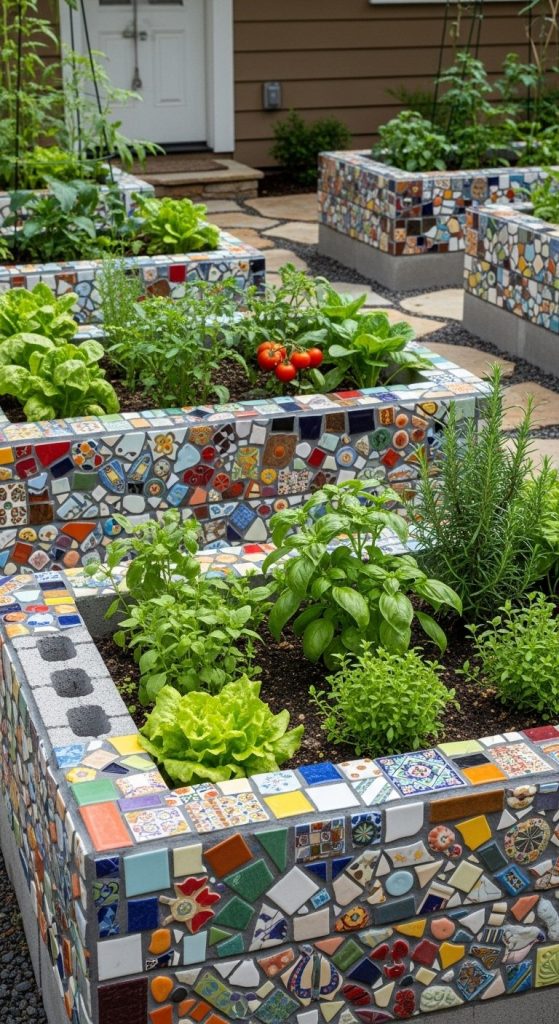
This one’s for the bold designer. Mix different colored cinder blocks or apply mosaic tiles for a handcrafted, artistic look.
Pros:
- Unique and visually stunning.
- Perfect for creative gardens.
- Adds personality to outdoor spaces.
Cons:
- More time-consuming to create.
Design Tip: Use broken ceramic or glass tiles for a boho-chic garden feel.
14. Raised Bed for Pollinator Plants
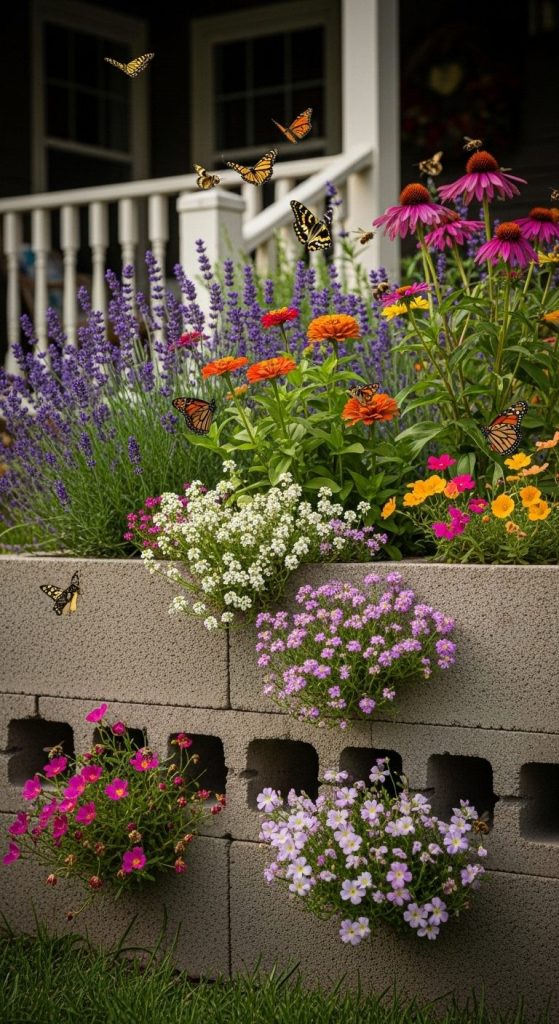
Who says raised beds are only for veggies? Dedicate one cinder block bed to pollinator-friendly plants—lavender, echinacea, and zinnias.
The block holes can hold creeping flowers that overflow the edges, softening the structure beautifully.
Pros:
- Attracts bees and butterflies.
- Low maintenance.
- Enhances garden biodiversity.
Cons:
- Requires some planning to maintain continuous blooms.
Design Tip: Position this bed near your vegetable garden to help boost pollination naturally.
15. Cinder Block Garden Pathway Integration
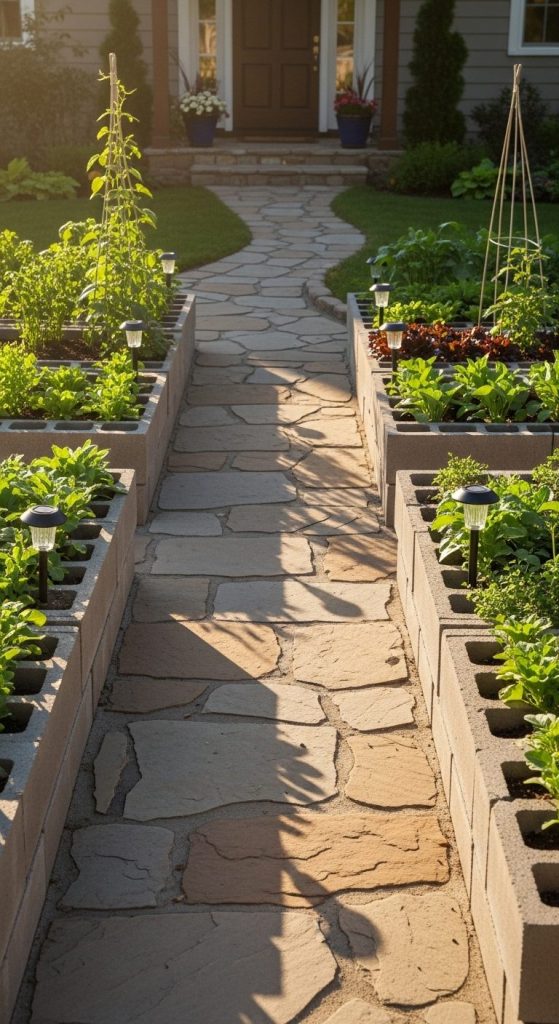
Merge form and function by building your cinder block beds alongside a walking path. Align them symmetrically to frame the walkway, creating a structured yet welcoming garden lane.
Pros:
- Creates visual harmony and flow.
- Defines space for multiple garden zones.
- Great for large or public gardens.
Cons:
- Needs precise spacing for walking comfort.
Design Tip: Add solar lights between blocks for a magical nighttime garden experience.
Final Thoughts
Cinder block raised garden beds aren’t just practical—they’re a canvas for creativity. You can mix, paint, stack, and style them into virtually any configuration your imagination allows. Whether your vibe is modern minimalism or rustic charm, there’s a design here that’ll make you say, “Okay, this is actually genius.”
And the best part? These gardens grow more than plants—they grow pride, patience, and a whole lot of personality in your backyard.

William Martin is a passionate bowler who spends most of his weekends playing the sport. With years of intense experience under his belt, William decided to share his knowledge by creating BOWLING OCEAN. Join me on this journey to explore the world of bowling and discover the tips and tricks to becoming a pro.