15 Small Trees with Non-Invasive Roots for Front Yard (No Cracked Driveways!)
I still remember the horror of watching my neighbor tear out a perfectly good concrete walkway because a pretty little ornamental pear tree decided it wanted to swim toward the house foundation. Roots were popping up through the grass like angry earthworms. It was a mess.
We spend so much time picking trees based on flowers or fall color, but we forget to look at what is going on underground. And honestly? That is where the real trouble (or the magic) happens.
If you want a charming front yard with curb appeal that doesn’t destroy your plumbing or lift your sidewalk, you need the specific crew of plants that play nice underground. I have spent way too many weekends digging holes and fixing landscaping fails, so trust me when I say these 15 small trees with non-invasive roots for your front yard are the actual heroes you are looking for.
Let’s grab a coffee and talk about trees that behave themselves.
1. Japanese Maple (Acer palmatum)
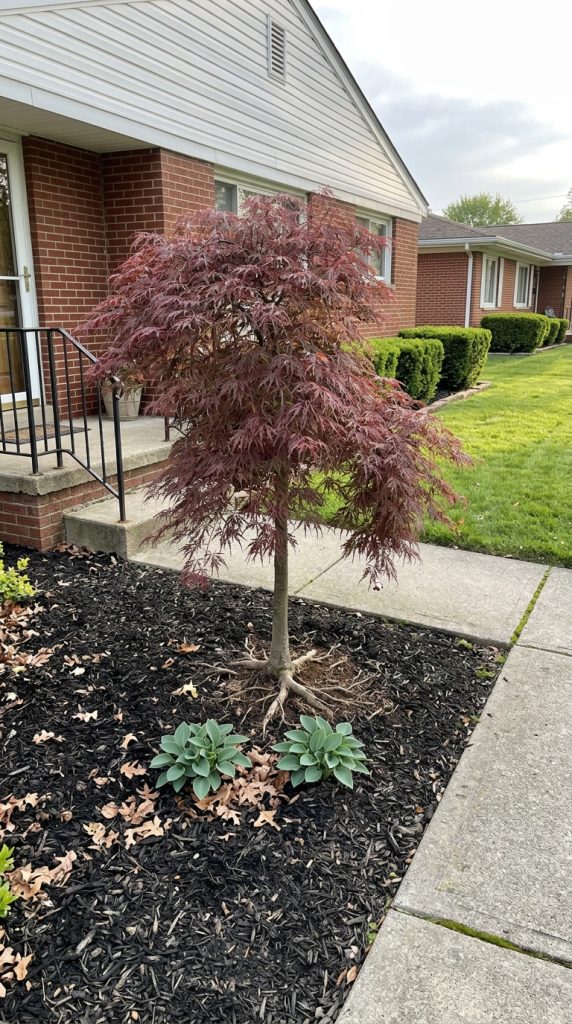
There is a reason these showstoppers are on every garden guru’s wish list. The Japanese Maple is the quiet kid in class who never causes drama. I planted a ‘Bloodgood’ variety three feet from a brick path five years ago, and the ground under it is still root-free enough to plant hostas directly underneath.
Pros:
- Root system is fibrous and shallow but stays put. No searching for water in your pipes.
- Unreal beauty. That burgundy or lace-leaf foliage makes your front yard look like a resort.
- Stays small (10–15 feet). Perfect for a corner bed or near an entryway.
Cons:
- Can be pricey at the nursery. A good specimen runs $60–$150.
- Slow grower. You are playing the long game here.
These trees prefer afternoon shade if you live in a hot zone. I learned that the hard way when mine got scorched in July. If you want a peaceful, zen vibe without worrying about foundation repair bills, this is your winner. Give it well-drained soil and a little mulch, and it will reward you for decades.
2. Crape Myrtle (Lagerstroemia)
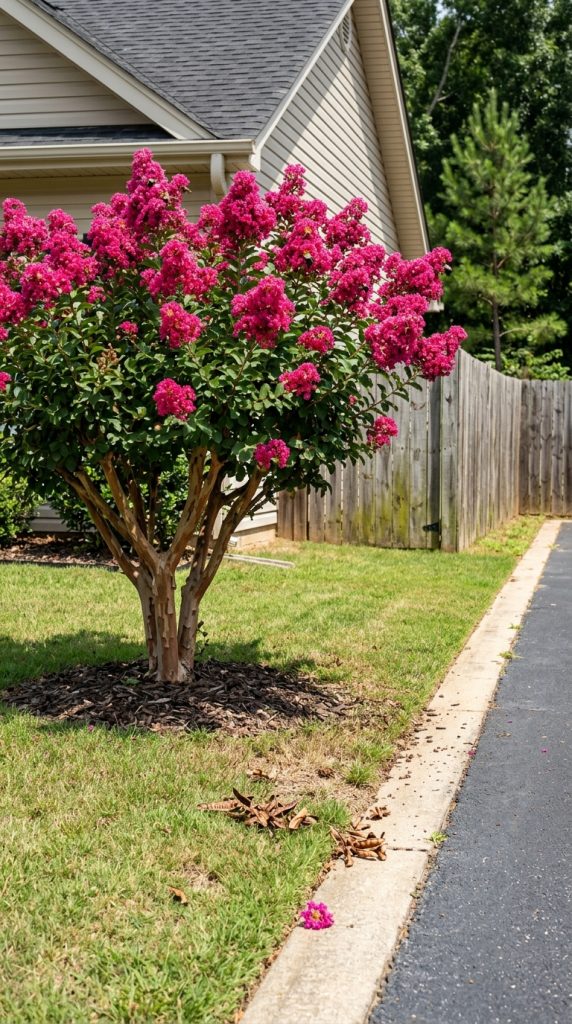
If you live in the South (or anywhere with humid summers), you have seen these blooming their heads off. But here is the trick: Go for the dwarf varieties like ‘Tonto’ or ‘Acoma’. The big ones can be rowdy, but the small cultivars stay put. I love how the bark peels away to reveal smooth, cinnamon-colored wood in winter.
Pros:
- Non-invasive root system. Seriously, they send down deep anchor roots but avoid spreading horizontally to crack things.
- Blooms for 100+ days. Hot pink, white, purple, or red flowers.
- Drought-tolerant once established. Water bills stay low.
Cons:
- Leaves drop in winter, so be ready for a small rake session.
- Pruning mistakes lead to “crape murder” (those ugly knuckles). Watch a YouTube tutorial first.
The roots match the top growth. If you buy a variety that maxes out at 8 feet, the roots stay tight and compact. I have seen these planted right next to driveway edges with zero lifting. Plus, the pollinators go absolutely nuts for the flowers. It is a joyful, mess-free tree.
3. Eastern Redbud (Cercis canadensis)
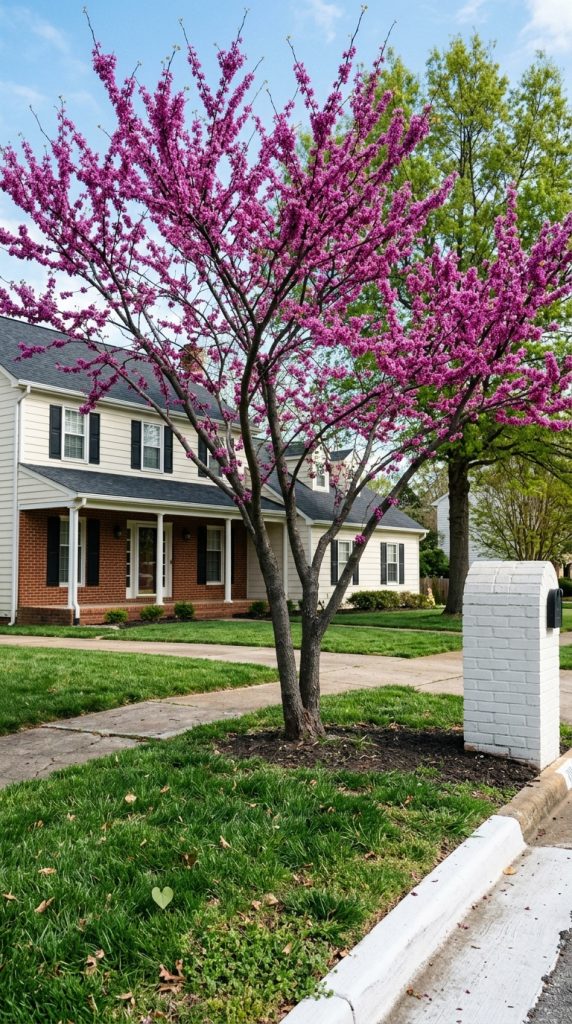
I have a soft spot for Redbuds because they are native to North America, which means they evolved to fit our ecosystem without being bullies. In early spring, before most trees even wake up, the branches explode with hot magenta pea-like flowers. It looks like someone sprinkled cotton candy on a stick.
Pros:
- Taproot system. They send one big root down deep, not wide.
- Heart-shaped leaves that look amazing on Pinterest mood boards.
- Attracts butterflies like a magnet.
Cons:
- Short lifespan (20–30 years). But honestly, that is fine for a front yard tree.
- Can get a little leggy if you don’t prune it when young.
These trees rarely exceed 20 feet, so they fit perfectly under power lines or near windows. The roots are not aggressive seekers of water, so your underground irrigation lines stay safe. My aunt has one four feet from her porch, and the concrete is pristine. Just give it full sun to part shade, and enjoy the spring show.
4. Dogwood (Cornus florida)
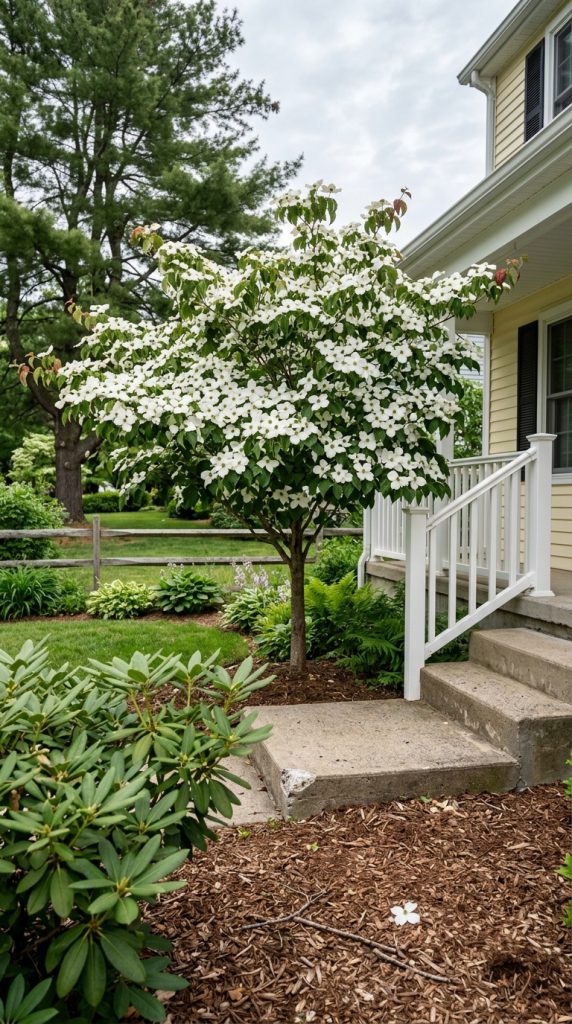
When people ask me for a tree that feels like a hug, I always say Dogwood. The white or pink bracts in spring are iconic. But what surprised me is how gentle the root system is. Dogwoods are understory trees, meaning they evolved to live in the shadow of bigger pines and oaks without competing violently for space.
Pros:
- Roots are shallow but non-aggressive. They weave around obstacles instead of breaking them.
- Stunning four-season interest. Berries in fall, red foliage, and interesting bark in winter.
- Perfect size for a small front yard (15–25 feet).
Cons:
- Needs well-drained soil. They hate wet feet (soggy roots rot quickly).
- Susceptible to powdery mildew if air doesn’t flow.
Here is a piece of advice: Plant your Dogwood where it gets morning sun and afternoon shade. If you put it in a scorching western exposure, it will stress out and might get sick. But treat it right, and the roots will never leave their lane. It is a polite, elegant choice for a cottage-style garden.
5. Hawthorn (Crataegus)
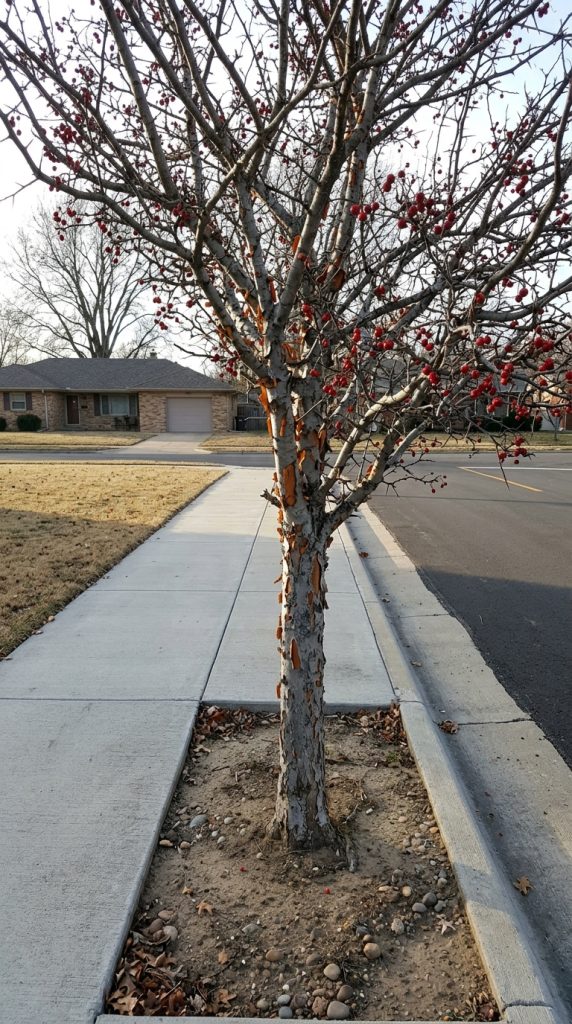
Do you want something a little different? Hawthorns are tough as nails. They handle city pollution, compacted soil, and bad weather like a champ. The ‘Winter King’ variety is my favorite because it has silvery bark and bright red berries that stay on the tree all winter. Birds love it.
Pros:
- Root system is dense but localized. No wandering explorers here.
- Thorny branches act as a natural security barrier under windows (thieves hate them).
- Tolerates clay soil like a boss.
Cons:
- Thorns are sharp. Wear gloves when pruning.
- Gets a minor leaf spot sometimes, but it rarely kills the tree.
I put one of these five feet from my sidewalk, and five years later, the concrete looks brand new. Because the roots stay in a tight ball, you can plant them closer to hardscapes than most other trees. Just make sure you get a thornless variety if you have little kids running around. Hawthorns bring a rustic, prairie vibe that feels very nostalgic.
6. Serviceberry (Amelanchier)
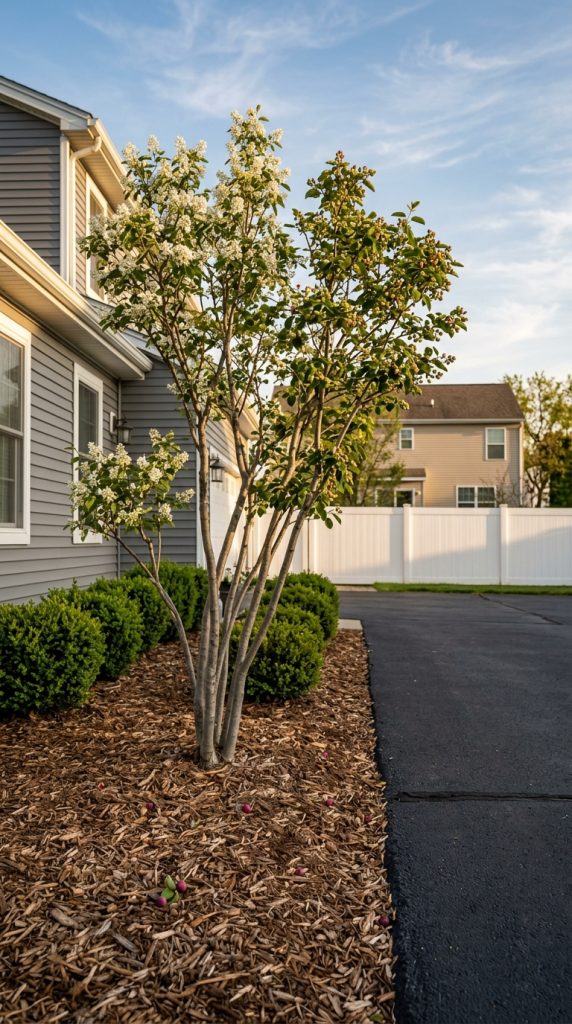
This one is a triple threat. Pretty flowers in spring, edible berries in June, and fire-orange leaves in fall. It is also known as “Juneberry” or “Saskatoon.” The roots are incredibly well-behaved because this plant is essentially a large shrub that you prune into a small tree shape.
Pros:
- Roots stay within the drip line. Very predictable.
- You get to eat the berries. They taste like blueberries with a hint of almond.
- Native to most of North America. Zero maintenance once established.
Cons:
- Birds will steal your berries before you get to them. Invest in some netting.
- Multi-trunk form means you have to prune to keep it looking like a tree.
You can plant a Serviceberry as close as 5 feet to a house foundation without breaking a sweat. I have seen them used in parking lot islands, which tells you how tough and non-invasive the roots are. Plus, knowing you grew your own fruit in the front yard is a total flex on the neighbors.
7. Fringe Tree (Chionanthus virginicus)
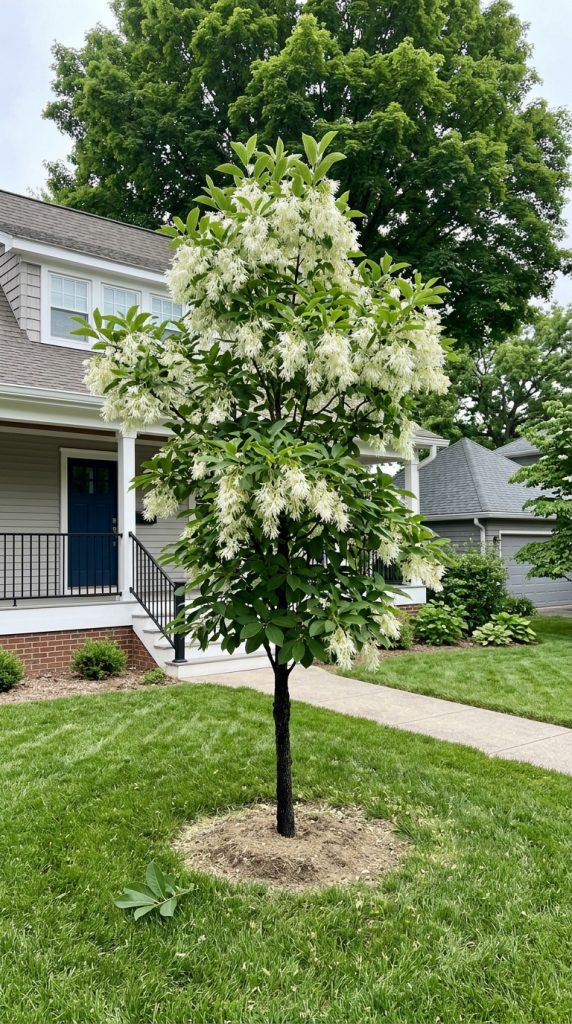
Have you ever smelled a Fringe Tree in full bloom? It smells like creamy, honeyed cereal milk. The flowers look like shredded white fringe hanging down. It is rare enough to be unique but easy enough for a beginner. The root system is a deep taproot with very few lateral roots.
Pros:
- Almost zero surface roots. Your lawn mower will thank you.
- Gets about 15 to 20 feet tall. Perfect for a two-story house scale.
- No serious pest or disease issues. Like, ever.
Cons:
- Slow to leaf out in spring. You will stare at a bare stick for a while.
- Needs male and female for berries, but you only need one for flowers.
If you are terrified of roots cracking your foundation, this is the safest bet on the list. The roots go straight down like a carrot, not sideways like an octopus. Plant it as a specimen tree in the middle of your front lawn, and let it do its thing. It looks fantastic with hydrangeas planted underneath because the roots don’t compete.
8. Star Magnolia (Magnolia stellata)
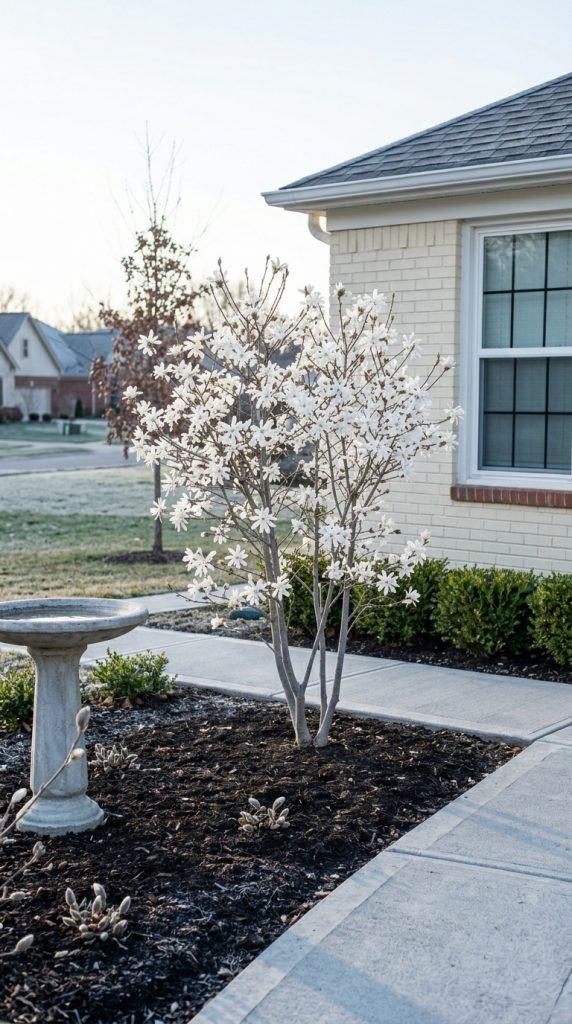
People usually think of the huge Southern Magnolia with roots like pythons. But the Star Magnolia is the delicate cousin who does yoga instead of lifting weights. It stays petite (10 to 15 feet) and the roots match that petite energy.
Pros:
- Fuzzy little buds in late winter that look like pussy willows.
- Fragrant white or pink star-shaped flowers very early in spring.
- Very slow growth rate equals very slow root growth.
Cons:
- The flowers often get zapped by a late frost. Mother Nature is mean sometimes.
- Needs protection from harsh wind.
I planted a ‘Royal Star’ about four feet from a concrete birdbath base. Three years later, the birdbath hasn’t shifted a millimeter. These trees prefer to be the star of a small bed rather than a huge lawn. They are perfect for a foundation planting because the roots are too wimpy to cause any damage. Just give them rich, slightly acidic soil.
9. American Hornbeam (Carpinus caroliniana)
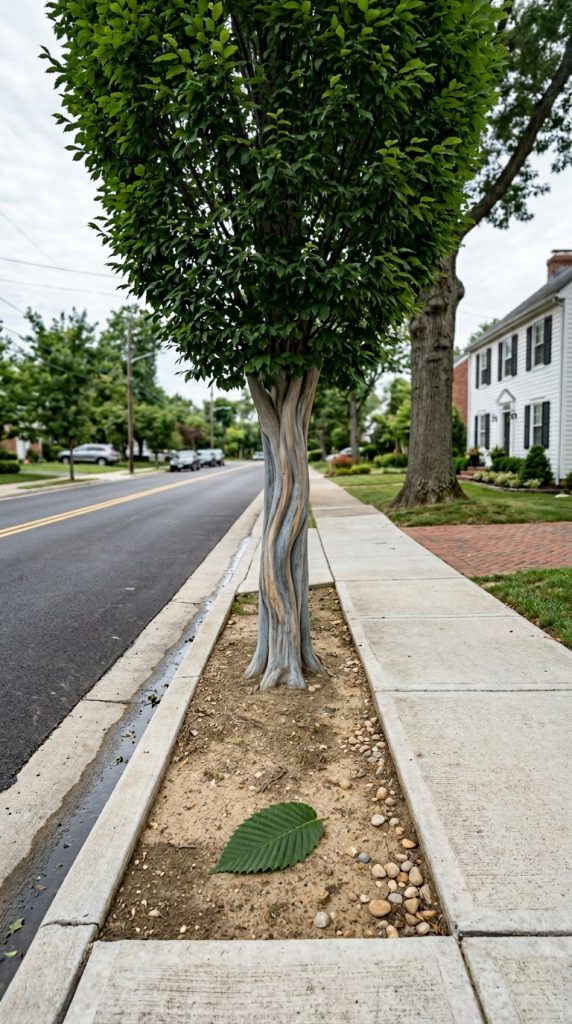
Also called “Musclewood” because the bark looks like rippling muscles under the skin. This tree is a native champion that grows slowly and stays small. Arborists love this tree because it is practically bulletproof. The root system is incredibly fine and fibrous, like a mat of hair rather than thick cables.
Pros:
- Roots are so fine they can’t break mortar or concrete.
- Tolerates both full sun and full shade. Name another tree that does that.
- Beautiful fluted trunk that looks amazing in winter snow.
Cons:
- Hard to find at big box stores. You might need a local native nursery.
- Fall color is just yellow-brown. Not flashy, but reliable.
If you have a narrow planting strip between the sidewalk and the street, plant this tree. It thrives in compacted soil where other trees suffocate. Because the roots lack the brute strength to heave pavement, cities use them as street trees all the time. It is the ultimate “set it and forget it” tree for lazy gardeners (I say that with love).
10. Witch Hazel (Hamamelis)

Here is a fact that blew my mind: Witch Hazel blooms in winter. When everything else is brown and dead, this tree shoots out wispy, ribbon-like yellow or orange flowers that smell like lemon and spice. The roots are shallow but stay extremely localized. They are not interested in traveling.
Pros:
- You get flowers in January or February. Serious mood booster.
- Roots are soft and fleshy, not woody and aggressive.
- Natural astringent properties (you can make your own toner from the bark).
Cons:
- It looks like a shrub unless you prune the lower branches.
- Blooms are easy to miss if you aren’t paying attention.
I put a ‘Diane’ variety (red flowers) near my gas meter, which is usually a no-no zone. The utility company wasn’t worried because the roots don’t grow large enough to interfere with the lines. If you want a conversation starter that won’t destroy your utility bill, Witch Hazel is it. Plus, the squirrels leave it alone.
11. Flowering Crabapple (Malus)
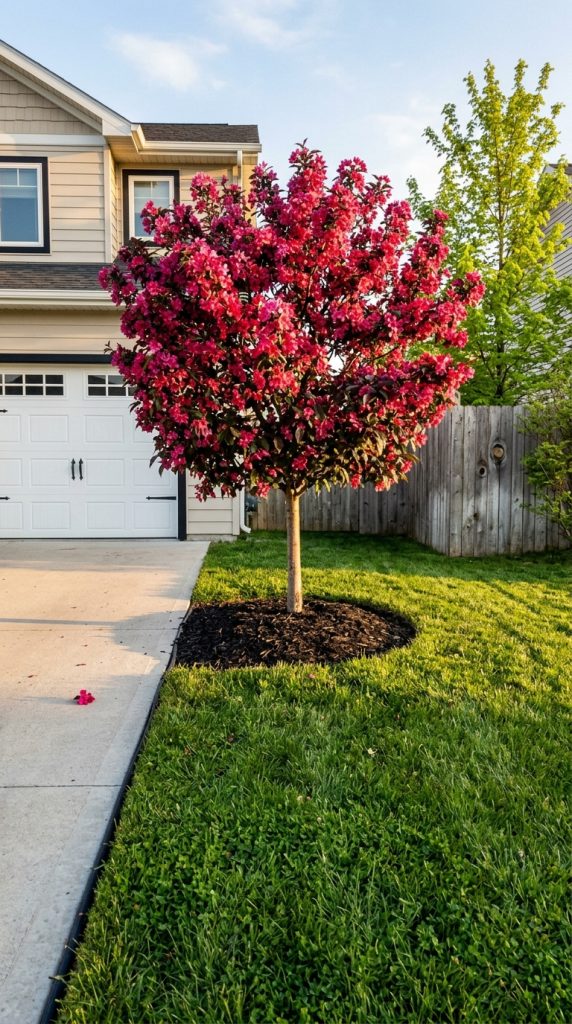
Let’s address the elephant in the room. Old-school Crabapples had terrible root systems and ugly, mushy fruits. But modern cultivars like ‘Prairifire’ or ‘Sugar Tyme’ are completely different animals. Breeders fixed the roots and the fruit mess. Now you get sterile or small fruits that birds eat instantly.
Pros:
- Roots are grafted onto dwarf rootstock that limits spread.
- Insane spring color. Hot pink or pure white flowers cover every branch.
- Very tolerant of urban pollution and poor soil.
Cons:
- You have to buy the right variety. Avoid seedlings or seed-grown trees.
- Some varieties still get apple scab, but resistant ones exist.
Do your research at the nursery. Look for the words “dwarf rootstock” or “compact growth habit.” These roots are engineered to stay put. My neighbor has a ‘Royal Raindrops’ planted three feet from her driveway edge. No cracks after seven years. Just rake up the fallen petals in spring, and you are golden.
12. Smoke Tree (Cotinus coggygria)
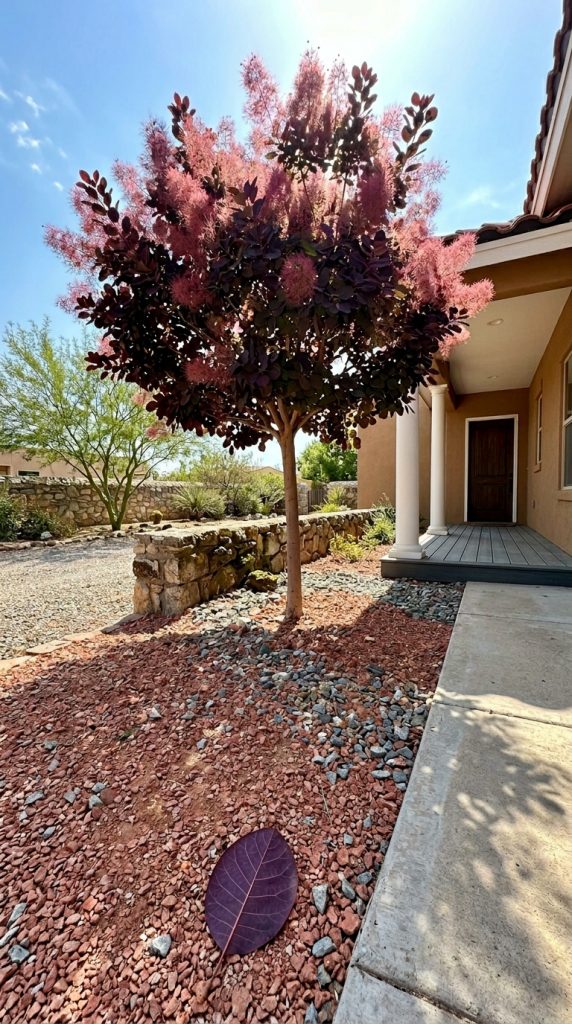
When I first saw a Smoke Tree, I thought it was on fire. The “flowers” are actually fluffy, hair-like stalks that look like pink or purple smoke clouds hovering over the bush. You can prune it to a single trunk to make it a small tree (about 12 to 15 feet). The root system is woody but compact.
Pros:
- Roots avoid hardscapes because they prefer deep, loose soil.
- The purple-leaf varieties (‘Royal Purple’) hold their color all summer.
- Thrives on neglect. Seriously, stop watering it.
Cons:
- Bleeds sap if you prune in spring. Prune in winter only.
- Can look a little wild and messy. That is either a pro or con.
The secret to Smoke Trees is that they are technically shrubs. Shrub roots are always less invasive than tree roots. Because they evolved to live in rocky, poor soil, they don’t send roots out searching for water pipes. If you have a hot, dry spot where nothing else grows, put a Smoke Tree there and walk away.
13. Golden rain tree (Koelreuteria paniculata)
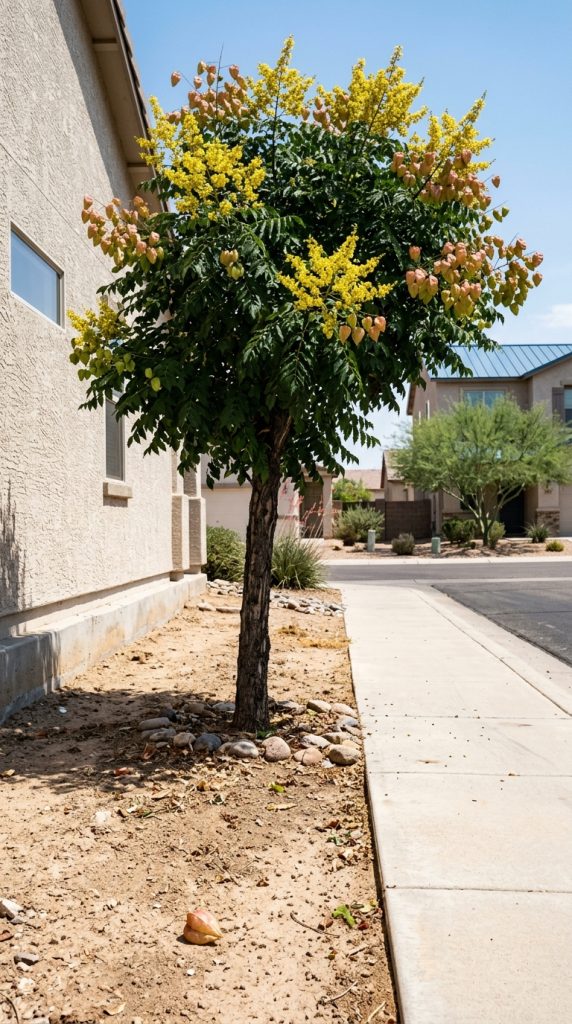
This tree gets a bad rap sometimes because people confuse it with the invasive Tree of Heaven. But Golden rain trees are totally different. In late summer, they explode with large clusters of yellow flowers that turn into lantern-shaped seed pods that rattle in the wind. The root system is moderate but not aggressive toward concrete.
Pros:
- Flowers when most trees are boring (July and August).
- Tolerates heat, drought, and salt like a champion.
- Roots stay in the top 18 inches but don’t thicken enough to crack stuff.
Cons:
- Seedlings pop up everywhere in your flower beds. Pull them when small.
- Branches are a bit brittle in ice storms.
If you live in a hot, dry state like Texas or Arizona, this tree is a lifesaver. It won’t send roots into your foundation looking for moisture because it doesn’t need much moisture. Just be vigilant about plucking the baby trees out of your mulch. I pull about ten a year, but the shade is worth the five minutes of work.
14. Japanese Snowbell (Styrax japonicus)

I am saving some of the most elegant for last. The Japanese Snowbell has a perfectly horizontal branching pattern that looks like a Japanese woodblock print. In late spring, it drips with white, bell-shaped flowers that hang down like little lanterns. The roots are fine and shallow, like a rhododendron.
Pros:
- Zero surface root issues. I mean zero.
- Looks stunning underplanted with ferns or hostas.
- The flowers smell lightly of vanilla.
Cons:
- Needs consistent moisture. Don’t plant it in a dry, dusty spot.
- Expensive at nurseries. Usually $100+ for a good size.
You can plant this tree within 4 to 5 feet of a patio or walkway. Because the root system is so delicate, it won’t lift pavers or crack grout. It prefers morning sun and afternoon shade to keep the leaves from scorching. If you want a tree that feels like a botanical garden specimen without the headache, this is your pick.
15. Dwarf Korean Lilac (Syringa meyeri ‘Palibin’)
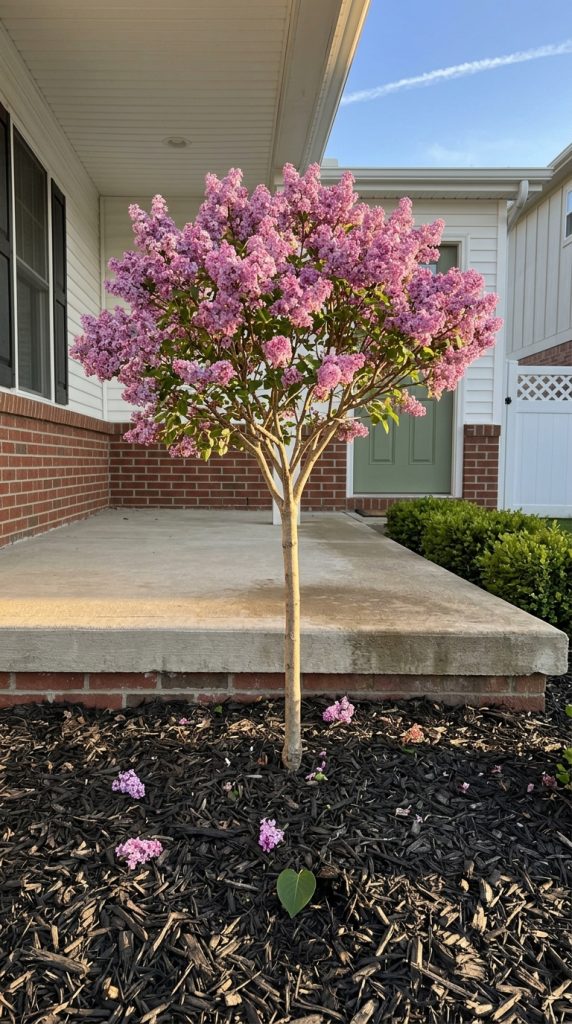
Technically, this is a shrub that you train as a tree. But for a tiny front yard near a porch? Nothing beats it. It maxes out at 6 to 8 feet tall. In late spring, it produces loads of lavender-pink, intensely fragrant flowers. The root system is so small and weak (in a good way) that you could plant it next to a sand castle without damage.
Pros:
- Roots are tiny and non-threatening. Perfect for planters or narrow strips.
- The smell will make your whole street jealous.
- Blooms at a young age. Even a two-foot tree flowers.
Cons:
- Needs full sun. Six hours minimum or it won’t bloom.
- Leaves can get powdery mildew if air is stagnant.
I have one of these growing in a large ceramic pot on my front porch. If the roots can live happily in a pot without cracking the ceramic, they aren’t going to crack your foundation. For the absolute smallest spaces (like a 4×4 foot garden bed), this is the safest bet on the entire list. Plus, you get to cut lilacs for your kitchen table.
Final Thoughts: Pick the One That Makes You Smile
Look, renovating a front yard feels overwhelming. We worry about killing the tree, or worse, the tree killing our wallet via foundation repair. But here is the truth I have learned after killing a few trees myself: The plants on this list want to live in peace with your house.
They aren’t the thugs of the plant world. They are the quiet neighbors who wave politely and keep their leaves on their own side of the fence.
My advice? Walk outside right now and look at your front yard. Measure the distance from your house to the sidewalk. Count how many hours of sun that spot gets. Then pick the tree from this list that matches that light level. Start with one. Plant it this weekend. Next year, when it blooms and your driveway is still crack-free, you will thank yourself.
Go get your hands dirty. Your front yard deserves a friend that won’t betray it from underground.

Ashley Ellison is a skilled writer and avid bowler. Her passion for storytelling and dedication to the sport have led her to participate in various national bowling leagues. With a unique combination of talents, Ashley approaches every challenge with creativity and a relentless drive to succeed.