15 Shade Loving Perennials For Your Garden That Actually Thrive
I spent three years thinking my shady backyard was a lost cause. The north side of my house stayed so dark that I literally gave up and let bare soil sit there. Then a neighbor walked over with a shovel and a cardboard box full of plants she dug up from her own shade garden. She said, “You just haven’t met the right perennials yet.”
She was right.
Turns out, some plants actually run away from the sun. They evolved on forest floors, under dense canopies, and in the shadows of cliffs. Bright light burns their leaves. Once I stopped trying to force sun-loving flowers into my dark corners and switched to real shade loving perennials for your garden, everything changed. No more crispy leaves. No more flopping stems. Just lush, green, blooming confidence.
Here are fifteen perennials that will turn your darkest spots into your favorite places.
1. Hosta (Hosta species)
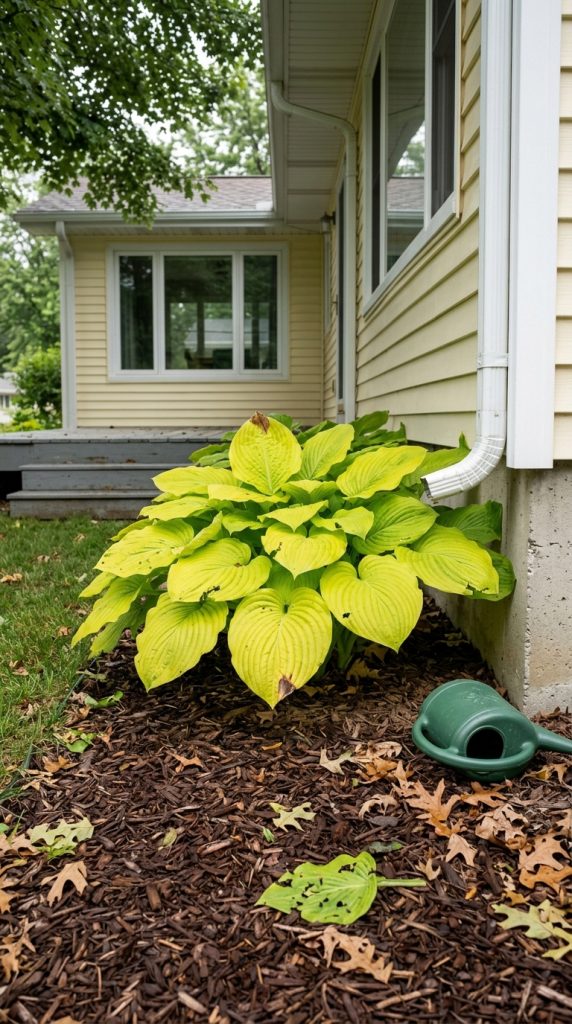
I know, I know. Hostas are everywhere. But there is a reason for that. These things are indestructible in the shade. I have a clump under my deck that gets zero direct sunlight, just reflected light off the white siding. It has doubled in size every year.
Pros:
- Hundreds of varieties from tiny to massive. Blue leaves, yellow edges, rippled textures.
- Extremely tolerant of root competition under trees.
- Deer food, unfortunately. But that just means they are tasty, not weak.
Cons:
- Slugs love them. Beer traps work like a charm.
- Flowers are pretty but not the main event. You grow hostas for leaves.
The secret is to buy them cheap. Hostas multiply fast. Find a friend with a shady yard and ask for divisions. Within two seasons, you will have more than you know what to do with.
2. Bleeding Heart (Dicentra spectabilis)
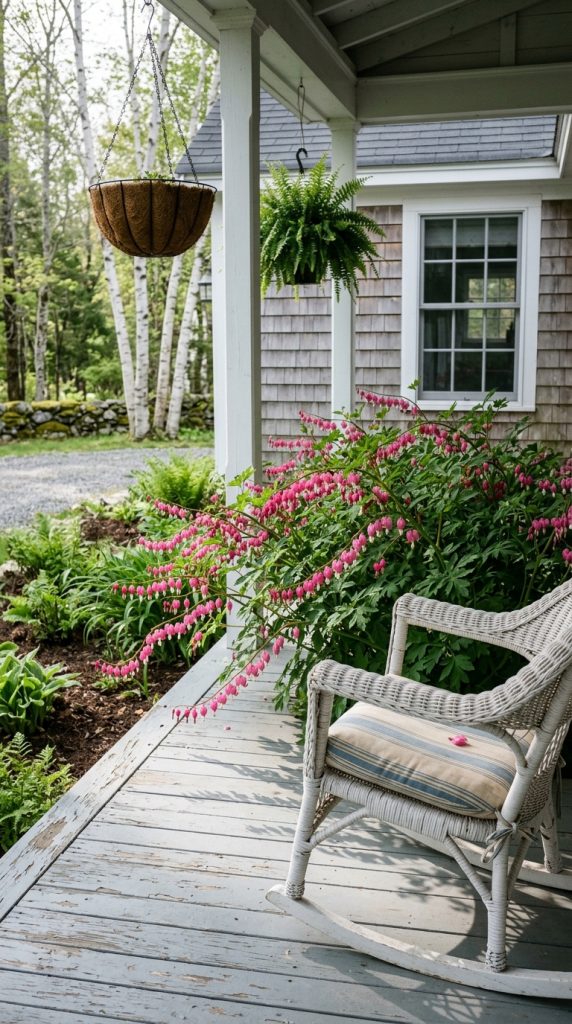
My grandmother had these lining her north-facing porch, and I thought they looked like magic. The pink or white heart-shaped flowers dangle from arching stems in spring. It looks like someone strung tiny lockets along a necklace.
Pros:
- Unforgettable flowers. People will stop and stare.
- Goes completely dormant in summer heat, which means no watering needed.
- Very cold hardy. Survives zone 3 winters without complaint.
Cons:
- Disappears by July. You get bare soil if you don’t plant something behind it.
- Needs rich, moist soil. Sandy soil makes it sad.
Plant Bleeding Heart where summer dormancy won’t leave a hole. Pair it with ferns or hostas that leaf out later and cover the gap.
3. Ferns (Various species, especially Japanese Painted Fern)
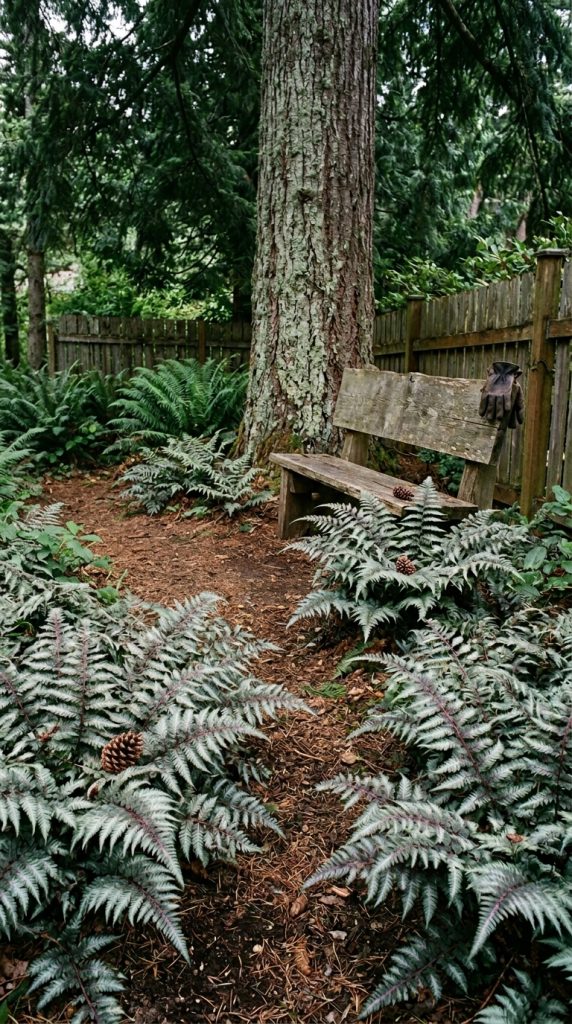
I used to think ferns were boring background plants. Then I discovered the Japanese Painted Fern. The fronds are silver with hints of burgundy and blue-green. It looks like someone dusted the leaves with metallic paint.
Pros:
- Deer and rabbit resistant. Finally, something they ignore.
- Thrives in deep, dry shade where nothing else grows.
- Adds that lush, Jurassic texture that softens hard edges.
Cons:
- Slow to emerge in spring. Be patient.
- Some types spread aggressively. Check your species before planting.
A study from the Royal Horticultural Society found that ferns remove more airborne heavy metals than flowering plants. So your shady garden is not just pretty. It is cleaning the air.
4. Lungwort (Pulmonaria)
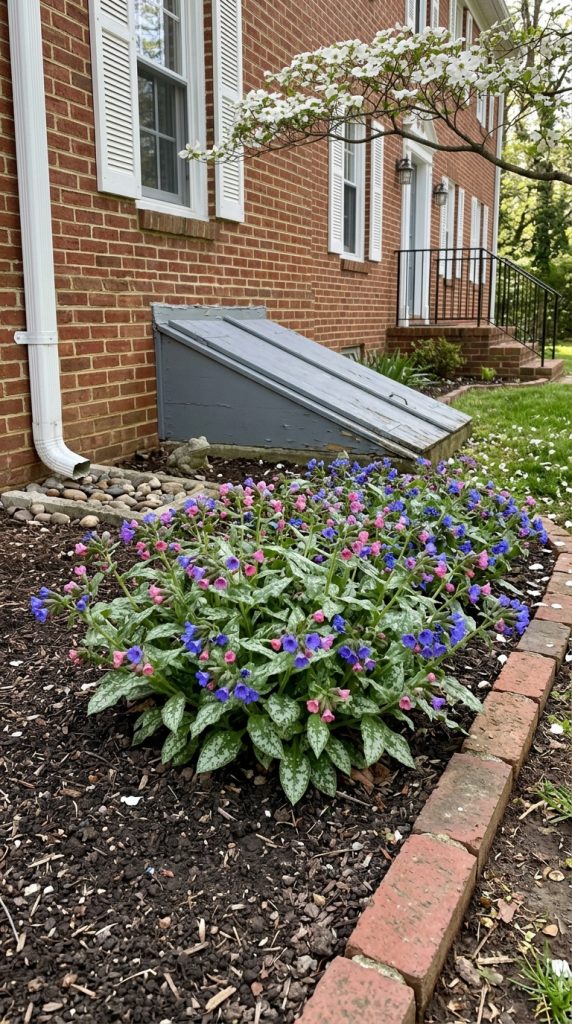
The name is terrible. The plant is wonderful. Lungwort gets its weird name from the spotted leaves that medieval people thought looked like diseased lungs. Ignore the history. The silver-spotted foliage and pink-to-blue flowers are stunning in deep shade.
Pros:
- Flowers change color as they age. Pink buds open to blue blooms. Both colors at once.
- Very early spring bloomer. When little else is awake.
- Tolerates clay soil beautifully.
Cons:
- Leaves can get powdery mildew in humid climates. Space them for air flow.
- Goes semi-dormant in hot summers. Looks tired by August.
Plant Lungwort near a path where you can see the color-changing flowers up close. It is like having a mood ring in your garden.
5. Coral Bells (Heuchera)
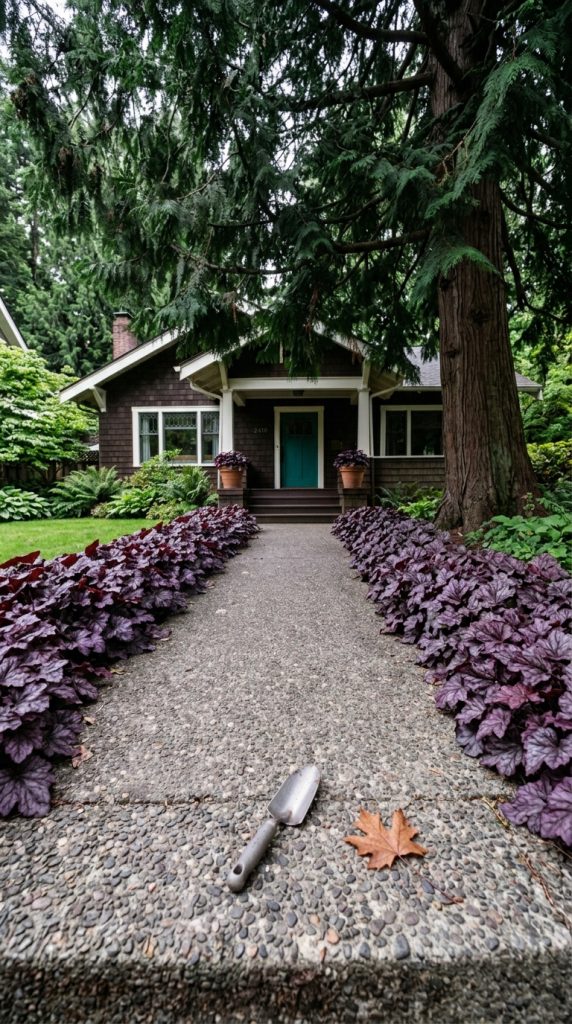
If you want color in the shade, this is your plant. Coral Bells come in every shade imaginable. Deep purple, caramel orange, lime green, silver, burgundy. The flowers are nice, but the leaves are the real show.
Pros:
- Evergreen in mild winters. You get color year-round.
- Hundreds of cultivars. You can collect them like trading cards.
- Very drought tolerant once established.
Cons:
- Heavier clay soils cause root rot. Amend with compost.
- The flower stalks can look messy. Cut them off if you prefer just leaves.
I have a ‘Caramel’ Coral Bell that sits under a maple tree with competitive roots. The tree steals all the water. The Heuchera does not care. It is the toughest pretty plant I own.
6. Astilbe (Astilbe species)
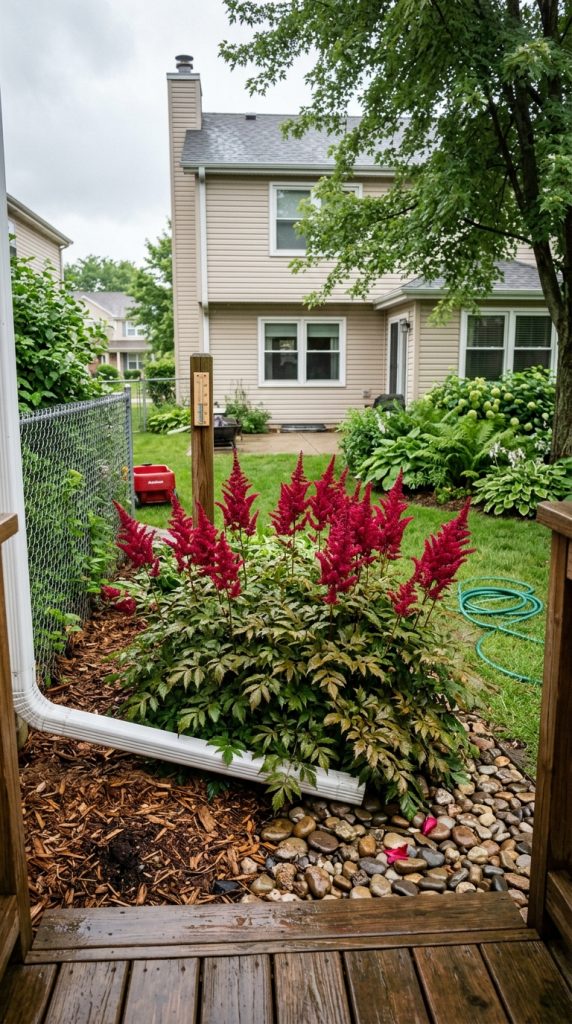
Do you want flowers that look like fluffy pink, red, or white plumes? Astilbe is your answer. These perennials bloom in shade when most other flowering plants refuse. The plumes rise above fern-like foliage like colorful cotton candy on a stick.
Pros:
- Blooms for weeks in early to mid-summer.
- Loves wet soil. Perfect for rain gardens and downspout areas.
- Dried flower plumes last through winter for interest.
Cons:
- Needs consistent moisture. Wilts dramatically in drought.
- Divides easily. You will have too many in three years.
A nursery owner once told me that Astilbe is the “exclamation point of the shade garden.” Use it where you need a pop of color against all that green foliage.
7. Foamflower (Tiarella cordifolia)
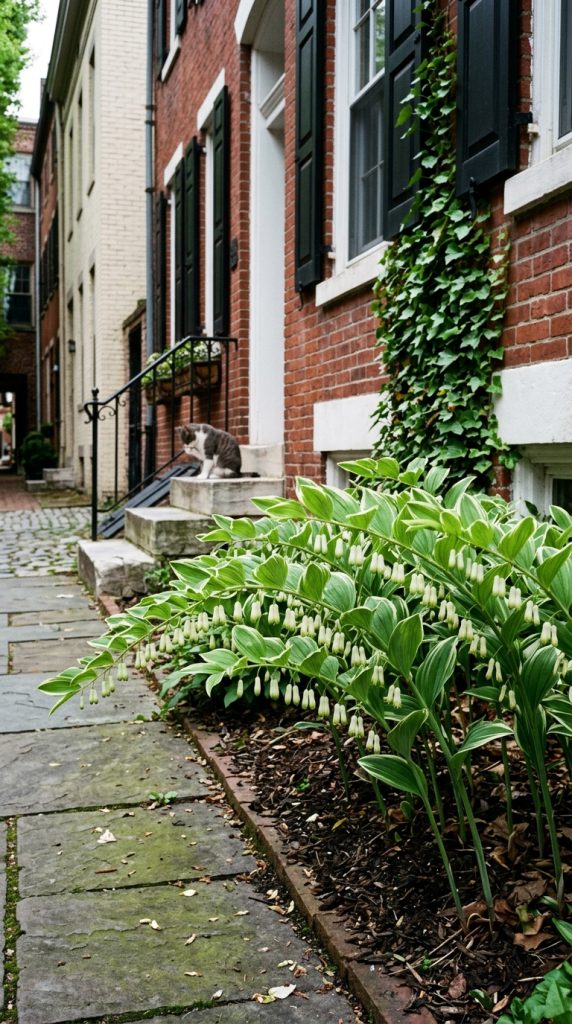
Foamflower looks like a smaller, more delicate cousin of Heuchera, and they are related. The maple-shaped leaves have dark purple centers, and the flowers are tiny white bottlebrushes that foam up in spring.
Pros:
- Spreads slowly to form a ground cover. Great for under trees.
- Native to North American woodlands. Supports local insects.
- Semi-evergreen. Looks good even in winter.
Cons:
- Can be hard to find at big box stores. Check native nurseries.
- The flowers are small. Do not expect a massive show.
I use Foamflower as a living mulch under my rhododendrons. It covers the bare soil, prevents weeds, and asks for nothing. That is a win-win.
8. Solomon’s Seal (Polygonatum odoratum)
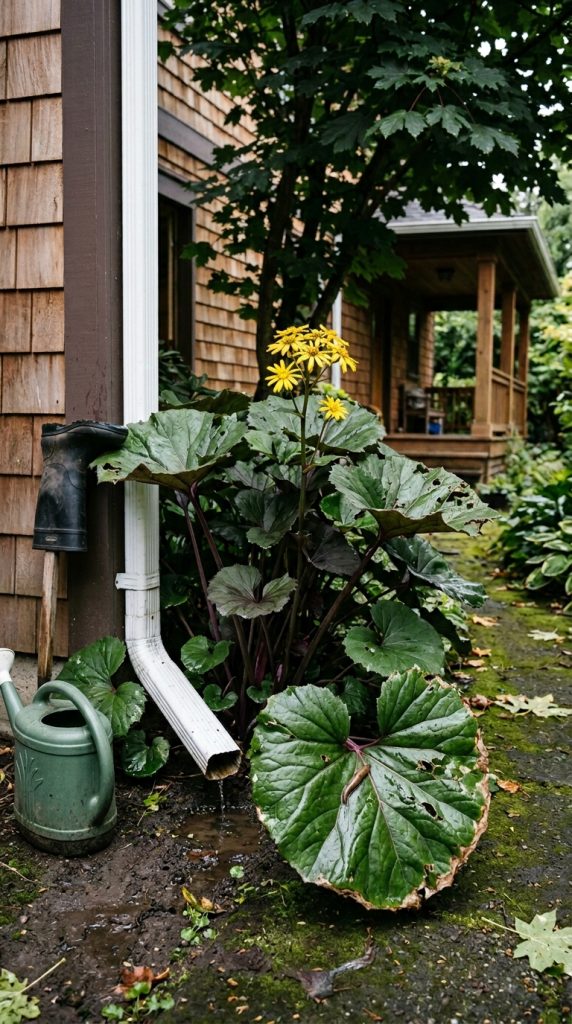
This plant has an architectural quality that most shade lovers lack. The stems arch gracefully like a rainbow, and little white bell flowers dangle underneath the leaves. You look up to see the blooms. It is a totally different experience.
Pros:
- Unique form adds vertical interest without being tall.
- Variegated varieties have white leaf edges that glow in low light.
- Very drought tolerant once mature.
Cons:
- Slow to establish. Do not expect miracles in year one.
- Goes completely dormant by late summer. Label the spot so you do not forget.
I planted a bare root Solomon’s Seal three years ago. The first year, nothing happened. I thought it was dead. The second year, one stem. The third year, twelve stems. Patience pays off.
9. Ligularia (Ligularia dentata)
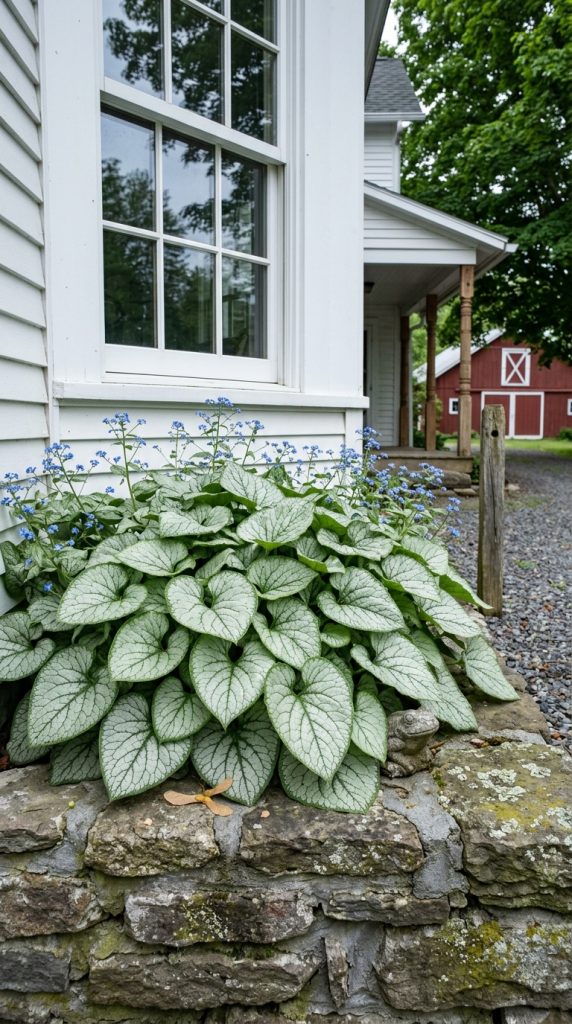
Big, bold, tropical-looking leaves in the shade garden. Ligularia has massive, round, serrated leaves that look like something from a jungle. The yellow flower spikes shoot up in late summer, but honestly, I grow it for the leaves.
Pros:
- Huge leaves make a statement. Instant drama.
- Loves wet, boggy soil. Perfect for that low spot that stays soggy.
- Very cold hardy. Zones 4 to 8 with no issues.
Cons:
- Slugs and snails will demolish it. Use slug bait early.
- Wilts dramatically in afternoon sun. Full shade only.
A neighbor has Ligularia planted next to her air conditioning condensate line. The constant drip keeps the soil wet, and the plant is six feet wide. Use your problem spots to your advantage.
10. Brunnera (Brunnera macrophylla)
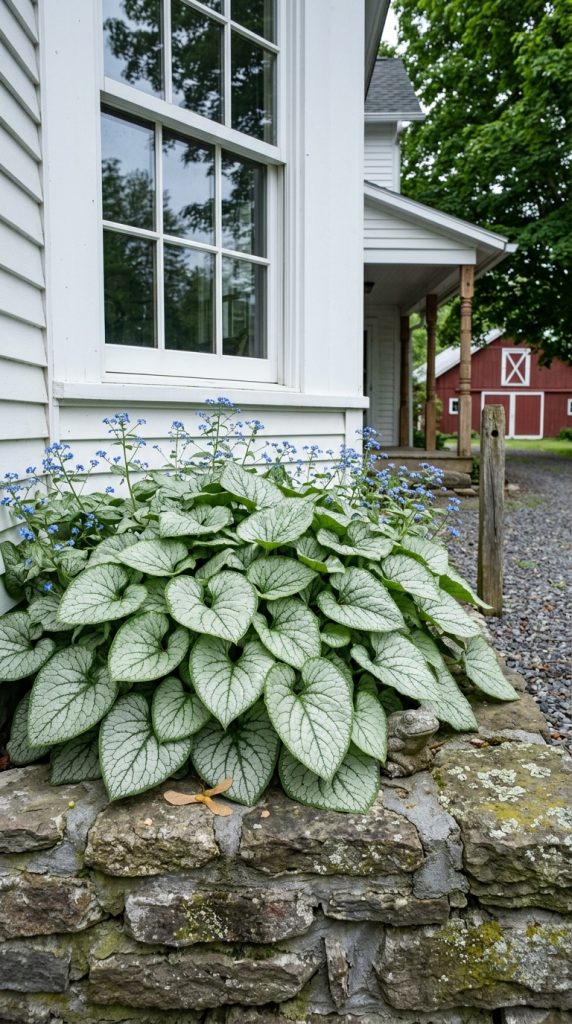
Remember the silver leaves of Japanese Painted Fern? Brunnera does that but on bigger, heart-shaped leaves. ‘Jack Frost’ is the classic variety, with silver leaves traced by dark green veins. The tiny blue flowers in spring look just like forget-me-nots.
Pros:
- The silver foliage lights up dark corners like a mirror.
- Very low maintenance. Cut back dead leaves in spring, done.
- Spreads slowly but politely. Not aggressive.
Cons:
- Leaves can scorch in afternoon sun. Shade only.
- Expensive compared to hostas. A gallon pot runs fifteen to twenty dollars.
I have a Brunnera planted under a north-facing window where I see it every morning. The silver leaves catch the early light and glow. It is the first thing guests comment on.
11. Toad Lily (Tricyrtis hirta)
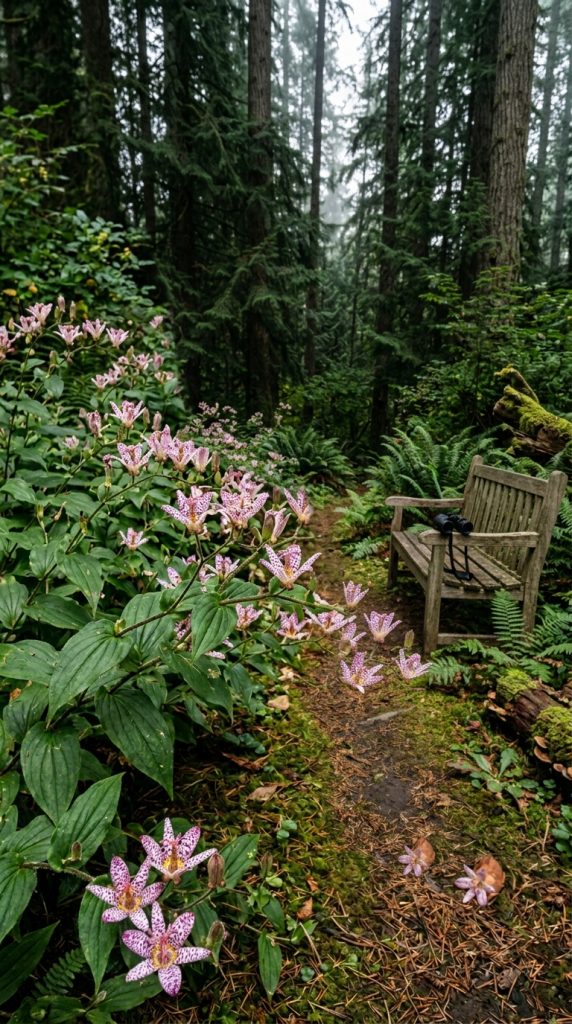
Here is the weird one. Toad Lilies bloom in fall when almost nothing else in the shade garden is flowering. The flowers look like tiny orchids, covered in purple spots. They are so strange that people either love them or hate them.
Pros:
- Late season blooms. September and October color.
- Unique spotted flowers. Conversation starter for sure.
- Tolerates dry shade better than most flowering plants.
Cons:
- The name is unappealing. Just call it Tricyrtis.
- Slow to emerge in spring. Mark the spot so you do not dig it up.
A botany professor told me that Toad Lilies evolved their spots to look like fungal infections, tricking insects into pollinating them. Nature is wild.
12. Hellebore (Helleborus orientalis)
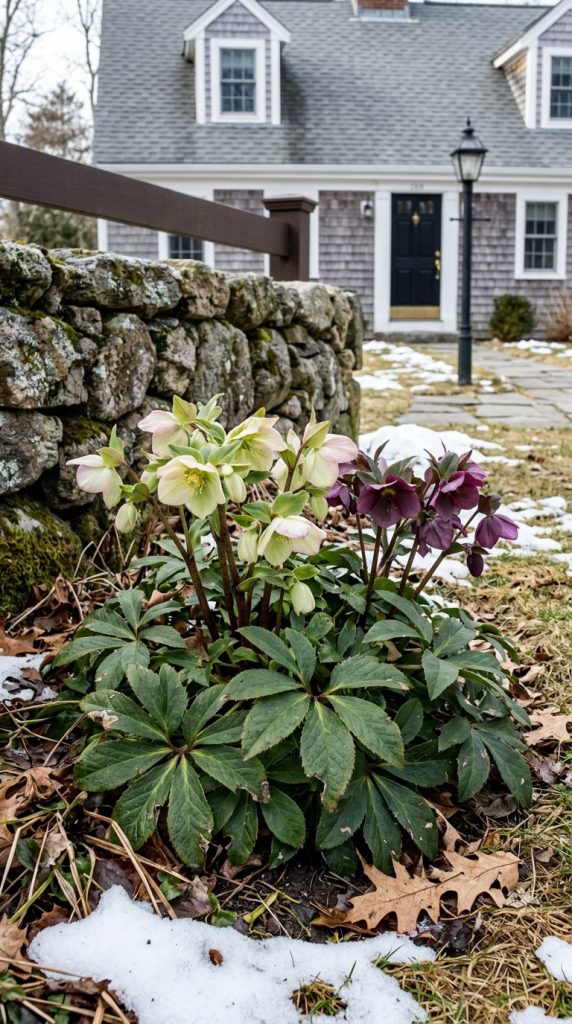
Also called the Lenten Rose because it blooms during Lent. Hellebores flower in late winter, often while snow is still on the ground. The nodding, cup-shaped flowers come in white, pink, purple, green, and even black. They last for months.
Pros:
- Blooms when nothing else dares. February and March flowers.
- Evergreen foliage in mild climates. Looks good all year.
- Deer and rabbit proof. Toxic to pests.
Cons:
- Expensive to buy. A mature plant runs twenty to thirty dollars.
- The flowers nod downward. Plant them on a slope or raised bed to see them.
Cut the old leaves off in January before the flowers emerge. This sounds aggressive, but it reveals the blooms and prevents disease. Trust me on this one.
13. Jack-in-the-Pulpit (Arisaema triphyllum)
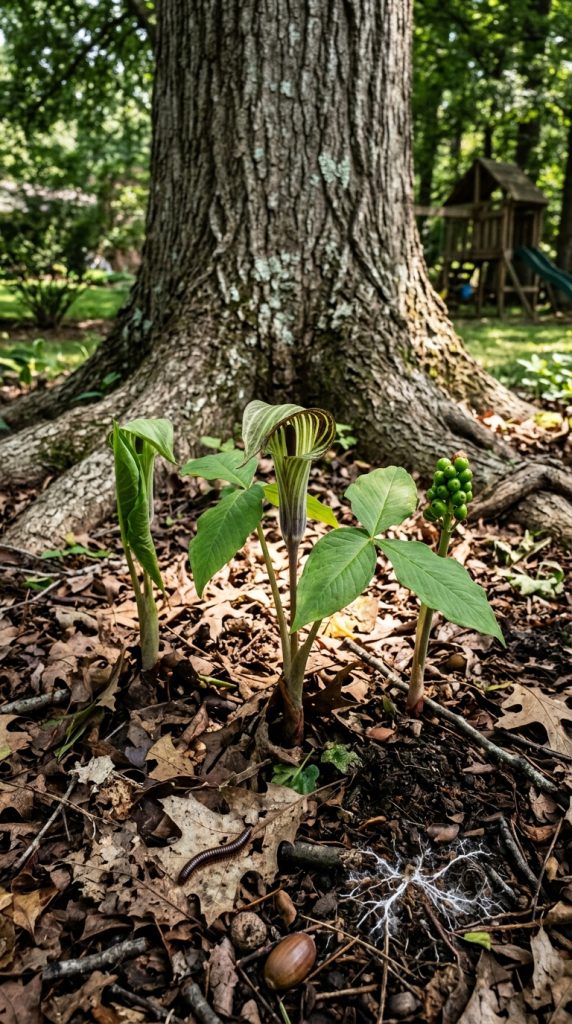
This is not a plant for people who want big, flashy flowers. Jack-in-the-Pulpit is for people who love weird, native, woodland weirdness. The flower is a striped hood (the pulpit) with a little preacher inside (Jack). In fall, it produces a cluster of bright red berries.
Pros:
- Native to most of eastern North America. Supports local ecosystems.
- The red berries are gorgeous in autumn.
- Very easy to grow from bulbs. Plant and forget.
Cons:
- Takes three to five years to flower from seed. Buy bulbs.
- Goes dormant by August. You get bare soil.
I have these growing under a massive white oak where the roots are so thick I cannot dig. Jack-in-the-Pulpit bulbs push right through the root mass. They do not care.
14. Barrenwort (Epimedium)
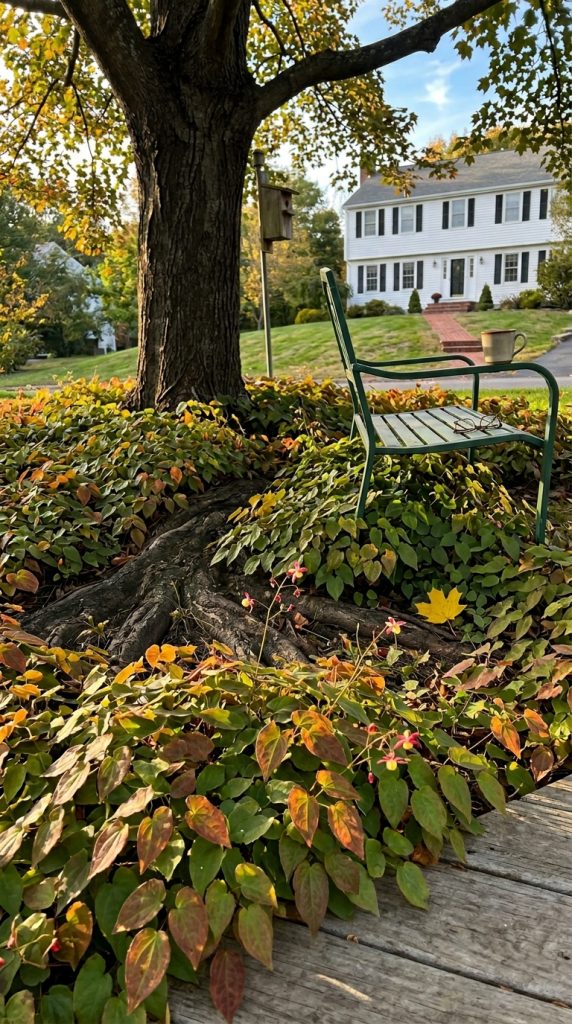
This plant has the worst common name and the best performance. Barrenwort grows in dry shade under trees where nothing else survives. The heart-shaped leaves emerge bronze in spring, turn green in summer, and often get red tones in fall. The tiny yellow, pink, or white flowers look like fairy caps.
Pros:
- Extremely drought tolerant. Once established, ignore it completely.
- Excellent ground cover. Forms a dense, weed-smothering mat.
- Deer resistant. They walk right past it.
Cons:
- Slow to spread. Do not buy one plant and expect a carpet soon.
- The flowers are small. You have to get close to appreciate them.
A landscape architect I know calls Epimedium the “ultimate solution plant.” Whenever she has a dry, shady, root-filled hellstrip, she plants Barrenwort and walks away.
15. Siberian Bugloss (Brunnera macrophylla ‘Sea Heart’)
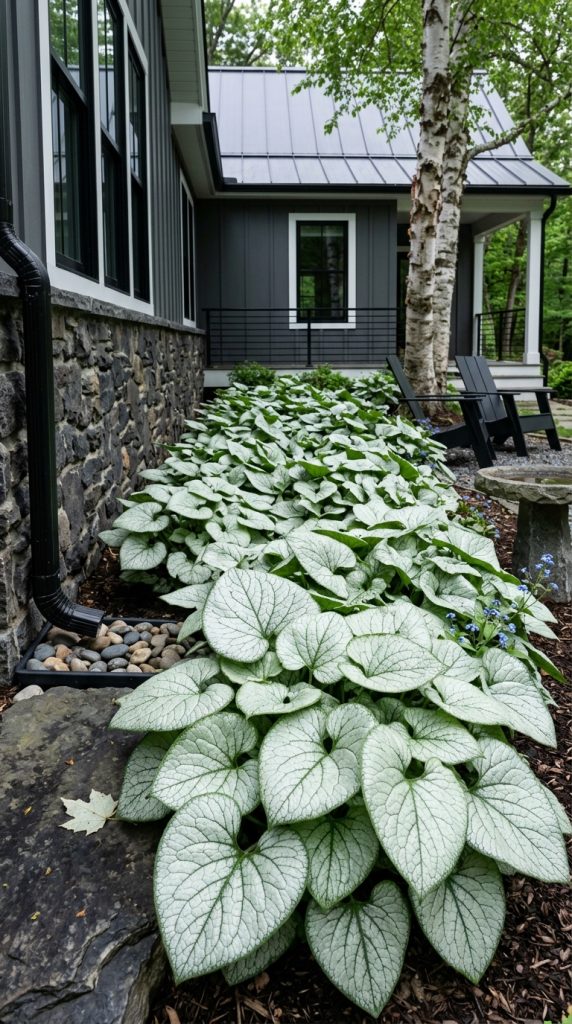
Wait, another Brunnera? Yes, but this one is different. ‘Sea Heart’ has enormous, thick, silver leaves that are almost completely white with just green veins. It looks like someone painted the leaves with liquid metal. It is a showstopper.
Pros:
- The boldest silver foliage available for shade.
- Very slug resistant compared to hostas.
- Long-lived. Plant once, enjoy for decades.
Cons:
- Needs consistently moist soil. Dries out in sandy soil.
- Expensive. This variety costs more than standard Brunnera.
I saw a mass planting of ‘Sea Heart’ at a botanical garden once. The silver glow was visible from fifty feet away. I asked the gardener how they kept it looking so good. He said, “We water it and leave it alone.” That is my kind of plant.
Your Shady Spot Is About to Become Your Favorite Place
I spent too many years thinking shade was a curse. Now I know it is a gift. The perennials on this list do not just tolerate low light. They prefer it. They evolved for exactly your situation.
Walk outside right now. Look at that bare patch under the tree, that north-facing wall, that dark corner by the fence. Pick one plant from this list. Just one. Plant it this weekend. Water it in. Then watch what happens.
Your garden is not broken. You just needed the right plants.

Ashley Ellison is a skilled writer and avid bowler. Her passion for storytelling and dedication to the sport have led her to participate in various national bowling leagues. With a unique combination of talents, Ashley approaches every challenge with creativity and a relentless drive to succeed.