17 Fall Window Boxes Ideas for a Cozy Autumn Home
There’s something about a window box in autumn that makes a house feel instantly more settled. Even a simple box can bring warm color, texture, and that slightly nostalgic fall feeling to a plain window.
I especially like fall window boxes because they don’t need to look overly decorated. A good arrangement can feel like it grew naturally into place, with foliage spilling over the edge, a few seasonal blooms rising above it, and colors that echo the changing landscape outside.
The trick comes down to choosing a distinct combination rather than stuffing the box with every fall plant you can find. Some arrangements look beautiful from the street but become awkward once everything grows together.
These seventeen fall window boxes ideas take different directions, from understated cottage arrangements to structured displays that suit more modern homes. Each one creates a noticeably different finished look while remaining practical for an ordinary residential window.
1. Warm Burgundy and Copper Window Box
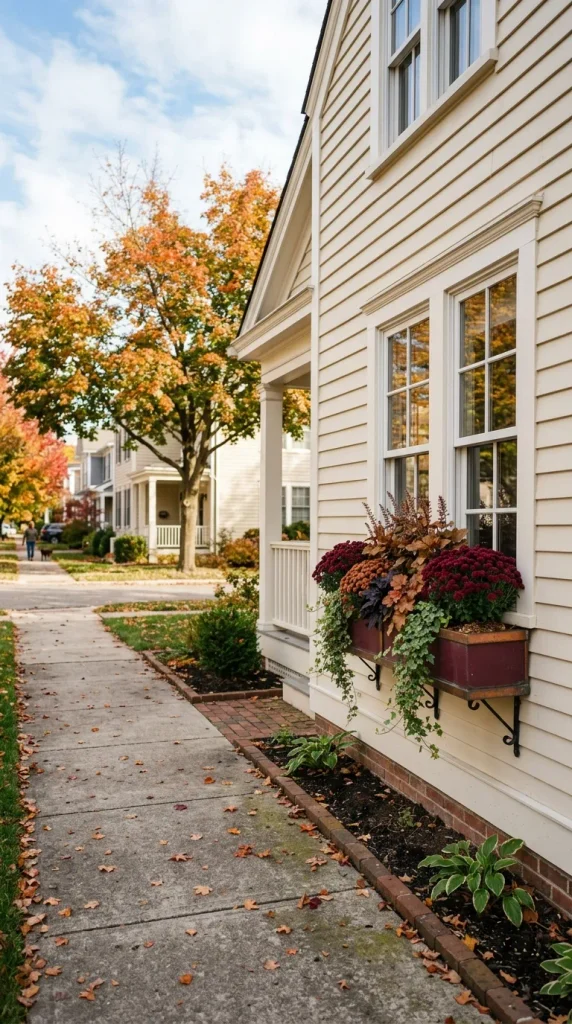
Deep burgundy foliage paired with copper-toned autumn flowers creates one of those arrangements that looks richer as the days get shorter.
The finished box has a warm, slightly dramatic appearance without becoming too dark. Place the tallest plants toward the back, keep the middle layer full and rounded, and let a few trailing stems soften the front edge.
A useful palette includes burgundy, bronze, rust, and muted green. These colors work particularly well against cream, gray, tan, or brick exteriors.
If your home already has a strong exterior color, resist the temptation to introduce five more. The restrained palette makes the window box look intentional.
This style also works nicely beneath a kitchen window because the warm colors feel seasonal without screaming “fall decoration.”
Some ideas to consider
- Metal window box liner: A durable liner helps protect the container while keeping the arrangement easy to refresh.
- Copper-toned plant markers: Small markers can introduce another copper detail without overwhelming the foliage.
- Hand pruners: Compact pruners make it easier to keep trailing stems tidy as the arrangement develops.
2. Cream, White, and Sage Cottage Box
Fall doesn’t always need orange.
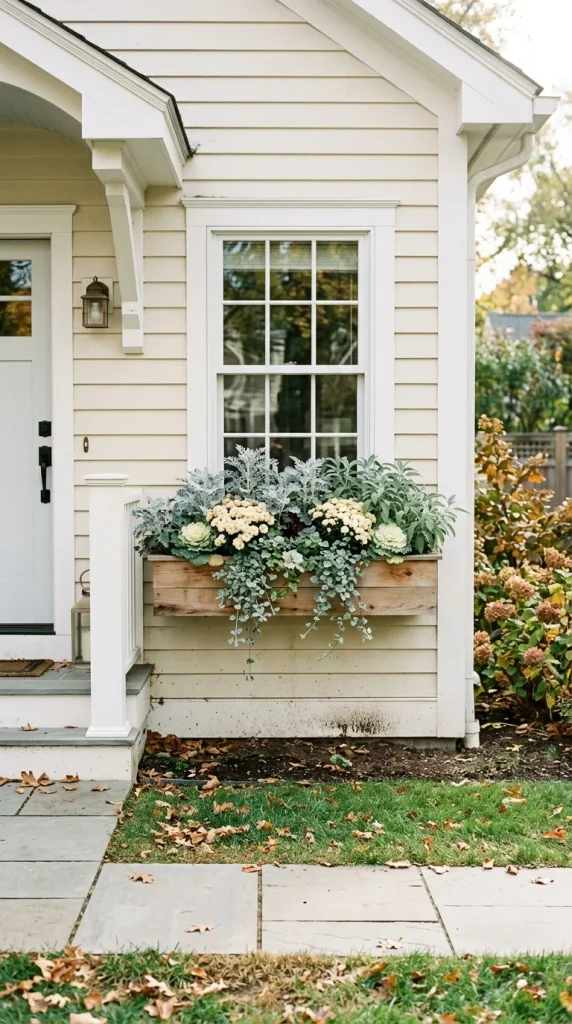
A cream-and-sage window box gives you a softer interpretation of the season, especially if your house has a cottage, farmhouse, or traditional exterior.
Think pale flowers, silvery-green foliage, soft sage leaves, and subtle cream tones. The overall effect feels calm rather than festive.
The beauty here comes from low visual contrast. Instead of making every plant compete for attention, let the foliage create most of the texture while the pale flowers provide small points of brightness.
This arrangement looks particularly good beneath white-framed windows. It also photographs beautifully on cloudy autumn mornings, when harsh sunlight won’t wash out the delicate colors.
One thing to watch: pale arrangements can disappear against very light siding. A darker window box or deeper architectural backdrop can give the foliage enough contrast.
A few things you might like
- Natural-finish wooden window box: Its understated surface suits the cottage character of the arrangement.
- Slim metal brackets: These provide strong support while keeping the installation visually quiet.
- Weather-resistant plant saucer: Useful beneath the box where drainage could otherwise stain a sill or wall.
3. Rustic Harvest Window Box With Gourds Built Into the Planting

Here’s an option for people who enjoy a more traditional harvest look.
Instead of simply placing pumpkins beside a window box, incorporate a few small gourds directly into the planting arrangement so they appear connected to the foliage.
Keep the plants dominant. The gourds should sit low among the leaves rather than tower over everything.
Rust, golden yellow, bronze, and green create a familiar autumn palette. Trailing foliage can hang over the front edge while upright stems create height behind the gourds.
This works especially well on wide windows where the box has enough depth to accommodate different visual levels.
There is one practical limitation: gourds add weight. Check the box’s capacity and mounting hardware before adding several pieces, especially if the container already holds wet soil.
Give these a look
- Heavy-duty window box brackets: Extra support makes sense when the finished arrangement carries additional weight.
- Moisture-resistant wooden box liner: A liner helps protect the container from constantly damp soil.
- Small garden kneeling pad: Handy when you need to sit close to the window while rearranging the display.
4. Jewel-Tone Fall Flower Box
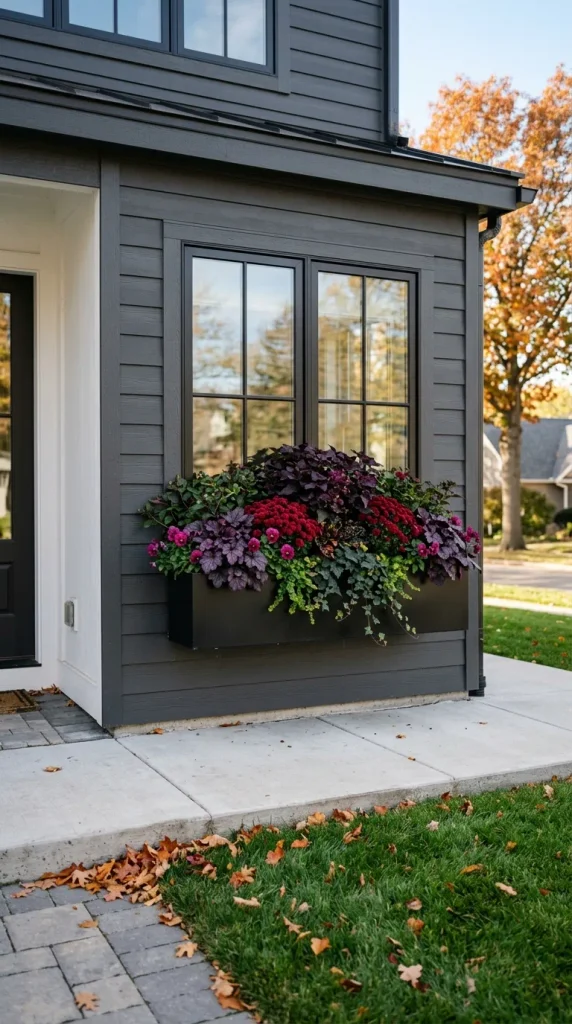
For something more colorful, move away from the traditional orange-and-brown palette and build the box around jewel tones.
Deep purple, wine red, magenta, and dark green create a sophisticated autumn arrangement that feels almost theatrical.
The important part is restraint. Pick two or three dominant colors instead of trying to include every jewel tone available.
This approach suits homes with darker trim, painted doors, or contemporary exterior colors. It can also make a plain facade feel more substantial during a season when many gardens start losing their summer brightness.
A particularly effective arrangement places the deepest tones toward the center and lets lighter foliage frame the sides.
Maybe worth checking out
- Matte-black window box: The dark container visually connects with the deeper flower colors.
- Adjustable mounting brackets: These help level the box securely on uneven masonry or siding.
- Watering wand: A narrow wand makes it easier to reach plants tucked toward the back.
5. Compact Cornstalk-Inspired Vertical Box
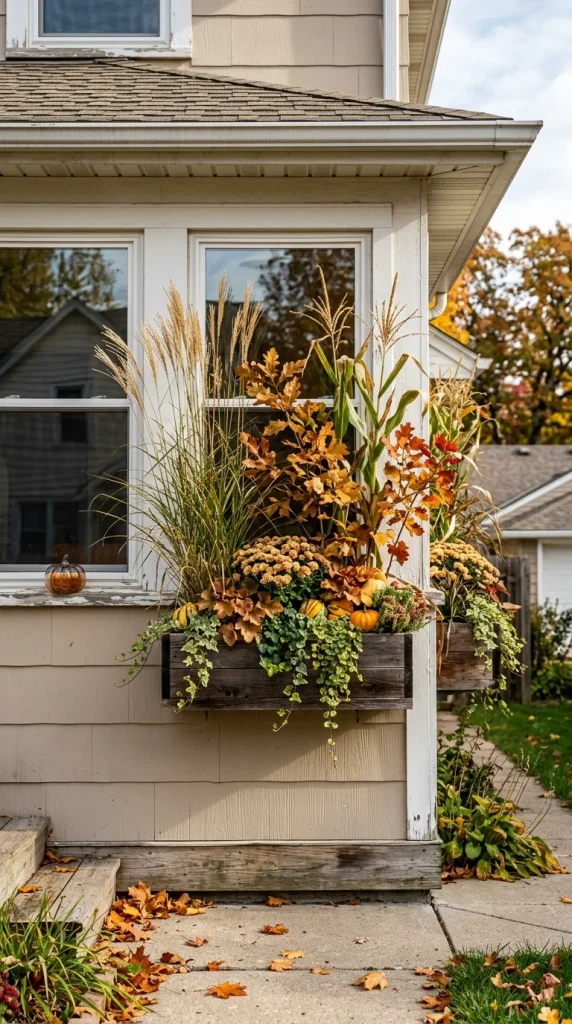
This arrangement takes a more architectural approach.
Instead of creating a rounded mass of plants, use tall, narrow autumn foliage behind shorter plants and trailing greenery in front. The result resembles a miniature vertical harvest display without requiring an enormous container.
It works particularly well beneath tall windows because the vertical structure visually connects the box to the window above it.
Keep the tallest elements narrow enough that they don’t block the glass. That detail matters more than people expect.
For smaller homes, this idea can create a stronger visual presence without increasing the width of the window box.
A few suggestions
- Deep planting container: Extra root space helps support taller seasonal plants.
- Plant support clips: Small supports can keep upright stems from leaning into the window.
- Coconut-fiber liner: A breathable liner gives the arrangement a natural finish while helping manage drainage.
6. Cascading Ivy and Autumn Flower Box
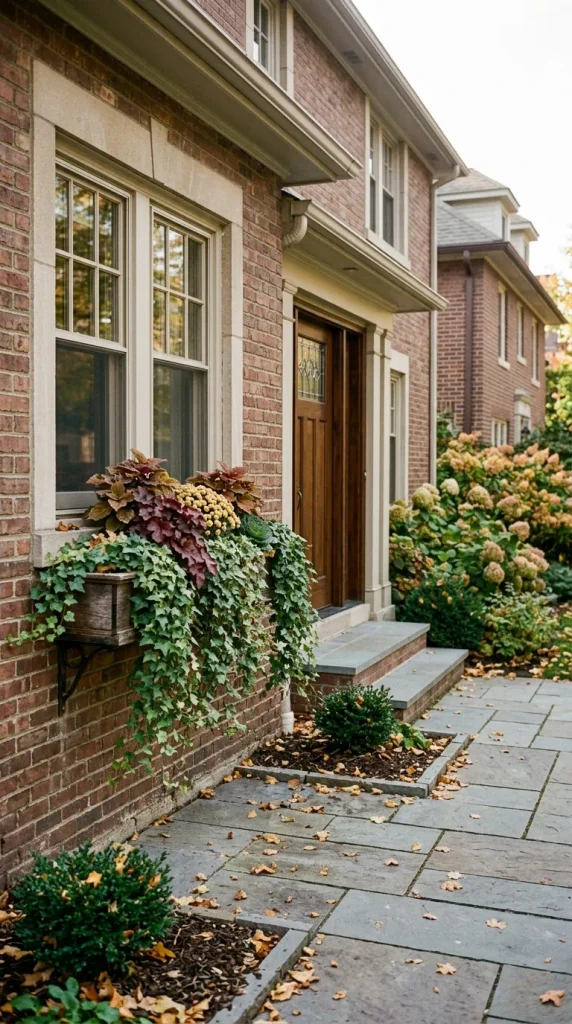
Some window boxes look best when you almost stop noticing the container itself.
That’s exactly what happens with a lush arrangement where trailing foliage spills several inches over the front edge and upright flowers peek through the center.
The cascading growth gives the box a softer, older-garden character. It works beautifully on stone houses, brick facades, and traditional homes.
Use a simple color scheme so the foliage remains important. Deep green mixed with burgundy, bronze, or muted yellow feels distinctly autumnal without looking crowded.
The biggest mistake here involves planting everything at the same height. Without a clear difference between upright and trailing growth, the box can look flat.
Possibly handy products
- Window box support brackets: Strong brackets provide dependable support as trailing growth becomes heavier.
- Long-reach watering nozzle: It makes watering the rear plants easier once the foliage fills out.
- Garden snips: Useful for selectively trimming runners without cutting back the entire arrangement.
7. Moody Black-and-Bronze Window Box
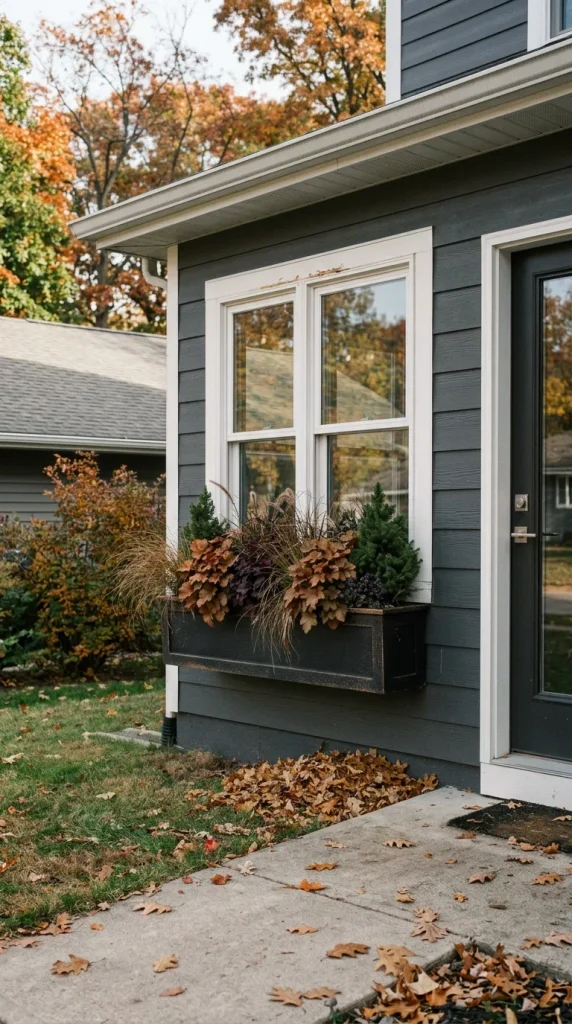
This is the fall window box for a darker exterior.
A black or charcoal container combined with bronze foliage and deep green plants creates a moody, modern look. Rather than celebrating autumn through bright orange, it captures the late-season atmosphere.
The arrangement looks particularly good against white, charcoal, dark green, or weathered wood.
Keep the plant shapes relatively clean. Too many loose stems can undermine the modern appearance.
One advantage of this palette is that it transitions nicely into late fall. You won’t necessarily need to replace everything as soon as Halloween passes.
A few relevant products
- Charcoal planter liner: It keeps the container interior protected while maintaining the dark exterior aesthetic.
- Slim soil scoop: A narrow scoop helps when working inside a densely planted box.
- Adjustable window box brackets: Their clean profile suits the more structured appearance.
8. Traditional Red, Orange, and Yellow Fall Box
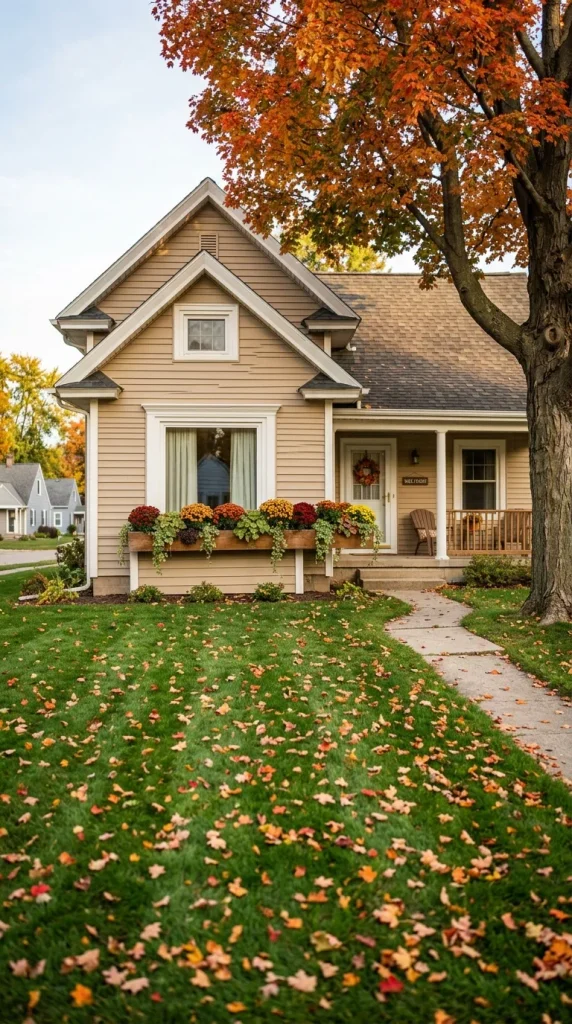
Sometimes the classic combination really is the best one.
A traditional autumn window box filled with red, orange, golden yellow, and green immediately reads as fall from the street.
The key difference between an attractive traditional display and a chaotic one comes from repetition. Repeat each major color several times instead of putting one isolated plant of every possible shade into the box.
Place brighter flowers where they can catch daylight, while darker foliage can fill the gaps between them.
This is also one of the easiest styles for beginners because the color story does much of the design work.
Useful items to consider
- Classic wooden planter: The natural material reinforces the traditional autumn character.
- Drainage tray: It helps control excess water around the window area.
- Small hand trowel: A compact trowel gives you better control when planting close together.
9. Silver Foliage and Rust-Toned Autumn Box
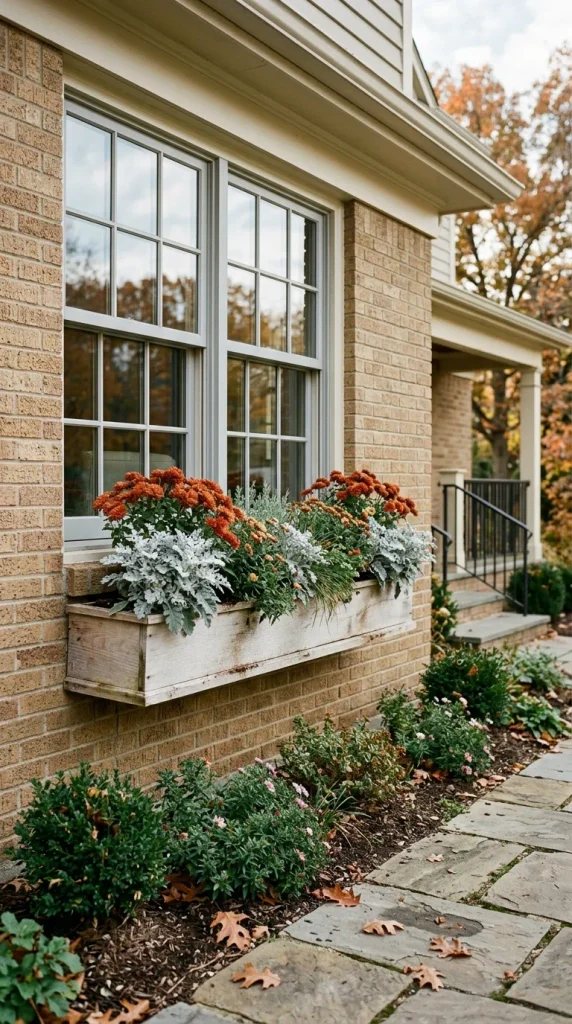
Here’s a quieter combination that feels surprisingly elegant.
Silver foliage provides a cool foundation while rust-colored flowers and warm brown tones bring in the seasonal warmth.
The contrast works because the two color families sit far enough apart to remain visible without becoming loud.
This arrangement can rescue a fall window box from looking overly orange. If your exterior already has warm brick or tan siding, the silver foliage creates useful separation.
Use the coolest silver tones toward the front and allow the rust-colored flowers to rise slightly above them.
Worth considering
- Light-colored wooden window box: It supports the soft silver-and-rust palette.
- Fine-mist watering attachment: Gentle watering helps avoid disturbing compact foliage.
- Protective window box liner: It adds a practical barrier between damp soil and the container.
10. Miniature Woodland Window Box
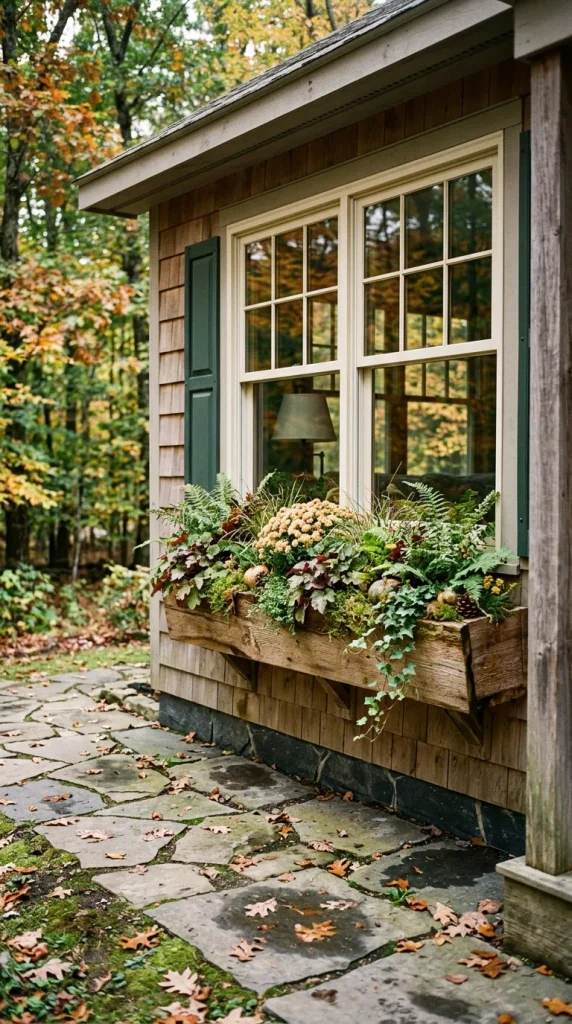
Imagine a little woodland floor beneath the window.
This arrangement combines mossy greens, brown foliage, muted yellow, and natural woody textures for a quieter autumn scene.
It suits homes surrounded by mature trees particularly well because the window box feels connected to the landscape instead of looking like a separate decoration.
Keep the planting irregular. A woodland-inspired arrangement shouldn’t look perfectly symmetrical.
The most important visual detail is variation in height. A few upright plants, low foliage, and soft trailing growth create the layered appearance you see naturally on a forest floor.
A few favorites
- Natural cedar window box: Its texture blends naturally with the woodland-inspired arrangement.
- Small hand cultivator: Useful for loosening compact soil around closely planted stems.
- Water-resistant gardening gloves: They make frequent autumn maintenance more comfortable.
11. Symmetrical Formal Window Boxes
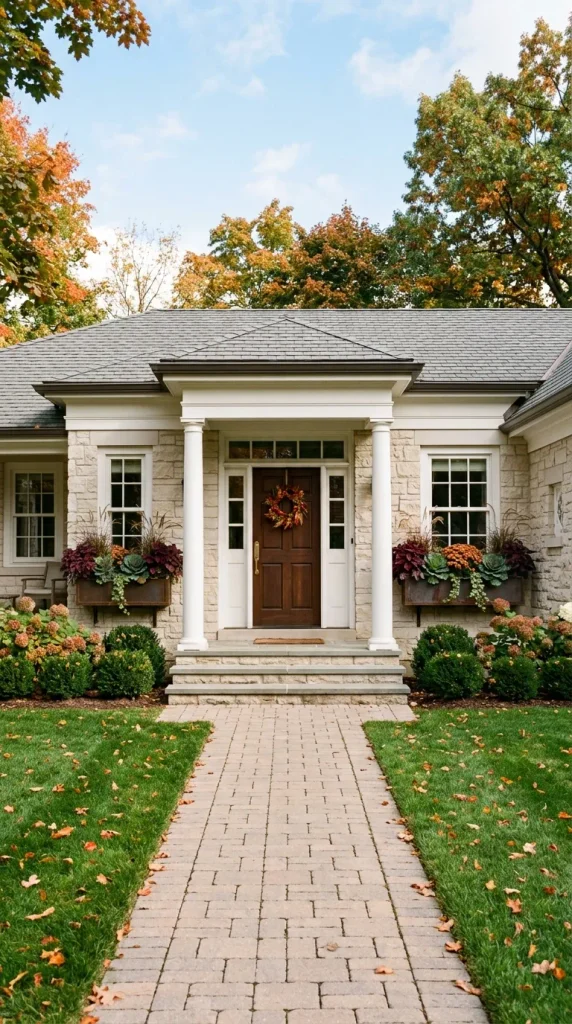
If your house has a formal architectural style, a loose cottage arrangement may feel slightly out of place.
A symmetrical pair of fall window boxes creates a much more polished appearance. Match the height, dominant colors, and general plant placement on both sides.
You don’t need every individual stem to match perfectly. Aim for visual balance rather than cloning the two boxes.
Deep green foliage with burgundy and bronze accents works particularly well here.
This style also makes sense around a central front window or entrance because symmetry reinforces the architecture.
Helpful additions
- Matching metal brackets: Identical brackets keep both installations visually consistent.
- Leveling tool: A small level helps prevent one box from sitting noticeably lower than the other.
- Watering can with a narrow spout: It gives you controlled watering around tightly arranged plants.
12. Edible Herb Fall Window Box
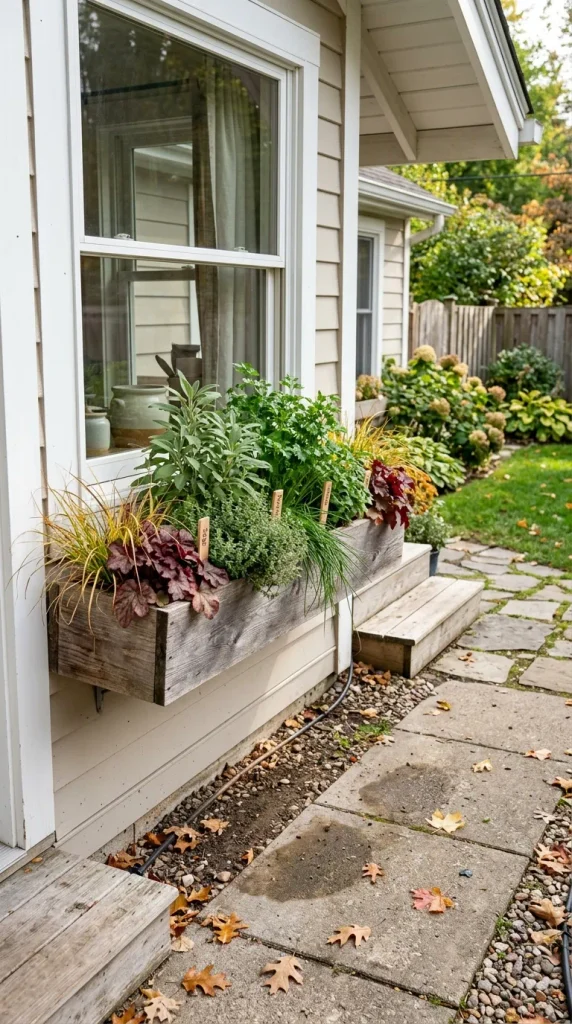
A window box doesn’t have to exist purely for decoration.
An autumn herb box can combine useful kitchen herbs with seasonal foliage while keeping everything within easy reach.
Place the herbs where you can access them from the window, and use lower-growing plants around them so the box remains visually attractive.
This works especially well outside a kitchen window.
The practical advantage becomes obvious on chilly evenings when you need a small amount of fresh herbs and don’t want to walk across the garden.
Just remember that herbs need appropriate drainage and sunlight. A beautiful arrangement won’t compensate for the wrong growing conditions.
Possibly helpful picks
- Self-watering planter insert: It can reduce watering frequency when autumn weather remains unexpectedly dry.
- Small harvesting scissors: Handy for taking small amounts of herbs without damaging neighboring growth.
- Weatherproof plant labels: They keep edible plants easy to identify as the arrangement fills in.
13. Farmhouse Window Box With Weathered Wood
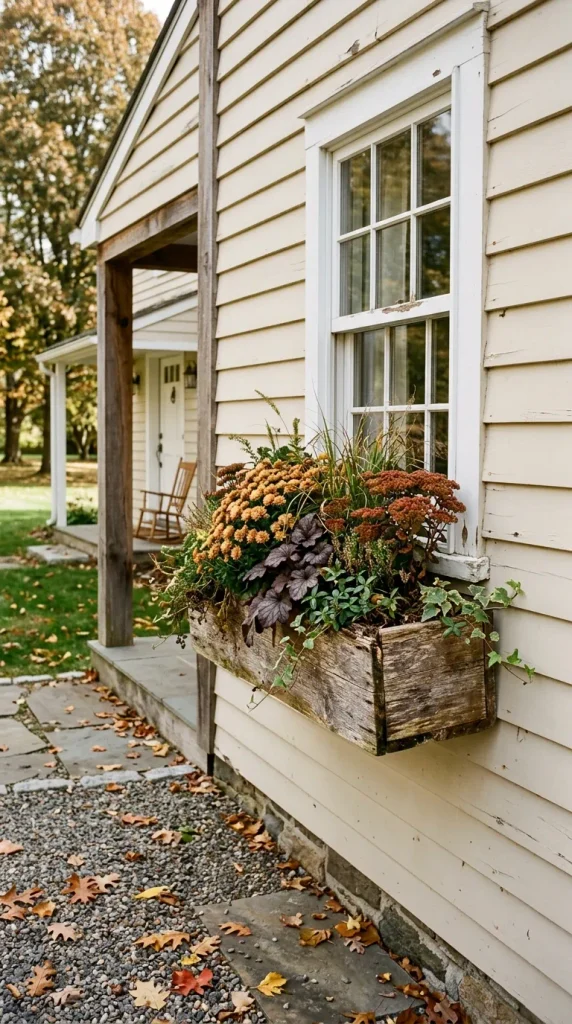
For a farmhouse exterior, a weathered wooden window box can become the foundation of the entire autumn look.
Fill it with loose foliage in muted green, faded yellow, bronze, and soft rust. The goal isn’t perfection. A slightly relaxed arrangement actually makes the box feel more authentic.
This idea works particularly well when the home already has natural wood, stone, or neutral siding.
Avoid overdecorating the box. The weathered material and seasonal planting already provide plenty of character.
There’s something charming about an arrangement that looks as though it belongs to the house rather than something that arrived for one weekend in October.
Nice finishing touches
- Weather-resistant wood sealer: It helps protect an exposed wooden container through wet autumn weather.
- Heavy-duty mounting hardware: Farmhouse-style wooden boxes can become quite heavy once planted.
- Hand brush: A small brush helps remove loose soil from the wood during maintenance.
14. Modern Geometric Fall Window Box
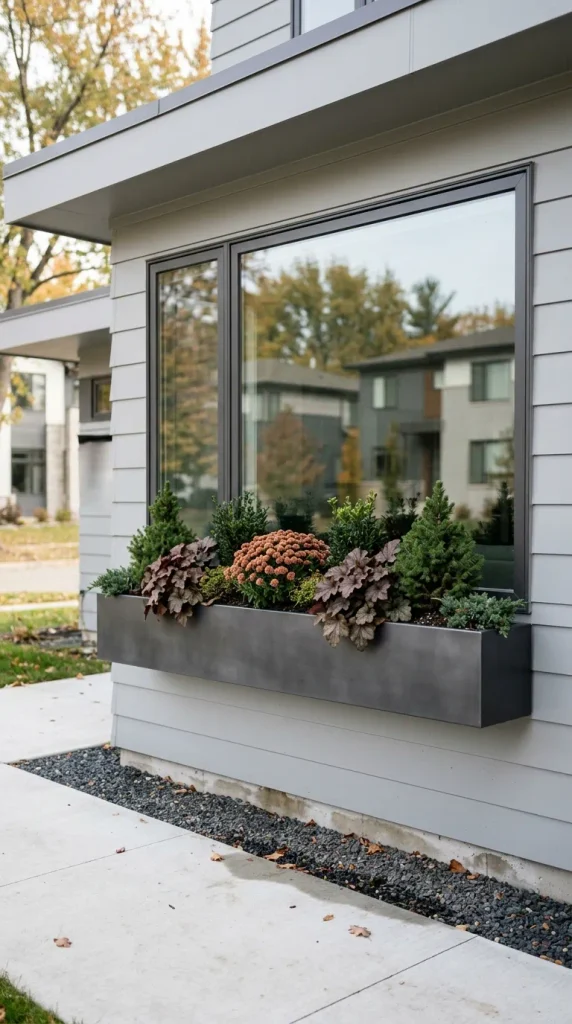
Not every fall window box needs a rustic personality.
For a contemporary home, create a clean horizontal arrangement with repeated shapes, limited colors, and controlled plant heights.
Think dark green, muted bronze, and one restrained seasonal color. Keep the front edge relatively neat rather than allowing everything to spill dramatically.
The container itself should have simple lines.
This approach works especially well on newer houses where overly traditional harvest styling can compete with the architecture.
The surprising benefit? A restrained box often requires less visual maintenance. When one plant becomes slightly untidy, the overall design can still hold together.
A few designer picks
- Rectangular metal planter: Its clean geometry supports the modern arrangement.
- Precision pruning shears: They make small corrective trims easier.
- Wall-mounted moisture meter: Useful for checking whether the soil actually needs water rather than watering on autopilot.
15. Soft Pink and Muted Mauve Autumn Box
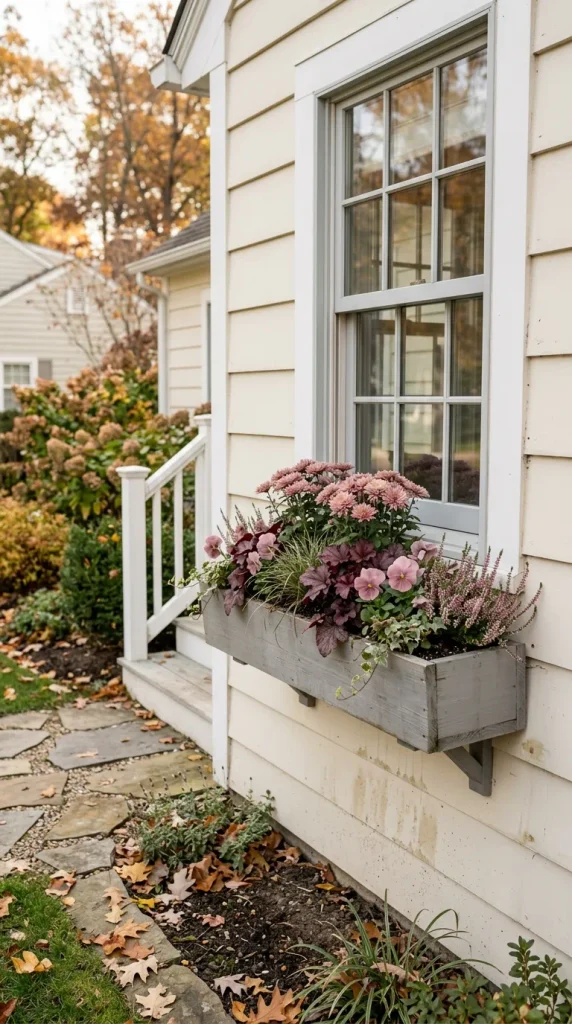
If bright fall colors aren’t your thing, consider a dusty pink, mauve, burgundy, and muted green combination.
It feels distinctly seasonal but much softer than the classic orange-and-yellow approach.
This palette looks especially attractive against pale gray, cream, or white exteriors.
The trick is to keep the pinks dusty rather than candy-bright. You want colors that look natural beside autumn foliage.
I’d also keep the container simple. The unusual color palette already gives the arrangement personality.
A few complementary pieces
- Soft-gray planter: It provides a neutral foundation for the muted floral colors.
- Adjustable plant support: Useful for keeping taller stems from collapsing into the lower flowers.
- Compact watering wand: Helpful for watering around delicate, densely planted areas.
16. Four-Season Window Box With a Fall-to-Winter Transition
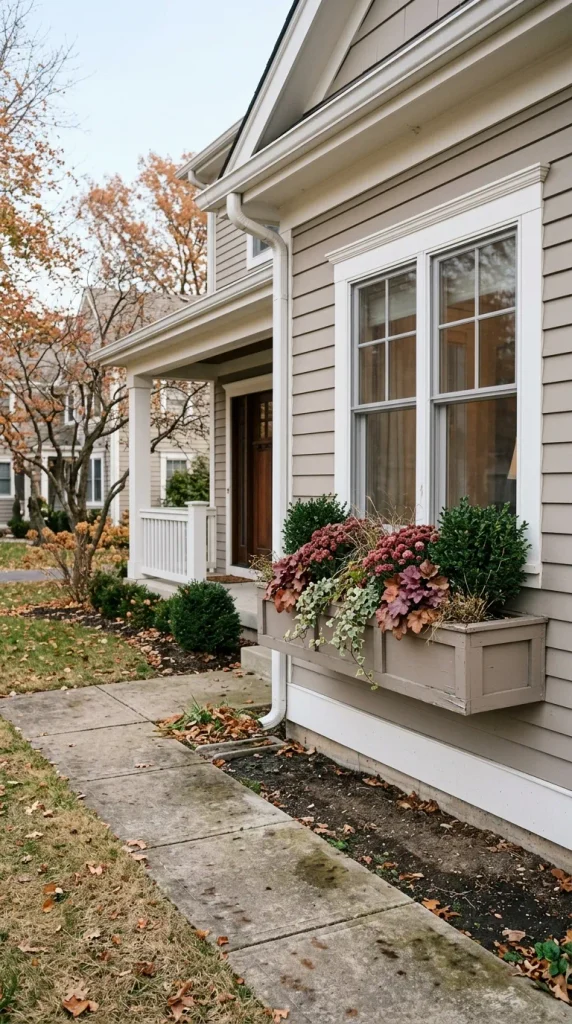
This idea is less about a single dramatic moment and more about creating a window box that ages gracefully through the season.
Start with plants and foliage that look strongest in early fall, but select components that can tolerate cooler temperatures as the season progresses.
The arrangement should have enough evergreen structure to remain attractive after some flowers fade.
That means you won’t face the familiar problem of looking at the window box six weeks later and thinking, “Well…that didn’t age very well.”
A transitional arrangement can also save time and money because you don’t need to rebuild the entire box when temperatures drop.
Practical extras
- Frost-resistant planter liner: It adds another layer of protection as temperatures fall.
- Lightweight garden fleece: Useful when an unexpected cold snap threatens tender plants.
- Compact pruning shears: They help remove fading growth while preserving the stronger seasonal structure.
17. Layered Cottage Garden Window Box With Three Distinct Heights
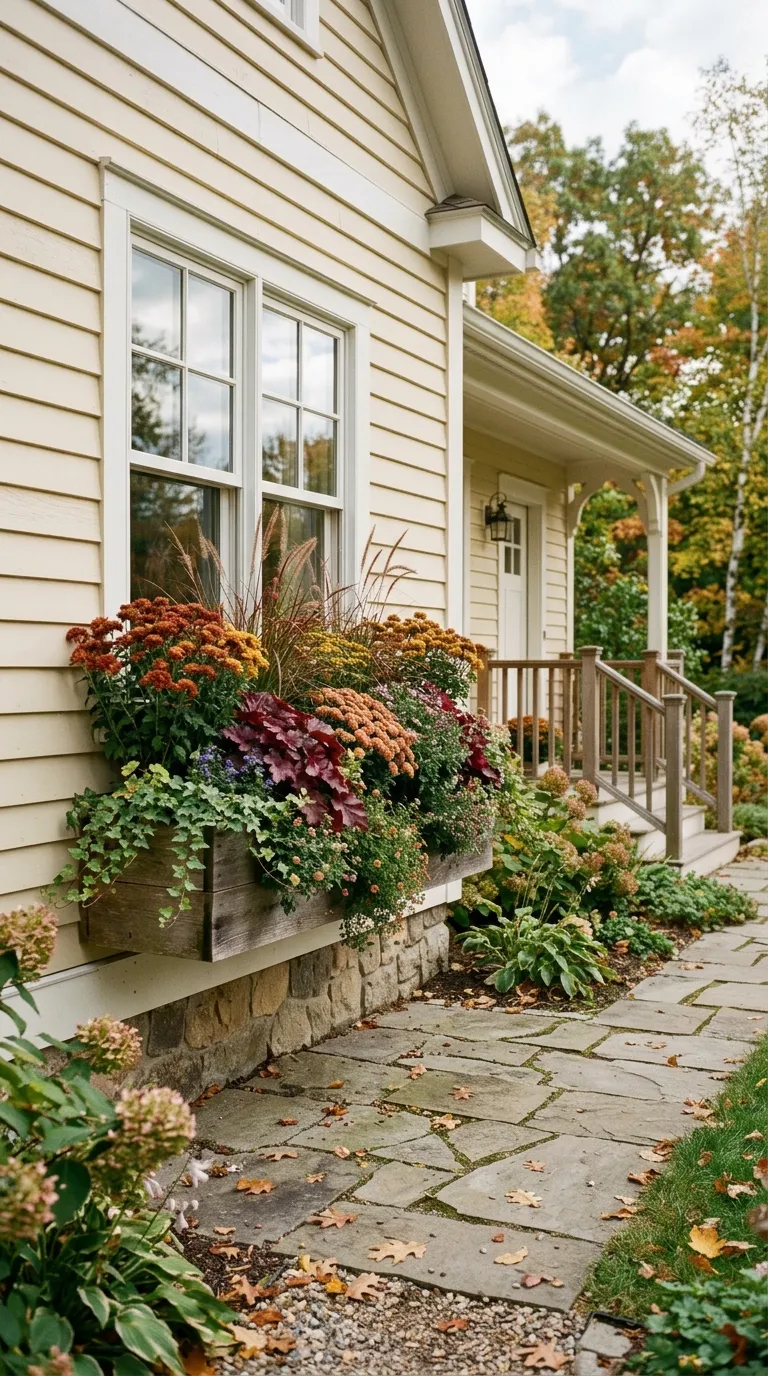
This is the arrangement I’d save for last because it combines many of the strongest qualities of fall window boxes without simply throwing everything together.
The finished look has three clear visual levels: taller autumn plants toward the back, a fuller middle layer of flowers and foliage, and trailing greenery falling over the front.
The colors stay within a warm palette of rust, burgundy, muted gold, and green.
What makes it different from a basic mixed planting is the sense of depth. When you look at the box from the street, your eye moves from the tallest stems down through the middle foliage and finally to the trailing edge.
It also feels wonderfully natural beside a cottage-style home.
Don’t pack every inch of the container. Give each layer enough breathing room to develop over the next several weeks.
And if you only have one window box to decorate this year, this flexible layered format gives you plenty of room to adjust the colors and plants to suit your home.
Helpful additions
- Deep rectangular planter: The extra depth gives three distinct planting levels enough room to coexist.
- Strong mounting brackets: A full layered box can become substantially heavier after watering.
- Long-handled watering wand: It makes reaching the rear planting layer much easier without disturbing the front growth.
Choosing Between the Different Fall Window Boxes Ideas
With seventeen possibilities on the table, the easiest way to narrow them down is to look at your house first and the plants second.
A traditional brick home can handle the classic red-and-orange box beautifully. A modern gray exterior may look better with the black-and-bronze or geometric arrangement.
Your window size matters, too.
A shallow box benefits from a simpler composition, while a deeper container gives you enough room for layered planting.
Sunlight also deserves more attention than it usually gets. Before buying plants, check how many hours of direct light the window receives and whether the location gets afternoon heat.
Here’s a quick comparison:
| Style | Best Character | Main Colors | Visual Effect |
|---|---|---|---|
| Burgundy & Copper | Warm and rich | Burgundy, bronze | Dramatic |
| Cream & Sage | Soft cottage | Cream, sage | Calm |
| Rustic Harvest | Traditional | Rust, green, gold | Seasonal |
| Jewel Tone | Sophisticated | Wine, purple | Moody |
| Vertical | Architectural | Green, bronze | Tall |
| Cascading | Lush | Green, burgundy | Romantic |
| Black & Bronze | Modern | Charcoal, bronze | Moody |
| Classic Fall | Familiar | Red, orange, yellow | Cheerful |
| Silver & Rust | Elegant | Silver, rust | Refined |
| Woodland | Natural | Moss, brown | Organic |
| Formal Symmetry | Polished | Green, burgundy | Structured |
| Herb Box | Functional | Green, muted colors | Useful |
| Farmhouse | Rustic | Rust, yellow, green | Relaxed |
| Geometric | Contemporary | Green, bronze | Clean |
| Pink & Mauve | Soft | Mauve, dusty pink | Romantic |
| Transitional | Long-lasting | Green, bronze | Seasonal |
| Layered Cottage | Full | Rust, gold, burgundy | Lush |
One more practical consideration: weight.
A window box becomes surprisingly heavy after you combine a container, wet growing medium, mature plants, and rain. Never assume the brackets can handle it simply because the empty box feels lightweight.
And drainage matters just as much. A beautiful window box that constantly holds water can create problems for both plants and the building.
Making the Window Box Look Good From Inside the House
It’s easy to design a window box entirely for the street.
But you’re probably going to see it from inside your house far more often.
Keep taller plants toward the sides or rear if the window provides an important view. You can still create height without turning the entire lower half of the glass into a wall of foliage.
For bedrooms and living rooms, softer colors may also work better than extremely bright flowers.
This small shift in perspective can completely change which of the fall window boxes ideas makes sense for your home.
The best arrangement isn’t necessarily the one that looks most impressive in a photograph. It’s the one that still makes you happy when you glance outside while drinking your morning coffee.
A Few Common Window Box Mistakes Worth Avoiding
The biggest mistake involves overfilling.
Young plants look small at the garden center, so it’s tempting to squeeze several more into the container. A few weeks later, everything competes for space and the box loses the clean visual structure you started with.
Another common problem comes from ignoring the window itself.
If plants completely cover the lower glass, the display may look attractive from outside but become frustrating from inside.
And then there’s watering.
Window boxes dry out faster than many people expect because their limited soil volume sits above the ground. Check the moisture regularly instead of assuming autumn rain will handle everything.
Finally, don’t force symmetry unless the architecture calls for it. Some of the most charming fall window boxes look slightly relaxed and irregular.
Final Thoughts on Fall Window Boxes Ideas
The nicest fall window boxes don’t necessarily contain the most plants or the brightest colors. They simply feel like they belong.
A burgundy-and-copper arrangement can make a plain window feel warmer. A cream-and-sage box can give a cottage home a softer seasonal transition. A dark geometric arrangement can bring autumn into a contemporary exterior without making it look rustic.
That’s what makes this kind of seasonal planting so enjoyable: you can express the character of your home without changing the home itself.
If you’re undecided, I’d start with the architecture and the colors already around your window. Then choose one arrangement from this list that naturally continues that visual story.
And honestly, don’t worry if your first attempt isn’t magazine-perfect. Plants grow, colors change, and autumn has a funny way of making slightly imperfect arrangements look even better.
Pick your favorite idea, give the plants enough room to breathe, make sure the box has solid support and drainage, and let the season do some of the decorating for you.

William Martin is a passionate bowler who spends most of his weekends playing the sport. With years of intense experience under his belt, William decided to share his knowledge by creating BOWLING OCEAN. Join me on this journey to explore the world of bowling and discover the tips and tricks to becoming a pro.