18 Fall Outdoor Planter Ideas for a Beautiful Autumn
There is something satisfying about the first fall planter of the year. You can almost feel the season change when a tired summer container gets replaced with deeper colors, interesting foliage, and a little more texture.
What I like most about fall outdoor planter ideas is that they do not have to look like a pumpkin exploded on your porch. A good autumn container can feel rustic, elegant, modern, cottage-like, or surprisingly understated.
The trick is choosing one strong visual idea and building around it. Cool-season plants such as pansies, violas, ornamental kale, and certain fall flowers can handle cooler weather, while grasses, foliage, branches, and seasonal accents add structure.
Here are 18 distinct arrangements worth trying, from tiny entryway containers to dramatic porch statements.
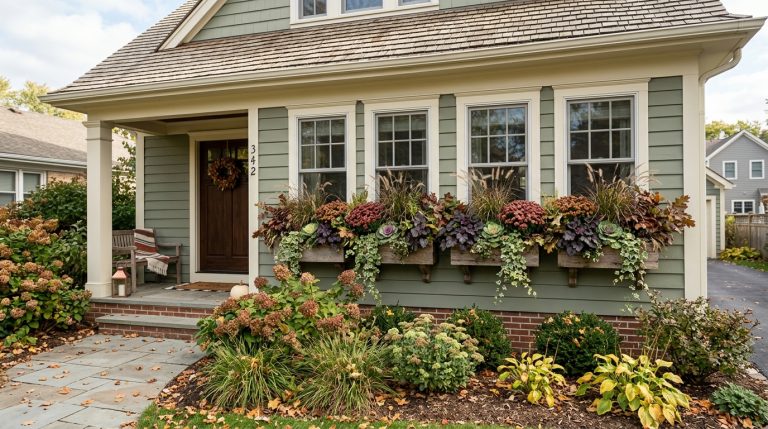
1. Deep Burgundy and Plum Planter
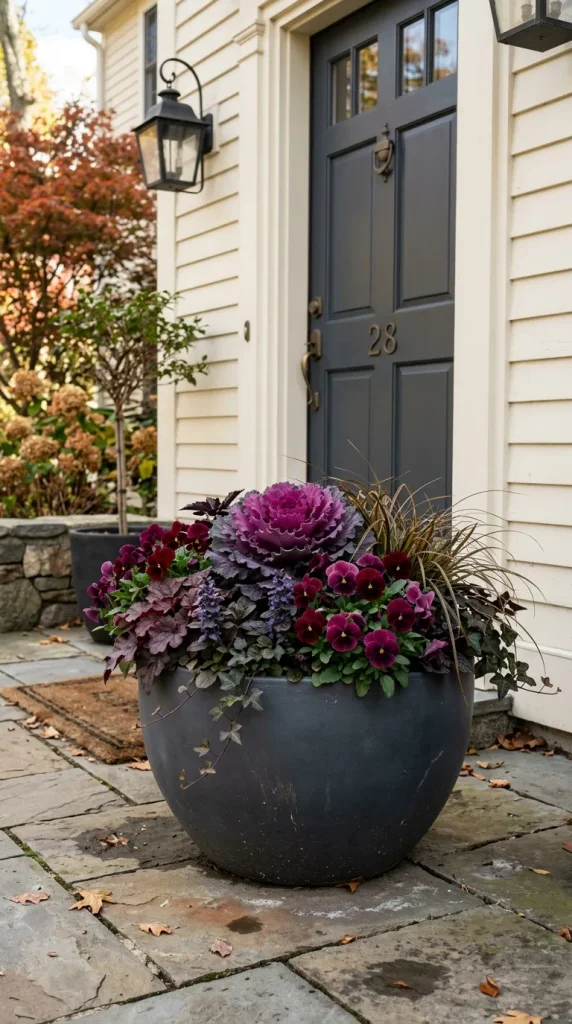
For a fall planter that feels sophisticated rather than overly festive, build the palette around burgundy, plum, and deep green.
Use a dark-toned flowering plant as the main color source, then surround it with foliage in contrasting shades. Ornamental kale can provide a sculptural rosette, while trailing greenery softens the edges.
The important part is restraint. Skip bright orange accents and let the foliage do most of the seasonal work. This arrangement looks particularly good against cream siding, natural stone, charcoal doors, or weathered wood.
A wide, heavy container works better than a narrow pot because the darker palette has more visual weight.
A few things you might like
- Large matte-finish planter: Gives the deep color scheme a substantial architectural base.
- Decorative plant stand: Raises the container slightly so the foliage remains visible from the walkway.
- Hand pruner: Makes it easy to remove damaged leaves and keep the arrangement tidy.
2. Rustic Wooden Crate Planter
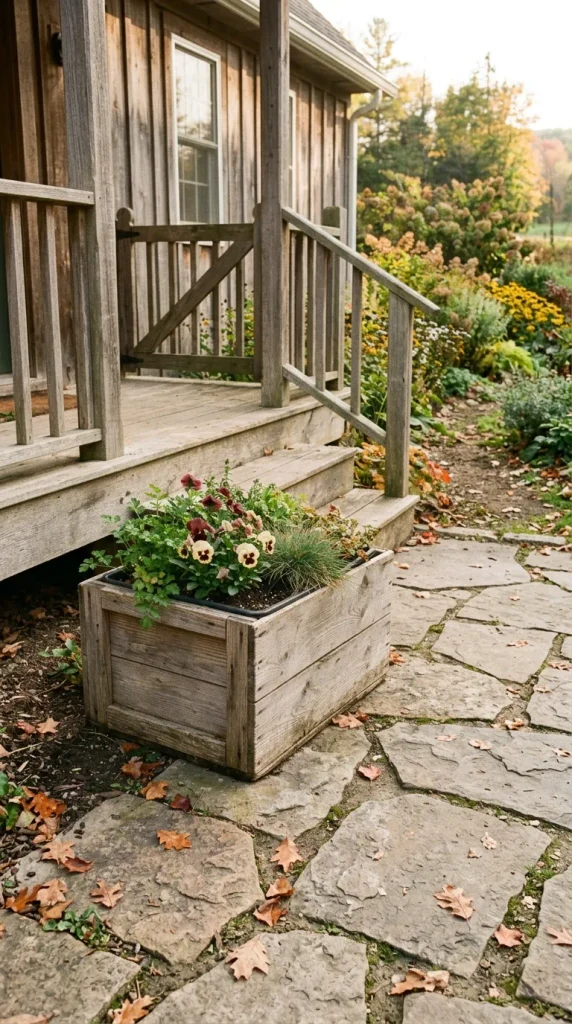
Instead of making the container itself disappear, make it part of the autumn look with a weathered wooden crate.
Choose a crate deep enough to hold a separate planting container or use a properly lined garden-safe box with drainage. Fill it with compact seasonal plants and allow the foliage to spill naturally over the edges.
This works beautifully beside a farmhouse-style entry, garden gate, shed, or back patio. The wood supplies the warmth, so the plants do not need exaggerated autumn colors.
One practical trick: keep the actual planting container inside the decorative crate if you want to reuse the crate throughout the year.
Give these a look
- Wooden garden crate: Creates the rustic foundation without making the plants compete with the container.
- Waterproof planter liner: Protects the decorative exterior while allowing the inner planting to drain properly.
- Garden twine: Useful for securing loose stems or adding a simple handmade finishing detail.
3. Fall Herb Window Box
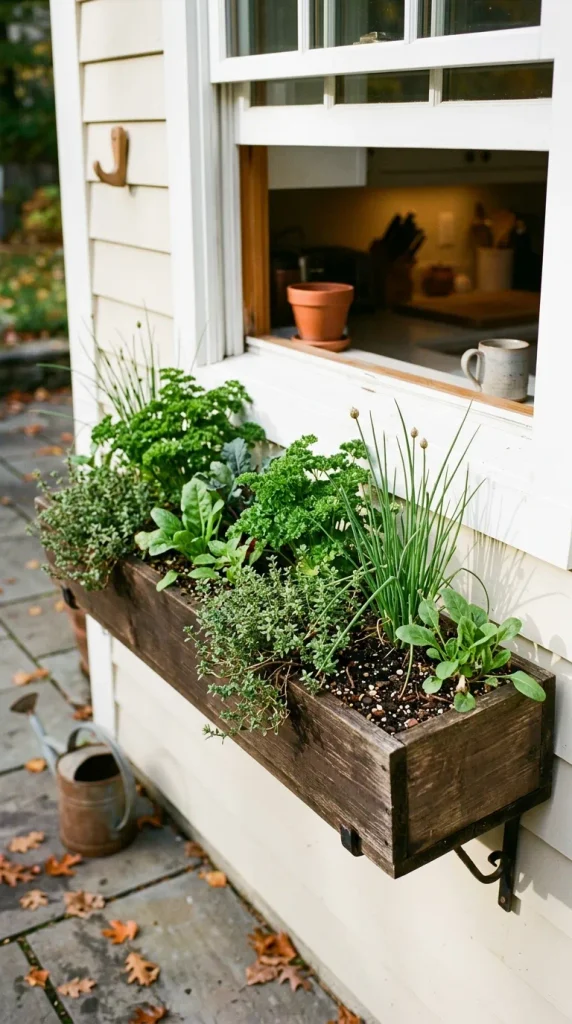
Who says a fall planter has to be purely decorative?
A long window box filled with parsley, thyme, chives, and cool-season greens can give an outdoor kitchen window or sunny patio a distinctly autumn feel while remaining useful.
Keep plants with similar light and moisture requirements together. Herbs such as parsley and thyme can work well in containers, while edible greens can add soft texture between them. Container gardening works particularly well where ground space remains limited.
The result feels more like a working garden than seasonal decoration, which is exactly why I like it.
Useful items to consider
- Self-watering window box: Helps maintain more consistent moisture when the box sits in a sunny location.
- Watering wand: Makes it easier to reach a long box without disturbing the foliage.
- Small plant labels: Keep individual herbs easy to identify once the planter fills out.
4. Tall Grass Statement Pot
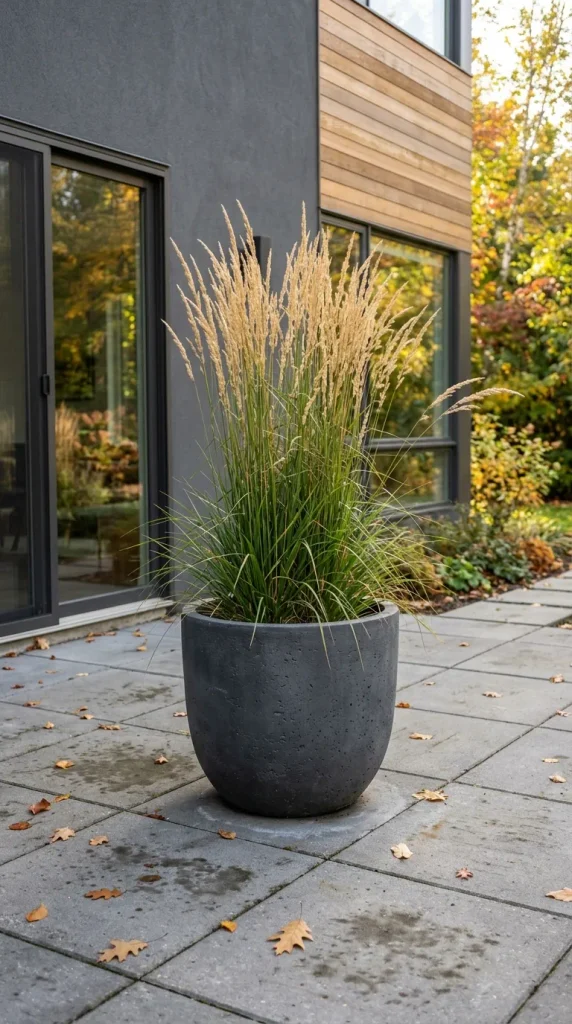
Sometimes the best fall planter contains almost no flowers.
Use a tall ornamental grass as the star of a large outdoor container. Its upright blades and feathery seed heads create movement whenever the breeze passes through.
Choose a substantial pot with a broad base. Tall foliage creates a larger visual footprint and can make a lightweight container unstable in exposed areas.
This idea suits modern patios especially well because it feels architectural rather than traditionally seasonal. Add nothing else if you prefer a minimalist look.
Possibly handy products
- Heavy outdoor planter: Gives tall foliage the stability it needs in windy locations.
- Pot feet: Lift the container slightly and improve drainage around the base.
- Plant support ring: Provides discreet reinforcement if the grass becomes top-heavy.
5. White and Silver Autumn Container
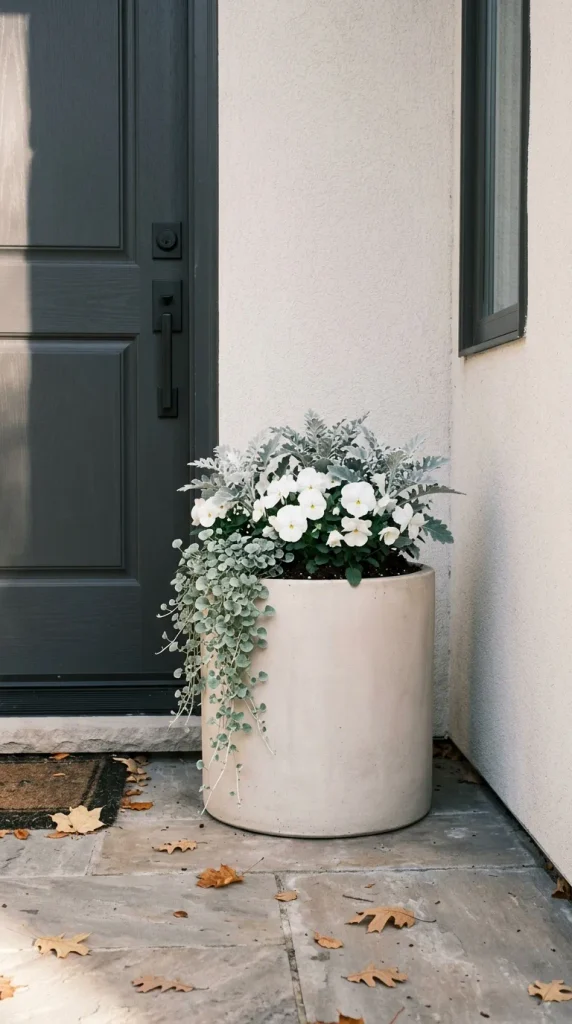
For something completely different from the usual orange-and-red palette, try white flowers with silver foliage.
Silver-toned foliage creates a cooler autumn mood and looks especially elegant against dark doors. Pair it with a white or pale stone-colored container to create a soft monochromatic arrangement.
The beauty here comes from texture rather than lots of different colors. Rounded blooms, dusty foliage, and a slightly trailing plant create enough variation without making the pot busy.
This is also an excellent choice for homes with modern or neutral exterior colors.
A few suggestions
- White ceramic-style outdoor planter: Reinforces the quiet monochromatic palette.
- Decorative gravel: Adds a clean surface layer around exposed soil.
- Outdoor plant riser: Gives a low container more presence beside an entry door.
6. Mini Pumpkin Pocket Planter
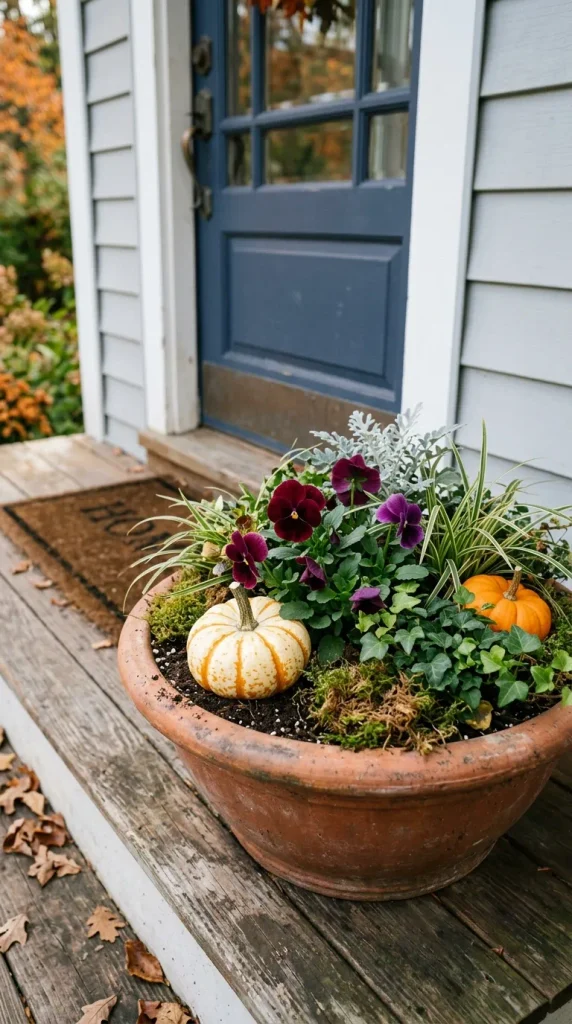
Here is where pumpkins can actually earn their place.
Instead of covering the entire container with gourds, create a small planting arrangement with one or two miniature pumpkins tucked naturally between the foliage.
The trick is keeping the pumpkins low and stable. Place them near the rim or soil surface rather than balancing them on delicate stems.
This approach gives you an unmistakably autumn display while allowing the plants to remain the main attraction.
It also makes seasonal cleanup easier because the pumpkins function as removable decorations rather than permanent parts of the planting.
Nice finishing touches
- Mini decorative pumpkins: Add seasonal color without overwhelming the planting.
- Decorative moss: Helps disguise exposed soil around the seasonal accents.
- Wide-rim outdoor pot: Provides enough surface area to position decorations securely.
7. Pansy and Viola Frost-Friendly Pot
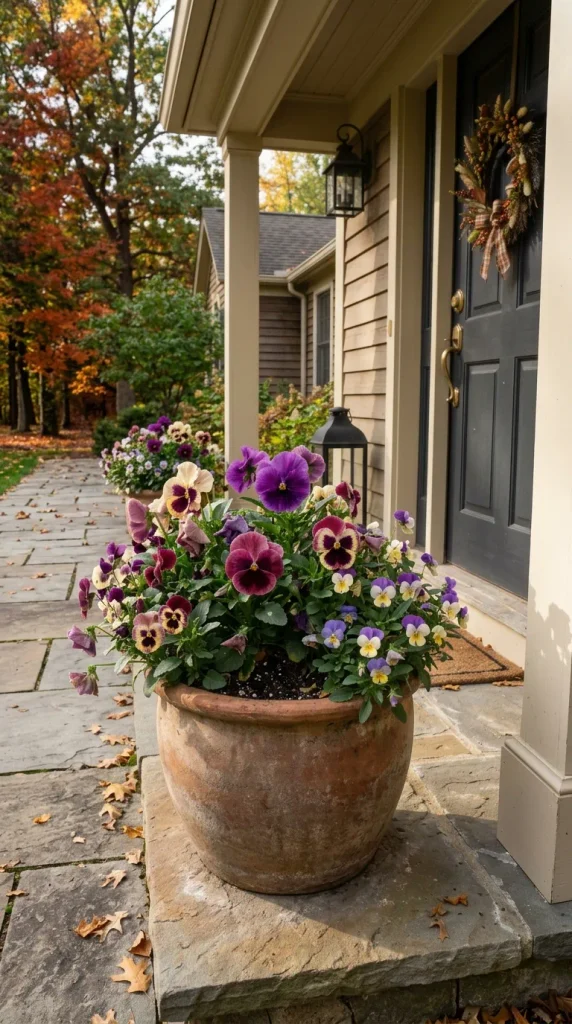
If you want flowers that keep contributing after temperatures fall, build the container around pansies and violas.
These cool-season flowers can tolerate chilly conditions and continue providing color when many summer containers have given up.
Use several colors within the same family rather than mixing every available shade. Purple, burgundy, cream, and yellow can create a particularly rich autumn combination.
Keep the soil consistently moist but never waterlogged. Container plants generally perform best with moisture that stays even rather than swinging from bone-dry to saturated.
Helpful accessories
- Moisture meter: Takes some guesswork out of checking a densely planted container.
- Slim hand trowel: Makes it easier to tuck small violas into tight planting spaces.
- Decorative pot saucer: Protects hard surfaces while allowing you to monitor excess water.
8. Ornamental Kale Sculptural Planter
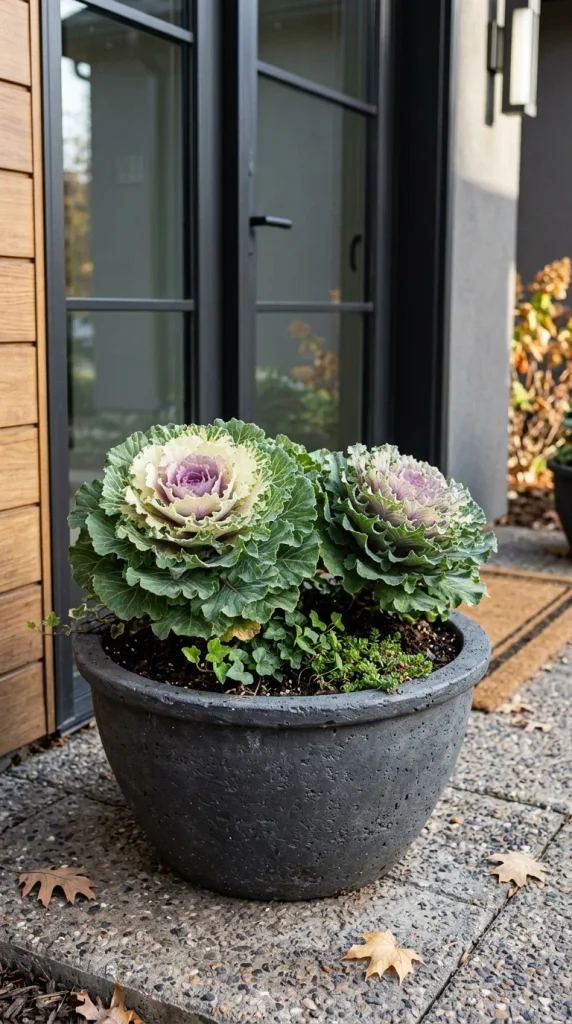
Forget flowers entirely and let ornamental kale or cabbage create the composition.
Their large rosettes give a container an almost sculptural appearance, particularly when planted in a simple stone, concrete-look, or charcoal pot.
This works best when you give the foliage room to become visible instead of burying it under several other plants.
Ornamental kale and cabbage are established cool-weather container choices, and their foliage can become especially useful when flowering plants start fading.
Honestly, this is one of my favorites for people who want autumn character without a traditional flower-heavy arrangement.
Maybe worth checking out
- Modern concrete-look planter: Gives the sculptural foliage an architectural backdrop.
- Plant caddy: Lets you move a heavy container when weather or cleaning requires it.
- Leaf-cleaning brush: Useful for keeping broad foliage free of debris.
9. Rustic Corn-Stalk Entry Pot
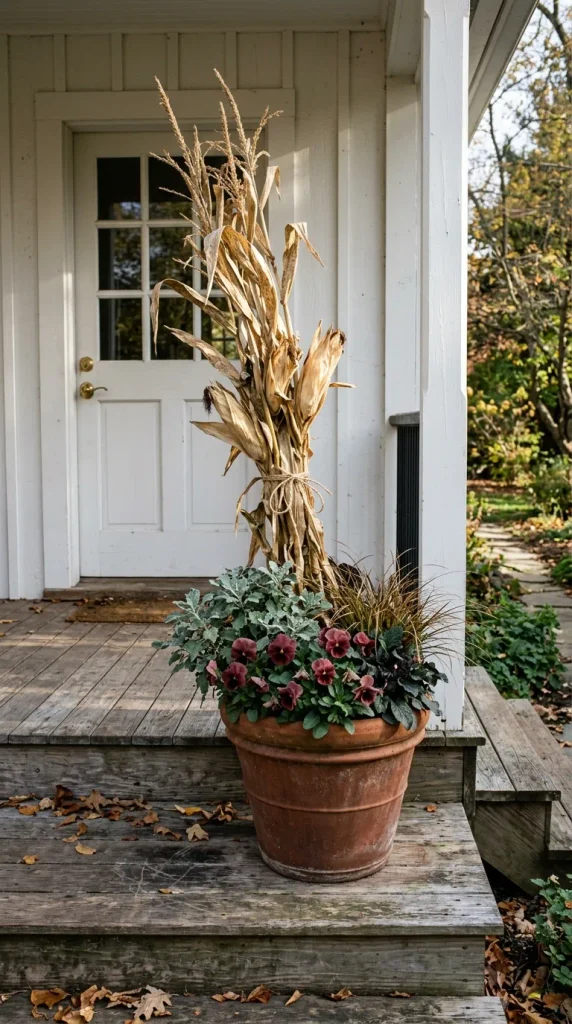
Create height without relying on a tall plant by using dried corn stalks behind a low seasonal planter.
The stalks can rise vertically from the back of the container while shorter foliage and flowers fill the foreground. Secure them carefully with garden twine so wind does not turn the arrangement into an accidental obstacle course.
This design works particularly well beside front doors where vertical space matters more than floor space.
Keep the stalks narrow enough that they do not obstruct the doorway or sightline.
Practical extras
- Natural garden twine: Secures tall stalks while maintaining the rustic appearance.
- Heavy-duty planter: Provides a stable base for the added vertical weight.
- Outdoor hook-and-loop ties: Offer a quick way to secure decorative stems discreetly.
10. Compact Balcony Fall Planter
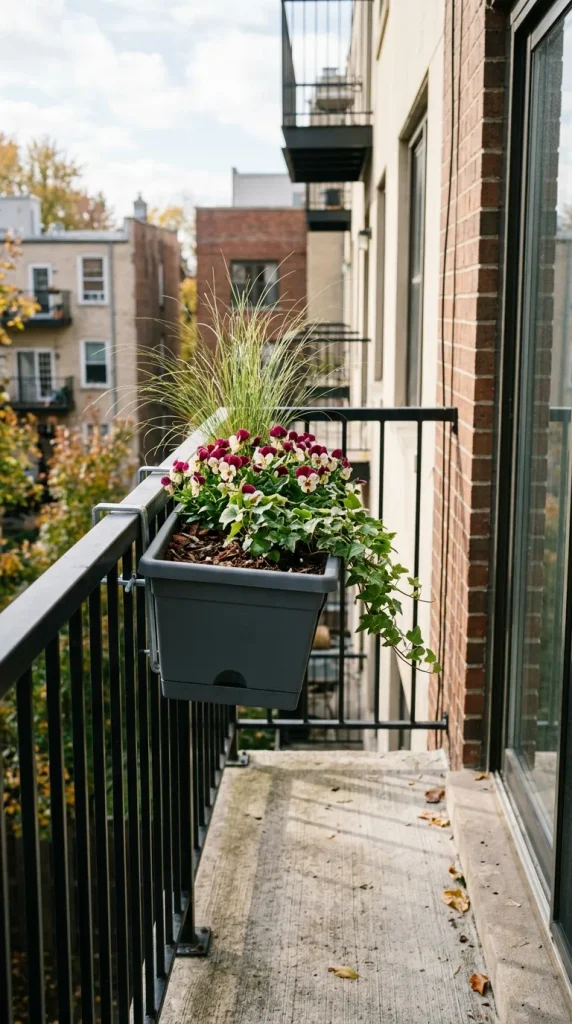
Small outdoor spaces deserve seasonal color too.
For a balcony, use a single rectangular planter rather than several pots scattered across the floor. Combine one upright plant with compact flowers and a trailing edge so the arrangement uses vertical and horizontal space efficiently.
The key is keeping the overall weight manageable. A smaller container also dries out more quickly, so check the soil regularly rather than relying on a fixed watering schedule.
This style can transform a narrow balcony railing into a seasonal focal point without sacrificing walking space.
Possibly helpful picks
- Lightweight resin planter: Reduces the load compared with a large stone or concrete container.
- Railing planter brackets: Keep the planting elevated and free up valuable floor area.
- Compact watering can: Makes regular watering easier in tight balcony spaces.
11. Copper and Burnt-Orange Container
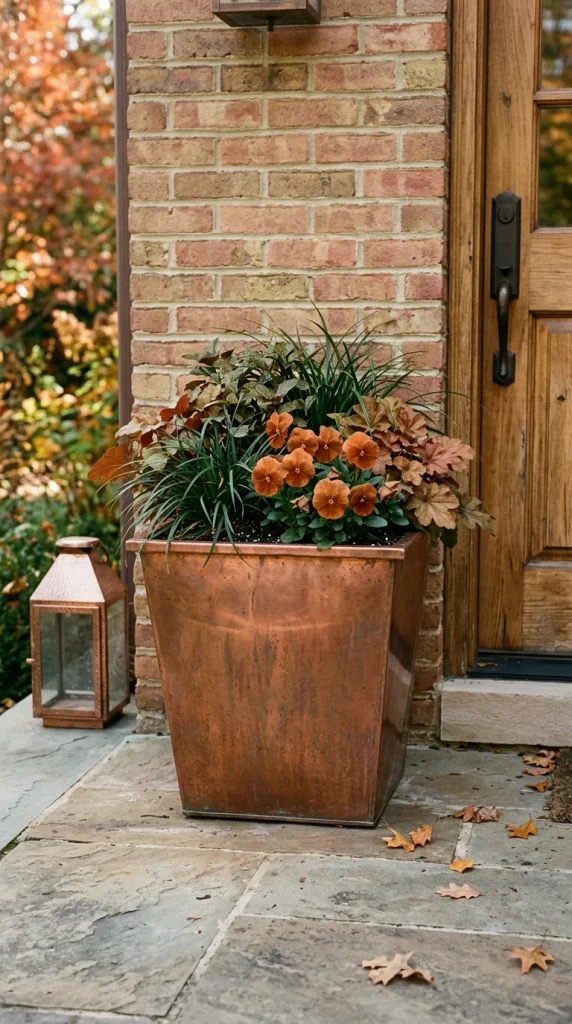
For a warmer, richer look, combine burnt orange, copper, bronze, and green.
The unusual part is using the container as a major color contributor. A copper-toned planter can make ordinary foliage feel much more autumnal without requiring a huge number of flowers.
Keep the plant palette relatively restrained. Too many orange shades can flatten the composition, while bronze foliage and deep green provide the contrast needed to keep it sophisticated.
This arrangement looks especially good near brick, natural wood, or warm-colored stone.
A few favorites
- Copper-finish outdoor planter: Supplies the warm metallic foundation for the arrangement.
- Outdoor lantern: Adds another copper-toned element without crowding the planter.
- Decorative plant stake: Provides a small vertical accent that complements the warm palette.
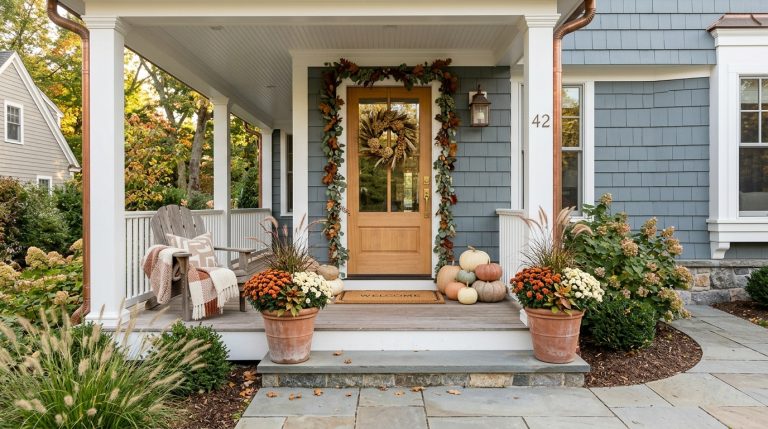
12. Front-Step Twin Planters
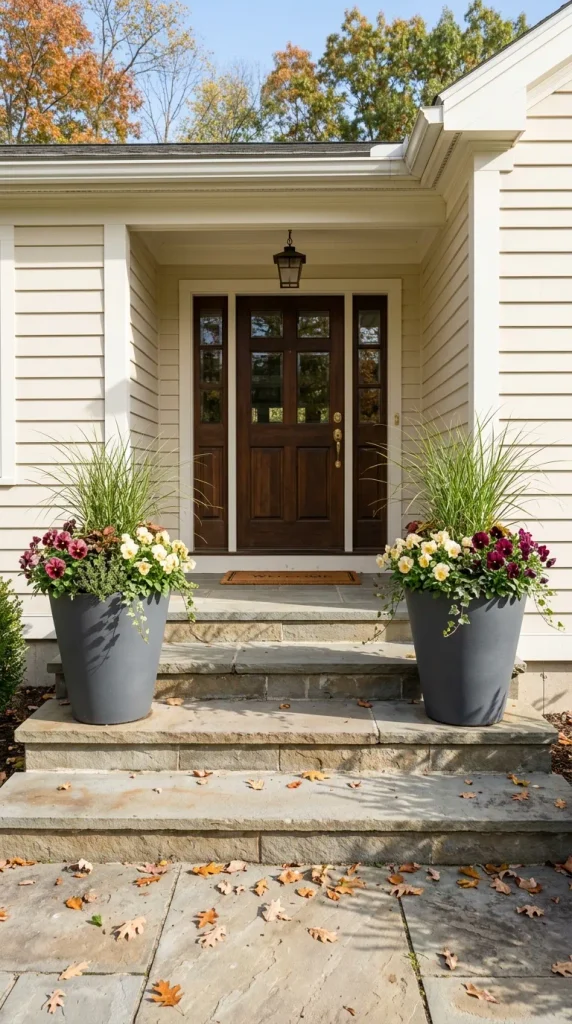
Rather than filling one enormous container, place two matching planters on either side of the entrance.
Symmetry makes this idea feel polished immediately. Keep the plant combinations identical or mirror them closely so the doorway becomes the visual center.
You can use flowers, foliage, grasses, or a combination, but avoid making each pot completely different. The strength of this arrangement comes from repetition and balance.
Choose containers large enough to remain visually substantial beside the door without narrowing the walking path.
Worth considering
- Matching outdoor planters: Create the symmetry that makes the entrance feel intentionally designed.
- Outdoor plant risers: Help adjust container height when the proportions look too low.
- Weather-resistant door lanterns: Reinforce the balanced entryway composition after sunset.
13. Fall Pollinator Container
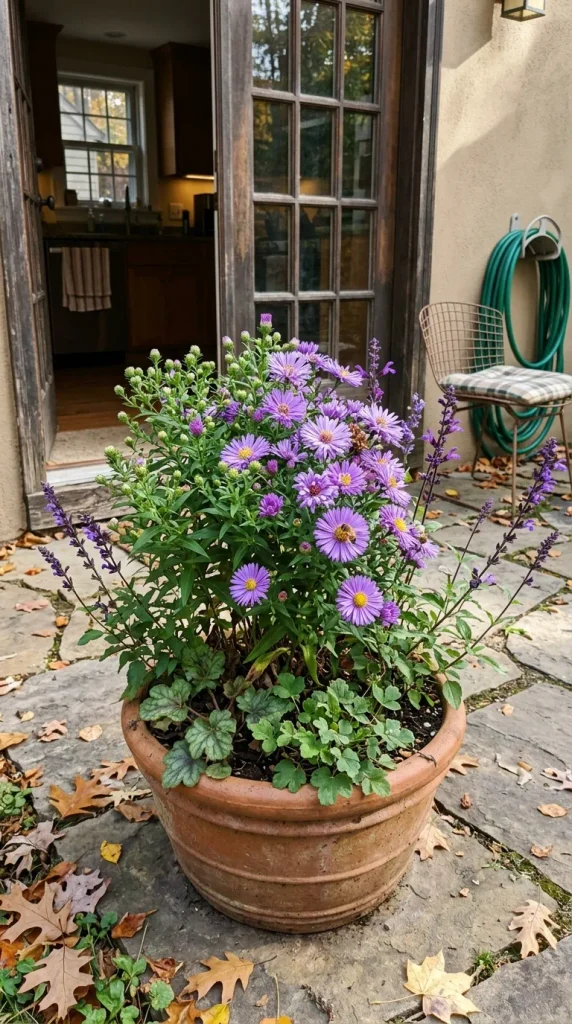
Autumn does not have to mean the end of garden activity.
Create a container with late-season flowering plants that provide nectar for pollinators, such as suitable asters or salvias for your climate. University of Minnesota Extension notes that fall-blooming plants can provide valuable late-season resources for bees and butterflies.
Use one dominant flower and let smaller supporting plants fill the edges. The result should look like a small working garden rather than a decorative centerpiece.
This idea makes particular sense near patios, balconies, and kitchen doors where you can actually watch the activity.
A few relevant products
- Decorative bee water station: Adds a small wildlife-friendly feature near the container.
- Natural wood plant marker: Keeps the planting organized without looking overly formal.
- Small garden scissors: Make quick deadheading and cleanup easier.
14. Hanging Basket With Trailing Autumn Color
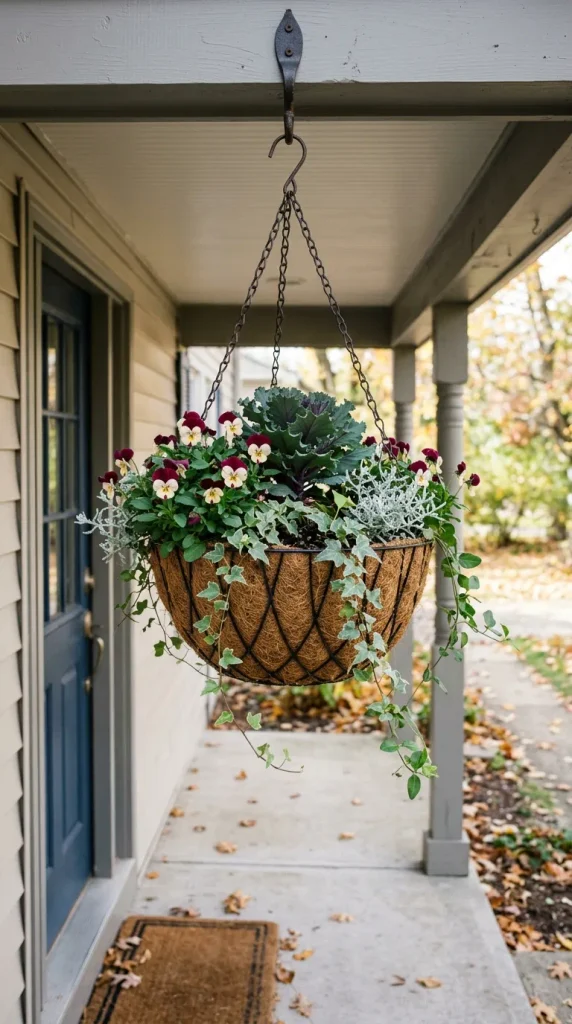
Not every fall planter belongs on the ground.
A hanging basket filled with trailing foliage and cool-season flowers adds seasonal color at eye level while keeping pathways clear.
Choose a basket with enough root space for the plants you want to use, then position it where the plants receive appropriate light. Hanging containers can dry faster than larger ground-level pots, so regular moisture checks matter.
This is especially useful for small porches where floor space disappears surprisingly quickly.
Helpful accessories
- Heavy-duty hanging basket hook: Provides secure support for a full seasonal container.
- Coir basket liner: Helps create a neat planting surface for a traditional hanging basket.
- Adjustable hanging chain: Lets you fine-tune the basket height around doors and windows.
15. Modern Black-and-Green Planter
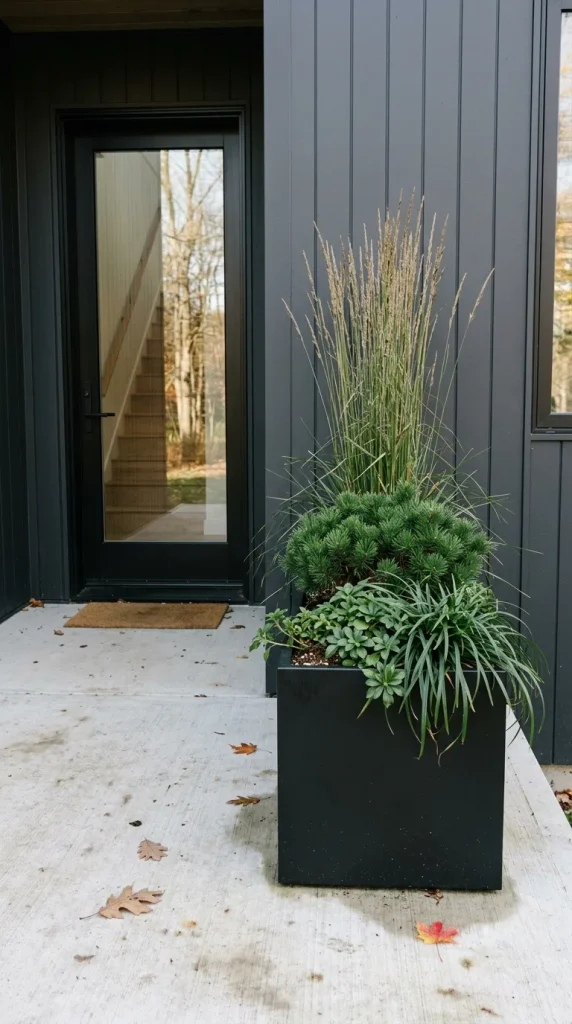
For a contemporary home, skip traditional fall colors altogether.
A black planter filled with layered green foliage can suggest autumn through texture, form, and changing seasonal growth rather than obvious decorations.
Use a tall upright plant, a rounded middle layer, and a trailing edge. The limited palette makes the shapes more noticeable, so choose plants with genuinely different leaf forms.
This is a particularly strong choice beside black-framed windows, charcoal siding, concrete, or minimalist architecture.
You might like
- Matte black planter: Creates the clean architectural foundation this arrangement needs.
- Minimalist plant stand: Adds height without introducing decorative clutter.
- Stainless-steel hand pruners: Keep foliage cleanly trimmed while fitting the modern aesthetic.
16. Edible Fall Salad Container
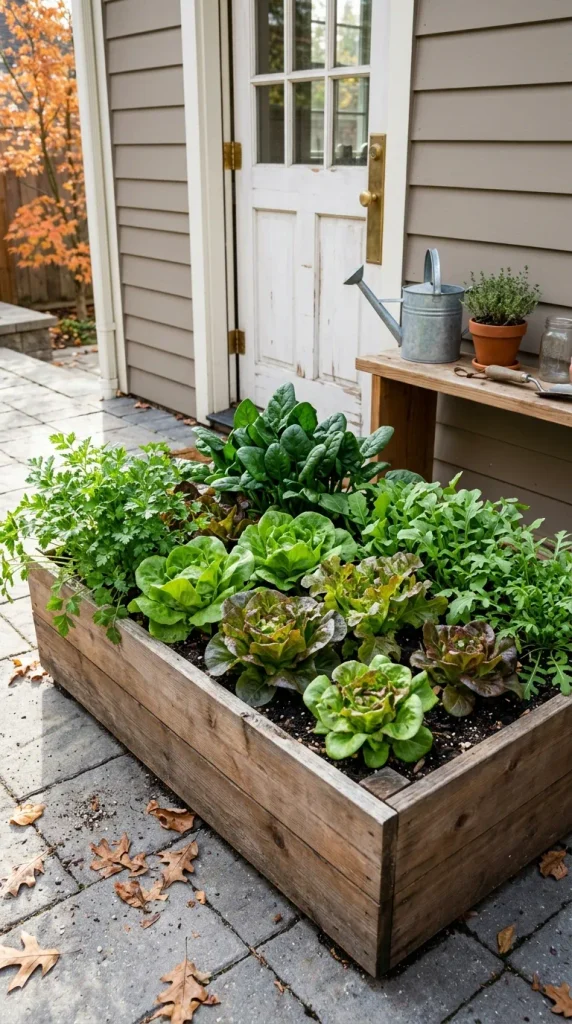
Turn the planter into something you can actually eat.
A deep outdoor container can hold leaf lettuce, spinach, parsley, or other suitable cool-season crops, creating a small edible display for a patio or kitchen entrance. Fall patio containers can include vegetables and herbs as well as flowers.
Arrange the tallest crop toward the back and shorter greens toward the front. The different leaf textures create enough visual interest that you do not need decorative accessories.
Just remember that edible crops need the right amount of light, water, and suitable container depth.
Useful items to consider
- Deep vegetable planter: Gives edible greens enough growing space for a productive container.
- Harvest scissors: Makes quick, clean cutting easier.
- Plant support labels: Help you remember varieties and planting dates.
17. Natural Branches and Foliage Planter
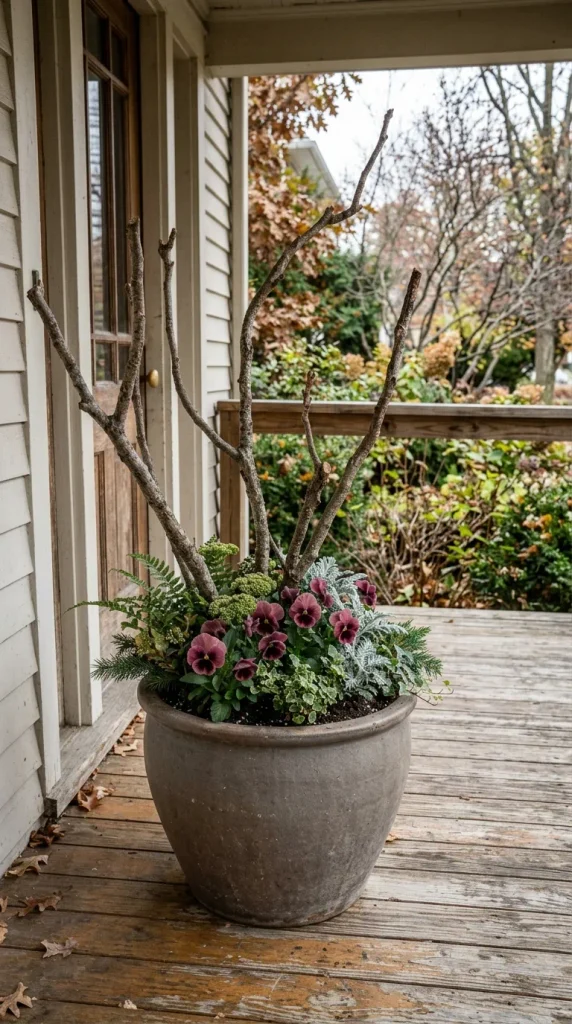
For an arrangement that feels almost like it came straight from the landscape, use natural branches as the vertical structure.
Choose interesting branches with attractive bark, insert them toward the back of a substantial planter, and surround their base with seasonal foliage.
This idea works particularly well when you want the container to transition toward winter. As flowers fade, the branches remain useful as structural elements.
Avoid using brittle branches or anything collected from questionable sources, and secure tall pieces firmly so they cannot fall into a walkway.
A few complementary pieces
- Heavy ceramic planter: Provides the weight needed for a branch-based arrangement.
- Floral wire: Helps discreetly secure branches while keeping the composition natural.
- Decorative bark pieces: Reinforce the woodland-inspired texture around the base.
18. Layered Fall Container With a Winter Transition
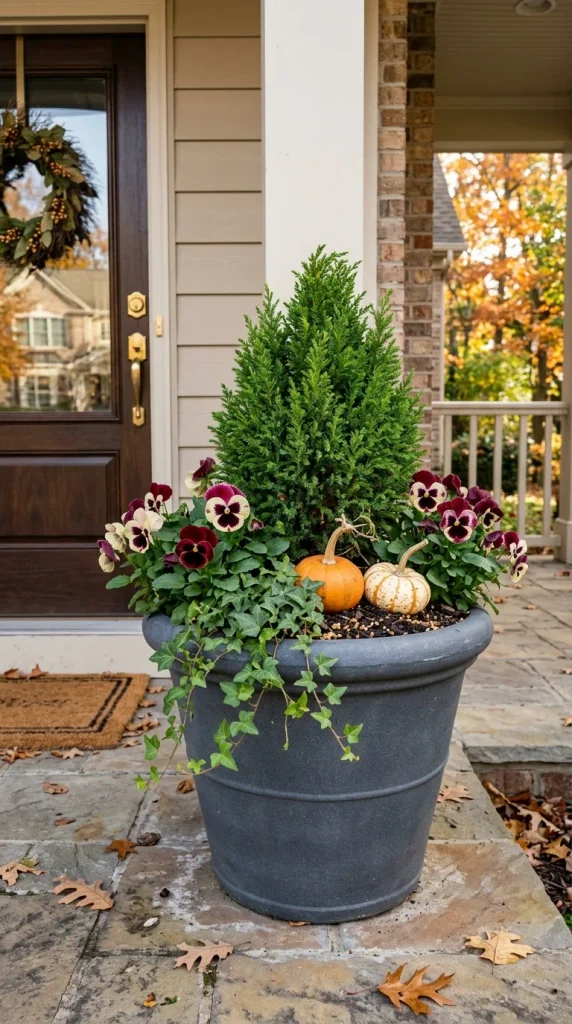
If you hate replacing your containers every few weeks, design one with the next season already in mind.
Start with a durable evergreen or structural plant, add cool-season flowers for immediate autumn color, then use removable pumpkins, gourds, or dried accents for the seasonal layer.
When the decorative pieces no longer feel appropriate, simply remove them. The living structure remains, giving you a head start on a winter arrangement.
This approach makes particular sense for large containers because you avoid tearing apart a healthy planting simply because the calendar changed.
Practical additions
- Weather-resistant outdoor planter: Gives the arrangement a durable home through multiple seasons.
- Frost cloth: Offers temporary protection when an unexpected freeze threatens tender container plants.
- Plant caddy: Makes a large container easier to reposition when winter weather becomes more severe.
Bringing Your Fall Planter Together
The best fall outdoor planter ideas do not necessarily use the most plants, the biggest pumpkins, or the brightest flowers. They work because every part of the container has a job.
One element creates height. Another supplies mass. Something else softens the edge. A seasonal accent might provide the final hint of autumn.
That balance matters more than following a strict planting formula. Extension guidance also emphasizes matching plants with similar light and moisture requirements rather than simply combining attractive plants in one pot.
And do not forget the boring part, because the boring part is what keeps the pretty part alive. Good drainage matters, especially when autumn rain arrives, and container plants generally prefer evenly moist soil rather than constantly saturated conditions.
If your planter sits in full sun, choose plants that tolerate it. If your porch receives only morning light, build around plants that can handle those conditions instead of forcing a sun-loving arrangement into a shady corner.
My personal approach would be to choose one of these ideas based on the personality of the space first, then worry about the exact plants. A quiet black-and-green pot can look incredible beside modern architecture, while a rustic crate may be perfect beside an old wooden porch.
You really only need one good container, a clear color direction, and a little seasonal texture to make the entrance feel completely different.
Start with the idea that makes you want to walk outside and rearrange your porch immediately. That is usually the right one.

William Martin is a passionate bowler who spends most of his weekends playing the sport. With years of intense experience under his belt, William decided to share his knowledge by creating BOWLING OCEAN. Join me on this journey to explore the world of bowling and discover the tips and tricks to becoming a pro.