18 Pumpkin Flower Arrangements for Fall Tables & Porches
Pumpkin flower arrangements have a funny way of making a room look finished.
You can put one on a dining table, entry console, porch bench, or even a garden table, and suddenly the whole space feels like fall without needing twenty other decorations around it. That is probably why the idea keeps coming back every autumn.
But there is more to this trend than hollowing out a pumpkin and stuffing flowers inside.
A pumpkin can become the vase, pedestal, base, centerpiece, accent, or even part of the composition itself. Fresh flowers, dried stems, foliage, branches, and seasonal textures can all change the character of the finished arrangement.
I especially like arrangements where the pumpkin still feels like part of the design rather than something hidden underneath a giant bouquet.
Here are 18 pumpkin flower arrangements worth trying, with each idea built around a different way to use the pumpkin.
1. Classic Hollowed Pumpkin Flower Vase
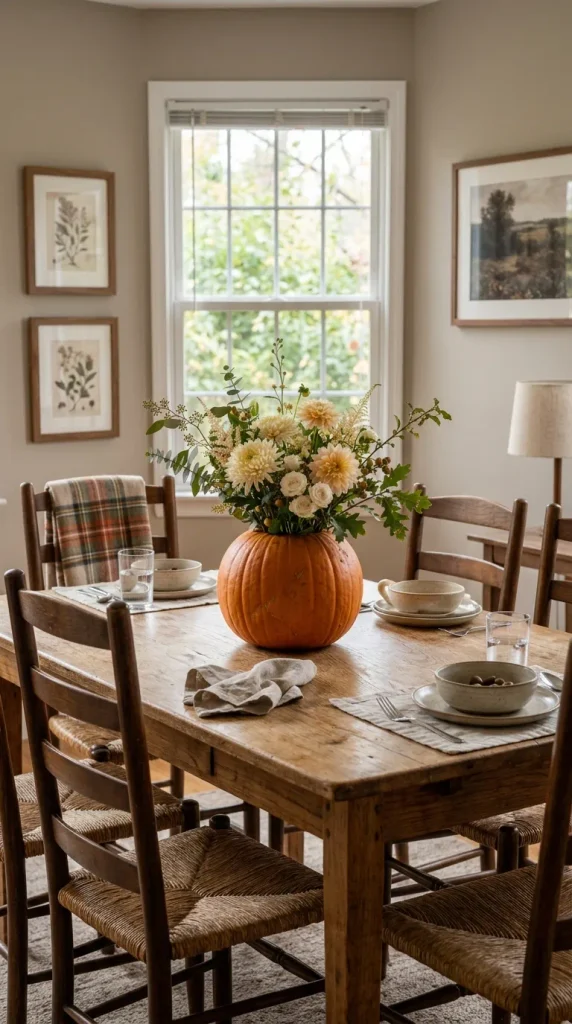
The most recognizable pumpkin flower arrangement is still one of the best.
Hollow out a firm pumpkin and use it as a seasonal vase for fresh flowers. You can place a small waterproof container inside the pumpkin rather than letting water sit directly against the pumpkin shell.
That little detail makes the arrangement much more practical. A floral foam-filled container can also hold stems securely while giving you control over the shape of the bouquet. Similar pumpkin-vase methods use an inner bowl or container with floral foam so the pumpkin acts as the decorative exterior rather than the water vessel.
Keep the flowers slightly taller than the pumpkin and let a few stems extend outward naturally. IMO, a little asymmetry makes this look far less like a craft-store centerpiece.
A few things you might like
- Waterproof floral container: Gives fresh flowers a safer water reservoir inside the pumpkin.
- Wet floral foam: Helps hold individual stems exactly where you want them.
- Floral snips: Make clean stem cuts without crushing delicate flower stems.
2. Reusable Faux Pumpkin Floral Arrangement
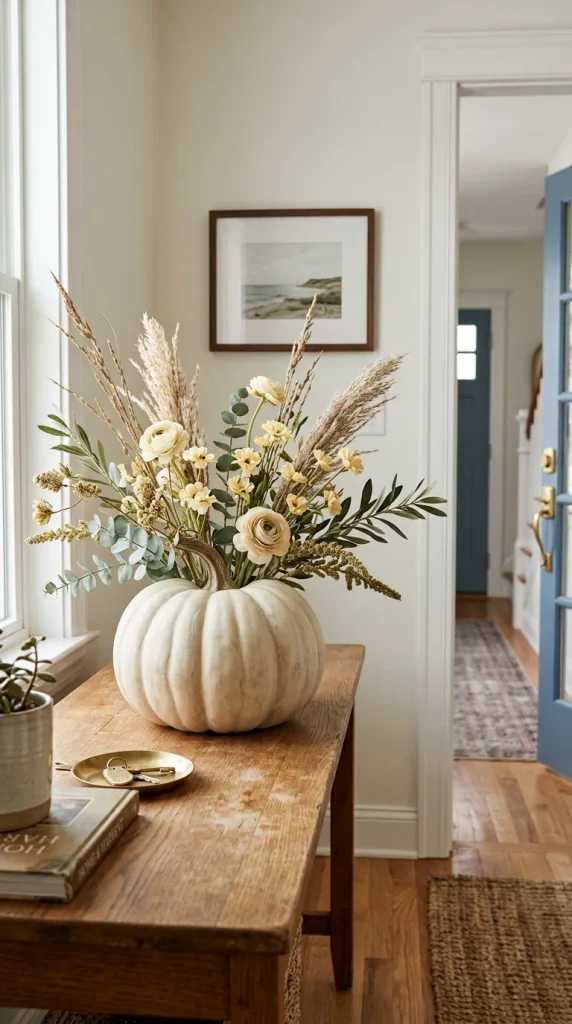
Want the pumpkin look without dealing with a real pumpkin breaking down?
Use a hollow or carveable faux pumpkin and build a permanent arrangement inside it. Foam pumpkins work particularly well because floral stems can be inserted directly into the material, while faux flowers allow the finished piece to return year after year.
This is a particularly smart option for an entry table or mantel where you want the same seasonal arrangement available every autumn.
Instead of making it overly perfect, mix different stem heights and leave some negative space between flowers.
Worth considering
- Carveable foam pumpkin: Provides a lightweight base for a reusable centerpiece.
- Wire cutters: Make trimming faux floral stems much easier.
- Decorative moss: Hides exposed foam around the arrangement’s base.
3. Three-Pumpkin Flower Cluster
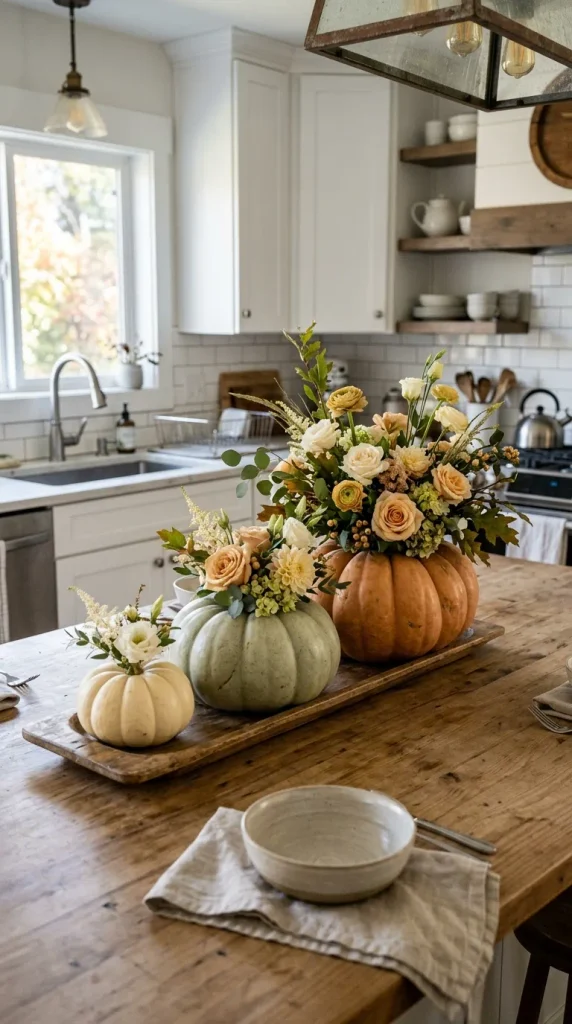
One pumpkin can make a centerpiece.
Three can create a composition.
Place three pumpkins of noticeably different sizes together and give each one a different role. The largest can carry the main floral arrangement, the middle pumpkin can support a smaller cluster, and the smallest can remain mostly decorative with just a few stems.
The important part is not making three identical arrangements.
Let the flowers move through the group so the eye travels naturally from one pumpkin to the next. This works beautifully on a console, buffet, or long kitchen island.
Helpful additions
- Wooden serving tray: Keeps the pumpkin grouping visually connected.
- Low-profile floral frogs: Help secure smaller floral stems without bulky foam.
- Felt furniture pads: Protect polished furniture underneath the heavier display.
4. Pumpkin-on-a-Pedestal Arrangement
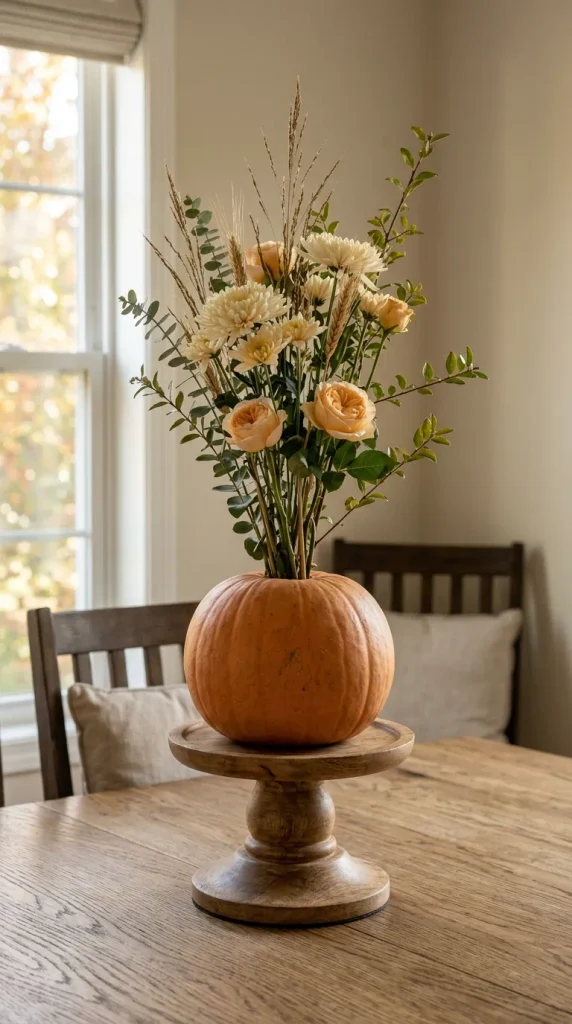
Here is a simple trick when your table feels too flat.
Raise the pumpkin.
Place one pumpkin on a sturdy decorative pedestal, cake stand, or low riser, then build the floral arrangement upward from there. The added elevation gives a single pumpkin more presence without requiring a huge bouquet.
This works especially well on dining tables because the arrangement can stay relatively narrow.
Choose a pedestal with a broad enough base to keep the pumpkin stable. A wobbly centerpiece is charming only until somebody reaches for the gravy.
A few practical extras
- Wooden pedestal riser: Adds height while keeping the arrangement visually simple.
- Non-slip display mat: Prevents the pumpkin from shifting on smooth surfaces.
- Florist wire: Useful for securing taller stems and preventing them from leaning.
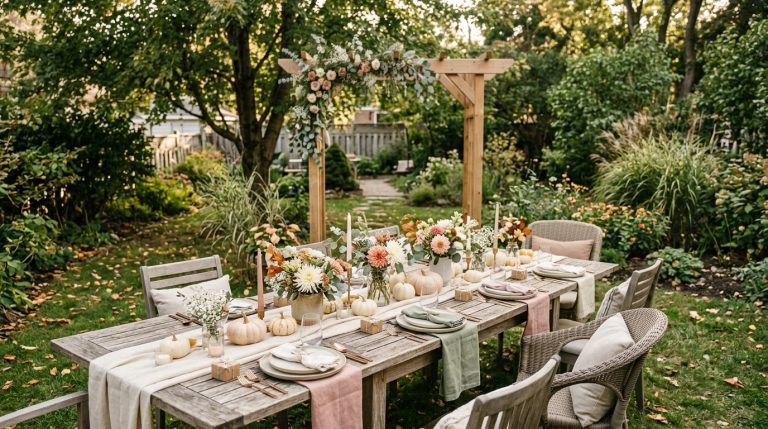
5. Long Pumpkin Floral Table Runner
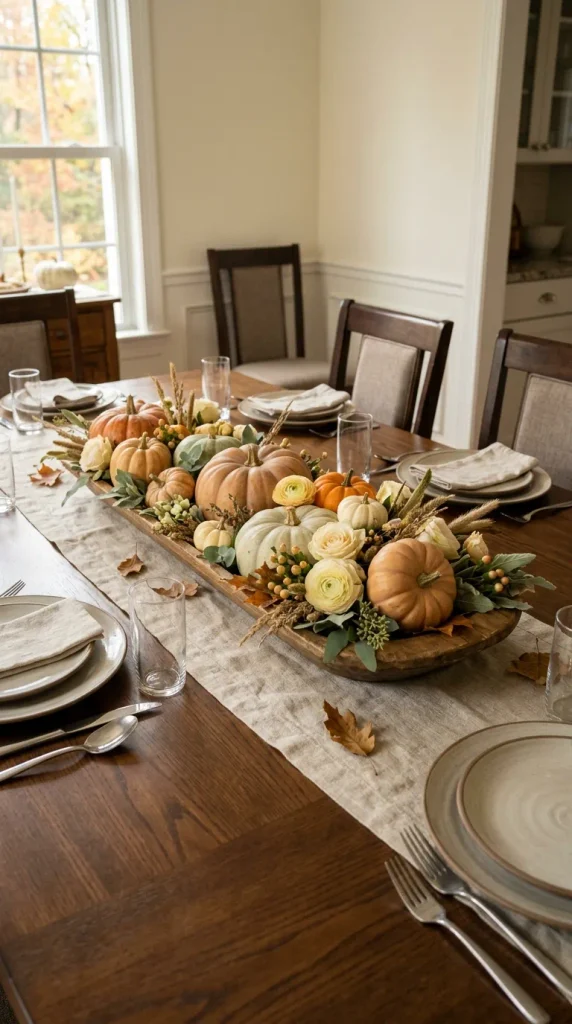
Instead of treating one pumpkin as the centerpiece, build a long horizontal arrangement.
Use several small pumpkins and weave flowers, foliage, and natural stems between them across the length of a dining table.
The flowers should stay relatively low so guests can still see across the table. A long trough or narrow tray underneath can help keep everything organized.
This format works particularly well for Thanksgiving because it fills the table without creating one giant obstruction in the middle.
Recent fall centerpiece examples also use long, low arrangements specifically to keep seasonal elements distributed across a dining table rather than concentrated in one tall bouquet.
Nice finishing touches
- Long wooden dough bowl: Gives the runner a natural visual base.
- Floral pin frogs: Keep greenery and stems positioned inside a low arrangement.
- Table runner: Creates a quiet visual foundation beneath the pumpkins.
6. One-Sided Asymmetrical Pumpkin Arrangement
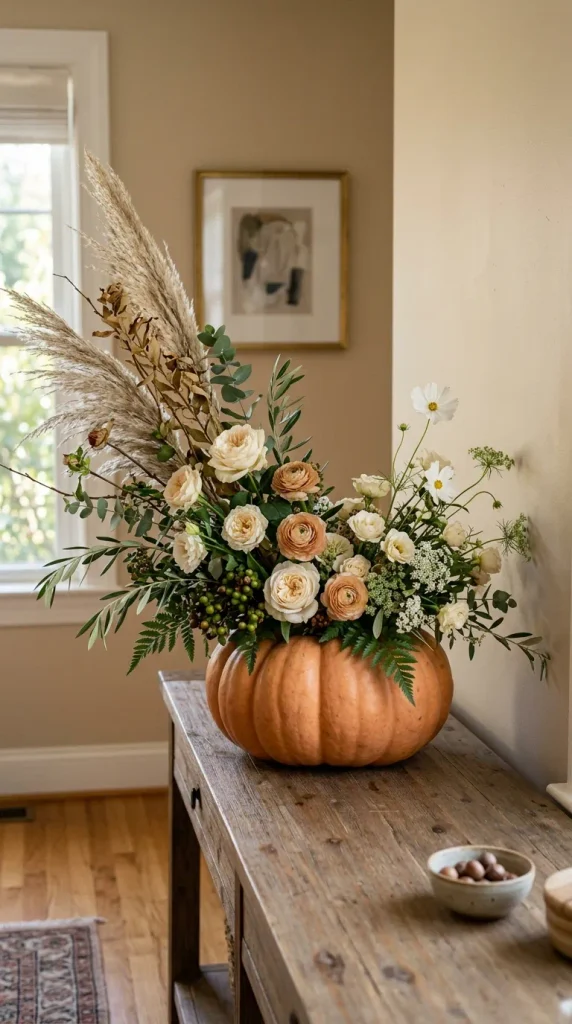
If perfectly rounded bouquets feel too formal, try arranging everything toward one side.
Start with the pumpkin as your anchor. Then place the tallest branches or flowers toward one side and allow shorter stems to move gradually toward the opposite edge.
The result feels more like something you might see in a florist’s window than a perfectly symmetrical DIY project.
This arrangement also works brilliantly against a wall because you can deliberately leave the back relatively flat.
Give these a look
- Floral chicken wire: Provides flexible support for an airy arrangement.
- Heavy ceramic tray: Gives the asymmetrical design a stable foundation.
- Floral tape: Helps reinforce delicate stems without making the mechanics obvious.
7. Pumpkin Arrangement With Dried Flowers
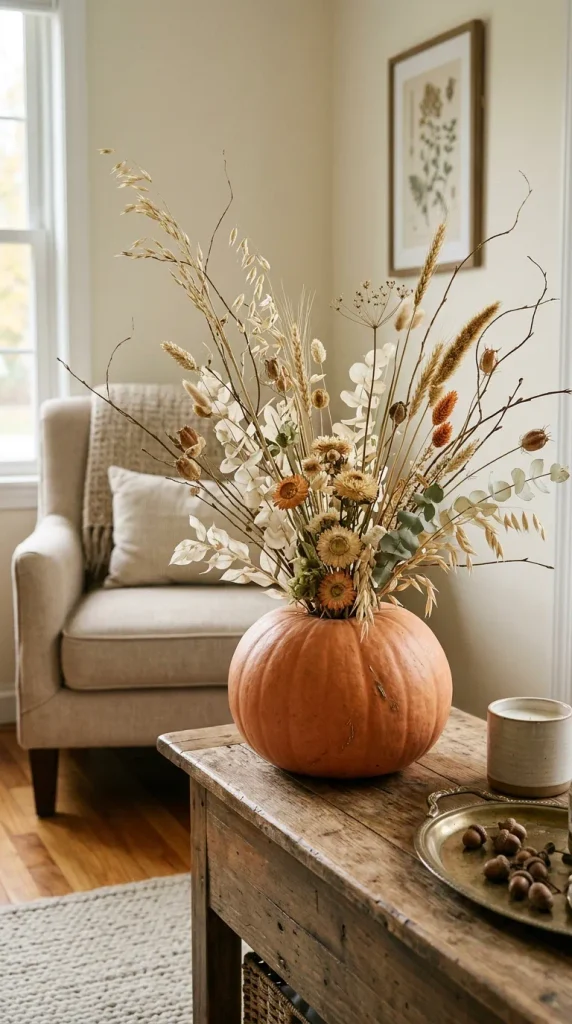
Fresh flowers aren’t your only option.
Dried flowers, grasses, seed heads, wheat, preserved foliage, and other dried botanicals can turn a pumpkin into an arrangement that lasts through the entire season.
The structure changes too. Instead of worrying about keeping every bloom hydrated, you can create taller, looser shapes with plenty of movement.
Dried natural arrangements commonly combine grasses, oats, wheat-like stems, preserved foliage, and other long-lasting materials with foam pumpkins.
This one is especially useful for shelves, consoles, and areas far from a water source.
Possibly helpful picks
- Dried floral foam: Gives dried stems something secure to grip.
- Preserved moss: Softens the transition between pumpkin and stems.
- Long-handled craft scissors: Make cutting woody dried stems easier.
8. Mini Pumpkin Place-Setting Flowers
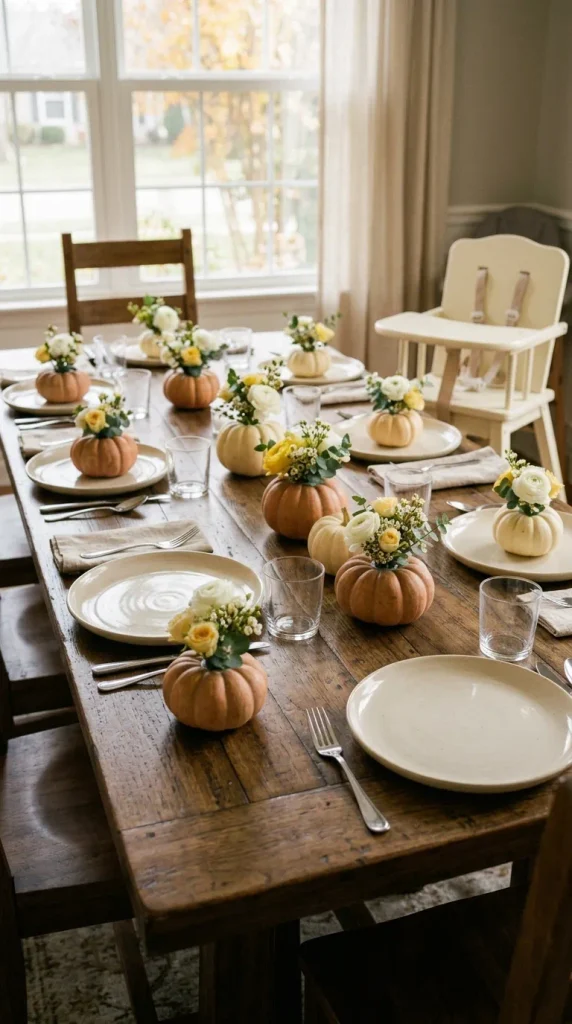
Forget one huge centerpiece.
Give every guest a tiny pumpkin flower arrangement instead.
Use small pumpkins as individual place-setting accents and add just a few short stems to each one. The arrangement can sit beside the plate rather than occupying the center of the table.
The trick here is restraint. A giant bouquet at every seat would turn dinner into an obstacle course.
This approach works particularly well for Thanksgiving, autumn dinner parties, or smaller gatherings where you want each place to feel intentionally prepared.
Useful little extras
- Mini bud vases: Can sit inside hollowed mini pumpkins for fresh flowers.
- Place cards: Turn each pumpkin into a personalized table marker.
- Small floral shears: Make creating several tiny arrangements quicker.
9. Pumpkin Flower Arrangement With Branches
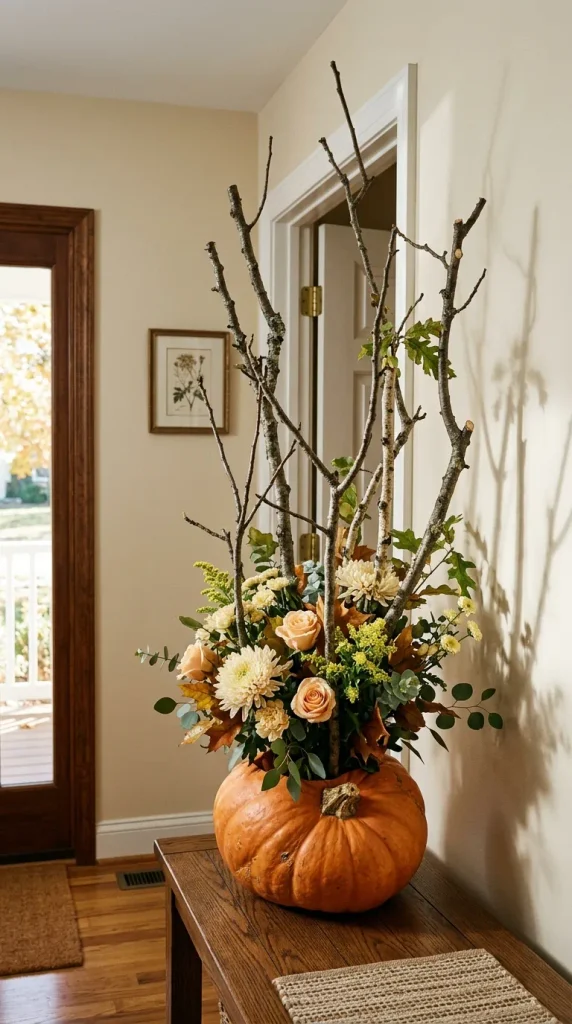
Flowers become much more interesting when something gives them height and structure.
Insert a few slender natural branches into the arrangement first, then work flowers and foliage around them.
The branches create the skeleton of the design while the flowers fill the lower and middle portions. You can use pruned garden branches or commercially available decorative stems, provided they are clean and structurally sound.
This approach is especially good for a large entry arrangement where a normal flower bouquet might look too compact.
Practical extras
- Floral binding wire: Keeps branching stems together at their base.
- Heavy-bottom container insert: Adds stability inside the pumpkin.
- Pruning shears: Handle thicker natural stems more cleanly.
10. Pumpkin-and-Garden Foliage Arrangement

Not every pumpkin flower arrangement needs to be flower-heavy.
Use the pumpkin as the anchor and make foliage the dominant feature. Eucalyptus, ferns, ornamental grasses, leafy stems, and other suitable cut greenery can create a softer arrangement with fewer blooms.
This is a great solution when you like flowers but don’t want your centerpiece screaming “seasonal decoration.”
The foliage can spill slightly over the pumpkin’s edge, making the whole thing feel more organic.
A few favorites
- Floral foam cage: Helps support a foliage-heavy arrangement.
- Waterproof liner: Protects the pumpkin’s interior and furniture beneath it.
- Fine mist sprayer: Useful for maintaining the appearance of suitable cut greenery.
11. Pumpkin Bouquet With a Dramatic Vertical Shape
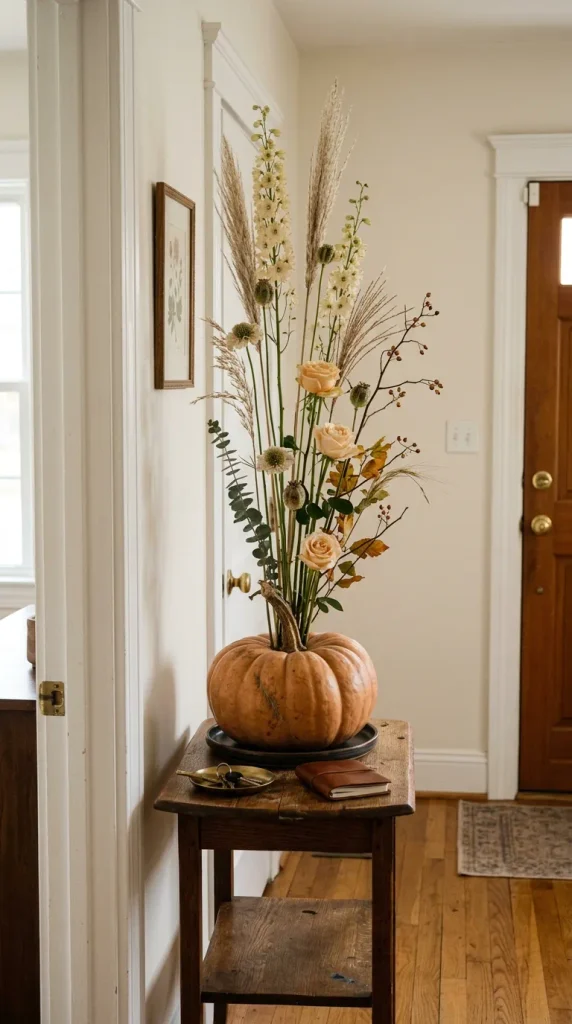
Instead of making a wide, round bouquet, go upward.
Choose a pumpkin with enough visual weight to support a taller arrangement, then build the flowers into a narrow vertical silhouette.
Tall stems should form the upper structure while shorter flowers fill around the base.
This is particularly effective on a narrow console table where a wide arrangement would consume too much usable surface.
The vertical approach also makes the pumpkin feel like the base of a floral sculpture rather than simply a vase.
Helpful additions
- Floral adhesive: Helps stabilize lightweight decorative elements.
- Tall floral support picks: Give long stems additional structure.
- Narrow decorative tray: Defines the arrangement without taking much space.
12. Low Pumpkin Arrangement for a Dining Table
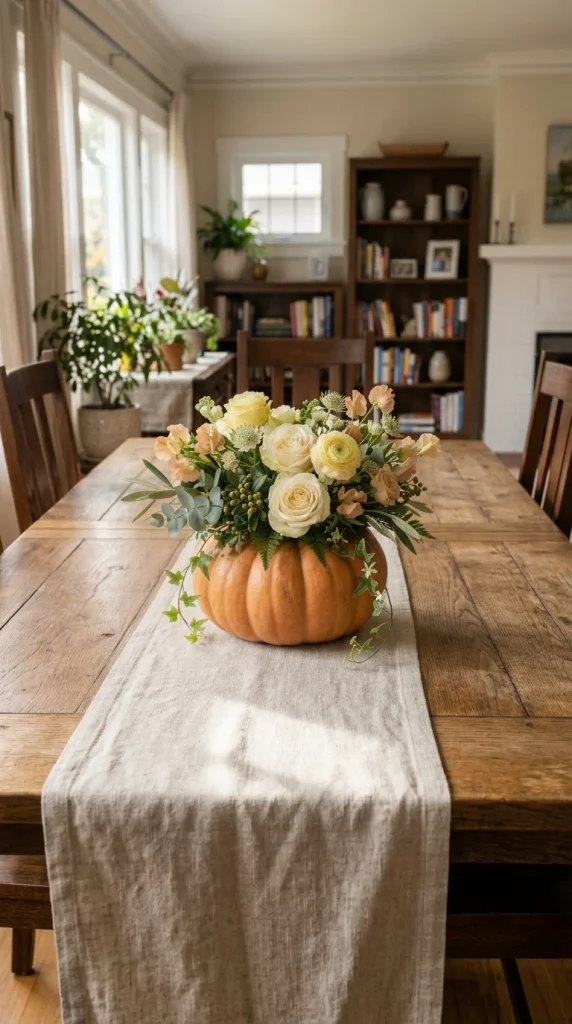
Sometimes the best centerpiece is the one you barely notice until you look closely.
Use a low pumpkin and create a compact floral arrangement that spreads horizontally instead of vertically.
This keeps sightlines open across the table, which matters when people are actually eating and talking.
Choose flowers with sturdy stems and keep the overall height low enough that guests can comfortably see each other.
FYI, this is one of those cases where making the arrangement smaller can actually make the table look more expensive.
Useful items to consider
- Low floral bowl: Creates a broad base for the flowers.
- Floral frog: Keeps short stems upright without requiring a tall foam block.
- Linen table runner: Gives the low arrangement a soft visual backdrop.
13. Porch Pumpkin Flower Urn
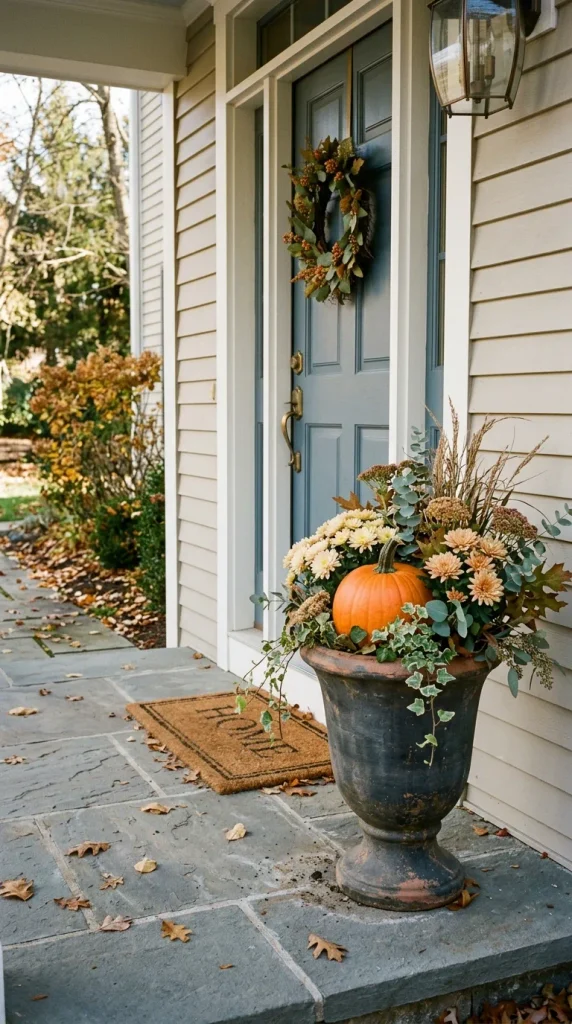
Take the pumpkin arrangement outdoors.
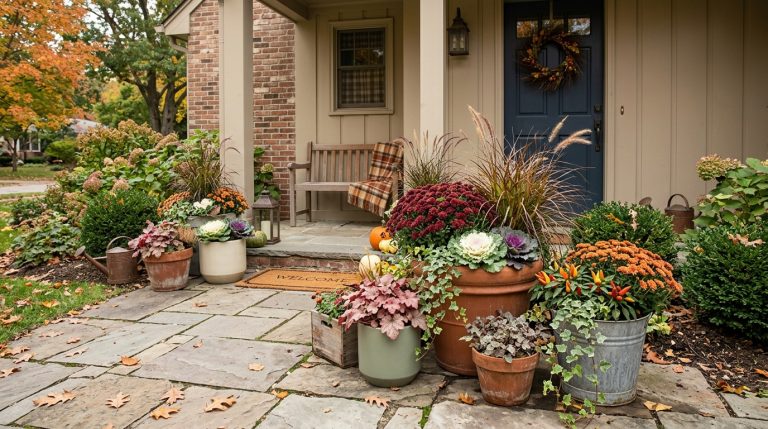
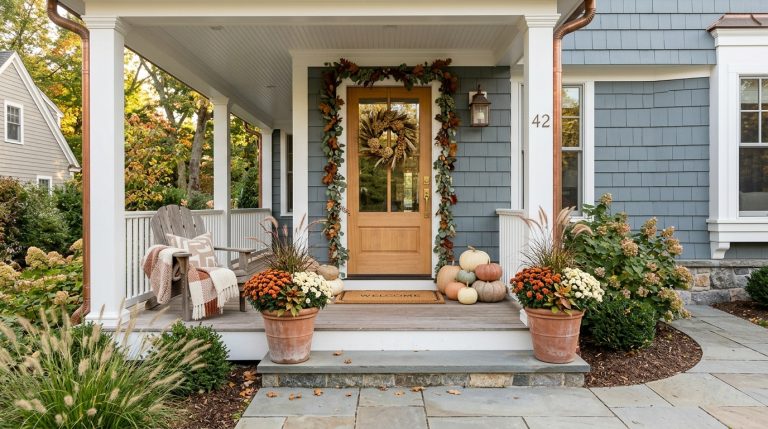
Rather than putting a pumpkin directly on the porch floor, place it inside a larger weather-resistant planter or urn and surround it with flowers, foliage, or trailing stems.
The larger container gives the arrangement more height and makes it easier to integrate with existing porch decor.
This works particularly well beside a front door, where the arrangement can become part of the home’s entry composition rather than a tabletop decoration.
HGTV also features pumpkins converted into seasonal flower planters for porch displays, showing how naturally pumpkins can work as fall planting vessels.
A few complementary pieces
- Weather-resistant planter: Gives the pumpkin display a substantial outdoor base.
- Outdoor plant caddy: Makes heavier seasonal displays easier to reposition.
- Decorative plant saucer: Helps protect porch surfaces from excess water.
14. Pumpkin Arrangement With Seasonal Produce
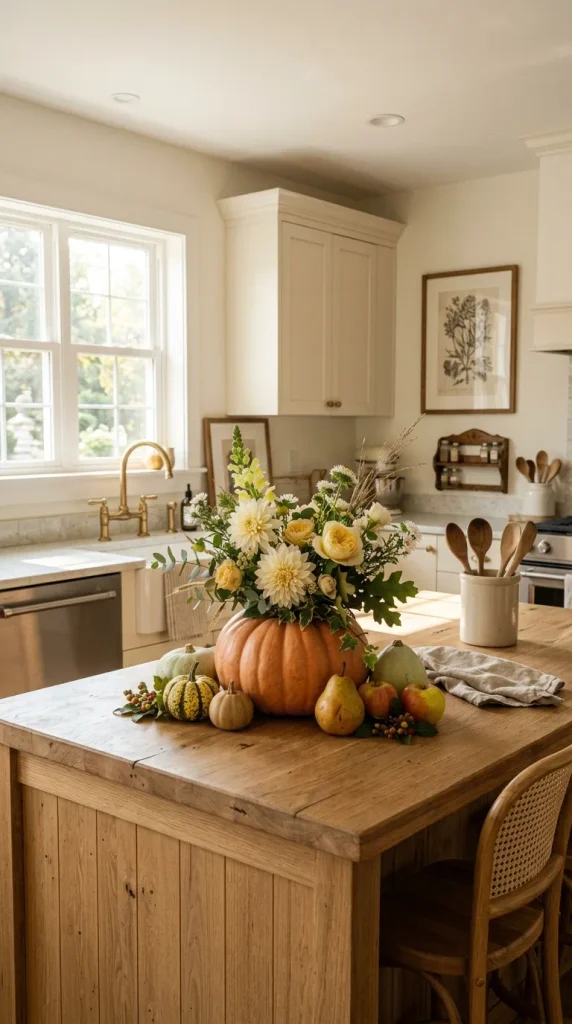
Flowers do not have to work alone.
Build the arrangement around a pumpkin and add a few edible-looking seasonal elements such as gourds, squash, pears, apples, or decorative vegetables.
The idea is to make the entire composition feel harvested rather than simply floral.
This can work beautifully on a kitchen island or dining table because the produce connects the decoration to the season’s food.
Pumpkins, squash, gourds, rainbow carrots, purple cabbage, and other crops can all contribute interesting forms and textures to autumn centerpieces.
Helpful additions
- Wooden produce bowl: Gives smaller seasonal items a defined home.
- Shallow serving tray: Keeps loose produce from spreading across the table.
- Natural-fiber placemats: Reinforce the harvest-inspired setting without competing with the centerpiece.
15. Pumpkin Flower Arrangement on an Entry Console
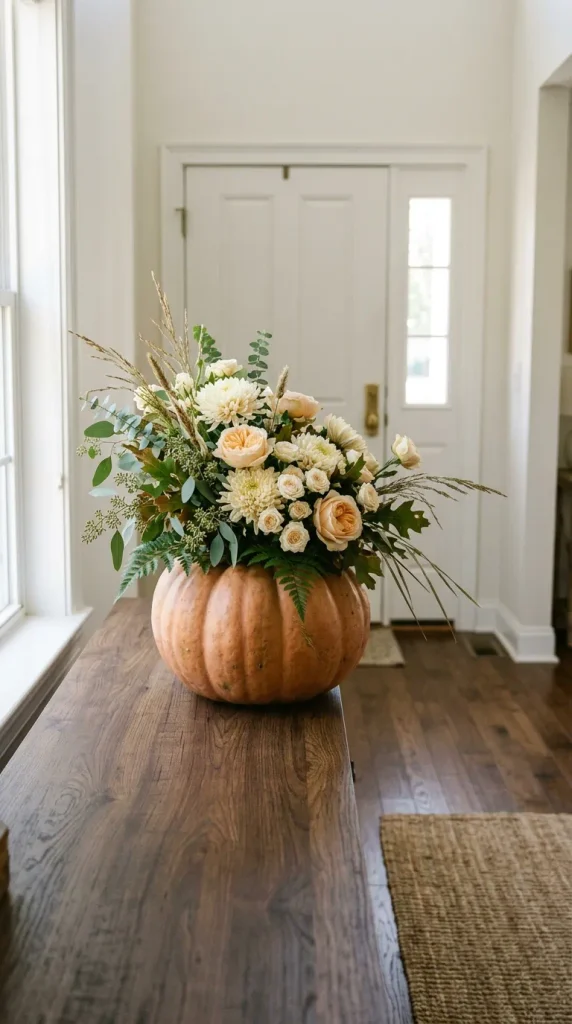
A dining table isn’t the only place for this idea.
Use a single substantial pumpkin arrangement on an entry console, then keep everything else around it quiet.
The goal is to create one strong focal point when someone walks through the door.
Let a few stems lean outward instead of building a perfectly centered bouquet. Then leave empty space around the pumpkin so it doesn’t get lost among candles, signs, bowls, and other seasonal decorations.
Honestly, this is often more effective than decorating every available surface.
A few designer picks
- Slim console tray: Keeps small supporting accents organized.
- Decorative taper holder: Adds height without competing with the floral arrangement.
- Small rechargeable table lamp: Gives the arrangement a warm evening backdrop.
16. Pumpkin-and-Flower Arrangement in a Rustic Crate
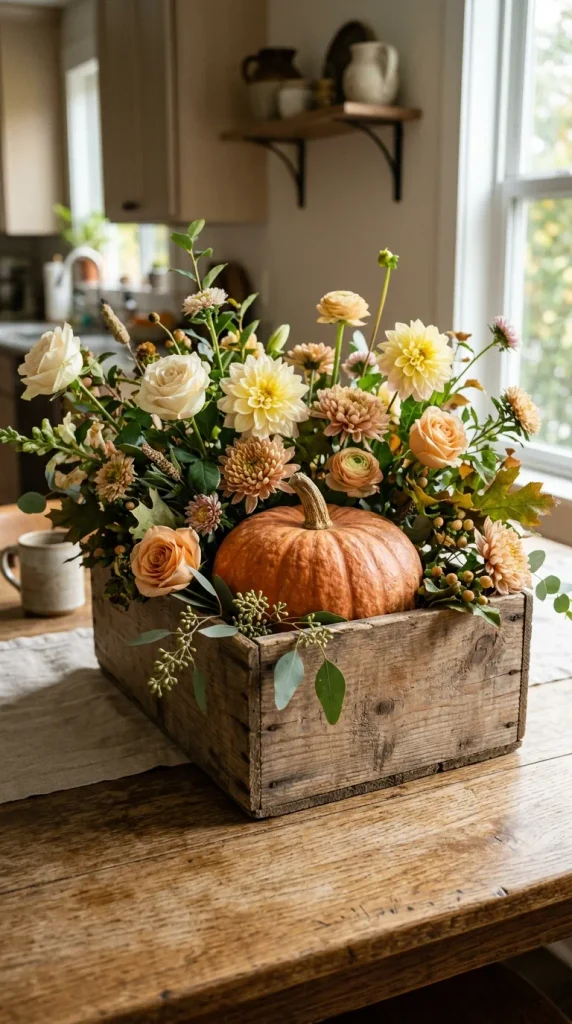
Instead of placing the pumpkin directly on a table, put it inside a shallow wooden crate.
The crate becomes the structural frame for the composition. Add the pumpkin, then let flowers and foliage rise from behind and around it.
This creates a more substantial display than a standalone pumpkin while still keeping the arrangement casual.
Use a crate with enough depth to keep the pumpkin stable. You can also add a folded cloth or hidden filler underneath to adjust its height.
Practical extras
- Vintage-style wooden crate: Creates the structural base for the display.
- Non-slip shelf liner: Keeps the pumpkin from rolling inside the crate.
- Decorative wood shims: Help level an uneven crate on a tabletop.
17. Pumpkin Flower Arrangement With a Floral Collar
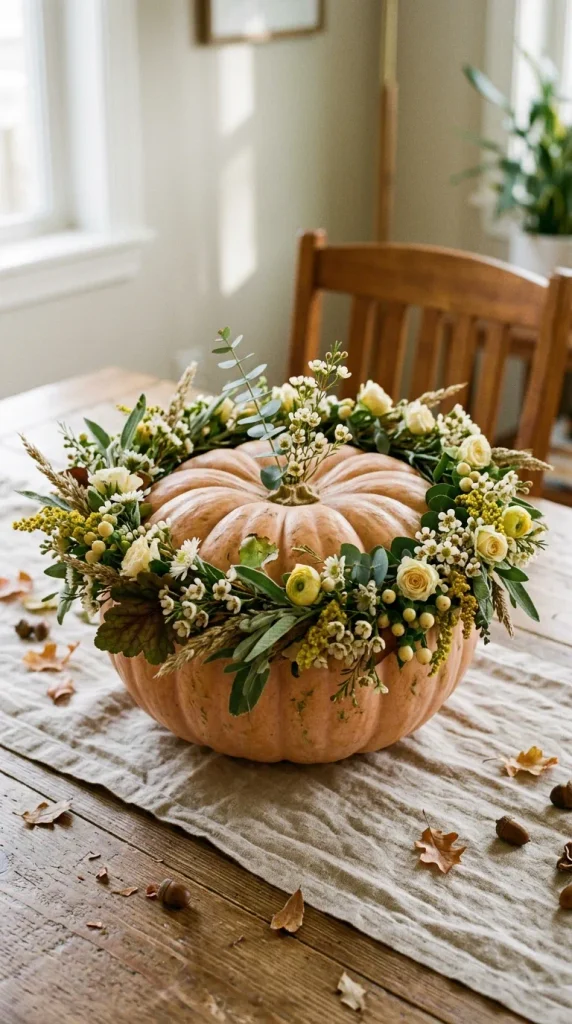
Here is a subtler design trick.
Instead of putting all the flowers into the top of the pumpkin, create a collar of greenery and small blooms around its upper edge.
The pumpkin remains clearly visible while the flowers appear to emerge from its shoulders.
This works especially well with faux pumpkins because you can attach some lightweight decorative elements around the upper edge without worrying about water.
The result has more dimension than a standard bouquet but still feels relatively compact.
Some ideas to consider
- Floral wire: Makes it easy to form a removable collar.
- Green floral tape: Helps conceal exposed wire and stem mechanics.
- Small craft clips: Useful for temporarily testing the arrangement before securing it.
18. A Pumpkin Arrangement Designed to Last From September Through Thanksgiving
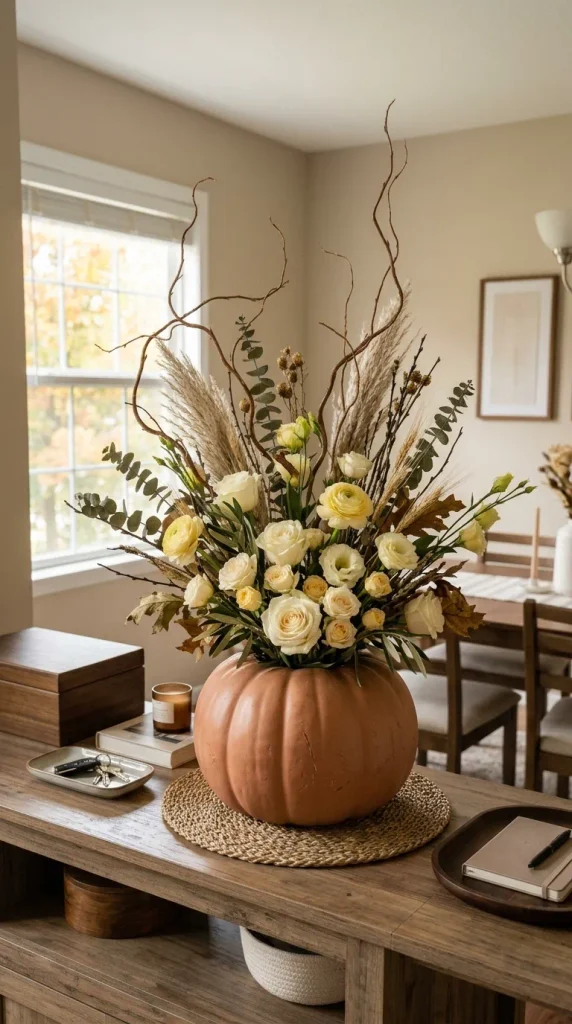
If you hate decorating something beautifully only to replace it two weeks later, build for longevity.
Start with a durable pumpkin, then combine long-lasting decorative elements with a smaller number of replaceable fresh flowers.
For example, the pumpkin and dried branches can remain throughout the season while fresh flowers provide the changing layer. When those flowers fade, replace only the floral portion.
You get the visual freshness of several arrangements without starting from scratch every time.
This approach also makes sense when you want one display to move from early fall decorating into Thanksgiving. Faux pumpkins, dried botanicals, and preserved materials can extend the usable life considerably.
Nice finishing touches
- Reusable floral mechanics: Make replacing individual stems much easier.
- Preserved foliage: Gives the arrangement a stable structural layer.
- Storage box: Protects reusable decorative components between seasons.
Choosing the Right Pumpkin Flower Arrangement
The easiest way to choose among these ideas is to start with the space, not the flowers.
For a dining table, a low or horizontal arrangement makes more sense because people need clear sightlines. For an entryway, a taller or asymmetrical arrangement can make a stronger first impression.
A real hollowed pumpkin gives you that unmistakable seasonal look, but it also has a shorter useful life. A faux pumpkin offers more flexibility for repeated use, while dried materials remove the need for constant watering.
If you use fresh flowers, remember that the pumpkin itself should not become a forgotten water container. Using an inner vessel or suitable floral mechanics helps separate the decorative pumpkin from the water and makes the arrangement easier to manage.
And don’t underestimate the importance of scale.
A tiny pumpkin with a huge bouquet can disappear underneath the flowers. A giant pumpkin with three delicate stems can look accidental. The strongest arrangements usually give the pumpkin and flowers clear visual roles rather than asking one element to overpower the other.
Final Thoughts
What I like most about pumpkin flower arrangements is that they don’t require a house full of fall decorations to make an impact.
One thoughtfully built arrangement can completely change a dining table. Another can make an entry console feel seasonal. A third can bring a little autumn personality to a porch without turning it into a pumpkin patch.
And you don’t have to copy the most elaborate arrangement you see online.
Start with the space you actually have. Decide whether you want something fresh, reusable, dried, dramatic, low, tall, formal, or relaxed. Then let the pumpkin become part of the design instead of treating it as a novelty container.
Personally, I’d start with the classic hollowed pumpkin vase or the low table runner. They’re simple enough for a first attempt but have plenty of room for your own personality.
The best part? If the flowers aren’t perfect, nobody is grading your arrangement. It’s fall. A little looseness usually makes it better.

William Martin is a passionate bowler who spends most of his weekends playing the sport. With years of intense experience under his belt, William decided to share his knowledge by creating BOWLING OCEAN. Join me on this journey to explore the world of bowling and discover the tips and tricks to becoming a pro.