
How to Get Rid of Moles in Yard Naturally using Dawn Soap and Castor Oil
Moles can turn a smooth lawn into a maze of raised tunnels almost overnight. If you want a natural option before using traps or chemicals, a Dawn soap and castor oil mixture is one of the most common DIY mole repellents.
Here is the quick answer: mix castor oil with dish soap, dilute it with water, spray it over active mole tunnels, then water it into the soil. The goal is not to kill moles. The goal is to make the treated area unpleasant so they move somewhere else.
This guide explains the recipe, how to apply it correctly, what results to expect, and when this natural method may not be enough.
Does Dawn Soap and Castor Oil Really Get Rid of Moles?
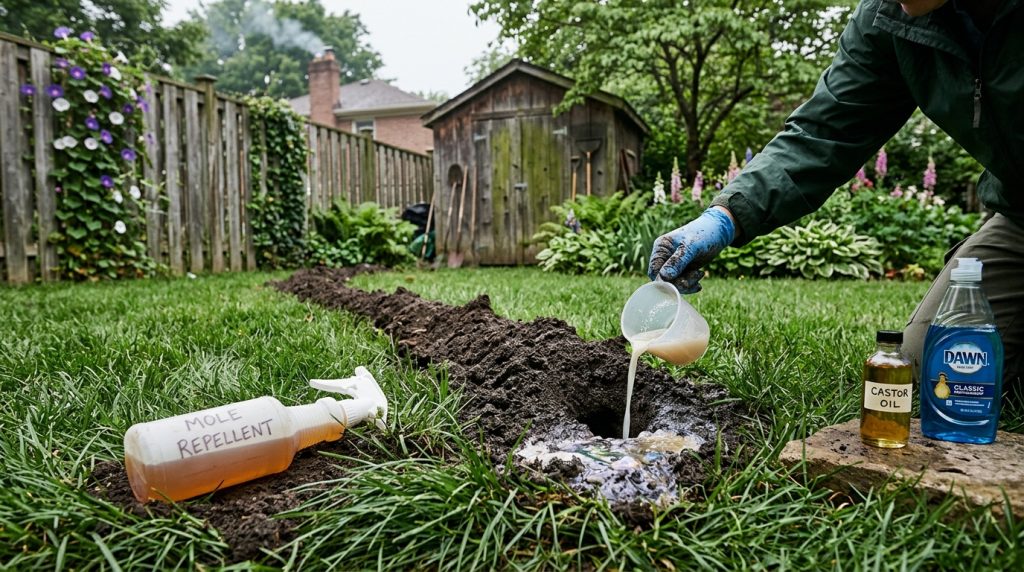
Dawn soap and castor oil can help repel moles, but it is not a guaranteed permanent fix.
Castor oil is used because moles dislike the smell and taste in the soil. Dish soap helps the oil mix with water so it can spread more evenly. Without soap, castor oil tends to separate from water and sit in oily patches.
The important thing to understand is this:
Castor oil does not remove the mole from existence. It encourages the mole to leave the treated area.
That means it may work well for light mole activity, small lawn sections, or early signs of tunneling. It may work less well if your yard has a large established tunnel system, very loose soil, heavy irrigation, or plenty of earthworms and insects for moles to eat.
First, Make Sure You Actually Have Moles
Before you spray anything, confirm the pest. Homeowners often confuse moles, voles, and gophers, but they cause different damage.
| Yard Sign | Likely Pest | What It Means |
|---|---|---|
| Raised ridges running through the lawn | Mole | The mole is tunneling just under the surface |
| Volcano-shaped soil mounds | Mole or gopher | Moles can push soil up, but gopher mounds are often fan-shaped |
| Chewed plant roots, bulbs, or bark | Vole or gopher | Moles usually do not eat plants |
| Small holes near plants or tree bases | Vole | Voles create surface runways and feed on vegetation |
| Soft, sunken paths in grass | Mole or vole | Look for mounds and plant damage to tell the difference |
Moles mainly eat earthworms, grubs, and insects. They damage lawns by tunneling, not by eating grass roots or flowers. If plants are being chewed, you may be dealing with voles or gophers instead.
Homemade Dawn Soap and Castor Oil Mole Repellent Recipe
You only need three basic ingredients:
- Castor oil
- Dawn dish soap or another mild liquid dish soap
- Water
Small Sprayer Recipe
Use this for small lawns, garden edges, or a few active tunnels.
| Ingredient | Amount |
| Castor oil | 1/2 cup |
| Dawn dish soap | 2 tablespoons |
| Water | 1 gallon |
Mix the castor oil and dish soap together first. Stir until the mixture looks cloudy and blended. Then add the mixture to 1 gallon of water and shake well.
Concentrate Recipe
Use this if you want to store a small amount of concentrate for later applications.
| Ingredient | Amount |
| Castor oil | 3 parts |
| Dawn dish soap | 1 part |
For example, mix 3/4 cup castor oil with 1/4 cup Dawn dish soap. When you are ready to apply it, add about 4 tablespoons of this concentrate to 1 gallon of water.
Hose-End Sprayer Option
For larger lawns, a hose-end sprayer is easier than a hand sprayer.
Add the castor oil and dish soap concentrate to the sprayer reservoir, then apply it evenly over the affected area. Follow your sprayer’s dilution settings and avoid over-soaking one spot.
How to Apply Castor Oil and Dawn for Moles
The way you apply the mixture matters more than most people realize. Pouring it randomly into a molehill is usually less effective than treating active tunnel areas.
Step 1: Find Active Tunnels
Flatten several raised tunnels with your foot or a lawn roller. Mark those spots with small flags, sticks, or garden markers.
Check them again after 24 hours.
If a tunnel rises again, it is active. That is where you should focus the treatment.
Step 2: Mix the Solution Correctly
Always mix the castor oil and Dawn together before adding water.
This helps the oil break into smaller droplets and spread through the water. If you pour everything together at once, the oil may float on top and apply unevenly.
Step 3: Spray the Active Areas
Spray the mixture over active tunnels, molehill areas, and the surrounding soil. Do not only spray the mound. Moles travel through tunnels, so the surrounding runway system matters.
For best results, treat a wider area around the activity, not just one small hole.
Step 4: Water It Into the Lawn
After spraying, lightly water the area so the mixture moves down into the soil.
This is a key step. If the solution stays on grass blades, it will not reach the tunnels where moles are moving.
Do not flood the lawn. You want the solution to soak into the upper soil layer, not wash away.
Step 5: Push Moles Away From the Yard
Do not start in the middle of the yard and spray in every direction randomly.
A better method is to work from the area closest to your house, garden, patio, or high-value lawn section and gradually push outward toward the edge of the property.
Think of it as gently making the mole’s current route less comfortable and encouraging it to move away.
When to Apply the Treatment
The best time to apply a Dawn and castor oil mole repellent is when the soil is slightly moist but not soaked.
Good times include:
- After light rain
- After lightly watering the lawn
- During spring or fall when mole activity is visible
- When fresh tunnels appear
- Before repairing damaged lawn sections
Avoid applying it right before heavy rain. Too much water can dilute or wash the mixture deeper than needed.
How Long Does It Take to Work?
Some homeowners notice less activity within a few days. Others need repeated applications over one to two weeks.
Results depend on:
- How active the mole is
- How large the tunnel system is
- Soil type
- Rainfall
- Lawn moisture
- Food supply
- Whether you treated active tunnels
If you still see fresh tunnels after several days, recheck which tunnels are active and apply again.
How Often Should You Reapply?
Reapply after:
- Heavy rain
- Frequent irrigation
- New tunnels appear
- Lawn mowing and watering cycles reduce the smell
- Two to four weeks of continued mole activity
Natural repellents usually require maintenance. They are not a one-time permanent barrier.
Common Mistakes to Avoid
| Mistake | Why It Fails | Better Approach |
| Pouring castor oil directly into holes | Oil does not spread evenly | Mix with dish soap and water first |
| Treating inactive tunnels | The mole may no longer be using them | Flatten tunnels and check for new activity |
| Skipping the watering-in step | Solution stays on grass instead of soil | Lightly water after spraying |
| Expecting instant removal | Repellents work gradually | Reapply and monitor for several days |
| Using too much dish soap | Can stress grass or soil life | Use measured amounts only |
| Applying before heavy rain | Rain may wash it away | Apply during dry or mild weather |
| Treating only one mound | Moles move through tunnel systems | Spray active tunnel zones and nearby soil |
Is Dawn Soap Safe for Grass?
Dawn dish soap is commonly used in DIY garden mixtures, but that does not mean more is better.
A small amount diluted in water is unlikely to harm a healthy lawn when used carefully. However, too much dish soap can dry out grass blades, irritate plant tissue, or affect soil organisms.
Use the recipe as a measured treatment, not as a weekly lawn tonic.
Avoid spraying during extreme heat, drought stress, or direct midday sun. If your lawn is already weak, test a small area first.
Is Castor Oil Safe Around Pets and Kids?
Castor oil is plant-derived and commonly used in many household products, but yard treatments should still be handled carefully.
Keep pets and children off the treated area until the lawn has dried. Store castor oil and dish soap mixtures out of reach. Do not let pets drink from puddles or freshly treated soil.
Also remember that “natural” does not automatically mean risk-free. Use only what you need and avoid runoff into ponds, drains, or vegetable beds.
Will This Get Rid of Grubs Too?
No. Castor oil and Dawn soap are not a reliable grub-control treatment.
Moles often follow earthworms and insects, including grubs, but killing grubs is not always the answer. Earthworms are a major food source for moles, and you usually do not want to remove earthworms from healthy soil.
If you suspect a serious grub problem, dig up a small patch of lawn and inspect the roots and soil. Use a grub treatment only if you confirm grubs are actually present and follow the product label carefully.
Natural Mole Control: What Works Best Together?
A Dawn and castor oil mixture works best as part of a broader natural strategy.
| Method | Best For | Limitation |
| Castor oil and Dawn spray | Repelling moles from active areas | Needs reapplication |
| Reducing excess lawn moisture | Making soil less attractive | Not always practical |
| Treating confirmed grub issues | Reducing one food source | Moles also eat earthworms |
| Repairing tunnels | Restoring lawn after activity drops | Does not remove active moles |
| Barriers around garden beds | Protecting small areas | Not practical for whole lawns |
| Professional help or trapping | Serious, ongoing damage | May not fit every homeowner’s preference |
If you want a humane, low-toxicity first step, start with the castor oil spray. If the problem continues, you may need more targeted control.
How to Repair Lawn Damage After Moles Leave
Once mole activity slows down, repair the lawn so roots can recover.
- Press raised tunnels back down with your foot or a lawn roller.
- Rake loose soil from molehills into thin layers.
- Fill sunken spots with topsoil.
- Reseed bare patches.
- Water lightly until grass fills in.
- Avoid heavy mowing until new grass is established.
Do not spend too much time repairing tunnels while moles are still active. They may push the same areas up again.
When the Dawn and Castor Oil Method May Not Be Enough
This natural repellent may not solve the problem if:
- New tunnels appear every day
- The yard borders woods, fields, or open land
- You have a long-established tunnel network
- Rain keeps washing treatments away
- You are treating the wrong pest
- The mole keeps moving around treated areas
- Lawn damage creates a safety hazard
In those cases, consider calling a local extension office, lawn specialist, or pest control professional. Trapping is often considered the most direct method for serious mole control, but local laws and humane preferences vary.
Quick Checklist: Best Way to Use Dawn and Castor Oil for Moles
- Confirm you have moles, not voles or gophers.
- Flatten tunnels and identify active ones.
- Mix castor oil and Dawn before adding water.
- Spray active tunnels and nearby soil.
- Water the treatment into the lawn.
- Apply from protected areas outward.
- Reapply after heavy rain or new activity.
- Repair lawn damage only after activity slows.
- Use realistic expectations: this repels moles, it does not guarantee permanent removal.
FAQ Section
What is the best homemade mole repellent with Dawn soap and castor oil?
A common homemade mole repellent uses 3 parts castor oil and 1 part Dawn dish soap as a concentrate. Add about 4 tablespoons of that mixture to 1 gallon of water, spray active tunnels, and water it into the soil. Always mix the soap and oil before adding water.
Does Dawn dish soap kill moles?
No, Dawn dish soap does not kill moles. In this recipe, the soap mainly helps castor oil mix with water. The castor oil is the repellent ingredient. The goal is to make the soil unpleasant so moles move away, not to poison or kill them.
How often should I apply castor oil mole repellent?
Reapply after heavy rain, frequent watering, or whenever new tunnels appear. In many yards, a treatment may need to be repeated every couple of weeks during active mole periods. Natural repellents fade over time, especially in wet or sandy soil.
Can I pour castor oil directly into mole holes?
It is better not to pour plain castor oil directly into holes. Castor oil does not mix well with water by itself, so it may sit in one spot instead of spreading through the tunnel area. Mixing it with dish soap and water gives more even coverage.
Will castor oil and Dawn hurt my lawn?
When properly diluted, the mixture is unlikely to harm a healthy lawn. However, too much dish soap can stress grass, especially during heat or drought. Use measured amounts, avoid overapplication, and test a small area first if your lawn is sensitive or newly seeded.
Do moles eat grass roots?
No, moles do not usually eat grass roots. They mainly eat earthworms, grubs, and insects. Their tunnels can still damage lawns by lifting soil, loosening roots, and creating dry or uneven patches. If plants are being chewed, voles or gophers may be the real problem.
Is castor oil better than mole traps?
Castor oil is a gentler repellent, while traps are usually more direct. If you want a natural first step, try castor oil and Dawn. If the mole damage continues or creates safety issues, traps or professional help may be more effective.
Can I use this recipe in flower beds or vegetable gardens?
Use caution in garden beds. Avoid soaking edible plant areas with dish soap mixtures, and do not apply heavily around delicate seedlings. For vegetable beds, physical barriers, raised beds with hardware cloth, or targeted mole control around the perimeter may be better options.
Conclusion
Using Dawn soap and castor oil is a simple natural way to discourage moles from tunneling through your yard. The recipe is easy, affordable, and safer than many harsh chemical options when used carefully.
The key is applying it correctly. Treat active tunnels, water the mixture into the soil, reapply after rain, and understand that this is a repellent, not a guaranteed permanent removal method.
If your mole problem is mild, this DIY approach may be enough to push activity away from your lawn. If the damage keeps coming back, combine it with better pest identification, lawn repair, moisture management, and professional advice when needed.

William Martin is a passionate bowler who spends most of his weekends playing the sport. With years of intense experience under his belt, William decided to share his knowledge by creating BOWLING OCEAN. Join me on this journey to explore the world of bowling and discover the tips and tricks to becoming a pro.