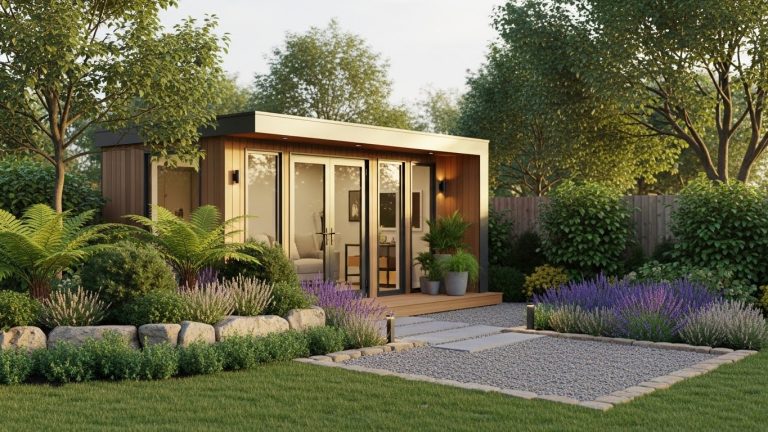
Raised Garden Beds Railroad Ties: 15 Smart, Sturdy & Stunning Garden Ideas
Ever thought about giving your garden a timeless, rustic upgrade without spending a small fortune? Well, raised garden beds made from railroad ties might just be your next weekend obsession. These chunky, durable timbers have that old-school charm that instantly makes your backyard look like something straight out of a homestead magazine. And here’s the kicker — they’re strong enough to outlive most store-bought planters.
Now, I’ve worked with a ton of materials over the years — cedar, corrugated metal, even recycled bricks — but there’s something undeniably solid about railroad ties. They anchor a space, quite literally, and give your garden structure both visually and physically. But before you start grabbing whatever ties you find on Craigslist, let’s break down how to use them safely, beautifully, and cleverly.
So, grab a coffee, because we’re about to explore 15 seriously creative ways to design raised garden beds using railroad ties — from minimalist layouts to full-on architectural garden zones.
1. Classic Tiered Railroad Tie Garden
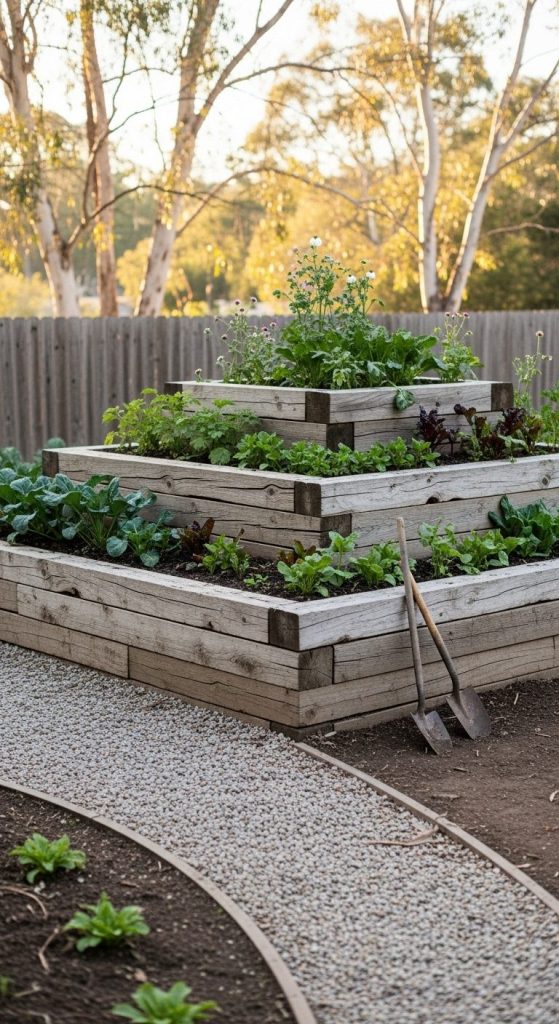
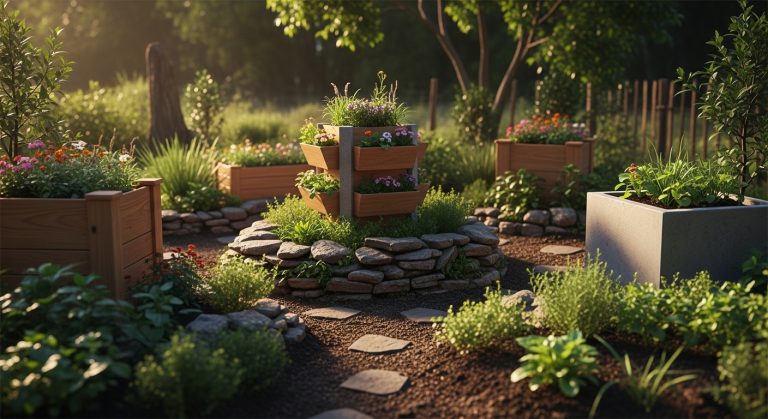
You know what’s timeless? Layers. And this tiered raised bed design is all about that — visual depth, easy access, and perfect drainage. Imagine three levels of lush greenery framed by solid wooden ties — that’s a statement piece for any yard.
Pros:
- Adds elevation and dimension.
- Ideal for small spaces needing vertical growth.
- Great drainage control.
Cons:
- Needs proper foundation leveling.
- Heavy lifting involved (seriously, you’ll feel it).
Pro Tip: Use untreated railroad ties or sealed modern versions. Older ties might contain creosote — something you don’t want near your veggies.
2. L-Shaped Garden Bed for Corners
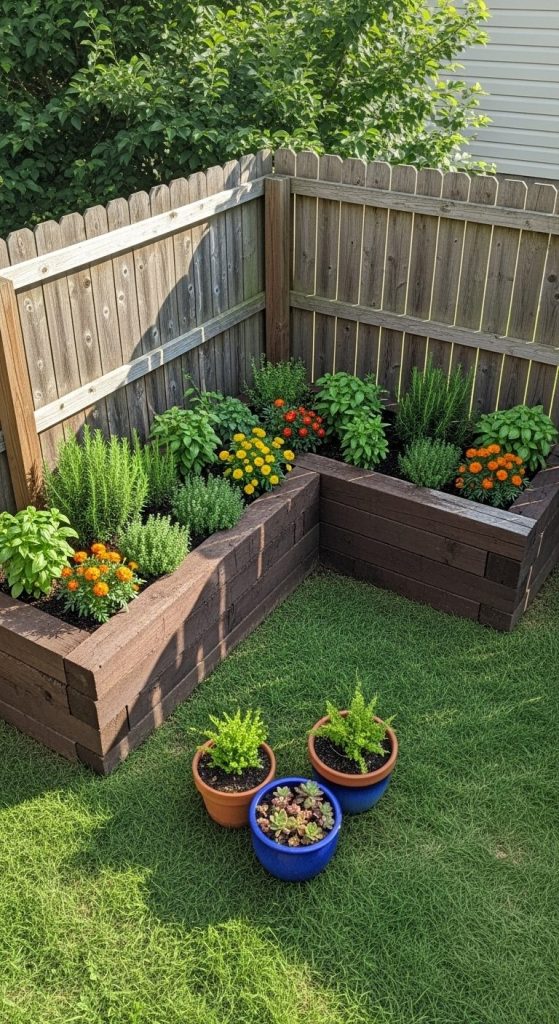
Got an awkward corner that looks bare? The L-shaped raised bed turns that dead zone into a lively, productive area. Perfect for herbs, greens, or even small shrubs.
Pros:
- Maximizes corner spaces efficiently.
- Visually balances patios or fences.
Cons:
- Slightly tricky to align at perfect 90° angles.
This layout works especially well in urban backyards where you want order and symmetry without sacrificing natural beauty.
3. Railroad Tie Retaining Wall Garden
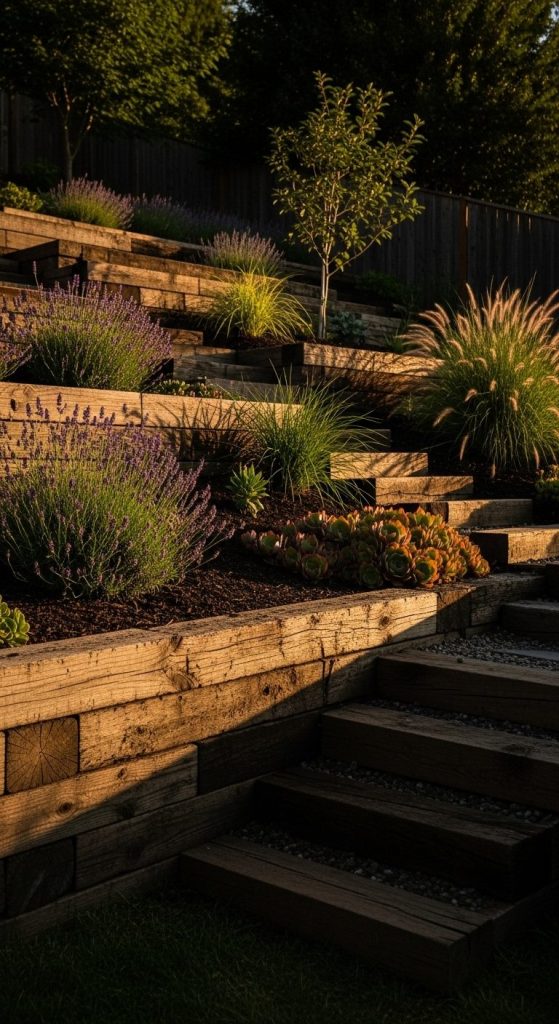
Why build a plain wall when it can also grow your salad? This dual-purpose retaining wall bed uses railroad ties to hold soil on one side and serve as a planter on the other.
Pros:
- Prevents erosion and adds structure.
- Strong, long-lasting, and visually bold.
Cons:
- Installation takes some time and measuring precision.
It’s functional and decorative — the kind of project that makes you feel like a backyard architect.
4. Long Linear Bed Along a Fence
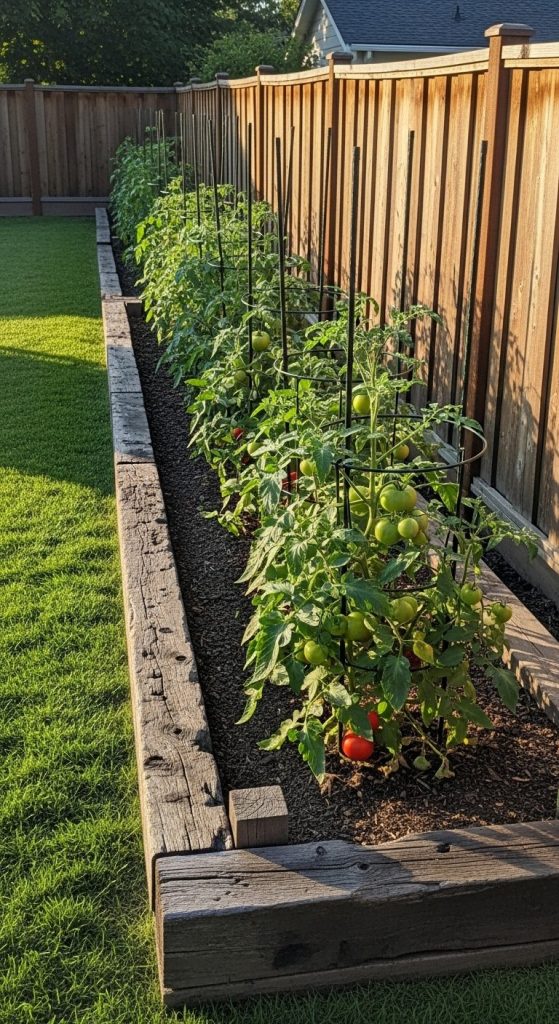
If you’re chasing that sleek, organized aesthetic, a long bed of railroad ties running parallel to a fence looks incredibly professional. It’s easy to build, easy to maintain, and perfect for climbing plants.
Pros:
- Streamlined and modern.
- Doubles as a border.
Cons:
- Linear layouts can look plain if not balanced with greenery height.
Break the monotony by adding trellises or alternating plant heights for texture and contrast.
5. Central Garden Feature Bed
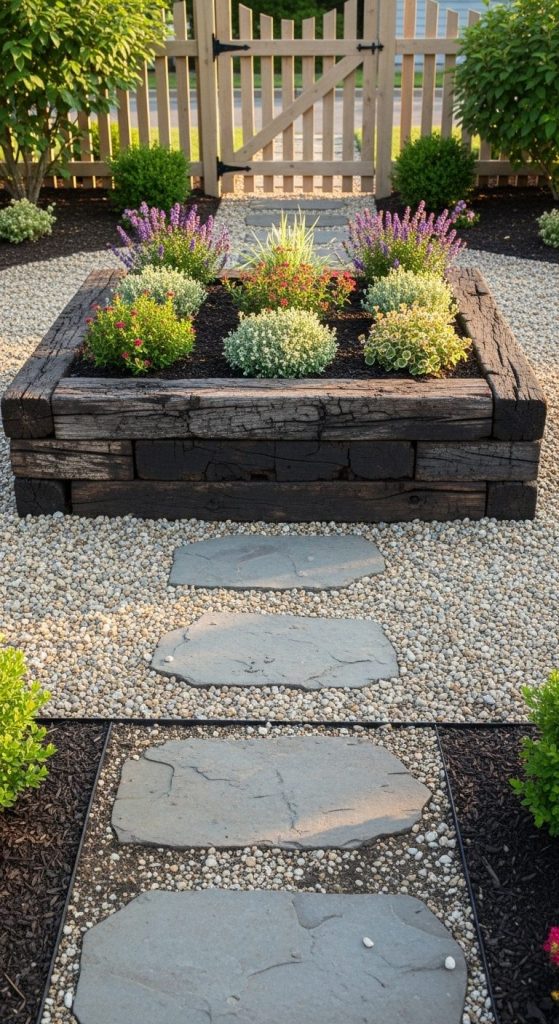
Want a centerpiece that makes your backyard pop? Build a square or circular raised bed right in the middle using thick railroad ties. It acts as both a visual anchor and a conversation starter.
Pros:
- Creates symmetry and focus.
- Perfect for ornamental plants or small trees.
Cons:
- Takes up central lawn space — not ideal for compact yards.
Design Tip: Frame the bed with gravel or stone for a professional, “magazine-cover” finish.
6. Multi-Zone Vegetable Layout
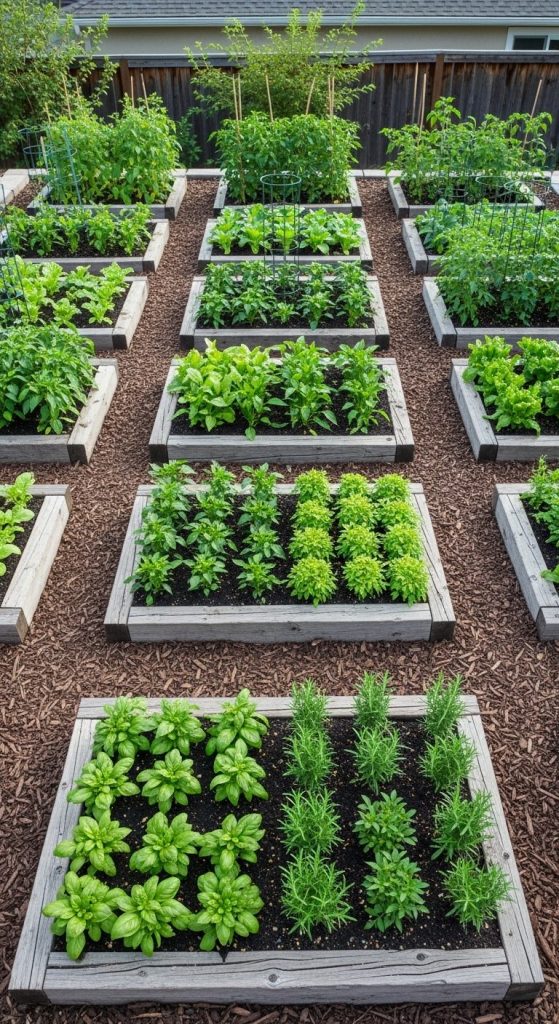
You know those Pinterest-perfect gardens divided into neat zones? You can easily recreate that with multiple small railroad tie beds, each dedicated to specific crops — herbs, greens, roots, etc.
Pros:
- Organized and easy to rotate crops.
- Prevents overcrowding.
Cons:
- Requires more cutting and assembly.
According to a 2024 Statista survey, 71% of urban gardeners prefer modular layouts for easier plant care — this design nails that balance between structure and flexibility.
7. Rustic Pathway Border Beds
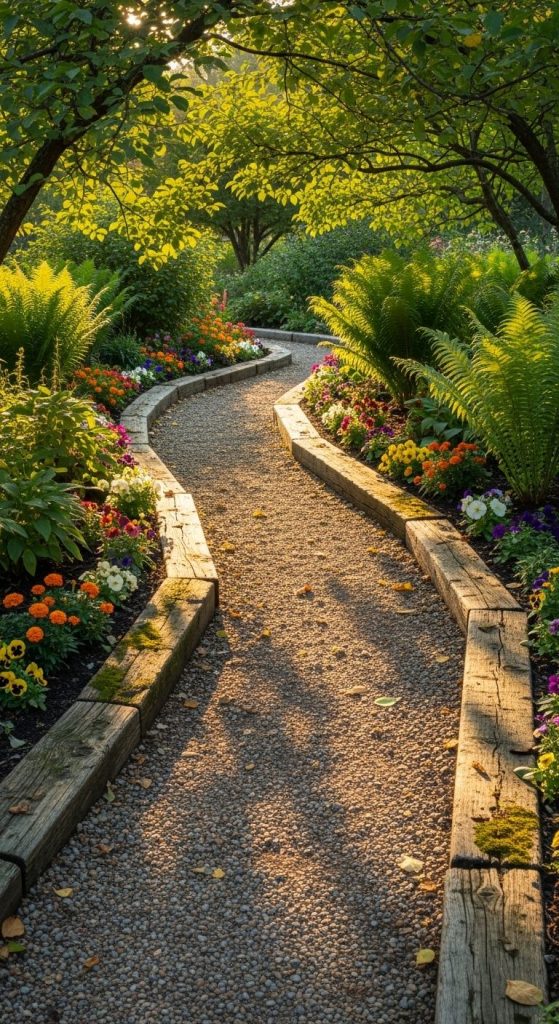
Ever walked through a garden that feels like a storybook path? Framing your walkways with low-profile railroad tie beds instantly gives that fairytale vibe.
Pros:
- Defines garden walkways beautifully.
- Adds natural, old-world charm.
Cons:
- May need sealing to prevent wood wear near soil edges.
You’ll get bonus points for mixing in crushed stone or mulch pathways between the ties — visually balanced and practical.
8. Two-Level Patio Edge Planters
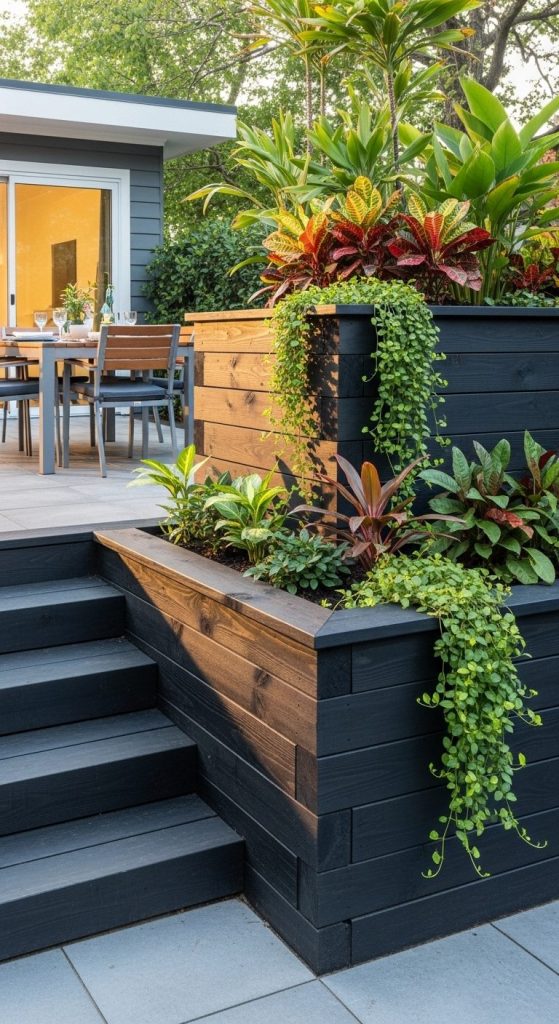
Blend hardscape with greenery by using railroad ties to frame your patio edges. Build a two-level bed that steps down naturally with the patio.
Pros:
- Seamless transition from patio to greenery.
- Adds lush, layered texture.
Cons:
- Can require precision cutting.
Architectural firms on Houzz often highlight this style for merging landscape and structure — and it’s surprisingly DIY-friendly.
9. U-Shaped Garden for Accessibility
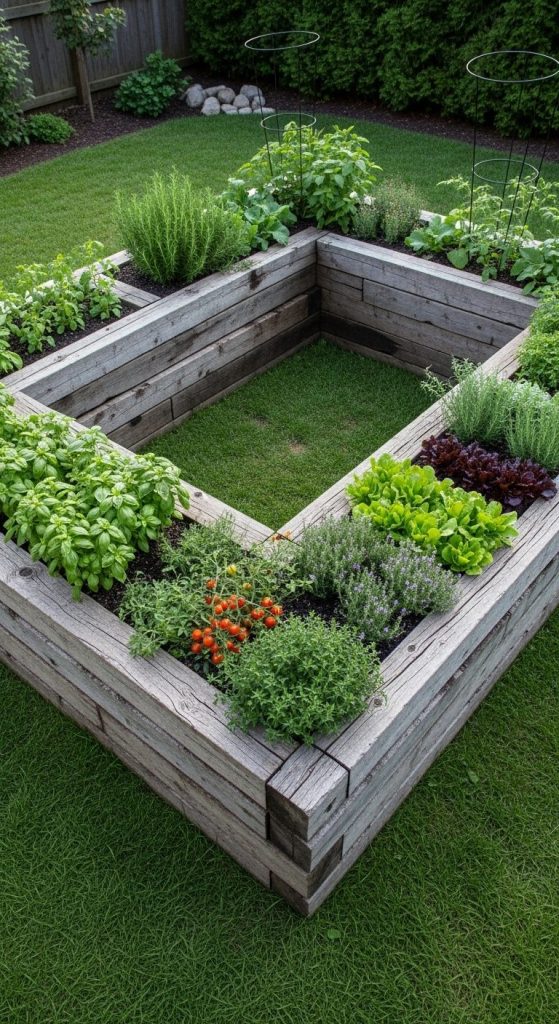
If you’re serious about gardening comfort, the U-shaped raised bed layout is your best friend. It gives you full access to all sides without stepping into the soil.
Pros:
- Easy to reach every corner.
- Great for intensive planting.
Cons:
- Requires more lumber upfront.
It’s a design that feels both efficient and luxurious — and trust me, your knees will thank you later.
10. Garden Seating Combo
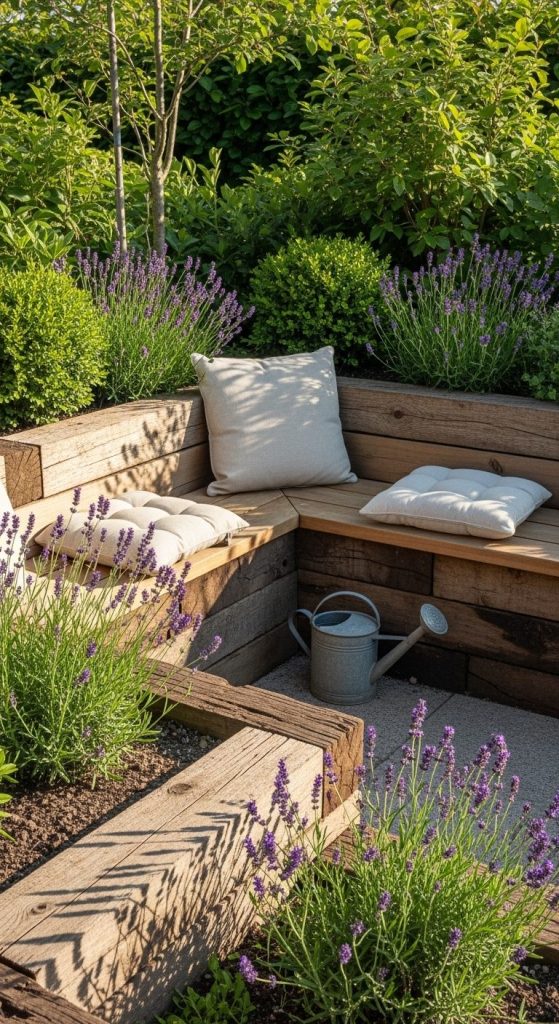
Why separate your planters and seating when you can combine both? Build bench seating directly into the outer edge of your raised beds using railroad ties as the base structure.
Pros:
- Dual-purpose design.
- Aesthetically integrated with your garden flow.
Cons:
- Needs sturdy reinforcement for weight-bearing.
Imagine sipping coffee while your lavender blooms behind you — practical meets peaceful.
11. Railroad Tie Steps with Side Beds
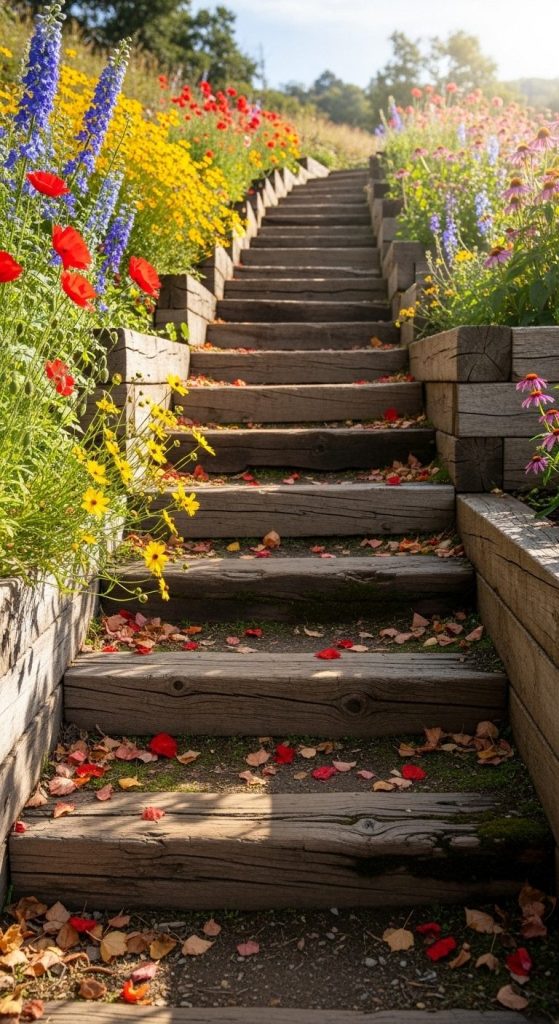
Turn a slope into a showpiece by combining stairs and garden beds in one cohesive design. The ties create steps, while the side borders hold small planters.
Pros:
- Converts sloped terrain into functional design.
- Adds character to hillside gardens.
Cons:
- Precision and secure anchoring required.
This layout is a landscaping favorite among professionals because it balances form and function beautifully.
12. Mini Herb Wall
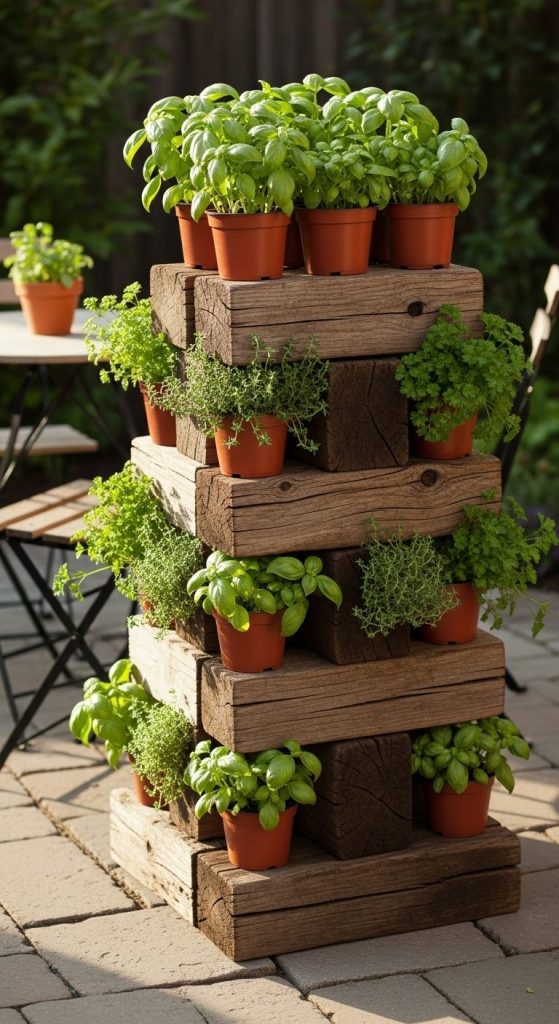
Short on space? Stack railroad ties vertically to create a tiered mini herb wall — ideal for patios, balconies, or tight backyard corners.
Pros:
- Compact and space-efficient.
- Great for kitchen herbs.
Cons:
- Requires frequent watering due to smaller soil pockets.
This one’s small but mighty — think of it as your personal “farm-to-fork” station just steps from your kitchen.
13. Industrial-Style Bed with Metal Accents
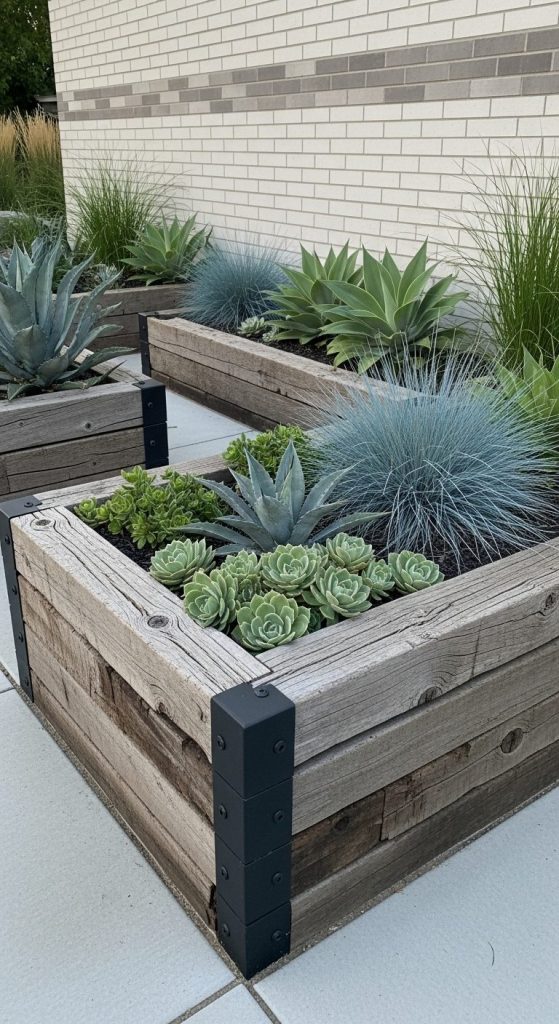
Mixing railroad ties with metal trims or corner brackets gives your garden a sleek, industrial vibe — perfect for modern homes.
Pros:
- Unique texture mix of wood and metal.
- Adds urban edge.
Cons:
- Slightly more effort for metalwork.
Pair with matte black planters or minimalist decor, and you’ll have a designer-worthy setup without paying designer prices.
14. Geometric Layout Bed
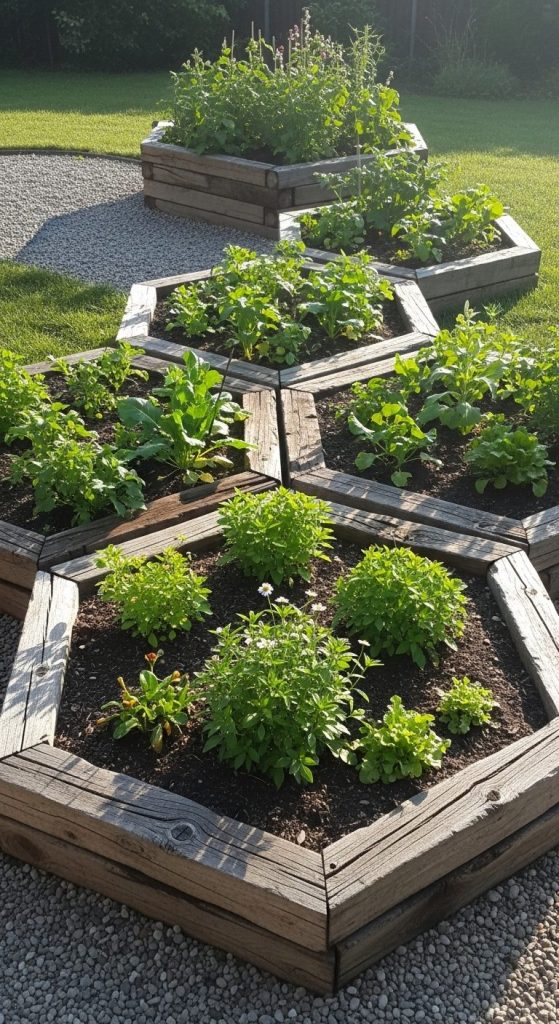
Tired of straight lines? Go bold with hexagonal or diamond-shaped raised beds using shorter railroad tie cuts. It’s modern, dynamic, and absolutely Insta-worthy.
Pros:
- Unique geometry boosts visual appeal.
- Easy to cluster multiple beds.
Cons:
- Requires precision measuring and cutting.
Design experts at Gardenista highlight geometric layouts as the top trend for 2025 — they blend artistic design with organic growth.
15. Garden Border & Fire Pit Integration
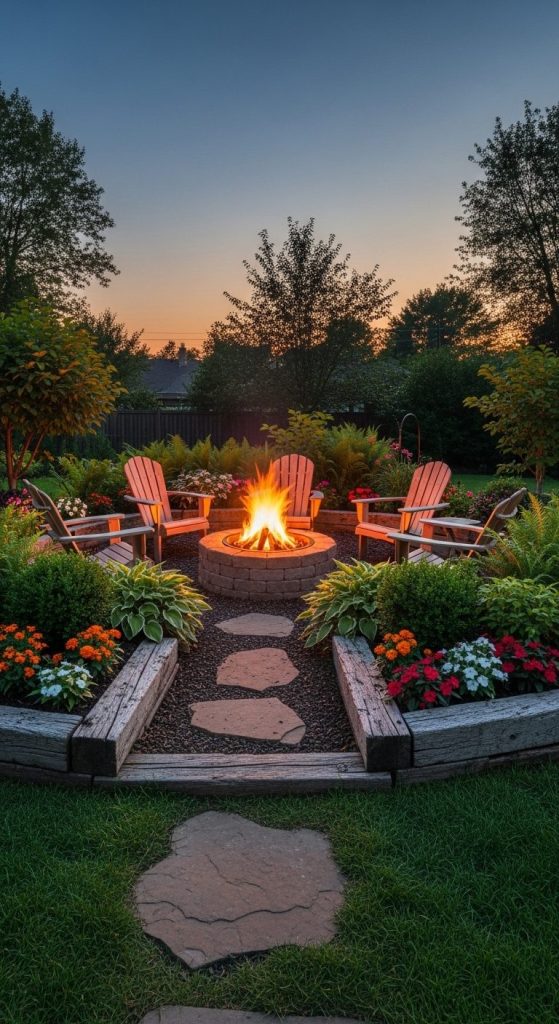
Here’s a showstopper — integrate railroad tie garden beds around a central fire pit area. You get a cozy outdoor hub surrounded by greenery.
Pros:
- Perfect blend of hardscape and softscape.
- Ideal for social spaces.
Cons:
- Wood must be well-sealed for heat resistance.
Add string lights, gravel, and native plants, and you’ve got a backyard paradise that feels professionally designed yet totally personal.
Conclusion
So there you have it — 15 creative, practical, and downright impressive ways to use railroad ties in raised garden beds. Whether you want a minimalist linear bed or a full-on tiered showpiece, these ideas bring that rugged-meets-refined vibe every great garden deserves.
Just remember: use modern, untreated or sealed ties for safety, plan your layout carefully, and don’t be afraid to experiment. Because honestly, a garden built with your own hands — especially one that looks this good — is worth every ounce of effort.
Now, go grab that shovel (and maybe a back brace, just in case) — your garden masterpiece awaits!

Ashley Ellison is a skilled writer and avid bowler. Her passion for storytelling and dedication to the sport have led her to participate in various national bowling leagues. With a unique combination of talents, Ashley approaches every challenge with creativity and a relentless drive to succeed.