16 Fall Garden Vegetables Ideas for a Better Harvest
There’s something especially satisfying about a fall vegetable garden. The summer garden starts looking tired, the evenings get cooler, and suddenly a fresh round of green shoots appears where you thought the growing season had already ended.
That’s exactly why fall garden vegetables have become one of my favorite parts of gardening. You don’t need a huge backyard or a complicated setup either. Cool-season crops can turn empty beds, containers, and even small leftover spaces into productive growing areas.
The trick comes down to choosing vegetables that actually enjoy cooler weather and planting them early enough to mature before growth slows. Your local first-frost date matters, and many extension guides recommend counting backward from that date while allowing extra time because autumn growth slows as days become shorter.
Here are 16 distinct ways to make your fall vegetable garden more productive, attractive, and genuinely useful.
1. Create a Fast-Growing Spinach Strip
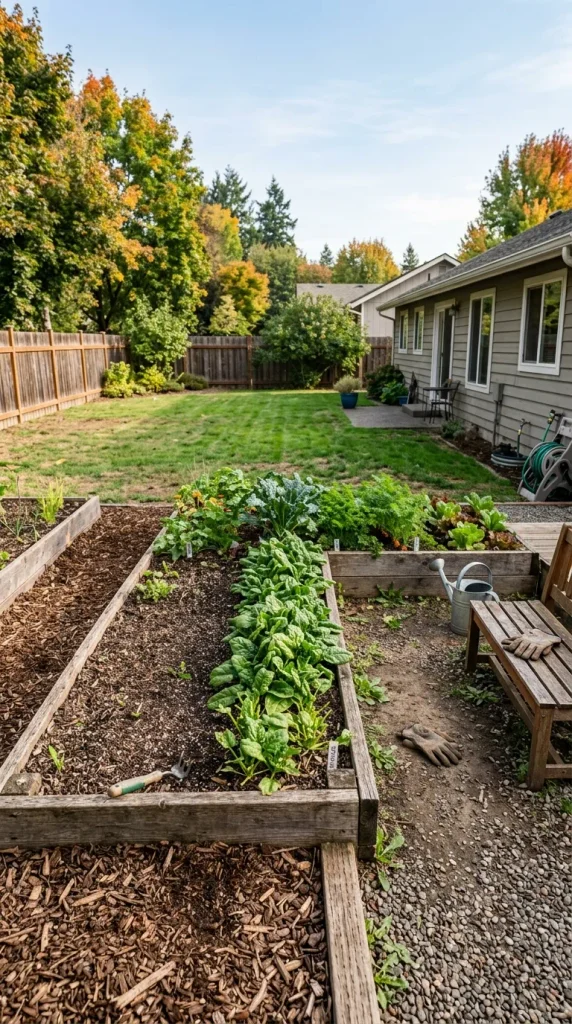
Spinach makes an excellent fall crop because it handles cool weather well and can provide a surprisingly generous harvest from a narrow strip of soil.
Instead of giving spinach an entire bed, dedicate a 6–12 inch-wide strip along an existing garden edge. Sow several short rows rather than one long row so you can harvest gradually.
Spinach grows quickly in favorable fall conditions, and some varieties can tolerate light frost.
The best part? You can harvest outer leaves while the plants continue producing. That makes this arrangement especially useful when you don’t need a giant harvest all at once.
If your summers run hot, wait until temperatures begin dropping before sowing. Hot conditions encourage spinach to bolt, while cooler weather suits it much better.
Some ideas to consider
- Garden dibber: Makes it easier to create evenly spaced planting holes without disturbing the surrounding soil.
- Fine-mesh garden netting: Helps protect tender seedlings from common garden pests.
- Harvest scissors: Handy for cleanly cutting individual leaves without trampling neighboring plants.
2. Grow Kale for Repeated Harvests
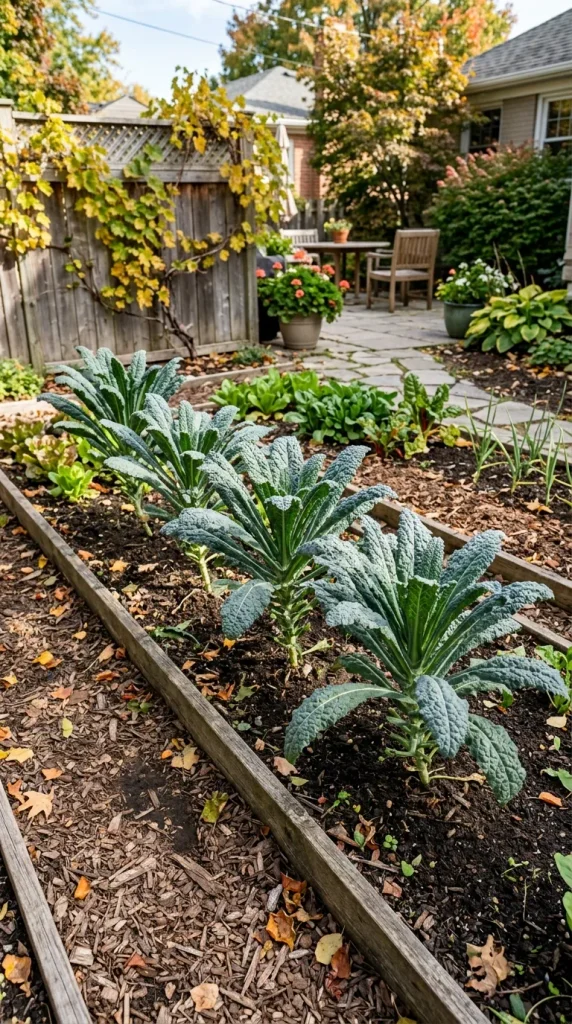
Kale gives you a very different fall-garden experience because you don’t need to harvest the whole plant.
Plant several kale seedlings in a simple row and remove the older outer leaves first, leaving the central growing point intact. This creates a productive little harvest station rather than a crop that disappears after one picking.
Kale ranks among the more cold-hardy fall vegetables, and extension guidance lists it as a strong candidate for late-season planting.
For a small garden, three or four plants can provide plenty of leaves for occasional meals.
Give each plant enough room for airflow, particularly if autumn brings damp weather. FYI, a slightly wider spacing often makes harvesting much easier too.
A few things you might like
- Stainless-steel garden snips: Useful for removing individual leaves quickly.
- Plant support rings: Keep mature foliage from sprawling into nearby paths.
- Reusable harvest basket: Gives you a convenient place to collect leaves while working through the bed.
3. Reserve a Bed for Sweet Fall Carrots
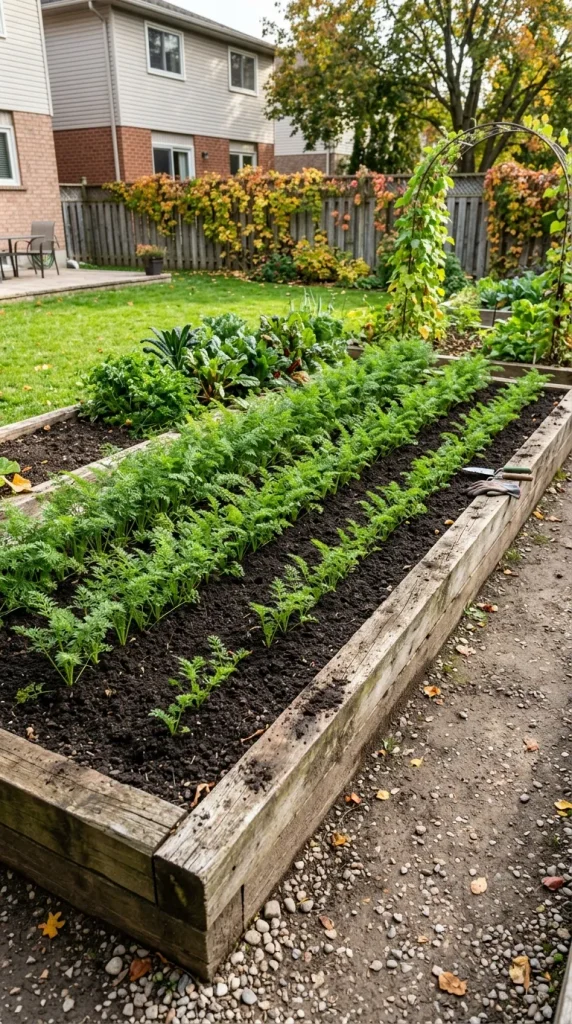
Carrots deserve a dedicated spot in a fall garden because their roots develop underground while the changing weather can actually improve their flavor.
Penn State Extension notes that carrots and several other root vegetables can develop greater sweetness after exposure to colder conditions because plants convert stored starches into sugars.
The important part comes before sowing: loose, stone-free soil.
A compacted or rocky bed can cause misshapen roots, so loosen the planting area deeply and remove obvious stones. Direct seeding also makes more sense for carrots because transplanting can distort the developing root.
A narrow raised bed works beautifully here because you can dedicate the soil to root crops without competing with large plants.
Worth considering
- Long-handled garden fork: Helps loosen deeper soil before sowing.
- Fine garden sieve: Useful for removing stones and creating a smoother seedbed.
- Lightweight harvest fork: Makes it easier to lift mature roots without snapping them.
4. Use Radishes as Fall Gap Fillers
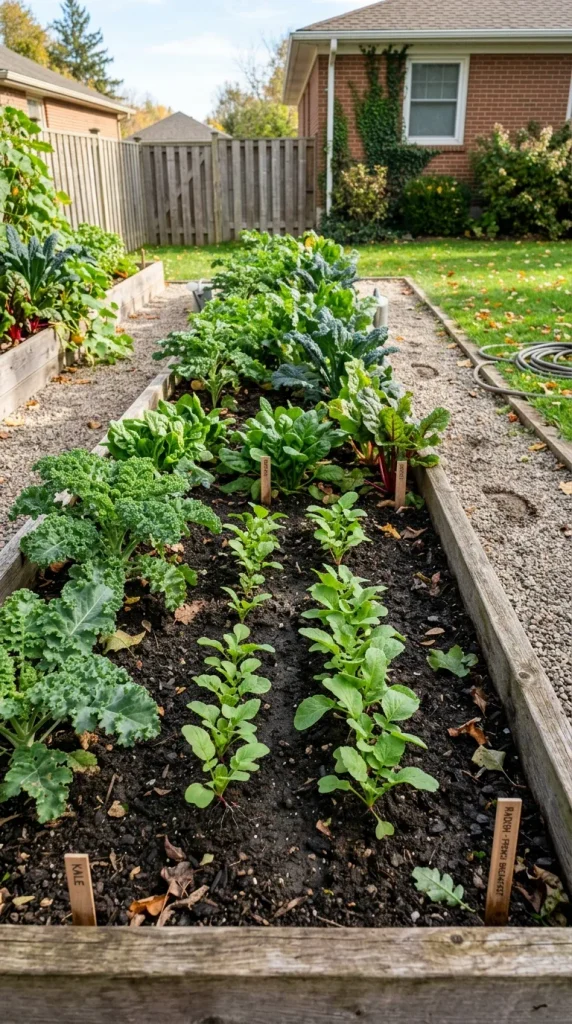
Have an empty patch between larger vegetables? Radishes can turn that awkward space into a useful harvest.
They mature relatively quickly, making them especially useful when you have limited time before colder weather arrives. Extension guidance lists radishes among suitable fall crops and notes that successive sowings can provide a more continuous harvest.
Try planting a small row every week or two rather than sowing everything simultaneously.
That way, you don’t end up with 40 radishes ready on the same weekend. Unless you genuinely love radishes, which is a perfectly respectable problem.
Keep their shallow roots consistently watered. Uneven moisture can lead to poor-quality roots.
Give these a look
- Small hand cultivator: Helps loosen the surface between successive sowings.
- Watering wand: Delivers a gentler stream to shallow-rooted seedlings.
- Wooden plant labels: Make staggered sowing dates much easier to remember.
5. Grow Beets for Two Harvests
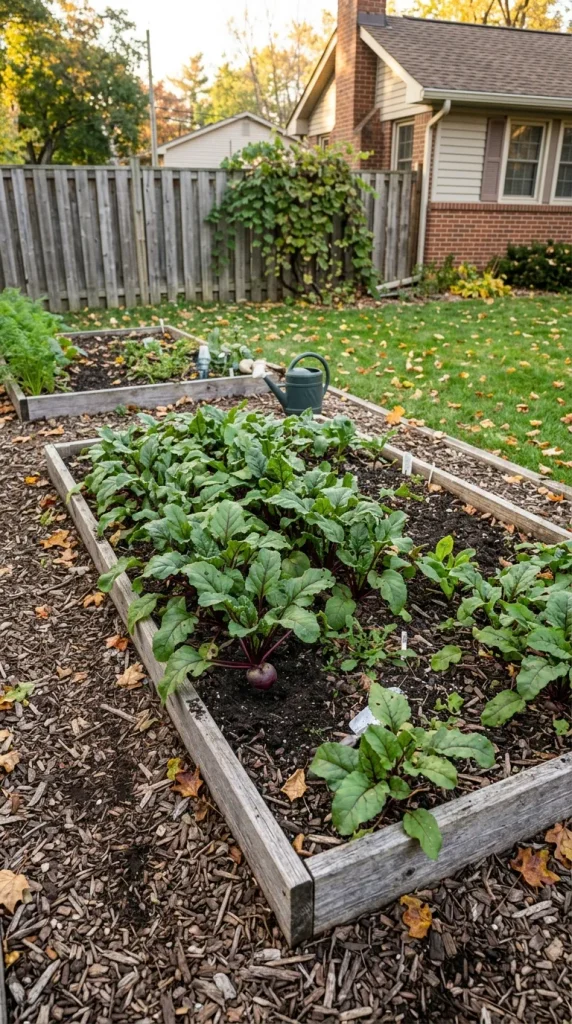
Beets give you something particularly useful in a fall vegetable garden: both the roots and the greens are edible.
Plant them in a compact block rather than scattering them throughout the garden. As the plants develop, you can harvest some young leaves while allowing other plants to mature fully.
Beets tolerate cooler conditions, and extension guidance includes them among vegetables suitable for midsummer planting for fall harvest.
The arrangement also looks surprisingly attractive. Deep green foliage over colorful roots creates a garden bed that feels intentional rather than purely utilitarian.
Keep the soil reasonably loose so the roots can expand without unnecessary resistance.
A few suggestions
- Garden soil thermometer: Helps you understand when your planting conditions actually suit the crop.
- Soft garden gloves: Useful when thinning crowded seedlings.
- Small harvest basket: Keeps leafy greens separate from soil-covered roots.
6. Make Turnips the Workhorse of a Small Bed
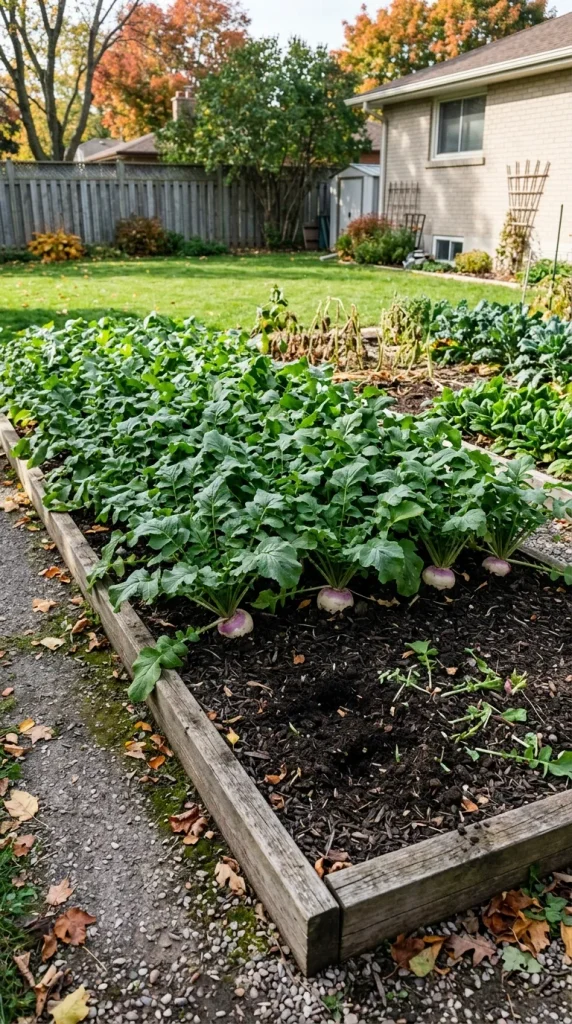
Turnips don’t always get the attention they deserve, but they make practical fall vegetables because you can use both the roots and leafy tops.
They also fit nicely into smaller gardens because you don’t need to dedicate a huge amount of space to them.
Plant them in short rows and thin seedlings early enough to prevent overcrowding. Their relatively quick development makes them useful when your remaining growing window feels short.
Cold weather can also improve the flavor of some root vegetables, including turnips.
For a particularly efficient setup, grow turnips in a bed that previously held an early summer crop. This turns one piece of ground into two productive seasons.
Possibly handy products
- Handheld soil rake: Smooths the surface before direct sowing.
- Garden kneeling pad: Makes repeated thinning and harvesting much more comfortable.
- Root-crop harvesting fork: Helps loosen soil around mature roots.
7. Give Broccoli a Head Start With Transplants
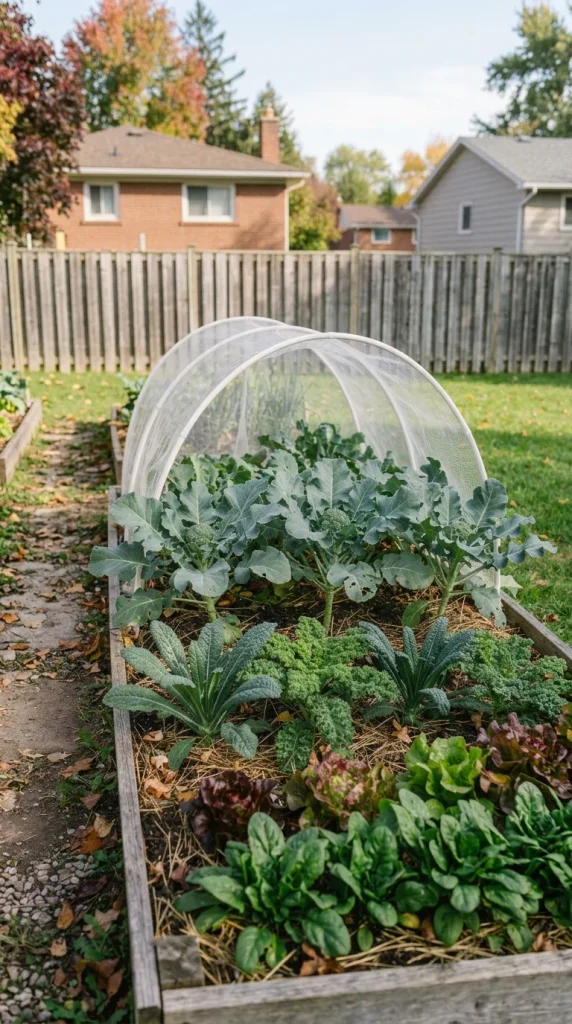
Broccoli works beautifully in a fall garden, but timing matters more than gardeners sometimes expect.
Starting with healthy transplants can give broccoli the head start it needs before shorter autumn days slow development. Extension guidance also notes that broccoli can grow from late-summer or early-fall sowing in suitable conditions.
Give each plant enough space for its mature size rather than squeezing several into one tiny corner.
I also like placing broccoli toward the back of a bed and using shorter crops around its edges. That creates layers without allowing the broccoli to completely dominate the planting area.
If pests regularly find your brassicas, physical protection can save a lot of frustration.
Helpful additions
- Fine insect-exclusion mesh: Creates a physical barrier around vulnerable brassica crops.
- Adjustable plant ties: Help secure protective mesh without crushing stems.
- Garden hoops: Provide a simple frame for supporting protective fabric.
8. Design a Long-Hold Brussels Sprout Row
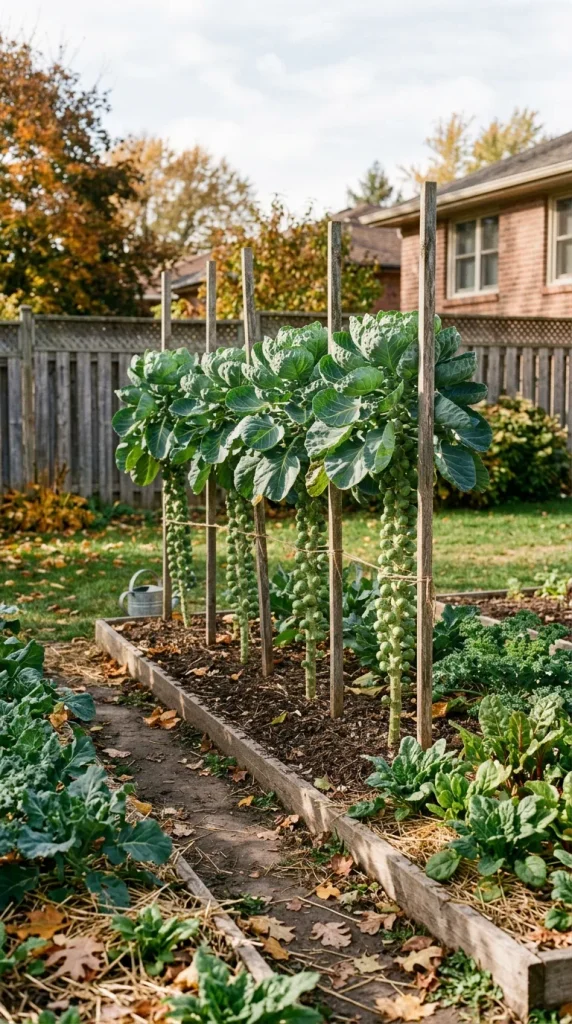
Brussels sprouts suit gardeners who don’t mind waiting for a later harvest.
They need considerably more time than quick crops such as radishes, so they work best as a dedicated long-term row rather than something you squeeze into an empty corner at the last minute.
Extension guidance identifies Brussels sprouts among the hardier cool-season vegetables and gives them a longer maturity window than many fall greens.
Plant them where they won’t interfere with quicker crops that need frequent access.
Their tall, upright growth also gives a fall garden some vertical structure. You can place shorter greens along the sunny side as long as they don’t shade the sprouts excessively.
A few favorites
- Sturdy garden stakes: Give tall plants extra support when autumn winds pick up.
- Soft plant ties: Secure stems without cutting into them.
- Garden fleece: Adds another layer of protection when temperatures suddenly drop.
9. Build a Succession-Planted Lettuce Bed
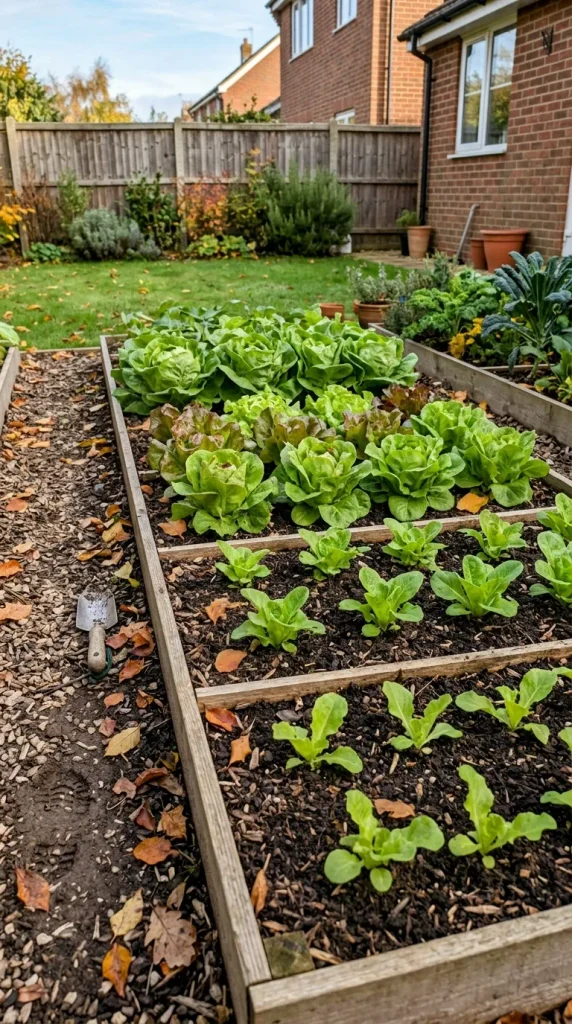
A lettuce bed becomes much more useful when you stop treating it as one planting.
Instead, divide the space into several small sections and sow each section at a different time. This approach spreads the harvest and prevents the classic problem of having an entire bed mature simultaneously.
Leaf lettuce suits this strategy particularly well because you can harvest individual leaves instead of waiting for every head to reach full size.
Cool-season crops generally perform better as temperatures fall, while excessive heat can encourage leafy vegetables to bolt.
For a neat visual arrangement, create three or four narrow bands with simple labels showing the sowing date.
Maybe worth checking out
- Reusable garden markers: Keep each sowing date clearly identified.
- Seed-sowing ruler: Helps maintain consistent spacing across multiple rows.
- Fine-rose watering can: Delivers gentle water without washing tiny seeds away.
10. Train Fall Peas Up a Simple Trellis
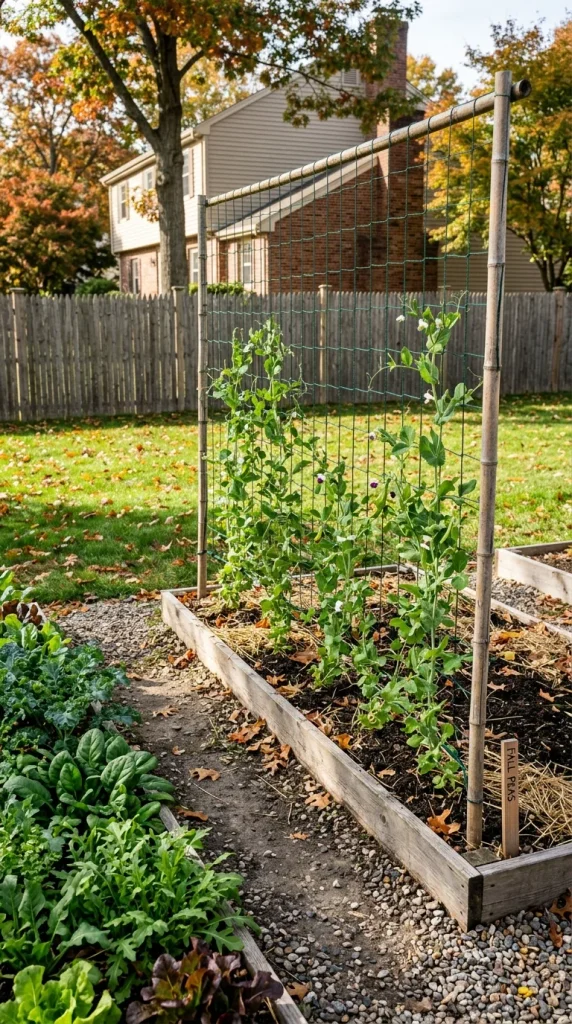
Peas add something many fall vegetable gardens lack: height.
Instead of letting the plants sprawl across valuable ground, give them a narrow trellis. This keeps the bed organized while creating a vertical green wall that can soften the look of a vegetable patch.
Peas appear on extension lists for fall planting in appropriate climates, although your local temperature and frost timing determine whether you have enough growing time.
A simple trellis doesn’t need to become a construction project. Netting stretched between two sturdy supports can work perfectly well.
Just position the structure where it won’t cast heavy shade over shorter vegetables.
Useful items to consider
- Garden trellis netting: Creates vertical support without taking much ground space.
- Bamboo garden stakes: Provide inexpensive anchor points.
- Reusable vine clips: Keep young growth attached to the support as it climbs.
11. Give Garlic Its Own Overwintering Space
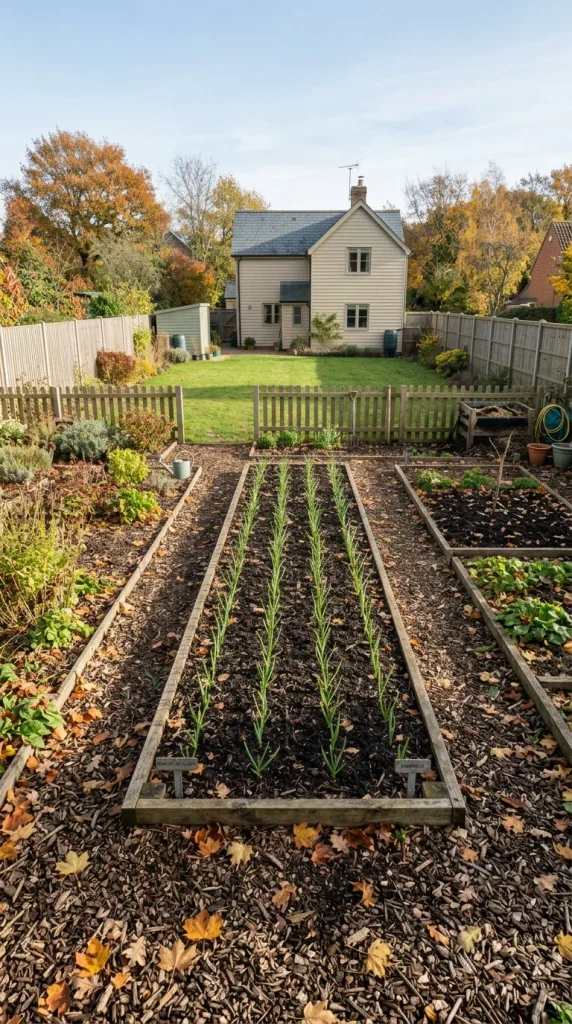
Garlic works differently from quick fall crops because you plant it in autumn and wait for a later harvest.
That makes it an excellent choice for a section of the garden you don’t need during winter. Garlic bulbs can overwinter in the ground and produce a summer harvest in suitable climates.
Keep the bed simple. Straight rows make it easier to identify the planting area months later, especially after winter weather has flattened surrounding vegetation.
A light protective mulch can also help moderate the soil environment, but local climate and drainage should guide how much you use.
The main advantage here isn’t speed. It’s using winter as part of the growing cycle.
Helpful accessories
- Bulb-planting dibber: Makes consistent planting holes quickly.
- Row marker stakes: Prevent accidental digging into the dormant bed.
- Garden hand fork: Helps loosen soil around the planting area without disturbing bulbs unnecessarily.
12. Add a Compact Scallion Border
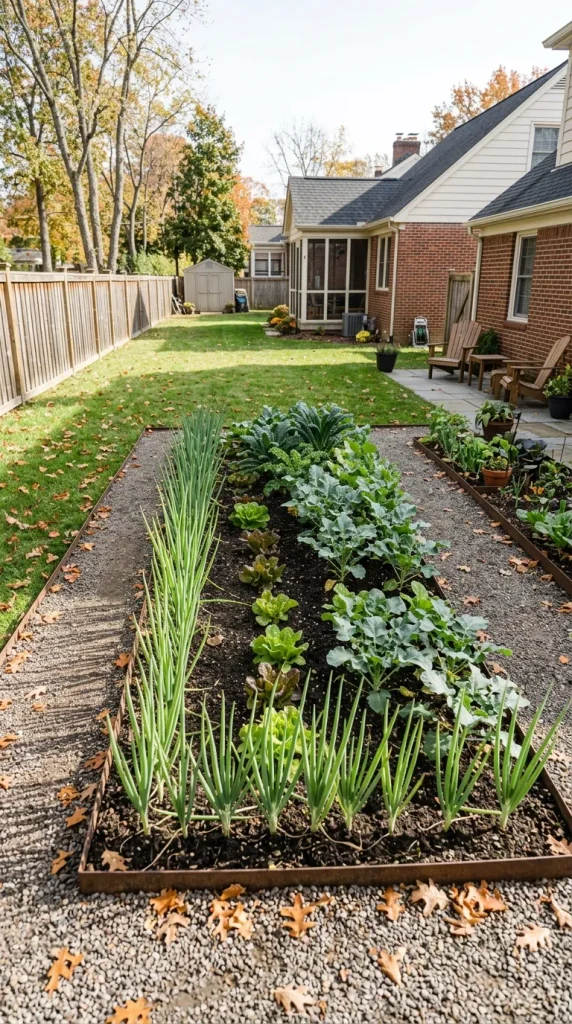
Scallions make an excellent border crop because they grow vertically without consuming much horizontal space.
Plant a narrow line along the front edge of a vegetable bed, beside a pathway, or around taller crops.
The result looks tidy while giving you an edible border instead of ornamental space that simply sits there.
Green onions also appear among common cool-season crops suitable for fall growing in appropriate climates.
Keep the arrangement narrow enough that you can reach the plants easily. You don’t want to turn harvesting into an awkward balancing act.
Nice finishing touches
- Narrow hand trowel: Ideal for working along tight bed edges.
- Garden edging strips: Give the border a cleaner visual boundary.
- Harvest knife: Makes quick cutting easier when you’re picking several plants at once.
13. Try a Small Asian-Greens Patch
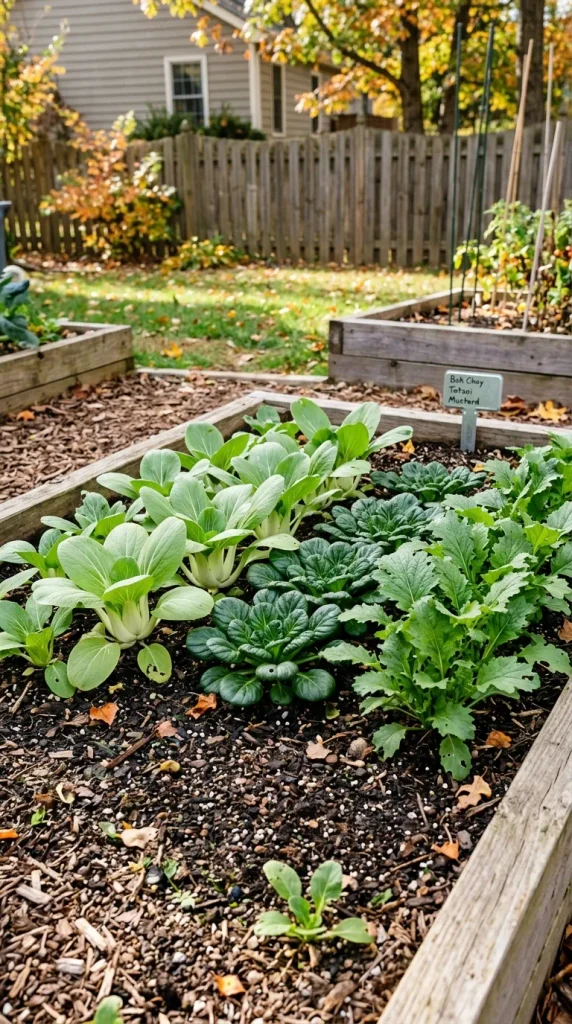
Bok choy, tatsoi, mustard greens, and similar Asian greens can give a fall garden a completely different texture.
Instead of planting one giant block, combine a few compatible greens in a compact patch of contrasting leaf shapes. This creates visual variety while keeping the bed productive.
Many Asian greens prefer cooler conditions, although exact timing depends heavily on your climate and the specific crop.
The important trick involves avoiding excessive heat during establishment. Fall planting works best when you calculate backward from your expected first frost rather than simply following a generic calendar.
This idea works particularly well in raised beds because you can dedicate one small section to fast-growing greens.
A few complementary pieces
- Lightweight garden cloche: Gives young greens temporary protection during sudden cold spells.
- Seedling protection mesh: Helps reduce pest pressure without blocking normal airflow.
- Compact harvest basket: Keeps several types of greens organized after picking.
14. Turn Containers Into a Fall Vegetable Garden
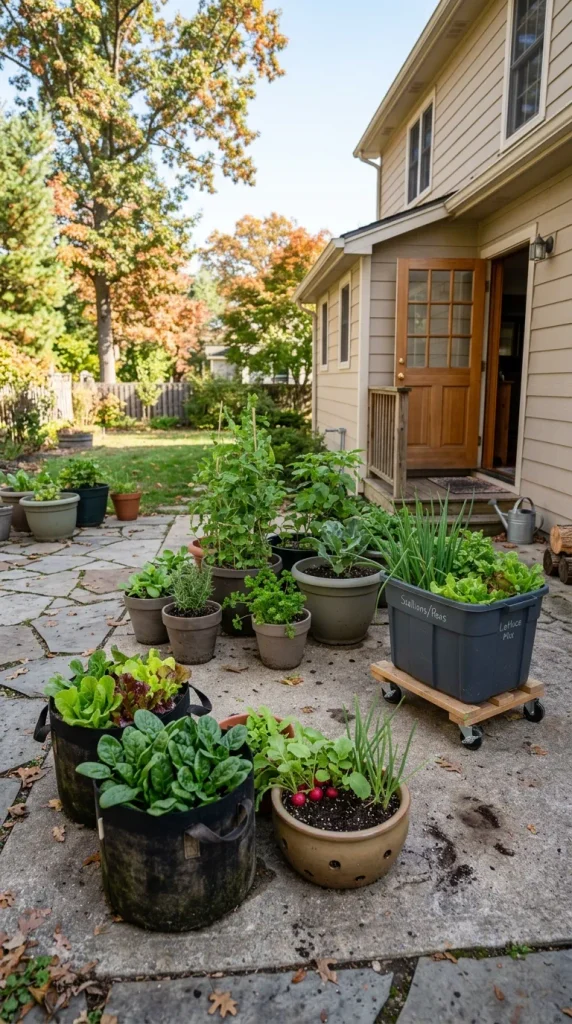
You don’t need an in-ground garden to grow fall garden vegetables.
Containers work especially well for compact crops such as lettuce, spinach, radishes, scallions, and smaller root vegetables.
The real advantage comes from mobility. If an unusually cold night approaches, you can move containers into a more sheltered location when practical.
Use containers with drainage holes and choose sizes that match the root system rather than putting everything into enormous pots.
Grouping several containers together can also make watering and harvesting easier. Arrange taller crops toward the back and shorter greens toward the front.
You might like
- Fabric grow bags: Provide a lightweight option for movable vegetable containers.
- Pot feet: Improve drainage beneath outdoor containers.
- Container plant caddies: Make larger pots easier to reposition when weather changes.
15. Protect Tender Fall Crops With a Low Tunnel
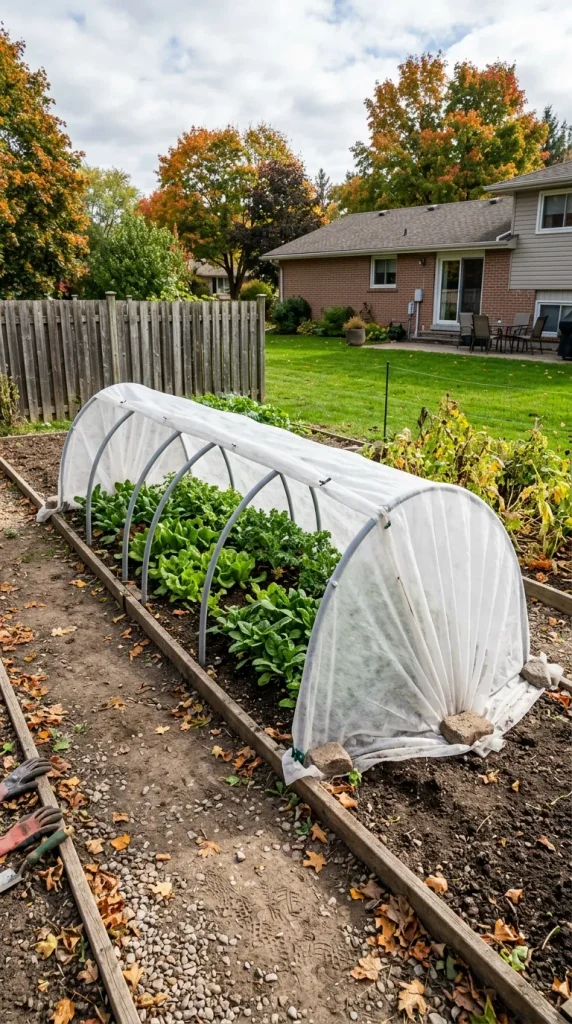
When you want to push the season a little further, a low tunnel can make a noticeable difference.
You can create one with simple hoops placed over a garden bed and cover them with appropriate row-cover fabric. Extension guidance describes low tunnels as practical season-extension structures, with hoops commonly spaced roughly 2–4 feet apart depending on the setup.
The important detail: don’t simply throw heavy material directly onto plants and forget about it. A supported cover keeps fabric off foliage and creates a more controlled protected space.
Row covers can help protect crops from frost and insects while allowing light and, depending on the fabric, air and water to reach plants.
Practical extras
- Floating row-cover fabric: Provides flexible protection for several cool-season crops.
- Ground-cover clips: Keep the edges secure when autumn winds arrive.
- Garden hoop supports: Create the structure needed to keep protective material above the plants.
16. Create a Four-Zone Fall Vegetable Bed
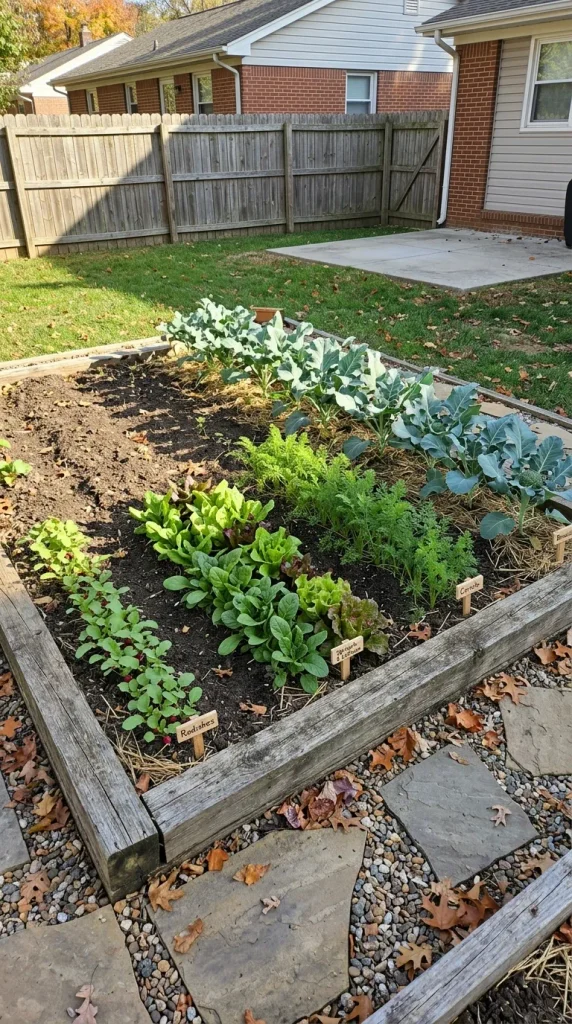
If you want one organized bed that produces several different harvests, divide it into four functional zones.
Put quick crops such as radishes in one section, leafy greens in another, root vegetables in the third, and longer-season brassicas in the fourth.
This arrangement works because not every fall vegetable follows the same timetable. Extension guidance lists everything from quick radishes and spinach to much longer crops such as Brussels sprouts, so combining maturity windows can keep the bed productive for longer.
Leave narrow paths or stepping areas between sections if the bed allows. You’ll appreciate them when harvesting after rain.
Most importantly, write down what you planted and when. A simple garden record makes the next season dramatically easier to plan.
Possibly helpful picks
- Weatherproof garden notebook: Track sowing dates, harvests, and frost events.
- Waterproof plant labels: Keep each zone identifiable throughout the season.
- Garden measuring tape: Helps you recreate successful spacing next year.
Making Your Fall Vegetable Garden Work Harder
The biggest mistake with fall garden vegetables isn’t usually choosing the wrong vegetable. It’s planting at the wrong time.
Autumn gives you a shrinking window, so your first frost date becomes a useful planning tool. Start with the vegetable’s days to maturity, then work backward from the expected frost date and allow additional time because cooler temperatures and shorter days slow plant growth.
Also remember that your climate changes the entire equation. A planting date that works beautifully in one region may arrive far too late or far too early somewhere else.
I particularly like combining fast crops with long-season crops. Radishes and leafy greens provide quick gratification while broccoli, Brussels sprouts, garlic, or carrots occupy space for a longer stretch.
And don’t overlook protection. Low tunnels, row covers, cold frames, and cloches can help gardeners extend the season beyond what an uncovered bed could manage.
One more useful habit: after an early crop finishes, reuse the space instead of letting it sit empty. Succession planting can turn one garden bed into multiple harvests throughout the year.
Conclusion
A good fall vegetable garden doesn’t need to look complicated. In fact, some of the most productive setups are wonderfully simple: a narrow row of spinach, a few kale plants, carrots tucked into loose soil, radishes filling gaps, and one protected bed carrying vegetables a little further into the cold season.
What I like most about fall gardening is the change in pace. Summer often feels like you’re racing to keep everything watered, harvested, and under control. Fall feels more deliberate. You choose crops carefully, watch the weather, and make every remaining patch of soil count.
The 16 ideas above also show that there isn’t one correct way to grow fall garden vegetables. You can build a dedicated root bed, use containers, train peas vertically, create a succession-planted salad patch, or protect an entire bed beneath a low tunnel.
Start with the idea that fits your space and climate best. Then try another next season. A small, well-timed fall garden can often give you far more food than an empty garden bed ever could.

William Martin is a passionate bowler who spends most of his weekends playing the sport. With years of intense experience under his belt, William decided to share his knowledge by creating BOWLING OCEAN. Join me on this journey to explore the world of bowling and discover the tips and tricks to becoming a pro.