15 Front Yard Address Sign Ideas for Stylish Homes
I used to think house numbers were boring. You stick a few digits on the wall, call it a day, and forget about it. Then I started noticing homes where the front yard address sign actually made me slow down. Some looked reminded me of boutique hotels. Others felt cozy and welcoming, like a handwritten invitation.
A front yard address sign does more than help delivery drivers. It sets the tone for your home before anyone rings the bell. It can feel modern, rustic, bold, or quietly elegant depending on the design.
If your house feels “almost done” from the outside, your address sign might be the missing detail. These 15 front yard address sign ideas focus on design, placement, readability, and real-world function.
1. Vertical Post Address Sign
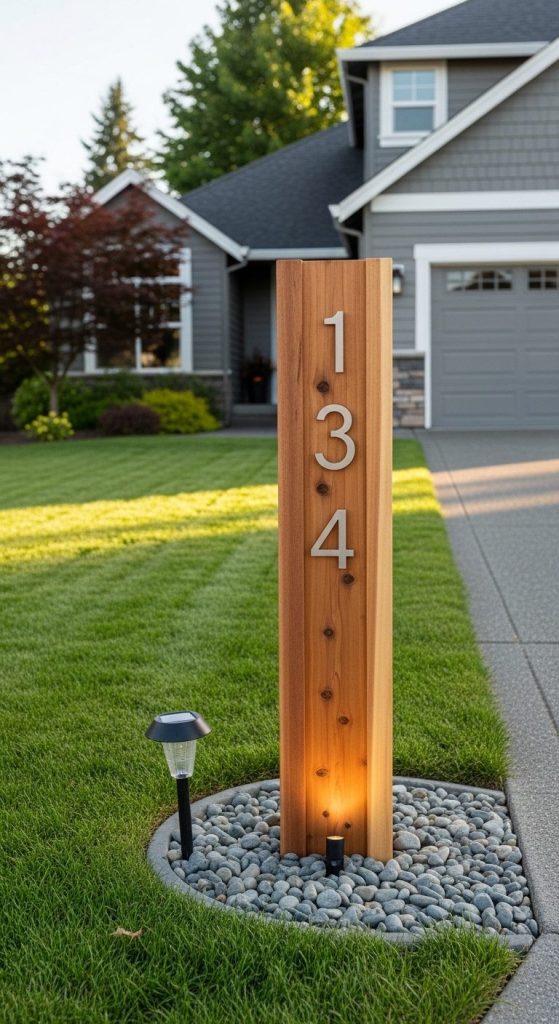
Vertical signs feel tall, modern, and very noticeable from the street.
Mount your house numbers vertically on a wooden or metal post planted near the driveway or walkway. Use bold numbers that read easily from a distance.
Pros:
- Highly visible from the road
- Works well for long driveways
- Adds a modern architectural touch
Cons:
- Requires digging or anchoring
- Needs weather-resistant materials
Mini takeaway: Vertical post signs make your address visible without touching the house facade.
2. Monument-Style Ground Address Sign
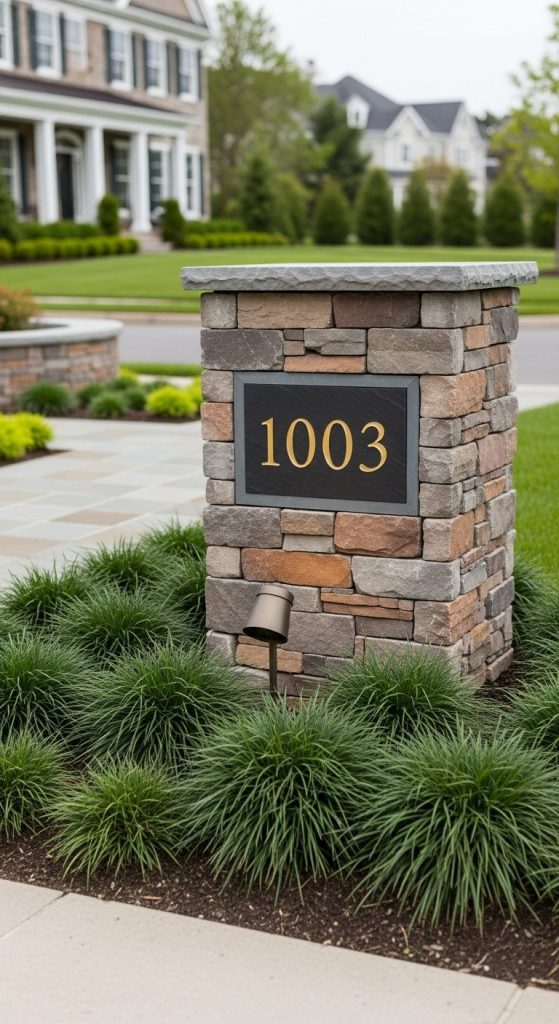
Monument signs sit low and solid, almost like a mini pillar.
Use stone, brick, or concrete blocks with engraved or mounted numbers. Place them near the front entry or driveway edge for a premium look.
Pros:
- Looks upscale and permanent
- Extremely durable
- Great for large properties
Cons:
- Higher cost than basic signs
- Requires proper installation
Mini takeaway: Monument signs feel like a luxury upgrade for your front yard.
3. Minimalist Wall-Mounted Address Panel
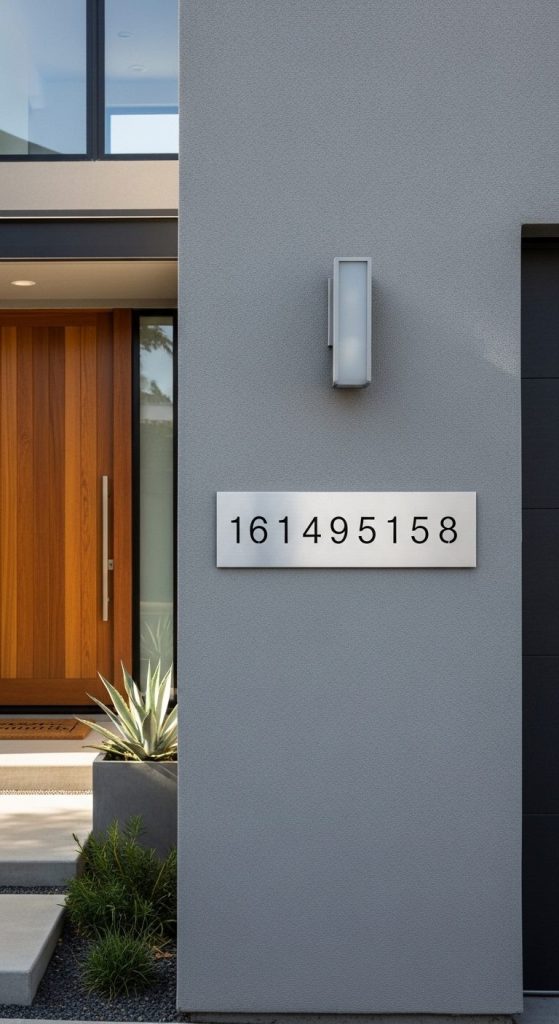
Minimalist homes benefit from clean signage.
Install a slim rectangular panel with metal numbers on your front wall or garage. Choose black, brushed steel, or matte finishes for a modern vibe.
Pros:
- Clean and modern appearance
- Easy to install
- Matches contemporary architecture
Cons:
- Less visible from far distances
- Requires precise alignment
Mini takeaway: Minimalist panels keep the front of your home sleek and uncluttered.
4. Illuminated Address Sign
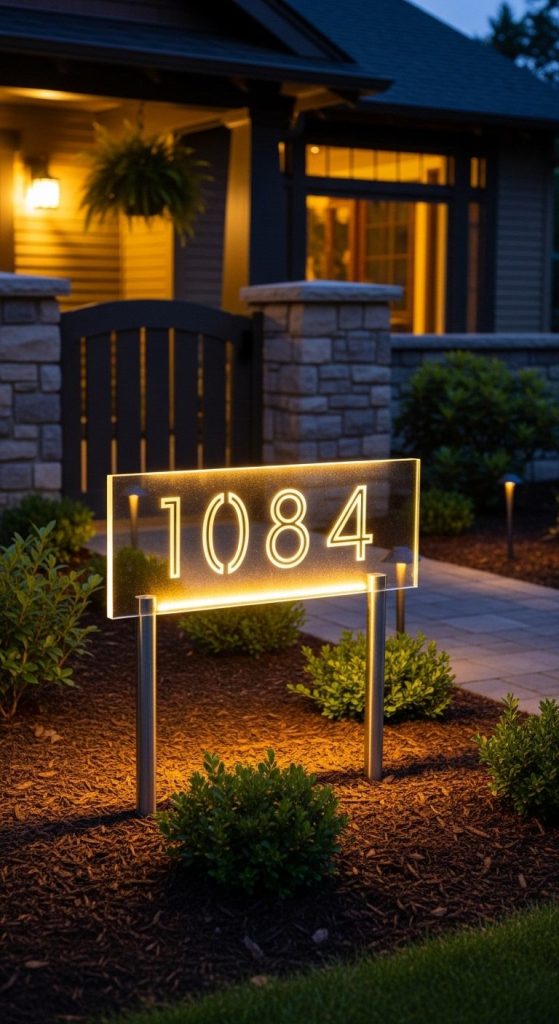
Address signs need to work at night too.
Add backlit numbers, LED panels, or solar-lit address boards. Position them where headlights or porch lights highlight them.
Pros:
- Easy to see in low light
- Improves safety and deliveries
- Energy-efficient solar options exist
Cons:
- Higher upfront cost
- Requires wiring or battery changes
Mini takeaway: Lighting turns your address sign into a functional nighttime feature.
5. Rustic Wooden Plank Address Sign
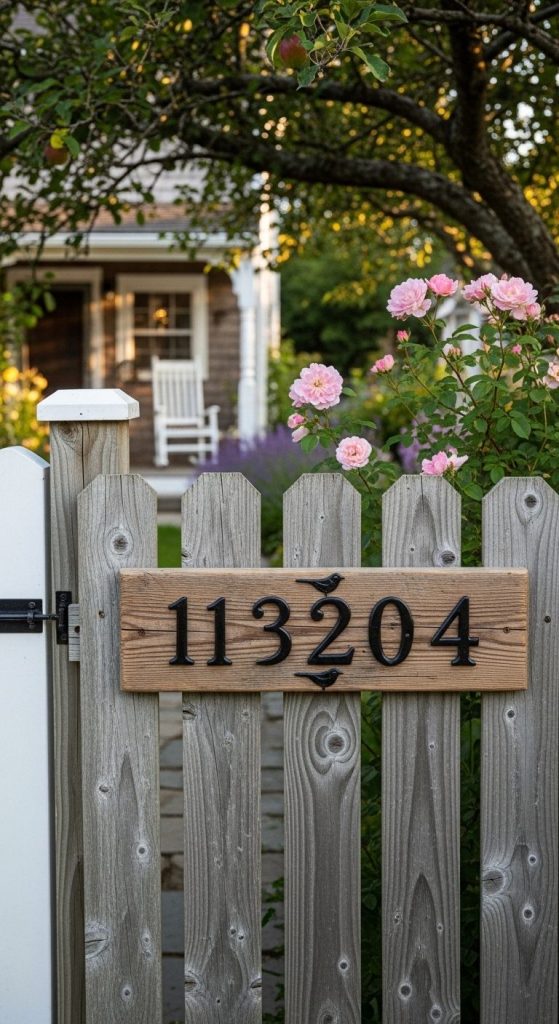
Rustic homes deserve warm, natural materials.
Use a stained wooden plank with carved or metal numbers. Mount it on a post or attach it to a fence or porch column.
Pros:
- Adds farmhouse or cottage charm
- Easy DIY project
- Budget-friendly
Cons:
- Requires sealing and maintenance
- Wood can weather over time
Mini takeaway: Wood signs bring warmth and personality to your front yard.
6. Metal Cut-Out Address Sign
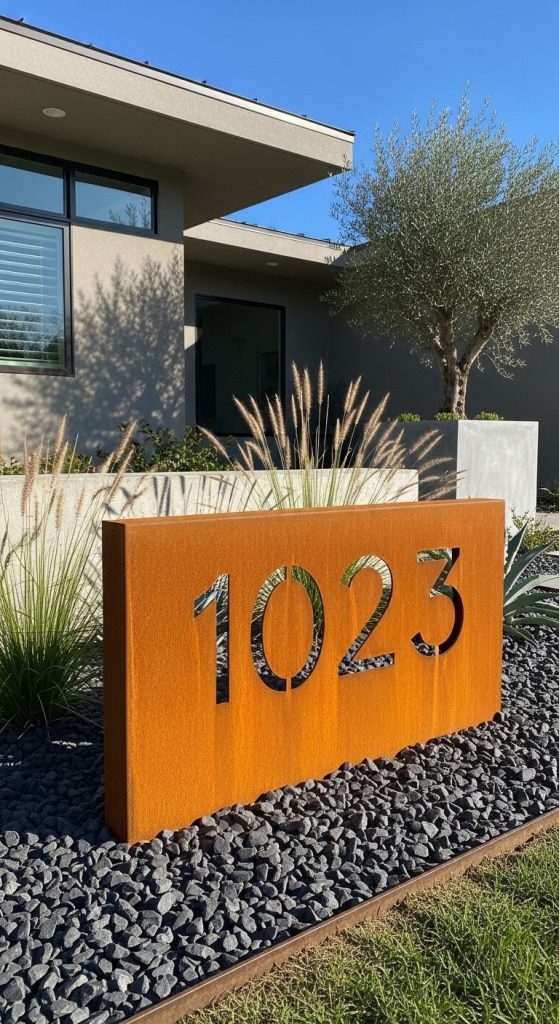
Metal cut-out signs look bold and custom.
Use laser-cut steel or aluminum numbers or panels. Mount them against a contrasting background for maximum visibility.
Pros:
- Durable and weather-resistant
- Sharp, modern look
- Easy to read
Cons:
- Costs more than vinyl numbers
- Requires secure mounting
Mini takeaway: Metal cut-outs give your address a custom, high-end feel.
7. Floating House Number Mounting
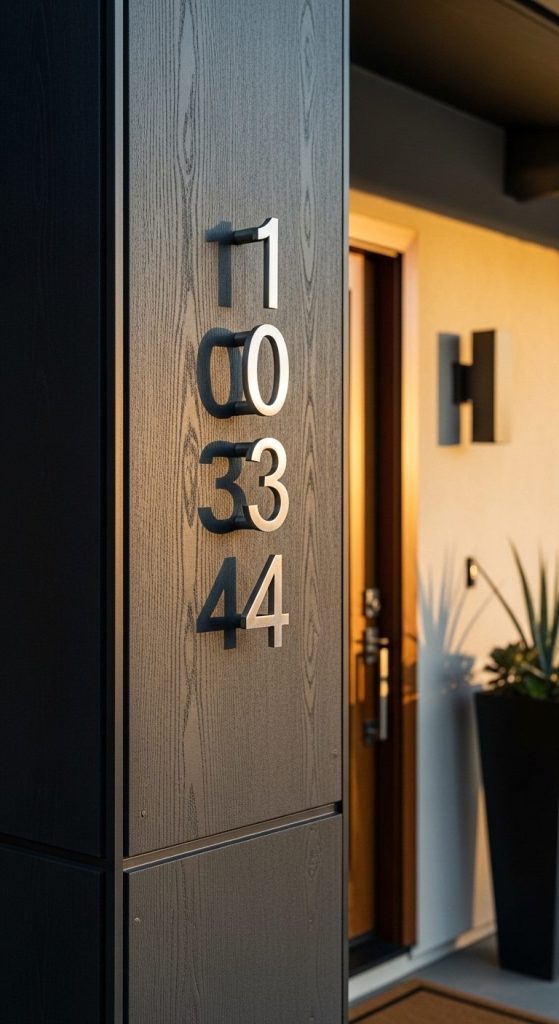
Floating numbers create depth and shadow.
Use spacers to mount numbers slightly away from the wall or sign panel. This creates a floating effect that looks modern and architectural.
Pros:
- Adds dimension and style
- Enhances shadows and contrast
- Easy to install with hardware kits
Cons:
- Needs precise drilling
- Small numbers may lose visibility
Mini takeaway: Floating numbers add subtle design detail without clutter.
8. Double-Sided Address Sign for Corner Lots
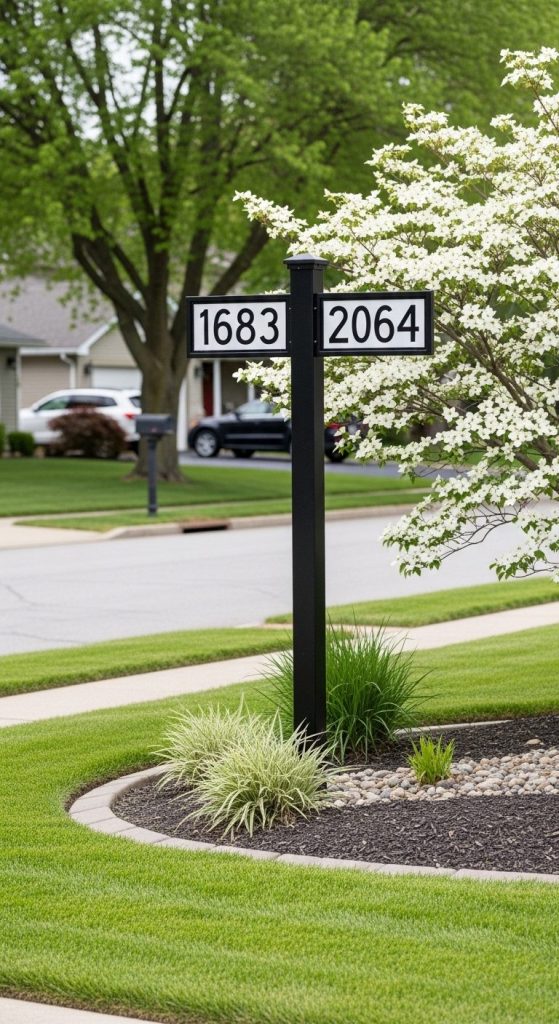
Corner lots need visibility from multiple directions.
Install a double-sided sign on a post or pillar so drivers from both streets can see the address clearly.
Pros:
- Improves visibility from all angles
- Practical for corner properties
- Looks intentional and professional
Cons:
- Requires sturdier post
- Slightly higher material cost
Mini takeaway: Double-sided signs solve visibility problems elegantly.
9. Modern House Number Totem
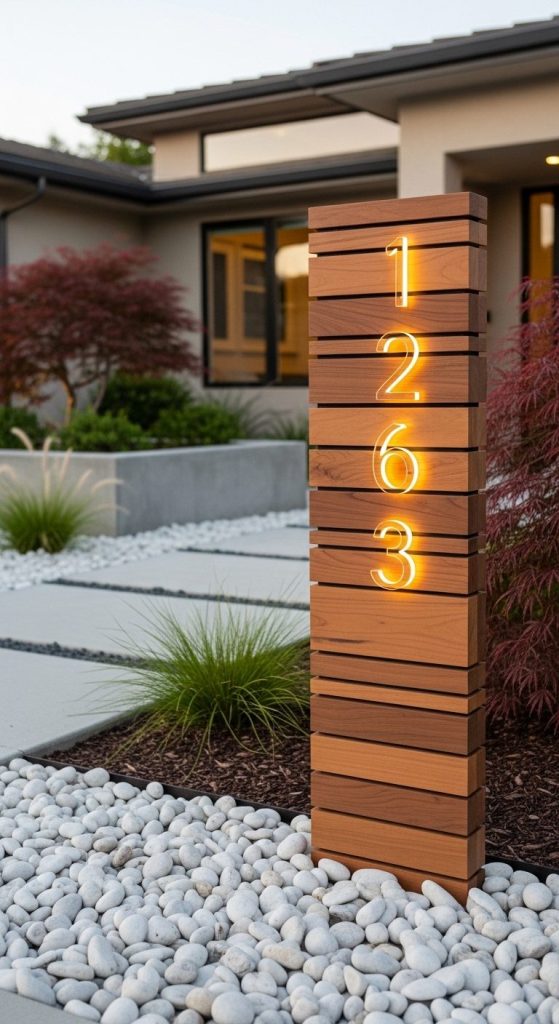
Totem-style signs stack numbers vertically on a tall, narrow panel.
Use wood, metal, or composite panels with large modern fonts. Place the totem near the driveway or walkway.
Pros:
- Architectural and trendy
- Easy to read from a distance
- Acts as a design feature
Cons:
- Needs solid anchoring
- Might not suit traditional homes
Mini takeaway: Totem signs double as art and address markers.
10. Stone Engraved Address Marker
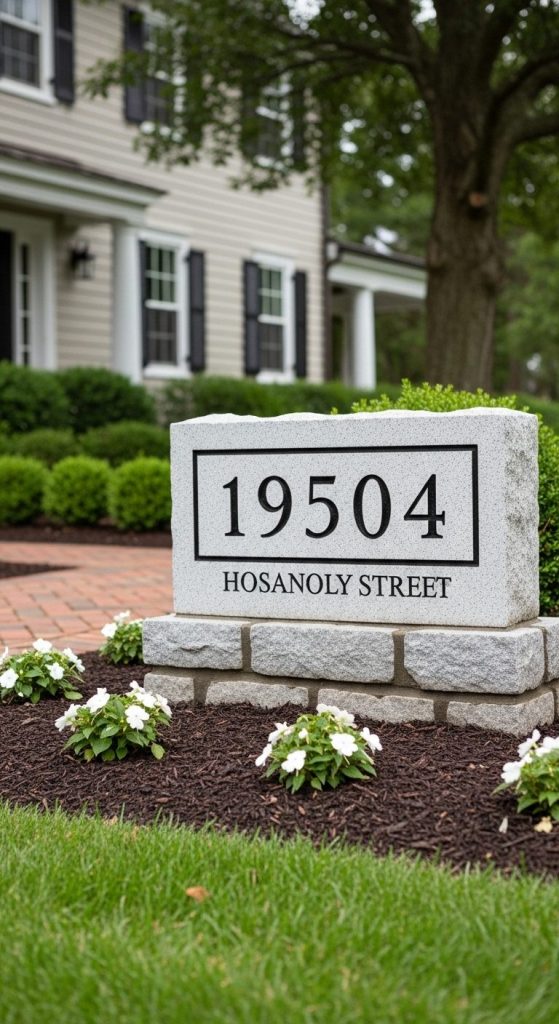
Engraved stone feels timeless.
Use granite, slate, or cast stone with engraved house numbers. Place it in a landscaped bed or near the entry path.
Pros:
- Extremely durable
- Elegant and timeless look
- Minimal maintenance
Cons:
- Higher cost
- Heavy to install
Mini takeaway: Engraved stone signs feel permanent and classic.
11. Reflective Address Sign for Visibility
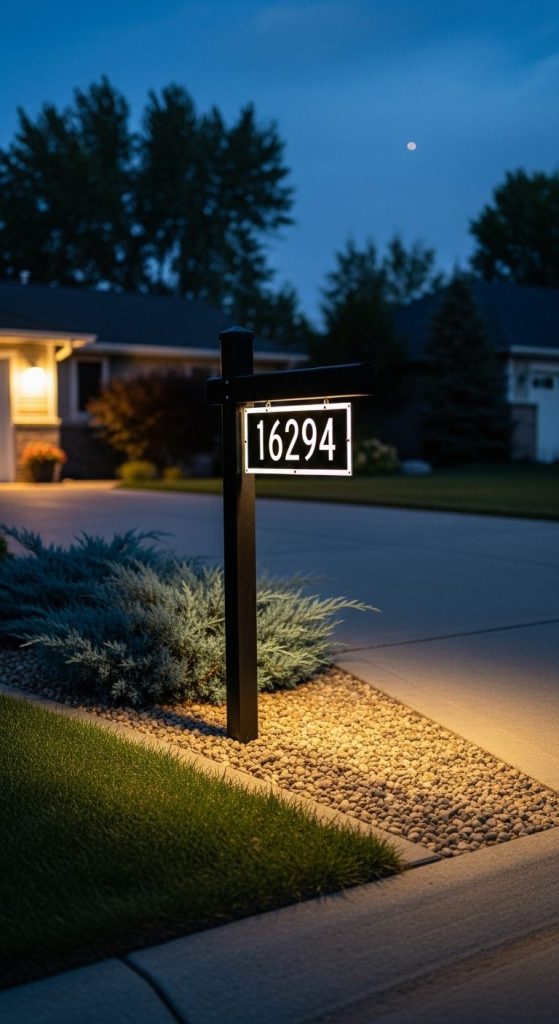
Reflective numbers improve safety and readability.
Use reflective vinyl or metal numbers that catch headlights. This helps emergency services and deliveries find your home quickly.
Pros:
- Highly visible at night
- Improves safety
- Affordable upgrade
Cons:
- Less decorative
- Limited style options
Mini takeaway: Reflective numbers prioritize function without losing clarity.
12. Large Scale House Number Display
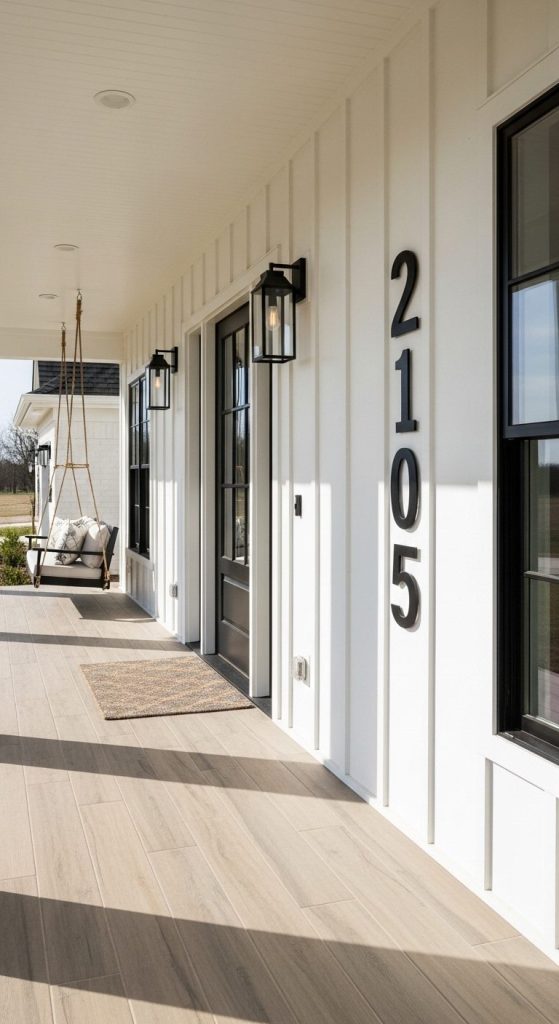
Big numbers make a statement.
Use oversized digits mounted on the facade, fence, or post. Large fonts help visibility from the street and add bold style.
Pros:
- Easy to read from far away
- Strong design statement
- Works for modern homes
Cons:
- Can overpower small facades
- Needs precise alignment
Mini takeaway: Oversized numbers combine function and bold style.
13. Mixed Material Address Sign
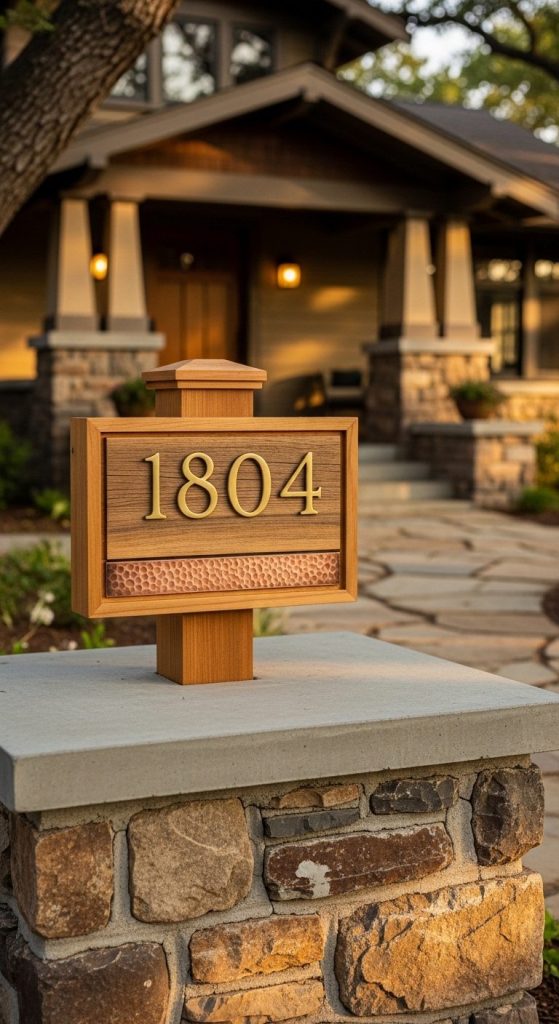
Mixing materials adds texture and interest.
Combine wood with metal numbers, stone with acrylic panels, or steel with concrete bases. Keep the design balanced and clean.
Pros:
- Adds visual depth
- Custom look without custom pricing
- Works with many home styles
Cons:
- Requires careful design planning
- Slightly more complex installation
Mini takeaway: Mixed materials create a designer look with simple elements.
14. Landscape-Integrated Address Sign
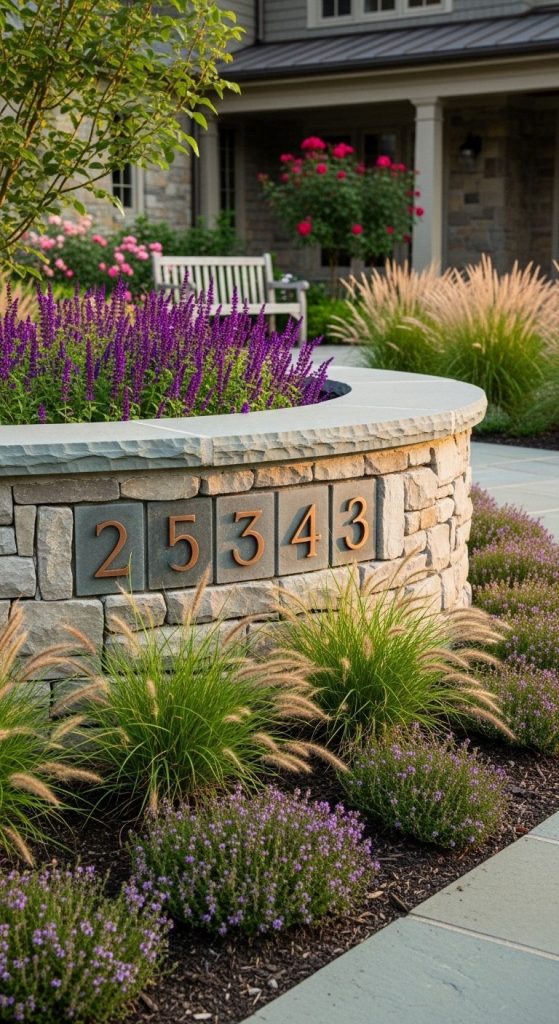
Integrate the sign into your landscaping.
Mount the address on a low wall, planter edge, or embedded in a garden pillar. Keep it visible but naturally blended into the yard design.
Pros:
- Feels cohesive with landscaping
- Adds a built-in look
- Great for curated yards
Cons:
- Requires landscaping planning
- Less flexible to move
Mini takeaway: Landscape-integrated signs feel custom and intentional.
15. Modern Font and Typography Focus
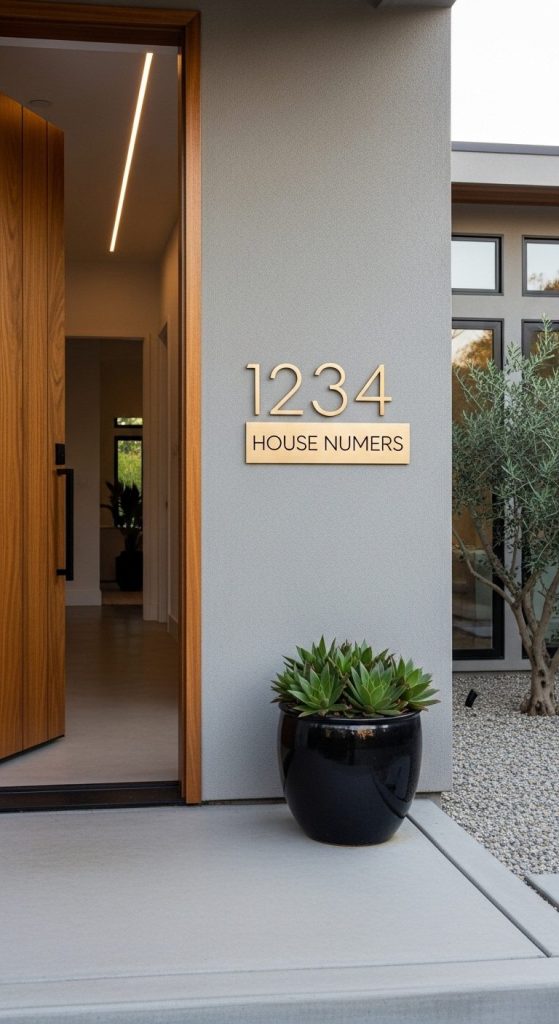
Typography changes everything.
Choose clean sans-serif fonts for modern homes or classic serif fonts for traditional styles. Avoid overly decorative fonts that hurt readability. The U.S. Postal Service and many municipalities recommend numbers at least 4 inches tall for visibility from the street.
Pros:
- Improves readability
- Sets the tone of your home style
- Easy to change without rebuilding the sign
Cons:
- Limited font options in physical materials
- Some fonts cost more to custom-cut
Mini takeaway: Typography influences style and visibility more than you think.
Conclusion
A front yard address sign might seem like a small detail, but it plays a huge role in curb appeal and functionality. It helps guests, delivery drivers, and emergency services find your home quickly, and it adds a subtle layer of personality to your exterior design.
I love how address signs blend function and style. A vertical post feels modern and bold. A stone marker feels timeless and grounded. Illuminated numbers feel practical and sleek. Even simple floating numbers can make a house look thoughtfully designed.
Try one upgrade first. Maybe swap basic numbers for larger digits or add lighting. Then build toward a custom sign that matches your home’s personality. Your front yard will feel finished, intentional, and surprisingly stylish with just this one detail.

William Martin is a passionate bowler who spends most of his weekends playing the sport. With years of intense experience under his belt, William decided to share his knowledge by creating BOWLING OCEAN. Join me on this journey to explore the world of bowling and discover the tips and tricks to becoming a pro.