15 Front Yard Brick Landscaping Ideas for Stunning Curb Appeal
A few summers ago, I noticed something interesting while walking through a quiet neighborhood. The houses that made me slow down weren’t always the biggest or the newest. They were the ones with beautifully designed brick landscapes in the front yard. Something about brick feels timeless. It’s warm, structured, and instantly makes a home look established.
That’s probably why front yard brick landscaping keeps trending year after year. Unlike many outdoor trends that fade quickly, brick brings durability and character at the same time. It also works with almost any home style—from classic colonial houses to modern minimalist builds.
Another reason people love brick? It’s practical and achievable. You don’t need a huge budget or professional landscape crew to start. Many homeowners tackle small sections themselves over a weekend and slowly expand the design.
Honestly, once you start noticing brick landscaping, you’ll see it everywhere—walkways, borders, terraces, even subtle elevation changes that make a yard look professionally designed.
If you’re thinking about upgrading your outdoor space, these ideas show exactly how brick can transform a front yard into something structured, welcoming, and surprisingly stylish.
1. Classic Brick Walkway From Sidewalk to Porch
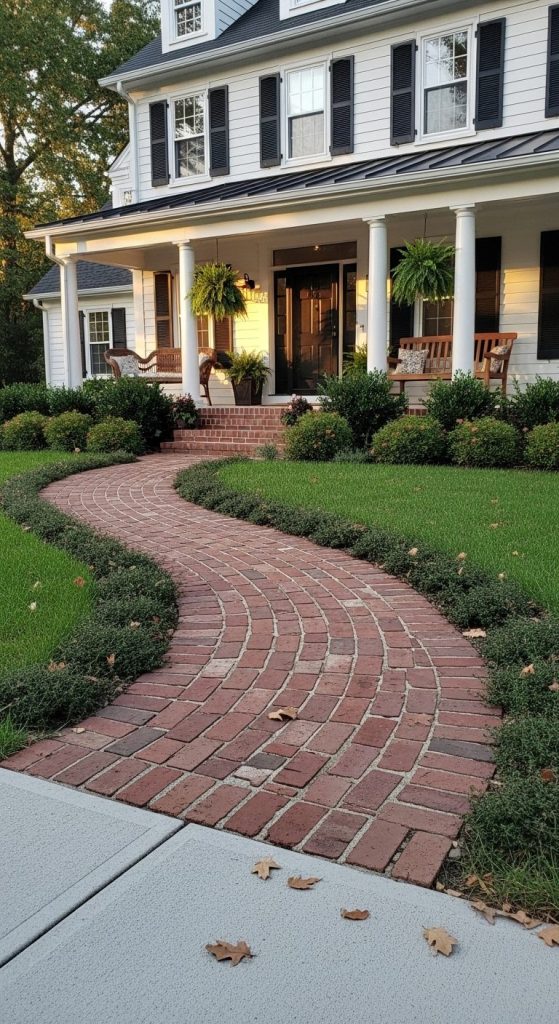
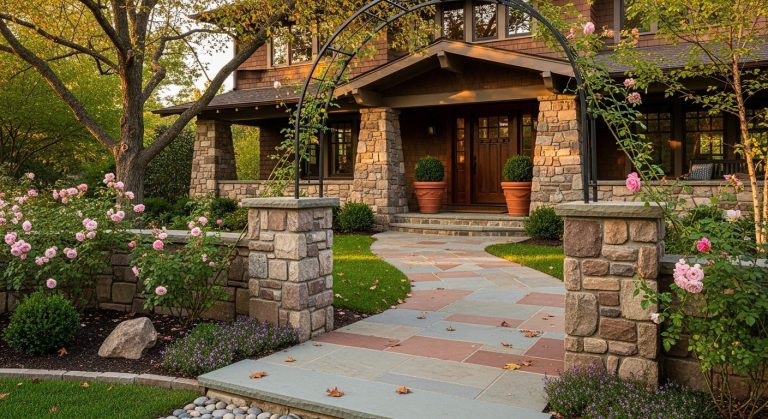
A brick walkway remains one of the most loved upgrades in front yard brick landscaping, and honestly, it makes sense. The moment someone approaches your home, the path they walk on sets the tone.
Instead of a plain concrete strip, a gently curved brick pathway leading to the porch adds character and warmth. The pattern alone can make a huge difference. Running bond patterns look traditional, while herringbone patterns instantly feel upscale.
Brick walkways also age beautifully. Over time, the bricks develop slight color variations that add charm instead of looking worn out.
Homeowners often line the walkway with grass edges or low groundcover plants to soften the look. That small detail creates a natural transition between hardscape and greenery.
According to the National Association of Realtors, outdoor hardscape upgrades like walkways can improve perceived home value and curb appeal significantly.
Pros
- Creates a welcoming entrance to the home
- Extremely durable compared to poured concrete
- Easy to repair by replacing individual bricks
- Adds traditional charm to most house styles
Cons
- Requires proper base preparation to prevent shifting
- Installation takes time if done DIY
Mini takeaway
A brick walkway feels like a small change, but it completely reshapes the first impression of your home.
2. Raised Brick Planting Beds
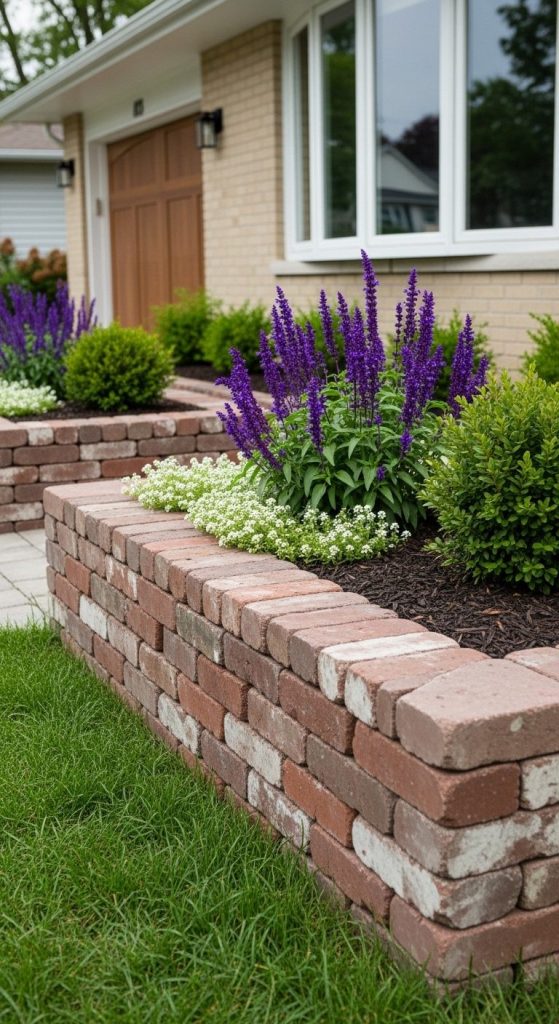
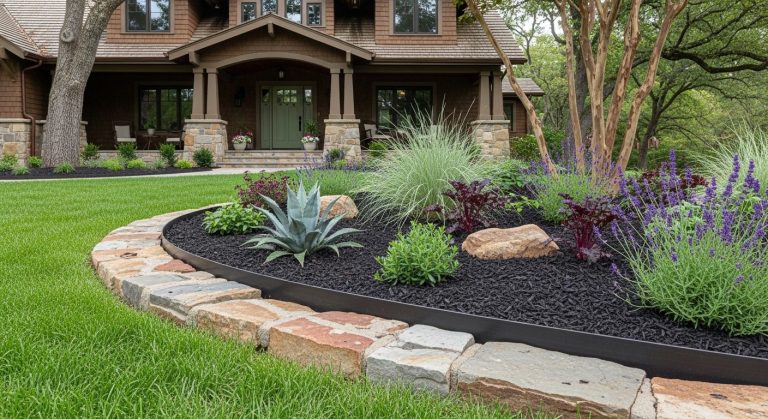
Flat yards sometimes look unfinished. One clever solution in front yard brick landscaping is creating raised brick planting beds.
Instead of planting flowers directly in the ground, bricks form structured borders that elevate soil slightly above the lawn level. The result looks organized and intentional.
Raised beds also make gardening easier. Plants receive better drainage, and soil quality becomes easier to control.
Many homeowners use red clay bricks for a classic garden feel, while darker bricks match modern homes beautifully. FYI, adding a slightly wider top row creates a ledge that doubles as casual seating.
The visual difference can be dramatic. Suddenly, plants look framed instead of scattered.
Pros
- Improves drainage for plants
- Keeps flower beds tidy and defined
- Makes yard maintenance easier
- Adds layered visual depth
Cons
- Requires extra soil to fill raised space
- Slightly higher initial material cost
Mini takeaway
Raised brick beds give plants a stage to shine instead of letting them blend into the yard.
3. Herringbone Brick Driveway Apron
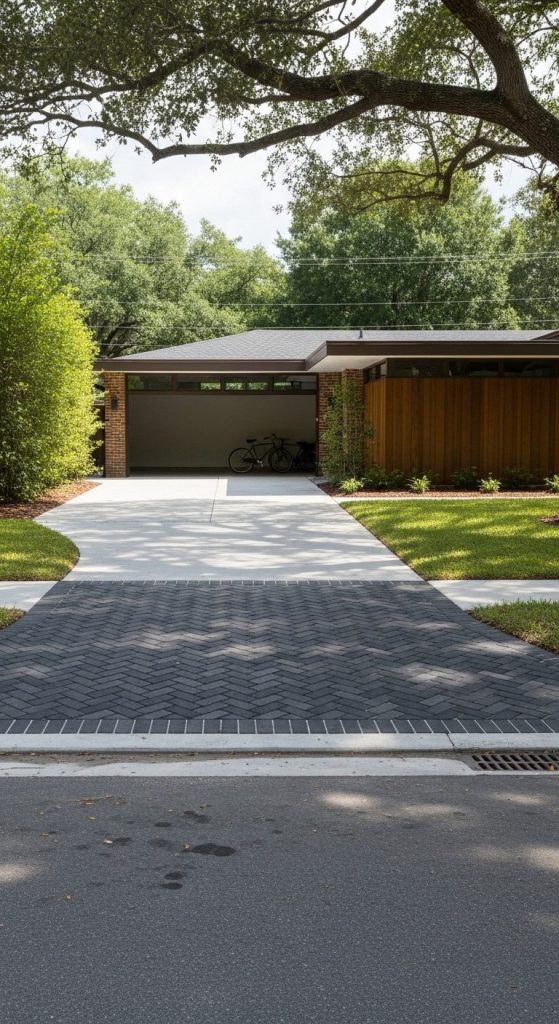
Driveway aprons often get ignored, yet they sit right at the front of the property. Replacing the plain section between the driveway and street with herringbone brick paving instantly upgrades the look.
The herringbone pattern doesn’t just look elegant—it also distributes weight efficiently. That’s why many historic streets still use it.
This design works particularly well when paired with concrete driveways. The brick section acts as a visual transition, almost like a decorative entry gate for cars.
Many homeowners choose darker bricks here because they hide tire marks better.
Interestingly, landscaping surveys from the American Society of Landscape Architects consistently rank decorative paving as one of the most requested outdoor upgrades.
Pros
- Extremely durable pattern for vehicle traffic
- Adds architectural interest to the driveway
- Creates a strong visual focal point
Cons
- Requires professional-level base preparation
- Slightly higher installation cost
Mini takeaway
A brick driveway apron quietly elevates the entire front yard without redesigning everything.
4. Brick Edging for Lawn Borders
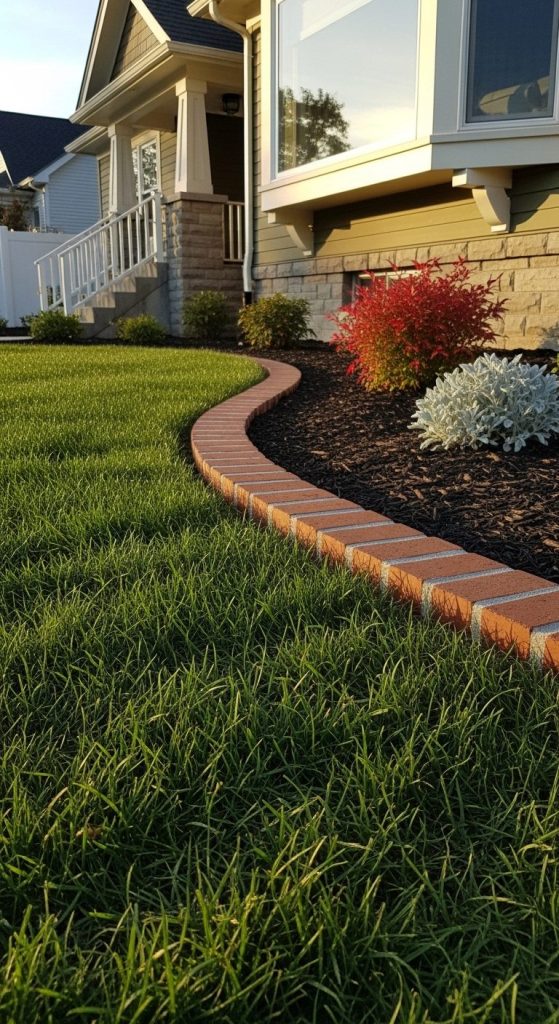
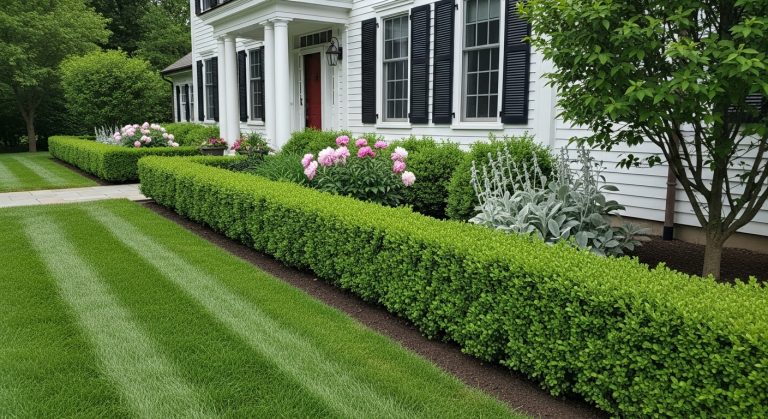
Sometimes the smallest details create the cleanest landscapes. Brick edging offers a simple but powerful tool in front yard brick landscaping.
Instead of metal or plastic borders, bricks form a crisp separation between lawn and garden beds.
They can sit flat in the ground or stand vertically for a slightly raised edge. Vertical edging looks especially sharp along curved garden beds.
The real benefit? Lawn maintenance becomes much easier. Mowers can glide along the bricks without chewing up plant areas.
Plus, bricks prevent soil from spilling into the lawn during rainstorms.
Pros
- Keeps lawn and garden areas clearly separated
- Long-lasting and weather resistant
- Simplifies mowing and trimming
Cons
- Requires careful leveling during installation
- Edges may shift slightly if soil settles
Mini takeaway
Brick edging feels subtle, but it instantly makes the yard look more structured and polished.
5. Circular Brick Tree Surround
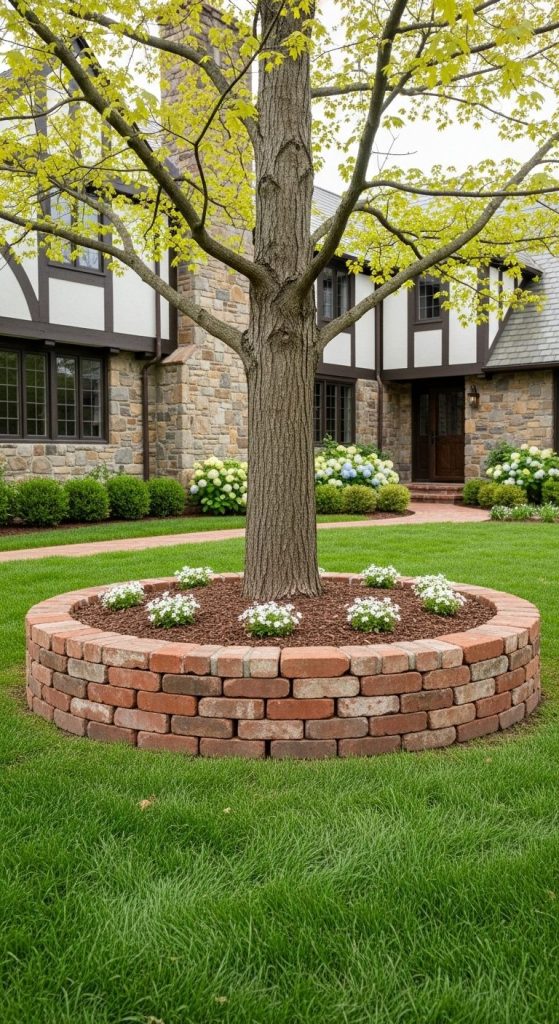
Trees often look lonely sitting in the middle of grass. A circular brick surround solves that problem beautifully.
Bricks form a neat ring around the tree base, creating a designated planting area for mulch or small flowers.
This approach also protects the tree from lawn mower damage—a surprisingly common issue in residential yards.
Many homeowners stack bricks slightly higher to create a low retaining ring. That small elevation makes the tree feel like a focal point rather than an afterthought.
Landscape designers frequently recommend tree surrounds because they protect root zones while improving visual balance.
Pros
- Protects tree trunks from mower damage
- Adds a focal point in the lawn
- Creates space for mulch or flowers
Cons
- Needs occasional adjustment as roots grow
- Must avoid covering tree root flare
Mini takeaway
A brick tree surround turns an ordinary tree into a designed landscape feature.
6. Brick Courtyard Entry Area
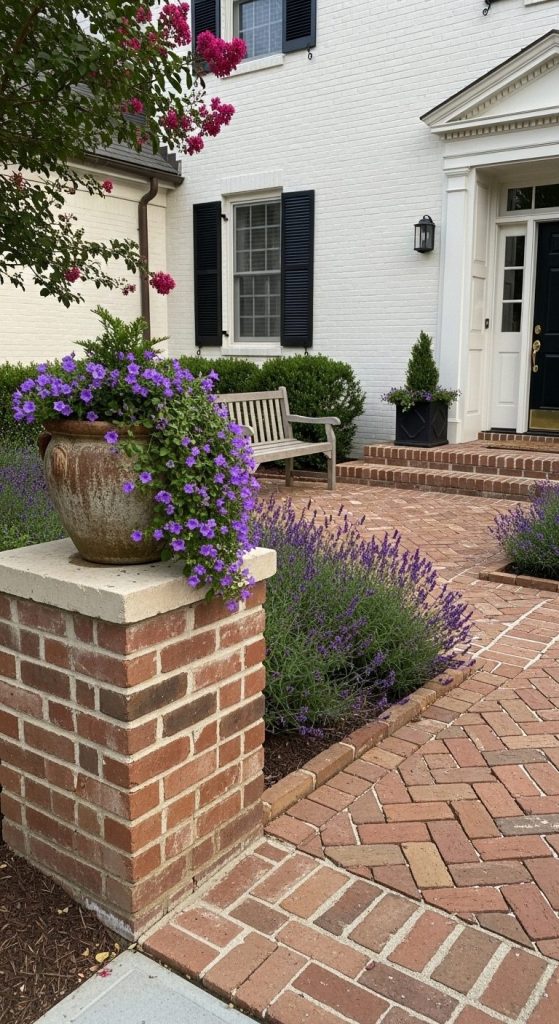
Some homes benefit from a small courtyard space at the front entrance. Brick paving works perfectly for this.
Instead of grass leading straight to the door, the front yard includes a small open patio framed by landscaping.
This setup creates a welcoming transition between public street space and private home space.
Guests can pause, drop packages, or simply admire the landscaping before entering.
Designers often mix brick with gravel accents to create subtle texture differences.
Pros
- Creates an inviting entrance zone
- Works well with traditional architecture
- Durable surface for foot traffic
Cons
- Requires careful drainage planning
- Needs occasional sweeping to stay tidy
Mini takeaway
A brick courtyard transforms the entry into a destination rather than just a doorway.
7. Brick Retaining Terrace for Sloped Yards
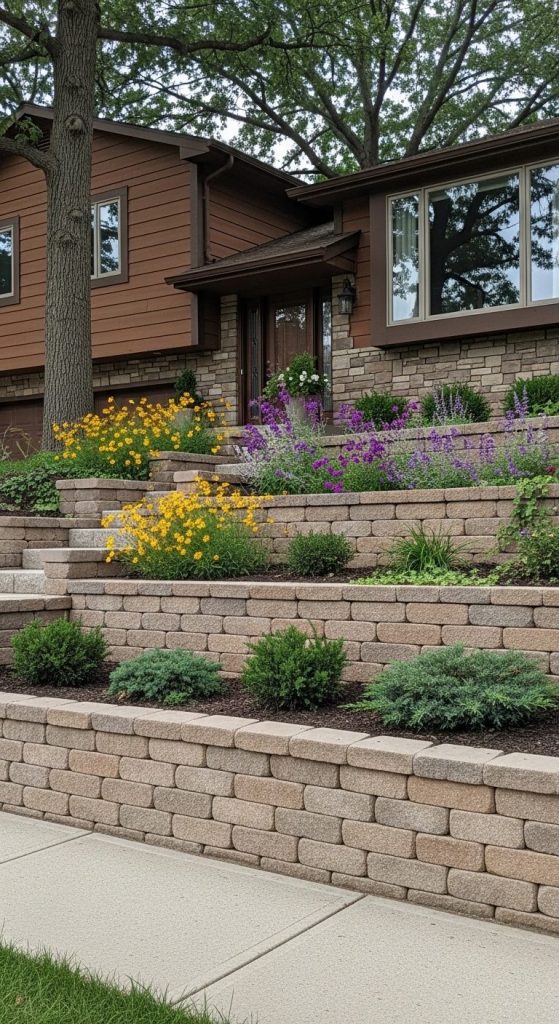
Sloped front yards frustrate many homeowners. Grass struggles to grow evenly, and mowing becomes awkward.
Brick retaining terraces solve that issue while enhancing front yard brick landscaping.
Low brick walls divide the slope into stepped planting levels. Each terrace holds soil in place while showcasing different plants.
This layered effect makes the yard feel larger and more organized.
Landscape engineers often use retaining structures like these to prevent soil erosion on residential slopes.
Pros
- Stabilizes soil on slopes
- Creates multiple planting zones
- Adds dramatic visual structure
Cons
- Requires solid foundation work
- More labor intensive than flat landscaping
Mini takeaway
Terraced brick walls transform difficult slopes into beautiful layered gardens.
8. Brick Mailbox Base
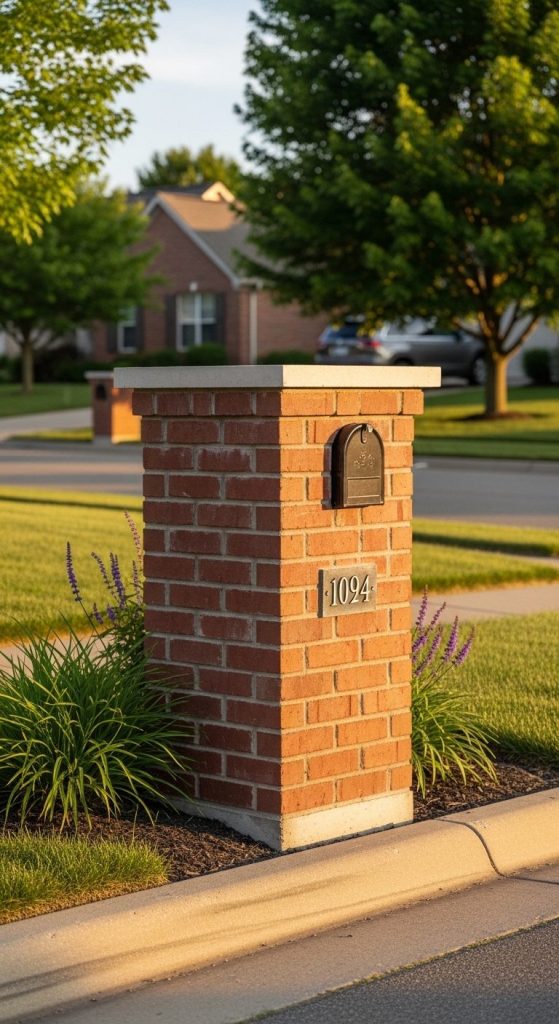
Most mailboxes stand on plain wooden posts. Building a brick base around the mailbox upgrades the look immediately.
The structure typically includes stacked bricks forming a square column or pedestal.
Homeowners often match the brick color to the house exterior for a cohesive design.
This small upgrade works surprisingly well because the mailbox sits right at the curb—one of the most visible spots on the property.
Pros
- Adds durability compared to wood posts
- Enhances curb appeal at street level
- Requires minimal materials
Cons
- Needs proper footing for stability
- Bricklaying skills required for clean look
Mini takeaway
A brick mailbox base proves small details can carry a lot of visual impact.
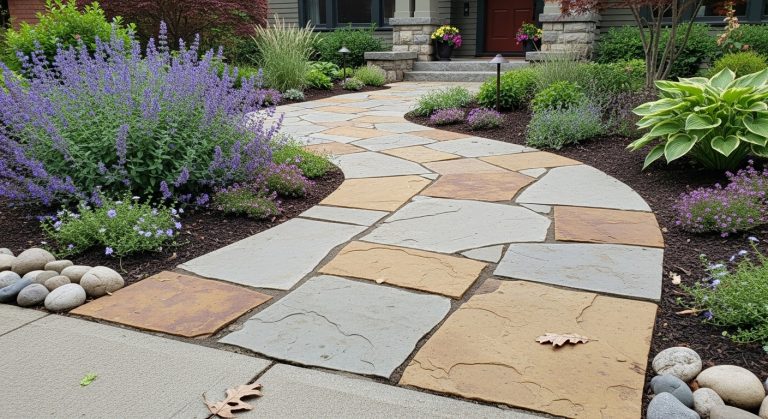
9. Brick Stepping Path Through the Lawn
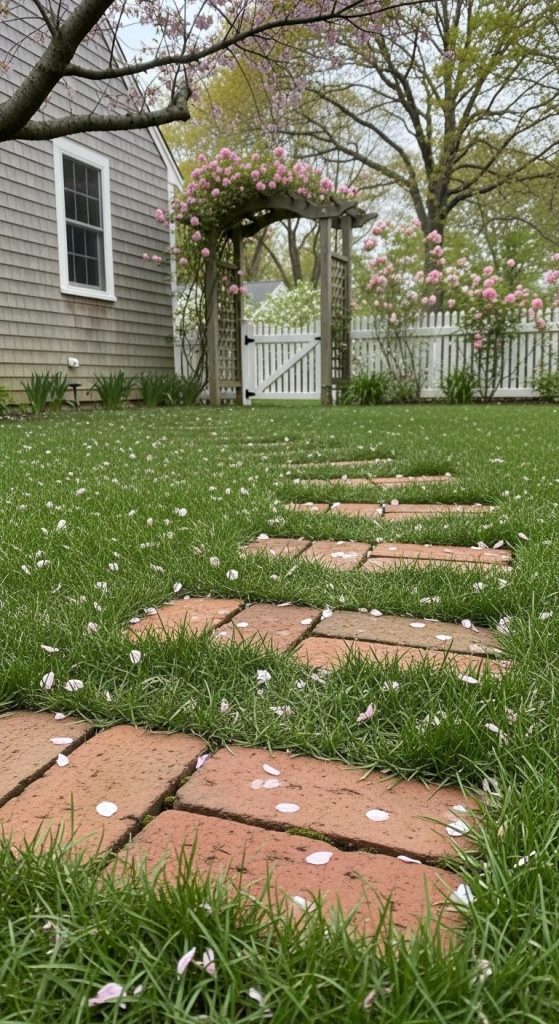
Some yards benefit from a stepping path instead of a full walkway.
Individual bricks sit spaced slightly apart across the grass, guiding movement without covering too much lawn.
This style feels relaxed and natural while still structured.
It works well for secondary paths leading toward side gates or garden areas.
Spacing the bricks evenly ensures comfortable walking while maintaining visual rhythm.
Pros
- Uses fewer materials than full pathways
- Maintains more green lawn space
- Simple DIY installation
Cons
- Grass requires trimming around bricks
- Not ideal for heavy foot traffic
Mini takeaway
Brick stepping paths create gentle structure without dominating the yard.
10. Brick Fire Pit Feature in the Front Yard
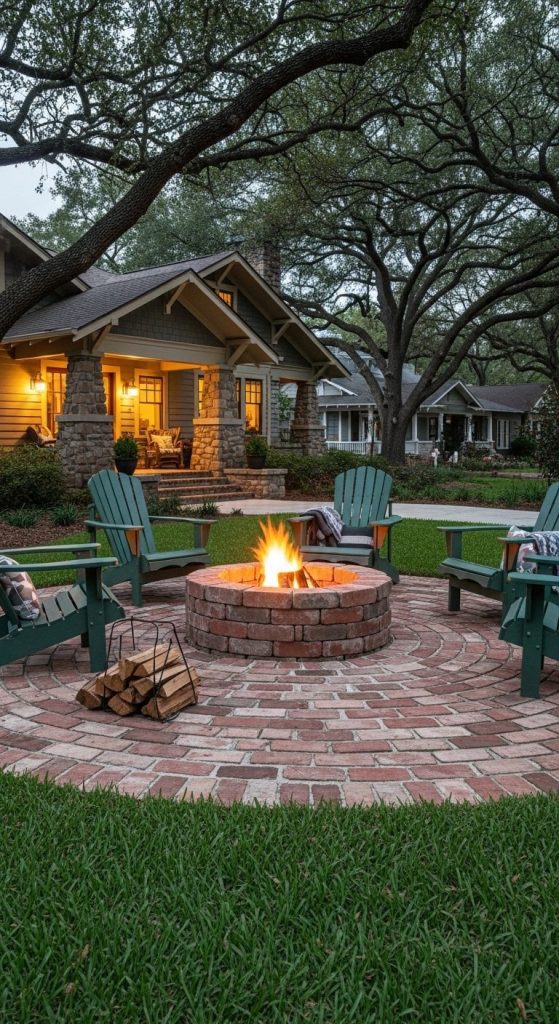
In neighborhoods where front yards function as social spaces, a brick fire pit area adds warmth and gathering potential.
The fire pit sits in a small circular brick patio area with seating around it.
While fire pits often appear in backyards, front yard versions create community interaction—neighbors naturally stop to chat.
Outdoor living research from Houzz landscaping reports shows rising demand for fire features in residential landscapes.
Pros
- Encourages outdoor socializing
- Durable heat-resistant material
- Creates cozy gathering spot
Cons
- Requires local fire safety compliance
- Needs clearance from structures
Mini takeaway
A brick fire pit can quietly turn a front yard into a neighborhood conversation hub.
11. Brick Border Along the Driveway Edge
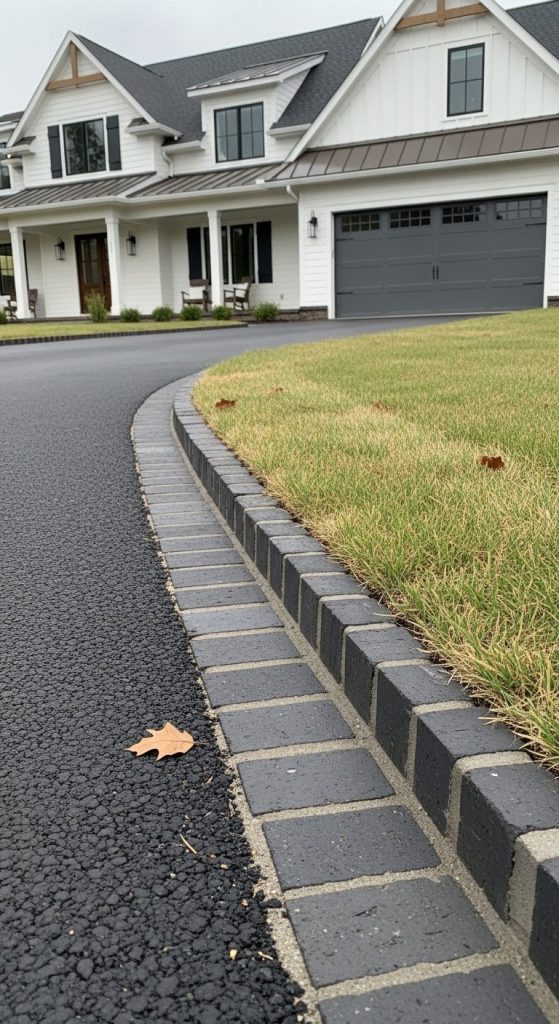
Driveways often blend awkwardly into the lawn. Installing a brick border along both edges sharpens the entire look.
The bricks create a visual frame that separates driveway pavement from grass.
This design works especially well with asphalt driveways, where the brick contrast stands out nicely.
It also prevents lawn edges from crumbling into the driveway over time.
Pros
- Defines driveway boundaries clearly
- Prevents edge deterioration
- Adds subtle architectural detail
Cons
- Requires digging a narrow trench
- Must be leveled carefully
Mini takeaway
Brick driveway borders deliver clean lines that make the whole yard feel more intentional.
12. Brick Seating Wall Near the Entrance
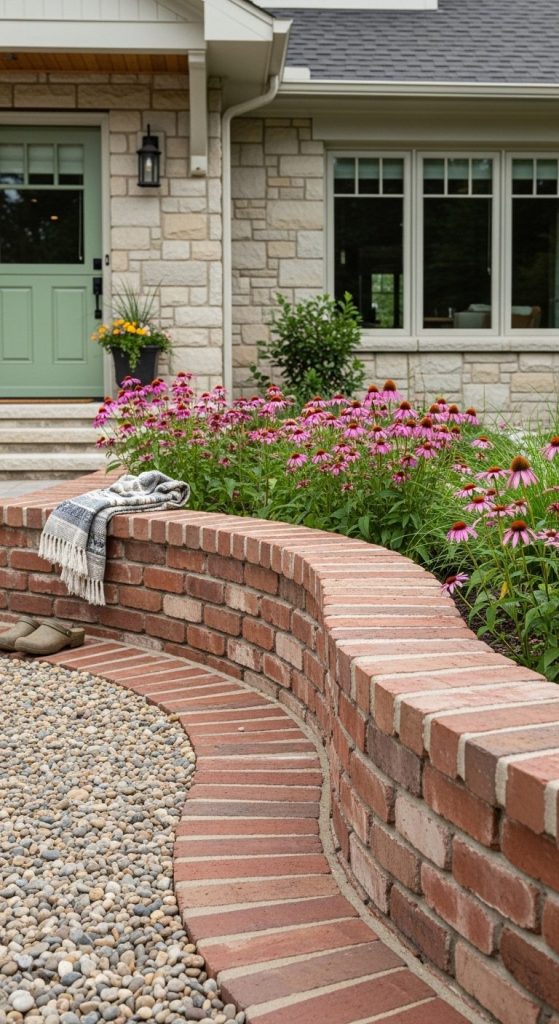
A low brick seating wall near the front entry offers both structure and function.
These walls typically stand about 18 inches high—perfect for casual seating.
They often wrap around planting beds or frame small patio areas.
Architectural guidelines from landscape design schools recommend seating walls because they blend utility with hardscape aesthetics.
Pros
- Provides practical outdoor seating
- Defines outdoor spaces clearly
- Durable for long-term use
Cons
- Requires stable foundation
- Higher material quantity
Mini takeaway
A seating wall gives the yard both purpose and architectural presence.
13. Brick Spiral Herb Bed
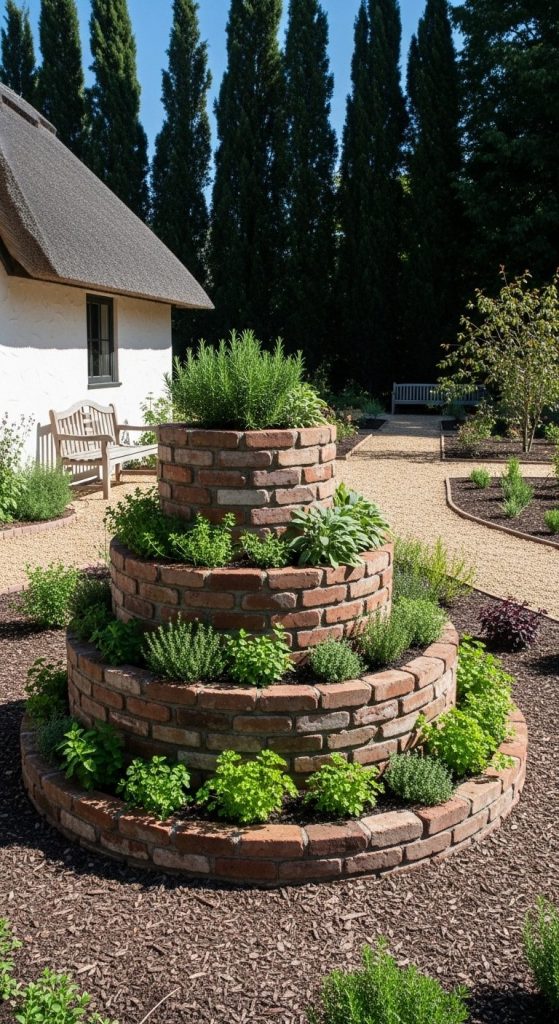
For homeowners who enjoy gardening, a brick spiral herb bed introduces a clever design.
Bricks stack in a gentle spiral shape that rises gradually toward the center.
Different herbs grow at different heights depending on sunlight and drainage conditions.
The spiral also creates a sculptural focal point in the yard.
Permaculture gardening guides often highlight spiral beds because they maximize planting space in small areas.
Pros
- Efficient use of small garden space
- Unique visual focal point
- Excellent drainage variations
Cons
- Requires careful layout planning
- Not ideal for very large plants
Mini takeaway
A brick spiral herb bed blends landscaping and edible gardening beautifully.
14. Brick Water Feature Basin
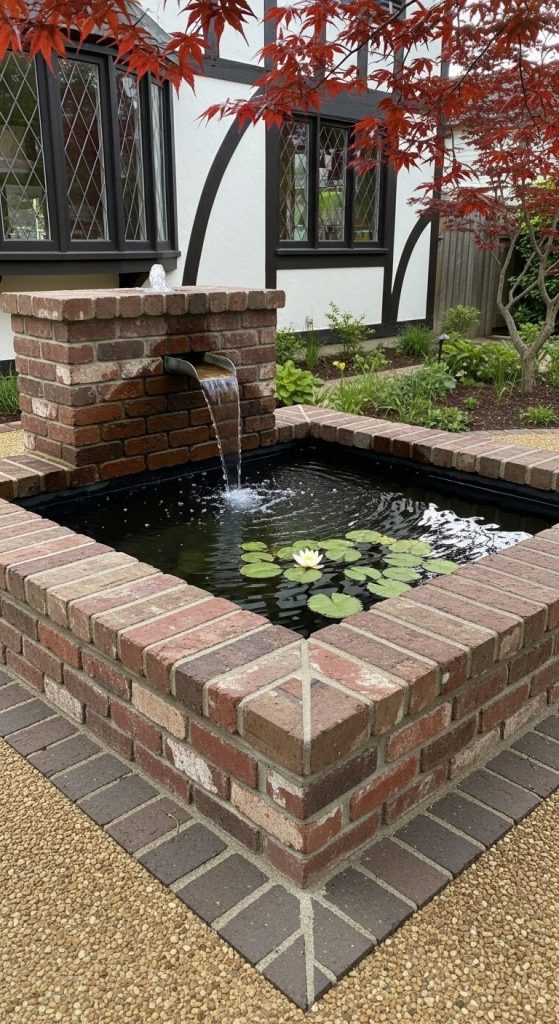
Water features add calm energy to outdoor spaces, and bricks create an ideal frame.
A brick basin fountain can sit near the entry path or within a garden bed.
Water flows gently from a central spout into the brick-lined basin below.
The texture of brick pairs nicely with moving water, creating a balanced natural feel.
Landscape designers often recommend water features because the sound of flowing water reduces perceived street noise.
Pros
- Adds relaxing ambient sound
- Creates a strong focal point
- Works with both classic and modern homes
Cons
- Requires pump maintenance
- Needs electrical access
Mini takeaway
A brick fountain introduces movement and calm to the front yard.
15. Brick Patio Seating Area
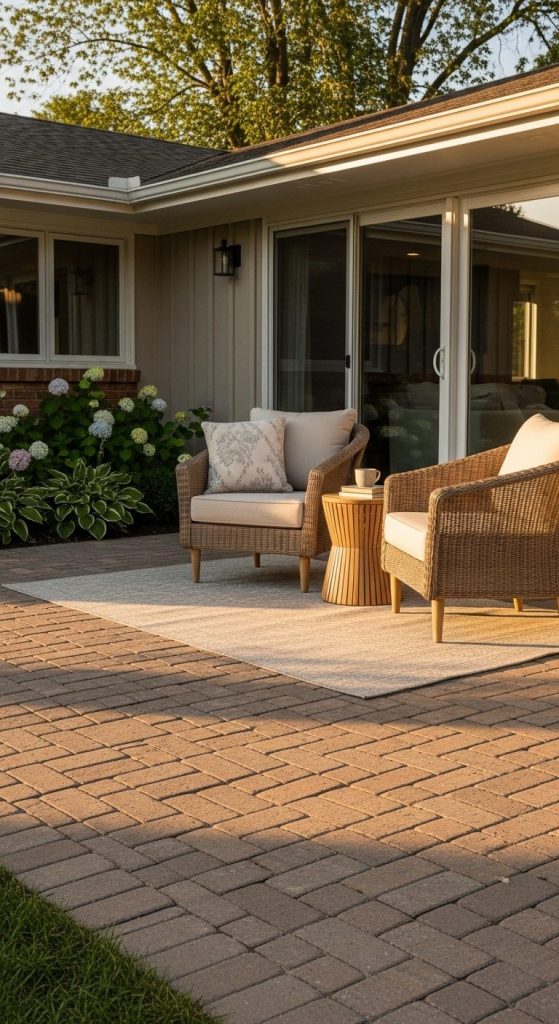
Some homeowners treat their front yard almost like an outdoor living room.
A small brick patio seating area near the house makes that possible.
The patio usually sits off the walkway with space for chairs or a bench.
Brick works especially well here because it stays cool underfoot and holds up to weather changes.
Outdoor living studies show homeowners increasingly prefer multiple small outdoor zones instead of one large backyard patio.
Pros
- Creates a relaxing outdoor sitting area
- Durable for furniture placement
- Adds livable square footage outdoors
Cons
- Requires proper drainage slope
- Takes moderate installation effort
Mini takeaway
A brick patio turns unused front yard space into a peaceful outdoor retreat.
Conclusion
Brick landscaping holds a special place in outdoor design because it balances beauty, durability, and practicality. Unlike trendy materials that come and go, brick keeps working year after year. It weathers gracefully, blends with nature, and fits nearly every home style.
What makes front yard brick landscaping especially appealing is its flexibility. You can start small—maybe a simple walkway or mailbox base—and gradually expand the design. Over time, those pieces connect into a cohesive landscape that feels intentional and welcoming.
Some homeowners prefer structured terraces. Others enjoy soft stepping paths or cozy patio spaces. Honestly, there’s no single right way to use brick. The best approach simply reflects how you want your front yard to function.
And here’s the surprising part: many of these upgrades don’t require massive budgets. With patience and basic planning, even DIY projects can dramatically reshape curb appeal.
If one of these ideas caught your attention, try starting there. Sometimes a single brick pathway or garden border becomes the beginning of an entire outdoor transformation.

William Martin is a passionate bowler who spends most of his weekends playing the sport. With years of intense experience under his belt, William decided to share his knowledge by creating BOWLING OCEAN. Join me on this journey to explore the world of bowling and discover the tips and tricks to becoming a pro.