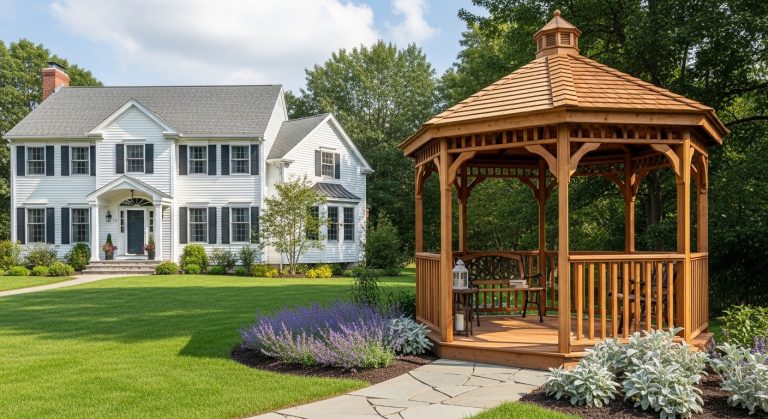
15 Front Yard Curb Appeal Ideas That Transform Your Home
You know that feeling when you walk past a house and immediately think, “Wow, that place looks amazing.” You might not even know exactly why. Maybe the lawn looks crisp, the walkway draws your eye perfectly, or the landscaping feels balanced in a quiet, satisfying way.
That reaction usually comes down to front yard curb appeal.
I started noticing this more when homes in my neighborhood began getting small exterior upgrades. One house added a stone walkway. Another reshaped their planting beds. None of the changes felt massive, but suddenly those homes stood out.
And here’s the interesting part: curb appeal rarely comes from one giant renovation. It usually grows from smart, focused improvements that guide how the eye sees the yard.
A tidy lawn, defined edges, thoughtful pathways, and well-placed landscape elements all work together. Real estate agents even say exterior appearance can strongly influence buyers before they step inside. According to the National Association of Realtors, landscape upgrades can return up to 100% of their cost in perceived home value.
The good news? Most improvements that boost curb appeal remain surprisingly achievable.
These ideas focus on practical, visual upgrades that transform the front of a home into something welcoming and memorable.
1. Defined Lawn Edge Borders

One small upgrade can instantly make a yard look more polished: clean lawn edging.
Grass naturally spreads into garden beds, sidewalks, and driveways. Over time, the yard starts looking messy even if the plants look healthy. Creating defined lawn edges solves that problem immediately.
Homeowners often install metal, stone, or brick edging along planting beds. The edge forms a clear boundary between grass and landscaping. That line helps the entire yard look intentional.
Honestly, the difference surprises people. A yard with sharp edges suddenly looks maintained and structured.
Pros
- Instantly improves visual neatness
- Prevents grass from invading garden beds
- Helps landscaping stand out more clearly
- Low cost compared to larger upgrades
Cons
- Requires periodic trimming maintenance
- Installation takes careful measuring
Mini takeaway
Defined edges give the yard a clean frame. Sometimes the smallest details create the biggest improvement in curb appeal.
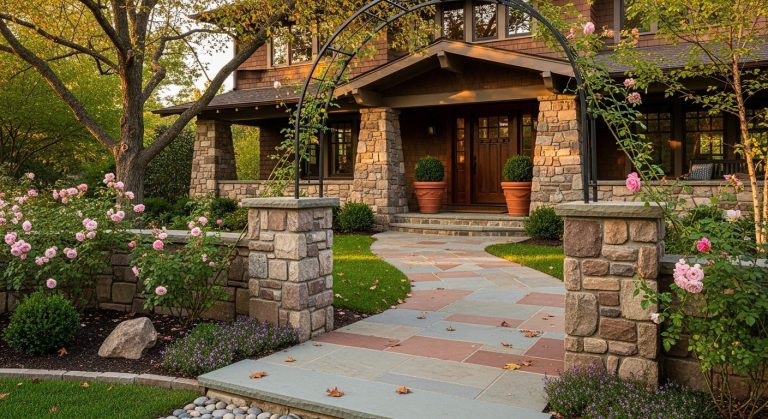
2. Curved Walkway Path Design

Straight sidewalks work fine, but curved walkways create visual movement.
A gentle curve leading from the driveway or street toward the front door makes the yard feel designed rather than purely functional.
Landscape designers often recommend curved paths because they guide the eye naturally through the yard.
According to landscape architecture research, curved lines feel more organic and welcoming than straight lines, which explains why parks and gardens use them frequently.
Pros
- Creates visual flow in the yard
- Makes entry feel inviting
- Works with brick, stone, or pavers
Cons
- Requires more planning during installation
- Curves increase material costs slightly
Mini takeaway
A curved walkway adds personality and guides visitors naturally toward the front entrance.
3. Symmetrical Front Yard Layout

Symmetry creates instant balance.
A symmetrical yard layout places similar landscape elements on both sides of the walkway or house entrance. Matching shrubs, evenly spaced trees, or mirrored planting beds establish harmony.
This design style appears often in classic homes because it feels calm and organized.
FYI, human brains naturally appreciate symmetrical arrangements. They appear orderly and visually satisfying.
Pros
- Creates a polished appearance
- Works with many home styles
- Easy to maintain balance over time
Cons
- Limits creative asymmetrical designs
- Requires careful spacing
Mini takeaway
Symmetry offers one of the easiest ways to achieve a tidy and timeless front yard.
4. Stone Walkway Pavers

Concrete sidewalks work, but stone paver walkways instantly elevate the landscape.
Natural stone, brick pavers, or textured concrete blocks introduce pattern and texture. That texture adds visual interest while guiding visitors toward the entrance.
Many homeowners prefer pavers because they allow flexible layout designs.
According to the National Association of Landscape Professionals, hardscape features like stone pathways rank among the most desired outdoor upgrades.
Pros
- Durable and long lasting
- Adds natural texture to the yard
- Improves walking surface
Cons
- Installation takes time
- Higher cost than poured concrete
Mini takeaway
Paver walkways transform a plain path into a feature that boosts overall curb appeal.
5. Raised Front Garden Beds

Flat yards sometimes feel visually empty.
Adding raised garden beds introduces height variation and structure. The raised edges frame plants beautifully while keeping soil contained.
Wood, stone, or brick borders define the beds clearly.
Raised beds also help control soil quality, which improves plant growth.
Pros
- Adds dimension to the yard
- Improves plant health
- Creates organized landscape zones
Cons
- Requires soil filling and maintenance
- Materials add extra cost
Mini takeaway
Raised beds make landscaping look intentional while improving growing conditions.
6. Layered Planting Design

Many front yards rely on single-height plants, which creates a flat look.
A layered planting layout solves this by combining tall shrubs, mid-height plants, and low ground cover.
The layered effect creates visual depth.
Landscape designers frequently recommend this approach because it mimics natural plant growth patterns.
Pros
- Creates depth and texture
- Makes planting beds look fuller
- Improves seasonal interest
Cons
- Requires planning plant spacing
- Some plants grow slowly
Mini takeaway
Layered planting turns simple landscaping into a richer, more dimensional display.
7. Structured Shrub Rows

Sometimes simple works best.
Neatly trimmed shrub rows along the front of the house create a clean architectural base.
Boxwood and similar shrubs maintain their shape easily, which makes them popular for structured landscapes.
According to horticulture experts, foundation plantings help visually anchor a home to its landscape.
Pros
- Creates clean visual structure
- Easy to maintain with trimming
- Works with most house styles
Cons
- Requires seasonal pruning
- Overgrowth can look messy
Mini takeaway
Structured shrubs frame the home and give the yard a refined appearance.
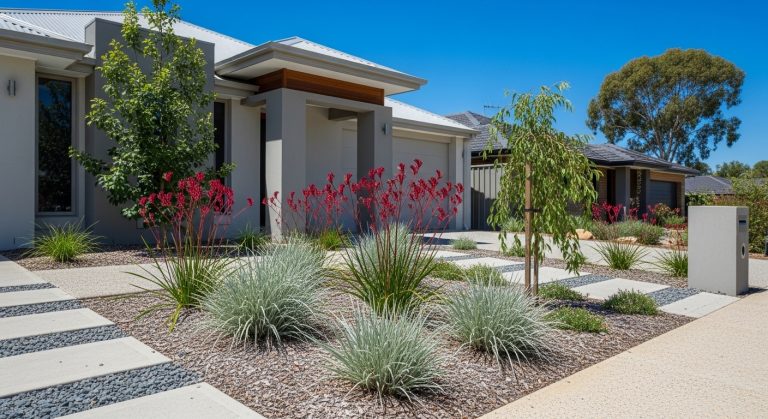
8. Gravel Accent Zones

Gravel landscaping adds texture without heavy maintenance.
Small gravel areas placed around plants or walkways create contrast against green grass.
Gravel also improves drainage, which benefits plant roots.
Many modern landscapes use gravel to reduce lawn maintenance.
Pros
- Low maintenance ground cover
- Helps control weeds
- Adds modern texture
Cons
- Gravel may shift over time
- Requires weed barrier installation
Mini takeaway
Gravel zones introduce contrast while keeping maintenance manageable.
9. Stepping Stone Garden Path

A stepping stone path through the lawn adds charm while protecting grass from foot traffic.
Flat stones placed a few feet apart create a casual walking route across the yard.
This design often appears in cottage-style gardens because it feels relaxed and inviting.
Pros
- Prevents worn grass areas
- Adds character to the yard
- Easy DIY installation
Cons
- Stones must stay level
- Requires spacing adjustments
Mini takeaway
Stepping stones create a welcoming pathway that blends naturally into the landscape.
10. Defined Driveway Borders

Driveways often blend into the lawn without clear boundaries.
Adding brick or stone borders along driveway edges defines the space and improves the overall layout.
The border creates a strong visual line that separates hard surfaces from grass.
Landscape designers often use driveway borders to make the yard look finished.
Pros
- Frames the driveway visually
- Prevents grass intrusion
- Improves driveway appearance
Cons
- Requires digging along edges
- Adds moderate installation effort
Mini takeaway
A defined driveway edge makes the entire yard look more intentional.
11. Terraced Front Yard Landscaping

Sloped yards sometimes feel difficult to manage.
Terracing solves this by dividing the slope into multiple flat planting levels supported by retaining walls.
Each terrace becomes its own small landscape zone.
Terraced landscaping also helps prevent soil erosion.
Pros
- Stabilizes sloped yards
- Adds dramatic visual structure
- Expands planting space
Cons
- Requires significant labor
- Retaining wall materials increase cost
Mini takeaway
Terraces turn challenging slopes into attractive landscape layers.
12. Mulched Planting Beds

Fresh mulch does more than look nice.
A mulched planting bed helps retain soil moisture, reduce weeds, and create strong visual contrast against plants.
According to horticulture studies, mulch can reduce soil moisture loss by up to 30%, which supports healthier plants.
Dark mulch also makes green foliage appear richer.
Pros
- Improves soil health
- Reduces weed growth
- Enhances plant visibility
Cons
- Needs yearly refreshing
- Mulch can shift during heavy rain
Mini takeaway
Mulch keeps plants healthy while making the yard look freshly maintained.
13. Stone Retaining Walls
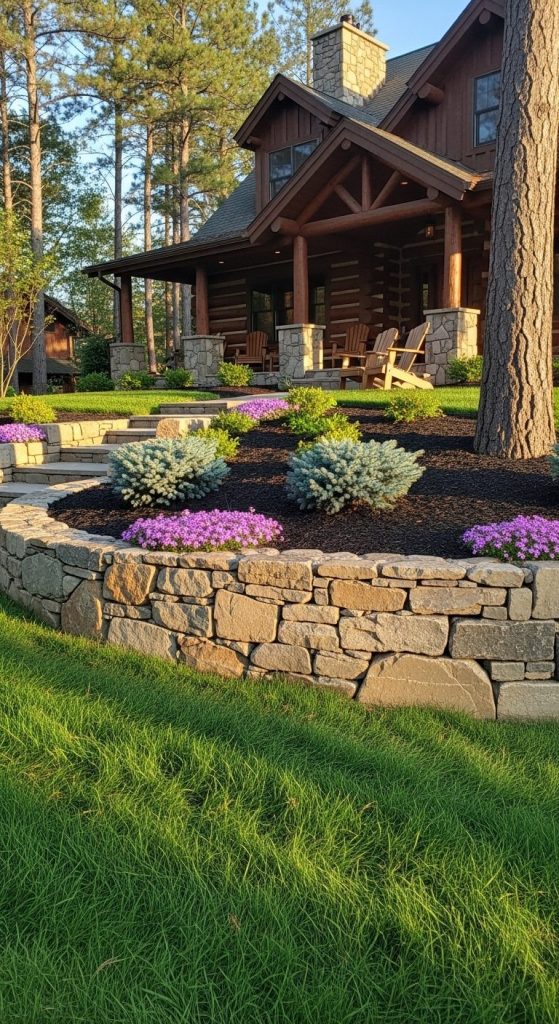
Small retaining walls add both structure and function.
Stone walls hold soil in place while creating defined planting areas. They also introduce texture and depth into the landscape.
Many homes with sloped yards rely on retaining walls to organize the space.
Pros
- Prevents soil erosion
- Adds strong architectural lines
- Creates elevated planting areas
Cons
- Requires solid foundation work
- Material costs vary widely
Mini takeaway
Stone retaining walls provide structure while enhancing visual appeal.
14. Lawn Shape Redesign

Many homeowners overlook this surprisingly powerful change.
Instead of keeping a simple rectangular lawn, redesigning the lawn shape with curved or angled borders transforms the yard.
Curved grass edges around garden beds create a softer landscape layout.
IMO, this single change often makes a yard feel professionally designed.
Pros
- Creates natural landscape flow
- Works with existing plants
- Improves visual balance
Cons
- Requires reshaping garden beds
- Needs edging maintenance
Mini takeaway
Changing the lawn’s shape can completely refresh the yard’s appearance.
15. Entry Walkway Alignment

The path to the front door acts as the visual guide through the yard.
A properly aligned entry walkway connects the driveway or street to the front entrance in a clear, natural direction.
Misaligned paths often look awkward or indirect.
Landscape designers frequently adjust walkways so they align directly with the front door or porch entry.
Pros
- Improves navigation through the yard
- Creates clear visual direction
- Enhances overall landscape flow
Cons
- May require walkway relocation
- Involves moderate construction work
Mini takeaway
A well-aligned path guides visitors naturally and strengthens the entire front yard layout.
Conclusion
Improving front yard curb appeal rarely requires a complete landscape overhaul. Most impressive yards grow from thoughtful, focused improvements that guide how people see the space.
Defined edges, balanced planting layouts, textured walkways, and structured landscape elements all work together to create that welcoming first impression.
What I love most about these upgrades is how achievable they feel. Some projects take a weekend. Others require more planning. But each one brings the yard a step closer to that polished look we all admire when walking down a street.
And honestly, that transformation feels satisfying. Watching the front yard slowly evolve into something beautiful changes how you feel about your home every time you pull into the driveway.
Start with one improvement that feels manageable. Over time, those small changes build the kind of curb appeal that makes people slow down and look twice.

William Martin is a passionate bowler who spends most of his weekends playing the sport. With years of intense experience under his belt, William decided to share his knowledge by creating BOWLING OCEAN. Join me on this journey to explore the world of bowling and discover the tips and tricks to becoming a pro.