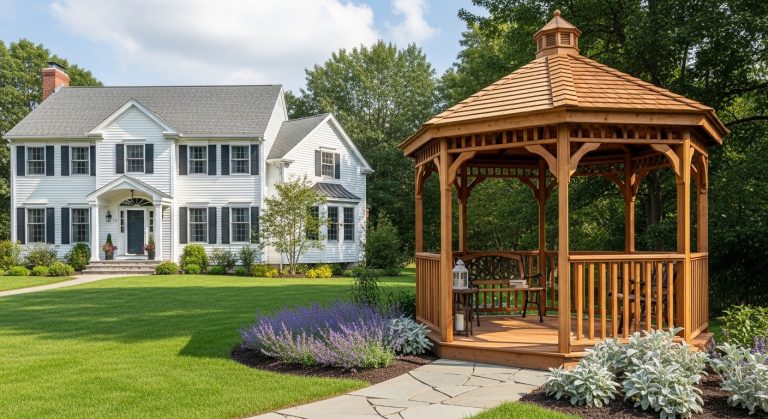
15 Front Yard Hardscape Ideas for Stunning Curb Appeal
A lot of front yards look… unfinished. Not ugly, not messy—just missing something. You see a patch of grass, maybe a walkway, and a few plants trying their best to make the space feel designed.
That’s usually where hardscape comes in.
I remember visiting a friend’s house where the landscaping itself looked pretty average, but the stone features completely transformed the yard. A curved walkway, a low retaining wall, and a small paved entry pad somehow made the entire property feel intentional. Suddenly the yard looked polished.
That’s the magic of thoughtful front yard hardscape ideas. Hard surfaces like stone, brick, concrete, and gravel create structure that plants alone can’t provide. They define spaces, guide movement, and hold everything together visually.
And lately, homeowners lean into this approach more than ever. According to the American Society of Landscape Architects, hardscape features rank among the most requested residential landscaping upgrades, largely because they combine beauty with durability.
The good news? Many hardscape improvements stay surprisingly achievable for regular homeowners. You don’t need a massive yard or an architectural budget.
Below are 15 creative and practical front yard hardscape ideas that add structure, curb appeal, and personality to a landscape without turning the project into a construction nightmare.
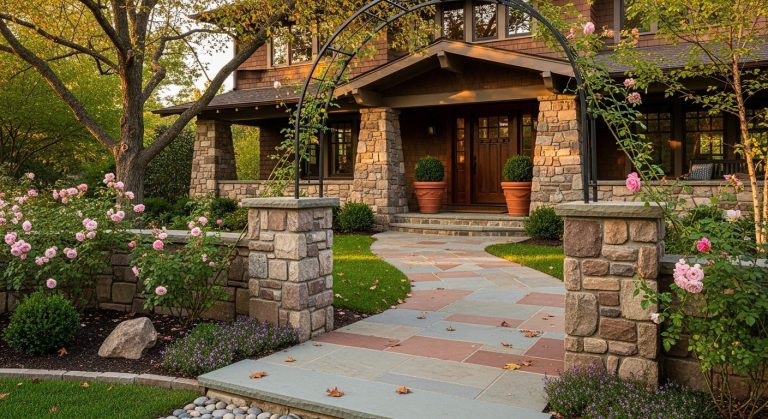
1. Natural Stone Walkway Entrance

Nothing changes the feel of a front yard faster than replacing a plain concrete path with a natural stone walkway.
Instead of a straight gray slab, irregular flagstones create a welcoming approach to the house. The stones vary slightly in shape and tone, which gives the path a relaxed, organic character.
Many homeowners choose this style because it blends beautifully with lawns, shrubs, and flower beds. The yard suddenly feels layered rather than flat.
Landscape professionals often recommend natural stone because it ages gracefully over decades while maintaining strength.
Pros
- Creates a warm and welcoming entry path
- Natural stone lasts for decades with minimal wear
- Blends beautifully with plants and greenery
- Adds strong curb appeal instantly
Cons
- Higher upfront cost than concrete
- Installation requires careful leveling
Mini Takeaway
A natural stone path instantly signals thoughtful landscaping. If the front yard feels plain, this upgrade adds character without overwhelming the space.
2. Brick Front Yard Pathway

Brick walkways carry a charm that feels almost nostalgic.
A brick pathway leading to the front door creates a timeless look that suits many home styles—from colonial houses to cozy cottages. The repeating pattern adds structure while still feeling warm.
Many homeowners love how brick gradually develops a soft patina over time.
FYI, historic neighborhoods often rely on brick hardscaping because the material handles decades of weather while maintaining character.
Pros
- Classic appearance that never feels dated
- Durable and weather resistant
- Adds texture and pattern to the yard
- Individual bricks allow easy repairs
Cons
- Weeds can appear between joints if neglected
- Installation requires proper base preparation
Mini Takeaway
Brick pathways bring a quiet elegance to a yard. They feel sturdy, welcoming, and beautifully traditional.
3. Curved Concrete Walkway

Straight paths feel practical, but curved walkways feel intentional.
A curving concrete walkway guides visitors gently through the front yard rather than sending them directly to the door. That small design shift creates a more welcoming arrival experience.
Curves also soften rectangular yard layouts.
Designers often use this technique because curved paths encourage visual exploration of the landscape rather than rushing through it.
Pros
- Adds movement and visual flow
- Works well in medium or large yards
- Durable and low maintenance
- More interesting than straight paths
Cons
- Slightly higher construction cost
- Requires accurate layout planning
Mini Takeaway
A curved walkway adds personality without complicated construction. It turns a simple path into a subtle design feature.
4. Gravel Front Yard Courtyard

Some front yards benefit from a dedicated hardscape space rather than just pathways.
A gravel courtyard area near the front entrance creates a defined zone within the landscape. Crushed stone spreads evenly and forms a clean, textured surface.
Many homeowners appreciate gravel because installation stays relatively simple.
The National Association of Landscape Professionals notes that gravel surfaces remain popular for residential projects because they offer excellent drainage and lower installation costs.
Pros
- Budget-friendly hardscape solution
- Excellent drainage in rainy climates
- Natural texture enhances the landscape
- Easy to refresh over time
Cons
- Gravel may shift slightly over time
- Requires occasional raking
Mini Takeaway
Gravel courtyards offer structure without heavy construction. They bring texture and definition to otherwise open front yards.
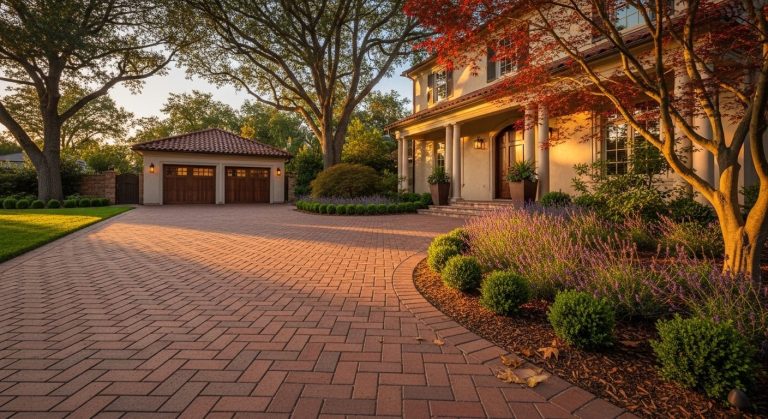
5. Paver Driveway Extension

Driveways often dominate the front yard visually. Upgrading that surface can transform the entire space.
A paver driveway extension uses interlocking stone pavers instead of plain asphalt or concrete.
The repeating pattern creates visual interest while still supporting vehicles.
According to a Remodeling Magazine cost report, attractive driveway surfaces can increase perceived property value significantly during resale.
Pros
- Strong visual upgrade for the yard
- Durable under vehicle weight
- Individual pavers allow easy repair
- Enhances curb appeal dramatically
Cons
- Higher installation cost than asphalt
- Requires professional leveling
Mini Takeaway
Driveways occupy a huge portion of the front yard. Improving that surface creates one of the biggest visual upgrades possible.
6. Front Yard Retaining Wall Terrace

Sloped yards often feel difficult to landscape. Hardscape solves that challenge.
A retaining wall terrace divides the front yard into leveled sections using stone or concrete blocks.
Instead of fighting the slope, the design embraces it.
Studies from landscape architecture programs at universities such as Cornell highlight terracing as one of the most effective ways to stabilize soil while improving usable yard space.
Pros
- Stabilizes sloped landscapes
- Prevents soil erosion
- Creates structured levels in the yard
- Adds architectural character
Cons
- Requires careful drainage planning
- Installation involves more labor
Mini Takeaway
Terraced retaining walls transform challenging slopes into attractive landscape features.
7. Stepping Stone Lawn Path

Not every walkway needs continuous pavement.
A stepping stone path across the lawn offers a lighter hardscape touch while still guiding movement.
Large stone slabs sit a few inches apart, allowing grass to grow between them.
The result feels relaxed yet intentional.
Pros
- Blends hardscape with greenery
- Lower cost than full walkways
- Adds visual rhythm across the lawn
- Simple installation process
Cons
- Stones must stay level
- Grass trimming around edges required
Mini Takeaway
Stepping stone paths create casual elegance. They feel playful but still practical.
8. Front Yard Stone Entry Pad

Some homes benefit from a stone landing pad near the front door.
This small paved zone acts as a transition between the walkway and entrance. It gives visitors space to pause before stepping inside.
Architects often include entry pads because they visually anchor the front door area.
Pros
- Highlights the home entrance
- Provides stable footing near the door
- Adds symmetry to the yard design
- Easy to combine with walkways
Cons
- Requires proper drainage slope
- Adds minor construction cost
Mini Takeaway
Entry pads bring structure to the doorstep. They make the arrival moment feel intentional.
9. Flagstone Front Yard Patio

Some homeowners prefer a usable outdoor surface in the front yard.
A flagstone patio area creates a durable gathering spot while still feeling natural.
Irregular stone shapes keep the surface visually interesting.
Pros
- Natural stone beauty
- Durable outdoor surface
- Works well with landscaping
- Strong curb appeal boost
Cons
- Requires proper installation base
- Higher material cost
Mini Takeaway
Flagstone patios bring a rustic elegance to front yard landscapes.
10. Circular Hardscape Entry Feature

Circular shapes immediately attract attention.
A circular paved feature near the front walkway becomes a focal point in the yard layout.
Many designers use circular hardscapes to break up linear spaces.
Pros
- Creates a striking focal point
- Adds geometric balance
- Works well in large yards
- Visually organizes the landscape
Cons
- Requires accurate layout
- Slightly higher installation complexity
Mini Takeaway
Circles soften rigid yard layouts and introduce elegant visual balance.
11. Stone Driveway Border

Sometimes the simplest upgrades deliver surprising impact.
A stone border framing the driveway outlines the edge and separates it from the lawn.
This detail gives the entire driveway a finished appearance.
Pros
- Clean visual boundary
- Prevents grass intrusion
- Adds subtle curb appeal
- Low maintenance
Cons
- Requires precise alignment
- Installation involves digging
Mini Takeaway
Driveway borders may seem small, but they sharpen the whole front yard design.
12. Raised Stone Planter Walls

Low stone planter walls combine landscaping and hardscape beautifully.
These short walls hold soil while creating defined planting zones.
Landscape experts note that raised planters improve soil control and drainage.
Pros
- Defines planting areas clearly
- Adds structure to gardens
- Durable stone construction
- Helps control soil erosion
Cons
- Requires masonry work
- Higher installation cost
Mini Takeaway
Raised stone planters add both structure and planting flexibility.
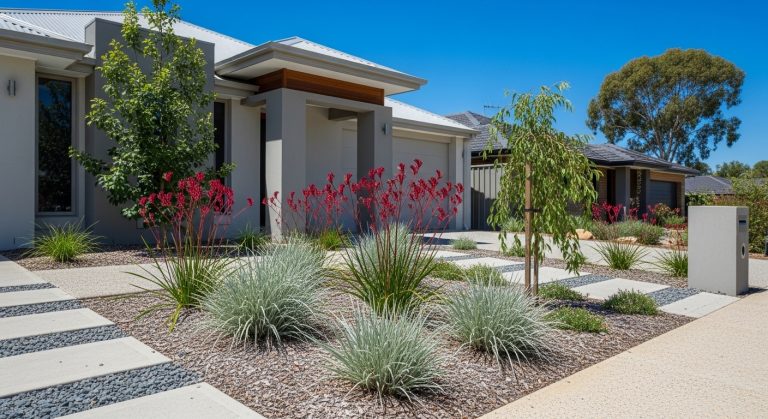
13. Concrete Grid Hardscape Pattern

Concrete grid paving creates a modern design.
Large concrete squares sit in a grid pattern with gaps between them.
Grass or gravel fills the spaces, creating contrast.
Pros
- Contemporary design style
- Durable concrete surface
- Blends hardscape with greenery
- Unique visual texture
Cons
- Requires precise installation
- Gaps require occasional maintenance
Mini Takeaway
Grid paving brings modern architecture into the front yard landscape.
14. Decorative Cobblestone Apron

The area where the driveway meets the street often gets overlooked.
A cobblestone apron upgrades that transition beautifully.
This small hardscape detail introduces texture and character.
Pros
- Elegant driveway entrance
- Extremely durable stone
- Adds historical charm
- Strong curb appeal feature
Cons
- Higher material cost
- Professional installation recommended
Mini Takeaway
Cobblestone aprons may cover a small area, yet they deliver huge visual impact.
15. Stone Staircase Entry Path

Homes with elevation changes benefit from stone staircases leading to the entrance.
Wide stone steps create a graceful approach that feels substantial and welcoming.
Architectural studies show that well-designed entry stairs improve perceived home value and accessibility.
Pros
- Elegant elevation solution
- Durable stone construction
- Improves front entry access
- Strong architectural presence
Cons
- Requires accurate measurement
- Construction takes time
Mini Takeaway
Stone steps create a grand but natural entrance. They turn a simple slope into a memorable approach.
Conclusion
Hardscape rarely steals the spotlight in landscaping conversations, yet it quietly shapes the entire front yard.
Walkways guide movement. Stone walls organize space. Pavers add texture and durability. Together, these elements create the structure that plants alone simply can’t provide.
Many homeowners focus heavily on flowers and shrubs, but the real transformation often comes from surfaces under your feet. A thoughtful path, a retaining wall, or even a simple driveway border can shift the entire personality of a yard.
What makes these upgrades even better is their longevity. Plants change every season, but well-built hardscape lasts for decades.
Start with one improvement that solves a specific problem—maybe a walkway, a driveway upgrade, or a small entry pad. From there, the landscape begins to feel cohesive.
Front yards don’t need massive renovations to look polished. Sometimes the right stone surface or pathway does the heavy lifting beautifully.

William Martin is a passionate bowler who spends most of his weekends playing the sport. With years of intense experience under his belt, William decided to share his knowledge by creating BOWLING OCEAN. Join me on this journey to explore the world of bowling and discover the tips and tricks to becoming a pro.