15 Front Yard Bushes Ideas for Beautiful Curb Appeal
I used to think bushes were just filler plants. You know, the things people add when a yard looks empty. Then I visited a friend’s house where the front yard looked calm, layered, and surprisingly expensive. The secret? Thoughtful front yard bushes. Not fancy trees. Not big lawns. Just smart shrub placement.
Bushes shape the first impression of a home. They frame the house, soften hard lines, add privacy, and make everything feel intentional. If your front yard feels flat or unfinished, bushes often fix that faster than any other landscaping move.
Let’s walk through 15 practical, design-focused front yard bush ideas that feel doable, realistic, and actually beautiful.
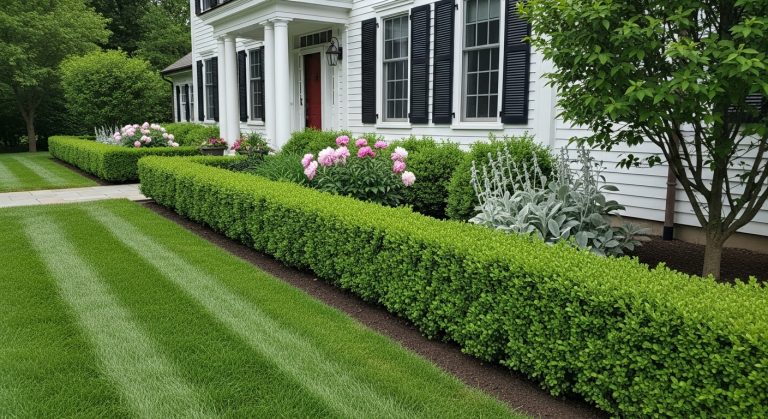
1. Structured Foundation Bush Line

Foundation bushes run along the front of your house and anchor the structure visually.
They soften harsh walls, hide bare foundations, and create a neat border between the house and the yard. Low-maintenance shrubs like boxwood, dwarf holly, or yew work great here.
Pros:
- Makes the house look grounded and finished
- Hides concrete or exposed foundation
- Easy to maintain with regular trimming
Cons:
- Requires yearly pruning
- Initial planting cost adds up
Mini takeaway: Foundation bushes give your home a polished, built-in look.
2. Layered Height Bush Design
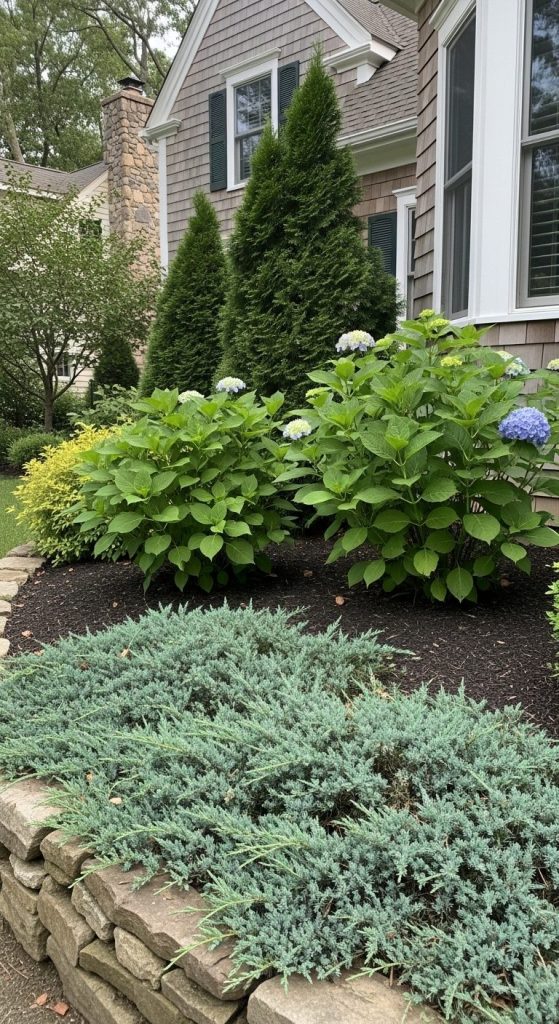
Flat shrub lines look boring. Layering changes everything.
Place taller bushes at the back, medium shrubs in the middle, and low-growing plants in front. This creates depth and a natural flow that feels like a professional landscape design.
Pros:
- Adds visual depth and texture
- Mimics natural garden growth patterns
- Works with almost any house style
Cons:
- Requires planning spacing
- Takes time for plants to mature
Mini takeaway: Layered bushes make a yard feel lush and intentional.
3. Symmetrical Entry Bush Framing

Symmetry feels calm and high-end.
Place identical bushes on both sides of the front door, walkway, or porch steps. This works especially well with formal homes, colonial styles, or modern builds.
Pros:
- Creates a balanced, elegant look
- Frames the entry visually
- Easy to replicate and maintain
Cons:
- Feels formal for casual homes
- Requires precise spacing
Mini takeaway: Symmetrical bushes instantly elevate curb appeal.
4. Low Hedge Border Bushes

Low hedges define space without blocking views.
Use dwarf boxwood, lavender hedges, or small evergreen shrubs to outline walkways, lawns, or garden beds. Keep them trimmed low and neat.
Pros:
- Defines yard zones clearly
- Looks tidy year-round
- Easy to shape and trim
Cons:
- Needs frequent trimming
- Takes time to grow dense
Mini takeaway: Low hedges give your yard structure without heaviness.
5. Privacy Screen Bush Row

Front yards sometimes feel exposed. Bushes can fix that.
Plant dense shrubs along the property line or near windows to create a soft privacy screen. Arborvitae, bamboo alternatives, or tall hedges work well.
Pros:
- Adds privacy without fencing
- Reduces street noise and dust
- Makes outdoor spaces more comfortable
Cons:
- Requires space and long-term growth
- Can block light if too dense
Mini takeaway: Privacy bushes feel natural and less harsh than fences.
6. Seasonal Flowering Bush Feature
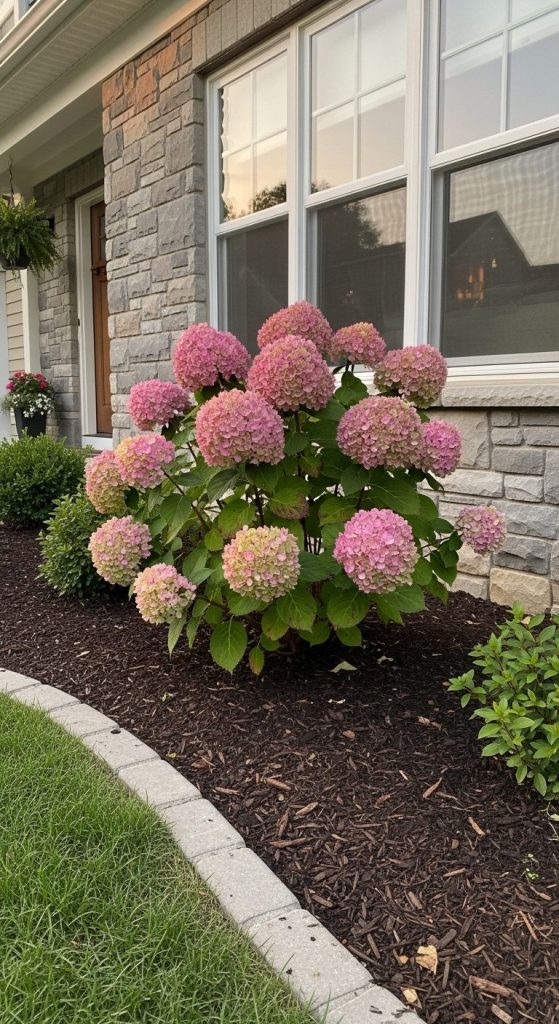
Flowering bushes add color without constant replanting.
Hydrangea, azalea, lilac, and hibiscus shrubs bloom seasonally and return every year. Place them near windows or entry areas for maximum impact.
Pros:
- Adds seasonal color automatically
- Attracts pollinators
- Increases curb appeal
Cons:
- Short bloom periods
- Requires pruning at the right time
Mini takeaway: Flowering bushes bring drama without extra planting work.
7. Evergreen Year-Round Bush Backbone
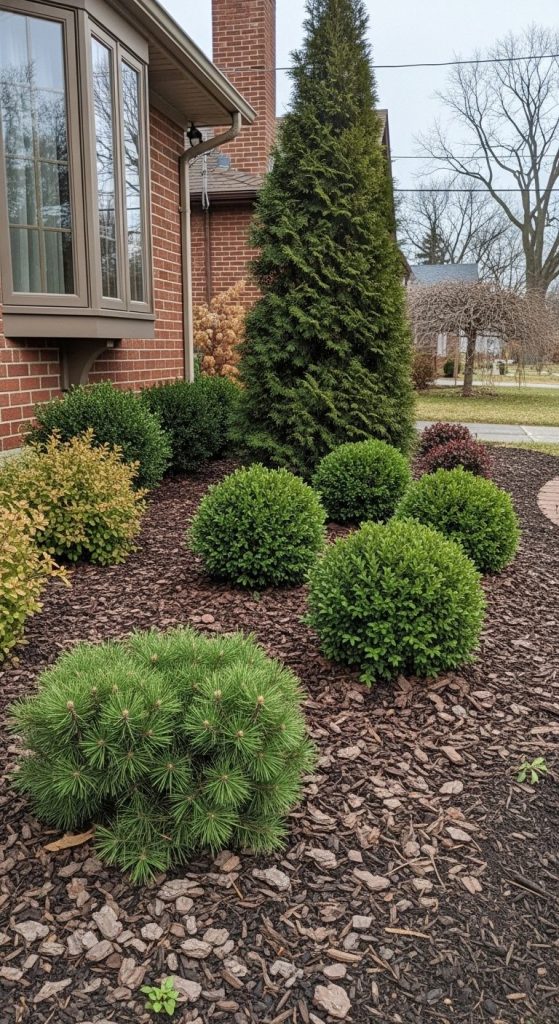
Deciduous plants lose leaves. Evergreens keep the yard alive.
Use evergreen shrubs as the backbone of your front yard design. Mix with seasonal plants for balance.
Pros:
- Looks green all year
- Low seasonal maintenance
- Provides consistent structure
Cons:
- Limited color variety
- Some species grow slowly
Mini takeaway: Evergreens keep your yard looking alive even in winter.
8. Bush Islands in Lawn Design

Bushes don’t need to stick to borders.
Create small bush islands in the lawn with curved mulch beds. This breaks up large lawns and adds visual interest.
Pros:
- Adds focal points to large yards
- Reduces boring lawn space
- Encourages creative layouts
Cons:
- Needs mowing around beds
- Requires edging maintenance
Mini takeaway: Bush islands make big lawns feel designed, not empty.
9. Walkway-Edging Bush Placement

Walkways deserve attention too.
Line your front walkway with low bushes for a welcoming entrance. Use rounded shrubs for a soft look or trimmed hedges for a formal feel.
Pros:
- Guides visitors visually
- Makes paths feel inviting
- Enhances symmetry and flow
Cons:
- Requires trimming to avoid blocking paths
- Needs consistent spacing
Mini takeaway: Walkway bushes turn a path into a statement.
10. Bushes for Noise and Dust Buffer

Front yards near roads get dusty and noisy.
Dense shrubs can reduce dust, absorb sound, and improve air quality. Studies from landscape architecture research show vegetation barriers can reduce noise levels by up to 5–10 decibels, depending on density.
Pros:
- Improves outdoor comfort
- Filters dust and pollutants
- Adds a natural barrier
Cons:
- Requires dense planting
- Takes time to mature
Mini takeaway: Bushes can improve comfort, not just looks.
11. Curved Bush Bed Layout
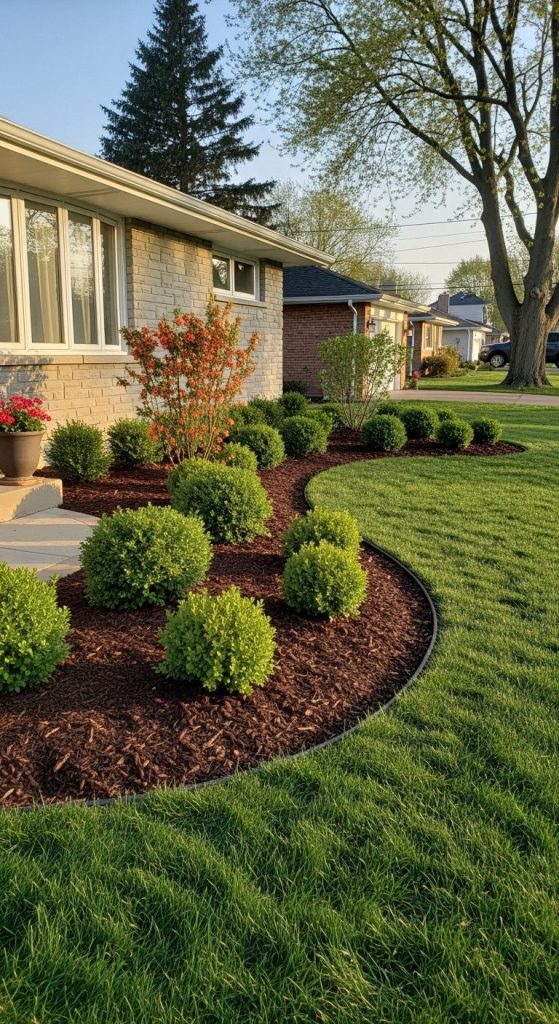
Straight lines feel rigid. Curves feel natural.
Design curved beds with flowing bush placement. Use mulch or stone edging to define the curves. This style suits cottage and natural landscapes.
Pros:
- Softens yard lines
- Feels organic and welcoming
- Easy to expand over time
Cons:
- Requires precise edging
- Slightly harder to mow
Mini takeaway: Curves make a yard feel friendly and organic.
12. Bush Height Zoning for Visual Balance
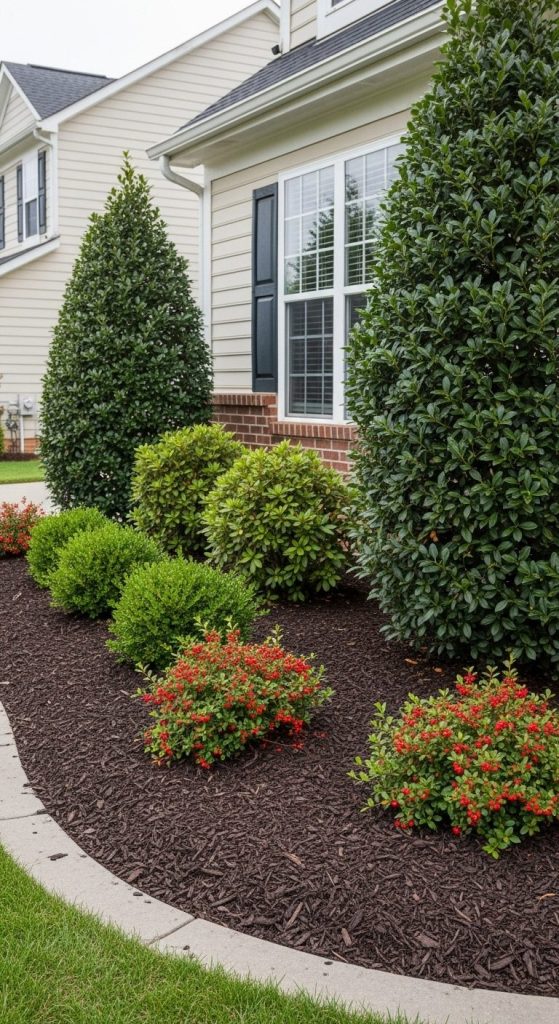
Not all bushes should be the same height.
Use tall shrubs near the house, medium shrubs near walkways, and low bushes near the lawn. This creates a natural gradient.
Pros:
- Improves visual balance
- Prevents blocking windows
- Adds depth without clutter
Cons:
- Needs careful planning
- Some reshaping over time
Mini takeaway: Height zoning keeps your yard from looking flat.
13. Bush Group Clusters for Natural Look
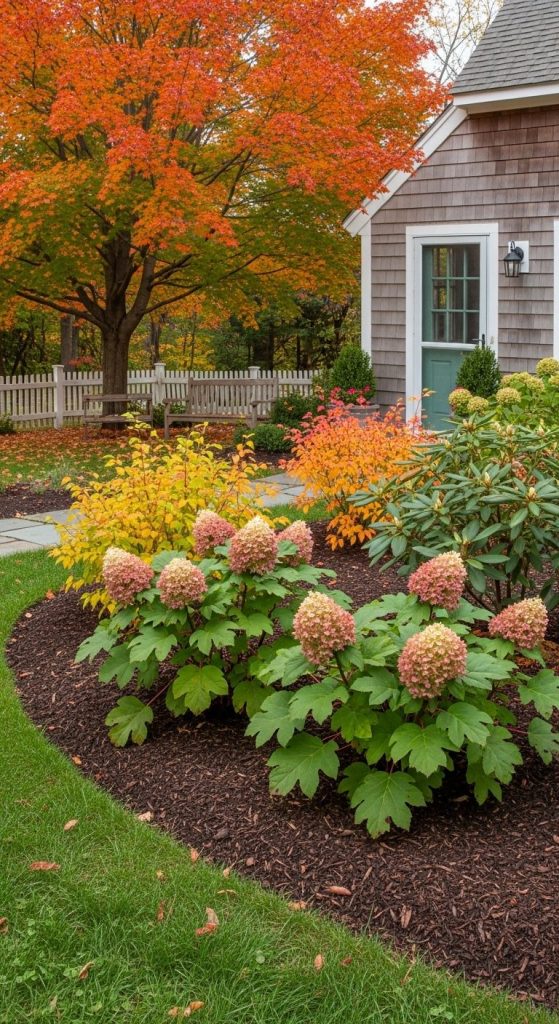
Single bushes can look random. Clusters look intentional.
Plant bushes in groups of three or five for a natural landscape feel. Mix species with similar colors and textures.
Pros:
- Mimics natural plant growth
- Looks fuller and richer
- Reduces sparse gaps
Cons:
- Requires more plants
- Needs planning for spacing
Mini takeaway: Clusters create a lush, natural front yard vibe.
14. Drought-Tolerant Bush Selection
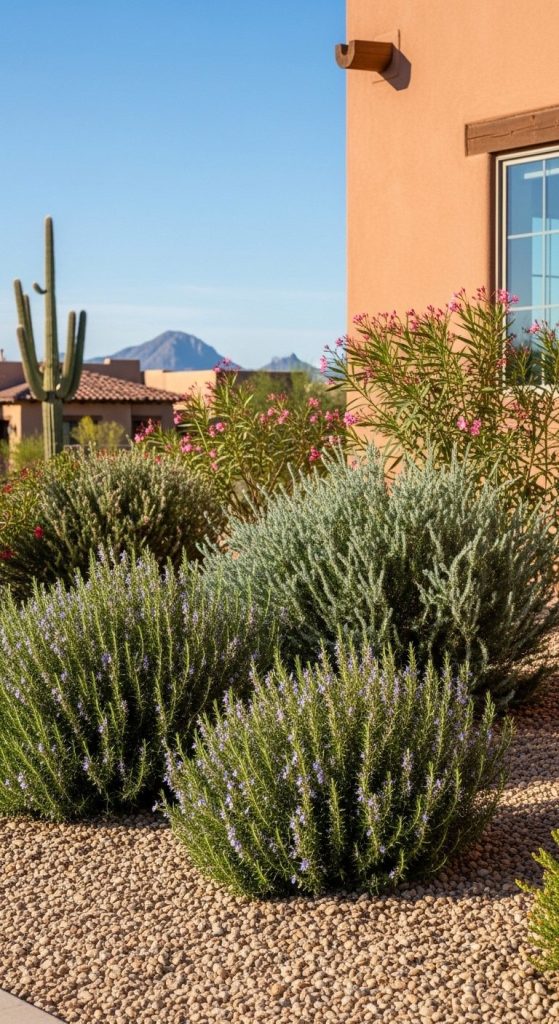
Watering costs matter.
Choose drought-tolerant shrubs like juniper, rosemary, or native species for low-water landscapes. These thrive with minimal irrigation.
Pros:
- Saves water and money
- Low maintenance
- Ideal for hot climates
Cons:
- Limited flowering options
- Slower growth for some species
Mini takeaway: Drought-tolerant bushes keep your yard green with less effort.
15. Bush Maintenance-Friendly Spacing Plan

Overcrowded bushes turn into a trimming nightmare.
Plan spacing based on mature size, not current size. Leave room for airflow, growth, and access for pruning tools.
Pros:
- Reduces long-term maintenance
- Prevents disease and pests
- Keeps plants healthy
Cons:
- Yard looks sparse at first
- Requires patience
Mini takeaway: Smart spacing today saves hours of work later.
Conclusion
Front yard bushes do more than fill space. They shape how your home feels from the street, how private your yard feels, and how polished your property looks. With thoughtful placement, height layering, and smart species choices, bushes can transform a plain front yard into a calm, structured, and welcoming space.
I love how bushes give instant structure while still feeling alive. They soften sharp lines, create privacy, and bring seasonal beauty without constant replanting.
Try one idea first—maybe a foundation line or a curved bed. Then build from there. Over time, your front yard will feel less like a random lawn and more like a designed outdoor room.

William Martin is a passionate bowler who spends most of his weekends playing the sport. With years of intense experience under his belt, William decided to share his knowledge by creating BOWLING OCEAN. Join me on this journey to explore the world of bowling and discover the tips and tricks to becoming a pro.