15 Front Yard Courtyard Ideas That Transform Outdoor Entry
Every now and then you walk past a house and notice something different about the front yard. It doesn’t look like a typical lawn or garden. Instead, it feels like a private little outdoor room sitting right in front of the house.
That’s the charm of a front yard courtyard.
I started noticing this trend a few years ago when more homeowners began replacing plain entry spaces with enclosed courtyards. Suddenly the front yard didn’t just serve as decoration — it became a place to sit, relax, and actually use.
Courtyard-style front yards originally appeared in Mediterranean and Spanish architecture, but now they show up everywhere. Modern homes, farmhouse designs, and even small suburban houses adapt the concept beautifully.
And honestly, the appeal makes sense. A courtyard gives you privacy, structure, and usable outdoor space, all while making the front of your home look thoughtfully designed.
The best part? You don’t need a massive property or complicated construction. Many courtyard upgrades rely on smart layouts, defined boundaries, and intentional landscaping.
Let’s walk through some thoughtful ways to shape a front yard courtyard that feels welcoming, functional, and visually stunning.
1. Enclosed Courtyard Wall Layout
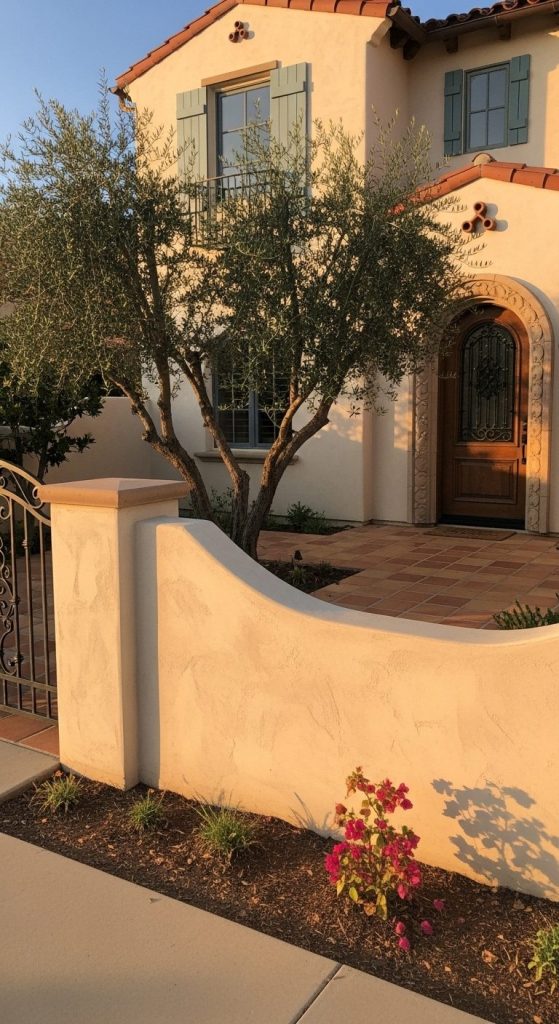
The defining feature of many courtyard homes starts with partial enclosure.
A low stucco, brick, or stone wall creates a boundary around the front courtyard space. Instead of leaving the yard open to the street, the wall forms a contained outdoor area that feels calm and intentional.
Architects often design courtyard walls around 3 to 4 feet high so they provide privacy without blocking the house visually.
That simple boundary changes the entire atmosphere. The front yard suddenly feels like an outdoor room.
Pros
- Creates strong visual structure
- Adds privacy from street traffic
- Defines the courtyard clearly
Cons
- Requires masonry work
- Material costs vary by stone or brick choice
Mini takeaway
An enclosing wall instantly transforms a basic yard into a true courtyard environment. Structure always sets the tone.
2. Central Courtyard Paver Floor
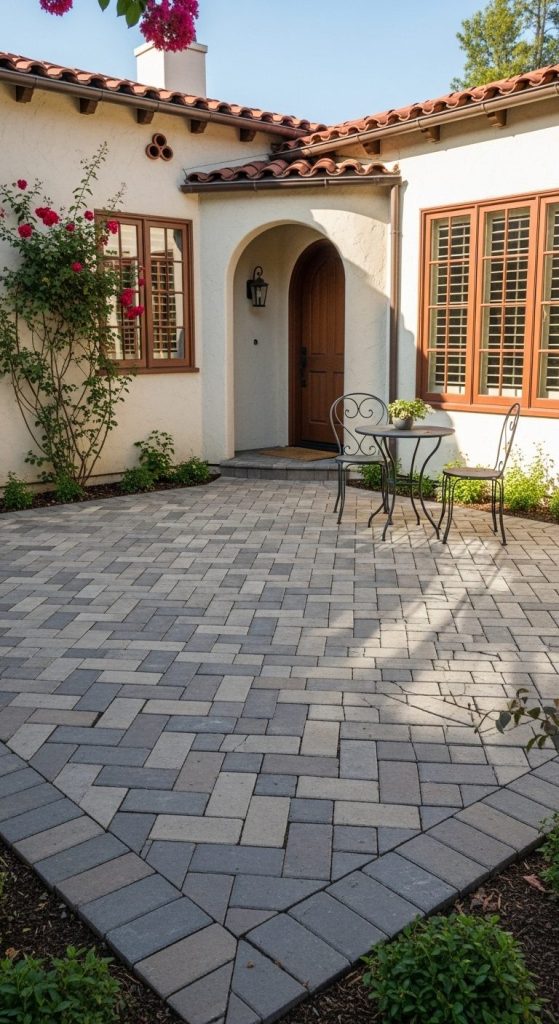
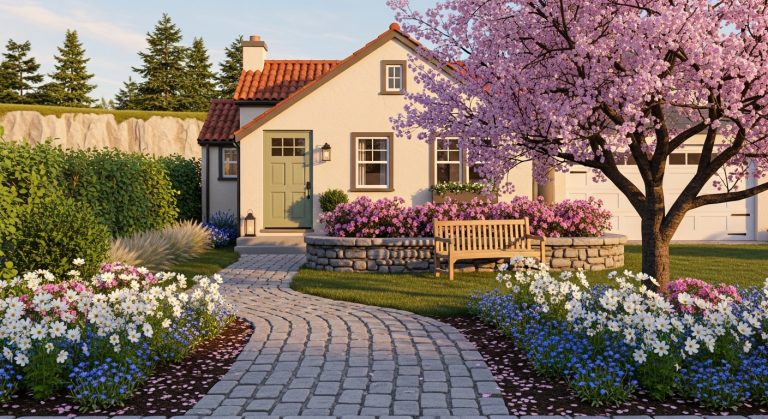
One of the fastest ways to turn a yard into a courtyard involves replacing grass with a solid courtyard surface.
Stone pavers, brick flooring, or concrete tiles create a patio-style ground plane. This flooring anchors the space and signals that the area serves a purpose beyond landscaping.
Courtyard floors usually follow grid or herringbone patterns, which adds visual rhythm.
According to the National Association of Landscape Professionals, hardscape surfaces rank among the most requested outdoor upgrades because they increase usable outdoor living space.
Pros
- Creates a functional gathering area
- Durable in different weather conditions
- Adds architectural character
Cons
- Installation requires ground preparation
- Costs higher than lawn installation
Mini takeaway
A courtyard floor turns the front yard into a usable outdoor space rather than decorative grass.
3. Courtyard Entry Gate
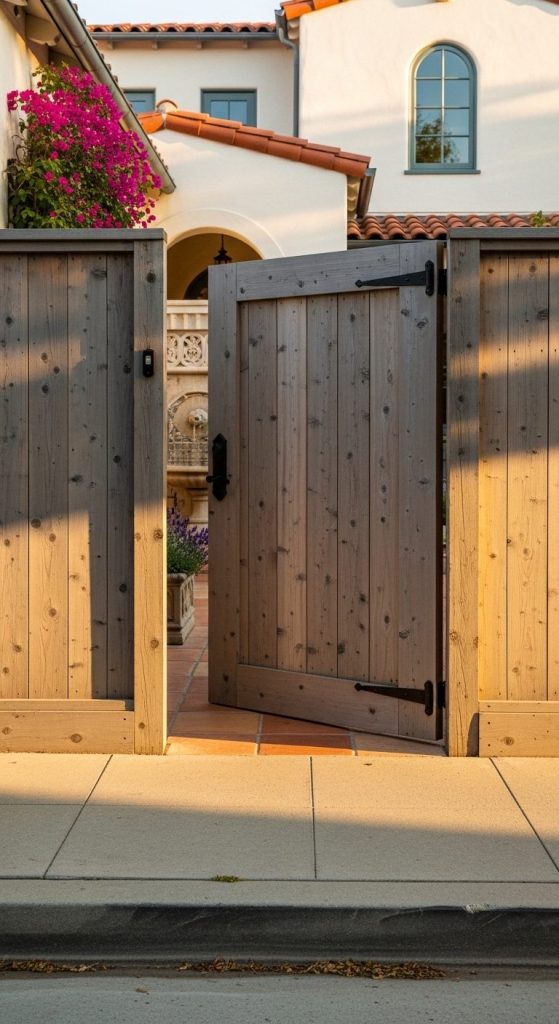
A front yard courtyard often includes a dedicated entry gate.
Instead of walking directly from sidewalk to front door, visitors pass through a gate into the courtyard space. This transition creates a sense of arrival.
Wrought iron, wood slats, and steel frame gates remain popular choices because they combine strength with style.
Architectural designers frequently recommend gates because they establish privacy while keeping visual openness.
Pros
- Adds security to the courtyard
- Creates an intentional entry experience
- Enhances architectural character
Cons
- Requires precise installation
- Hinges and latches need maintenance
Mini takeaway
A courtyard gate adds a welcoming transition that separates the public street from the private entry space.
4. U-Shaped Courtyard Layout
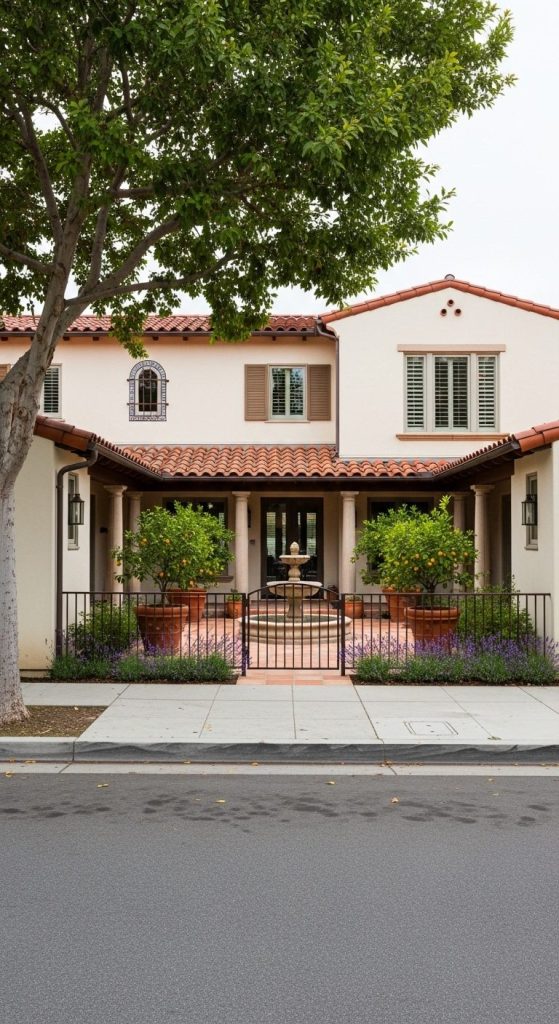
Some homes naturally support a U-shaped courtyard design.
In this layout, the house structure surrounds three sides of the courtyard while the open side faces the street. The shape naturally creates shelter and enclosure.
Mediterranean homes often follow this design because it protects the courtyard from wind and street noise.
IMO, this layout makes the courtyard feel especially cozy.
Pros
- Natural architectural enclosure
- Creates a protected outdoor pocket
- Encourages relaxing outdoor use
Cons
- Works best with certain house layouts
- Remodeling may require structural changes
Mini takeaway
A U-shaped layout turns the front yard into a peaceful extension of the home itself.
5. Courtyard Water Fountain Feature
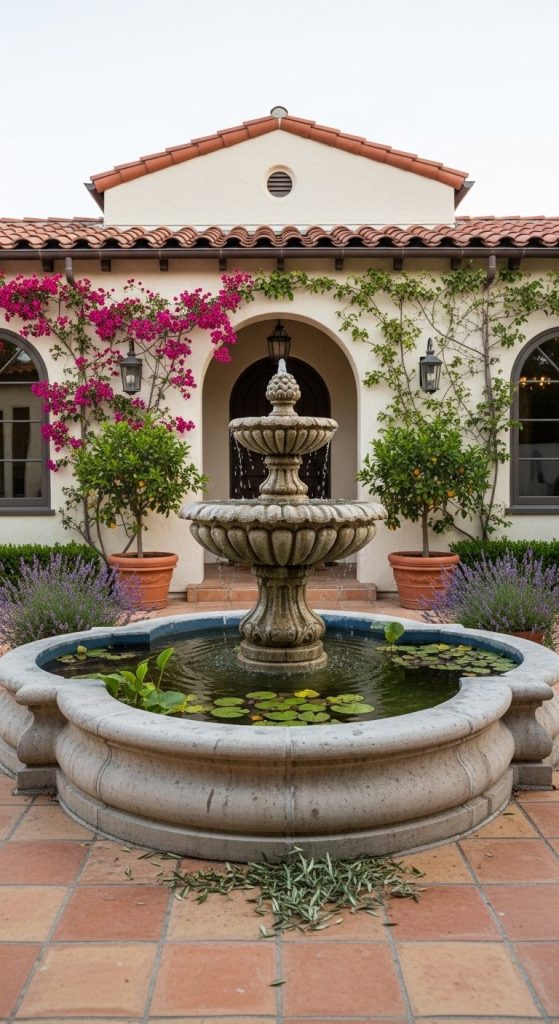
Few courtyard elements feel as calming as a central water fountain.
The sound of gentle water softens outside noise and creates a relaxing atmosphere. Many courtyard fountains sit directly in the center of the paved space.
Courtyard fountains remain a signature feature in traditional European and Mediterranean homes.
According to environmental psychology research, natural water sounds reduce stress and increase relaxation levels.
Pros
- Creates soothing ambiance
- Becomes a visual centerpiece
- Enhances courtyard atmosphere
Cons
- Requires plumbing setup
- Regular cleaning needed
Mini takeaway
A fountain adds life and sound that makes the courtyard feel peaceful and inviting.
6. Courtyard Tree Centerpiece
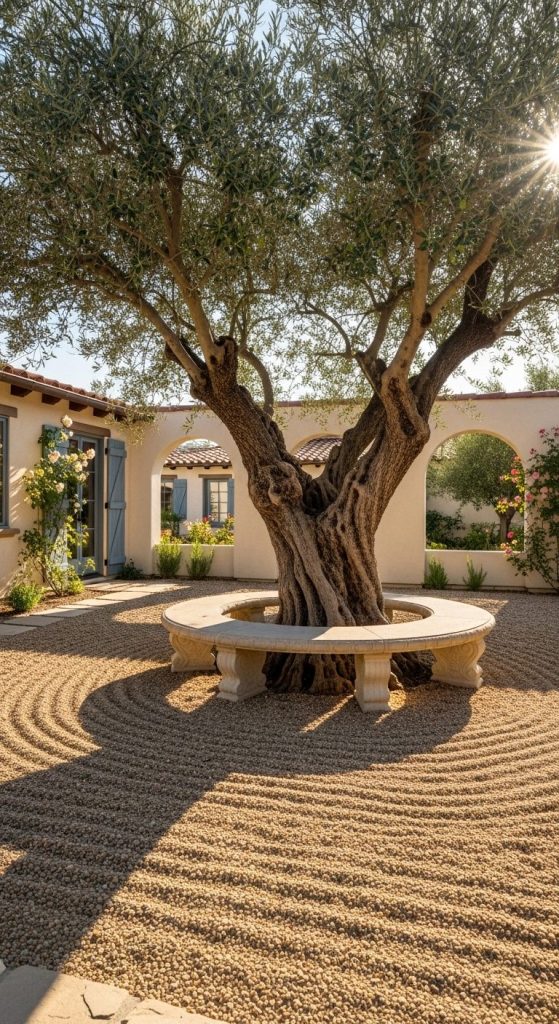
A single courtyard tree can anchor the entire layout.
Olive trees, Japanese maples, and dwarf citrus trees often work beautifully in courtyard spaces because they remain compact yet visually striking.
Landscape designers love this approach because one well-chosen tree creates strong focus.
Honestly, it often becomes the most photographed element of the courtyard.
Pros
- Creates natural shade
- Adds vertical visual interest
- Establishes a focal point
Cons
- Requires proper root space
- Needs seasonal care
Mini takeaway
A courtyard tree brings nature directly into the heart of the space.
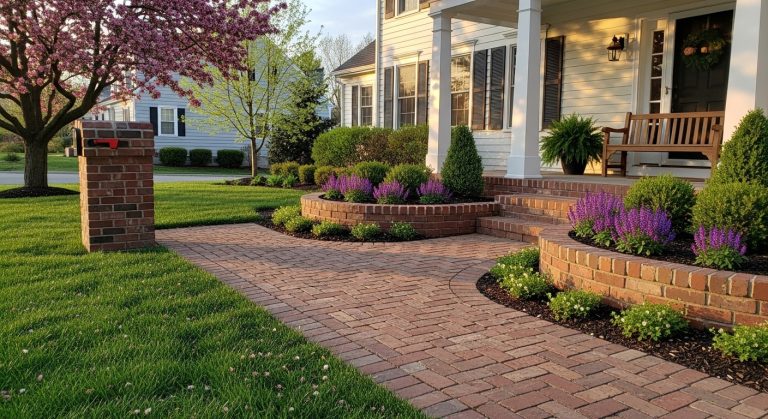
7. Raised Courtyard Planter Borders
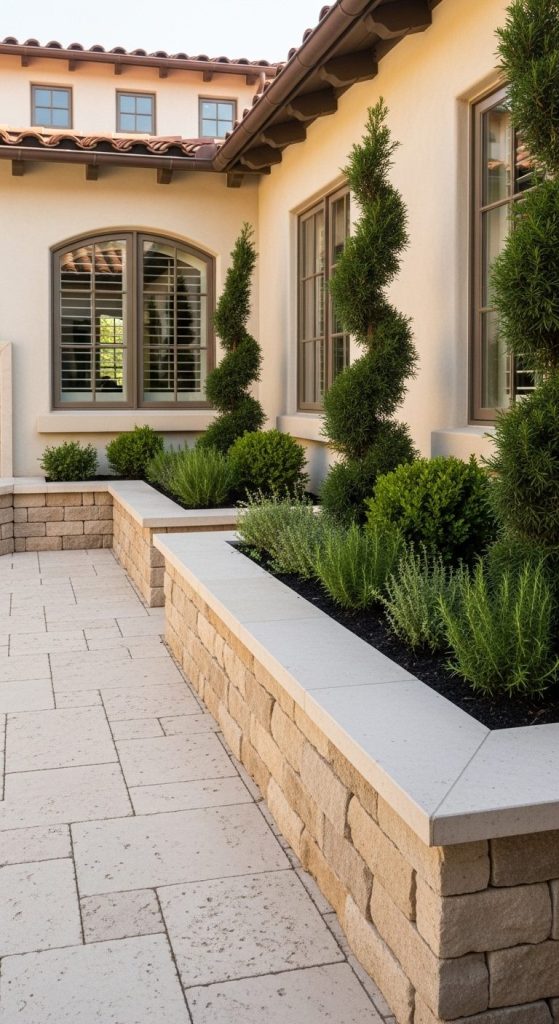
Raised planters add definition without overwhelming the courtyard.
Low stone or concrete planter boxes run along the courtyard edges and hold shrubs, flowers, or small trees.
These borders create clean lines between hardscape and greenery.
Landscape architects often recommend raised planters because they control soil depth and simplify maintenance.
Pros
- Frames the courtyard edges
- Keeps planting organized
- Improves drainage control
Cons
- Requires masonry installation
- Soil must be replenished over time
Mini takeaway
Raised planters introduce greenery while preserving the courtyard’s clean layout.
8. Gravel Courtyard Ground Texture
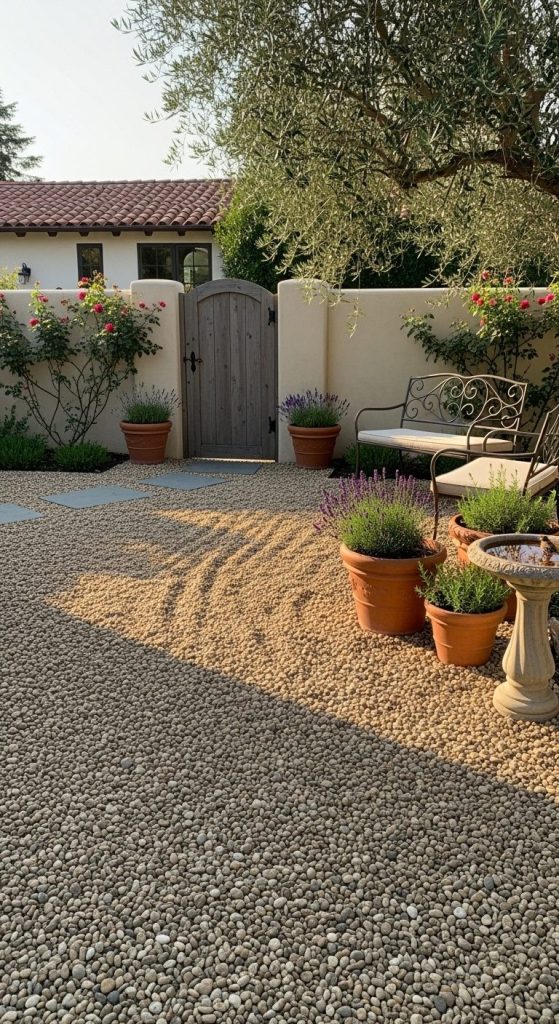
Some courtyard designs skip full paving and instead use decorative gravel flooring.
Pea gravel, decomposed granite, or crushed stone creates a relaxed, rustic surface. Gravel also drains water efficiently, which prevents puddles.
Many modern courtyards use gravel because it feels simple yet elegant.
FYI, gravel courtyards remain common in historic European homes.
Pros
- Lower cost than pavers
- Excellent drainage
- Soft natural appearance
Cons
- Gravel shifts under foot traffic
- Occasional raking required
Mini takeaway
Gravel courtyards deliver texture and charm without complicated construction.
9. Courtyard Privacy Plant Walls
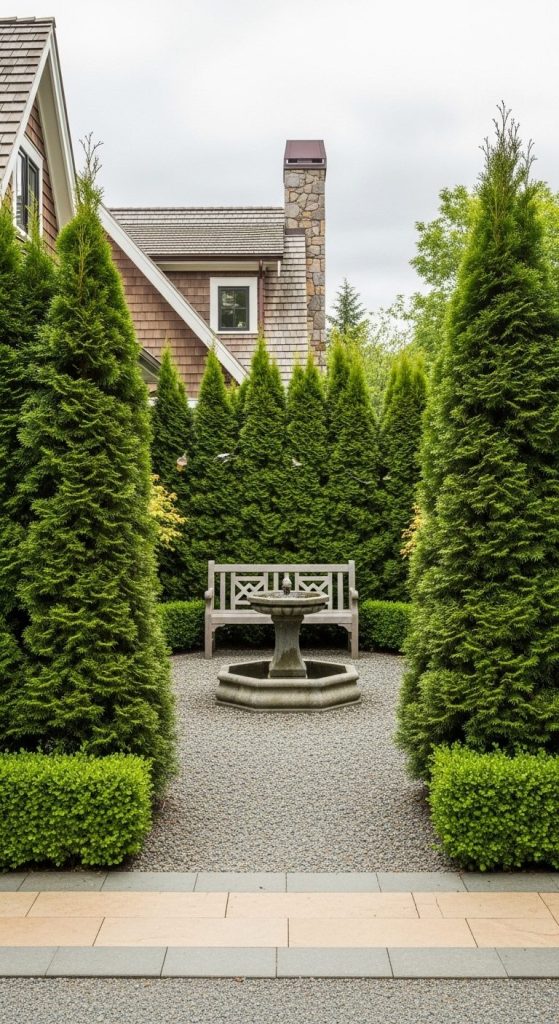
Instead of tall fences, some courtyards use dense hedge walls.
Boxwood, arborvitae, or laurel hedges grow thick enough to block views from the street. Over time the greenery forms a living wall.
A well-maintained hedge adds softness compared to solid barriers.
According to landscape surveys, living privacy walls remain one of the most requested residential landscape features.
Pros
- Natural privacy barrier
- Adds greenery to the courtyard
- Improves air quality slightly
Cons
- Requires trimming maintenance
- Takes time to grow fully
Mini takeaway
Living hedge walls protect privacy while keeping the courtyard lush and natural.
10. Courtyard Pergola Structure
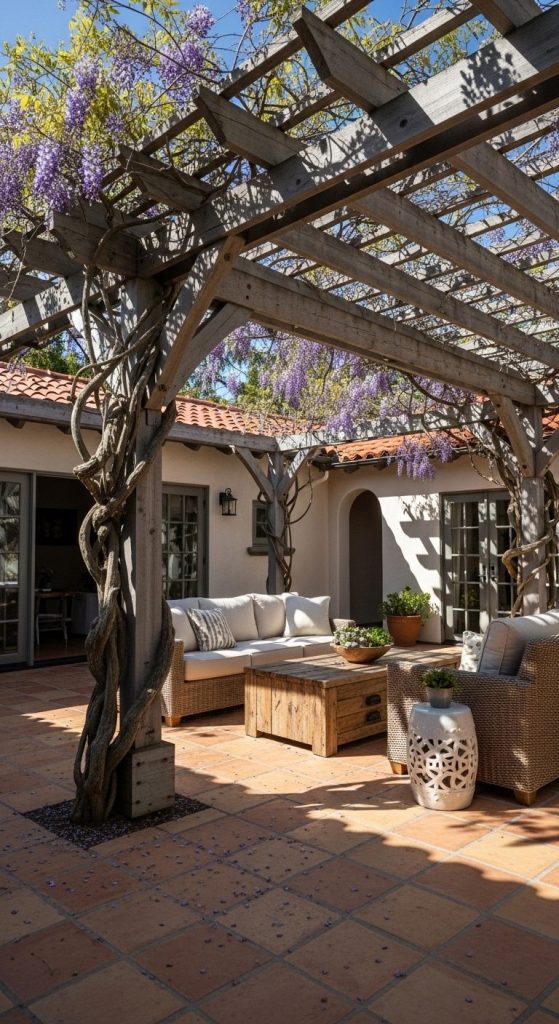
A pergola inside the courtyard introduces architectural height.
Wood or steel beams create partial shade and give the courtyard a defined gathering spot. Many homeowners install pergolas above seating zones or walkway paths.
Pergolas often become visual anchors that tie the courtyard together.
Pros
- Provides shade and structure
- Adds architectural depth
- Supports climbing plants
Cons
- Requires sturdy installation
- Periodic wood maintenance needed
Mini takeaway
Pergolas transform flat courtyards into layered outdoor rooms.
11. Sunken Courtyard Seating Area
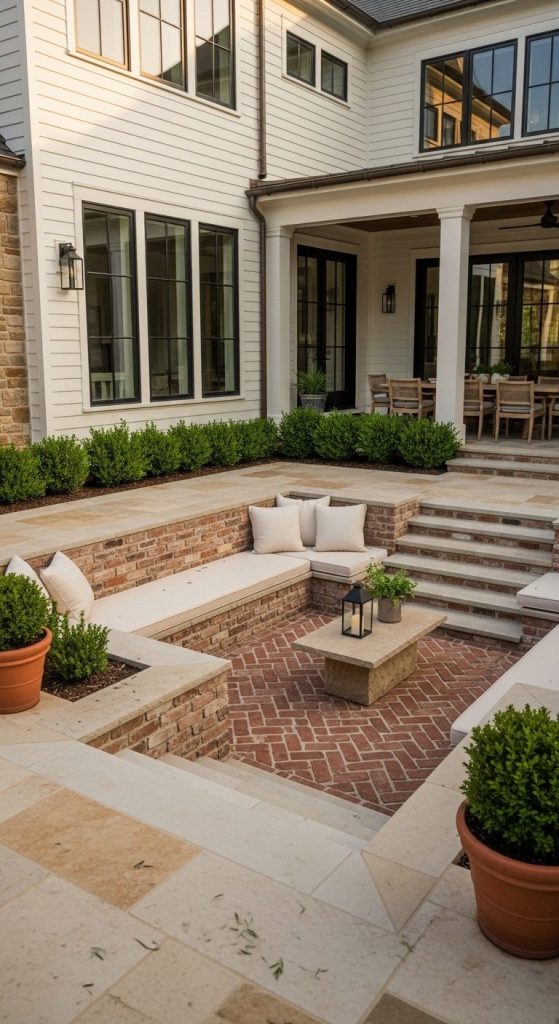
A sunken courtyard section creates a dramatic gathering space.
Builders lower the center seating area a few steps below the main courtyard level. The surrounding edges act as natural seating walls.
Modern courtyard homes often use this design because it feels intimate and cozy.
Pros
- Creates architectural interest
- Defines conversation space
- Adds depth to the courtyard
Cons
- Requires excavation work
- Drainage planning necessary
Mini takeaway
Sunken seating zones give courtyards a striking architectural centerpiece.
12. Courtyard Fire Pit Circle
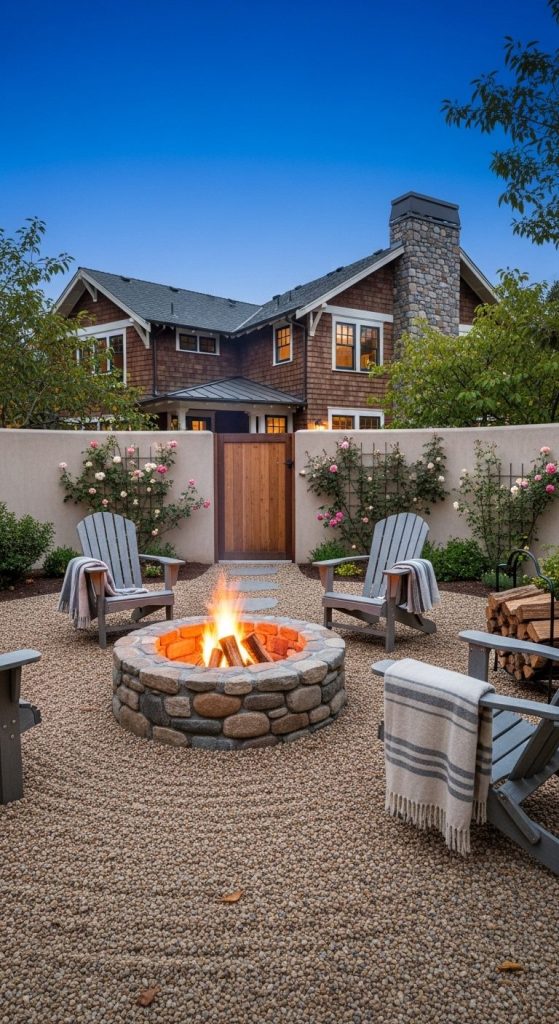
Cool evenings transform when a fire pit anchors the courtyard.
Stone fire pit circles naturally draw people together and create warmth. Many homeowners center them within the courtyard flooring.
According to outdoor living studies, fire features rank among the top outdoor upgrades requested by homeowners.
Pros
- Extends courtyard use into cooler seasons
- Encourages social gatherings
- Creates cozy atmosphere
Cons
- Requires fire safety planning
- Local regulations may apply
Mini takeaway
A fire pit makes the courtyard feel alive during evenings.
13. Courtyard Arched Entryway
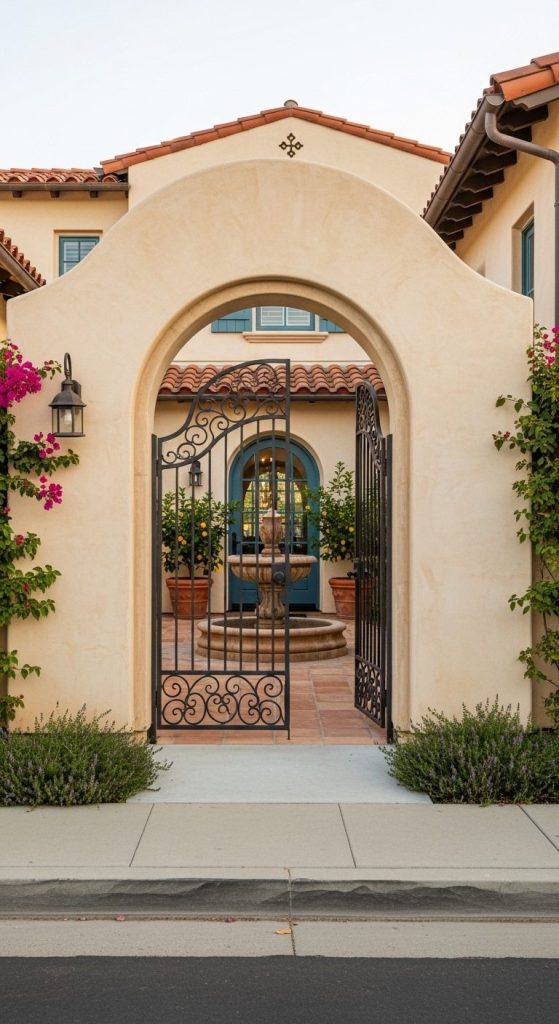
An arched courtyard entrance adds architectural drama.
Stucco or brick arches frame the entrance path and signal the transition from street to courtyard.
Mediterranean homes often use arches because they soften straight lines and create elegance.
Pros
- Strong architectural character
- Enhances entrance visibility
- Creates memorable first impression
Cons
- Requires structural work
- Higher cost than standard entryways
Mini takeaway
Arched entrances elevate the courtyard into something visually memorable.
14. Courtyard Stone Retaining Edges
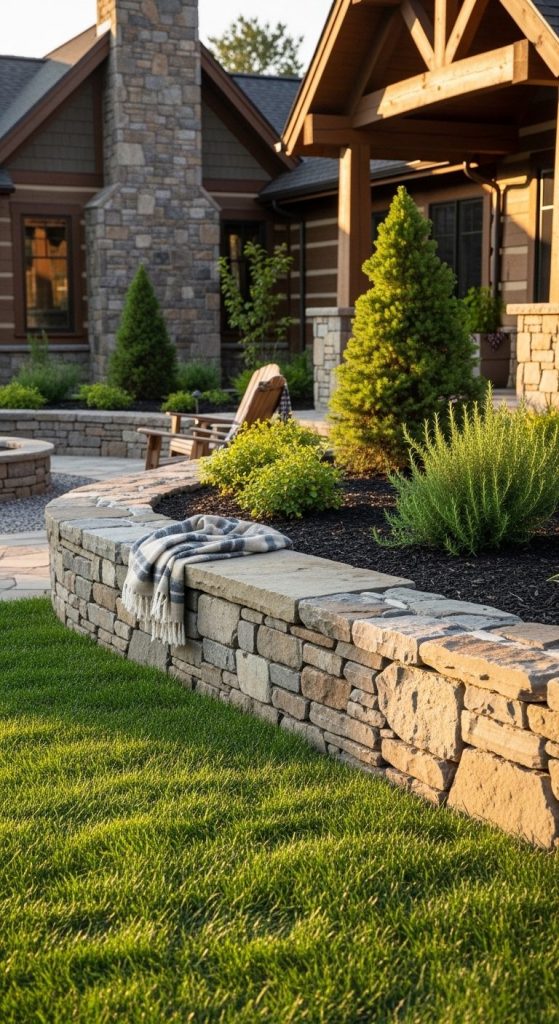
Courtyards built on sloped yards often include retaining stone edges.
These low retaining walls stabilize the ground while shaping planting zones and seating areas.
Stone adds texture that blends beautifully with landscaping.
Pros
- Stabilizes soil on slopes
- Adds visual weight to the courtyard
- Creates seating edges
Cons
- Requires strong foundation work
- Stone installation takes time
Mini takeaway
Retaining edges bring both function and character to courtyard design.
15. Courtyard Pathway Alignment
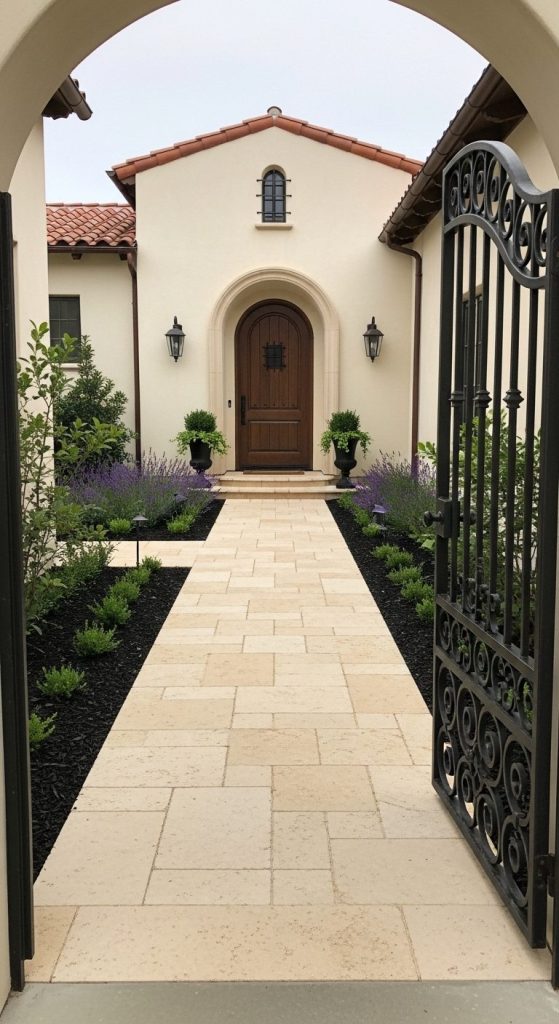
One detail often separates average courtyards from beautifully designed ones: pathway alignment.
A clearly defined path should lead from the gate through the courtyard to the front door. Straight lines, stepping stones, or paver strips guide movement naturally.
When the path flows smoothly, the courtyard instantly feels organized.
Pros
- Improves navigation through the space
- Creates visual direction
- Enhances overall design flow
Cons
- Requires thoughtful planning
- May involve reworking existing paving
Mini takeaway
Aligned pathways quietly guide visitors while tying the entire courtyard together.
Conclusion
A thoughtfully designed front yard courtyard changes how the front of a home feels. Instead of a simple lawn, the space becomes a welcoming outdoor room that balances privacy, beauty, and everyday functionality.
Small structural decisions make the biggest difference. Defined walls create enclosure. Hardscape flooring shapes the layout. Trees, fountains, and planters introduce life and movement.
Over time, those elements begin working together naturally. The courtyard feels calm, inviting, and surprisingly practical.
What I love most about courtyard spaces is how they encourage people to actually use the front yard again. Morning coffee outside suddenly feels appealing. Evening conversations last longer. Even quick moments outside feel more relaxing.
And the visual impact? Hard to beat.
Start with one structural improvement that fits your space. Once that foundation forms, the rest of the courtyard design usually falls into place beautifully.

William Martin is a passionate bowler who spends most of his weekends playing the sport. With years of intense experience under his belt, William decided to share his knowledge by creating BOWLING OCEAN. Join me on this journey to explore the world of bowling and discover the tips and tricks to becoming a pro.