15 Front Yard Gazebo Ideas to Elevate Outdoor Spaces
A gazebo in the front yard changes how a home feels the moment someone walks past it. Most houses rely on a porch or a patio to create that welcoming atmosphere. But a gazebo sitting gracefully near the entrance area? That immediately makes the yard feel intentional and inviting.
I remember visiting a neighborhood where one house had a small white gazebo near the sidewalk. Nothing fancy—just a simple structure with a peaked roof and open sides. Yet people constantly paused there during evening walks. It had quietly turned into a neighborhood landmark.
That’s the magic of a well-designed front yard gazebo. It creates a focal point, adds architectural interest, and turns empty lawn space into something people actually use.
Outdoor living continues to rise in popularity. According to a 2023 Houzz landscape trends report, over 60% of homeowners upgrading their yards focused on outdoor structures like pergolas and gazebos to create functional outdoor rooms.
Below are 15 practical and beautiful front yard gazebo ideas that can transform an ordinary lawn into a welcoming outdoor space.
1. Classic Octagonal Wooden Gazebo

The octagonal gazebo remains the design most people picture first. Eight evenly spaced sides create balanced symmetry that feels traditional and timeless.
Many homeowners choose this design for the front yard gazebo because it naturally becomes a centerpiece without overpowering the house. The shape allows views from every angle, which keeps the structure feeling open and inviting.
A cedar or pressure-treated wood frame often works best for this style.
Pros
- Timeless architectural shape
- Open views from all directions
- Works with traditional homes
- Durable natural wood structure
Cons
- Octagonal framing requires precise carpentry
- Slightly higher material cost than square builds
Mini Takeaway
If you want a gazebo that never feels trendy or outdated, the octagonal design always delivers classic curb appeal.
2. Square Modern Front Yard Gazebo

Clean lines have become incredibly popular in outdoor structures.
A square gazebo with straight beams and flat roof lines pairs beautifully with modern homes and minimalist landscaping. Instead of decorative trim, this design focuses on strong geometric proportions.
The result feels calm, structured, and contemporary.
Pros
- Clean modern aesthetic
- Easier framing compared to multi-sided gazebos
- Fits well with modern landscaping
- Efficient use of space
Cons
- Less decorative than traditional designs
- Requires careful proportion planning
Mini Takeaway
A square front yard gazebo proves that simple geometry often looks the most sophisticated.
3. Open-Air Pavilion Style Gazebo

Some homeowners prefer the feel of a pavilion rather than a fully enclosed gazebo.
A pavilion-style gazebo keeps wide open sides supported by strong corner posts. The roof provides shade while the open layout keeps the yard visually connected.
This design feels especially welcoming in front yards because it doesn’t block sightlines.
Pros
- Excellent airflow
- Wide open views of the yard
- Comfortable shaded space
- Works well for larger lawns
Cons
- Less protection from wind
- Requires strong roof framing
Mini Takeaway
This layout turns the gazebo into a relaxed outdoor lounge area rather than just a decorative structure.
4. Metal Frame Gazebo Structure

Wood isn’t the only option. A powder-coated metal gazebo frame offers a sleek and durable alternative.
Steel or aluminum frames resist rot, insects, and weather damage. Many homeowners choose this style when they want a low-maintenance front yard gazebo.
Modern homes especially benefit from the clean lines of metal structures.
Pros
- Rust-resistant coatings available
- Very strong structural support
- Minimal maintenance required
- Contemporary appearance
Cons
- Metal materials increase cost
- Professional installation sometimes needed
Mini Takeaway
Metal gazebos deliver durability with a modern aesthetic that stays sharp for years.
5. Rustic Timber Beam Gazebo

Heavy timber beams create a completely different personality.
A rustic timber gazebo uses thick wood posts and exposed rafters that highlight the natural grain of the wood. The structure often looks handcrafted and sturdy.
Homes with farmhouse or cottage architecture benefit from this design.
Pros
- Strong natural character
- Thick beams add structural strength
- Beautiful wood texture
- Blends well with natural landscapes
Cons
- Heavy materials require solid foundations
- Professional carpentry often needed
Mini Takeaway
Rustic timber gazebos feel warm and welcoming. Honestly, they make the yard feel like a retreat.
6. Vinyl Maintenance-Free Gazebo

Not everyone enjoys sanding or staining wood every few years.
A vinyl gazebo provides the same visual charm while eliminating most maintenance work. The material resists moisture, fading, and insects.
Many homeowners choose vinyl for front yard structures that face constant sun exposure.
Pros
- Virtually maintenance free
- Weather resistant material
- Long-lasting color finish
- Easy cleaning
Cons
- Higher initial purchase price
- Limited custom color options
Mini Takeaway
If you prefer low upkeep, vinyl makes owning a front yard gazebo far easier long term.
7. Pergola-Style Gazebo Hybrid

Some designs combine the best elements of pergolas and gazebos.
A pergola-style gazebo features partial roof slats instead of a solid roof. The structure still feels defined but allows filtered sunlight to pass through.
This design works beautifully in sunny climates.
Pros
- Allows natural sunlight
- Creates interesting shadow patterns
- Lightweight roof construction
- Elegant architectural style
Cons
- Limited rain protection
- Requires careful beam spacing
Mini Takeaway
This hybrid structure offers shade without feeling heavy or enclosed.
8. Small Corner Front Yard Gazebo

Not every property has space for a large structure.
A corner gazebo fits neatly into the edge of the front yard rather than the center. The placement preserves lawn space while still adding visual interest.
Urban homes and compact lots often benefit from this layout.
Pros
- Saves valuable yard space
- Easy integration into landscape corners
- Creates cozy seating area
- Lower material requirements
Cons
- Limited interior space
- Corner placement requires thoughtful orientation
Mini Takeaway
A smaller structure can still make a huge visual impact when placed strategically.
9. Raised Deck Gazebo

Sometimes elevation transforms the entire design.
A raised deck gazebo sits on a small platform that lifts the structure slightly above ground level. The elevation adds visual importance and improves drainage.
The platform also defines the gazebo as a dedicated outdoor room.
Pros
- Improved drainage under structure
- Strong visual presence
- Clear definition of gathering space
- Stable flooring surface
Cons
- Deck construction adds cost
- Requires sturdy foundation posts
Mini Takeaway
Adding elevation turns a gazebo into a true focal point in the front yard.
10. Cupola Roof Gazebo

Roof design often determines how elegant a gazebo looks.
A cupola roof gazebo features a small ventilated tower at the roof peak. This detail improves airflow and adds architectural charm.
Many classic garden structures use this design.
Pros
- Enhanced ventilation
- Elegant roof detail
- Visually taller appearance
- Traditional garden style
Cons
- Slightly more complex roofing
- Increased construction time
Mini Takeaway
A cupola adds character that instantly elevates the overall gazebo design.
11. Hexagonal Compact Gazebo

The hexagonal gazebo sits right between square and octagonal designs.
Six sides provide a balanced structure that looks interesting without becoming overly complex. Many homeowners prefer this layout because it feels unique while remaining practical.
Pros
- Balanced geometric design
- Efficient material use
- Attractive multi-angle views
- Easier framing than octagons
Cons
- Custom measurements required
- Roofing angles need precision
Mini Takeaway
A hexagonal front yard gazebo feels distinctive without becoming complicated.
12. Solid Roof Shingle Gazebo
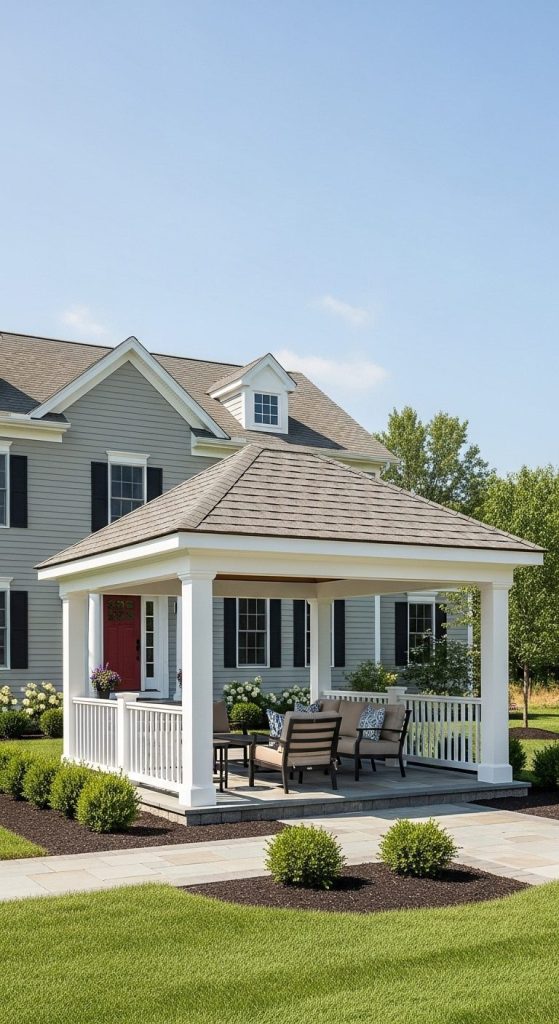
Roof materials change the durability of the structure.
A shingle roof gazebo uses the same asphalt shingles commonly installed on houses. This approach creates visual consistency between the gazebo and the home.
Pros
- Excellent weather protection
- Matches house roofing
- Long lifespan materials
- Strong rain resistance
Cons
- Roofing installation takes time
- Slightly heavier structure
Mini Takeaway
Matching roof materials can make a gazebo look like it belongs with the house from day one.
13. Glass Panel Gazebo

Some modern gazebos include tempered glass panels between structural posts.
The glass blocks wind while maintaining full visibility of the yard. This design works well in cooler climates where wind protection matters.
Pros
- Wind protection
- Maintains open views
- Contemporary design
- Durable tempered glass
Cons
- Higher construction cost
- Glass requires occasional cleaning
Mini Takeaway
Glass panels turn a gazebo into a comfortable outdoor shelter without losing openness.
14. Compact Entryway Gazebo

Instead of placing the structure deep in the yard, some homeowners position the gazebo near the front walkway entrance.
This layout creates a welcoming transition space between the sidewalk and the home.
It feels almost like an outdoor foyer.
Pros
- Welcomes visitors at the entrance
- Defines pathway area
- Strong curb appeal
- Makes small yards feel designed
Cons
- Requires careful placement planning
- Must maintain clear walkway access
Mini Takeaway
An entryway gazebo creates a memorable first impression.
15. Gazebo With Integrated Structural Benches

Some gazebos include built-in bench seating attached directly to the structure frame.
The benches become part of the gazebo itself rather than loose furniture. This approach keeps the space organized and durable.
A 2023 outdoor living study by the American Society of Landscape Architects noted that built-in seating continues gaining popularity in outdoor structures.
Pros
- Permanent seating solution
- Space efficient design
- Strong structural integration
- Clean organized appearance
Cons
- Fixed seating arrangement
- Requires custom carpentry
Mini Takeaway
Built-in seating turns a front yard gazebo into a fully functional gathering spot.
Conclusion
A well-placed front yard gazebo changes the way a home interacts with its surroundings. Instead of empty lawn space, the yard suddenly offers a destination.
Some gazebos focus on architectural beauty. Others prioritize comfort and shade. The right design depends on the style of the house, the available space, and how you want to use the structure.
Traditional octagonal gazebos bring timeless charm. Square and metal designs lean modern. Timber structures create rustic warmth that feels inviting from the street.
Personally, I love gazebos that look like they’ve always belonged to the property. When the structure complements the house and landscape, it doesn’t feel like an addition—it feels like part of the home’s story.
If you’re considering an outdoor upgrade, a gazebo offers one of the most noticeable transformations. It adds structure, personality, and a reason to spend more time outside.
Start with the idea that fits your yard best, and build from there. Sometimes a simple structure becomes the feature everyone remembers.

William Martin is a passionate bowler who spends most of his weekends playing the sport. With years of intense experience under his belt, William decided to share his knowledge by creating BOWLING OCEAN. Join me on this journey to explore the world of bowling and discover the tips and tricks to becoming a pro.