15 Front Yard Cottage Garden Ideas for Charming Curb Appeal
I still remember walking past a small house in my neighborhood that stopped me mid-walk. The yard wasn’t big. It didn’t have fancy landscaping or expensive stone features. But flowers spilled over the path, herbs brushed the edges of the walkway, and the whole space felt alive in the most charming way.
That’s the magic of a front yard cottage garden.
Unlike perfectly trimmed landscapes, cottage gardens thrive on a slightly wild, welcoming look. Flowers mingle together, paths feel soft and natural, and every corner looks like it belongs in a storybook. Yet the best part? Most of these gardens come together with simple plants, practical layouts, and a bit of thoughtful layering.
Homeowners everywhere have started embracing this relaxed garden style again. According to a 2023 National Gardening Association survey, nearly 55% of gardeners prefer informal, layered planting styles over rigid landscaping layouts.
Honestly, it makes sense. A cottage garden feels warm, colorful, and personal — not stiff or overly planned.
If you’re dreaming about transforming your yard into something charming and inviting, these ideas will help you shape a beautiful front yard cottage garden that feels natural, full of life, and surprisingly achievable.
1. Layered Flower Borders That Overflow Naturally
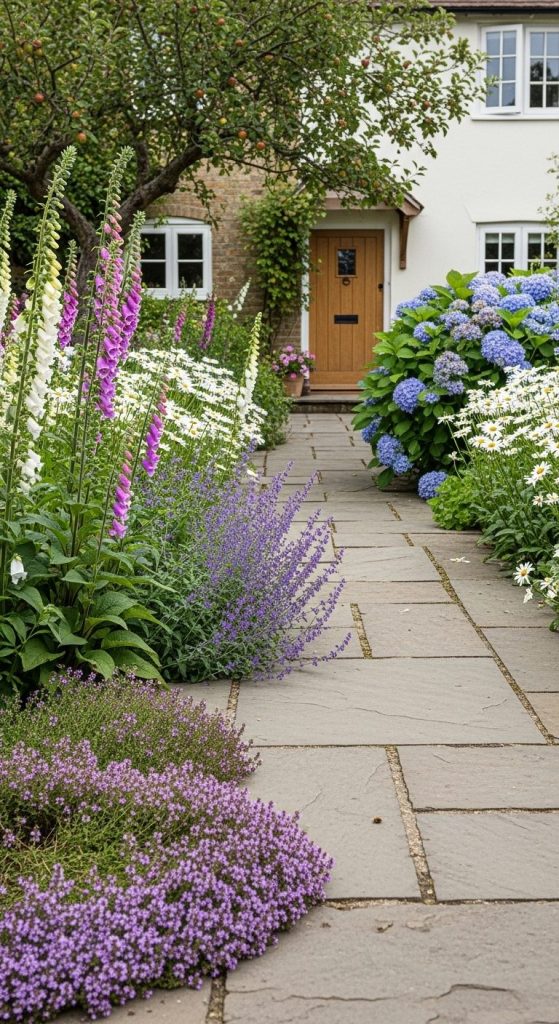
The first thing people notice in a front yard cottage garden usually isn’t a single plant. It’s the layers. Flowers rise at different heights, creating depth and movement instead of flat rows.
Start by planting tall flowers at the back, medium-height blooms in the middle, and low growers near the edge of the path. Hollyhocks, foxgloves, and delphiniums create height, while daisies, lavender, and salvia fill the center.
Ground covers like creeping thyme soften the front edge.
The goal isn’t perfection. Cottage gardens actually look better when plants mingle slightly and overlap.
Pros
- Creates rich visual depth without complex landscaping
- Allows dozens of flower varieties in a small space
- Naturally fills empty garden gaps over time
Cons
- Requires seasonal trimming to prevent crowding
- Some taller flowers may need support stakes
Mini takeaway
Layered planting creates that classic cottage look almost instantly. Honestly, once the flowers mature and start leaning into each other, the garden feels alive in the best way.
2. Curved Garden Paths That Guide the Eye
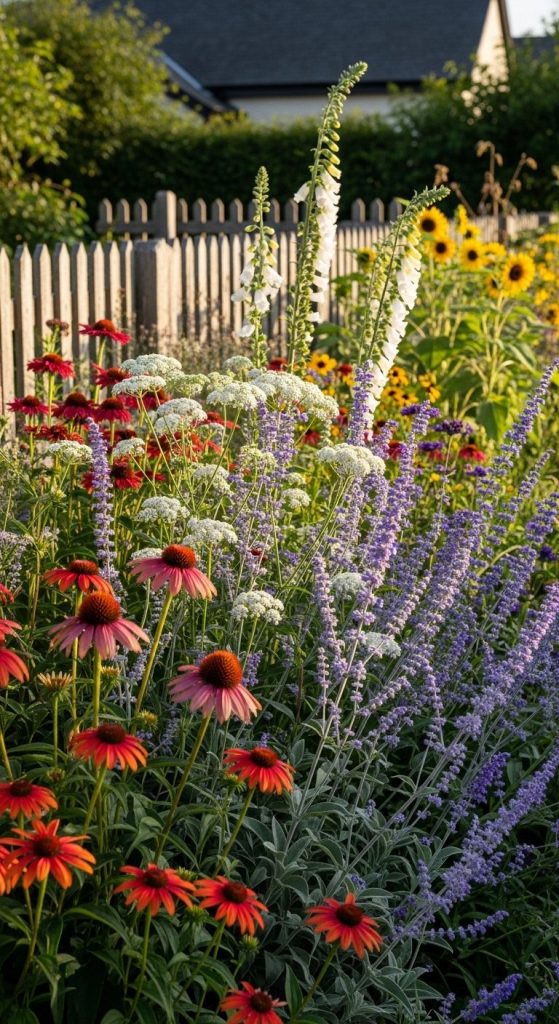
Straight walkways feel formal. Cottage gardens lean toward softer shapes.
A gently curving path through the garden encourages visitors to slow down and look around. Gravel, stepping stones, or natural flagstone work beautifully for this style.
Let plants grow slightly along the edges so the path feels tucked inside the garden instead of cutting through it.
Designers often use curves because the eye naturally follows them. The result feels cozy instead of structured.
Pros
- Makes small yards feel larger and more inviting
- Encourages a relaxed, natural garden flow
- Works with affordable materials like gravel or stone
Cons
- Requires occasional edge trimming
- Gravel paths may shift slightly over time
Mini takeaway
A curved path instantly softens a yard. IMO, this single change can transform a basic garden layout into something that feels charming and intentional.
3. A Dense Perennial Flower Mix
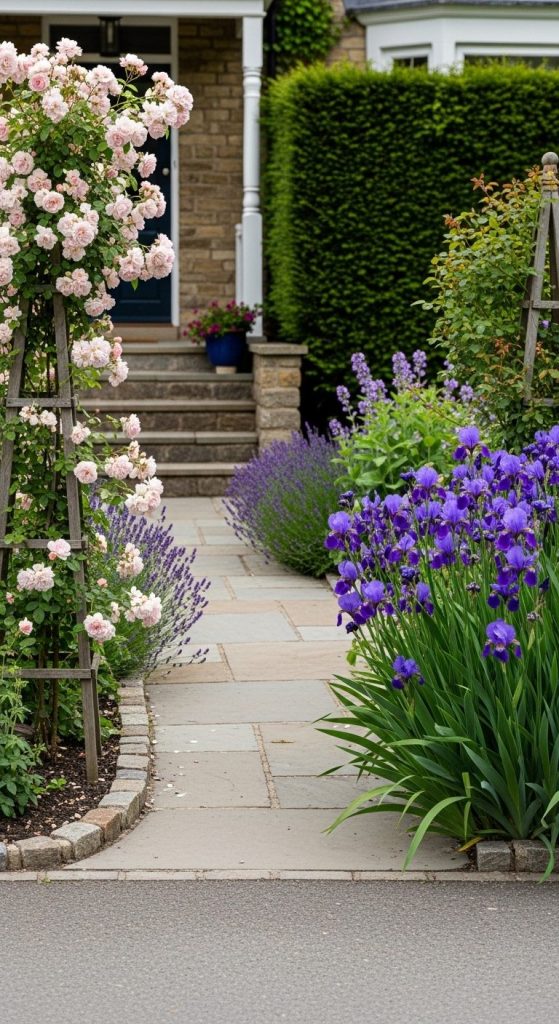
Annual flowers look beautiful but require replanting every year. Cottage gardens traditionally rely on perennials that return season after season.
Mix varieties that bloom at different times so the garden stays colorful from spring through fall.
Popular cottage choices include:
- Coneflowers
- Black-eyed Susans
- Peonies
- Shasta daisies
- Bee balm
According to the Royal Horticultural Society, perennial planting improves pollinator activity and reduces yearly garden costs.
Pros
- Lower long-term planting costs
- Continuous bloom cycles through the season
- Strong support for bees and butterflies
Cons
- Some varieties take a year to fully establish
- Occasional dividing needed every few seasons
Mini takeaway
A dense perennial mix builds the backbone of a true cottage garden. Once plants settle in, the space starts looking fuller every year.
4. Cottage Garden Planting Around the Walkway Entrance
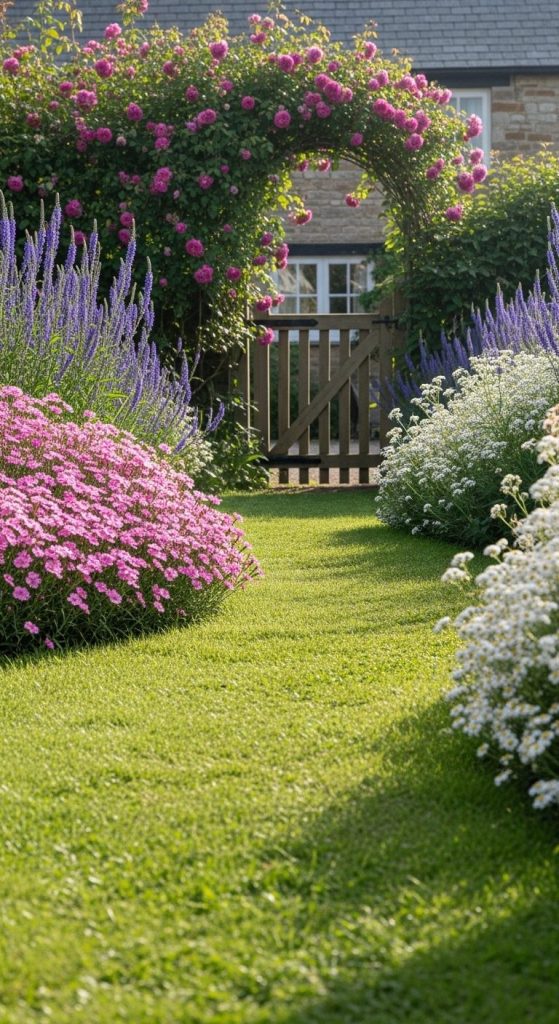
The entrance to a front yard cottage garden deserves special attention. This small zone sets the tone for the entire yard.
Plant taller flowers on both sides of the walkway entrance so visitors feel like they’re stepping into the garden rather than simply crossing it.
Foxgloves, delphiniums, or climbing roses trained on narrow supports work beautifully here.
That slight sense of enclosure creates charm instantly.
Pros
- Makes the entrance feel intentional and welcoming
- Adds height without blocking visibility
- Creates beautiful seasonal color right by the path
Cons
- Taller plants may need staking in windy areas
- Some flowers bloom for shorter periods
Mini takeaway
Framing the entryway adds personality. It’s a simple trick, yet it gives the garden a storybook vibe.
5. Soft Grass Pathways Through Flower Beds
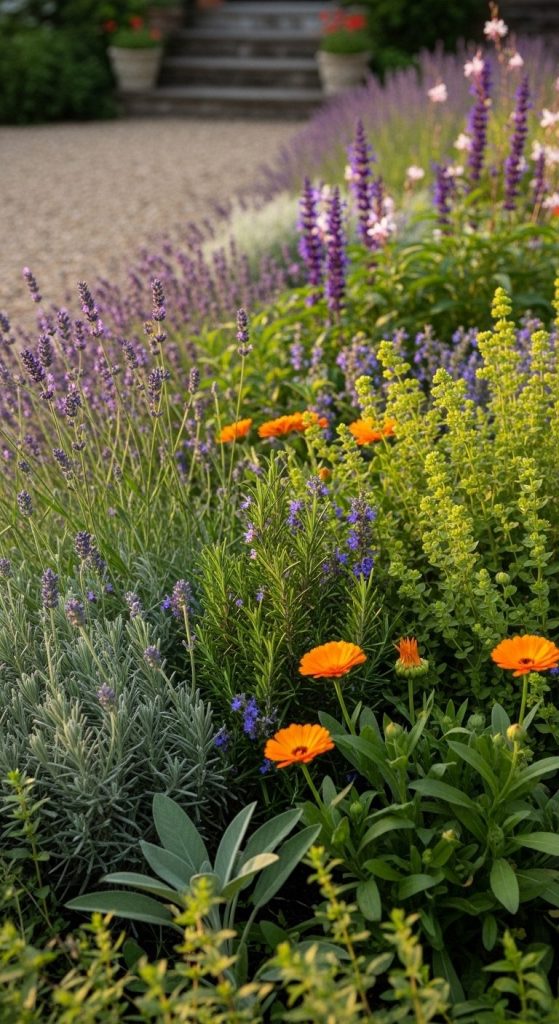
Not every garden path needs stone.
A narrow grass path cutting through flower beds creates a soft cottage feel that feels both practical and nostalgic.
This style works especially well in wider yards where flowers grow in large drifts rather than narrow borders.
Gardeners often mow a slightly winding strip to maintain the pathway.
Pros
- Very affordable to create
- Blends naturally into the garden
- Comfortable to walk on barefoot
Cons
- Requires consistent mowing
- Can become muddy in heavy rain
Mini takeaway
Grass pathways make a garden feel relaxed and approachable. FYI, they also photograph beautifully during spring bloom season.
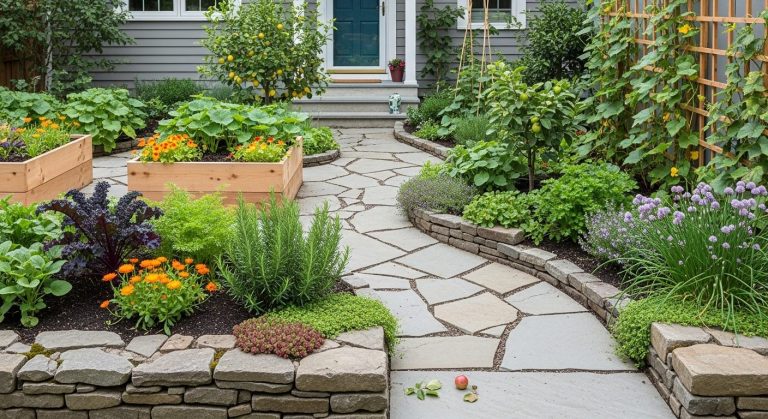
6. Mixed Herb and Flower Beds
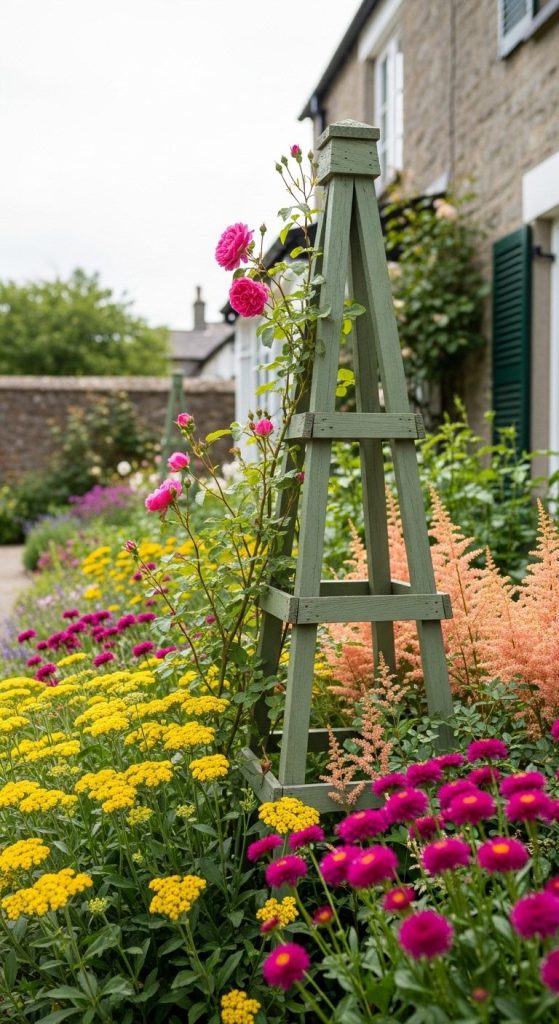
Traditional cottage gardens rarely separated herbs from flowers. Everything grew together.
Plant rosemary, sage, thyme, and oregano alongside flowers like lavender and calendula. The scents mix together and create an amazing sensory experience.
Many herbs also attract pollinators, which helps nearby plants thrive.
Pros
- Adds fragrance throughout the garden
- Provides useful cooking herbs
- Encourages beneficial insects
Cons
- Herbs may spread quickly
- Some varieties prefer drier soil
Mini takeaway
Combining herbs and flowers makes the garden both beautiful and practical. Honestly, brushing past thyme while walking through the yard feels incredible.
7. Climbing Roses on Front Garden Trellises
Few plants define cottage gardens better than roses climbing gracefully upward.
A simple wood or metal trellis placed in the garden bed allows climbing roses to grow vertically while saving ground space.
Over time, the blooms create a dramatic focal point in the yard.
According to the American Rose Society, climbing roses can produce hundreds of blooms in one season when properly supported.
Pros
- Adds vertical interest to flat gardens
- Produces large seasonal flower displays
- Enhances the classic cottage aesthetic
Cons
- Requires annual pruning
- Takes a few seasons to fully cover the trellis
Mini takeaway
Climbing roses bring timeless charm. Once they mature, they turn an ordinary garden corner into something unforgettable.
8. Gravel Courtyard Section Inside the Garden
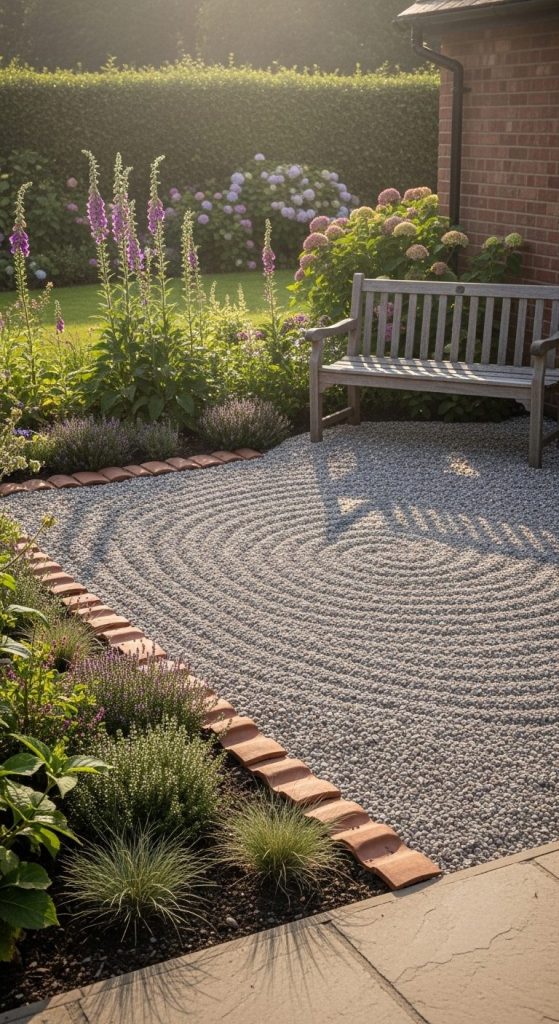
A small gravel courtyard area within the garden gives the space structure without losing its relaxed feel.
This section might sit near the entrance or slightly deeper into the garden layout.
Gravel allows water drainage while blending naturally with surrounding flowers and plants.
Pros
- Affordable ground cover option
- Provides a resting or standing area in the garden
- Prevents muddy soil in high-traffic spots
Cons
- Needs occasional raking to keep level
- Weeds may appear if landscape fabric isn’t used
Mini takeaway
A gravel courtyard balances wild flowers with a practical surface. That contrast actually makes the garden look more intentional.
9. Flower Arches Over the Garden Path
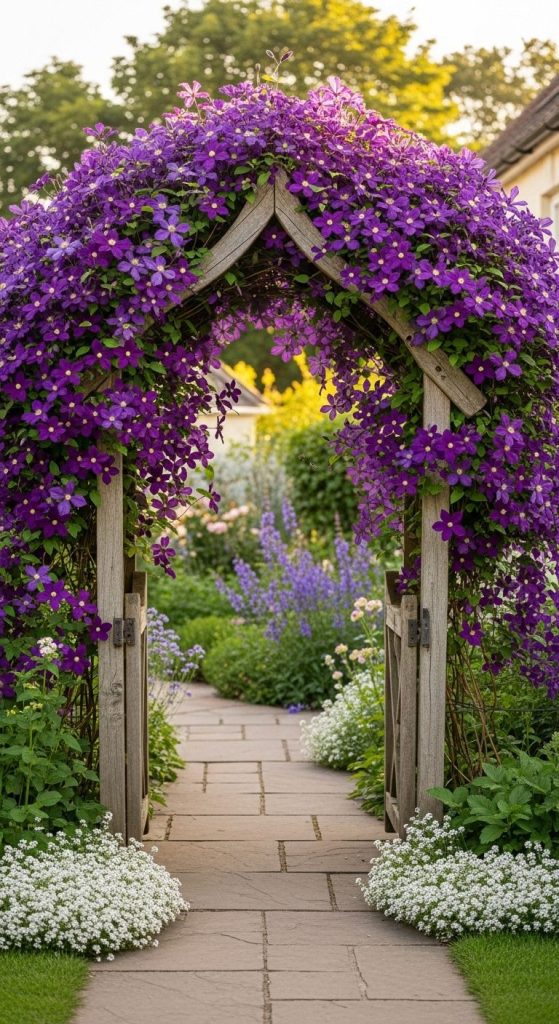
Arches create a moment of drama in a front yard cottage garden without requiring a large space.
Train climbing plants like roses, clematis, or honeysuckle to grow over a simple metal or wooden arch placed along the path.
Walking beneath blooming flowers feels almost magical.
Pros
- Creates a strong visual focal point
- Encourages vertical plant growth
- Defines sections of the garden naturally
Cons
- Initial structure installation required
- Climbing plants need occasional training
Mini takeaway
Garden arches transform ordinary paths into memorable garden features. Guests always notice them first.
10. Dense Pollinator Plant Zones
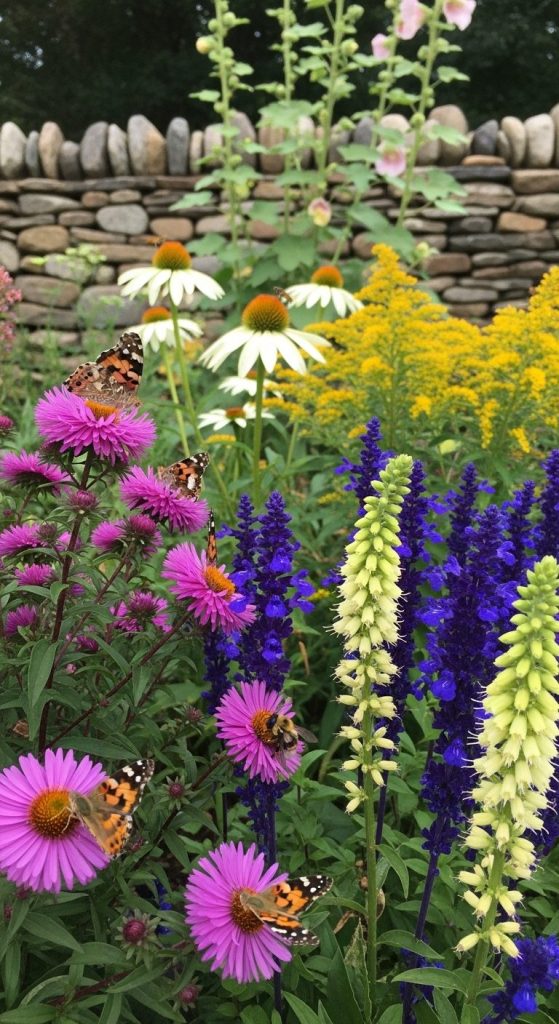
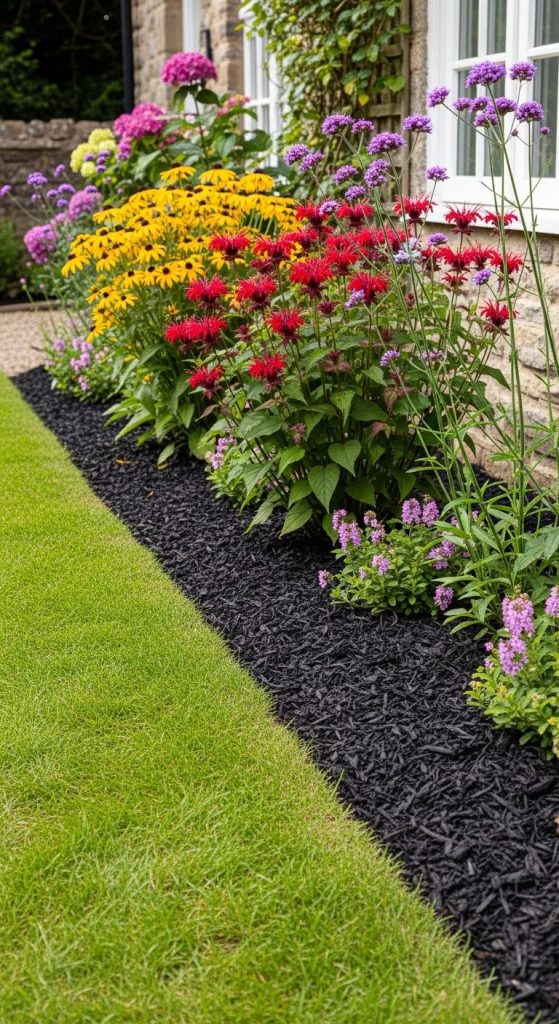
Pollinators love cottage gardens because of their diversity.
Design a section dedicated to bee-friendly flowers like echinacea, lavender, bee balm, and yarrow.
These flowers provide nectar across long blooming periods.
The U.S. Department of Agriculture reports that pollinator gardens improve local ecosystem health and increase vegetable yields nearby.
Pros
- Supports bees and butterflies
- Keeps the garden lively and active
- Promotes healthier plant growth
Cons
- Bees may surprise visitors unfamiliar with pollinator gardens
- Requires seasonal deadheading
Mini takeaway
A pollinator zone makes the garden feel alive. Watching butterflies drift across flowers never gets old.
11. Stone Edging Around Garden Beds
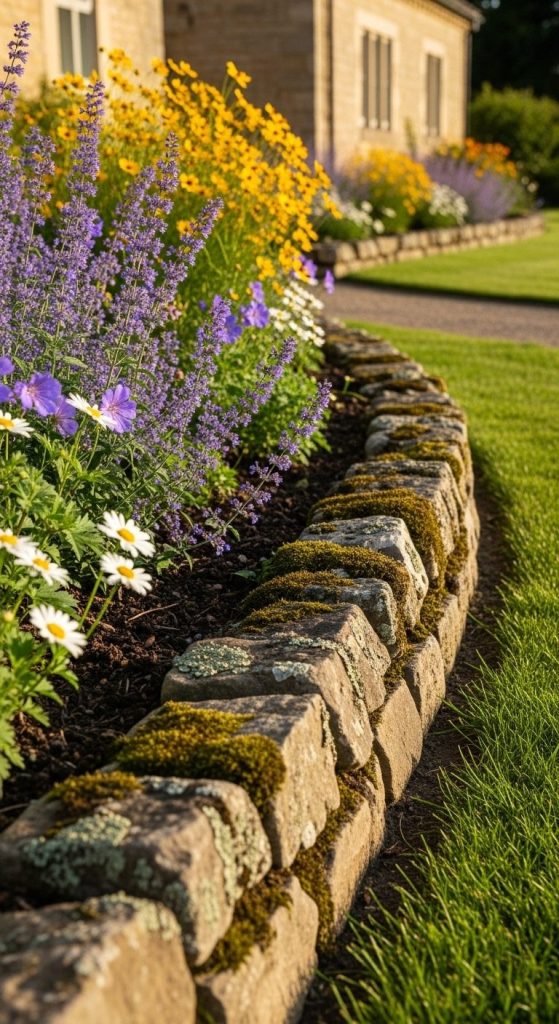
Stone edging quietly organizes the natural chaos of a cottage garden.
Place rough stone borders around flower beds to keep soil in place while still maintaining a rustic look.
Flat fieldstones or limestone pieces work beautifully.
Pros
- Prevents soil erosion
- Defines planting zones clearly
- Adds texture and natural structure
Cons
- Requires time to install properly
- Heavy stones may need leveling
Mini takeaway
Stone edging creates balance. The garden still looks relaxed, but the structure keeps everything from feeling messy.
12. Seasonal Flower Rotation Beds
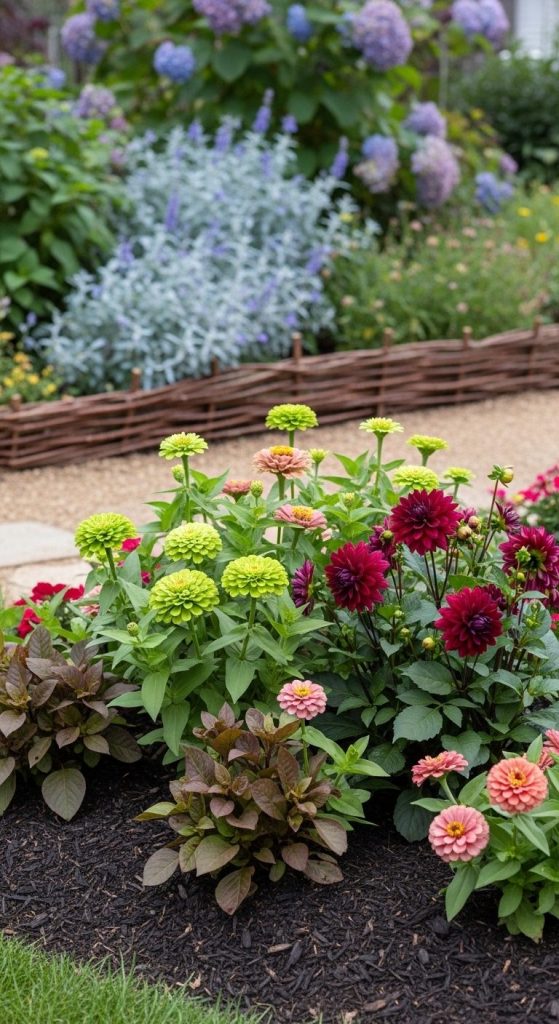
Even cottage gardens benefit from seasonal planning.
Design one section for seasonal flower rotation, allowing fresh plants to cycle throughout the year.
Spring bulbs, summer zinnias, and fall asters keep the garden colorful for months.
Pros
- Maintains vibrant color year-round
- Allows experimentation with new plants
- Keeps the garden feeling fresh
Cons
- Requires seasonal planting work
- Soil preparation needed between cycles
Mini takeaway
Rotating flowers keeps the garden exciting. Every season brings a slightly different personality.
13. Cottage Garden Vegetable Corners
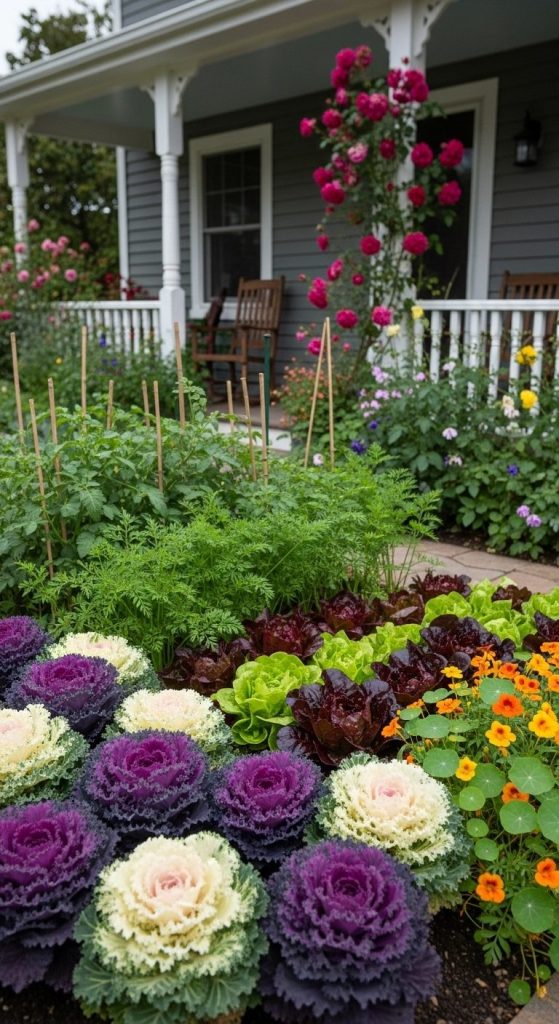
Traditional cottage gardens often included vegetables among flowers.
Plant compact vegetables like kale, lettuce, and dwarf tomatoes within the garden beds.
The leafy textures blend surprisingly well with flowers.
Pros
- Produces fresh food from the yard
- Adds interesting plant textures
- Maximizes small garden space
Cons
- Vegetables need consistent watering
- Some crops attract pests
Mini takeaway
Vegetables bring practicality to the garden. Plus, harvesting food from the front yard feels oddly satisfying.
14. Natural Mulch Path Edges
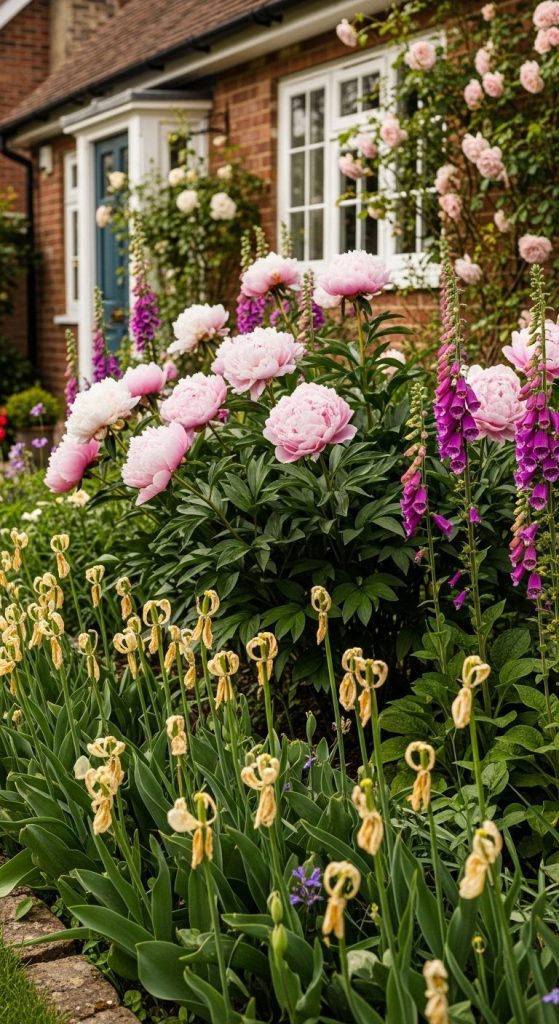
Mulch helps maintain soil health and keeps weeds down.
Use bark mulch along the edges of planting beds and paths to create a soft transition between walkways and flowers.
This simple addition improves moisture retention significantly.
Studies from the University of Florida IFAS Extension show organic mulch can reduce soil water evaporation by up to 30%.
Pros
- Retains soil moisture
- Reduces weed growth
- Improves soil quality over time
Cons
- Needs refreshing every year or two
- Strong winds may scatter light mulch
Mini takeaway
Mulch quietly improves garden health. It’s not flashy, but it makes a big difference behind the scenes.
15. Layered Bloom Calendar Planning
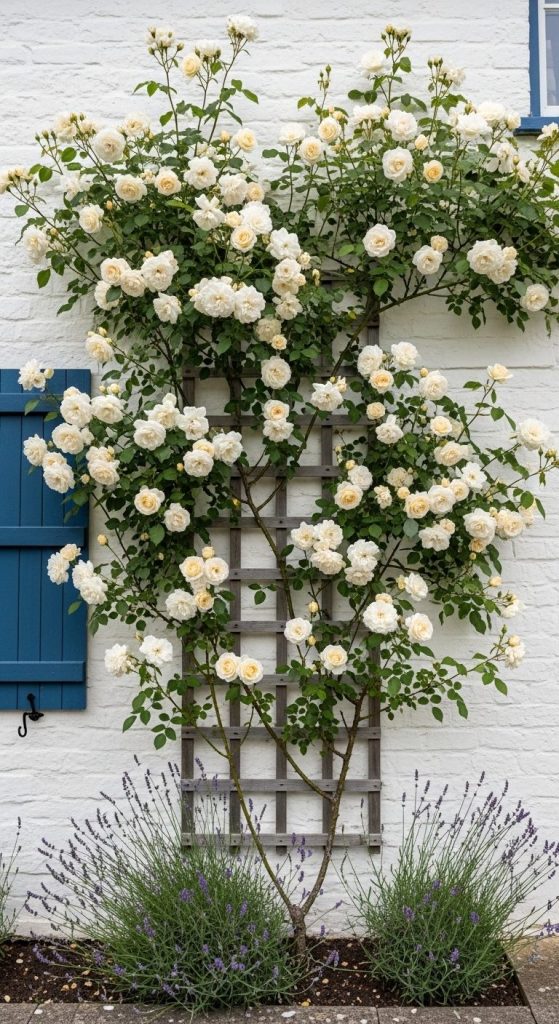
A cottage garden looks best when different plants bloom across the entire growing season.
Plan flowers based on bloom timing:
- Spring: tulips, daffodils
- Early summer: peonies, foxgloves
- Late summer: coneflowers, black-eyed Susans
- Fall: asters and sedum
This approach ensures color almost every month.
Pros
- Keeps the garden lively all year
- Prevents empty seasonal gaps
- Encourages diverse plant combinations
Cons
- Requires planning during the planting stage
- Some bulbs need fall planting preparation
Mini takeaway
A bloom calendar turns a garden into a living timeline. Every few weeks, something new begins to flower.
Conclusion
A front yard cottage garden offers something many modern landscapes miss — personality.
Instead of rigid symmetry and perfectly trimmed hedges, this style celebrates color, movement, and a slightly wild charm. Flowers spill into pathways, herbs mingle with blooms, and every corner invites curiosity.
What makes this style so appealing is how achievable it feels. You don’t need a massive yard or expensive materials. With layered planting, curved paths, climbing flowers, and a thoughtful bloom schedule, the garden slowly evolves into something full of life.
Honestly, the most beautiful cottage gardens rarely appear overnight. They grow over time as plants spread, new flowers join the mix, and the space gains character year after year.
That slow transformation becomes part of the joy.
Start with one or two ideas that excite you most. Maybe layered flower beds, a curved pathway, or a climbing rose arch. As the garden grows, it begins telling its own story — one bloom at a time.

William Martin is a passionate bowler who spends most of his weekends playing the sport. With years of intense experience under his belt, William decided to share his knowledge by creating BOWLING OCEAN. Join me on this journey to explore the world of bowling and discover the tips and tricks to becoming a pro.