15 Front Yard Desert Landscaping Ideas for Stunning Curb Appeal
A few summers ago, I walked past a neighbor’s yard that looked nothing like the typical patchy grass lawns around it. Instead of struggling turf and brown spots, the entire space used gravel, sculptural plants, and warm stone paths. It felt calm, modern, and surprisingly alive.
That moment completely changed how I think about front yard desert landscaping ideas.
Traditional lawns often fight the climate in dry regions. They demand constant watering, trimming, and fertilizing. Desert landscapes flip that idea upside down. Instead of battling the environment, they work with it.
And the best part? These yards can look stunning while staying practical.
More homeowners now lean toward drought-friendly landscaping. According to water conservation studies from the EPA WaterSense program, replacing turf with xeriscaping can reduce outdoor water use by 50–75% in dry climates. That’s a huge difference for both the environment and your utility bill.
If you want a front yard that looks stylish, survives heat waves, and doesn’t demand weekend-long maintenance sessions, you’re in the right place.
Below are 15 practical front yard desert landscaping ideas that real homeowners actually build—and love living with.
1. Gravel Base with Sculptural Cactus Clusters
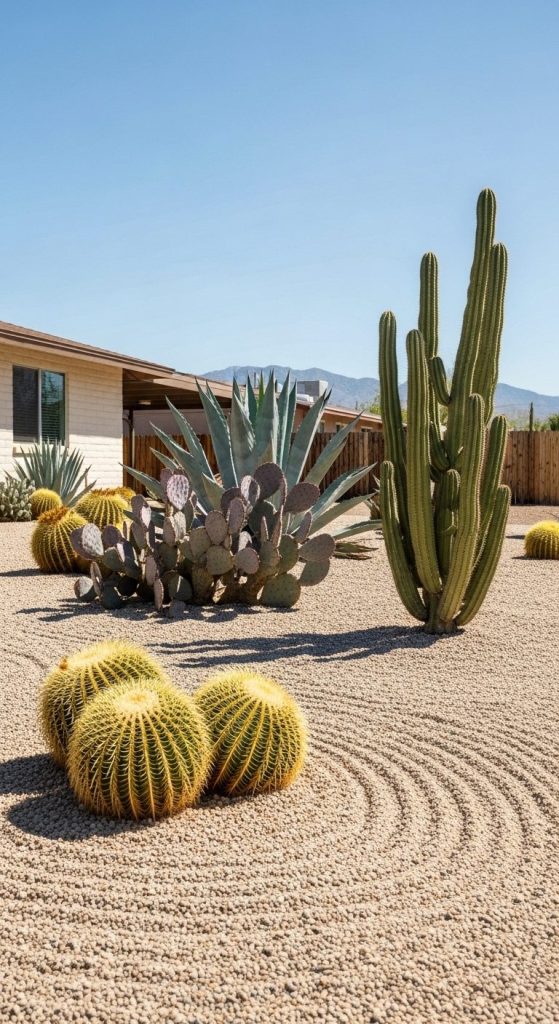
Some landscapes rely on lush greenery. Desert landscapes rely on shape. And cactus plants bring incredible structure to a yard.
Start with a base of light-colored gravel across the yard. Then create small clusters of cactus varieties rather than planting them in straight lines.
A mix of barrel cactus, prickly pear, and tall column cactus creates height variation that feels natural instead of staged.
Leave open space between clusters so the shapes stand out.
Pros:
- Extremely low water usage
- Strong architectural visual impact
- Minimal long-term maintenance
- Gravel suppresses weeds effectively
Cons:
- Initial plant cost can add up
- Requires gloves and care when planting
Mini takeaway:
Desert yards thrive on bold plant shapes and clean ground textures. A gravel and cactus layout delivers both without complicated planning. Honestly, even a small yard can look professionally designed with this approach.
2. A Natural Dry Creek Bed Feature
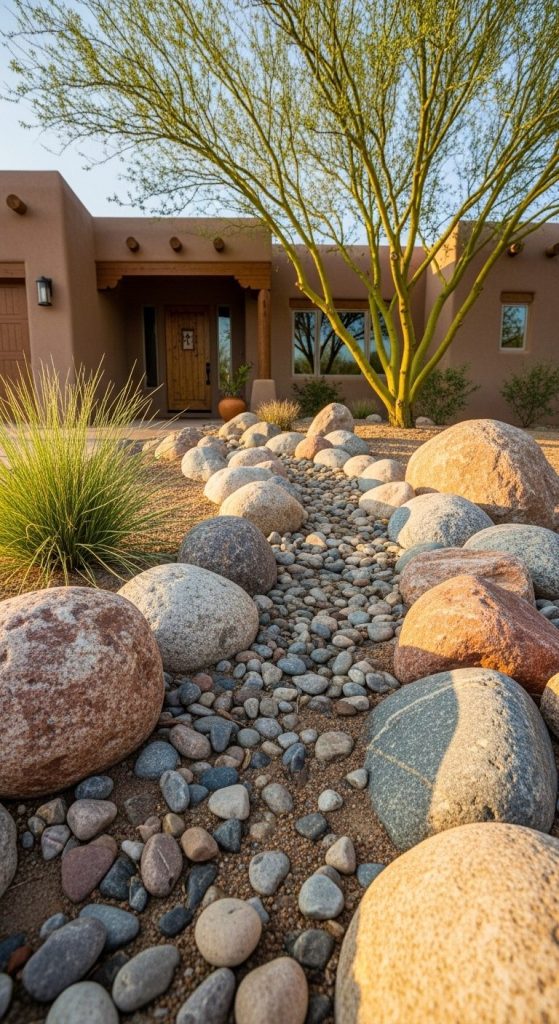
Ever notice how desert landscapes often include stone riverbeds that carry rainwater during storms?
You can recreate that same idea in your front yard.
A dry creek bed uses smooth river rocks arranged in a winding channel across the yard. It visually breaks up gravel areas and adds movement to the design.
During heavy rain, the channel also directs water away from your home’s foundation.
Use larger rocks along the edges and smaller stones inside the channel to mimic natural erosion patterns.
Pros:
- Improves drainage during storms
- Adds visual flow to the yard
- Creates contrast with gravel areas
Cons:
- Requires some digging and shaping
- Needs proper slope planning
Mini takeaway:
A dry creek bed solves a practical problem while adding natural beauty. It also makes your yard feel like a tiny desert landscape rather than a flat gravel lot.
3. Raised Decomposed Granite Plant Beds
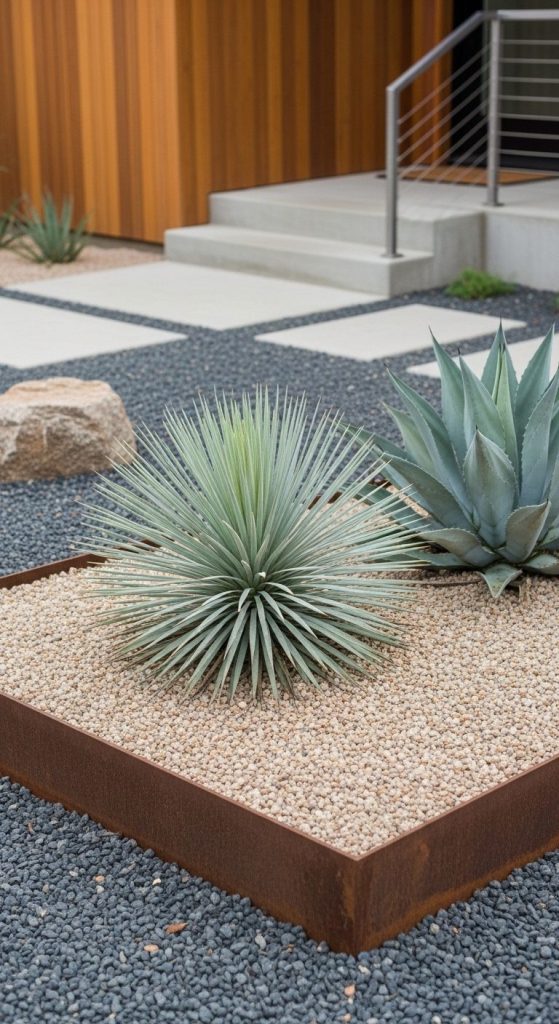
Flat yards often look unfinished. Raised beds bring dimension.
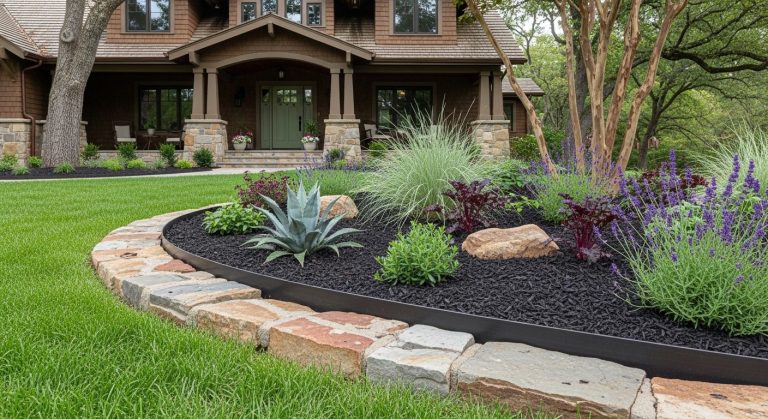
Instead of wood or concrete borders, many desert yards use mounded beds filled with decomposed granite.
Decomposed granite looks like natural sandy gravel but compacts slightly over time, creating a clean surface that drains well.
Plant drought-tolerant plants like yucca, desert spoon, or agave inside these raised pockets.
The elevation change instantly makes the yard feel more layered.
Pros:
- Excellent drainage for desert plants
- Creates visual depth
- Prevents water pooling around roots
Cons:
- Requires shaping soil during installation
- Granite may shift slightly before compacting
Mini takeaway:
Raised decomposed granite beds make even small yards feel intentionally designed. That little elevation change does more for curb appeal than most people expect.
4. A Central Agave Feature Island
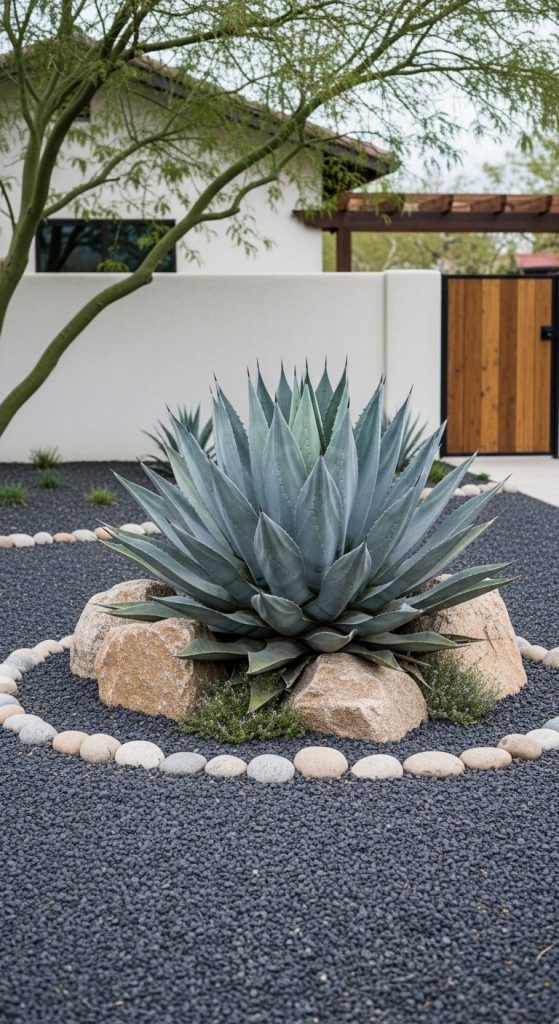
Some plants deserve the spotlight.
Agave plants bring bold symmetry and dramatic geometry. A single agave island in the middle of your yard creates a striking focal point.
Surround the plant with a circular patch of decorative gravel or crushed stone. Then add three or four accent rocks around it to anchor the design.
Keep surrounding landscaping simple so the plant stands out.
Pros:
- Instant focal point
- Extremely drought tolerant
- Very low maintenance once established
Cons:
- Agave spikes require careful placement away from walkways
- Some varieties grow slowly
Mini takeaway:
One dramatic plant can anchor an entire landscape. A central agave island proves that simple design choices often create the strongest visual impact.
5. A Seasonal Desert Wildflower Strip
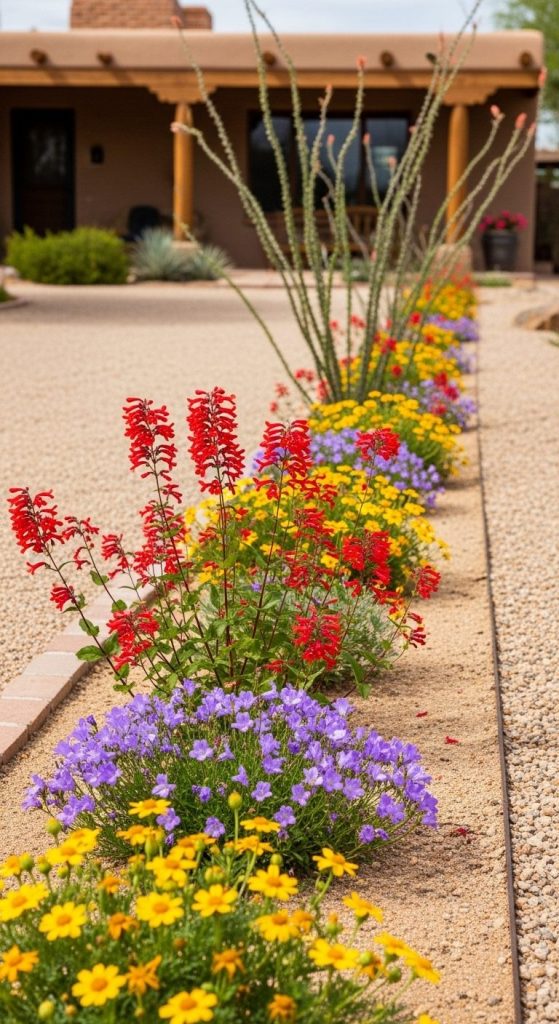
Desert yards don’t have to look monochrome.
Many homeowners add a narrow strip of native desert wildflowers along the front edge of their property.
Plants like desert marigold, penstemon, and globe mallow bloom in bursts of color during spring and early summer.
According to the Lady Bird Johnson Wildflower Center, native wildflowers support local pollinators while using significantly less water than ornamental garden plants.
Pros:
- Seasonal bursts of color
- Supports bees and pollinators
- Requires minimal irrigation once established
Cons:
- Some wildflowers die back in extreme heat
- Seasonal appearance may vary yearly
Mini takeaway:
A desert yard doesn’t mean colorless. Native wildflowers introduce life and movement without compromising water efficiency.
6. Flagstone Pathways Through Gravel
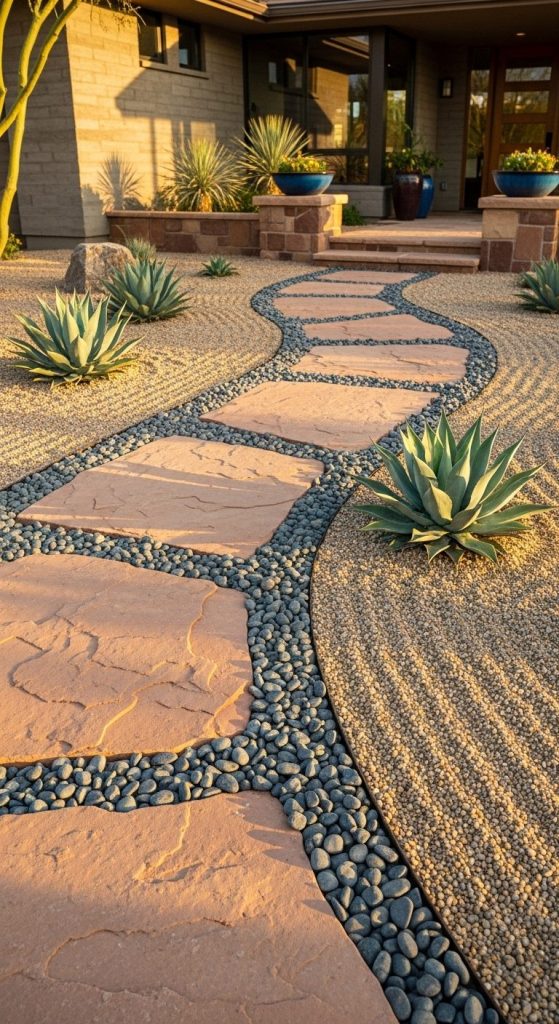
Walking across gravel feels awkward. A stone pathway solves that instantly.
Install a flagstone stepping path from the sidewalk to your front door.
Space stones slightly apart and fill gaps with small gravel or decomposed granite.
This simple addition guides visitors naturally toward your entrance.
Pros:
- Improves walkability
- Adds visual structure to the yard
- Durable in extreme climates
Cons:
- Requires leveling ground before installation
- Larger stones increase cost
Mini takeaway:
Paths quietly organize a landscape. Once installed, they make the entire yard feel more polished and welcoming.
7. Grouped Terracotta Planter Courtyard
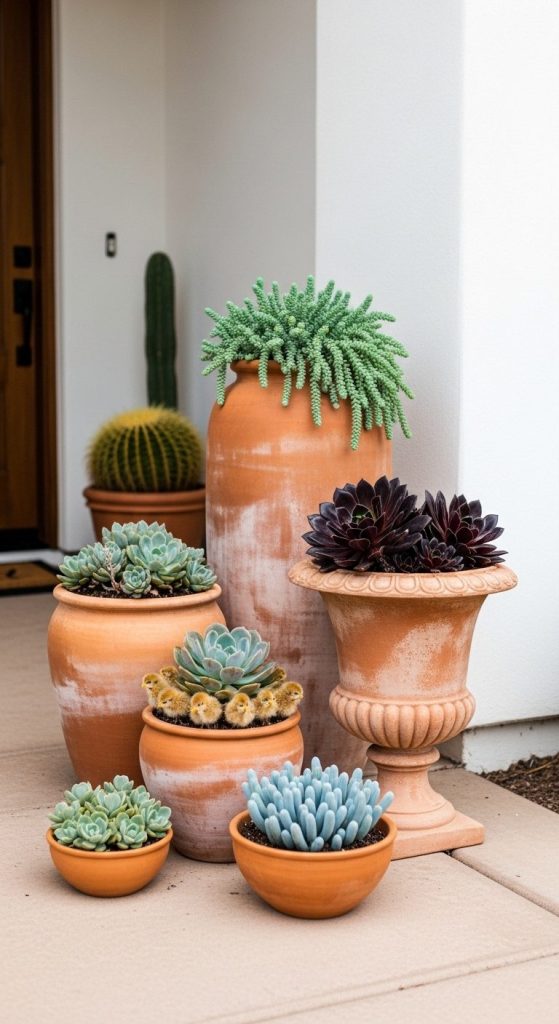
Sometimes the easiest landscaping upgrade sits above ground.
Create a cluster of terracotta planters near your entry walkway.
Use varying pot heights and plant succulents like aloe, echeveria, and kalanchoe.
Terracotta naturally complements desert palettes because the warm clay tones echo surrounding soil and rock.
Pros:
- Flexible arrangement
- Easy plant replacement
- Adds height without digging
Cons:
- Pots dry out faster than ground soil
- Strong winds may tip lighter containers
Mini takeaway:
Grouped planters work like movable landscaping. You can rearrange them anytime your yard needs a refresh.
8. Ornamental Desert Grass Borders
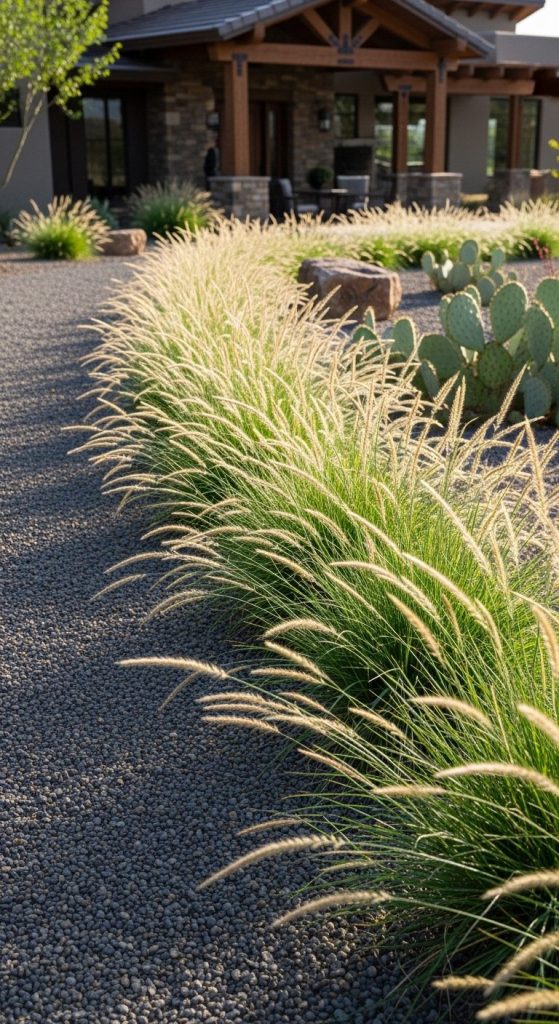
Not every plant in a desert yard has to look spiky.
Ornamental grasses soften the edges beautifully.
Plants like Mexican feather grass or deer grass sway in the wind and add texture along walkways or property borders.
Research from Arizona Cooperative Extension shows that many desert grasses survive on 30–50% less irrigation than traditional lawn grass.
Pros:
- Adds movement and softness
- Tolerates heat and drought
- Blends well with rock landscapes
Cons:
- Needs trimming once or twice a year
- Some varieties spread if unmanaged
Mini takeaway:
Grasses add rhythm to a yard. Their movement makes the entire landscape feel alive.
9. Rock Mulch Succulent Grid
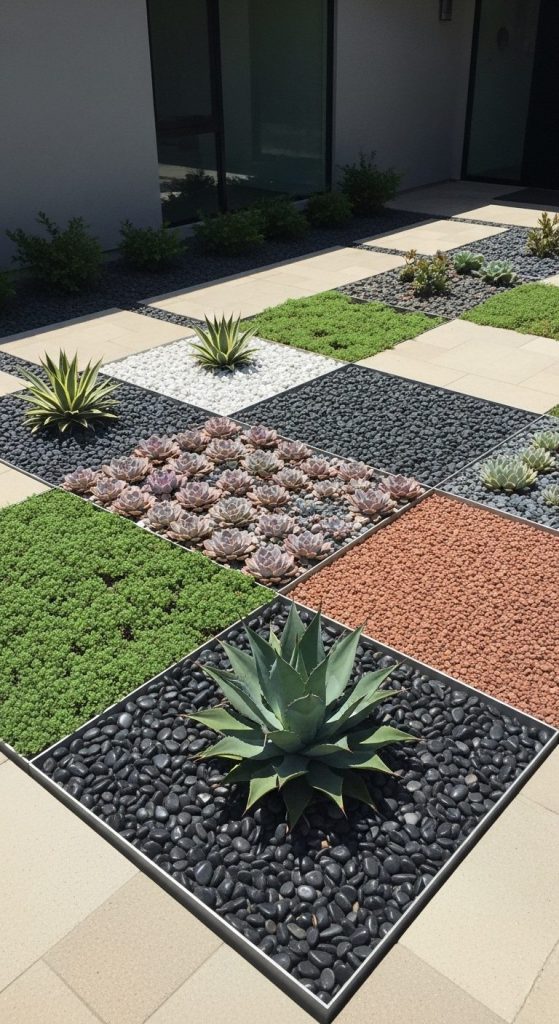
This idea works especially well in modern homes.
Divide a planting area into a clean geometric grid using square or rectangular planting pockets.
Each section contains a single succulent species surrounded by decorative rock mulch.
The layout feels minimalist and organized while still highlighting plant diversity.
Pros:
- Clean modern aesthetic
- Easy to maintain plant groups
- Rock mulch reduces soil evaporation
Cons:
- Grid layout requires careful measuring
- Plants must stay proportionate to sections
Mini takeaway:
Order can look just as beautiful as nature-inspired chaos. A succulent grid offers a modern twist on desert landscaping.
10. Gentle Soil Berm Landscape
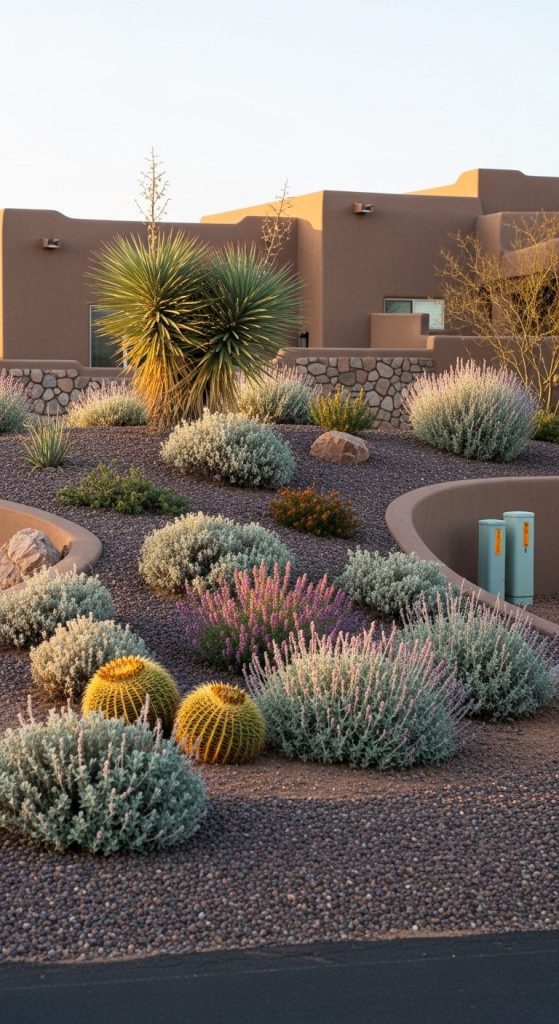
Flat landscapes sometimes look unfinished.
A soil berm adds subtle elevation that makes the yard feel sculpted.
A berm forms a low rolling mound planted with desert shrubs and succulents.
Landscape designers often use berms to hide irrigation equipment or utility boxes while enhancing visual depth.
Pros:
- Creates natural-looking elevation
- Improves drainage
- Adds visual interest
Cons:
- Requires soil movement during installation
- Needs proper grading
Mini takeaway:
Even a 12-inch rise in soil changes how a yard feels. Berms create natural flow that flat ground simply can’t match.
11. A Small Palo Verde Shade Pocket
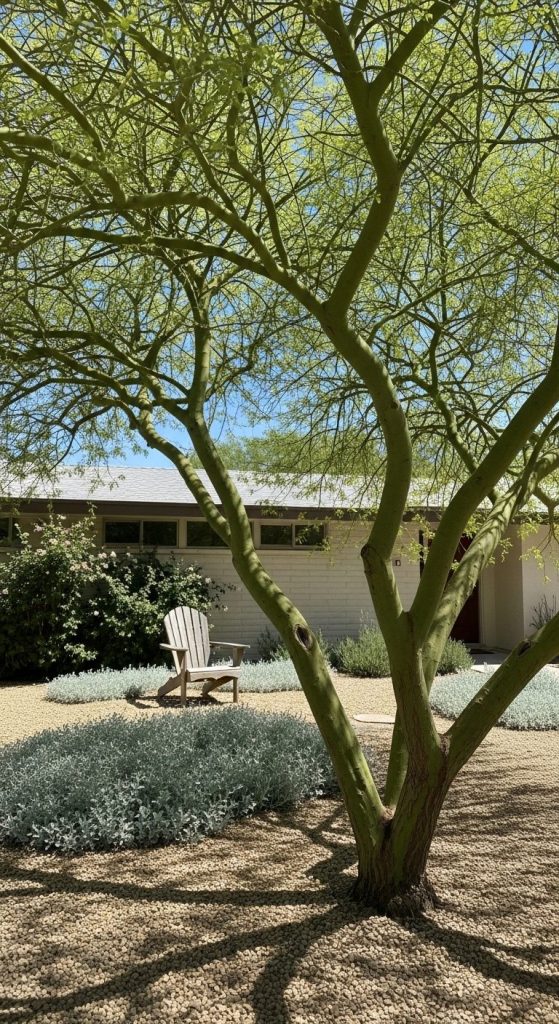
Shade transforms how a yard feels.
A palo verde tree creates filtered shade while maintaining the desert aesthetic.
These trees grow airy canopies that allow sunlight through while reducing harsh afternoon heat.
According to Southwest urban forestry studies, palo verde trees thrive in arid soils and require minimal supplemental irrigation once mature.
Pros:
- Provides shade without dense canopy
- Extremely drought tolerant
- Bright green trunk adds color
Cons:
- Takes several years to mature
- Requires occasional pruning
Mini takeaway:
A single tree can change the comfort level of your yard dramatically. The right desert species adds beauty without increasing water demand.
12. Rainwater Swale Garden
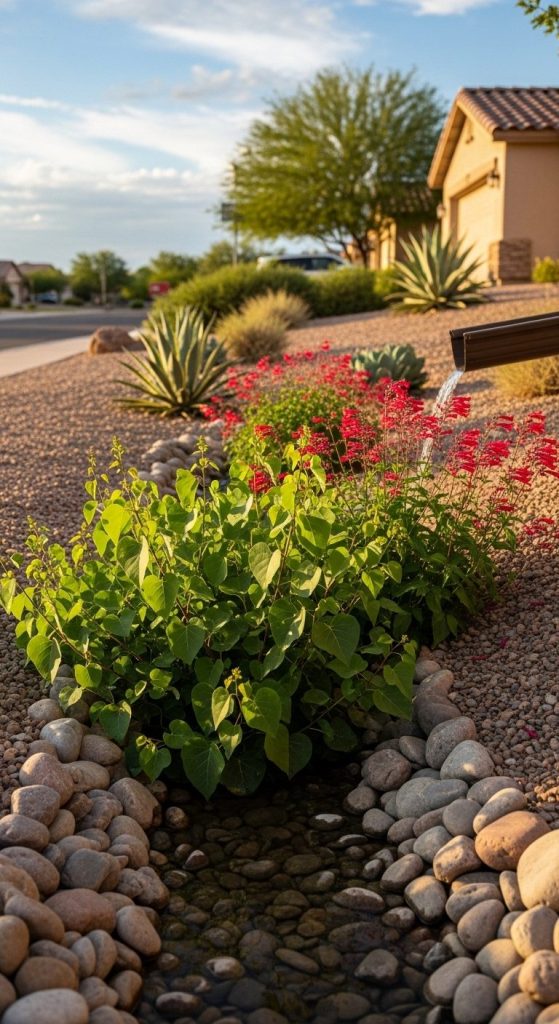
Desert storms may arrive suddenly, but they bring valuable water.
A rainwater swale captures runoff and directs it into a shallow planting basin.
Native plants inside the basin absorb the collected water instead of letting it drain into the street.
This method forms the backbone of many water-conserving landscapes.
Pros:
- Reduces irrigation needs
- Prevents erosion
- Supports healthier plant growth
Cons:
- Requires correct slope design
- May need professional planning in larger yards
Mini takeaway:
Smart landscaping turns rainfall into a resource. Swales help desert yards thrive even in dry climates.
13. Modern Concrete and Gravel Strip Design
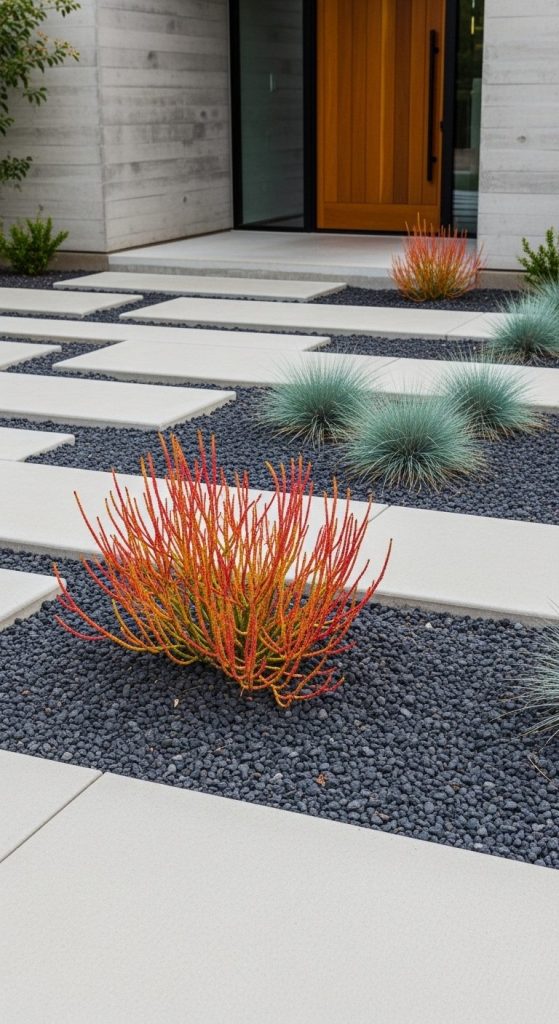
Minimalist homes often pair beautifully with structured desert landscaping.
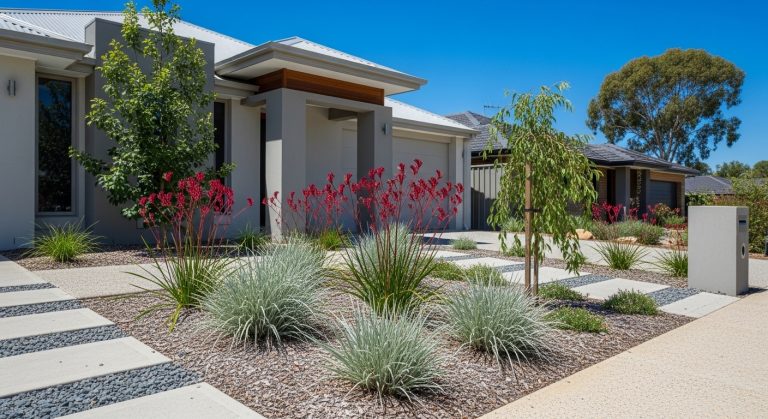
Install parallel strips of concrete pavers separated by gravel bands.
This layout creates a bold modern pattern while maintaining permeable ground surfaces.
Use drought-tolerant plants sparingly between sections.
Pros:
- Contemporary appearance
- Durable and long-lasting
- Low weed growth
Cons:
- Concrete installation costs more
- Requires precise measurements
Mini takeaway:
Sometimes landscaping works best when it echoes architecture. Clean lines and simple materials create a cohesive look.
14. Boulder Seating Nook
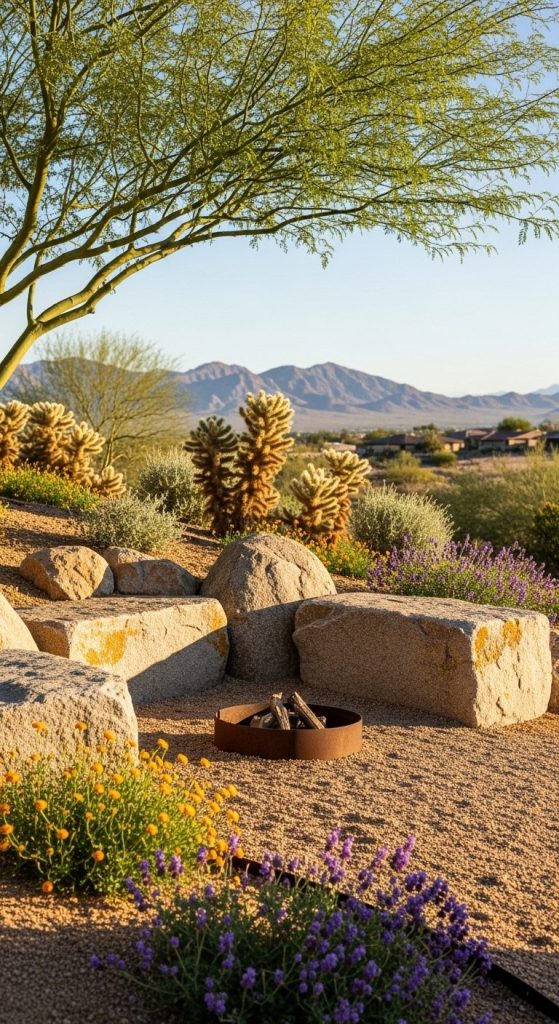
Large natural boulders add instant authenticity to desert yards.
Place two or three flat-topped boulders in a shaded corner of the yard to form a small seating nook.
Surround the area with gravel and low plants to keep the focus on the stone.
Pros:
- Natural seating option
- Blends with desert environments
- Requires zero maintenance
Cons:
- Transporting large stones can be expensive
- Placement requires planning
Mini takeaway:
Landscaping doesn’t always require furniture. Natural stone often feels more integrated with the environment.
15. Subtle Uplighting for Nighttime Desert Texture
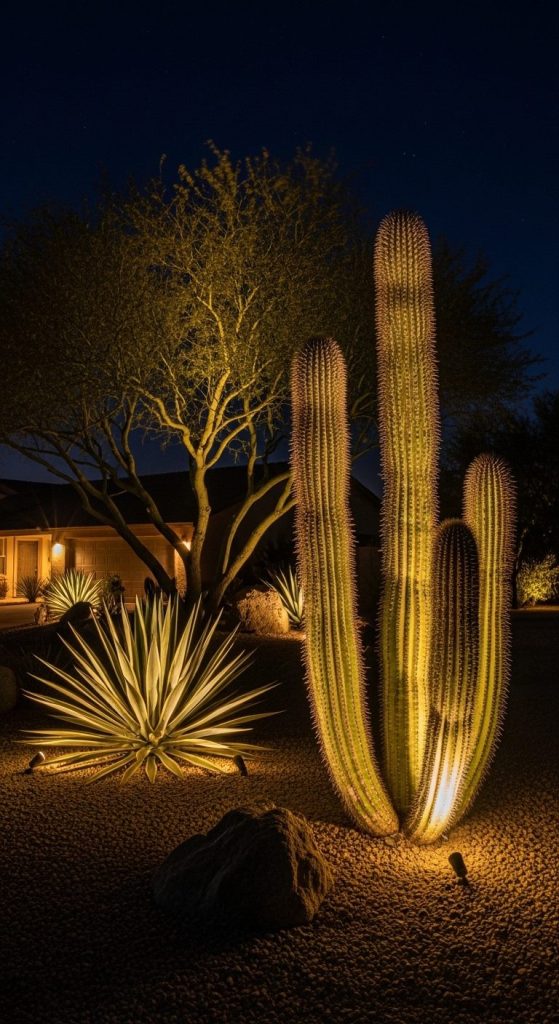
Desert plants look completely different at night.
Low-voltage landscape lights placed near cactus, agave, or rock formations cast dramatic shadows across the yard.
The result feels calm and atmospheric rather than bright and flashy.
Outdoor lighting experts often recommend 2700K warm lighting to preserve the natural warmth of desert tones.
Pros:
- Enhances nighttime curb appeal
- Improves pathway visibility
- Highlights plant structure
Cons:
- Requires electrical setup
- Lights may need occasional repositioning
Mini takeaway:
Night lighting reveals a whole new side of desert landscaping. Even a few carefully placed lights can transform the yard after sunset.
Conclusion
The beauty of front yard desert landscaping ideas lies in their balance of simplicity and character.
Instead of fighting nature with thirsty lawns, these landscapes embrace heat, sun, and dry soil. Gravel replaces turf. Sculptural plants replace high-maintenance shrubs. Smart water management turns occasional rain into a resource.
And the result often looks better than traditional yards.
What I personally love most about desert landscaping is how intentional every element feels. Each rock, plant, and path plays a role. Nothing exists just to fill space.
If you’re thinking about transforming your yard, start small. Maybe install a gravel base and add a cactus cluster. Or try a flagstone pathway first.
Once you see how low maintenance and visually striking these designs can be, expanding the landscape becomes exciting instead of overwhelming.
Pick the idea that resonates most with you and build from there. Desert landscapes reward patience—and they only get better with time.

William Martin is a passionate bowler who spends most of his weekends playing the sport. With years of intense experience under his belt, William decided to share his knowledge by creating BOWLING OCEAN. Join me on this journey to explore the world of bowling and discover the tips and tricks to becoming a pro.