15 Front Yard Driveway Ideas That Instantly Boost Curb Appeal
A driveway rarely grabs attention—until you see one that completely transforms a home’s front yard. I remember walking past a house where the driveway used wide stone pavers separated by grass strips. The moment I saw it, the whole property looked more intentional, almost like the driveway itself acted as the centerpiece.
That experience made me realize something simple but powerful: a driveway isn’t just a place to park a car. It’s one of the first design features people notice when they approach a home.
Homeowners increasingly rethink their driveway layouts because they want something more attractive than plain concrete slabs. According to a report from the National Association of Realtors, exterior upgrades like driveways and walkways can increase perceived property value by up to 7–10% when done thoughtfully.
And honestly, that makes sense. The driveway connects the street to the home. It shapes how the front yard
looks, how water drains, and how comfortable daily parking feels.
If you’re planning to upgrade yours, these front yard driveway ideas offer practical, achievable approaches that homeowners actually install—and enjoy living with every day.
1. Wide Concrete Slab Driveway with Clean Expansion Lines
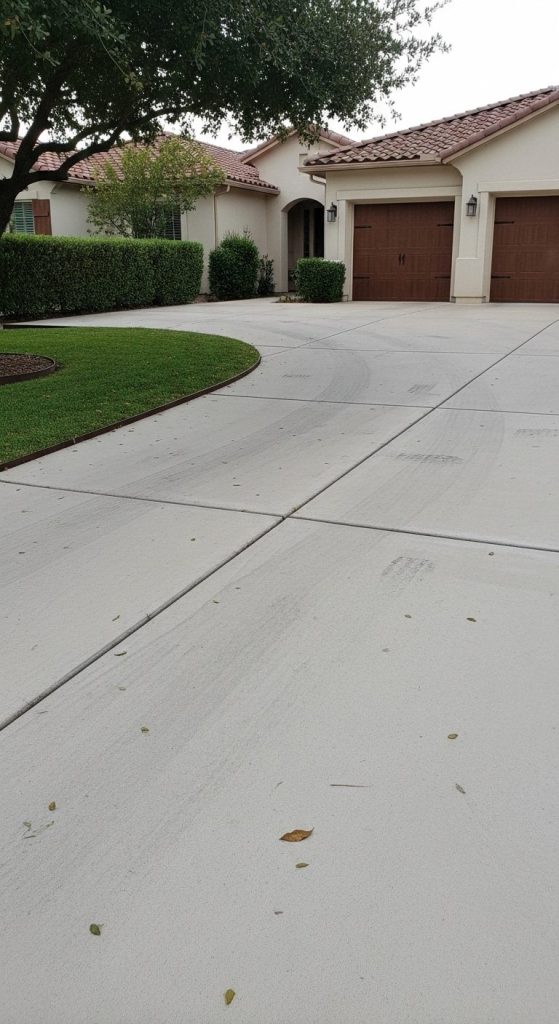
Sometimes the simplest solution works best, especially when it looks crisp and intentional. A wide concrete driveway with carefully spaced expansion joints creates a clean, structured look that suits almost any home style.
Instead of the typical narrow strip, many homeowners widen the slab slightly so parking feels easier and safer. The expansion lines form subtle square or rectangular patterns across the surface.
Those lines aren’t only decorative. They allow concrete to expand and contract during temperature changes, which prevents cracks.
Pros:
- Durable and long-lasting surface
- Clean appearance that complements modern or traditional homes
- Easy to maintain and clean
- Handles heavy vehicles easily
Cons:
- Installation costs more than gravel
- Repairs require professional work if major cracks develop
Mini takeaway:
A wide concrete driveway proves that simplicity often looks timeless. When the proportions feel right, the entire front yard looks more polished without extra design complexity.
2. Interlocking Brick Paver Driveway
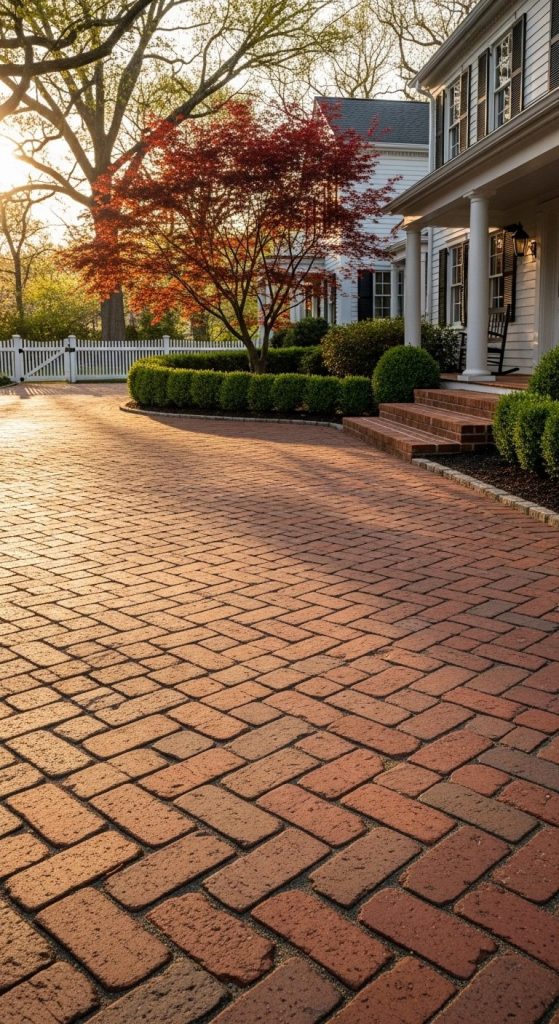
Some driveways feel warm and inviting the moment you see them. Brick pavers create that exact effect.
Instead of a poured surface, this driveway uses individual clay bricks arranged in patterns like herringbone or basket weave. The texture adds character and breaks up large paved areas.
If one brick cracks, you can replace it without removing the entire driveway. That flexibility explains why many homeowners choose pavers over concrete.
Pros:
- Classic, timeless appearance
- Easy to repair individual sections
- Excellent traction in wet weather
- Strong load-bearing structure
Cons:
- Installation requires careful leveling
- Weeds may appear between joints over time
Mini takeaway:
Brick pavers bring personality to a driveway. The surface feels handcrafted rather than industrial, and that subtle charm goes a long way in front yard design.
3. Two-Strip Concrete Ribbon Driveway
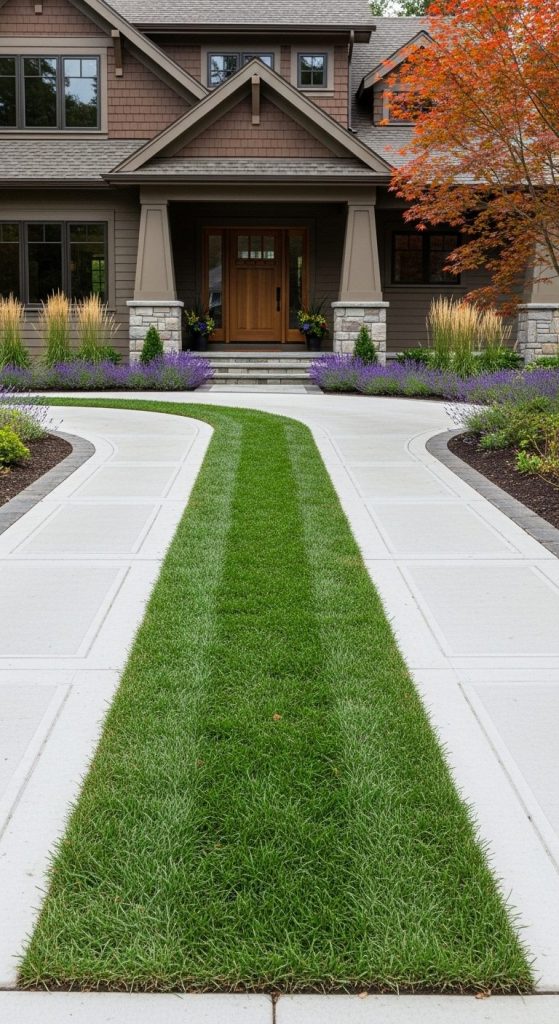
Not every driveway needs to cover the entire ground. A two-strip ribbon driveway uses two parallel concrete lanes where tires travel, leaving the middle section open.
The center area usually contains gravel, grass, or ground cover plants.
This design reduces material use while creating a lighter visual footprint across the yard.
Pros:
- Uses less concrete than full slabs
- Adds visual interest
- Allows water to absorb into the ground
- Works well in smaller front yards
Cons:
- Requires precise alignment for vehicle tires
- Grass or gravel center may need upkeep
Mini takeaway:
Ribbon driveways feel surprisingly elegant. They guide the car naturally while keeping the yard from looking overly paved.
4. Gravel Driveway with Steel Edging
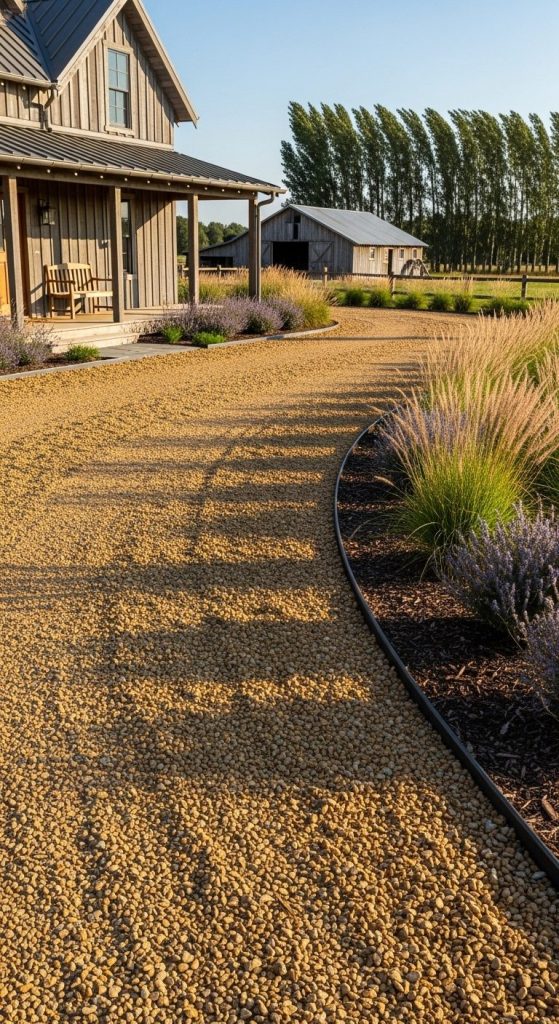
Gravel driveways remain popular for good reason. They cost less than most hard surfaces and adapt well to many home styles.
The key upgrade here involves steel edging along the sides. The metal borders keep gravel contained and maintain a sharp, defined line between the driveway and surrounding landscaping.
Without edging, gravel slowly spreads into lawns and flower beds.
Pros:
- Affordable installation
- Excellent drainage during rain
- Rustic and natural appearance
- Simple repairs by adding fresh gravel
Cons:
- Gravel shifts under tires
- Requires occasional leveling
Mini takeaway:
A gravel driveway looks casual yet refined when steel edging frames it properly. That small detail turns a simple surface into a tidy front yard feature.
5. Stamped Concrete Stone Pattern Driveway
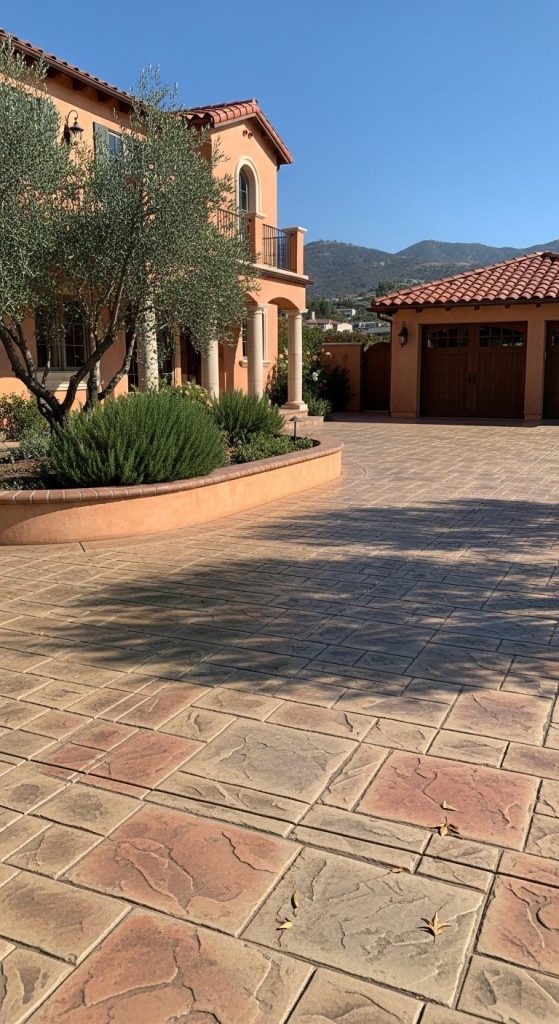
Stamped concrete offers the strength of concrete with the look of natural stone.
During installation, contractors press textured molds into wet concrete to mimic materials like slate, cobblestone, or flagstone. Color stains enhance the illusion.
The result looks like individual stone slabs even though the driveway remains one continuous surface.
According to the American Concrete Institute, stamped concrete surfaces maintain structural strength while delivering decorative finishes often used in residential landscaping.
Pros:
- Decorative stone look without stone installation
- Strong and durable
- Wide variety of patterns available
- Lower cost than natural stone
Cons:
- Repairs require matching texture and color
- Sealing recommended every few years
Mini takeaway:
Stamped concrete blends beauty with durability. It offers the charm of stone without the complicated installation process.
6. Permeable Grid Driveway System
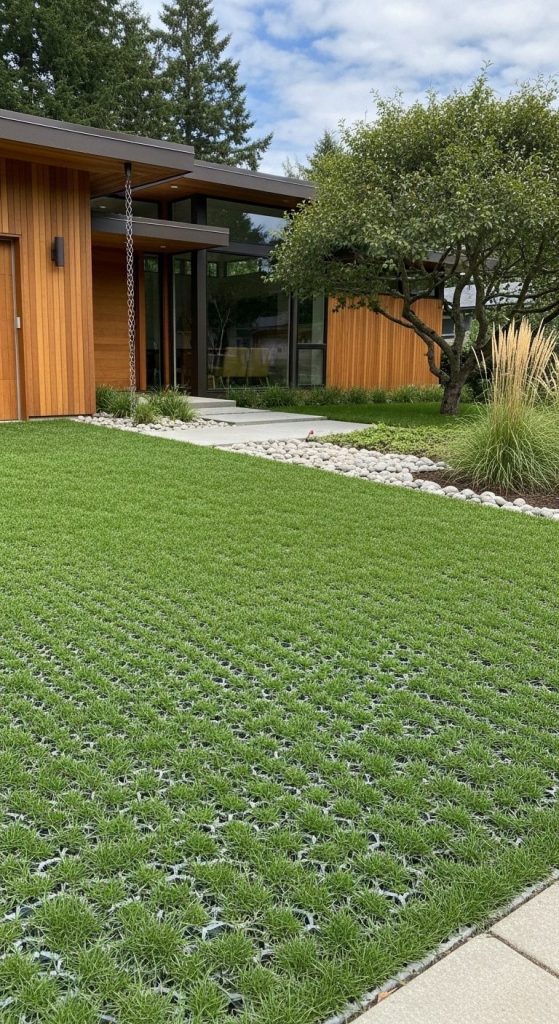
Water management matters more than most homeowners realize. Heavy rain can overwhelm traditional driveways that push runoff toward the street.
A permeable grid driveway solves this problem. Plastic or concrete grids install beneath gravel or grass, creating a stable surface that allows water to drain through the ground.
Cities increasingly encourage permeable surfaces to reduce stormwater runoff.
Pros:
- Excellent drainage
- Reduces puddles and runoff
- Supports grass or gravel surfaces
- Environmentally friendly design
Cons:
- Requires ground preparation
- Slightly higher upfront material cost
Mini takeaway:
Permeable systems work quietly beneath the surface. They improve drainage while keeping the driveway visually appealing.
7. Curved Driveway Layout
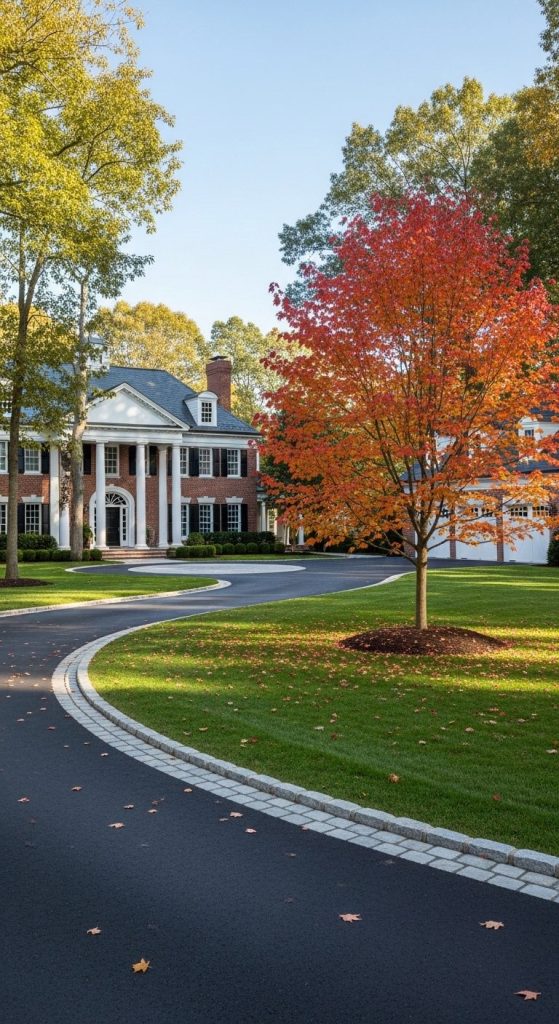
Straight driveways feel efficient, but curved driveways add elegance.
A gentle curve across the front yard creates a more natural flow from the street to the garage. It also softens the appearance of large paved areas.
Landscape designers often use curves to guide movement visually through outdoor spaces.
Pros:
- Improves curb appeal dramatically
- Creates graceful visual flow
- Works well for large front yards
- Slows vehicle entry speed
Cons:
- Requires more land space
- Construction planning becomes slightly more complex
Mini takeaway:
Curves introduce movement and sophistication. Even a subtle bend can elevate the entire front yard design.
8. Cobblestone Border Driveway Frame
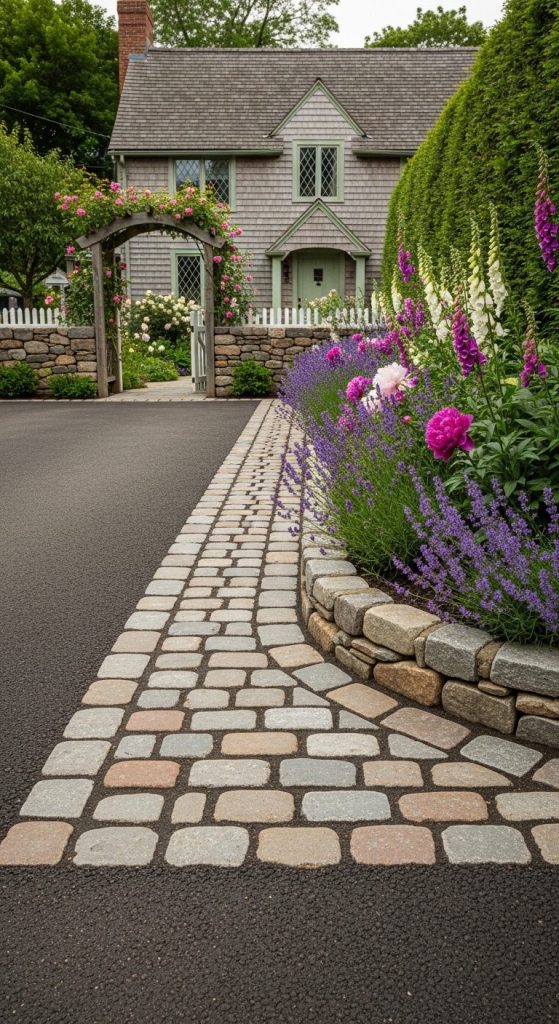
Borders bring definition to outdoor surfaces.
This driveway uses a standard concrete or asphalt base but adds a cobblestone edge frame along both sides. The border acts like a picture frame for the driveway surface.
Cobblestones contrast beautifully with smoother paving materials.
Pros:
- Instant visual upgrade
- Helps define driveway edges
- Durable stone material
- Works with multiple driveway surfaces
Cons:
- Stone installation increases labor cost
- Requires precise alignment
Mini takeaway:
Borders add structure and elegance. Cobblestone edges instantly make the driveway feel custom designed.
9. Exposed Aggregate Concrete Driveway
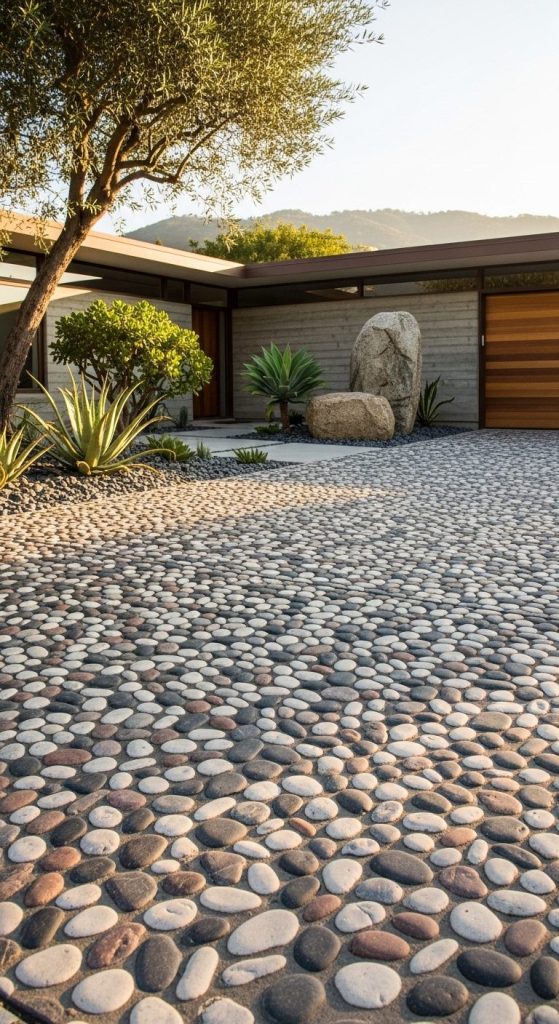
Some concrete surfaces hide their texture. Exposed aggregate celebrates it.
During finishing, contractors wash away the top cement layer to reveal decorative stones embedded in the concrete mix.
The stones create a textured surface that sparkles slightly in sunlight.
Pros:
- Slip-resistant surface
- Attractive natural stone texture
- Durable under heavy vehicles
- Low maintenance
Cons:
- Higher installation cost than basic concrete
- Repairs require professional finishing
Mini takeaway:
Exposed aggregate delivers durability with subtle beauty. It feels more organic than standard concrete while staying practical.
10. Large Concrete Paver Panel Driveway
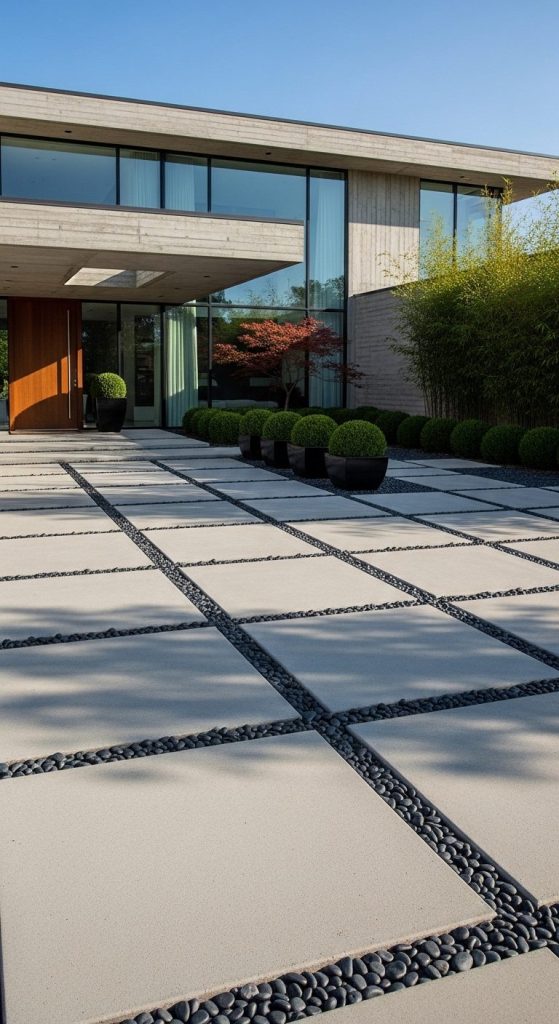
Large concrete panels create a bold, modern driveway appearance.
Instead of many small bricks, this design uses oversized square or rectangular pavers spaced slightly apart with gravel joints.
The wide spacing creates visual rhythm across the driveway.
Pros:
- Contemporary architectural look
- Strong structural surface
- Individual panels replace easily
- Clean geometric layout
Cons:
- Requires precise installation
- Large pavers cost more per unit
Mini takeaway:
Oversized pavers make a driveway feel like part of the home’s architecture rather than just a parking surface.
11. Asphalt Driveway with Stone Edge Restraints
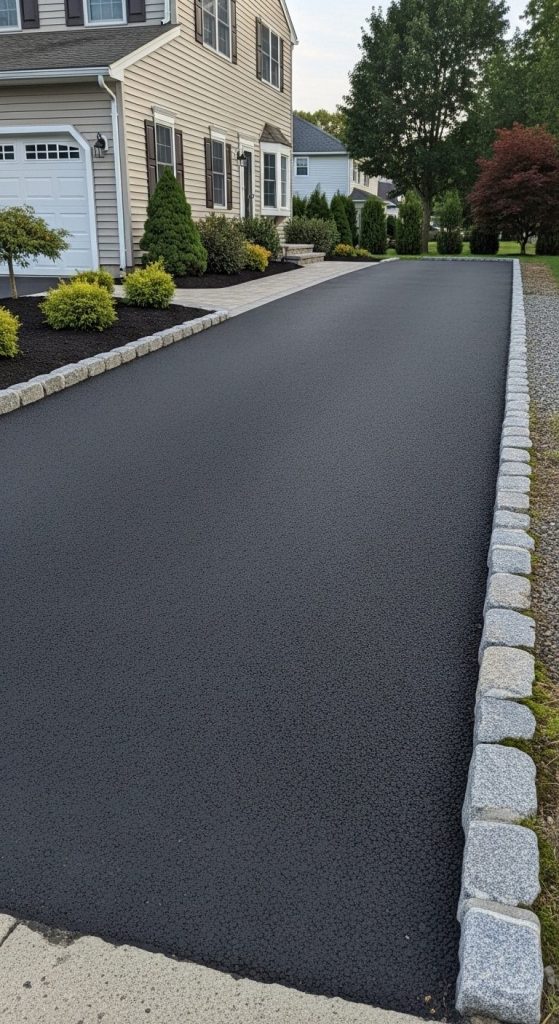
Asphalt remains one of the most affordable driveway surfaces.
However, asphalt alone sometimes looks unfinished. Adding stone edge restraints dramatically improves the appearance.
Natural stones line both sides of the asphalt strip, preventing edge cracking while enhancing curb appeal.
Pros:
- Budget-friendly installation
- Smooth driving surface
- Edge stones improve durability
- Fast installation process
Cons:
- Asphalt needs resealing over time
- Dark surface absorbs heat
Mini takeaway:
Edge details matter more than people expect. Stone borders instantly elevate a standard asphalt driveway.
12. Split Driveway Design for Multiple Parking Spots
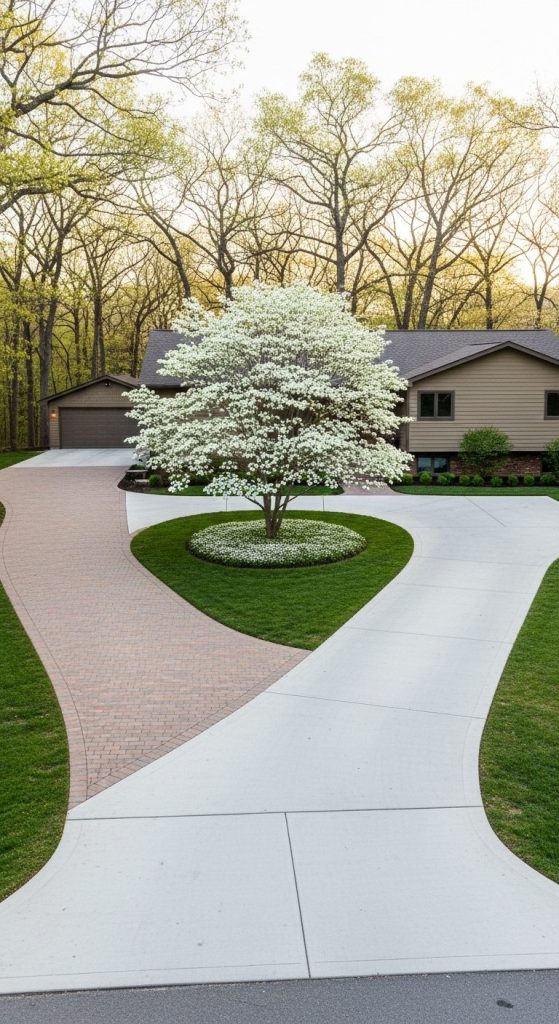
Some homes need more than one parking space. A split driveway provides flexibility.
The driveway begins as a single entry near the street and then splits into two branches leading to separate parking areas.
This layout works especially well for families with multiple vehicles.
Pros:
- Improves parking organization
- Reduces driveway congestion
- Creates balanced front yard layout
- Useful for shared homes
Cons:
- Requires wider yard space
- Increases paving area
Mini takeaway:
Split driveways solve practical problems while adding visual symmetry to the property.
13. Concrete Driveway with Integrated Drain Channel
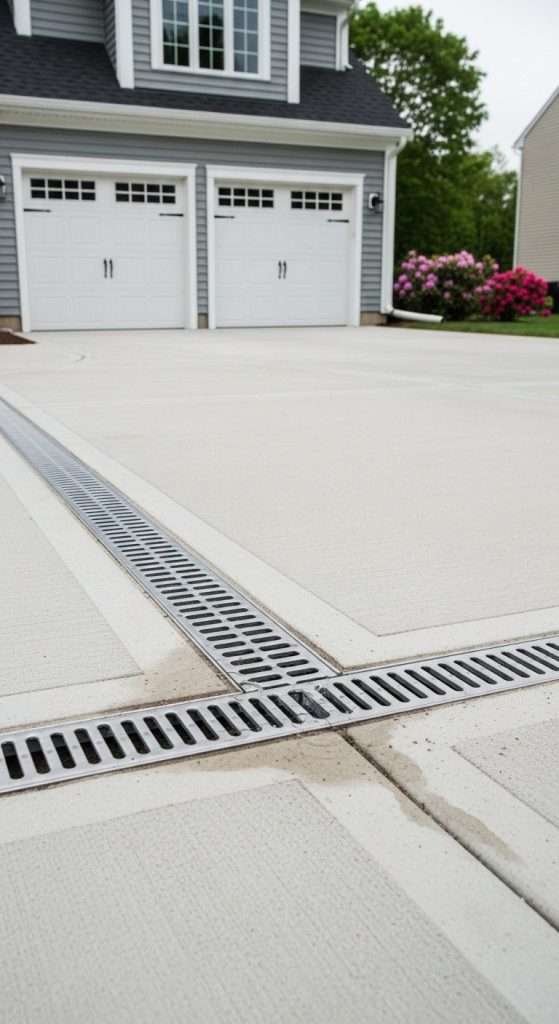
Heavy rain often causes water to pool on flat driveways.
An integrated drain channel solves the problem. Narrow drainage grates run across the driveway near the garage or slope points, directing water into underground pipes.
According to the Federal Highway Administration, proper surface drainage significantly extends pavement lifespan by preventing structural damage.
Pros:
- Prevents water pooling
- Protects driveway surface
- Reduces ice buildup in cold climates
- Keeps garage entry dry
Cons:
- Installation requires careful grading
- Drain grates need occasional cleaning
Mini takeaway:
Drainage systems remain invisible most days, yet they protect the driveway year after year.
14. Stone Slab Driveway with Natural Irregular Layout
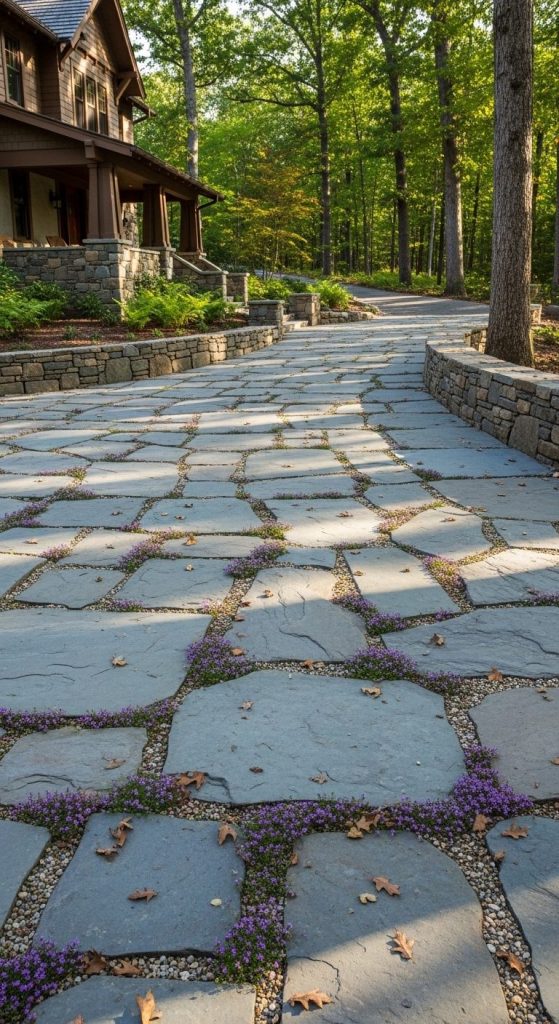
Natural stone slabs create one of the most visually striking driveway surfaces.
Instead of perfectly shaped pavers, large stone pieces install in slightly irregular patterns with gravel joints between them.
The result feels earthy and handcrafted.
Pros:
- Unique natural appearance
- Strong and durable surface
- Excellent drainage between stones
- Long lifespan
Cons:
- Natural stone costs more than concrete
- Installation requires skilled labor
Mini takeaway:
Natural stone slabs deliver character that manufactured materials often struggle to replicate.
15. Heated Driveway System for Cold Climates
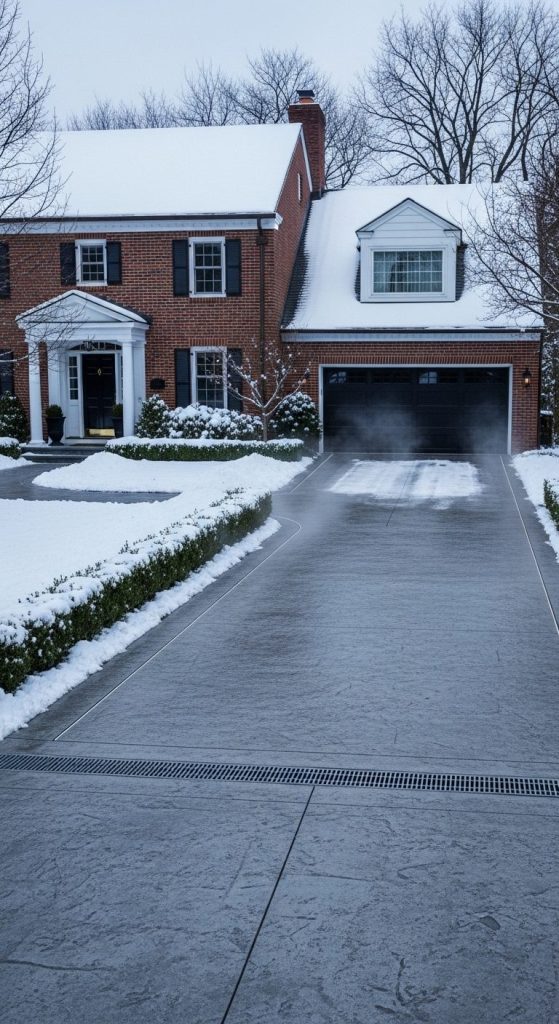
Snow removal becomes exhausting in winter climates. Heated driveway systems eliminate that problem.
Electric heating cables or hydronic tubes install beneath the driveway surface. When activated, they melt snow and ice automatically.
Cold-region homeowners increasingly adopt this technology for safety and convenience.
Pros:
- Prevents ice buildup
- Reduces snow shoveling
- Improves winter safety
- Protects driveway from freeze damage
Cons:
- Higher installation cost
- Requires electricity or heating system integration
Mini takeaway:
Heated driveways transform winter maintenance. Once installed, snowy mornings become far less stressful.
Conclusion
Driveways shape the entire first impression of a home. They guide vehicles, frame the front yard, and influence how welcoming a property feels from the street.
The ideas above show how much variety exists beyond the typical concrete slab. From brick pavers and exposed aggregate surfaces to curved layouts and permeable systems, each approach brings its own advantages.
Some homeowners want durability and low maintenance. Others prefer texture and character. Fortunately, modern driveway design allows both.
What I personally love about these upgrades is how practical they remain. None of them require unrealistic budgets or complicated construction techniques. Most homeowners can plan these improvements with experienced contractors and see immediate results.
Start by thinking about what matters most to you—appearance, drainage, durability, or parking flexibility. Once that priority becomes clear, the right design choice usually follows naturally.
Try your favorite approach first and build from there. A thoughtfully designed driveway doesn’t just hold cars—it elevates the entire front yard.

William Martin is a passionate bowler who spends most of his weekends playing the sport. With years of intense experience under his belt, William decided to share his knowledge by creating BOWLING OCEAN. Join me on this journey to explore the world of bowling and discover the tips and tricks to becoming a pro.