15 Front Yard Bakery Stand Ideas for Charming Home Sales
A couple of years ago, I walked past a small house where something unexpected stopped me mid-step. In the front yard sat a tiny bakery stand with a wooden sign that read “Fresh Cinnamon Rolls – $3.” A small tray held a few warm pastries, and a jar waited for payment. No fancy storefront. No complicated setup. Just someone sharing baked goods with their neighborhood.
That moment stuck with me.
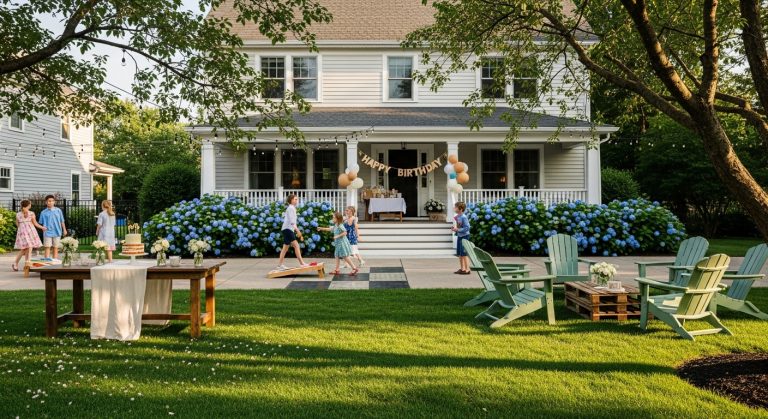
The idea of a front yard bakery stand has quietly become one of those charming neighborhood trends people instantly love. It blends homemade baking with a small, welcoming storefront right outside your home. Think lemonade stand energy—but upgraded with sourdough loaves, muffins, or cookies.
And honestly, it works because it feels personal and approachable. Neighbors enjoy fresh baked treats. Bakers get a creative outlet. Kids sometimes help run the stand. Everyone wins.
But here’s the thing many people miss: the difference between a random table and a well-designed bakery stand comes down to thoughtful features. Smart layout, good display design, and practical structure turn a simple idea into something people stop for.
These ideas explore practical upgrades and designs that make a front yard bakery stand both charming and functional.
1. Fold-Out Counter Bakery Stand
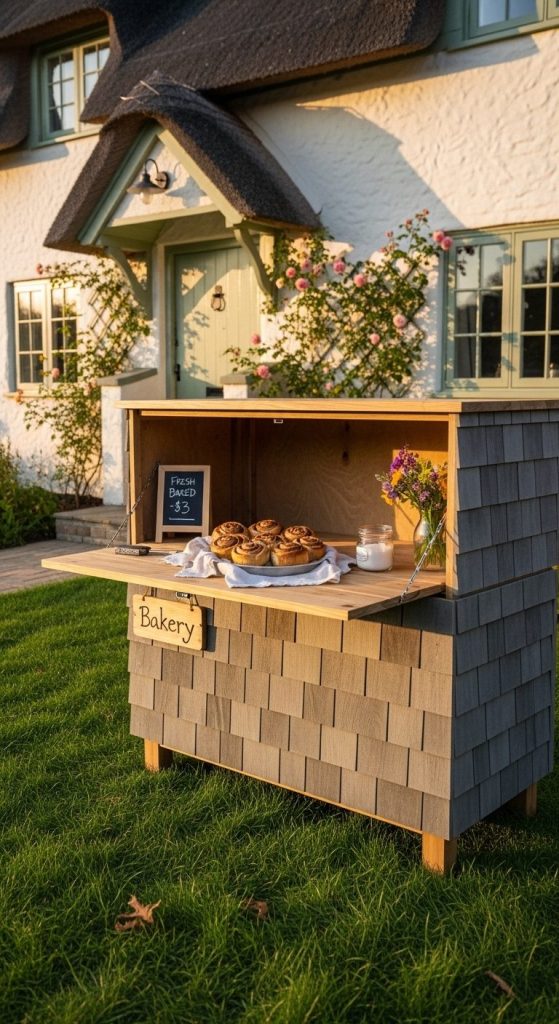
A fold-out counter design turns a compact structure into a full bakery display within seconds.
Many home bakers start small, and a front yard bakery stand with hinged panels offers flexibility. When closed, it looks like a tidy wooden box or cabinet. When opened, the panels fold outward to create serving counters.
This design feels especially smart for smaller yards because it keeps everything compact between selling hours. The counter space appears only when needed.
People walking by instantly see the baked goods displayed at eye level, which naturally draws attention.
Woodworkers often recommend hinged countertop panels because they keep construction simple while doubling surface space.
Pros
- Expands display space instantly
- Protects the stand when closed
- Great for small front yards
- Easy to build with basic woodworking tools
Cons
- Hinges require strong installation
- Panels need weather protection
Mini takeaway
A fold-out counter creates a bakery stand that stays compact but opens up beautifully when it’s time to sell.
2. Window-Style Bakery Stand Front
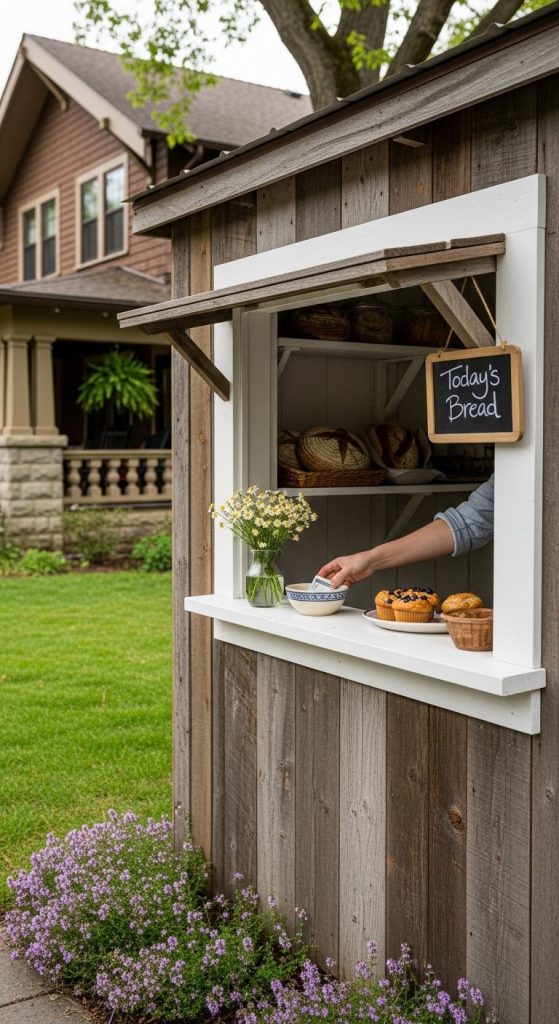
A bakery window design makes the stand feel like a miniature storefront.
Instead of placing baked goods directly on a table, the stand includes a serving window cut into the front wall. Customers approach the opening just like they would at a small café counter.
The window frame creates a natural focal point, and baked goods sit just behind it on display shelves.
This setup works especially well if you bake inside the house and simply bring trays out periodically.
Honestly, the window concept adds a surprising amount of charm. It feels like a tiny neighborhood bakery.
Pros
- Creates clear serving space
- Protects baked goods from outdoor exposure
- Adds authentic bakery feel
Cons
- Requires more construction effort
- Window opening must be sized carefully
Mini takeaway
A window front turns a simple stand into a miniature bakery experience.
3. Tiered Bakery Display Shelves
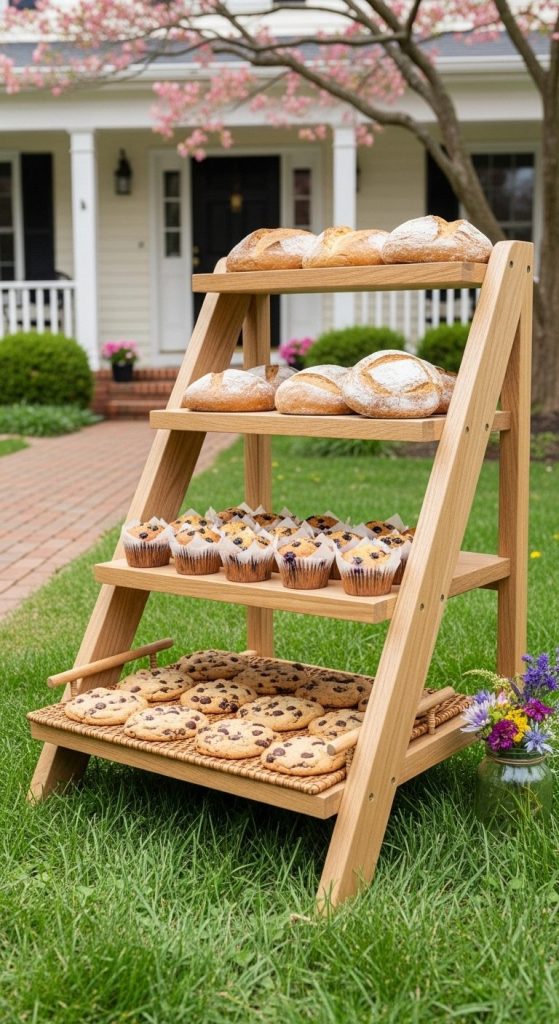
Flat tables hide baked goods behind one another. Tiered shelving fixes that instantly.
A front yard bakery stand with stepped display levels allows every pastry to stay visible. Cookies sit on the lower level, muffins in the middle, and bread loaves on top.
This design works because the human eye scans upward naturally. Multiple levels guide attention across the entire display.
Retail studies show vertical product displays increase visibility and browsing time, which explains why bakeries use them so often.
Pros
- Shows more baked goods in limited space
- Improves visibility for each item
- Creates attractive presentation
Cons
- Requires careful spacing for trays
- Shelves must stay sturdy under weight
Mini takeaway
Tiered shelves help every baked good shine instead of hiding behind another tray.
4. Chalkboard Menu Front Panel
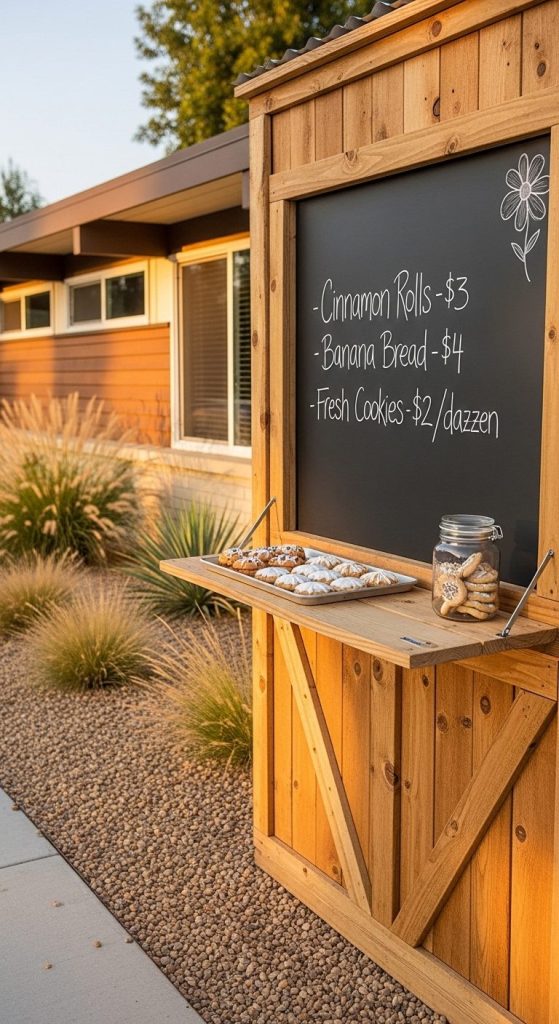
Clear pricing removes confusion and builds trust.
A bakery stand with a chalkboard menu panel on the front allows you to write daily offerings and prices. Cinnamon rolls today, banana bread tomorrow—just wipe and rewrite.
This design feels friendly and approachable. Customers immediately know what’s available before even reaching the counter.
Small bakeries often use chalkboard menus because they stay flexible for changing recipes.
Pros
- Easy daily menu updates
- Creates a welcoming handmade look
- Helps customers decide quickly
Cons
- Requires frequent rewriting
- Chalk may fade in rain
Mini takeaway
A chalkboard panel keeps the bakery stand clear, flexible, and inviting.
5. Built-In Bread Crate Storage
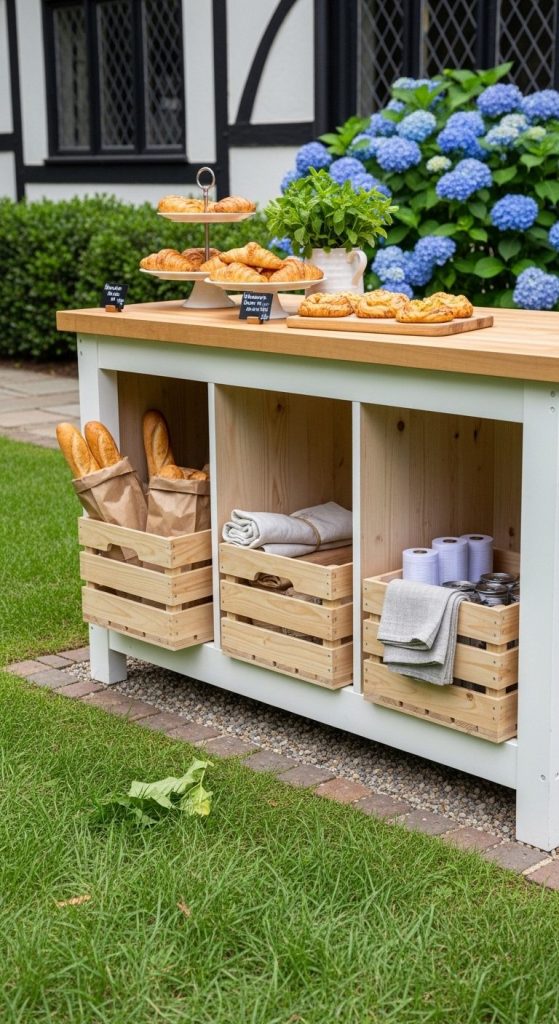
Running a bakery stand means storing trays, ingredients, and packaging supplies.
Adding built-in crate compartments under the counter keeps everything organized. Bread crates slide neatly into cubbies, holding extra pastries or baking tools.
This storage also keeps the counter uncluttered.
Professional bakery operations rely heavily on stackable crate systems because they organize baked goods efficiently.
Pros
- Keeps stand tidy and organized
- Makes restocking easier
- Maximizes limited space
Cons
- Requires precise cabinet sizing
- Storage adds extra build complexity
Mini takeaway
Smart storage makes a small bakery stand run smoothly.
6. Covered Roof Bakery Stand
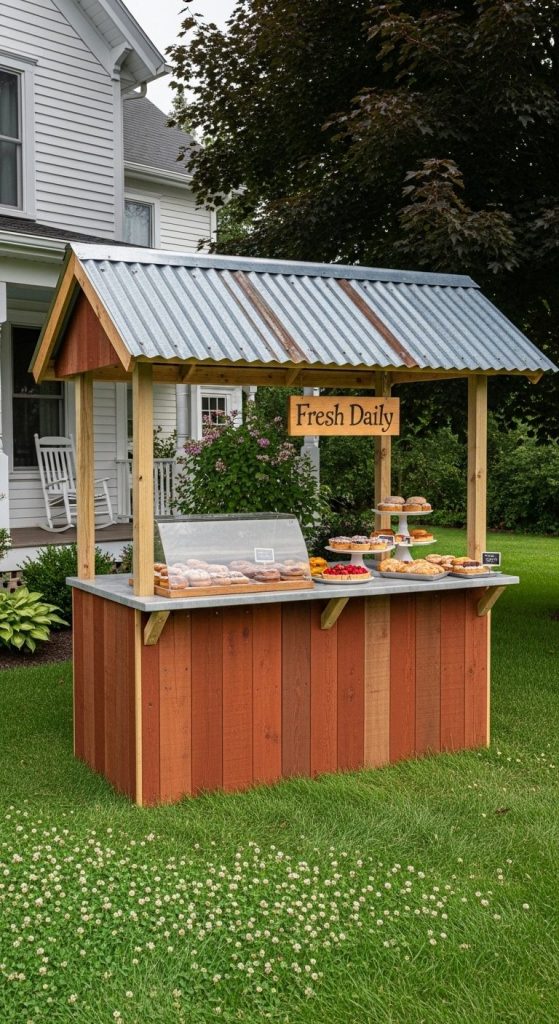
Weather changes quickly, and baked goods need protection.
A roofed front yard bakery stand shields pastries from sunlight, wind, and unexpected drizzle. Even a small slanted roof dramatically improves usability.
This design also creates visual height, making the stand noticeable from the sidewalk.
Outdoor market vendors often rely on overhead coverings to maintain food freshness throughout the day.
Pros
- Protects baked goods from weather
- Makes the stand visible from distance
- Extends selling hours
Cons
- Adds extra construction steps
- Roof materials increase cost
Mini takeaway
A simple roof turns a bakery stand from occasional use into an everyday setup.
7. Sliding Service Door Stand
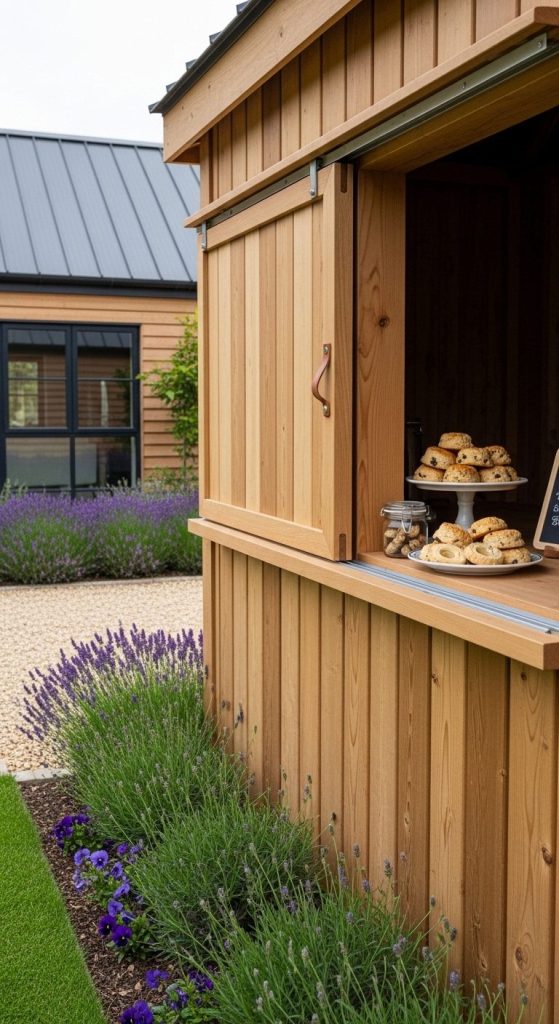
Some bakers prefer more control over when the stand opens.
A sliding service door allows the front panel of the bakery stand to slide open horizontally when selling begins. When closed, the baked goods stay protected inside.
This feature works especially well for early morning setups.
Once opened, the panel can even act as a small counter shelf.
Pros
- Protects goods overnight
- Opens quickly for selling hours
- Doubles as counter surface
Cons
- Sliding tracks require precise installation
- Wood expansion may affect movement
Mini takeaway
A sliding door design gives the bakery stand both security and flexibility.
8. Built-In Pastry Display Case
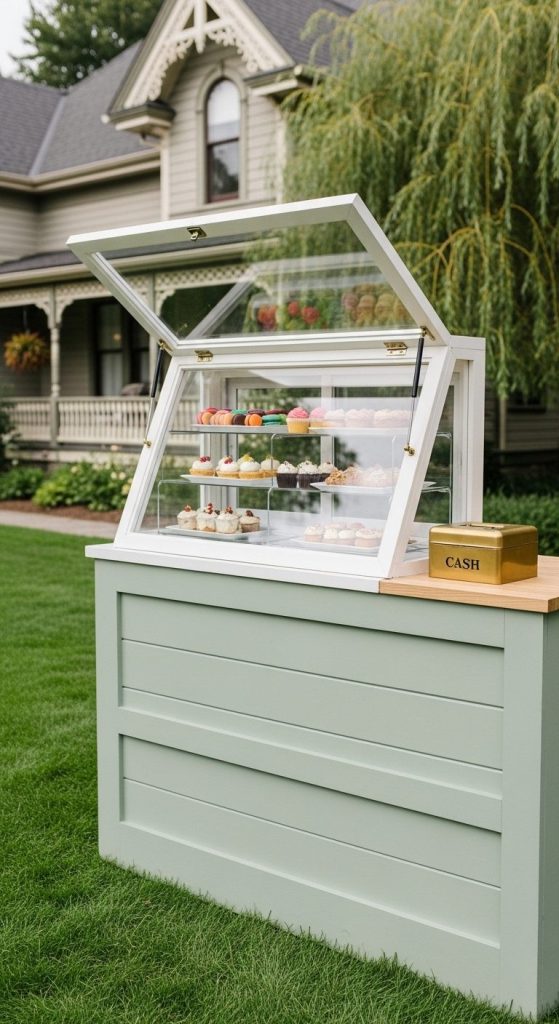
Clear display cases elevate the presentation dramatically.
Instead of placing baked goods directly on open trays, the stand includes a glass-front display compartment.
Customers see everything clearly while the baked goods stay protected from dust or insects.
Real bakeries rely on display cases because visual presentation strongly influences buying decisions, according to retail psychology research.
Pros
- Keeps pastries protected
- Improves visual presentation
- Makes the stand look professional
Cons
- Glass requires regular cleaning
- Case construction adds cost
Mini takeaway
A display case turns homemade treats into bakery-style presentation.
9. Payment Shelf With Drop Box
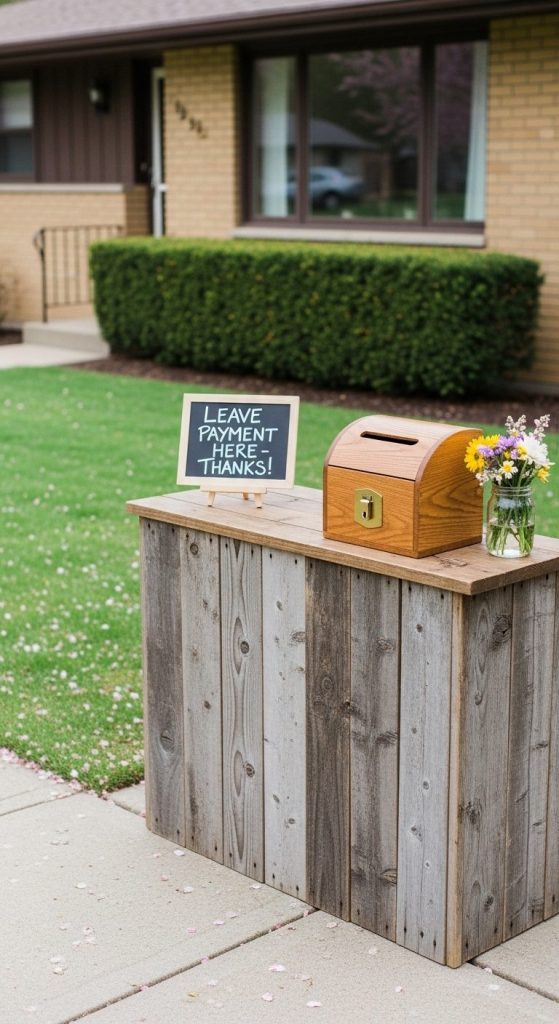
A simple payment system keeps transactions smooth.
The stand can include a dedicated payment shelf with a secure drop box underneath. Customers place cash through a slot after selecting items.
This setup works especially well for self-serve bakery stands.
Farm stands and roadside markets often use similar payment systems because they encourage honesty while keeping things simple.
Pros
- Supports self-serve operation
- Keeps money secure
- Simple to manage
Cons
- Cash handling requires occasional checks
- Not ideal for large crowds
Mini takeaway
A payment shelf keeps the bakery stand organized and easy to use.
10. Roll-Out Bakery Stand Cart
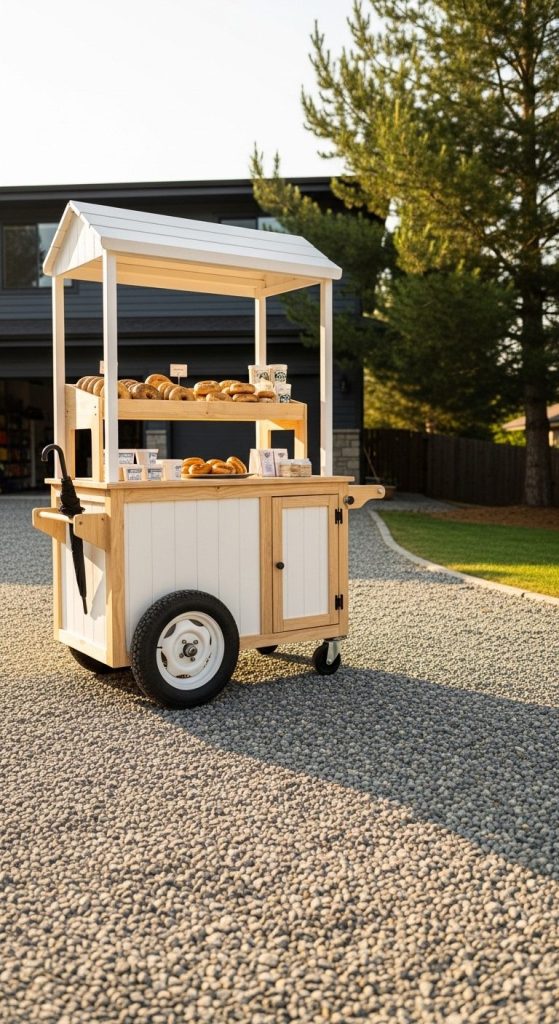
Mobility can completely change how the stand works.
A roll-out bakery cart design sits on locking wheels so the entire stand moves easily from garage to yard.
This helps homeowners avoid leaving the stand outside permanently.
Farmers market vendors frequently rely on rolling carts because they simplify setup and storage.
Pros
- Easy to move and store
- Protects stand from weather
- Flexible placement
Cons
- Wheels require locking mechanism
- Slightly higher build cost
Mini takeaway
A rolling stand keeps the setup convenient and flexible.
11. Split Counter Serving Design
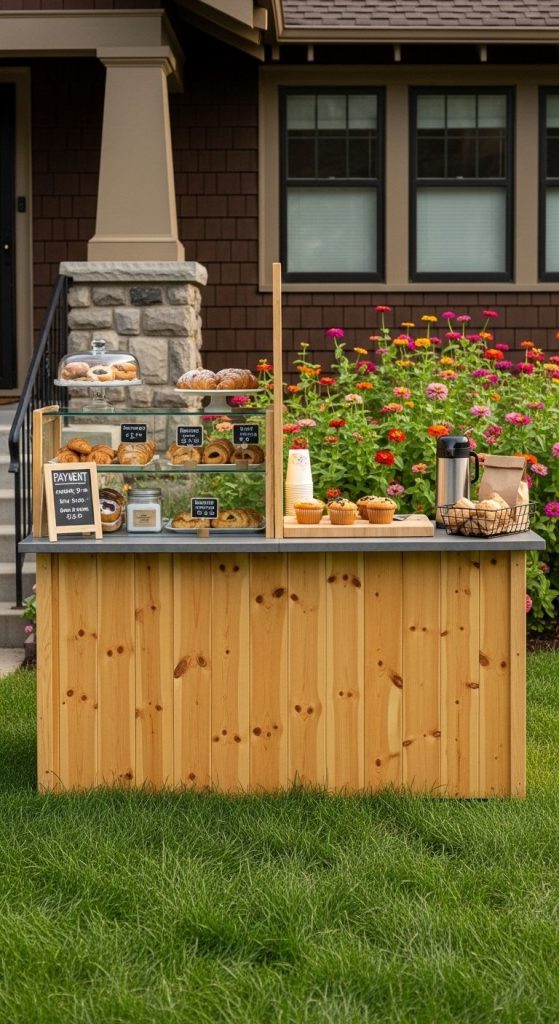
A split counter design separates the customer area from the baking area.
One side of the stand displays baked goods, while the other side acts as a prep and restocking surface.
This small design change improves workflow dramatically.
Commercial bakery counters use similar layouts to maintain efficient serving.
Pros
- Keeps customer and prep areas separate
- Improves restocking efficiency
- Reduces clutter on display
Cons
- Requires wider stand structure
- Slightly larger footprint
Mini takeaway
A split counter layout keeps the bakery stand organized during busy moments.
12. Multi-Tray Bread Rack Stand
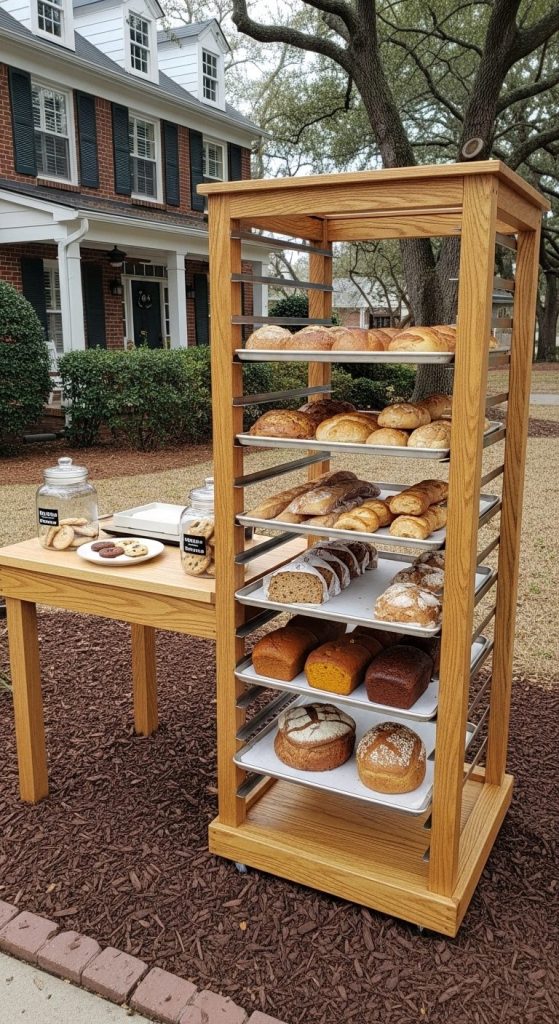
Bread takes up space quickly.
A vertical bread rack built into the stand allows multiple trays to slide into wooden rails. Each tray holds different baked goods.
This design increases capacity without expanding the stand size.
Bakeries rely heavily on tray racks for this exact reason.
Pros
- Holds large quantities of baked goods
- Saves counter space
- Keeps items organized
Cons
- Requires precise tray sizing
- Needs sturdy support structure
Mini takeaway
Tray racks allow a small stand to sell a surprising number of baked goods.
13. Lift-Up Service Hatch
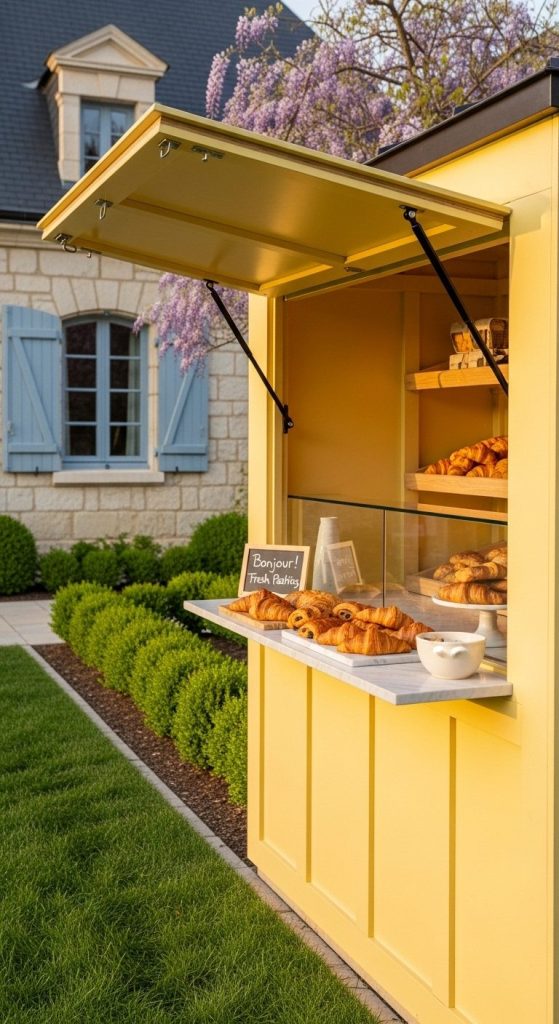
A lift-up hatch feels like something you’d see at a food kiosk.
The front panel of the bakery stand lifts upward, creating both an opening and a small overhead cover.
This design makes serving quick and visually inviting.
Food trucks often use similar hatch systems because they provide shade and clear serving access.
Pros
- Creates instant service window
- Adds overhead shade
- Opens quickly for customers
Cons
- Hinges must support weight
- Requires secure closing latch
Mini takeaway
A lift-up hatch makes the bakery stand feel lively and interactive.
14. Built-In Cooling Shelf
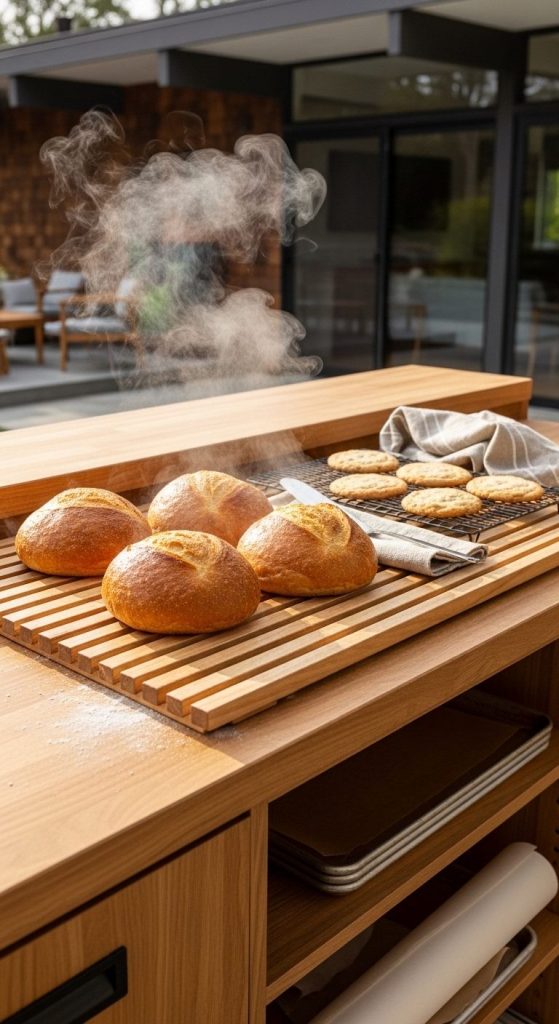
Fresh baked goods sometimes need airflow before serving.
A ventilated cooling shelf built into the stand allows bread and pastries to rest safely while cooling.
Wood slats or metal racks allow air circulation, preventing condensation.
Professional bakeries rely on cooling racks because baked goods need proper airflow to maintain texture.
Pros
- Prevents soggy baked goods
- Speeds cooling process
- Keeps counter space clear
Cons
- Requires space planning
- Not ideal for very small stands
Mini takeaway
Cooling shelves keep fresh pastries tasting their best before serving.
15. Lockable Overnight Storage Stand
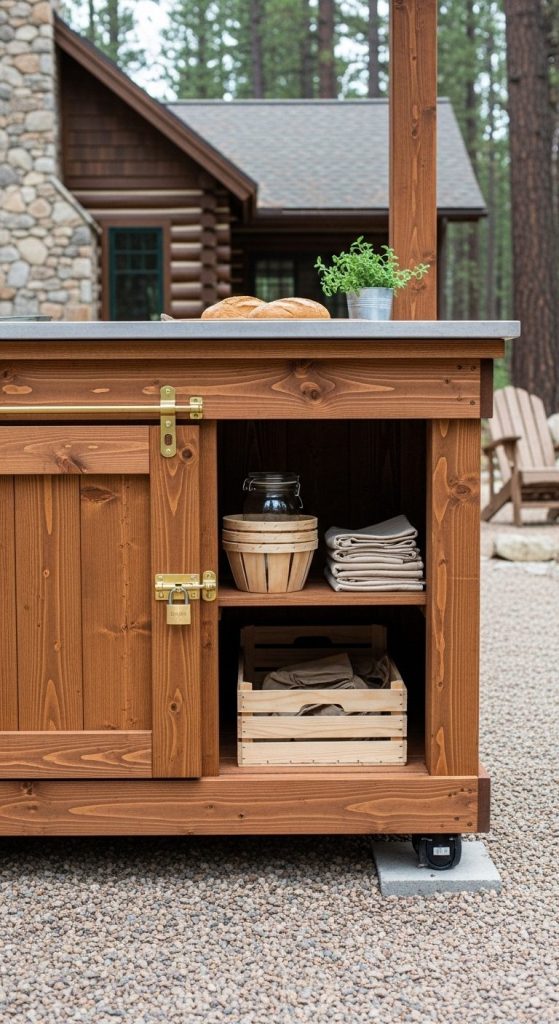
Security matters when equipment stays outside.
A lockable cabinet base built into the bakery stand stores trays, tools, and supplies safely overnight.
This feature eliminates constant setup and teardown.
Many roadside vendors rely on lockable storage to protect supplies between selling days.
Pros
- Keeps supplies secure
- Reduces daily setup time
- Protects baking equipment
Cons
- Requires solid lock hardware
- Adds construction complexity
Mini takeaway
Lockable storage turns the bakery stand into a dependable long-term setup.
Conclusion
A front yard bakery stand feels simple on the surface, but the right features make a huge difference in how well it works. Small design decisions—like display shelves, serving windows, or built-in storage—turn a basic table into a charming neighborhood bakery spot.
What makes these stands so appealing is the mix of homemade warmth and practical design. Fresh bread or cookies already bring people together. A thoughtfully built stand simply makes that experience easier and more inviting.
Some people start with a small window stand. Others build larger setups with display cases and tray racks. Both approaches work because the goal stays the same: share fresh baked goods in a welcoming way.
Honestly, that’s what makes this idea so fun. It’s not just about selling pastries. It’s about creating a little moment of joy right outside your home.
Try one of these designs, start small, and let the stand grow naturally as your baking adventures expand.

William Martin is a passionate bowler who spends most of his weekends playing the sport. With years of intense experience under his belt, William decided to share his knowledge by creating BOWLING OCEAN. Join me on this journey to explore the world of bowling and discover the tips and tricks to becoming a pro.