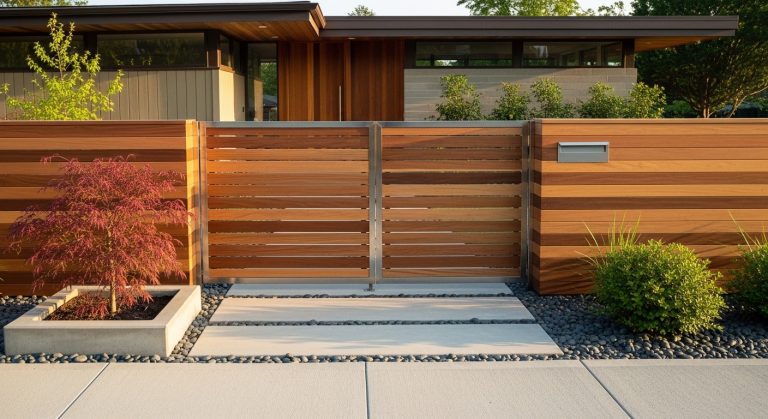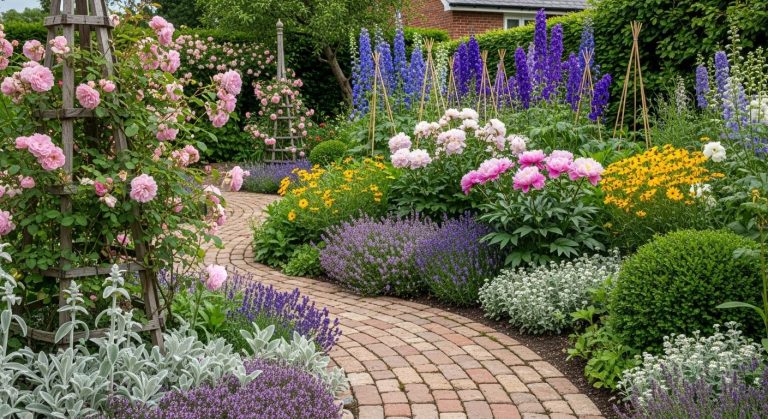
15 Front Yard Entrance Ideas to Elevate Your Home’s Entry
You can walk past hundreds of houses in a neighborhood and forget most of them five minutes later. Then suddenly one home stands out. The walkway feels inviting, the doorway looks intentional, and the entire front yard entrance seems to quietly say, “Come on in.”
That moment usually has nothing to do with fancy landscaping or expensive materials. It comes down to thoughtful design choices around the entrance itself.
I noticed this while helping a friend redo his small front yard last year. His house already looked nice, but the entrance felt oddly forgettable. Once we widened the walkway and framed the door with stone pillars, the difference felt dramatic. The house suddenly had personality.
Design experts often emphasize the same point. According to the National Association of Landscape Professionals, entryway improvements rank among the top outdoor upgrades that improve perceived home value and curb appeal.
And honestly, it makes sense. The entrance guides visitors from the street to the front door. It creates the first physical interaction with the home.
The ideas below focus entirely on front yard entrance improvements that homeowners actually build—design choices that look beautiful, function well, and make arriving home feel just a little bit better.
1. Wide Centered Walkway Leading to the Entrance
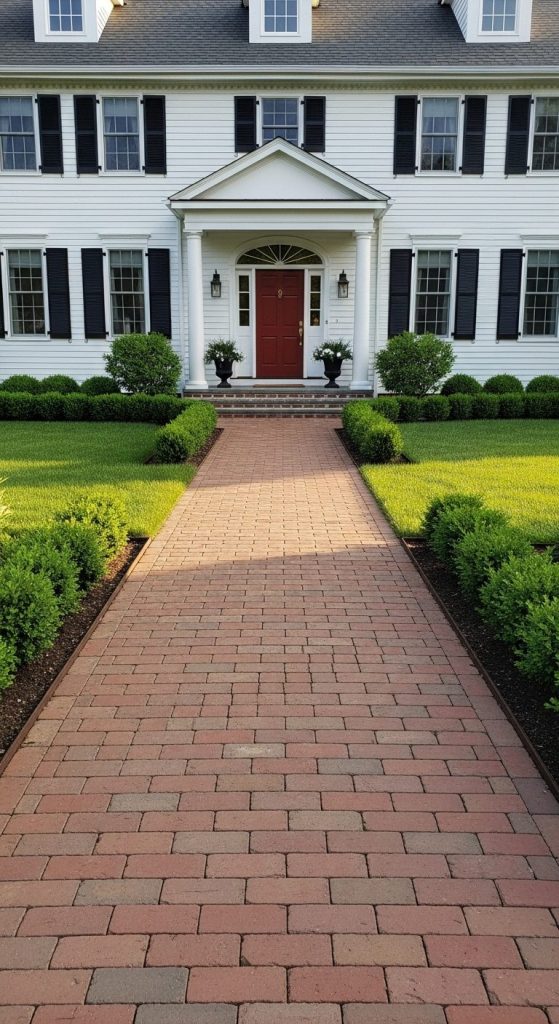
Many homes suffer from narrow entry paths that feel cramped or awkward. A wider centered walkway immediately fixes that problem.
Instead of a thin strip of concrete, imagine a path that comfortably fits two people walking side by side. The entrance suddenly feels welcoming rather than restrictive.
Most homeowners choose materials like concrete, brick, or stone pavers. Aligning the walkway directly with the front door creates a strong visual axis from the street to the home.
Pros:
- Creates a clear visual path to the front door
- Improves accessibility for guests and deliveries
- Adds balance and symmetry to the front yard
- Works with many architectural styles
Cons:
- Requires removing existing narrow paths
- Slightly higher material cost than small walkways
Mini takeaway:
A wide walkway instantly upgrades the entire front yard entrance. It guides people naturally toward the door while making the home feel more open and welcoming.
2. Stone Pillar Entry Markers
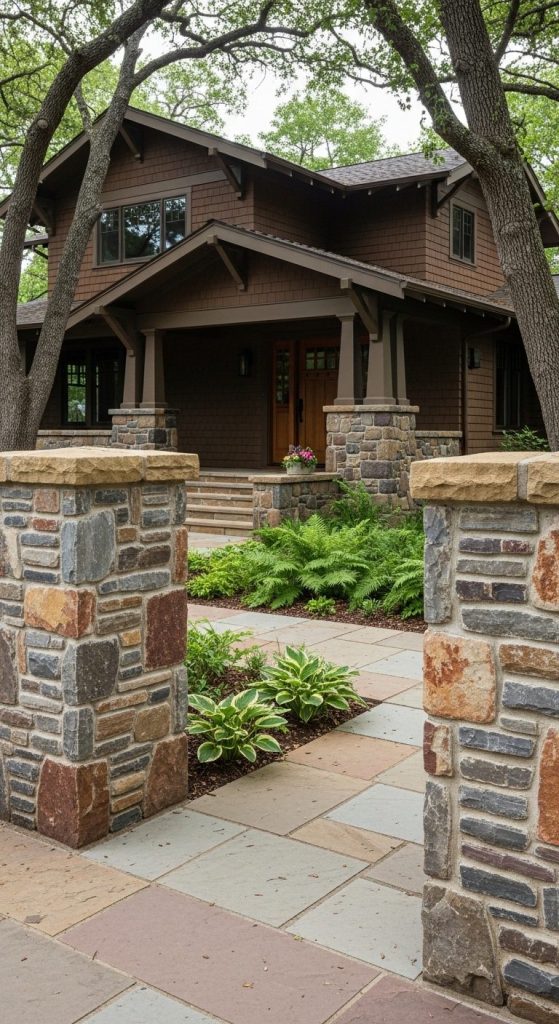
Some homes look fantastic but lack a defined entrance moment. Stone pillars fix that instantly.
Installing two stone pillars at the start of the walkway creates a subtle gateway effect. The pillars don’t block access; they simply frame the transition from yard to entry path.
You often see this feature in craftsman and traditional homes, but it works beautifully in modern designs too.
Pros:
- Defines the entrance clearly
- Adds architectural presence to the yard
- Durable and long-lasting structure
- Works with many stone types
Cons:
- Masonry installation requires skilled labor
- Materials can increase project cost
Mini takeaway:
Stone pillars introduce a sense of arrival. Even a simple walkway feels more important once the entrance receives that architectural framing.
3. Arched Garden Entrance Walkway
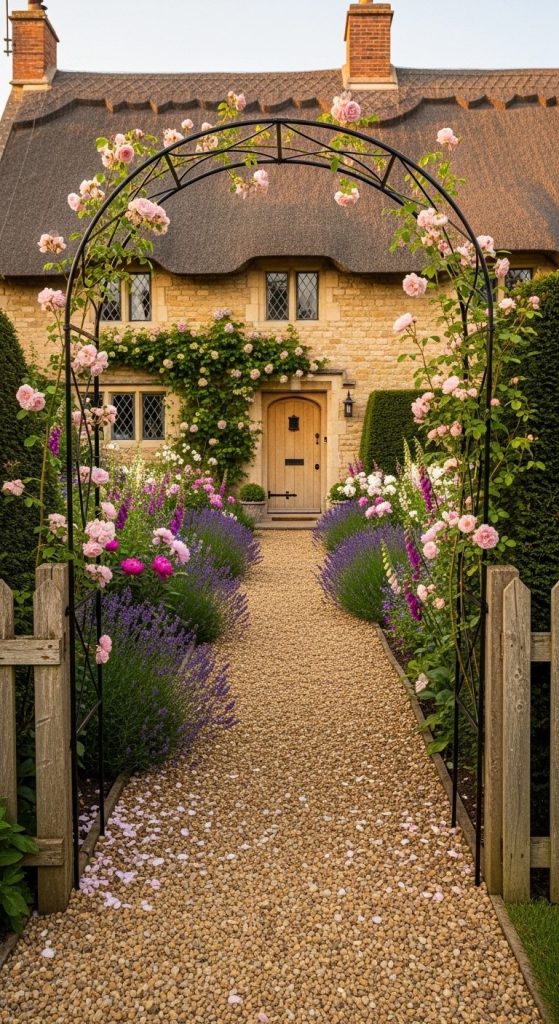
A simple path can feel magical when an arched structure frames the entrance.
Garden arches made of metal or wood sit directly above the walkway, forming a gentle curve that draws attention to the front door. Some homeowners allow climbing plants to grow along the arch for added texture.
The structure acts like a visual doorway before the actual door.
Pros:
- Creates a charming focal point
- Enhances vertical interest in the yard
- Works well with garden landscapes
- Relatively simple installation
Cons:
- Climbing plants require maintenance
- Wooden arches may need weather protection
Mini takeaway:
Arches guide the eye forward. A well-placed arch makes the front yard entrance feel intentional and inviting.
4. Stepped Entry Walkway for Sloped Yards
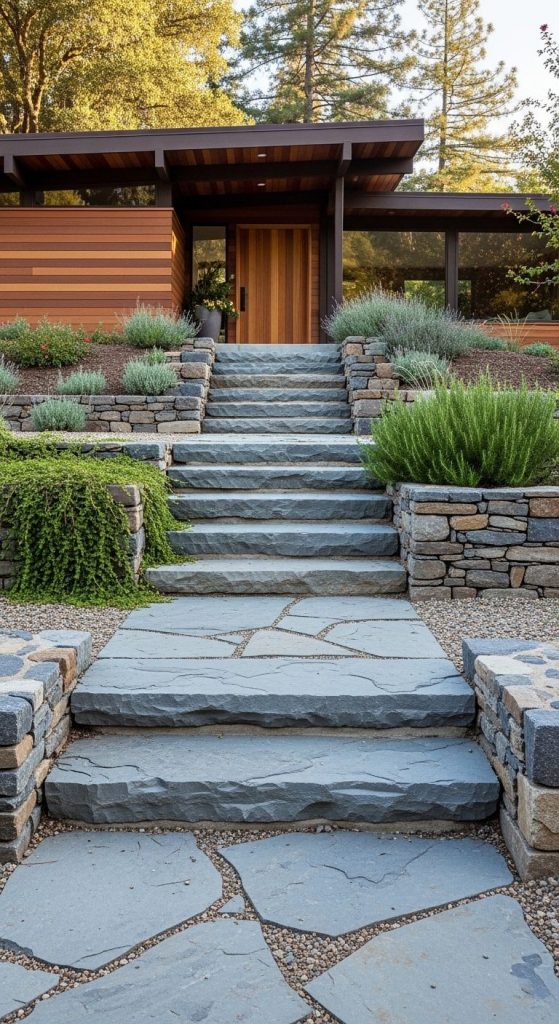
Sloped front yards often create awkward entrances. A stepped walkway design solves the challenge while adding character.
Instead of forcing a straight ramp, the walkway forms gentle steps using stone or concrete slabs. Each step breaks the slope into comfortable segments.
Landscape designers often pair the steps with small landing areas to slow movement and create visual rhythm.
Pros:
- Improves safety on sloped ground
- Adds architectural structure to the entrance
- Reduces erosion from rainfall
- Enhances curb appeal significantly
Cons:
- Requires proper grading during construction
- Higher installation effort than flat paths
Mini takeaway:
Steps transform a slope into a design feature. They guide visitors smoothly toward the entrance while giving the yard a sculpted look.
5. Circular Entry Landing at the Door
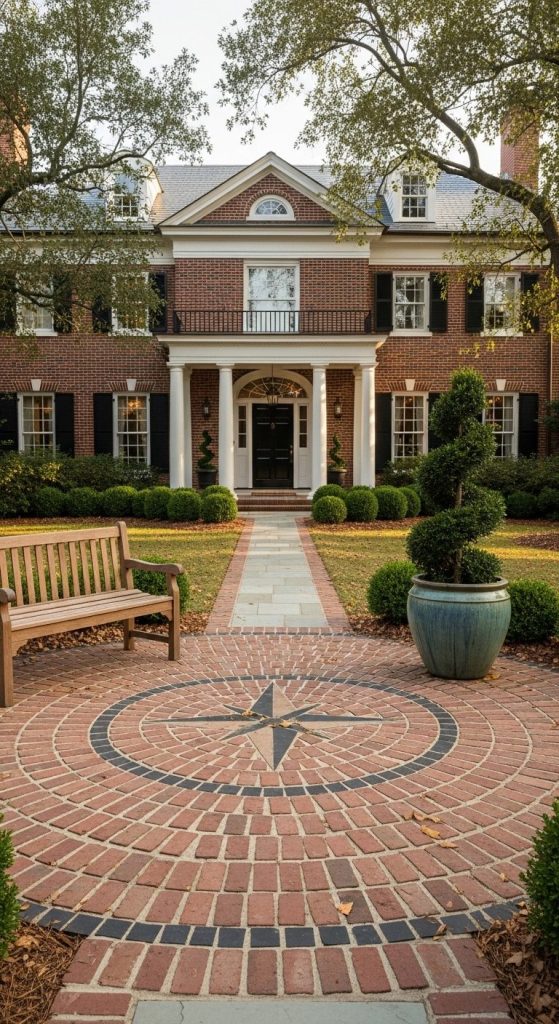
Straight walkways work well, but sometimes the final few feet feel cramped near the door. A circular landing solves that problem.
Instead of ending the walkway abruptly, the path opens into a small round patio directly in front of the entrance.
This landing creates space for turning, greeting guests, or simply pausing before stepping inside.
Pros:
- Adds breathing room at the entrance
- Creates a welcoming gathering point
- Enhances symmetry near the door
- Works with many paving materials
Cons:
- Requires additional paving area
- Needs careful layout planning
Mini takeaway:
A circular landing makes the entrance feel relaxed instead of rushed. The transition from outside to inside becomes smoother and more comfortable.
6. Raised Entry Platform with Steps
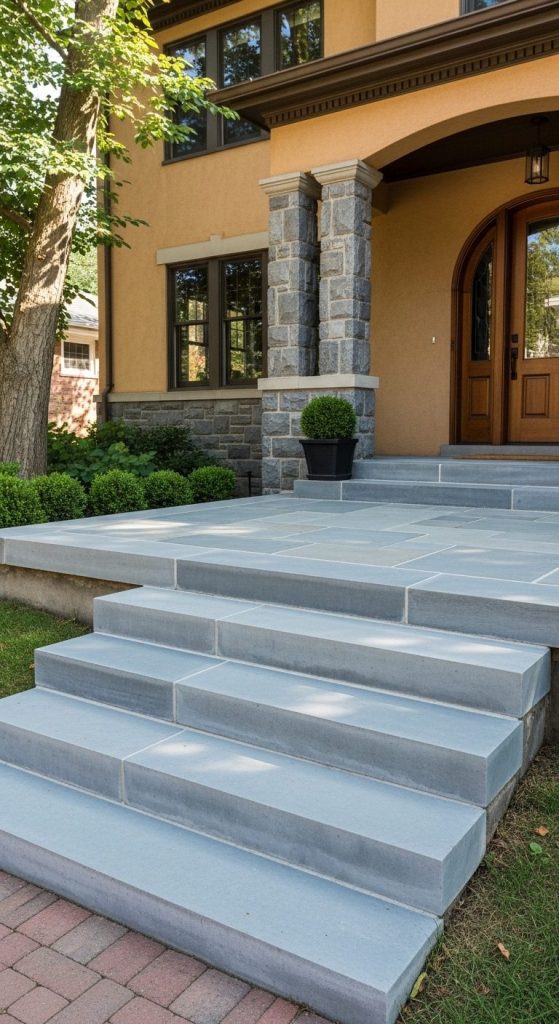
Some homes benefit from a raised entry platform rather than a flat approach.
This design lifts the entrance slightly above the surrounding yard using stone or brick steps leading to a small platform.
The elevation draws attention to the doorway while improving drainage around the entrance.
Pros:
- Creates strong visual hierarchy
- Protects the doorway from water runoff
- Enhances architectural presence
- Offers sturdy, long-lasting construction
Cons:
- Requires structural masonry work
- Higher upfront cost
Mini takeaway:
A raised entry gives the house authority. Visitors instinctively recognize where the front yard entrance begins.
7. Split Walkway Entrance Design
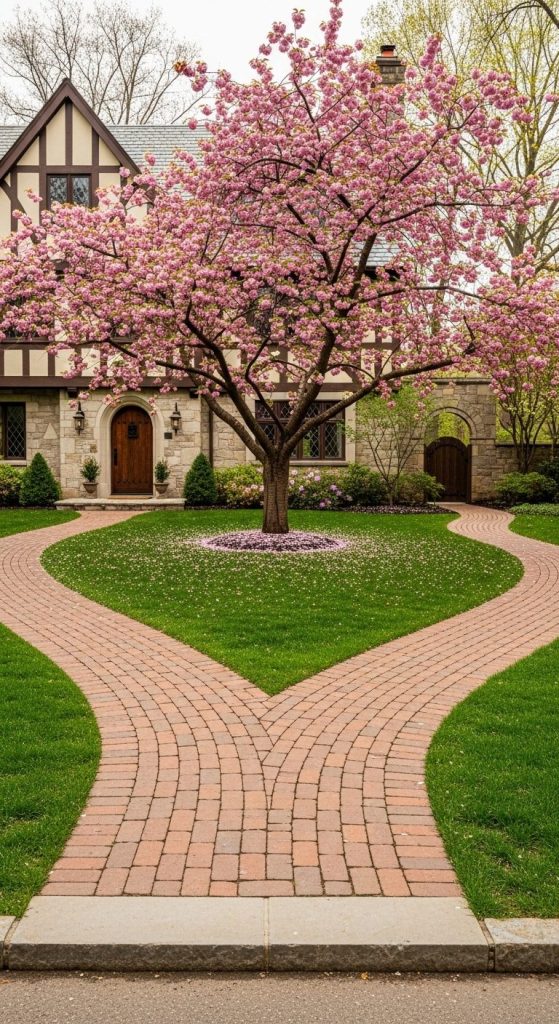
Many homes place the front door slightly off-center. A split walkway addresses that layout naturally.
The path begins as a single walkway near the street and then divides into two branches as it approaches the home. One branch leads directly to the front door.
This design works beautifully in larger front yards.
Pros:
- Adds visual elegance
- Creates multiple approach routes
- Balances off-center doors
- Enhances landscaping flow
Cons:
- Requires larger yard space
- Increases paving materials
Mini takeaway:
Split paths introduce movement and sophistication. The entrance feels thoughtfully planned rather than forced.
8. Stone Slab Entry Pathway
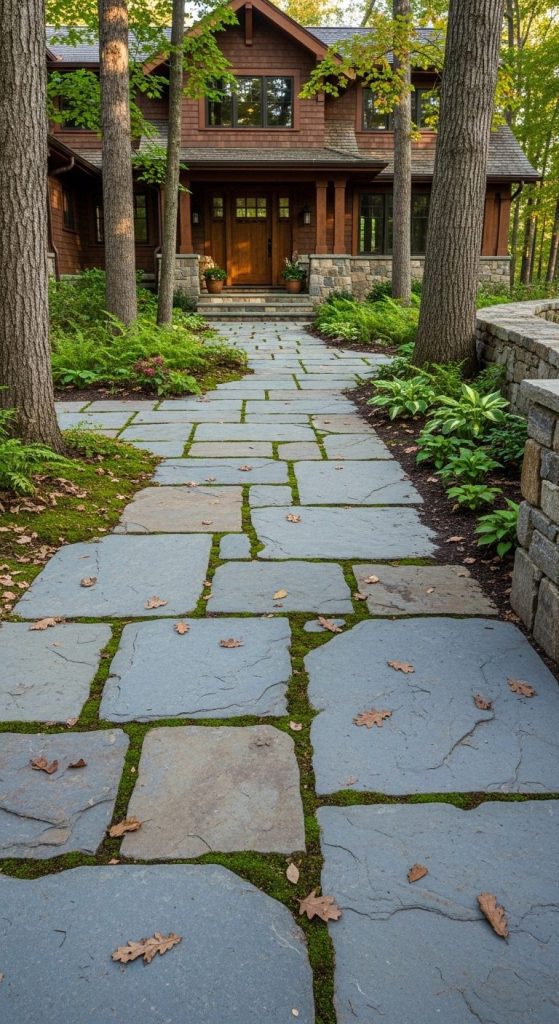
Natural stone slabs create an entrance with strong personality.
Large irregular stones form a stepping path toward the door. Gravel or ground cover fills the gaps between slabs.
The result feels organic and timeless.
According to the American Society of Landscape Architects, natural stone remains one of the most durable materials used in residential hardscaping.
Pros:
- Unique natural appearance
- Long lifespan
- Excellent drainage between stones
- Works well with garden landscapes
Cons:
- Stone costs more than concrete
- Installation requires careful leveling
Mini takeaway:
Stone slabs add authenticity. Every entrance looks slightly different, which makes the design feel personal.
9. Straight Axis Walkway with Symmetry
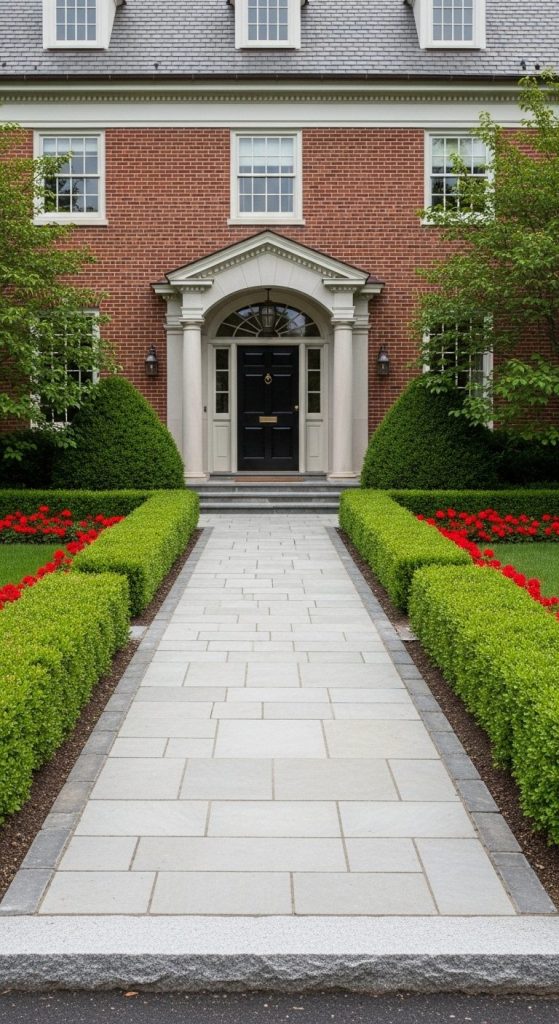
Some entrances look best when everything lines up perfectly.
A straight axis walkway connects the sidewalk directly to the center of the front door. Matching landscaping or paving edges mirror each side of the path.
This symmetrical approach works especially well for colonial or traditional homes.
Pros:
- Creates strong visual balance
- Guides visitors naturally
- Enhances formal architecture
- Simple layout planning
Cons:
- Requires precise alignment
- Less flexibility for irregular yards
Mini takeaway:
Symmetry brings order to the entrance. The front yard immediately feels organized and refined.
10. Textured Paver Entrance Walkway
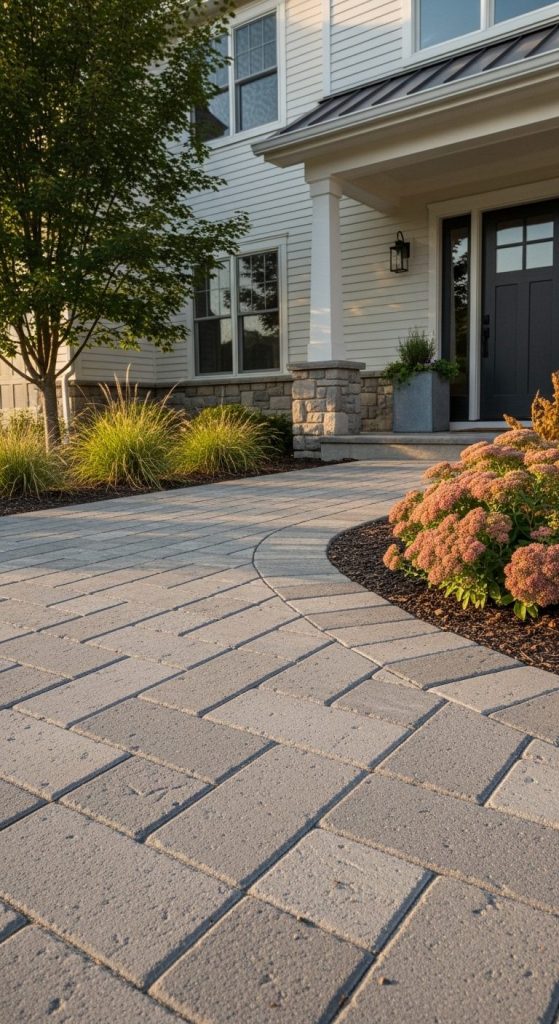
Plain surfaces sometimes feel a bit flat visually. Textured pavers introduce subtle depth.
Interlocking pavers arranged in patterns such as herringbone or running bond add movement across the walkway.
The patterns also increase traction during wet weather.
Pros:
- Highly durable walking surface
- Attractive pattern options
- Easy replacement of individual pavers
- Excellent drainage between joints
Cons:
- Installation requires careful leveling
- Weed control may be necessary
Mini takeaway:
Texture adds interest without overwhelming the space. A patterned walkway brings energy to the entrance.
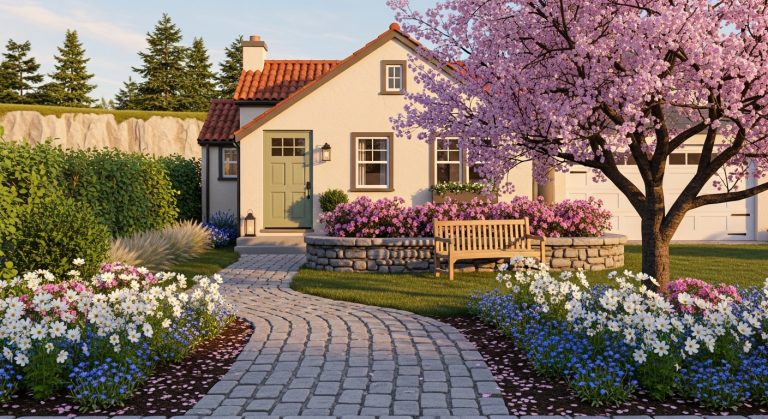
11. Curved Entrance Walkway
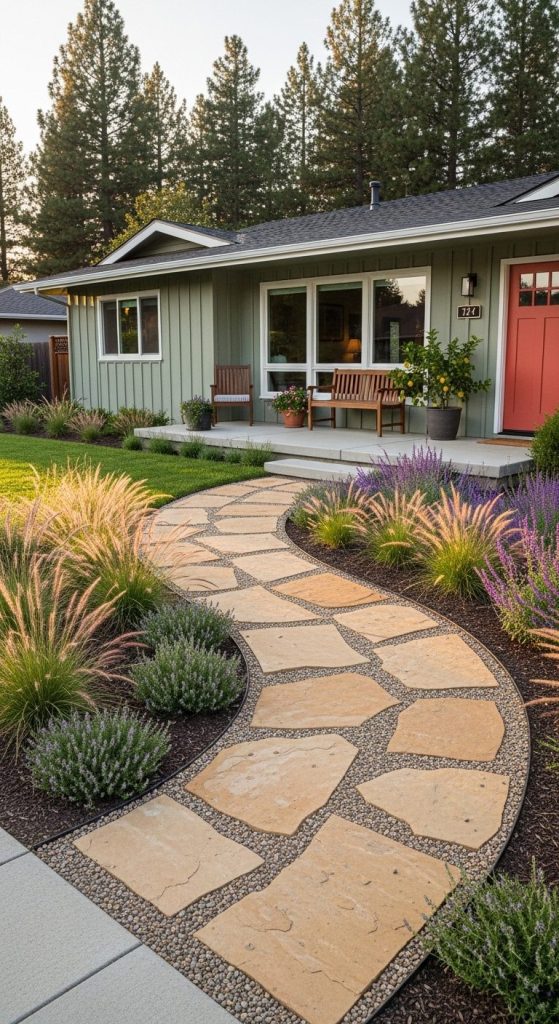
Curved paths feel more relaxed than straight ones.
A curved walkway gently winds through the front yard before reaching the door. The curve slows movement and encourages people to take in the surrounding landscape.
Landscape designers often use curves to soften rigid architectural lines.
Pros:
- Creates natural visual flow
- Softens rectangular yard layouts
- Adds elegance to the approach
- Works well in larger front yards
Cons:
- Requires more yard space
- Slightly higher construction complexity
Mini takeaway:
Curved paths feel welcoming and relaxed. They create a subtle sense of journey toward the entrance.
12. Permeable Entry Walkway System
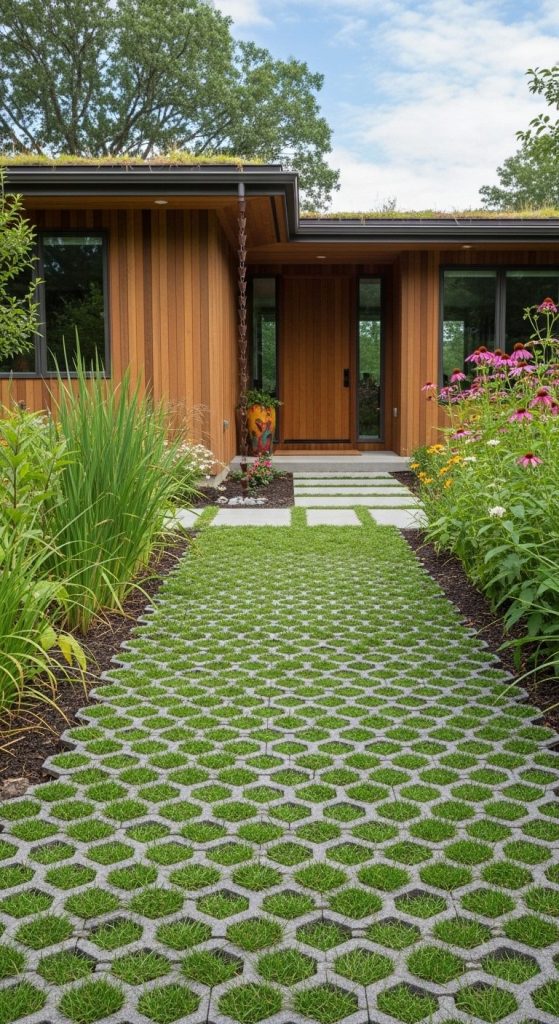
Water management often gets overlooked in entrance design.
A permeable walkway uses gravel grids or spaced pavers that allow rainwater to soak into the soil instead of running off.
Cities increasingly encourage permeable surfaces for environmental reasons.
Pros:
- Improves stormwater drainage
- Reduces puddles on walkways
- Environmentally friendly design
- Supports stable walking surfaces
Cons:
- Requires proper ground preparation
- Materials may cost slightly more
Mini takeaway:
Permeable surfaces quietly protect both the yard and the entrance. They keep the walkway functional during heavy rain.
13. Tiered Entrance Approach
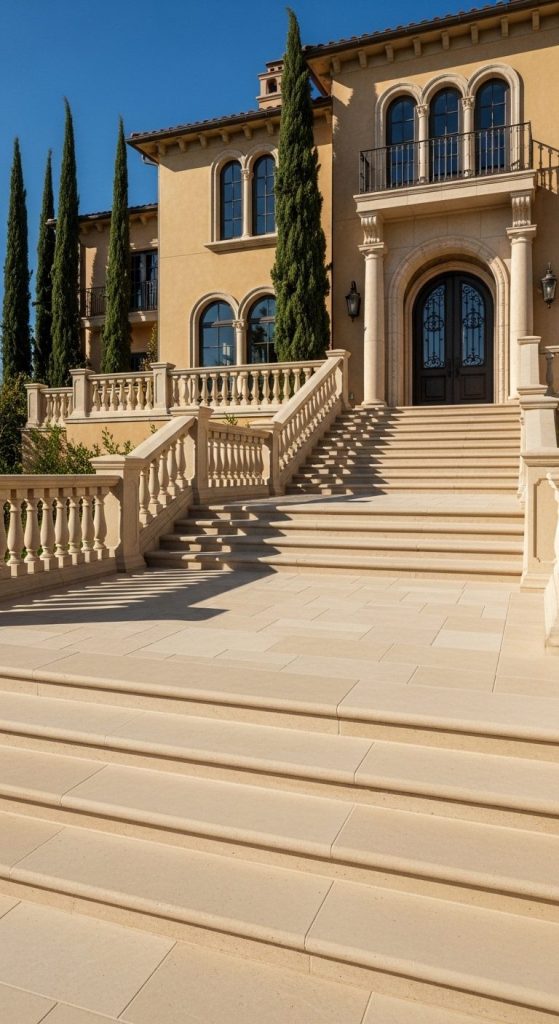
Large homes sometimes need more visual buildup before the door.
A tiered entrance uses multiple short stair sections separated by small landings. Each level gradually lifts visitors toward the doorway.
The layered approach creates drama and architectural presence.
Pros:
- Adds grandeur to the entrance
- Breaks long staircases into comfortable sections
- Improves safety when climbing steps
- Enhances architectural depth
Cons:
- Requires careful structural planning
- Higher material and labor cost
Mini takeaway:
Tiered entrances create anticipation. The approach to the door becomes part of the home’s overall design experience.
14. Concrete and Gravel Strip Walkway
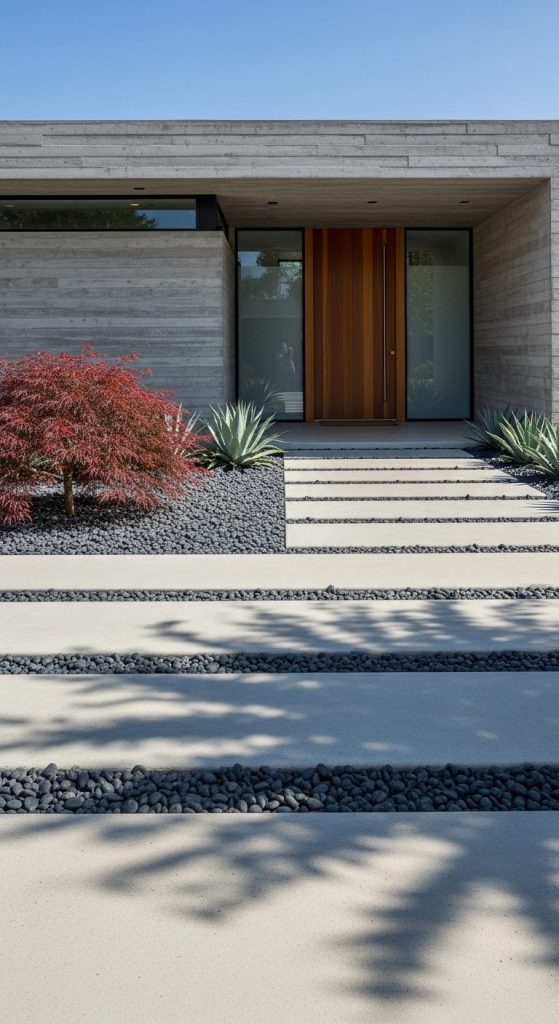
Minimalist homes often benefit from strip walkways.
Concrete panels install in parallel sections with gravel strips between them. The alternating materials create a modern geometric pattern.
The design keeps the entrance visually clean and contemporary.
Pros:
- Modern architectural appearance
- Durable materials
- Strong visual contrast
- Allows water drainage between strips
Cons:
- Requires precise spacing during installation
- Gravel areas may need occasional raking
Mini takeaway:
Strip walkways look simple but striking. They turn the entrance into a subtle design statement.
15. Grand Double Walkway Entrance
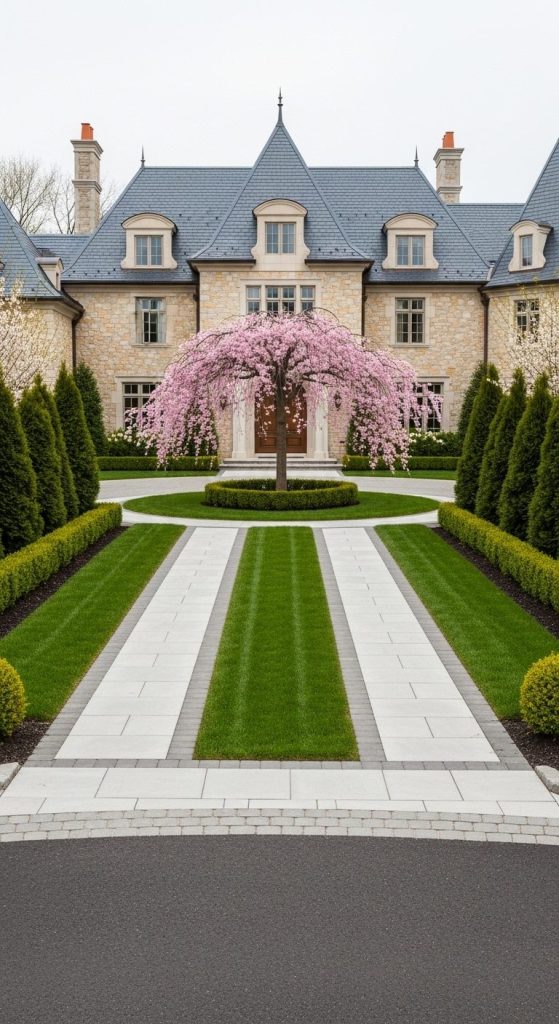
Some properties benefit from a double walkway layout.
Two parallel paths begin near the sidewalk and converge at the front door. The design creates a grand approach often seen in classic estate homes.
Even smaller properties can adapt the concept with narrower paths.
Pros:
- Creates a dramatic arrival experience
- Improves visual symmetry
- Offers multiple walking routes
- Works beautifully with formal landscaping
Cons:
- Requires more paving materials
- Best suited for medium to large yards
Mini takeaway:
Double paths elevate the entrance instantly. Visitors naturally sense the importance of the home’s entry point.
Conclusion
The front yard entrance plays a much bigger role than most homeowners realize. It guides visitors from the street, frames the home’s architecture, and shapes the very first impression of the property.
A thoughtful entrance doesn’t require elaborate landscaping or massive renovation. Sometimes a wider walkway, a gentle curve, or a stone pathway completely changes how the house feels from the outside.
Personally, I find entrances fascinating because they combine practicality with design. Every visitor walks the path, climbs the steps, and pauses at the door. That short journey becomes part of the experience of the home.
The ideas above show how many possibilities exist—from elegant stone slabs to structured symmetrical paths and modern strip walkways.
Start with the improvement that fits your space best. Even a single upgrade can dramatically enhance how the entrance looks and feels.
Choose the idea that resonates most and build from there. A well-designed entrance turns everyday arrivals into something quietly special.

William Martin is a passionate bowler who spends most of his weekends playing the sport. With years of intense experience under his belt, William decided to share his knowledge by creating BOWLING OCEAN. Join me on this journey to explore the world of bowling and discover the tips and tricks to becoming a pro.