15 Front Yard Edging Ideas for a Clean Landscape Look
The first time I paid attention to front yard edging, it wasn’t during some big landscaping project. It happened while walking through a quiet neighborhood one evening. One house had this crisp stone border separating the lawn from the flower beds, and suddenly the entire yard looked polished—almost magazine-level neat.
Funny thing? The plants weren’t fancy. The grass wasn’t perfect either.
But that simple front yard edging idea created clean lines that made everything else look intentional.
Edging works like the frame around a picture. Without it, the yard looks a little messy. With it, everything feels organized and finished.
And lately, homeowners have been getting seriously creative with it. From natural stone borders to modern metal lines, edging has turned into one of those upgrades that makes a front yard instantly more attractive—without requiring a huge renovation.
If you’re thinking about improving your curb appeal, these 15 front yard edging ideas offer practical, achievable designs you can actually build or install yourself. Some are budget-friendly DIY projects, while others bring a more polished landscape look.
Either way, they all do one thing beautifully: make the yard look intentional instead of accidental.
1. Natural Stone Garden Border Edging
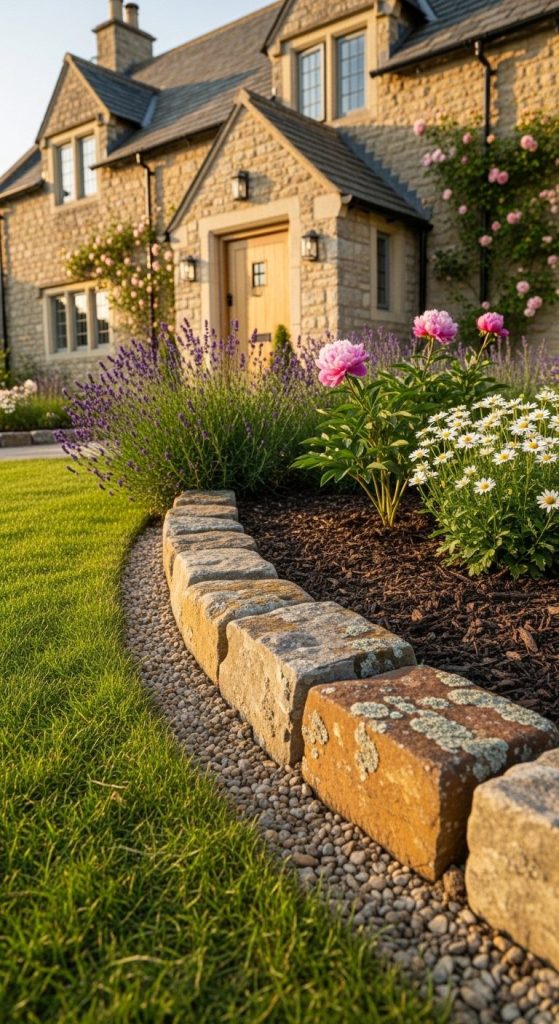
There’s something timeless about a natural stone edge around a garden bed. The uneven shapes and earthy tones blend beautifully with plants and grass, so the edging feels like it belongs there instead of looking manufactured.
Many homeowners place flat fieldstones along the border between their lawn and flower beds. You simply dig a shallow trench and set the stones tightly together. The result feels rustic, charming, and surprisingly durable.
This approach works especially well for cottage-style gardens or yards filled with perennials.
Pros
- Creates a natural, organic look
- Extremely durable and weather-resistant
- Works with many garden styles
- Stones rarely need replacement
Cons
- Stones can be heavy to move
- Installation requires a bit of patience
Mini takeaway
Natural stone edging quietly upgrades a yard. The border blends into the landscape while still creating a clear separation between grass and planting beds.
2. Brick Soldier Course Edging
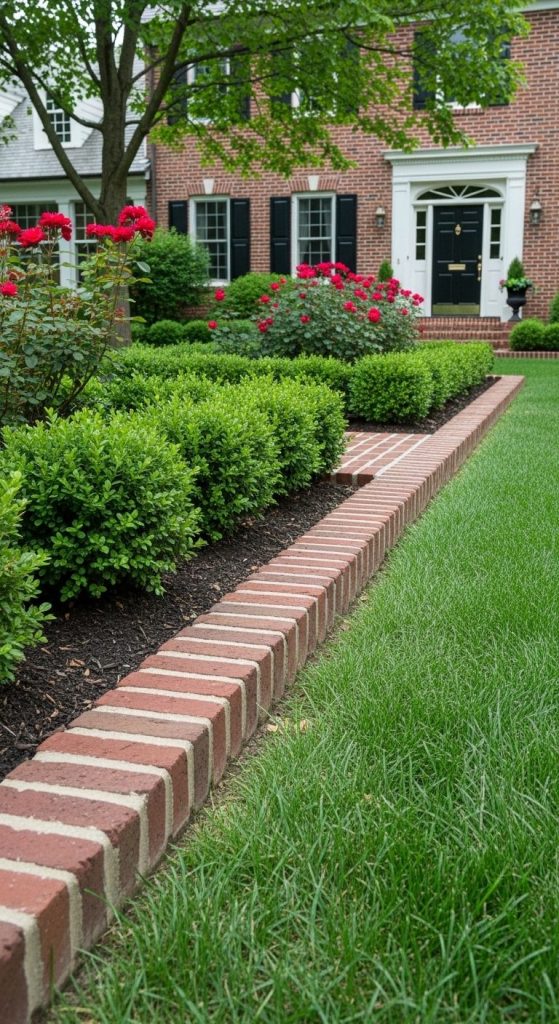
A soldier course brick edge stands upright instead of lying flat. Each brick sits vertically along the lawn border, creating a tidy, architectural edge that instantly feels structured.
This edging style has been around for decades because it works. The vertical bricks create a defined barrier that prevents grass from creeping into garden beds.
Homeowners often use reclaimed bricks, which add character and color variation.
Pros
- Strong classic landscape appearance
- Helps prevent grass from invading beds
- Long-lasting material
- Works with traditional homes
Cons
- Requires digging a narrow trench
- Bricks may settle unevenly over time
Mini takeaway
If you like traditional landscaping, brick soldier edging delivers. It feels neat, organized, and quietly elegant.
3. Modern Steel Landscape Edging
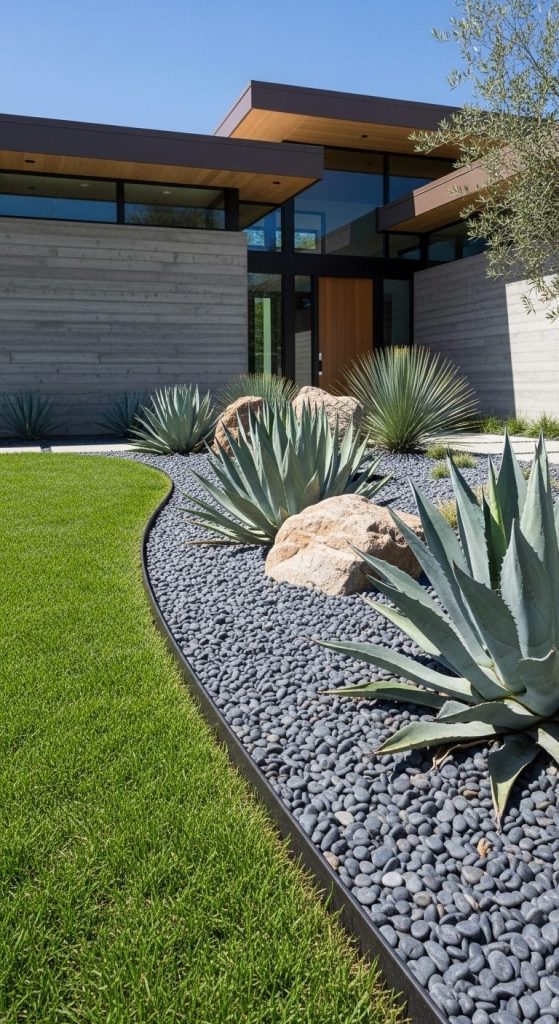
If your home leans modern or minimalist, steel landscape edging creates incredibly crisp lines.
These thin metal strips install flush with the ground, separating lawn and beds with a clean, almost invisible border. The effect looks sleek and contemporary.
Many landscape designers love steel edging because it creates perfect curves and straight lines without bulky borders.
According to landscaping professionals surveyed by the American Society of Landscape Architects, clean hardscape lines remain one of the most requested modern yard upgrades.
Pros
- Extremely clean and modern appearance
- Flexible for curved beds
- Low maintenance
- Nearly invisible once installed
Cons
- Metal can cost more than plastic edging
- Requires proper anchoring during installation
Mini takeaway
Steel edging works beautifully when you want plants and grass to stand out while the border quietly disappears.
4. Gravel Trench Edging
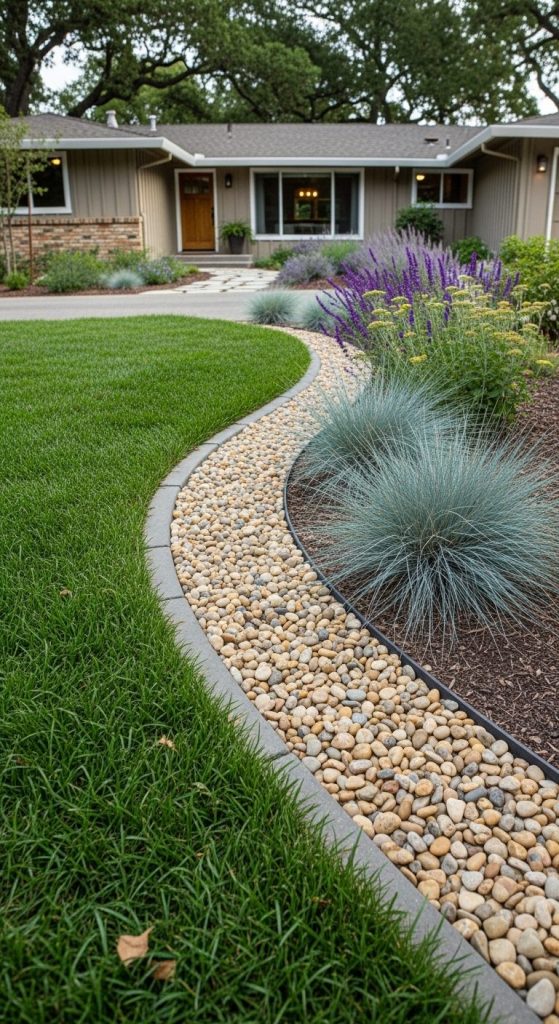
Sometimes the simplest edging method turns out surprisingly attractive. A gravel trench border separates the lawn and planting beds with a narrow strip of decorative stone.
You dig a shallow trench, line it with landscape fabric, and fill it with gravel or small river rock. The texture creates contrast between the grass and garden beds.
This edging style also helps with drainage.
Pros
- Budget-friendly and simple
- Excellent drainage
- Creates visual contrast
- Easy DIY project
Cons
- Gravel may shift over time
- Occasional refilling needed
Mini takeaway
Gravel trench edging feels relaxed but intentional. It adds texture while keeping the lawn from creeping into beds.
5. Concrete Curb Edging
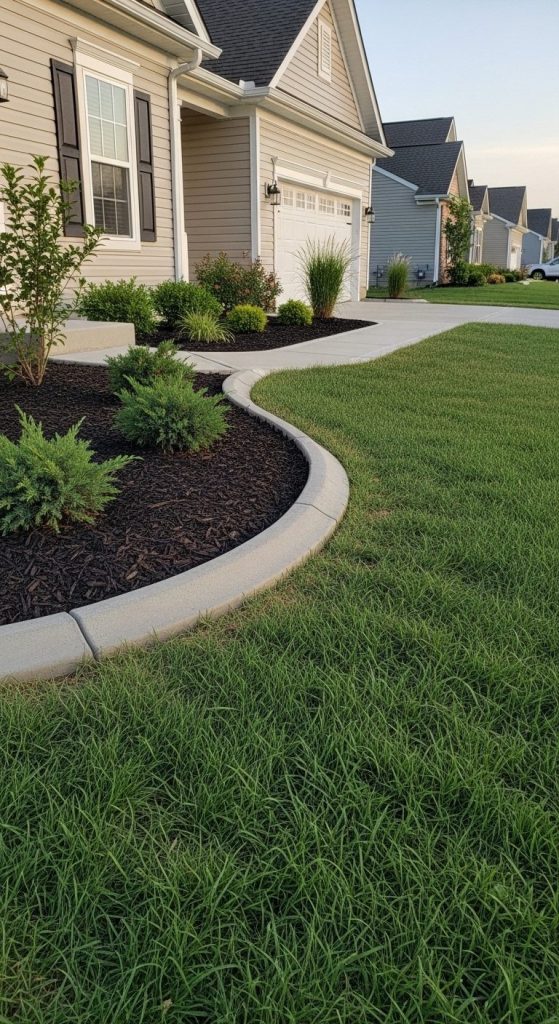
If you want something permanent, poured concrete edging offers one of the most durable solutions available.
Landscapers often shape concrete into smooth curves that follow the flow of the garden beds. Once it cures, the border becomes a solid barrier between grass and plants.
The result feels clean and professional.
Pros
- Extremely durable
- Prevents grass invasion
- Smooth, consistent lines
- Long lifespan
Cons
- Higher installation cost
- Hard to modify later
Mini takeaway
Concrete edging creates a polished landscape look that lasts for years with almost zero maintenance.
6. Wooden Landscape Timber Edging
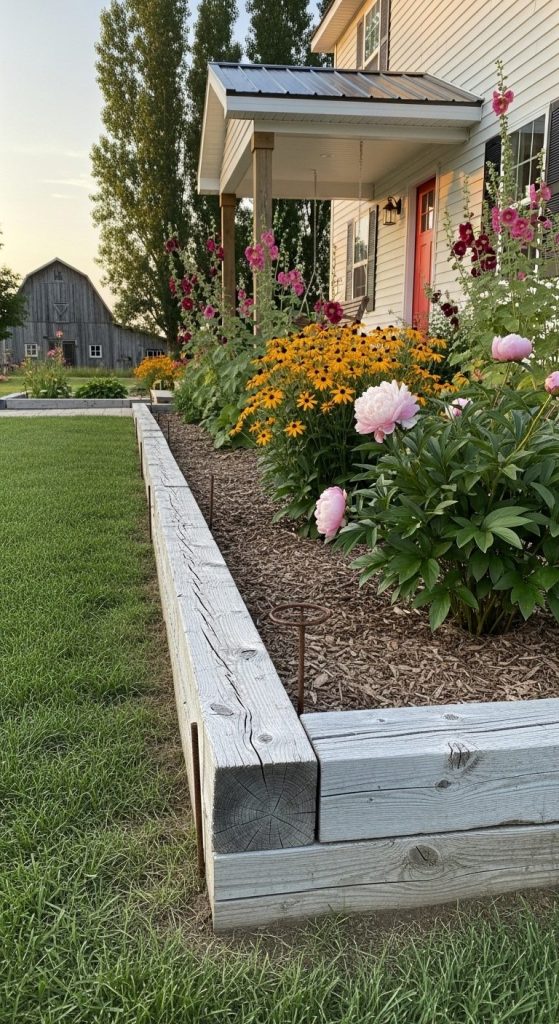
Wooden landscape timbers bring a warm, natural look to front yard beds.
People typically place pressure-treated timbers along the edge of the lawn and secure them with rebar stakes. This edging style works especially well for slightly raised planting beds.
It pairs nicely with rustic or farmhouse-style homes.
Pros
- Warm natural appearance
- Affordable materials
- Easy to cut and install
- Adds subtle height to beds
Cons
- Wood eventually deteriorates
- Requires occasional replacement
Mini takeaway
Timber edging adds structure while still feeling relaxed and earthy.
7. Flat Brick Path Edging
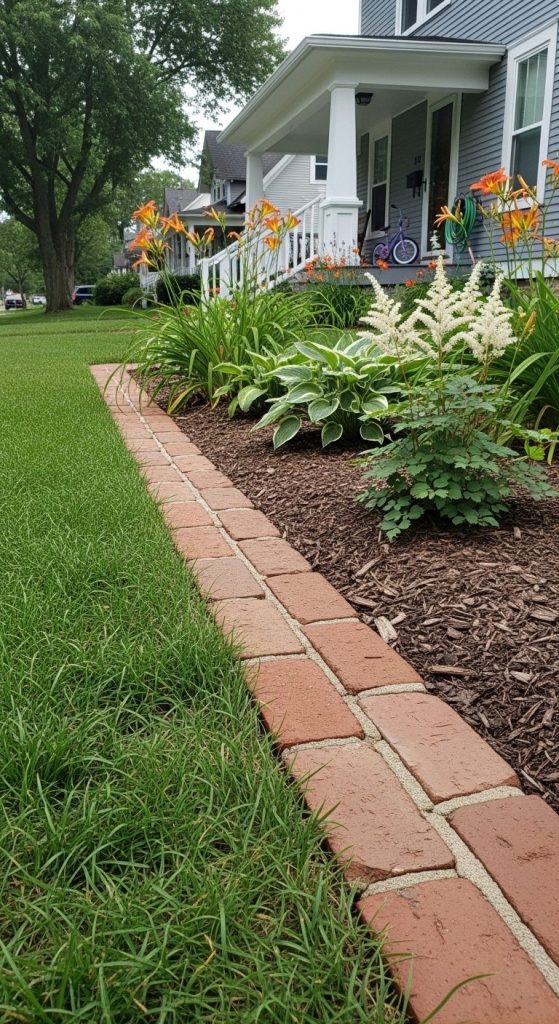
Another classic method uses flat bricks laid horizontally along the lawn border.
Instead of standing upright like soldier course bricks, these sit flat in a narrow trench. The top surface stays level with the lawn, which allows a mower wheel to roll directly over the edge.
Many gardeners love this feature because it reduces trimming.
Pros
- Makes mowing easier
- Attractive traditional appearance
- Durable material
- Simple installation
Cons
- Bricks may shift if soil settles
- Requires careful leveling
Mini takeaway
Flat brick edging quietly solves two problems: it defines the bed and simplifies lawn maintenance.
8. Stacked Stone Garden Edge
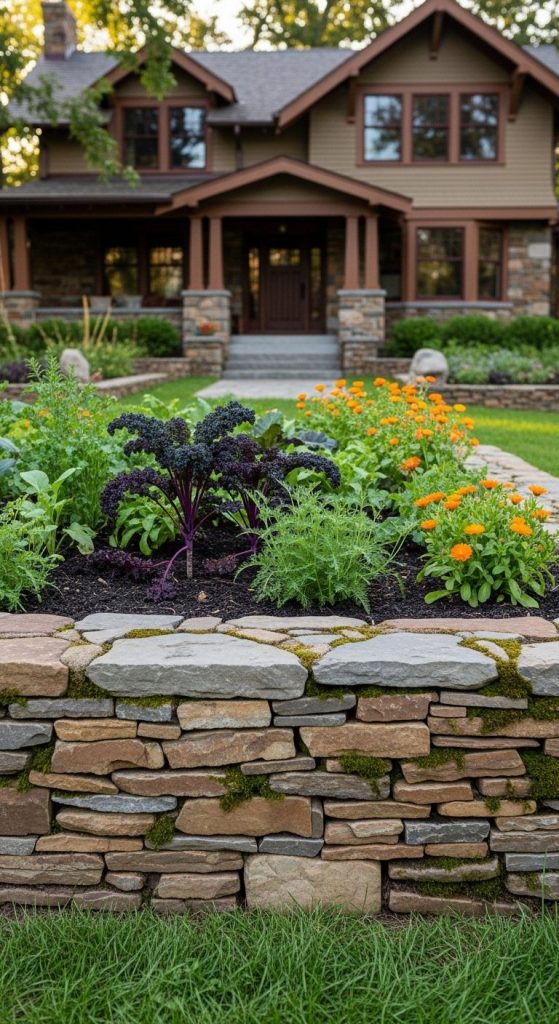
Stacked stone edging creates a low wall along the garden border.
Homeowners stack flat stones two or three layers high, forming a small retaining edge that frames the planting bed beautifully.
This edging style works well when the bed sits slightly higher than the lawn.
Pros
- Adds depth and texture
- Works for slightly raised beds
- Natural aesthetic
- Durable materials
Cons
- Requires careful stacking
- Stones may shift if not stabilized
Mini takeaway
Stacked stone edges give garden beds a strong visual frame that feels both rustic and refined.
9. Curved Paver Border
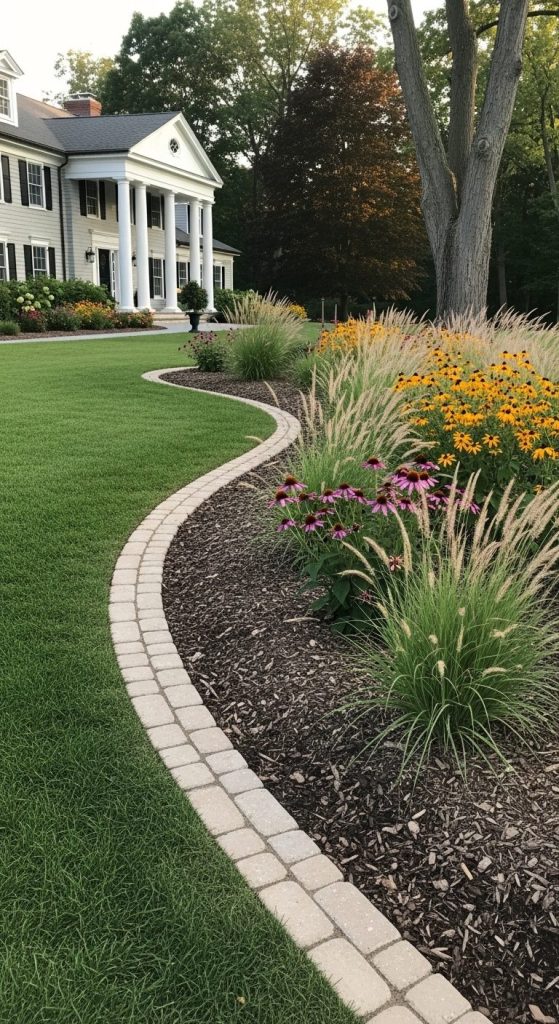
Some yards look better with flowing curves instead of straight lines.
A curved paver edge follows the shape of the garden bed, using small concrete pavers to create gentle arcs along the lawn border.
This style softens the landscape and makes flower beds feel more natural.
Pros
- Smooth flowing shapes
- Strong visual definition
- Durable materials
- Works well in large yards
Cons
- Installation takes patience
- Curves require precise placement
Mini takeaway
Curved paver edging gives the front yard a softer, more organic layout.
10. River Rock Border Edging
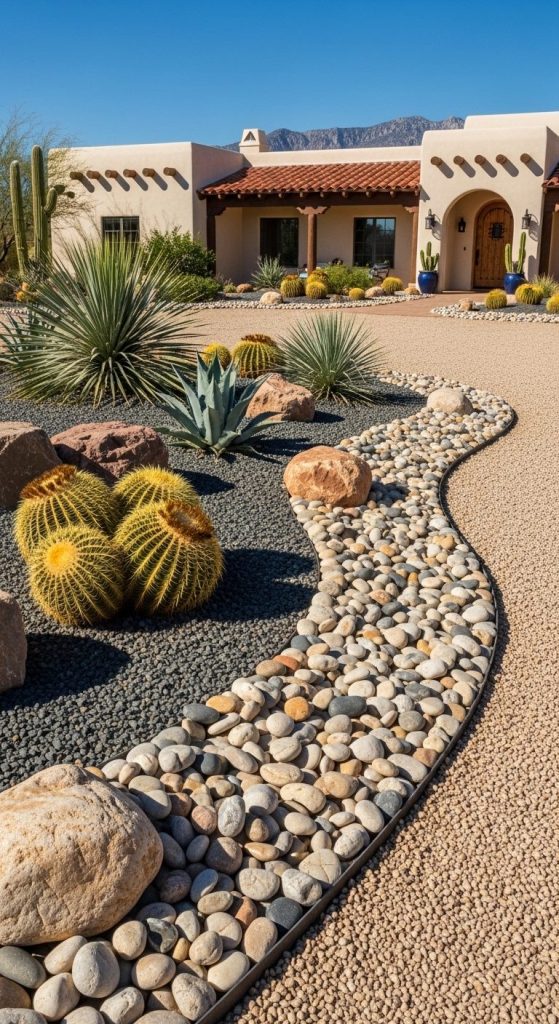
River rocks create a textured, decorative border between grass and plants.
Unlike gravel trenches, these stones sit slightly above the soil, forming a visible border line. Many homeowners mix stone sizes for a natural stream-like look.
Research from the University of Nevada Cooperative Extension notes that rock landscaping can also help reduce irrigation needs in planting beds.
Pros
- Beautiful natural texture
- Excellent drainage
- Helps retain soil moisture
- Long-lasting material
Cons
- Stones may scatter over time
- Weed barrier recommended underneath
Mini takeaway
River rock borders feel relaxed and natural while still giving the yard structure.
11. Decorative Concrete Block Edging
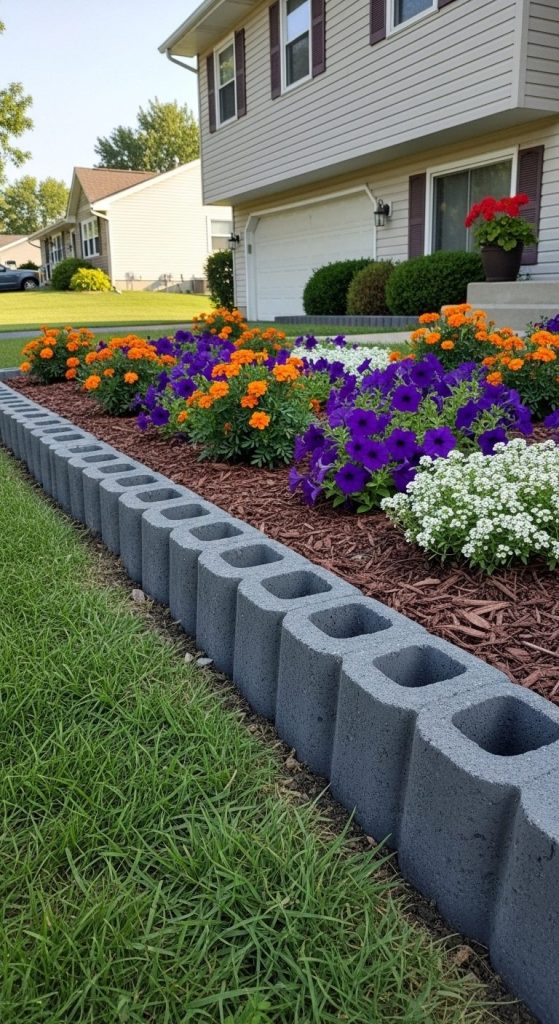
Concrete garden blocks designed for edging create a small repeating border along the lawn line.
These blocks often include subtle textures or shapes, adding visual interest while still serving as a functional edge.
They work well for homeowners who want something slightly decorative without going overboard.
Pros
- Structured and consistent
- Easy to stack and align
- Durable material
- Widely available at garden centers
Cons
- More visible than subtle edging styles
- Blocks require leveling
Mini takeaway
Decorative concrete blocks offer a tidy border with a touch of design personality.
12. Lawn Mower Edge Trench
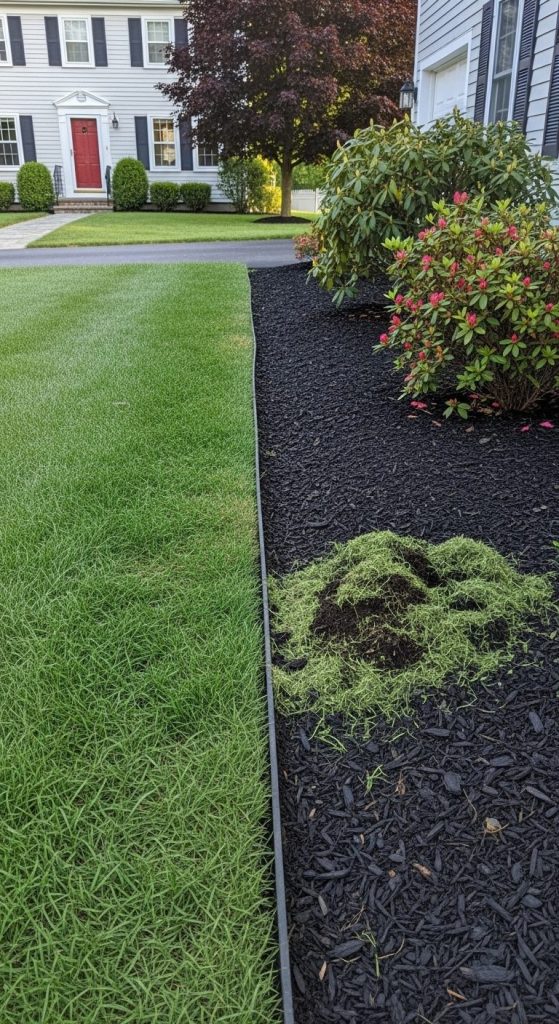
One of the simplest front yard edging ideas requires almost no materials.
A mower edge trench involves cutting a sharp vertical edge between the lawn and planting bed. Landscapers often use a half-moon edger tool to maintain this line.
The result creates a clean border without adding stone or brick.
Pros
- Extremely budget-friendly
- Fast to install
- Clean natural look
- Easy to reshape
Cons
- Requires periodic maintenance
- Edge softens after heavy rain
Mini takeaway
Sometimes the simplest edging looks surprisingly elegant when maintained regularly.
13. Raised Metal Garden Edge
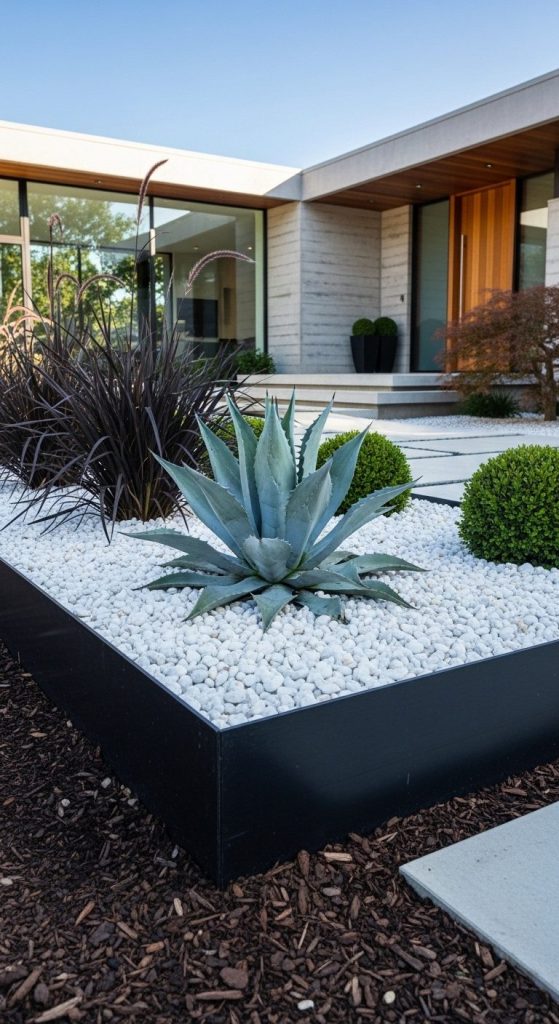
Some metal edging systems rise a few inches above the soil instead of sitting flush.
This raised edge creates a clear border that visually frames the planting bed while still maintaining a modern appearance.
Many gardeners like this option because it helps contain mulch.
Pros
- Prevents mulch from spilling
- Modern landscape appearance
- Long-lasting metal material
- Clean garden definition
Cons
- Slightly more visible than flush edging
- Requires proper installation stakes
Mini takeaway
Raised metal edges combine function and style while keeping garden beds neatly contained.
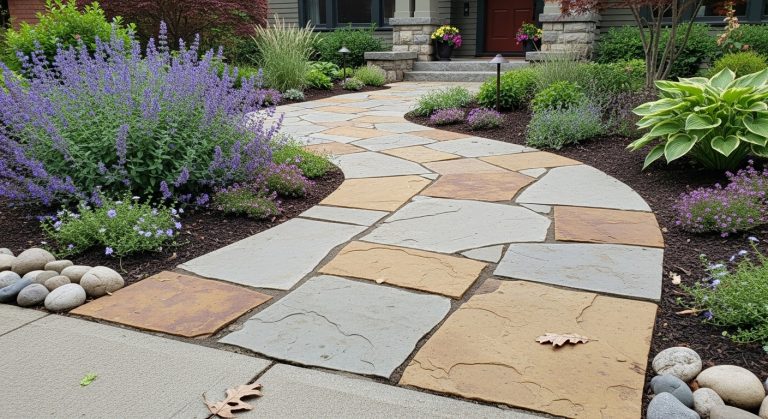
14. Flagstone Border Edging
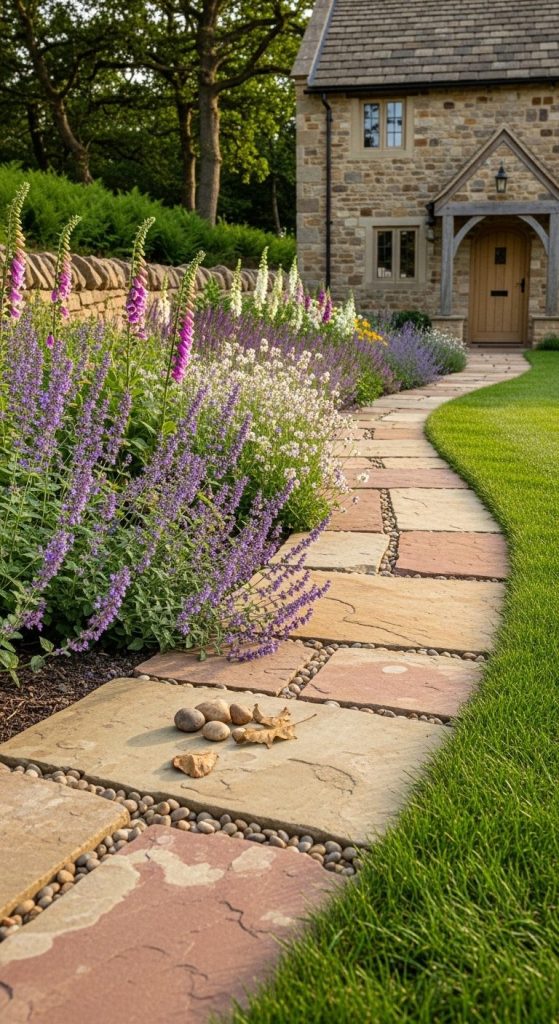
Flagstone slabs placed along the garden border create a wide, natural edging line.
Instead of a thin border, these stones form a flat edge path that transitions from lawn to planting bed.
The irregular shapes create visual interest without looking overly structured.
Pros
- Wide stable edge
- Beautiful natural stone
- Excellent durability
- Helps prevent soil erosion
Cons
- Stone pieces can be heavy
- Installation requires leveling
Mini takeaway
Flagstone edging feels relaxed and substantial at the same time.
15. Reclaimed Brick Garden Edge
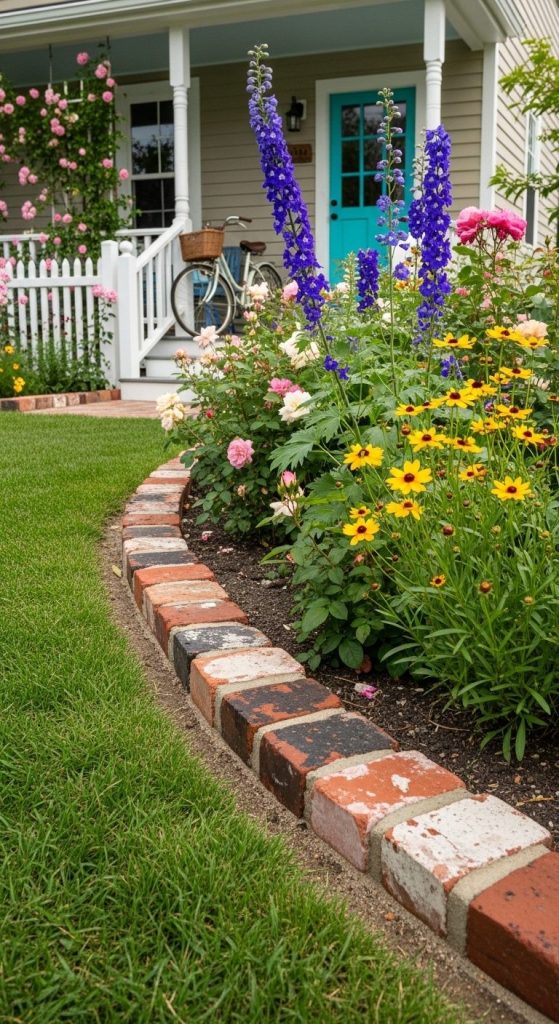
Reclaimed bricks bring character that new materials often lack.
Older bricks often show subtle color variation and weathered texture, which makes them perfect for vintage-style front yard edging.
Many homeowners find reclaimed bricks through salvage yards or renovation projects.
Pros
- Unique aged appearance
- Eco-friendly reuse of materials
- Durable and strong
- Great for cottage-style gardens
Cons
- Finding matching bricks may take time
- Surface irregularities require careful leveling
Mini takeaway
Reclaimed brick edging adds personality and history to the front yard landscape.
Conclusion
A well-designed lawn and garden can look beautiful on their own. But without a clear border, the whole yard sometimes feels a little unfinished.
That’s where thoughtful front yard edging ideas come in.
The right edging does more than separate grass from flower beds. It creates structure, defines shapes, and quietly improves curb appeal.
Some homeowners prefer the natural charm of stone or river rock. Others lean toward the clean lines of metal or brick. Honestly, there’s no single “best” option.
The best edging is the one that fits your home style, your budget, and the amount of maintenance you’re comfortable with.
Personally, I love how such a small upgrade can transform a yard. Add a simple edge around the garden beds and suddenly everything looks planned and intentional.
Pick the style that feels right for your space and try it first. Sometimes one clean border is all it takes to make the entire front yard look dramatically better.

Ashley Ellison is a skilled writer and avid bowler. Her passion for storytelling and dedication to the sport have led her to participate in various national bowling leagues. With a unique combination of talents, Ashley approaches every challenge with creativity and a relentless drive to succeed.