15 Front Yard Edible Garden Ideas for Beautiful Food Landscapes
A few years ago, I noticed something interesting happening in my neighborhood. One house replaced their decorative shrubs with tomato plants and kale. Another added raised beds filled with herbs right beside the walkway. Before long, it felt like half the street started experimenting with the same idea.
That’s when the concept of a front yard edible garden really clicked for me.
Instead of using the most visible part of your property purely for decoration, you turn it into something that actually feeds you. Fresh herbs near the walkway, fruit trees near the entrance, vegetables growing where grass used to struggle. It’s practical, beautiful, and surprisingly satisfying.
And the trend keeps growing. According to the National Gardening Association, food gardening participation in the U.S. increased by more than 200% over the past decade, with many homeowners choosing visible front yard spaces instead of hidden backyard plots.
Honestly, that shift makes sense. Front yards often receive the best sunlight, and they offer the perfect opportunity to combine curb appeal with fresh produce.
If you’ve ever thought about growing food at home, these front yard edible garden ideas offer practical, achievable ways to make that space productive while still looking great from the street.
1. Raised Vegetable Beds Along the Walkway
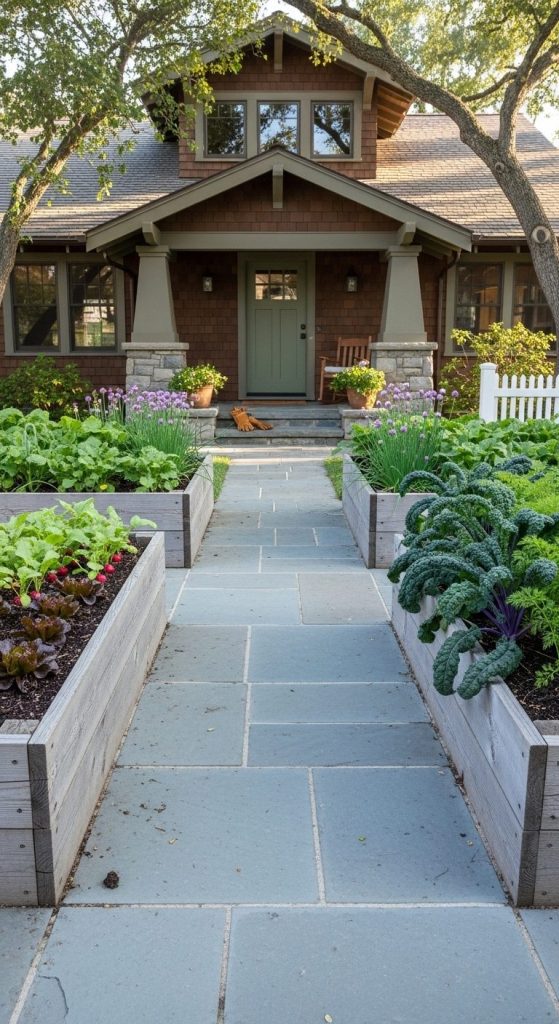
Some of the most charming front yard gardens I’ve seen place raised beds right beside the main entry path.
Instead of a traditional lawn border, rectangular raised vegetable beds line the walkway leading to the house. You might see lettuce, carrots, peppers, and herbs growing neatly in rows while guests walk past them toward the front door.
Raised beds improve soil quality and drainage, which makes vegetable growing far easier for beginners.
Pros:
- Improves soil control and drainage
- Easy access for planting and harvesting
- Keeps the garden organized and tidy
- Reduces bending while gardening
Cons:
- Requires initial construction effort
- Lumber or stone materials add cost
Mini takeaway:
Walkway beds make the front yard edible garden part of everyday life. Every trip to the door becomes a reminder that fresh food grows just a few steps away.
2. Front Yard Fruit Tree Row
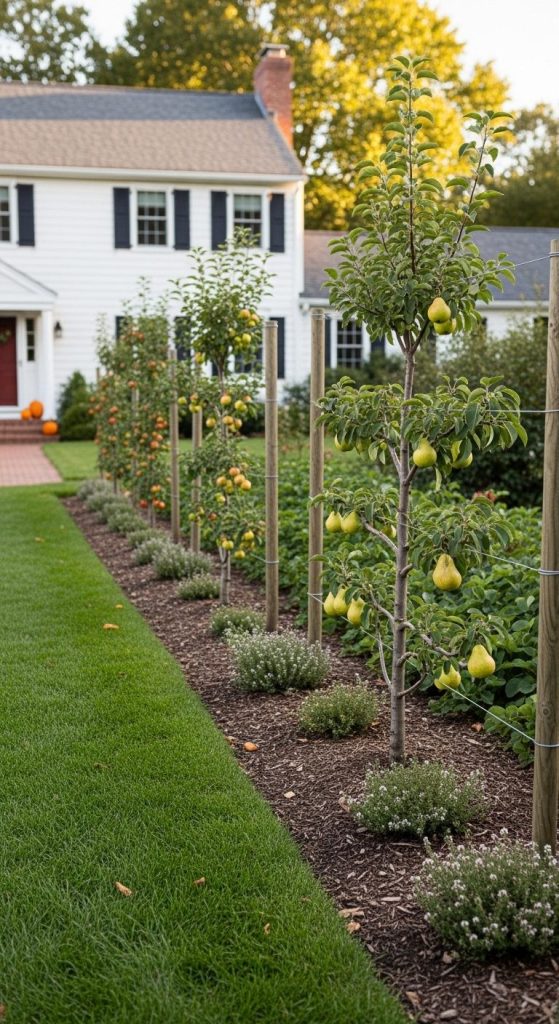
Fruit trees bring beauty and productivity to a yard at the same time.
Planting a row of small fruit trees along the property line creates a structured garden that produces apples, peaches, citrus, or figs depending on the climate.
Dwarf fruit tree varieties work especially well in front yards because they stay compact and manageable.
Pros:
- Provides fresh seasonal fruit
- Creates natural shade and structure
- Long-term food production
- Adds visual interest to the landscape
Cons:
- Requires pruning and seasonal care
- Fruit harvest may attract birds
Mini takeaway:
Fruit trees turn a front yard into a long-term food source. A single row can provide harvests for many years with proper care.
3. Edible Border Garden Along the Sidewalk
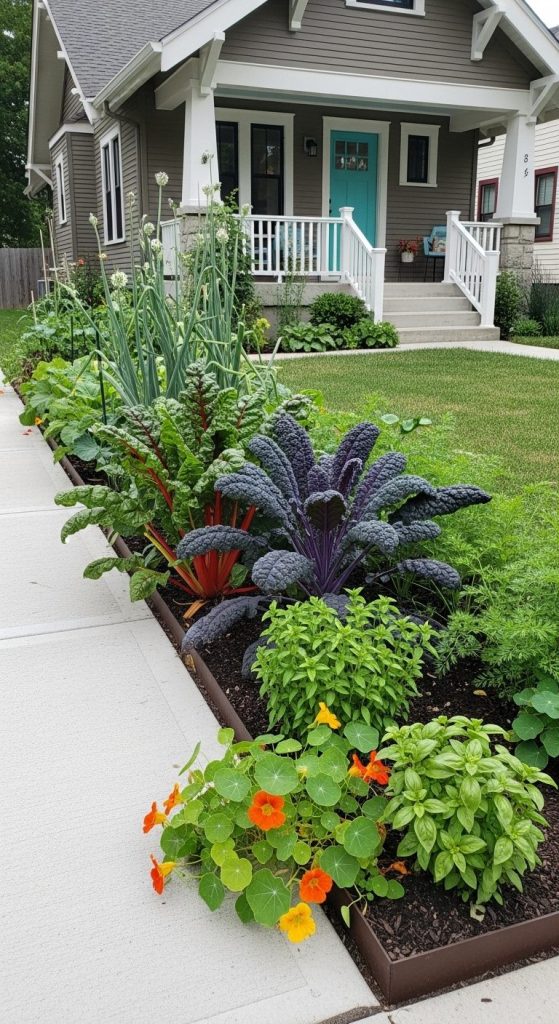
Many homeowners install decorative borders near sidewalks. Replacing those plants with edible crops creates something far more useful.
An edible border garden uses plants like Swiss chard, kale, basil, and strawberries along the outer edge of the yard.
These plants offer vibrant color while still producing food.
Pros:
- Maximizes unused edge space
- Easy harvesting from the sidewalk side
- Attractive foliage and color variety
- Ideal for small yards
Cons:
- Needs regular harvesting to stay tidy
- Some plants require seasonal replanting
Mini takeaway:
Border gardens prove that food plants can look just as beautiful as ornamental ones.
4. Circular Herb Garden at the Entrance
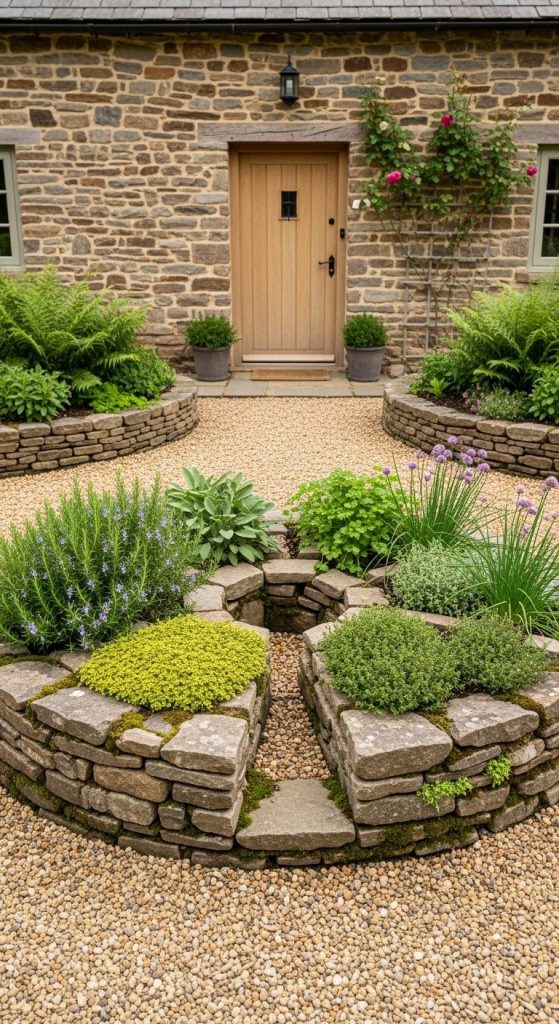
Herbs thrive in sunny areas and don’t require large spaces. That makes them perfect for a circular herb garden near the front entrance.
The design uses a round planting area divided into sections for herbs like rosemary, thyme, oregano, parsley, and mint.
According to the Royal Horticultural Society, most culinary herbs require at least 6 hours of sunlight per day, which front yards often provide easily.
Pros:
- Compact yet productive layout
- Easy access for cooking ingredients
- Pleasant aromas near the entrance
- Attractive circular design
Cons:
- Some herbs spread quickly
- Regular trimming helps maintain shape
Mini takeaway:
A circular herb garden turns the entrance area into a functional kitchen resource.
5. Vertical Trellis Vegetable Garden
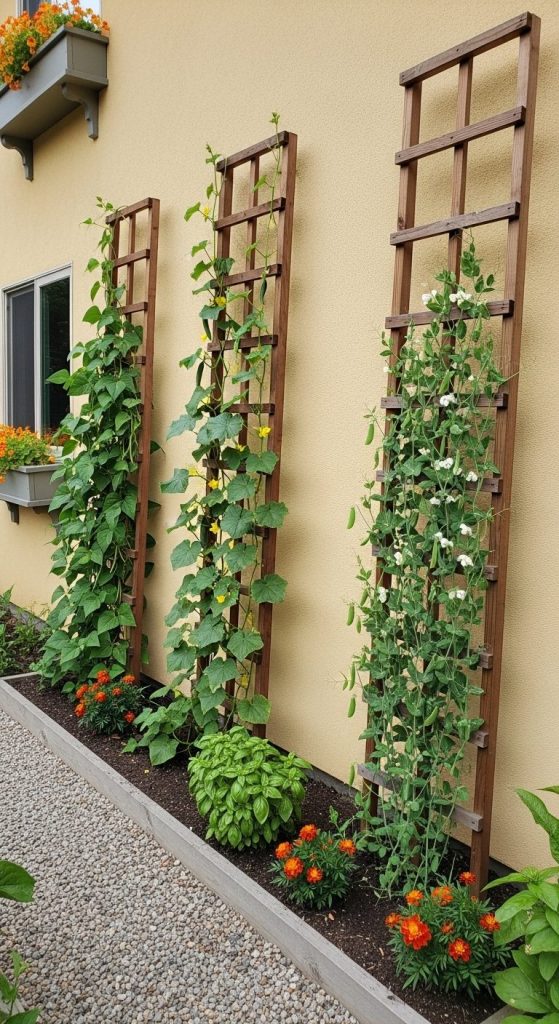
Limited space doesn’t mean limited harvests.
A vertical trellis garden grows climbing vegetables like cucumbers, beans, and peas upward instead of outward.
Tall wooden or metal trellises sit within garden beds and guide plants toward the sun.
Pros:
- Maximizes growing space
- Improves air circulation for plants
- Makes harvesting easier
- Creates visual height in the garden
Cons:
- Trellis installation required
- Plants need occasional tying for support
Mini takeaway:
Vertical gardening works brilliantly in a front yard edible garden. The design saves space while producing impressive harvests.
6. Front Yard Berry Patch
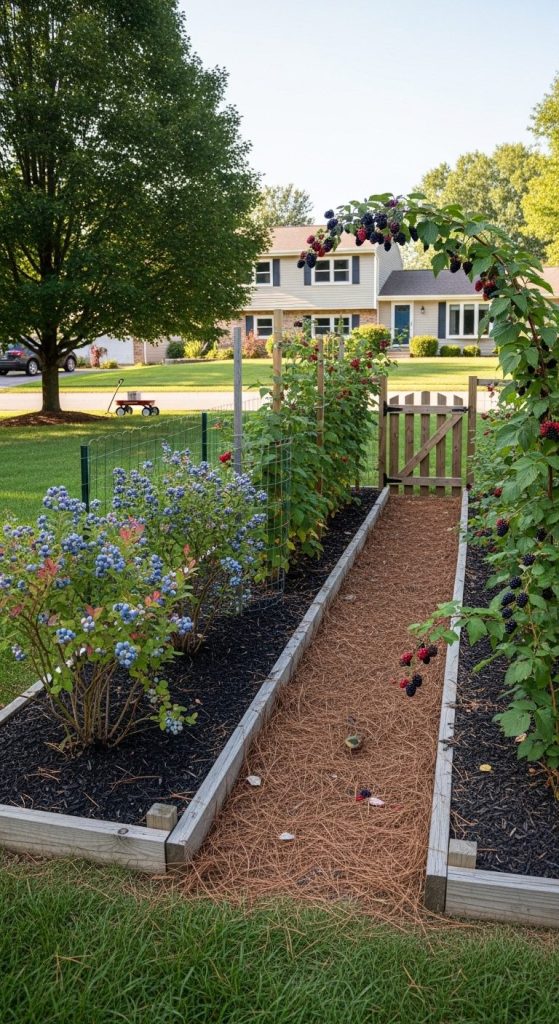
Berry bushes offer one of the easiest edible garden options.
Blueberries, raspberries, and blackberries grow well in compact clusters and produce fruit year after year.
A dedicated berry patch near the front yard corner keeps the garden organized while delivering sweet summer harvests.
Pros:
- Perennial plants produce annually
- Compact bushes fit smaller yards
- Fresh berries for snacks and desserts
- Attractive seasonal foliage
Cons:
- Birds often compete for ripe berries
- Some varieties spread quickly
Mini takeaway:
Berry patches combine beauty with delicious rewards. A small section of yard can supply fruit for months.
7. Kitchen Salad Garden Bed
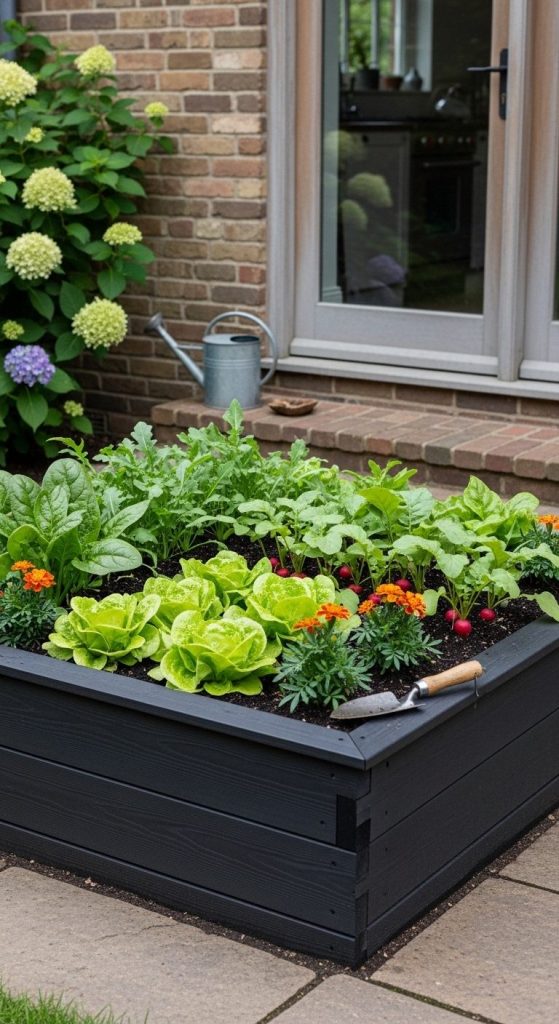
Salad greens grow quickly and require minimal space.
A salad garden bed focuses on lettuce, spinach, arugula, and radishes planted in small succession batches.
According to research from the University of California Agriculture Department, leafy greens often reach harvest size in 30–45 days, making them ideal for continuous home production.
Pros:
- Fast-growing crops
- Easy for beginner gardeners
- Continuous harvest potential
- Requires little space
Cons:
- Needs frequent watering in hot climates
- Short growing seasons in extreme heat
Mini takeaway:
Salad beds bring instant gratification to gardening. Fresh greens appear quickly and keep coming throughout the season.
8. Mixed Edible Flower and Vegetable Garden
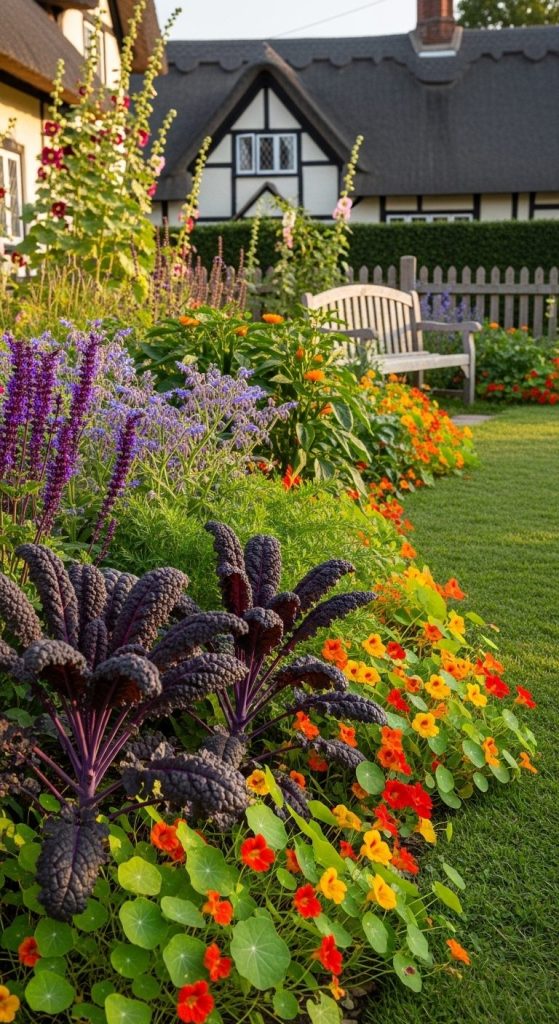
Some edible plants look stunning.
A mixed edible garden combines vegetables with edible flowers like nasturtiums, calendula, and pansies.
These flowers add color while also serving culinary purposes in salads or garnishes.
Pros:
- Visually vibrant garden layout
- Supports pollinators like bees
- Adds culinary creativity
- Encourages biodiversity
Cons:
- Requires thoughtful plant pairing
- Some flowers bloom seasonally
Mini takeaway:
Edible flowers blur the line between ornamental and productive gardens.
9. Front Yard Citrus Tree Garden
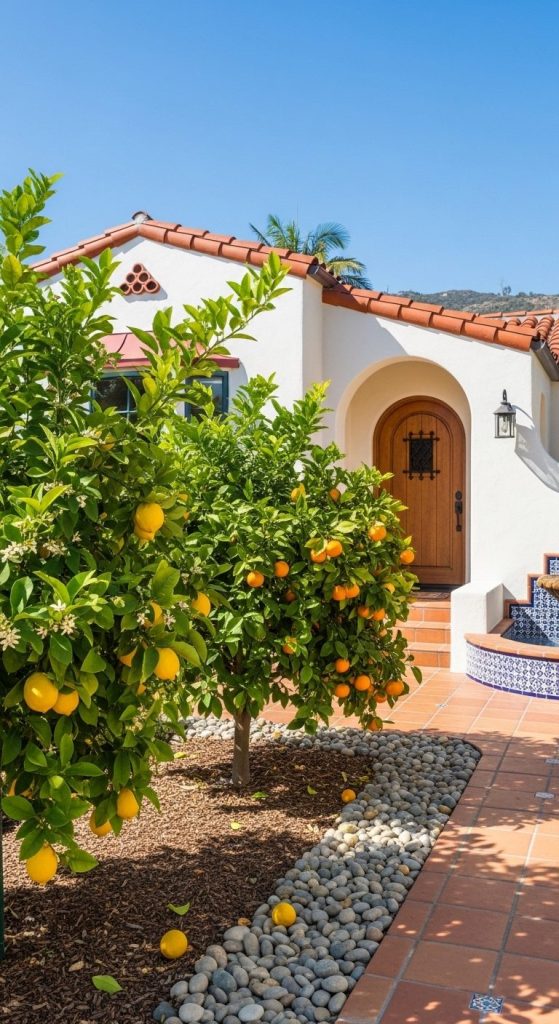
In warmer climates, citrus trees thrive beautifully in sunny front yards.
Planting lemon, lime, or orange trees near the entrance creates a lush edible landscape.
According to the USDA Agricultural Research Service, mature citrus trees can produce hundreds of fruits per year depending on the variety.
Pros:
- High fruit production
- Pleasant fragrance during bloom
- Attractive evergreen foliage
- Long-lasting harvest seasons
Cons:
- Sensitive to frost in colder climates
- Requires occasional pruning
Mini takeaway:
Citrus trees bring both beauty and abundance to the edible landscape.
10. Edible Groundcover Garden
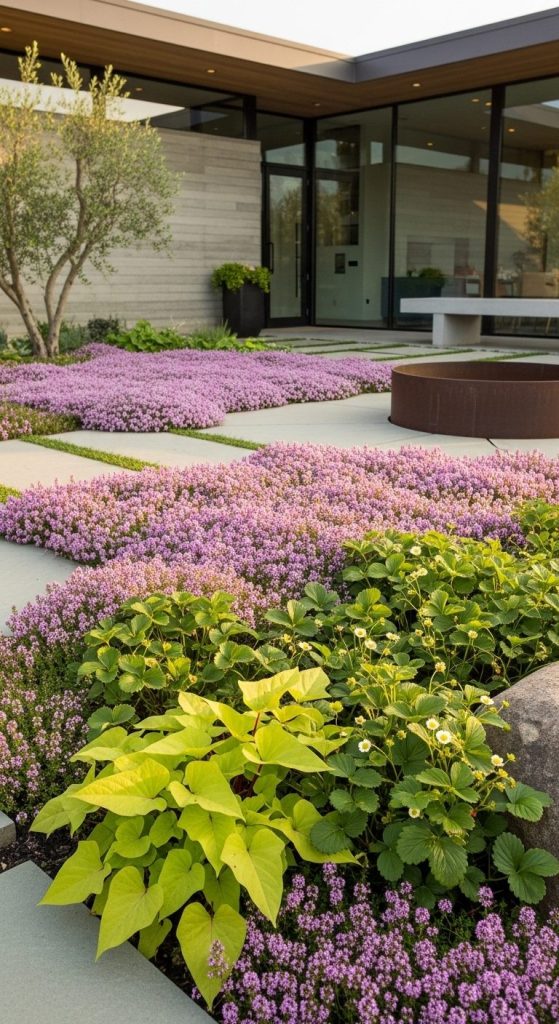
Some edible plants grow low to the ground and work perfectly as groundcover.
Strawberries, creeping thyme, and sweet potatoes create a living carpet of edible plants across sections of the yard.
The result looks lush while producing small harvests.
Pros:
- Covers soil effectively
- Suppresses weeds naturally
- Provides seasonal harvests
- Low-growing plants look tidy
Cons:
- Harvesting requires bending down
- Some varieties spread aggressively
Mini takeaway:
Groundcover gardens offer a creative twist on traditional planting layouts.
11. Front Yard Orchard Layout
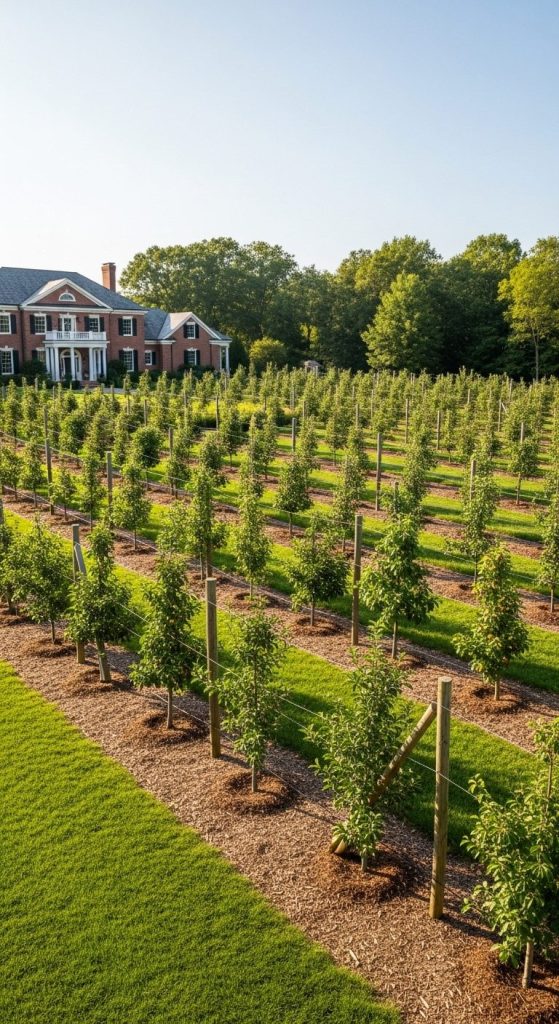
For larger properties, a mini orchard works beautifully in the front yard.
Instead of random tree placement, fruit trees install in organized rows or symmetrical spacing.
According to the Food and Agriculture Organization, well-maintained fruit trees can produce harvests for 20–40 years.
Pros:
- Long-term food production
- Organized landscape structure
- Shade and cooling benefits
- Seasonal harvest variety
Cons:
- Requires significant space
- Regular pruning necessary
Mini takeaway:
Orchard-style layouts transform a front yard into a productive landscape for decades.
12. Companion Planting Vegetable Garden
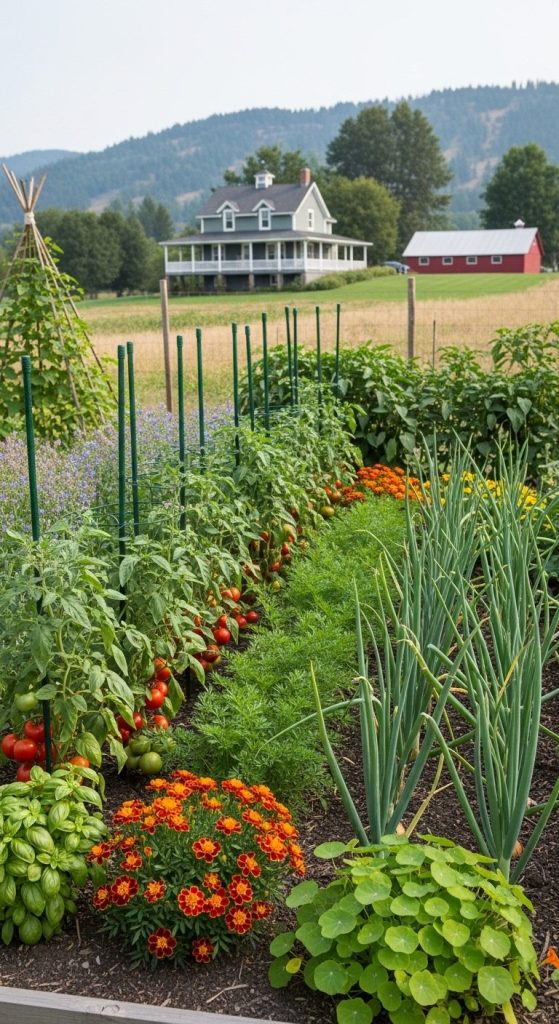
Companion planting improves crop health naturally.
In this layout, vegetables grow in combinations that benefit each other. Tomatoes grow beside basil, carrots grow near onions, and marigolds deter pests.
Pros:
- Improves plant health
- Natural pest management
- Efficient space use
- Encourages biodiversity
Cons:
- Requires basic plant knowledge
- Crop planning becomes important
Mini takeaway:
Companion planting adds intelligence to the edible garden design.
13. Front Yard Potato Patch
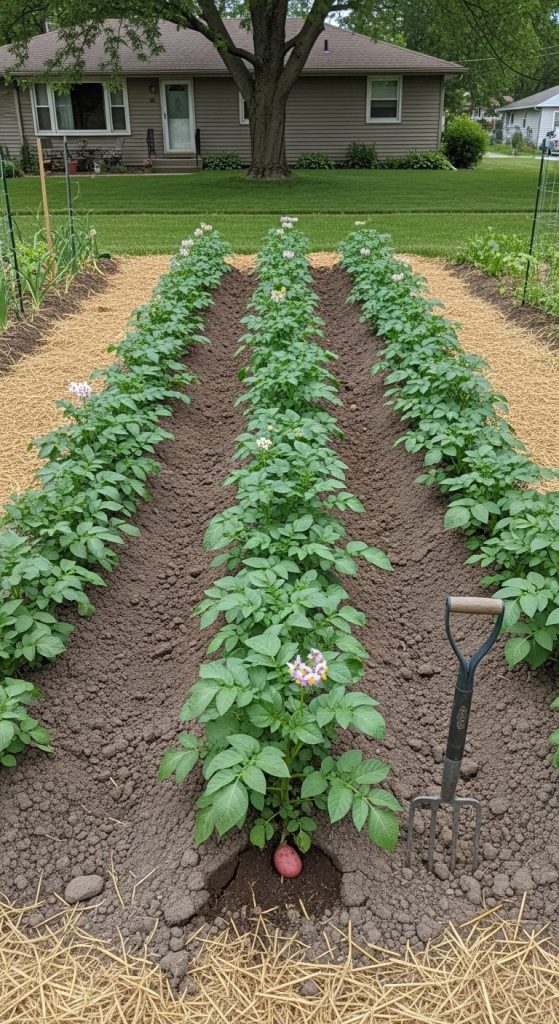
Potatoes remain one of the most productive crops for home gardens.
A dedicated potato patch uses loose soil rows or raised beds where potatoes grow beneath the surface.
According to the International Potato Center, one kilogram of seed potatoes can produce up to 10 kilograms of harvest under good conditions.
Pros:
- High yield crop
- Easy planting process
- Stores well after harvest
- Suitable for many climates
Cons:
- Requires digging during harvest
- Needs loose soil for best results
Mini takeaway:
Potatoes reward patience. A small patch can provide impressive harvest quantities.
14. Edible Hedge Garden
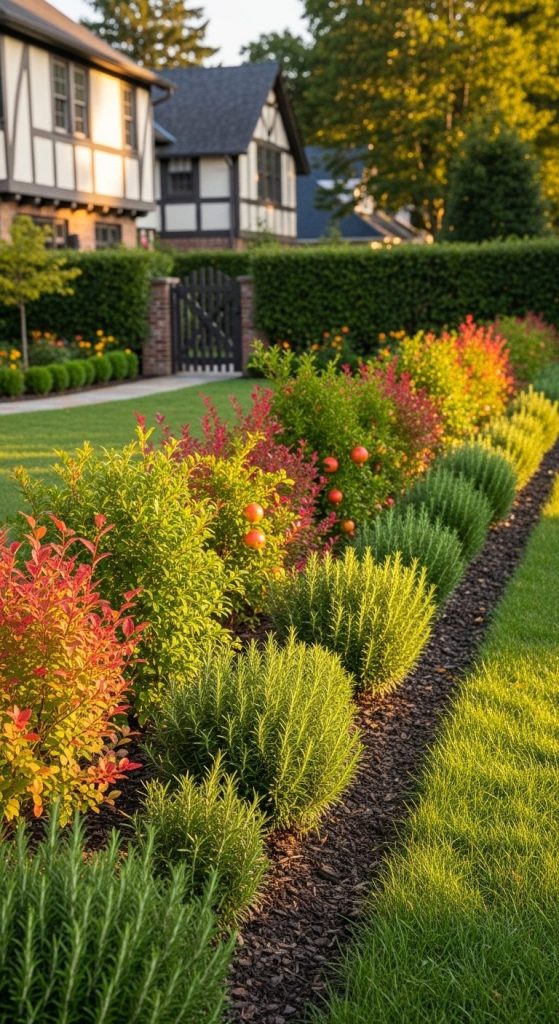
Traditional hedges use ornamental shrubs. An edible hedge replaces those plants with food-producing varieties.
Examples include blueberry bushes, rosemary hedges, or dwarf fruit shrubs arranged along the property boundary.
Pros:
- Defines property edges
- Provides edible harvests
- Attractive seasonal changes
- Multi-purpose landscaping
Cons:
- Requires pruning for shape
- Harvest seasons vary
Mini takeaway:
Edible hedges turn a structural landscape feature into a productive garden.
15. Four-Season Edible Garden Layout
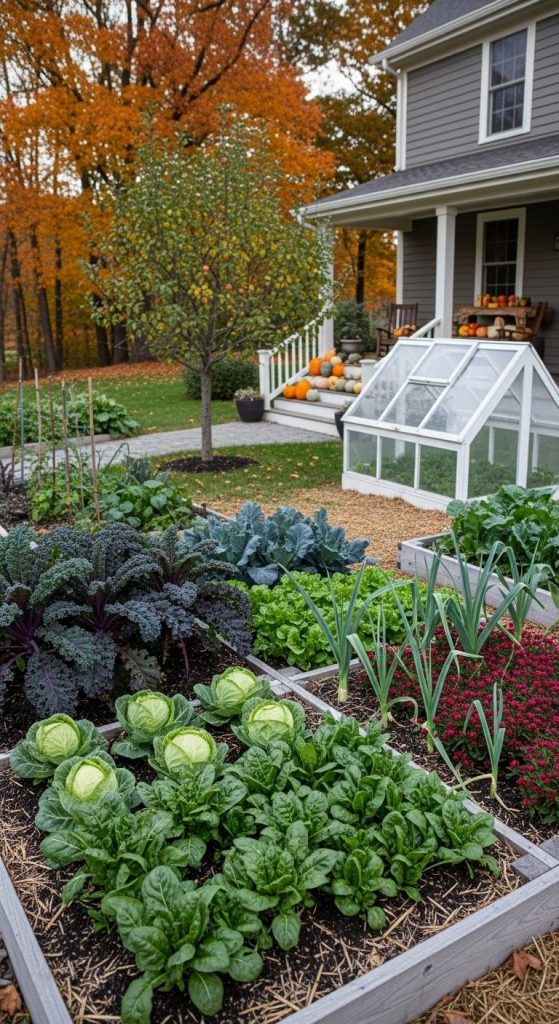
One common challenge with edible gardens involves seasonal gaps.
A four-season garden plan rotates crops so something grows year-round. Cool-season crops like kale grow in spring and fall, while tomatoes and peppers thrive in summer.
Pros:
- Continuous food production
- Efficient garden use
- Reduces empty garden space
- Encourages crop diversity
Cons:
- Requires seasonal planning
- Some climates limit winter crops
Mini takeaway:
Seasonal rotation keeps the front yard edible garden active throughout the year.
Conclusion
A front yard edible garden changes the way people think about landscaping.
Instead of maintaining decorative plants that offer little practical benefit, the space begins producing herbs, vegetables, fruits, and greens that support everyday meals.
Even better, edible gardens can look just as attractive as traditional landscaping when designed thoughtfully. Rows of vegetables, berry bushes, fruit trees, and herb beds bring texture, color, and seasonal change to the front yard.
Personally, the most exciting part involves the connection between gardening and daily life. Walking outside to pick herbs for dinner or grabbing fresh strawberries on the way inside feels surprisingly rewarding.
The ideas above show that edible gardens come in many forms—from small herb circles to full orchard layouts. Every yard can support some type of productive planting.
Start with one manageable section of the yard. A few raised beds or fruit trees can quickly transform the space.
Once the harvest begins, the front yard becomes more than landscaping. It becomes a living source of fresh food.

William Martin is a passionate bowler who spends most of his weekends playing the sport. With years of intense experience under his belt, William decided to share his knowledge by creating BOWLING OCEAN. Join me on this journey to explore the world of bowling and discover the tips and tricks to becoming a pro.