15 Front Yard Flower Beds Against the House Ideas
Some parts of a yard get all the attention—lawns, patios, maybe a big shade tree. But one of the most overlooked spaces sits right under our noses: the strip of ground against the house.
For years I ignored mine. A few random plants sat there, half struggling, half surviving. Nothing looked terrible, but nothing looked intentional either.
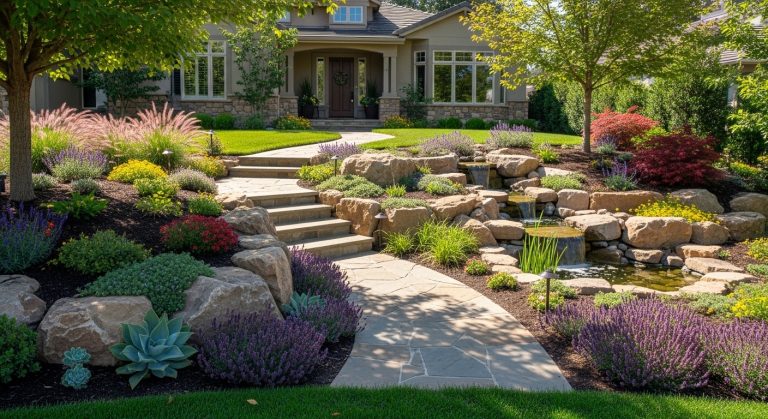
Then I noticed something while walking around older neighborhoods. Homes with beautiful curb appeal almost always had thoughtfully designed front yard flower beds against the house. The plants framed the walls, softened the foundation, and made the house feel welcoming instead of boxy.
That small change completely reshaped how the yard looked.
Foundation beds don’t need to be huge or complicated. With the right layout and plant structure, they can transform the entire front exterior.
The following ideas focus on practical, achievable ways to design flower beds along the house foundation. Each one solves a different design challenge—height balance, seasonal color, maintenance, or curb appeal.
Some are simple weekend projects. Others create a full garden upgrade.
Either way, they turn that overlooked strip of soil into one of the best-looking parts of the yard.
1. Layered Foundation Planting Bed
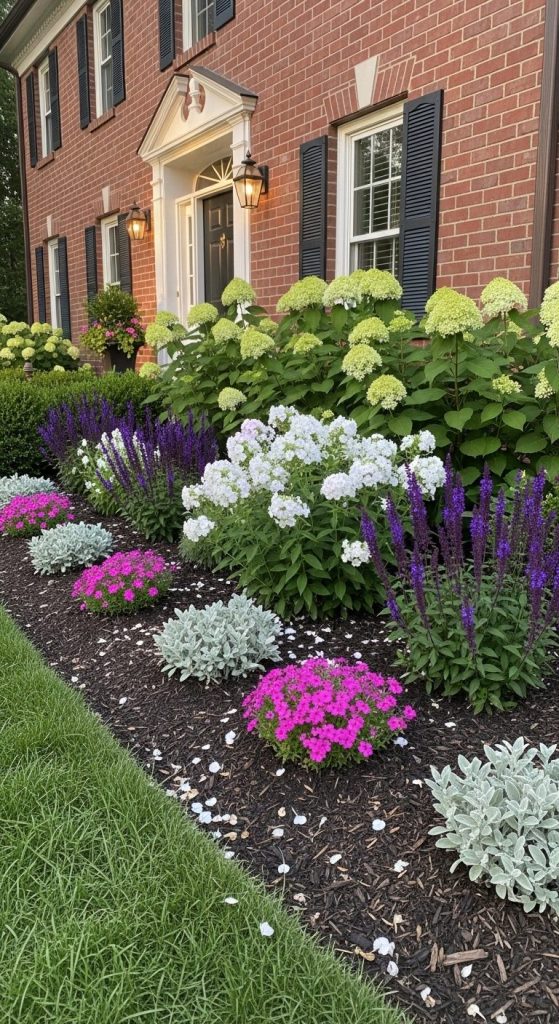
One of the most effective ways to design front yard flower beds against the house involves layering plants by height.
Tall shrubs sit closest to the wall, medium perennials fill the center, and low flowers edge the front of the bed. This layered structure creates depth instead of a flat row of plants.
The house wall acts like a backdrop, which makes the flowers stand out even more.
Landscape designers often follow this structure because it visually balances the height of the house.
Pros
- Creates depth and dimension along the foundation
- Frames the house beautifully
- Allows multiple plant types in one bed
- Works in narrow planting spaces
Cons
- Requires thoughtful spacing
- Some plants need occasional pruning
Mini takeaway
Layered planting turns a simple foundation strip into a lush garden border that feels full and intentional.
2. Continuous Evergreen Shrub Foundation Bed
Sometimes the most polished look comes from simplicity.
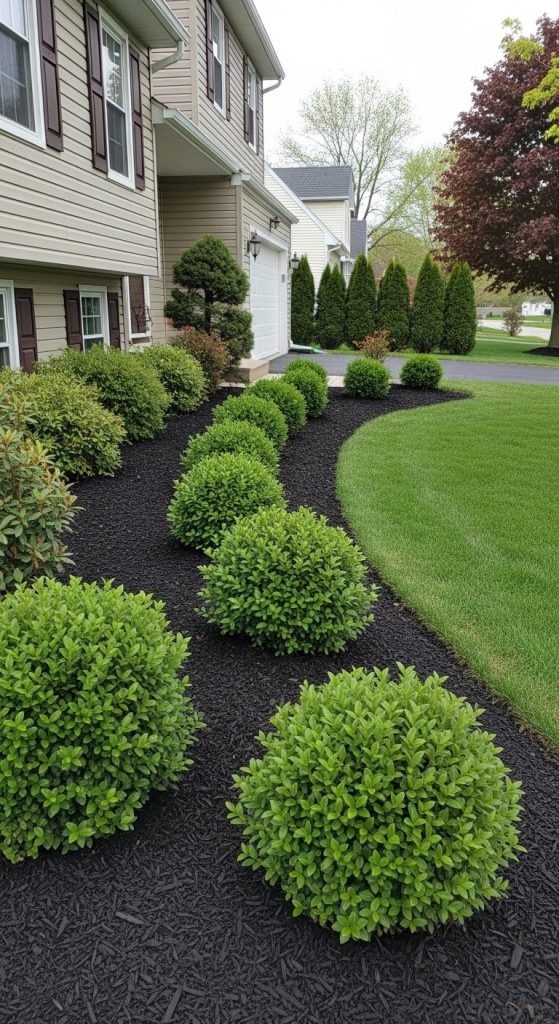
A continuous row of evergreen shrubs planted along the foundation creates a clean, classic landscape line. Boxwood, dwarf holly, or yew shrubs often work well for this style.
The shrubs stay green all year, which keeps the front yard looking maintained even during winter.
According to the National Association of Landscape Professionals, evergreen foundation plantings remain one of the most common curb-appeal upgrades for residential homes.
Pros
- Year-round greenery
- Low seasonal maintenance
- Strong architectural structure
- Works with traditional and modern homes
Cons
- Less seasonal flower color
- Requires occasional trimming
Mini takeaway
Evergreen foundation beds keep the front yard neat and balanced in every season.
3. Curved Flower Bed Along the Foundation
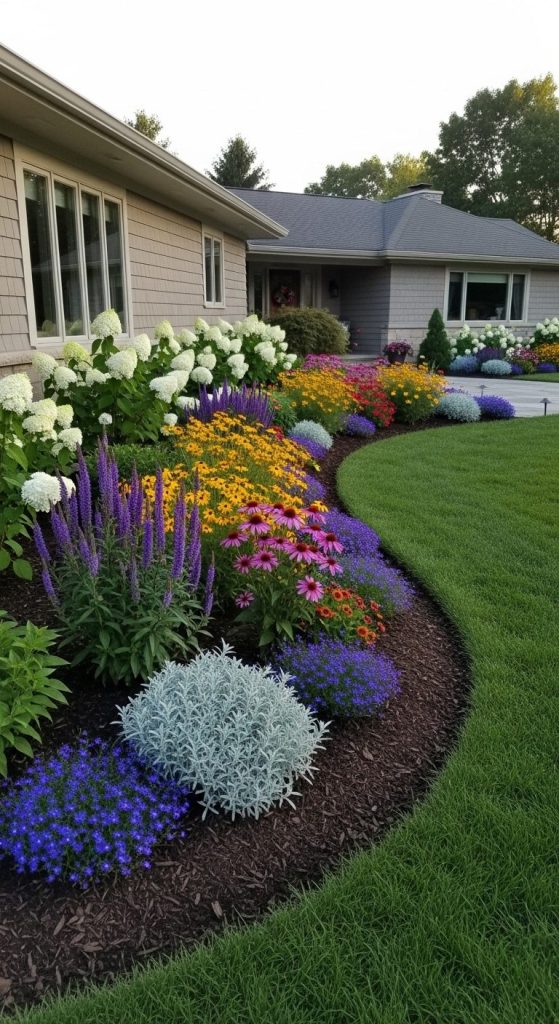
Straight foundation beds sometimes feel rigid.
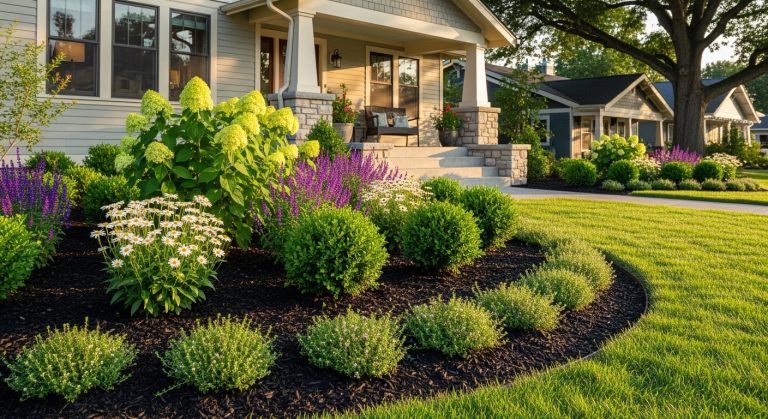
A curved planting bed softens the edge between lawn and house by creating gentle arcs instead of a straight border. This approach adds visual movement across the front of the home.
Landscape professionals often recommend curved beds for larger houses because they break up long walls.
Pros
- Creates natural garden flow
- Makes the yard feel more dynamic
- Works well with layered plants
- Improves curb appeal
Cons
- Curves require careful edging
- Slightly more complex to install
Mini takeaway
Curved beds instantly make foundation landscaping feel more organic and welcoming.
4. Narrow Cottage-Style Flower Bed
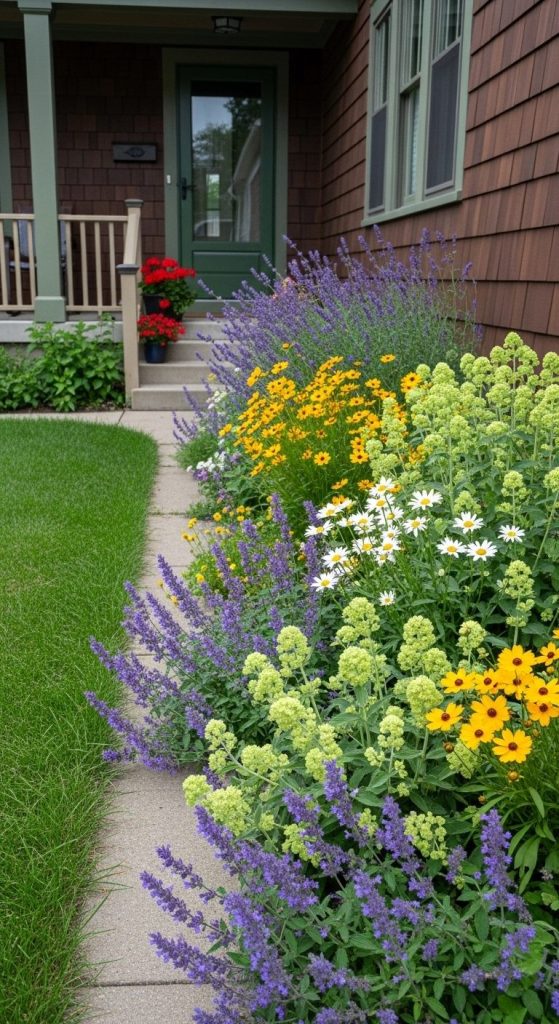
Even small spaces along the house can become charming gardens.
A narrow cottage-style bed mixes flowering perennials closely together so the plants spill slightly toward the walkway or lawn.
Lavender, daisies, salvia, and catmint often appear in these beds.
The dense planting style makes a small strip of soil feel surprisingly lush.
Pros
- Perfect for tight foundation spaces
- Rich cottage garden look
- Supports pollinators
- Colorful seasonal blooms
Cons
- Plants may need occasional thinning
- Dense planting requires good soil
Mini takeaway
Small foundation beds can still deliver big visual impact with dense cottage planting.
5. Symmetrical Entry Foundation Beds
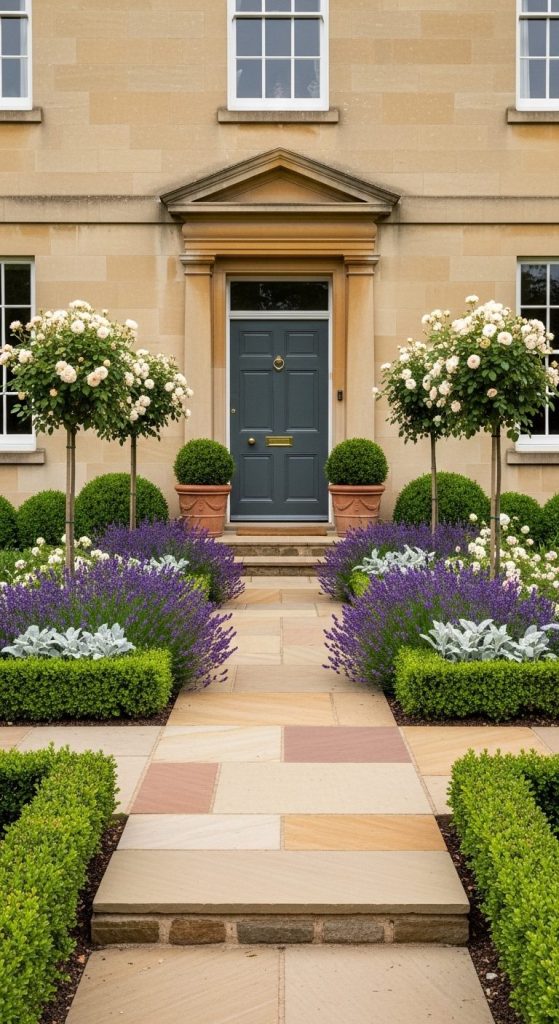
The area near the front door deserves special attention.
Matching flower beds on both sides of the entry walkway create a symmetrical foundation layout that feels welcoming and balanced.
Many homeowners plant the same shrubs and flowers on both sides to mirror the design.
Pros
- Strong curb appeal
- Frames the entrance beautifully
- Easy to maintain visually
- Creates a welcoming focal point
Cons
- Requires consistent plant care
- Symmetry limits creative variation
Mini takeaway
Symmetrical beds anchor the front of the house and guide visitors naturally toward the door.
6. Hydrangea Foundation Flower Bed
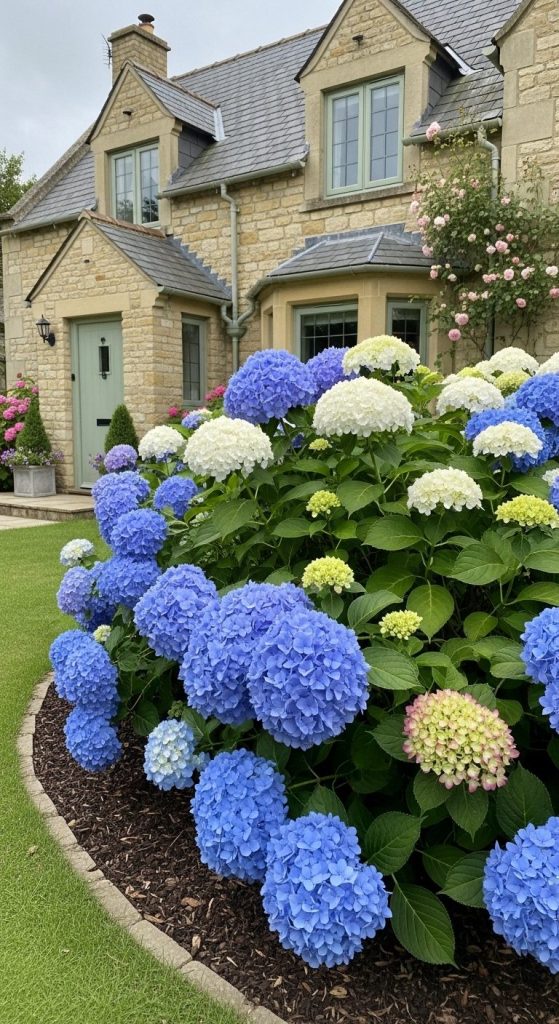
Hydrangeas bring softness and large blooms to front yard flower beds against the house.
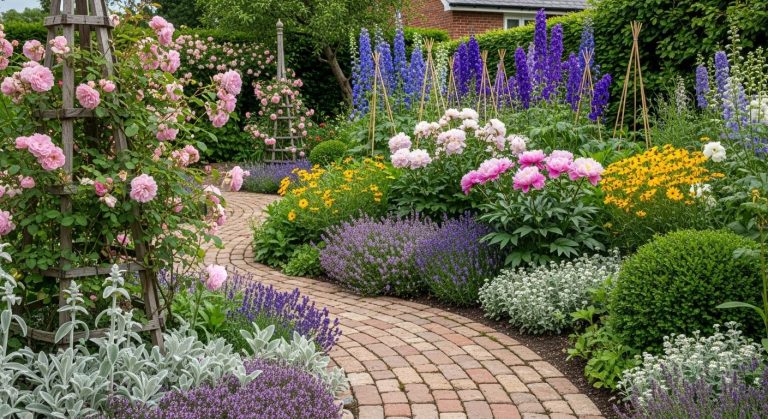
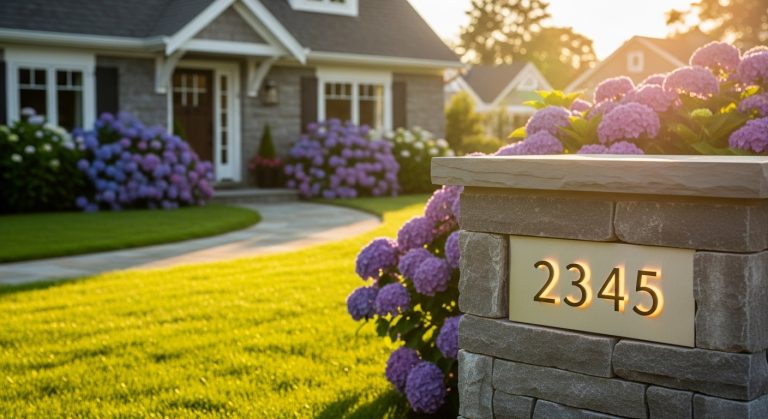
Their rounded flower heads fill space beautifully along foundation walls, especially when planted in small clusters.
Hydrangeas thrive in partial sunlight, which many house foundations provide.
According to the U.S. National Arboretum, hydrangeas rank among the most widely planted ornamental shrubs in American landscapes.
Pros
- Large eye-catching flowers
- Long bloom season
- Softens harsh foundation walls
- Works well in grouped planting
Cons
- Needs consistent watering
- Some varieties require winter pruning
Mini takeaway
Hydrangeas create lush, romantic foundation beds with minimal effort.
7. Mixed Perennial Foundation Garden
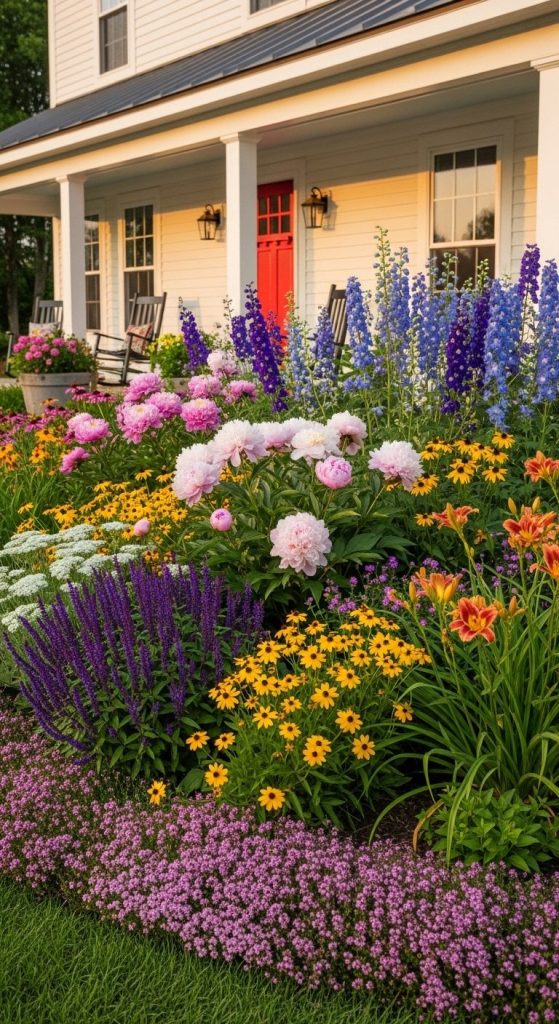
A mixed perennial bed provides color throughout the growing season.
Instead of relying on one plant type, gardeners combine several perennials with staggered bloom times. Early spring flowers transition into summer blooms and then fall color.
The house wall acts as a backdrop for the changing seasonal display.
Pros
- Continuous seasonal color
- Encourages pollinators
- Diverse plant textures
- Garden evolves over time
Cons
- Requires planning bloom cycles
- Seasonal maintenance needed
Mini takeaway
Mixed perennials keep foundation beds lively from spring through fall.
8. Low Hedge with Flower Border
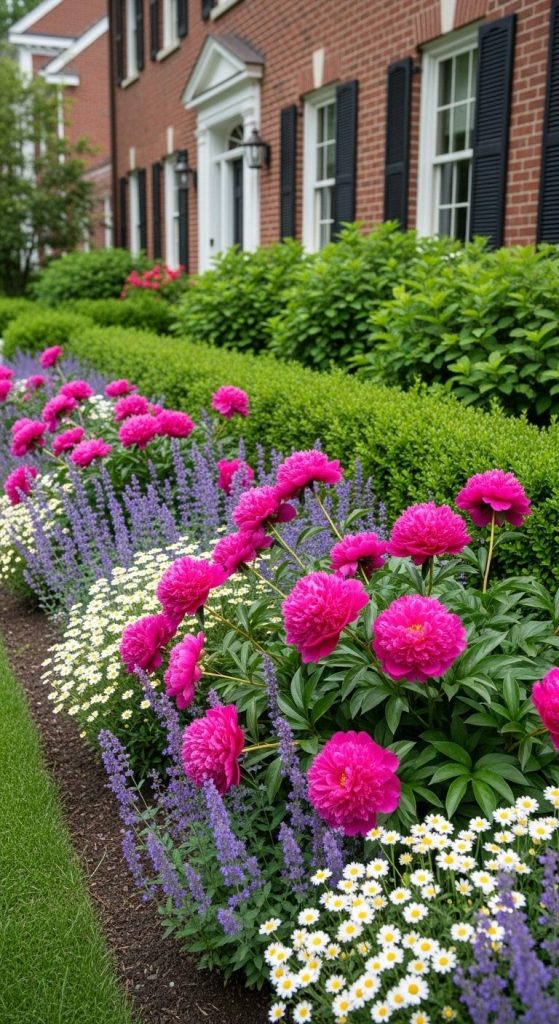
Some homeowners prefer structure with a touch of color.
A low hedge planted along the house creates a tidy foundation line, while flowering plants fill the front portion of the bed.
The hedge provides a green backdrop that highlights the flowers.
Pros
- Balanced structure and color
- Strong visual organization
- Works with many plant combinations
- Year-round greenery
Cons
- Hedge trimming required
- Needs slightly deeper planting space
Mini takeaway
This design balances neat structure with seasonal flower beauty.
9. Window-Level Flower Bed Design
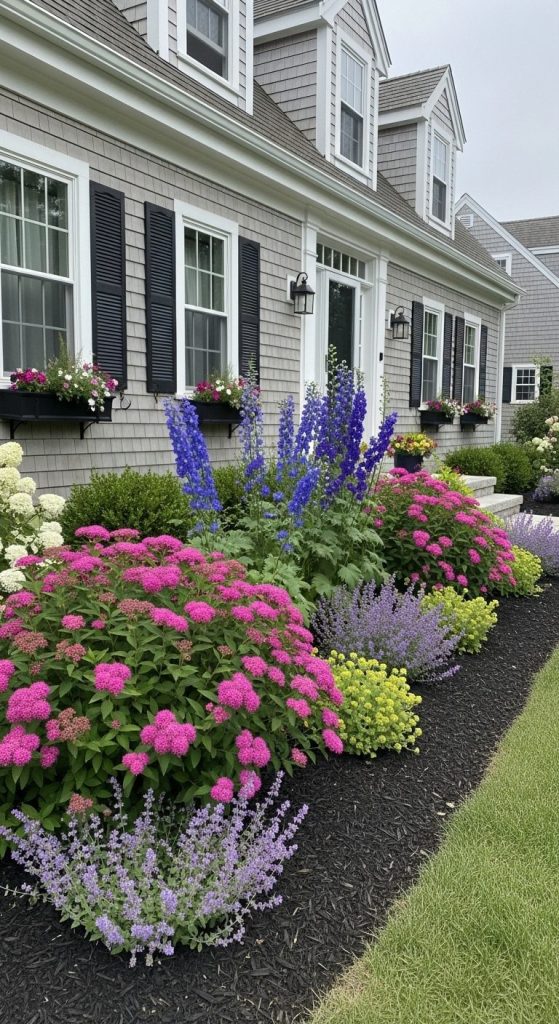
Windows offer a perfect height reference for foundation plantings.
A window-level flower bed uses shrubs and tall flowers that reach just below the window frame. This proportion visually connects the house and garden.
Landscape designers often recommend this technique to avoid plants that grow too tall.
Pros
- Balanced house proportions
- Frames windows attractively
- Prevents overgrown shrubs
- Easy to maintain height
Cons
- Requires careful plant selection
- Some pruning required
Mini takeaway
Planting at window height keeps the foundation garden tidy and proportional.
10. Flower Bed with Groundcover Front Edge
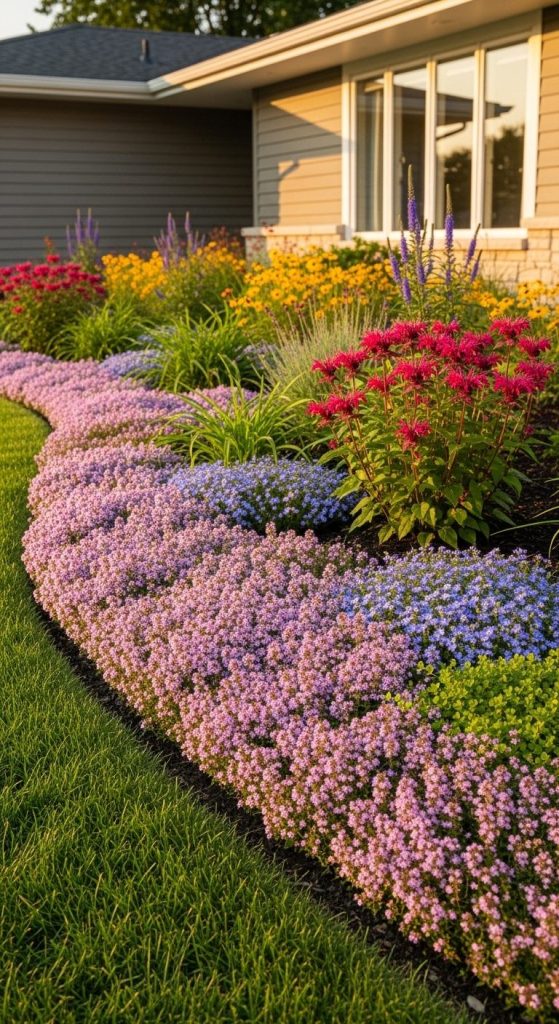
Groundcovers add polish to front yard flower beds against the house.
Low plants such as creeping thyme, sweet alyssum, or sedum create a soft edge along the front of the bed.
These plants fill gaps and reduce visible soil.
Research from Texas A&M AgriLife Extension shows groundcovers help suppress weeds and reduce soil erosion in landscape beds.
Pros
- Reduces weeds naturally
- Creates lush ground coverage
- Softens the edge of the bed
- Low maintenance once established
Cons
- Some varieties spread quickly
- Needs trimming near walkways
Mini takeaway
Groundcovers finish the front edge of foundation beds beautifully.
11. Flower Bed with Tall Ornamental Grasses
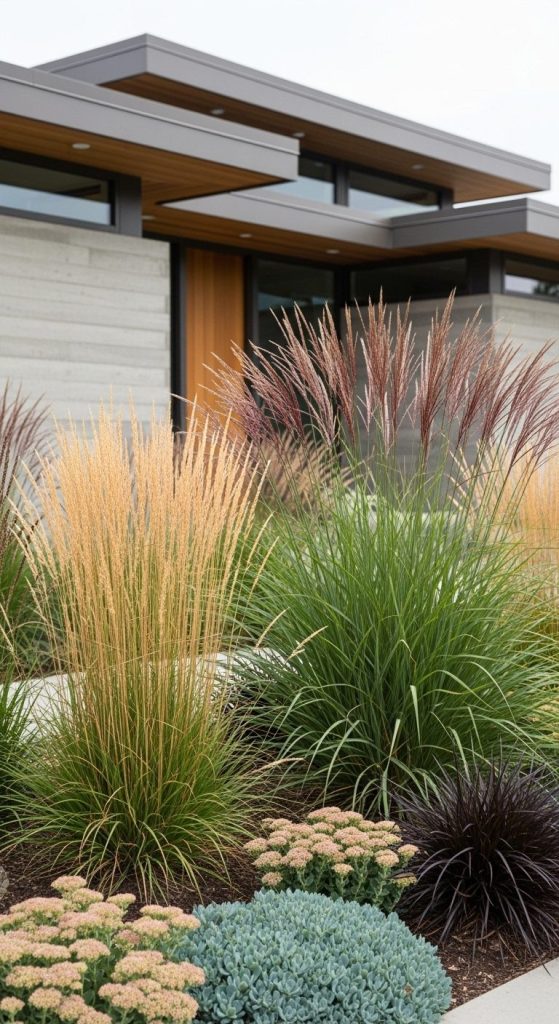
Ornamental grasses add movement to foundation plantings.
Tall grasses like fountain grass or maiden grass sway in the breeze and provide texture against the house wall.
These plants work especially well on modern homes.
Pros
- Adds vertical movement
- Low water requirements
- Interesting texture
- Works in contemporary landscapes
Cons
- Requires seasonal trimming
- Needs space to spread
Mini takeaway
Ornamental grasses bring life and motion to otherwise static foundation beds.
12. Shade-Friendly Foundation Flower Bed
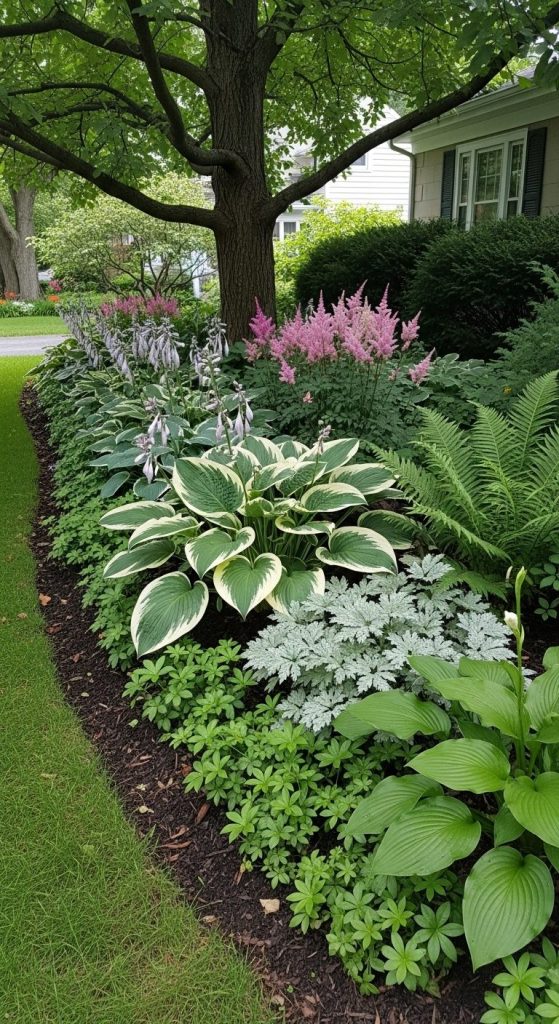
Many foundation areas receive partial shade from the house.
A shade-friendly flower bed uses plants that thrive in lower light conditions. Hostas, astilbe, and ferns often perform beautifully in these spaces.
According to the University of Minnesota Extension, shade-tolerant plants reduce stress and improve plant survival in foundation landscapes.
Pros
- Perfect for shaded house walls
- Lush foliage textures
- Low sun requirement
- Reliable plant growth
Cons
- Fewer bright flowering options
- Moist soil often needed
Mini takeaway
Choosing shade-loving plants ensures foundation beds stay healthy and full.
13. Raised Foundation Flower Bed
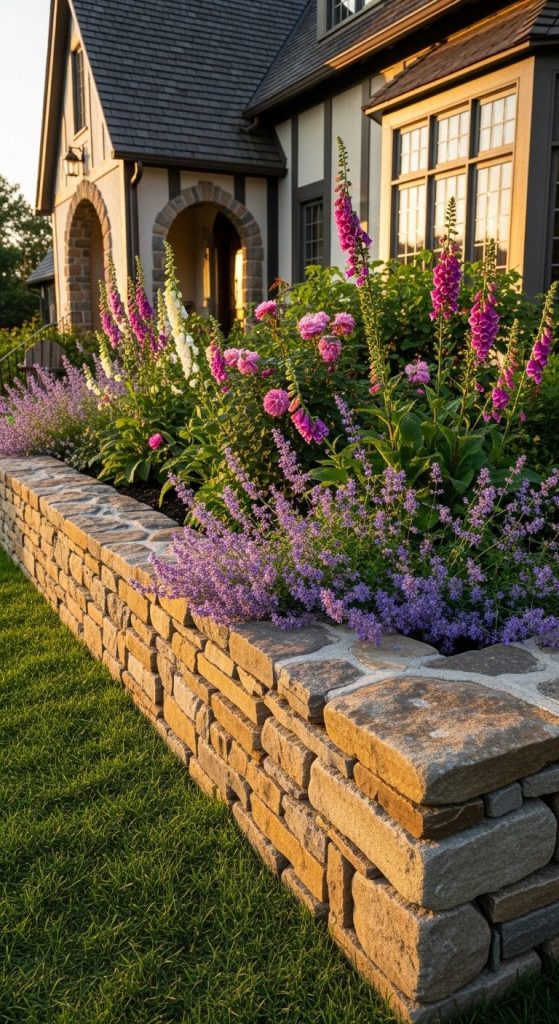
A raised planting bed along the foundation adds height and depth to the landscape.
Stone or brick edging lifts the soil slightly above lawn level, making the plants more visible from the street.
Raised beds also improve drainage near the house.
Pros
- Better soil drainage
- Strong visual definition
- Easier plant maintenance
- Adds dimension to flat yards
Cons
- Requires edging materials
- Slightly higher installation effort
Mini takeaway
Raised beds turn simple foundation strips into standout garden features.
14. Monochrome Flower Bed Color Theme
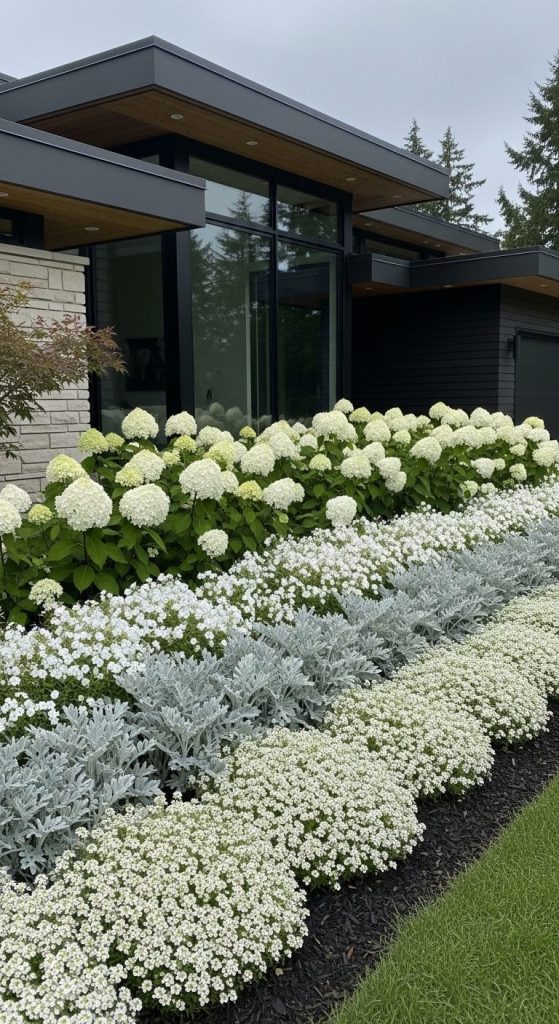
Some of the most striking foundation gardens focus on one consistent flower color.
For example, a bed filled with white flowers—hydrangeas, white petunias, and alyssum—creates a calm and elegant look against darker siding.
This approach keeps the design cohesive.
Pros
- Clean, elegant garden style
- Easy plant coordination
- Strong visual impact
- Works well with modern homes
Cons
- Limited color variety
- Seasonal replacements may be needed
Mini takeaway
A monochrome flower bed delivers a polished, magazine-worthy landscape look.
15. Seasonal Rotating Flower Bed
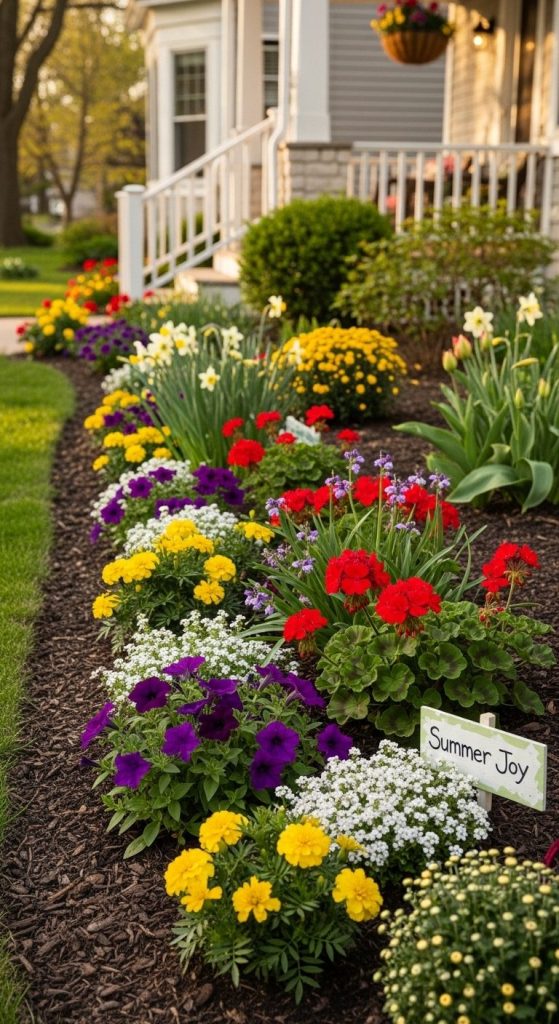
Gardeners who enjoy variety often use seasonal rotating flowers along the house foundation.
Spring bulbs transition into summer annuals, followed by fall plants like chrysanthemums.
The bed changes appearance throughout the year while maintaining the same structure.
Pros
- Fresh seasonal color
- Constant visual interest
- Flexible plant choices
- Great for gardening enthusiasts
Cons
- Requires seasonal replanting
- Slightly higher maintenance
Mini takeaway
Seasonal planting keeps foundation beds lively and evolving year after year.
Conclusion
The narrow strip of soil along the house foundation might seem like a small part of the yard, but it plays a huge role in curb appeal.
Thoughtfully designed front yard flower beds against the house soften walls, frame windows, and create a welcoming first impression. Even a simple planting layout can transform how the entire property feels.
Some homeowners prefer structured evergreen shrubs. Others lean toward colorful perennial gardens or cottage-style flower beds.
Both approaches work beautifully when the plants match the space, sunlight, and overall home style.
Personally, I love foundation gardens because they feel like the finishing touch that pulls everything together. Without them, the house sits on the lawn like a box. With them, it feels connected to the landscape.
Start with one idea that fits your yard—maybe layered planting or a curved bed. Once those flowers begin filling in, the entire front of the house starts looking more inviting.
And honestly, that’s the magic of a well-designed foundation garden.

William Martin is a passionate bowler who spends most of his weekends playing the sport. With years of intense experience under his belt, William decided to share his knowledge by creating BOWLING OCEAN. Join me on this journey to explore the world of bowling and discover the tips and tricks to becoming a pro.