15 Front Landscaping Ideas Low Maintenance for Easy Curb Appeal
A few summers ago, I helped a neighbor redo their front yard. The original plan looked great on paper—lush lawn, colorful flowers everywhere, perfectly trimmed hedges. Three months later? They were outside every weekend pulling weeds and watering plants like it had become a part-time job.
That’s when the conversation shifted toward front landscaping ideas low maintenance homeowners actually enjoy living with.
The truth is, most people want a yard that looks polished without demanding constant attention. Busy schedules, unpredictable weather, and rising water costs make high-maintenance landscapes less appealing these days. According to the National Association of Landscape Professionals, homeowners increasingly request low-maintenance landscapes designed to reduce weekly yard work.
And honestly, that makes sense.
A smart front landscape should look beautiful while quietly doing most of the work itself. Drought-tolerant plants, smart layout choices, and durable materials can dramatically cut down maintenance.
These front landscaping ideas low maintenance homeowners rely on focus on practical design strategies that keep yards clean, structured, and visually appealing—without turning every Saturday into a landscaping marathon.
1. Gravel Garden Beds Instead of Traditional Mulch
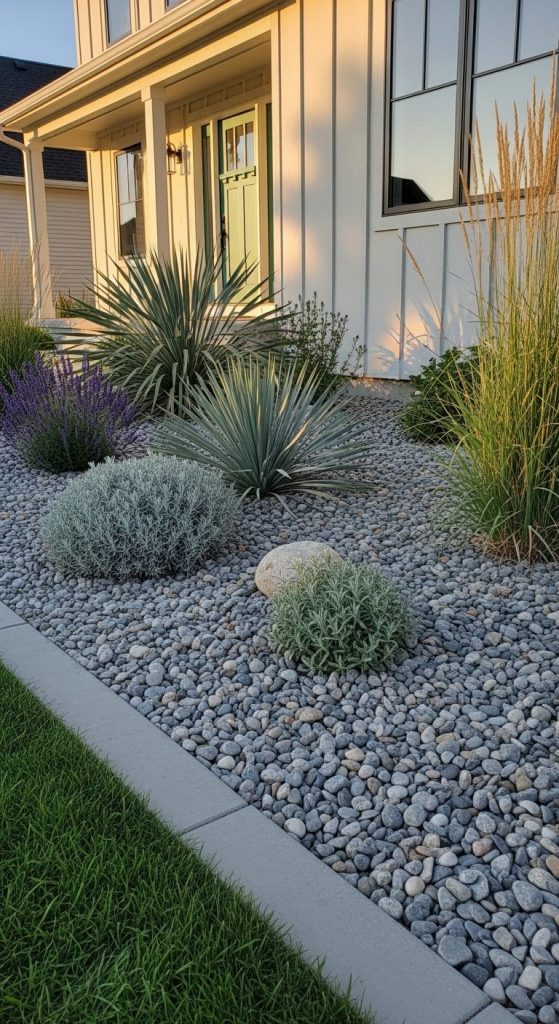
Mulch looks great for a few months, but anyone who has used it knows the cycle: fade, break down, replace, repeat. Gravel beds offer a surprisingly practical solution.
A front landscaping ideas low maintenance strategy many homeowners now choose replaces mulch with decorative gravel or crushed stone. The gravel surrounds plants and acts as a long-lasting ground cover.
Unlike mulch, gravel doesn’t decompose. That means fewer yearly refreshes and far less mess after storms.
It also works beautifully with drought-tolerant plants like lavender, ornamental grasses, or yucca.
Pros
- Extremely durable ground cover
- Reduces weeds when combined with landscape fabric
- Works well in dry climates
- Requires minimal yearly maintenance
Cons
- Initial installation takes effort
- Harder to remove later if redesigning
Mini takeaway
Gravel beds bring structure and durability to a landscape. Once installed, they quietly reduce a lot of the yearly maintenance headaches.
2. Native Plant Front Yard Layout

Plants that evolved in your region naturally adapt to the climate. That simple fact makes them incredibly useful in front landscaping ideas low maintenance designs.
Native plants typically require less watering, fewer fertilizers, and minimal pest treatment. They already understand the soil and seasonal patterns.
The U.S. Environmental Protection Agency notes that native landscaping can reduce outdoor water use significantly, especially in regions with dry summers.
Many homeowners now design entire front yards using native shrubs, grasses, and perennials.
Pros
- Requires less watering and fertilizer
- Supports pollinators and local wildlife
- Naturally adapted to climate conditions
Cons
- Availability varies by region
- Some native plants spread aggressively
Mini takeaway
Native plants remove a lot of guesswork. The garden grows with the environment instead of fighting against it.
3. Evergreen Shrub Foundation Planting

Flowers come and go with the seasons, but evergreen shrubs stay reliable all year.
A smart front landscaping ideas low maintenance approach often starts with a row of evergreen shrubs along the home’s foundation. These plants provide structure without constant seasonal replanting.
Boxwood, dwarf spruce, and holly shrubs keep their shape with minimal pruning.
They also maintain color during winter months when many gardens look empty.
Pros
- Year-round greenery
- Low seasonal maintenance
- Adds visual structure to the yard
Cons
- Slow growth in some varieties
- Occasional pruning required
Mini takeaway
Evergreens act like the backbone of the landscape. They keep the yard looking finished even when everything else goes dormant.
4. Large Plant Clusters Instead of Many Small Plants

One common mistake in landscaping comes from planting dozens of different small plants.
Maintenance increases quickly when every plant needs separate care. A better strategy in front landscaping ideas low maintenance layouts groups plants into larger clusters.
Instead of ten different flowers, plant a group of the same hardy perennial.
Clusters reduce visual clutter and simplify maintenance routines.
Pros
- Easier watering and care
- Strong visual impact
- Fewer plant varieties to manage
Cons
- Less plant diversity
- Requires careful spacing
Mini takeaway
Large clusters simplify the landscape. Fewer plant types mean fewer things to manage week after week.
5. Ornamental Grass Garden Design

Ornamental grasses quietly solve several landscaping challenges at once.
These plants tolerate heat, wind, and drought while requiring very little attention. That makes them popular in front landscaping ideas low maintenance gardens.
Varieties like fountain grass, blue fescue, and feather reed grass add texture and gentle movement to the yard.
Landscape designers often use them as focal plantings or border plants.
Pros
- Very drought tolerant
- Rarely affected by pests
- Adds texture and movement
Cons
- Needs cutting back once per year
- Some varieties spread over time
Mini takeaway
Ornamental grasses deliver beauty with very little effort. They sway in the wind and mostly take care of themselves.
6. Groundcover Plants Instead of Lawn Areas

Lawns look beautiful, but they require mowing, watering, fertilizing, and edging.
Replacing small lawn sections with groundcover plants dramatically lowers maintenance in front landscaping ideas low maintenance landscapes.
Plants like creeping thyme, sedum, or dwarf mondo grass spread across the soil and suppress weeds.
The University of Maryland Extension reports that groundcovers help reduce soil erosion while lowering water needs.
Pros
- Reduces mowing
- Helps prevent weed growth
- Adds natural texture
Cons
- Takes time to spread fully
- Initial planting requires patience
Mini takeaway
Groundcovers transform high-maintenance lawn sections into self-managing plant carpets.
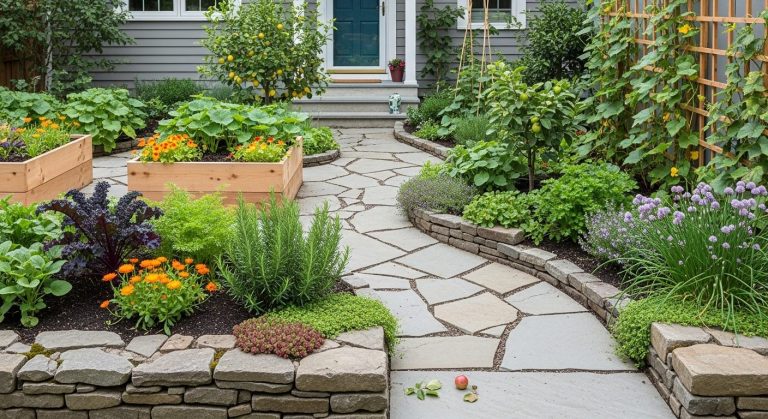
7. Stone Edging for Permanent Bed Borders

Garden beds often lose their shape over time when edges shift or erode.
Installing stone edging helps maintain clean lines in front landscaping ideas low maintenance designs.
Natural stone or concrete edging creates a long-lasting barrier between lawn and garden beds.
Once installed, it requires almost no upkeep.
Pros
- Keeps beds neatly defined
- Reduces soil movement
- Extremely durable
Cons
- Installation requires physical effort
- Material costs can vary
Mini takeaway
Permanent edging protects the shape of the garden. The landscape stays neat with minimal work.
8. Drought-Tolerant Perennial Planting

Perennials already reduce yearly planting work because they return each season.
Choosing drought-tolerant varieties strengthens front landscaping ideas low maintenance strategies even further.
Plants like coneflower, sedum, and lavender thrive in tough conditions with limited watering.
The Royal Horticultural Society highlights drought-tolerant plants as one of the best ways to reduce long-term garden maintenance.
Pros
- Returns every year
- Needs little watering once established
- Adds seasonal color
Cons
- Some plants require occasional dividing
- Bloom periods vary
Mini takeaway
Drought-tolerant perennials provide dependable color while reducing the need for constant care.
9. Mulch-Free Rock Landscaping Sections

In some areas of the yard, plants may not grow easily.
Rock landscaping solves this issue while strengthening front landscaping ideas low maintenance layouts.
River rock, crushed granite, or decorative stone can fill difficult spots such as dry slopes or narrow side areas.
These sections rarely require attention once installed.
Pros
- Extremely low maintenance
- Helps prevent erosion
- Long-lasting surface
Cons
- Limited plant growth in those areas
- Initial material cost
Mini takeaway
Rock landscaping removes problem areas from the maintenance list while adding visual texture.
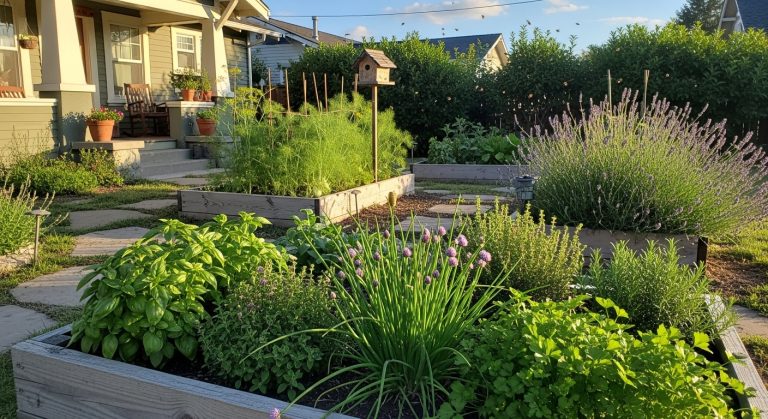
10. Raised Planting Beds with Deep Soil

Raised beds improve soil quality while simplifying plant care.
A structured front landscaping ideas low maintenance layout sometimes includes raised beds filled with well-prepared soil.
Better soil conditions help plants grow stronger and resist disease.
Stronger plants require less ongoing attention.
Pros
- Improved soil drainage
- Easier weed management
- Healthier plant growth
Cons
- Initial construction required
- Soil filling costs
Mini takeaway
Healthy soil leads to healthier plants. Raised beds give plants a strong foundation from the start.
11. Minimalist Plant Palette Design

Some of the most elegant landscapes use very few plant varieties.
A front landscaping ideas low maintenance approach often limits the palette to three or four plant types repeated throughout the yard.
This design method simplifies maintenance while creating a calm, cohesive look.
Many modern landscapes use this exact strategy.
Pros
- Easier plant care routines
- Creates visual harmony
- Simplifies seasonal maintenance
Cons
- Less botanical variety
- Requires thoughtful plant selection
Mini takeaway
Less variety often means less work. A simple plant palette keeps the landscape organized and manageable.
12. Sloped Rain Garden Drainage Area

Some yards collect water during heavy rain.
A rain garden planted with moisture-loving plants absorbs runoff naturally while supporting front landscaping ideas low maintenance goals.
The U.S. Geological Survey reports rain gardens can reduce stormwater runoff by up to 30 percent.
These gardens turn drainage problems into functional landscape features.
Pros
- Improves water drainage
- Supports hardy plant species
- Reduces erosion
Cons
- Requires careful location planning
- Soil preparation needed
Mini takeaway
Rain gardens quietly solve drainage issues while adding greenery to the yard.
13. Wide Planting Beds Along Walkways

Narrow beds near walkways often struggle to support healthy plants.
A better front landscaping ideas low maintenance design uses wider planting beds that allow plants to grow naturally.
Wider beds reduce crowding and improve airflow between plants.
Healthier plants require fewer interventions.
Pros
- Healthier plant spacing
- Reduces plant disease risk
- Creates fuller landscape appearance
Cons
- Reduces lawn area
- Requires planning before installation
Mini takeaway
Plants thrive when they have room to grow. Wider beds support stronger, easier-to-maintain gardens.
14. Terraced Beds for Sloped Front Yards

Sloped yards often require extra work due to erosion and water runoff.
Terraced beds stabilize slopes while supporting front landscaping ideas low maintenance structures.
Retaining edges hold soil in place while creating layered planting areas.
These terraces also improve water absorption.
Pros
- Prevents erosion
- Creates organized planting levels
- Improves soil stability
Cons
- Construction effort required
- Material costs vary
Mini takeaway
Terracing turns difficult slopes into functional garden spaces that require less long-term maintenance.
15. Repeating Plant Patterns for Easy Maintenance

Landscapes feel more cohesive when certain plants repeat throughout the yard.
Using repeated plant patterns supports front landscaping ideas low maintenance strategies because it simplifies plant care.
When the same plants appear in several areas, watering, pruning, and seasonal care follow the same routine.
Pros
- Simplifies garden care
- Creates visual rhythm
- Makes the landscape feel organized
Cons
- Overuse may feel repetitive
- Requires planning during planting stage
Mini takeaway
Repetition builds visual harmony while keeping maintenance routines simple and predictable.
Conclusion
Low-maintenance landscaping doesn’t mean boring landscaping. In fact, many of the most visually appealing front yards rely on simple, practical design strategies.
Smart front landscaping ideas low maintenance homeowners love focus on durability, plant selection, and thoughtful layout. Gravel beds reduce upkeep. Native plants adapt naturally to the climate. Evergreen shrubs provide year-round structure. Groundcovers replace high-maintenance lawn sections.
Even small design decisions—like grouping plants together or repeating certain varieties—can drastically reduce how much time a yard requires.
The goal isn’t perfection. The goal is a front yard that looks welcoming while fitting into real life.
Start with one change that makes sense for your space. Maybe replace a lawn patch with groundcover, plant drought-tolerant perennials, or install durable stone edging.
Over time, those small improvements add up to a landscape that looks beautiful without demanding constant attention.
And honestly, that’s the kind of yard most homeowners appreciate the most.

William Martin is a passionate bowler who spends most of his weekends playing the sport. With years of intense experience under his belt, William decided to share his knowledge by creating BOWLING OCEAN. Join me on this journey to explore the world of bowling and discover the tips and tricks to becoming a pro.